The Shirt Did Not Come With a Collar
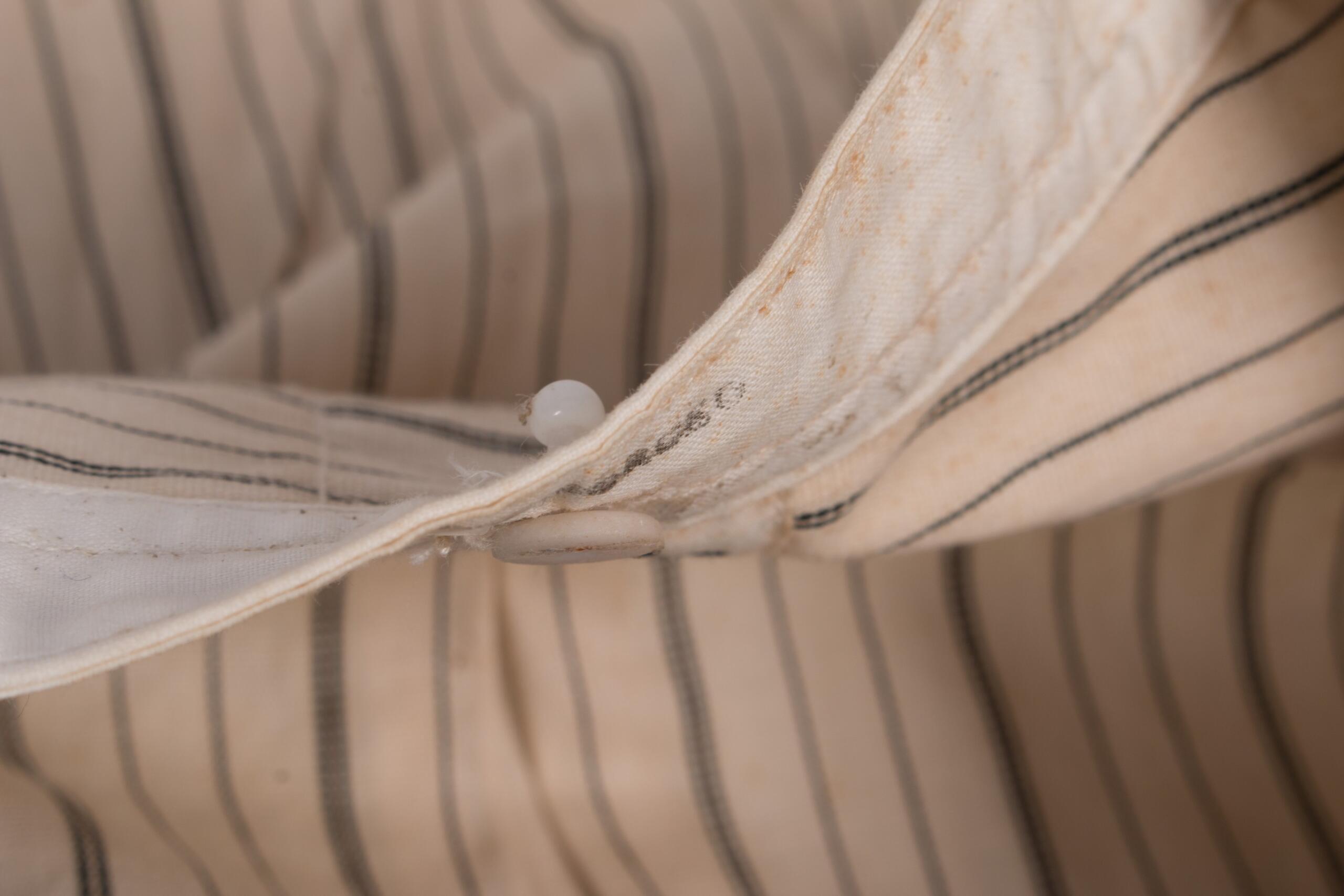
A man’s dress shirt was a body with sleeves and a neckband, and nothing above it. The neckband had a buttonhole at the front and another at the back, and the shirt was finished.
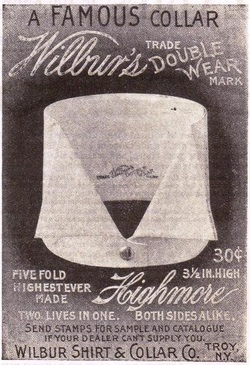
The collar was a separate object: a stiff band of heavily starched linen or cotton, or later a sheet of celluloid, shaped and ready to wear, and sold on its own.
To dress, you took a collar from the box, fed a stud through the back buttonhole of the neckband and through the back of the collar, did the same at the front, and the collar was now part of the shirt. The tie went over it. When he undressed the studs came out and the collar came off.
Like our content? Follow us for more.
It Came Off Because Laundry Cost Real Money
Here is the entire reason, and once you see it the whole arrangement is obvious.
A shirt gets dirty unevenly. The collar and the cuffs touch skin, hair and whatever a man has put on his hair, and they are visible – so they show soiling and wear long before anything else does. The body of the shirt, under a jacket and a waistcoat, stays clean for days.
Laundering a whole shirt in 1920 meant washing, boiling, blueing, starching, drying and ironing a large garment, by hand, by somebody. It took real labour or real money, and the thing that actually needed cleaning was about four inches wide.
So the design separated them. One shirt, worn for several days, with a fresh collar every morning – and the only thing requiring the full starch-and-iron treatment was a small stiff band that a laundry could do in volume.
The collar did not come off for fashion. It came off because clean cloth was expensive and this was the cheapest possible way to have a clean neck.
Starching One Properly Was a Specialist Job
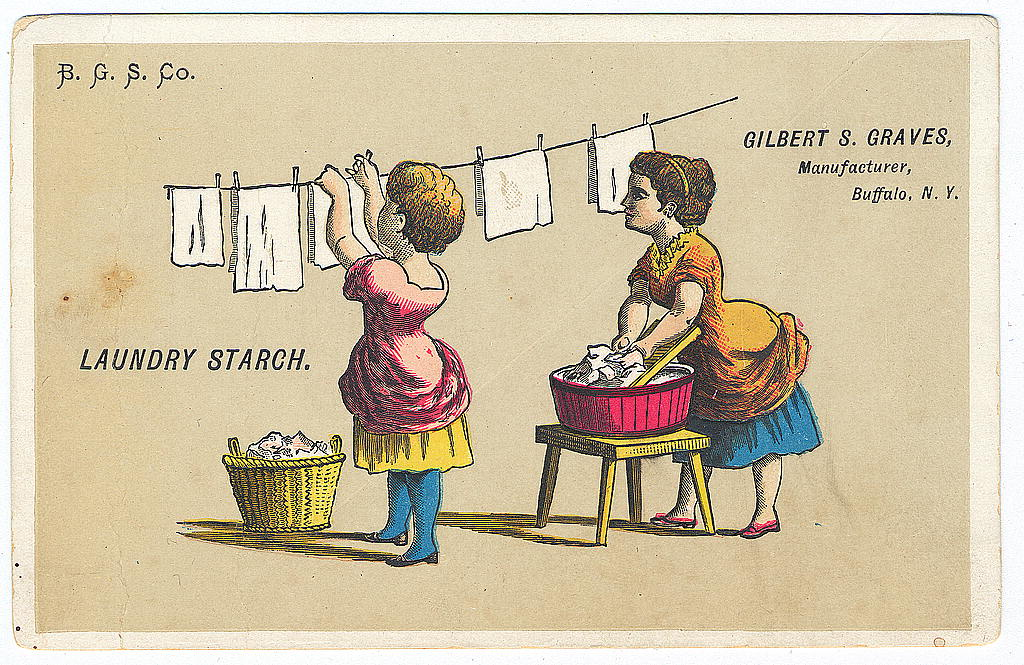
The stiffness is the part modern readers underestimate. A dress collar of this period was not merely crisp. It was rigid – closer to thin card than to cloth – and achieving that was a genuine process.
The collar was washed, saturated with heavy starch, partly dried, then shaped and ironed with considerable heat and pressure on a curved form so that it held its shape, its fold and its gloss.
Doing that at home was possible and it was hard. Doing it well, repeatedly, to a standard a man would wear to an office, was work for a commercial laundry with the right equipment – which is why collar-and-cuff laundering became a substantial trade in every American city, and why a man’s weekly bundle going out and coming back was a routine household transaction.
Celluloid Collars Were the Cheap Escape
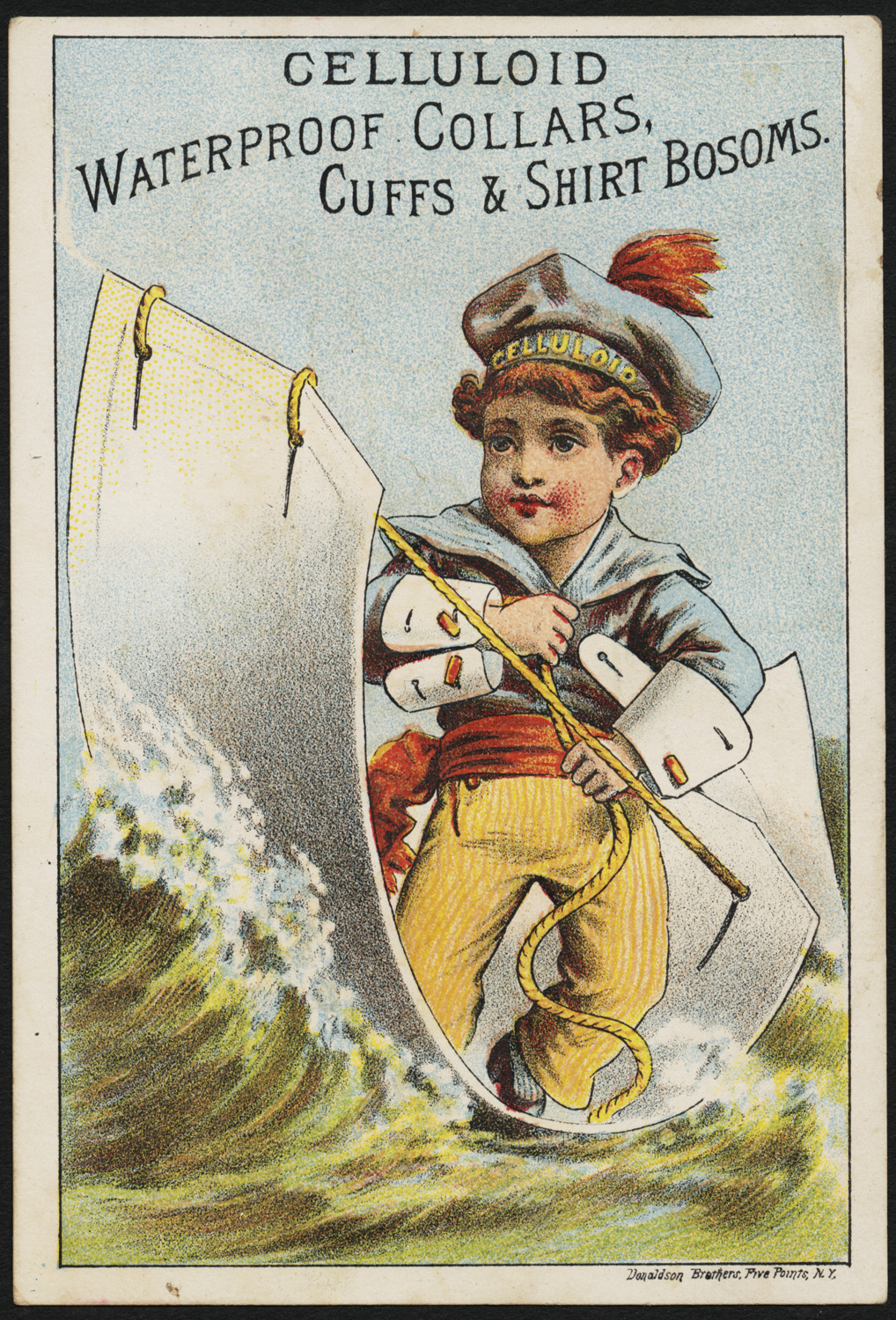
There was a way to avoid the laundry entirely, and an enormous number of men took it.
A celluloid collar was an early plastic sheet, moulded and finished to look like starched linen, worn the same way with the same studs. It never needed washing. You wiped it with a damp cloth at night, and it was clean.
They were cheap, they lasted a long time, and they were the practical choice for anybody whose wage would not support a laundry bill – clerks, tradesmen, men on a fixed salary.
They were also conspicuous. They had a particular shine and a particular sound, they did not drape at all, and anybody who dealt with men’s clothing could tell one across a room. Which made them a visible marker of economy, and that is a large part of why they are remembered with embarrassment rather than affection.
One further fact belongs here as safety history rather than advice: early celluloid is highly flammable, which was understood at the time, and it is a documented reason the material was eventually abandoned across every product it had been used for.
They Came in Sizes and Every Man Knew His
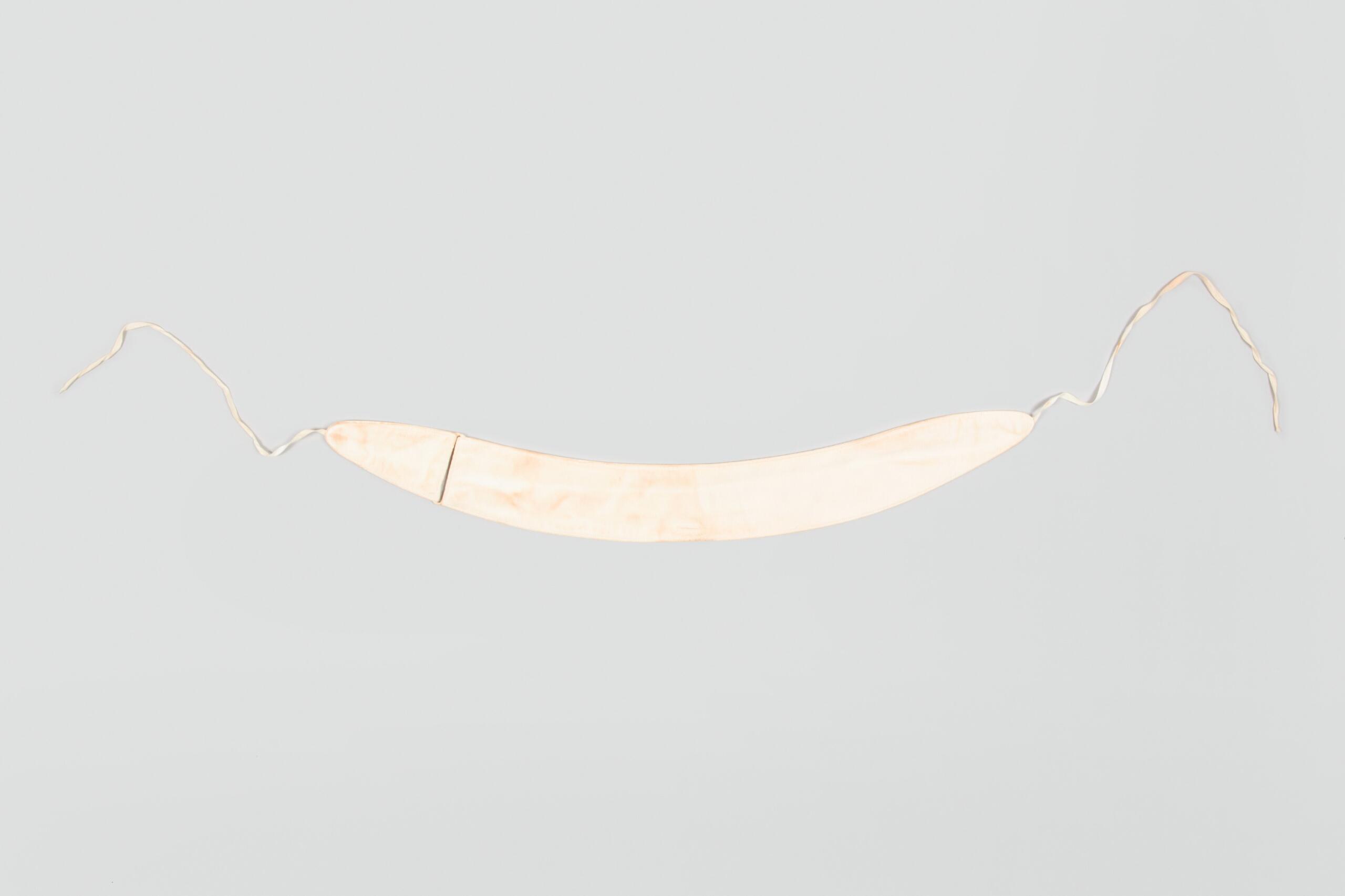
Collars were sized by neck measurement in inches and half-inches, and a man knew that figure the way he knew his shoe size – because a collar is close-fitting, rigid and unforgiving, and half an inch is the difference between correct and unwearable.
That is the origin of the shirt sizing still printed on dress shirts today. A modern shirt labelled with a neck measurement and a sleeve length is carrying the measurement system of an object that no longer exists, because the collar it refers to used to be bought separately in exactly those increments.
Collars were also sold in a range of heights and shapes, and the choice said something. A tall collar read as formal and was genuinely restrictive; a lower turnover was ordinary daywear; the winged form with the points turned out was for evening. Men had preferences and younger men wore lower ones, which their fathers noticed.
The Collar Box Was a Real Piece of Household Equipment
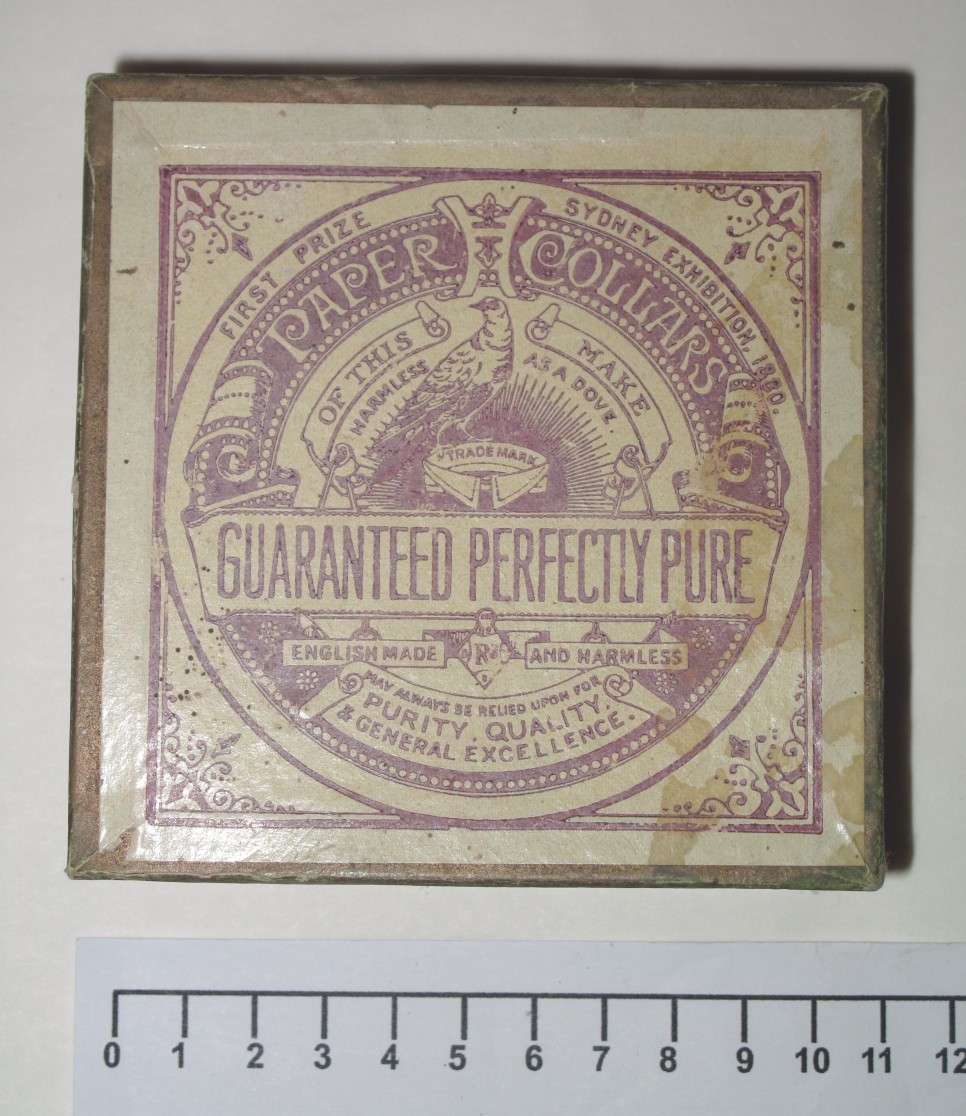
Because collars were rigid and could not be folded, they needed storing in their own shape – so every man who wore them had a collar box.
It was a round or oval lidded box, a few inches deep, in cardboard, leather, papier mache or tin, frequently decorated, holding a stack of collars standing on edge inside. Studs went in a small compartment or a separate dish.
These boxes were sold as gifts, decorated for the purpose, and they survive in large numbers in antique shops – where they are now bought as attractive lidded boxes by people who have no idea what shape they were built around.
They Were Genuinely Uncomfortable and the Language Proves It
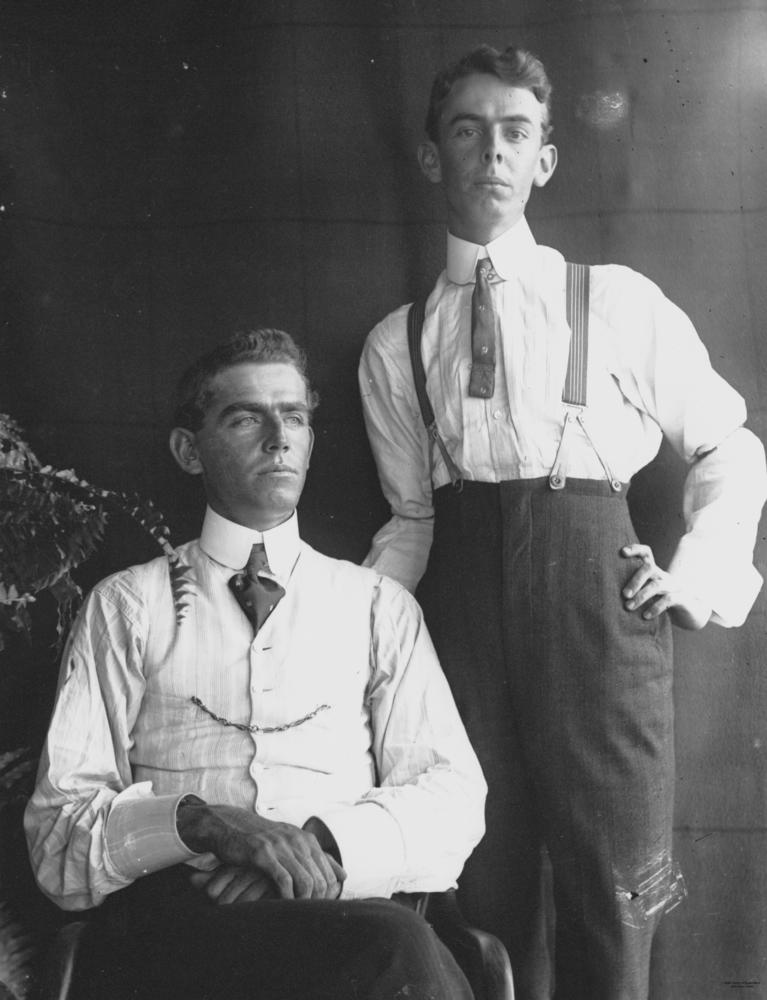
A heavily starched rigid collar, worn all day, chafes. It restricts the turning of the head. It is hot. Its edges cut into the neck, and the back of a man’s neck under one was frequently raw.
Which is why English carries a set of phrases from this object that have long outlived it. Getting hot under the collar. Feeling collared. A white-collar worker, which simply meant a man whose work let him wear one, against a blue-collar worker whose work did not.
That last pair is the most interesting survival on this list. The entire vocabulary of American class description above and below the collar line comes from a physical garment that distinguished the man who sat at a desk from the man who did not – and the garment has been gone for a century while the words have not moved at all.
What Replaced It and Why It Won So Fast
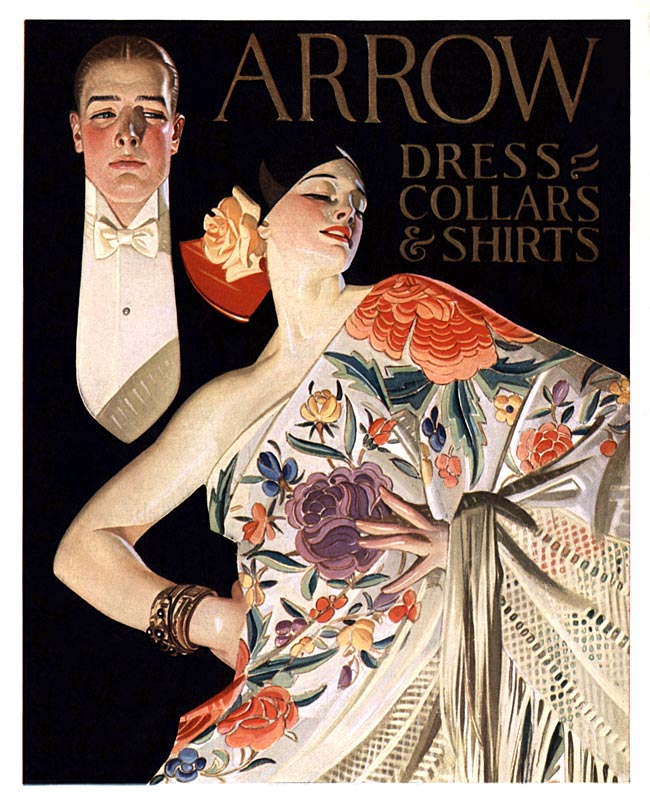
The soft attached collar arrived as sporting and informal wear and then simply took over, and three things pushed it.
The first was the war. Enormous numbers of American men spent a period in uniform wearing soft collars, found them comfortable, and declined to go back.
The second was the washing machine. Once laundering an entire shirt at home became a matter of loading a machine, the whole economic foundation of the detachable collar evaporated. If washing the body of the shirt is nearly free, there is no reason whatsoever to wear a shirt that lets you avoid washing it.
The third was the shirt itself. Manufacturers began making shirts with the collar attached, sized by neck and sleeve, in quantity, cheaply – and a shirt that arrives complete is simply easier than a shirt plus a box of collars plus a laundry arrangement plus two studs you can lose.
The Twist: The Logic Is Everywhere and the Collar Is Not
The detachable collar looks like a period eccentricity, and it is the clearest possible example of a design principle that is now used constantly.
The principle is this: when cleaning something is expensive, separate the part that gets dirty from the part that does not, and make the dirty part removable.
In 1920 the expensive input was laundry – labour, fuel, water, soap, starch and ironing, applied by hand to a large garment. The rational response was to put a boundary at the point where soiling concentrates, and make everything above that boundary a small, separately cleanable, separately replaceable item. One shirt, six collars, a clean neck every day, at a fraction of the cost of six shirts.
That is good engineering, and it was abandoned the instant the input got cheap. The domestic washing machine made washing a whole shirt so nearly free that the entire calculation inverted, and a man would rather wash a shirt than manage a collar.
But look at where the same logic now lives, because it did not go anywhere. Removable cushion covers on furniture that is otherwise impossible to clean. Replaceable filters in everything that moves air or water. Detachable liners in coats. Changeable blades, pads, cartridges and heads. Fitted sheets, which exist so that the thing against the skin can be washed while the thing underneath is not. Every one of those is the detachable collar’s argument applied to a different object.
So the principle is thriving and the garment is extinct, which is the right outcome. The collar was only ever a consequence of laundry being dear.
The one piece that genuinely did survive is the vocabulary. A century after the last American office worker put a stud through a neckband, the country still divides its working population into people who wear a white collar and people who do not – and almost nobody saying it knows they are describing a detachable object in a round box.
Like our content? Follow us for more.