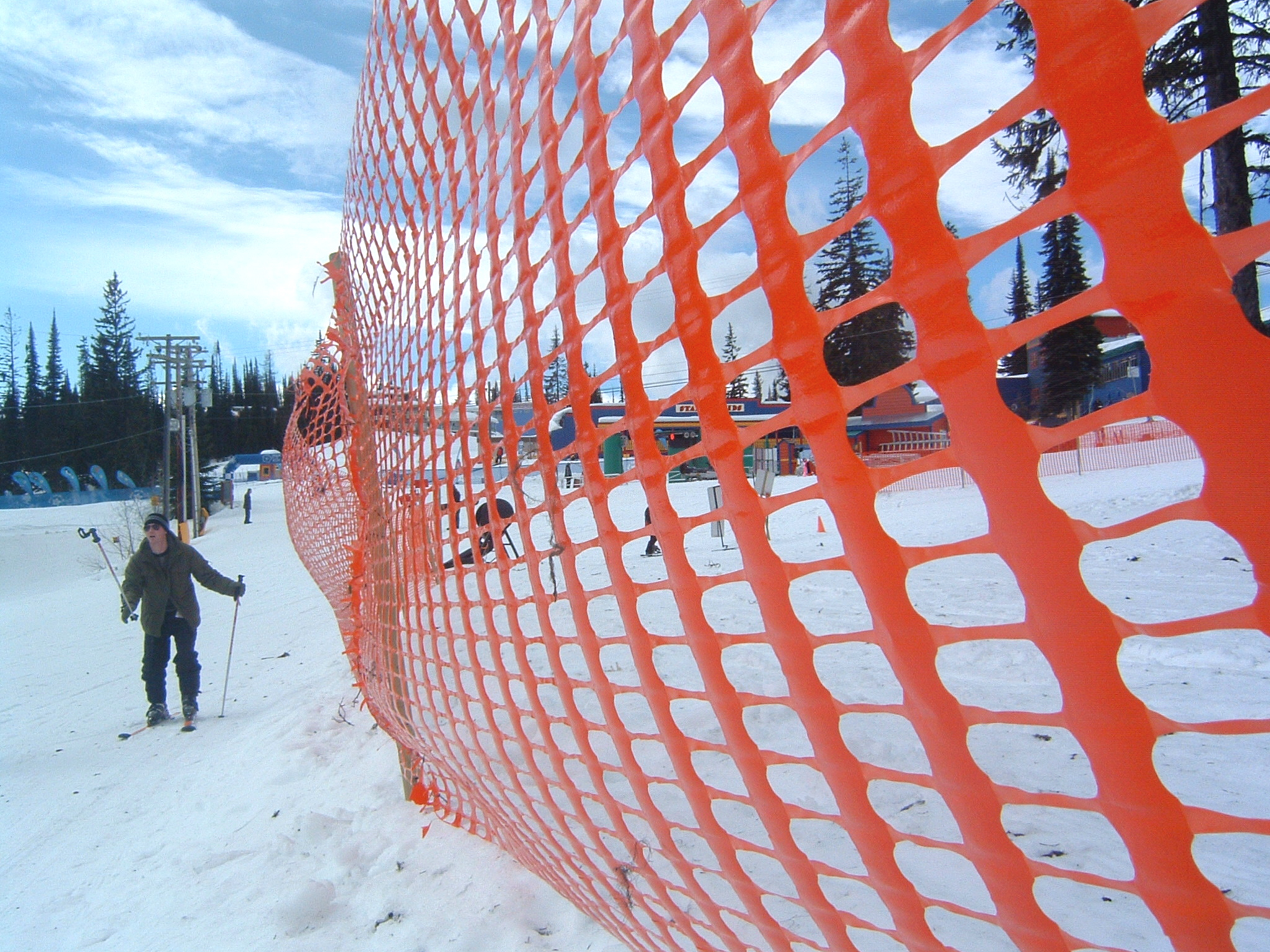
I grew up assuming a snow fence was a wall that stopped snow from getting onto the road, and that the gaps in it were a way of saving material. Both halves of that are wrong. The gaps are the mechanism, the fence is not in the right place to be a wall, and the drift that forms behind it is not a failure but the entire purpose of the thing. It is one of the most satisfying pieces of engineering I know, and it looks like a row of sticks.
Snow on the Ground Is Not Falling Snow
Start with where the problem comes from.
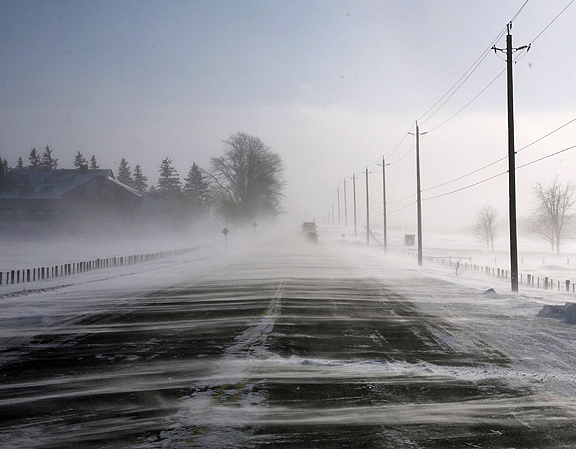
The snow that blocks a road in open country mostly did not fall there. It fell somewhere upwind, and it is being moved along the ground by the wind – picked up, carried, dropped, picked up again. On open prairie or bare farmland a moderate wind will shift an enormous quantity of snow across the surface, and that moving material is what fills a cut, buries a road and rebuilds the same drift every night after the plough has been through.
So the problem is transport, not precipitation. That distinction is the key to the whole design, and it is why fences work in places where simply having snow does not necessarily cause trouble.
Like our content? Follow us for more.
Wind Can Only Carry What It Has Energy For
Now the physics, which is uncomplicated.
Wind carries snow because moving air has enough energy to keep particles suspended or bouncing along. Slow the air down and it cannot. The particles settle out, and they settle out exactly where the slowing happens.
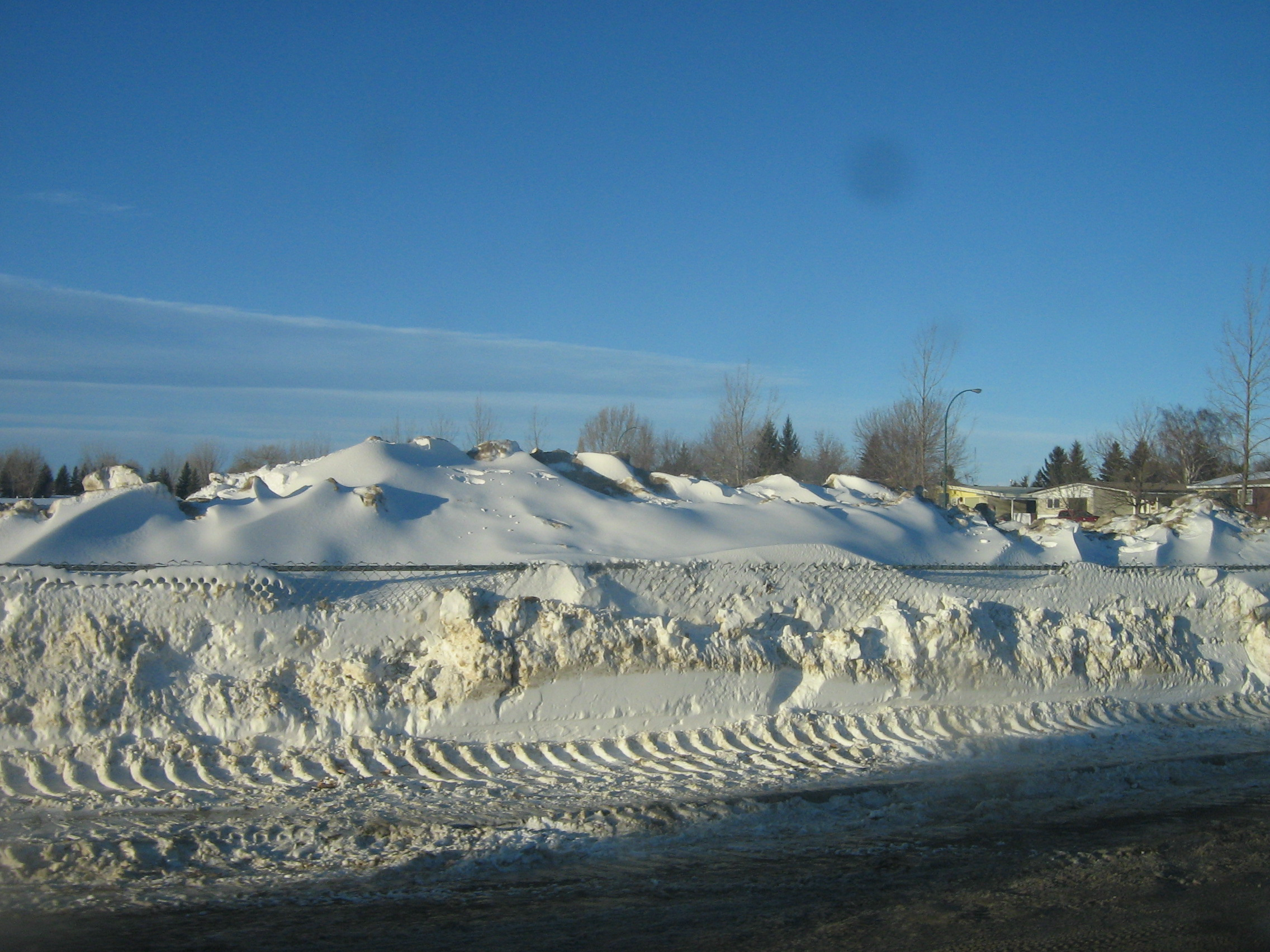
This is the same principle as silt dropping out of a river where it widens and slows, or dust settling in a sheltered corner of a yard. Anything that reduces wind speed over a patch of ground will cause whatever the wind is carrying to be deposited on that patch.
So the way to stop snow reaching a road is not to build a barrier at the road. It is to make the wind drop its load somewhere else first.
Which Is Why the Gaps Matter
Here is where the design becomes clever.
A solid fence does not slow the wind down over an area. It diverts it. Air piles up in front, accelerates over the top, and comes down on the far side as a fast eddy that scours the ground immediately behind the fence and then dumps everything in a tight heap a short distance away. You get a deep drift very close to the fence, the fence is quickly buried, and once buried it does nothing at all.
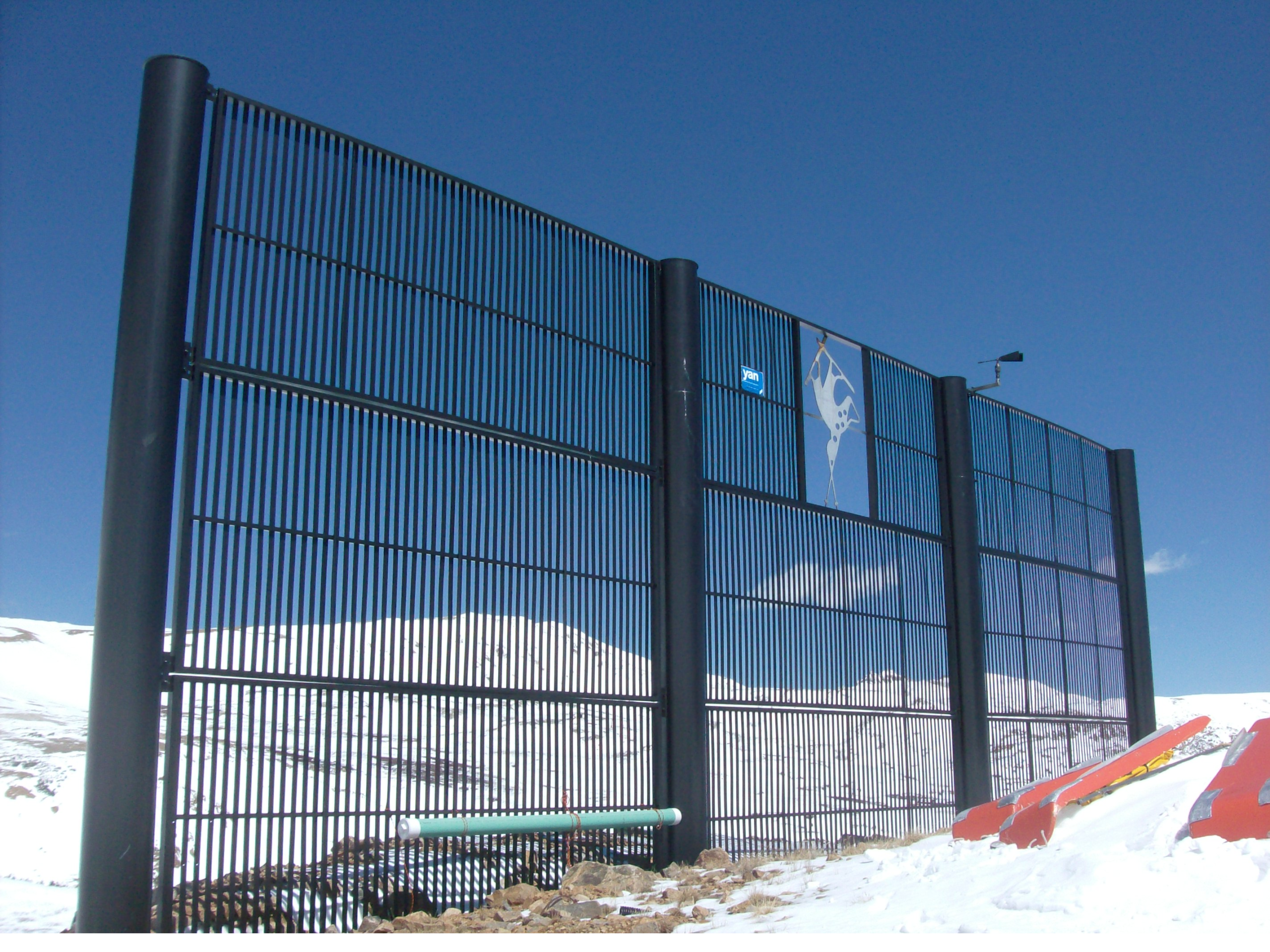
A fence with gaps behaves completely differently. Some air goes through, which prevents the violent eddy, and the fence as a whole acts as a brake on a wide band of air rather than a wall. The wind leaves the fence slowed but still moving in roughly the same direction, so it drops its snow gradually over a long distance downwind instead of all at once.
The result is a long shallow drift rather than a short deep one, and the fence does not bury itself.
The Open Proportion Is a Real Number
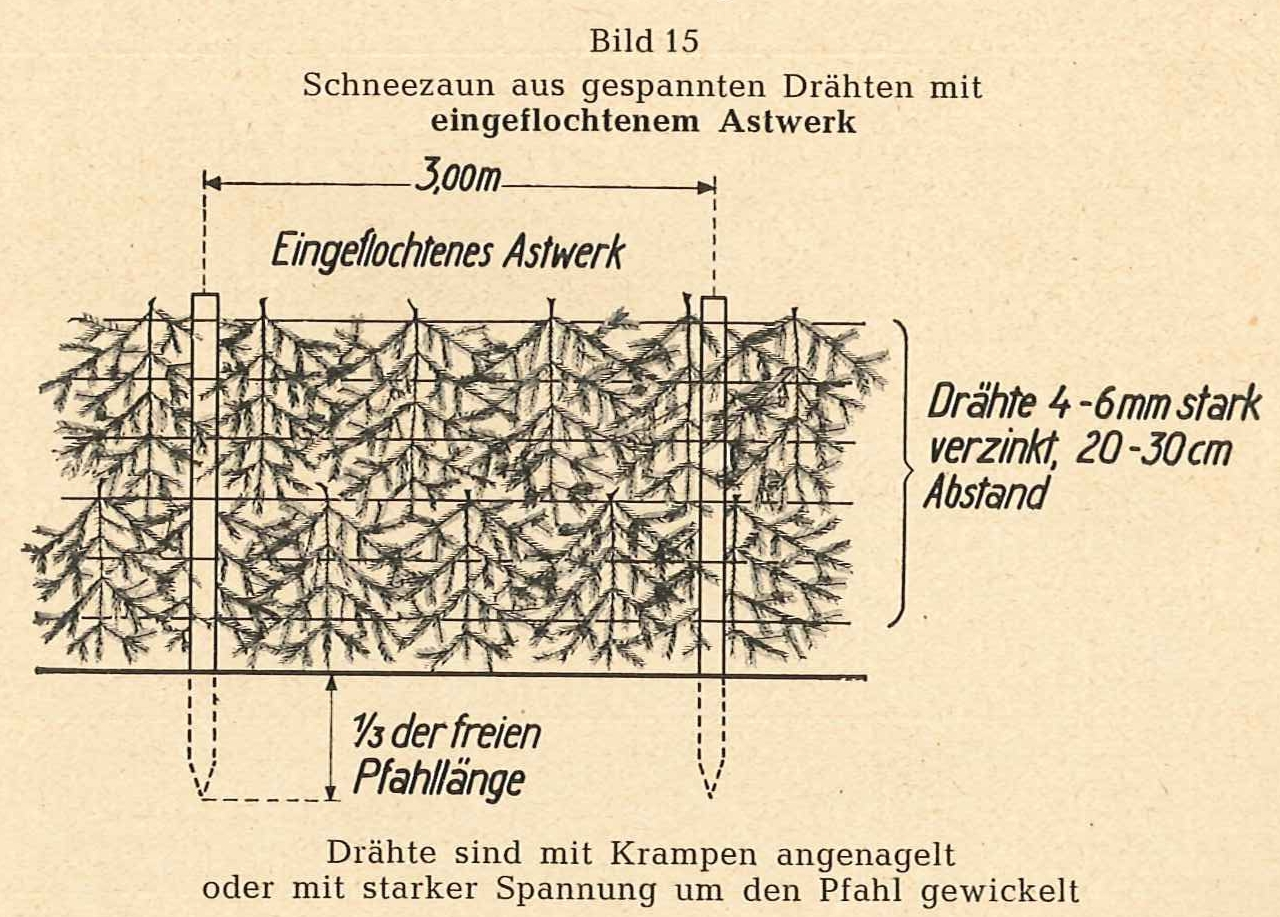
The ratio of gap to slat is not arbitrary, and it is the single most important thing about a snow fence.
Too solid and you get the eddy and the buried fence. Too open and the air is barely slowed, so very little snow comes out of it. There is a band in between where the fence is porous enough to avoid the eddy and solid enough to take real energy out of the wind, and the traditional slat fence sits in that band.
I am not going to quote a figure, partly because the useful range depends on conditions and partly because the people who design these things properly work from engineering guidance rather than from articles. But the existence of an optimum is the point: somebody measured this, and the familiar fence is the answer to a measurement.
The Fence Is Set Well Back From the Road
The second thing I had wrong was the position.
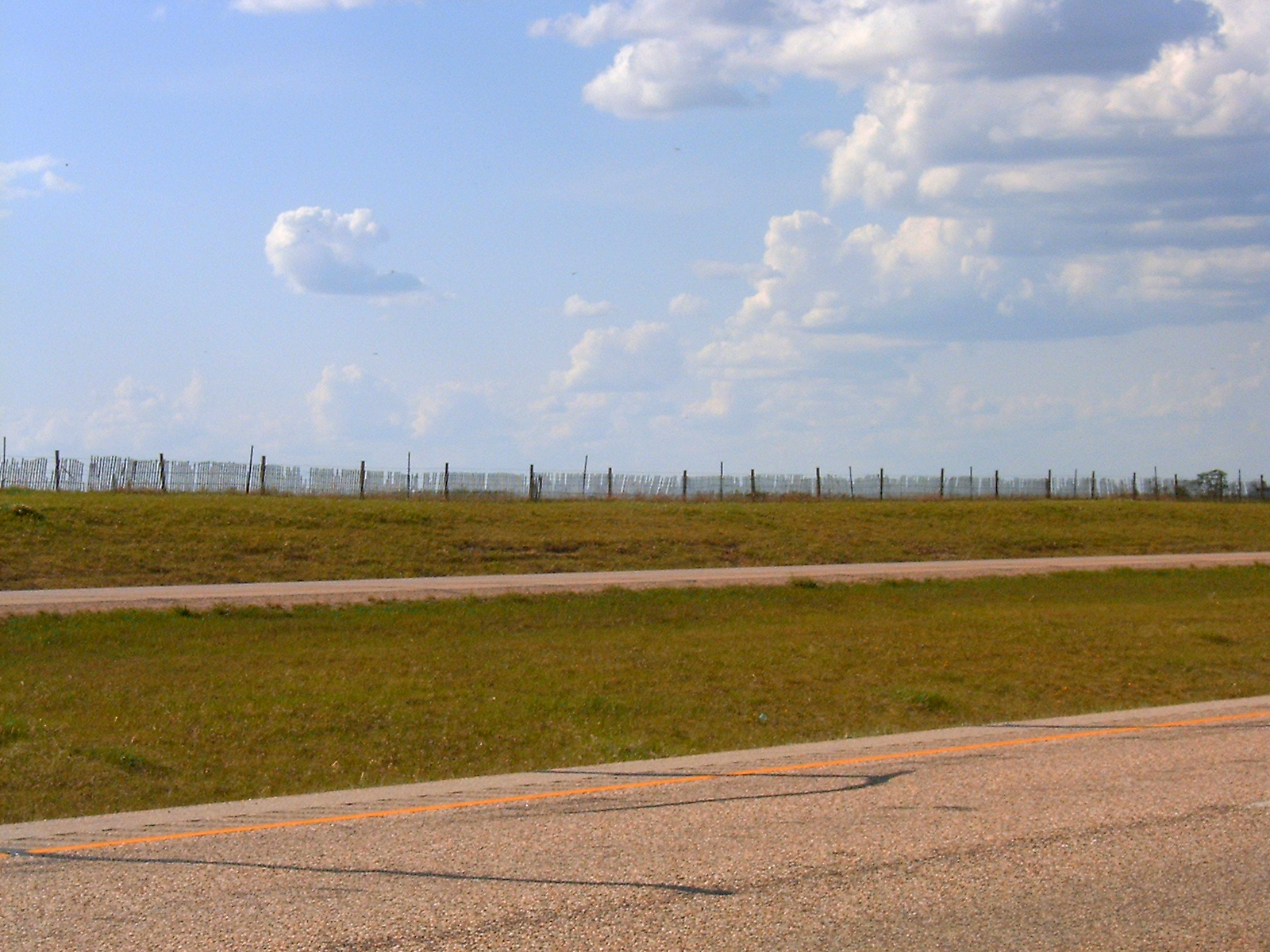
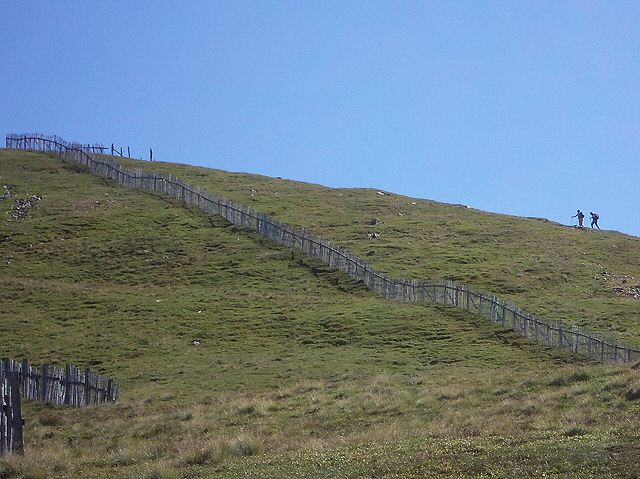
Because the drift forms downwind of the fence and extends a long way, a fence placed at the edge of the road simply deposits the snow on the road. The fence has to be set back far enough that the whole length of the drift fits between it and the carriageway.
That distance is substantial – a multiple of the fence’s height – which is why snow fences stand out in fields a surprising way from the road they protect, and why farmers had to be paid or persuaded to allow them there. The fence is not protecting its own line. It is protecting something a long way behind it.
It also has to be the right side. A fence is built for a prevailing wind, and one set up for the wrong direction does nothing or makes things worse.
It Has to Stand Off the Ground
A detail that looks like sloppy installation and is deliberate.
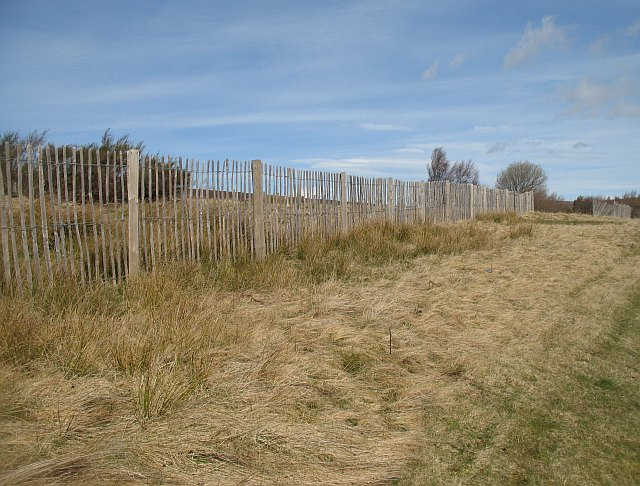
Snow fences are set with a gap at the bottom, not flush to the surface. Air accelerating through that gap keeps the ground immediately under and in front of the fence scoured clear, which stops the fence from being buried from below and keeps it working through the season.
Once a fence is buried it is just a lump in a drift. Everything about the design – the porosity, the bottom gap, the setback – is aimed at the same thing: a fence that is still a fence in February.
Wood, Wire and Then Plastic
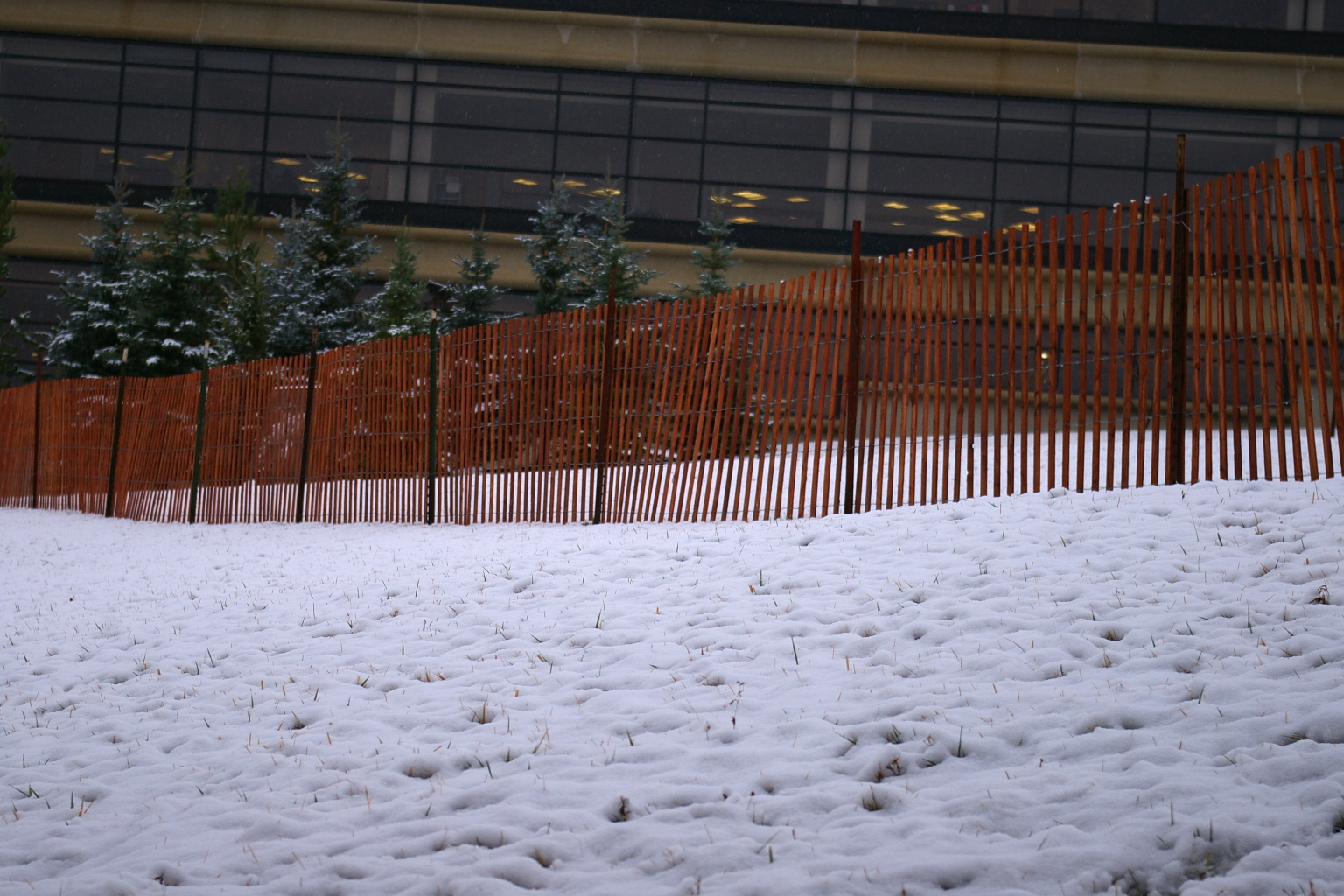
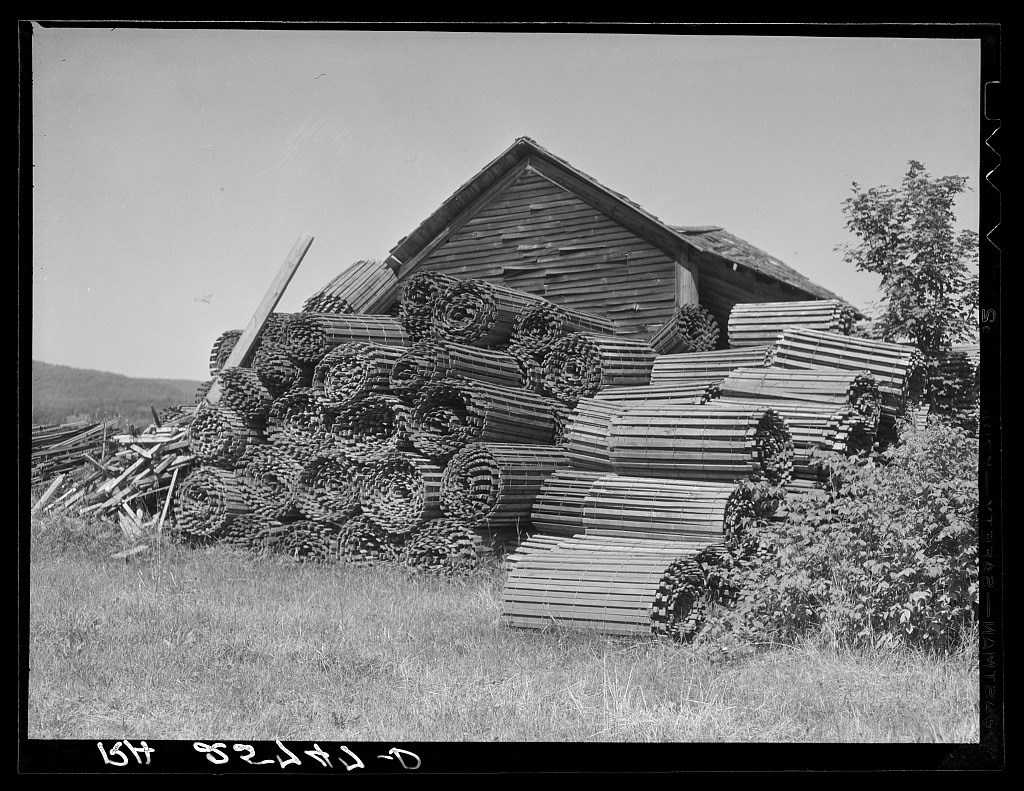
The traditional fence is thin vertical wooden slats woven onto horizontal wires, which is a clever construction for a seasonal object.
It can be rolled up. A fence like that comes off its posts in spring, rolls into a bundle, goes into a shed, and goes back out in autumn – which matters enormously, because a fence left standing all year is in the way of every field operation and weathers to nothing. The posts stay, sometimes, and the fence itself is a consumable.
Later versions used plastic mesh, which rolls more easily and does not rot, and the best permanent answer in bad locations turned out to be planting a living barrier of trees or shrubs with the same porosity – which does the same job, needs no handling, and grows.
Nobody Who Put One Up Was Thinking About Fluid Dynamics
I want to be careful not to make this sound more theoretical than it was.
The men who set these fences knew from experience how far back they had to be, which way they faced, and that the slat kind worked while a board fence made a mess. That knowledge came from watching drifts form, year after year, in the same places.
The engineering understanding came later and explained what they already knew. Which is the usual order of events with practical technology, and it is worth saying because the fence is sometimes presented as an application of theory when it is really an observation that turned out to have a theory behind it.
They Were Also Used Around Buildings
The same principle got applied at a much smaller scale.
A length of snow fence set upwind of a door, a lane, a gate or a stock tank keeps that spot clear by making the snow drop short of it. Farmyards were laid out with that in mind, and temporary fences went up each autumn exactly where last winter’s drift had been a nuisance.
Which means the fences were also a record. A farm’s snow fences, set in the same places every year, marked the farm’s known drift lines as accurately as any survey – and that information lived in one person’s head and disappeared when they did.
Then the Snowplough Got Better, and the Fence Stayed
This is one of the few things in these pieces that did not go obsolete.
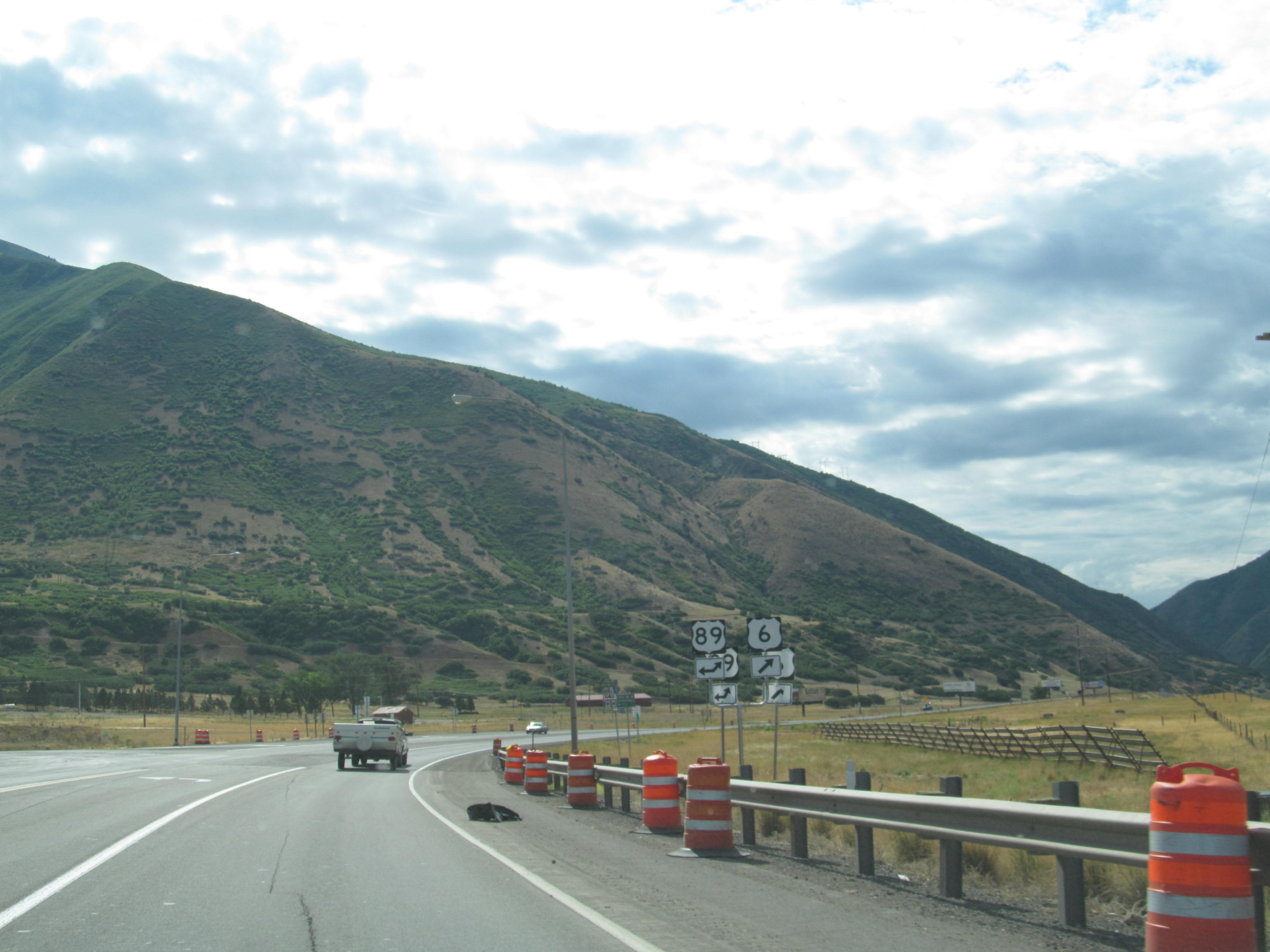
Mechanical snow clearing got vastly better, and that reduced the dependence on fences. But ploughing a drift is a cost every time it forms, while a fence that stops the drift from forming is a cost once. The arithmetic still favours the fence in open country, and so snow fences are still installed, still in the familiar slat or mesh form, still set well back from the road and still porous.
What changed is that they stopped being a farmer’s own improvisation and became a designed and specified piece of highway infrastructure, with the porosity, the height and the setback calculated rather than guessed.
What the Fence Taught Me
The reason I keep coming back to this object is that it is a complete inversion of the obvious solution.
The obvious solution to snow blowing onto a road is a wall at the road. That is worse than nothing: it buries itself, concentrates the drift and puts it in the wrong place. The actual solution is a deliberately leaky fence a long way upwind, whose job is to make the snow fall in a field where nobody minds.
You do not fight the wind. You take enough energy out of it that it puts down what it is carrying before it gets where you care about. That is the entire idea, it requires no power and no moving parts, and the people who worked it out did so by looking at where the drifts were and moving the fence until they were somewhere else.
Like our content? Follow us for more.