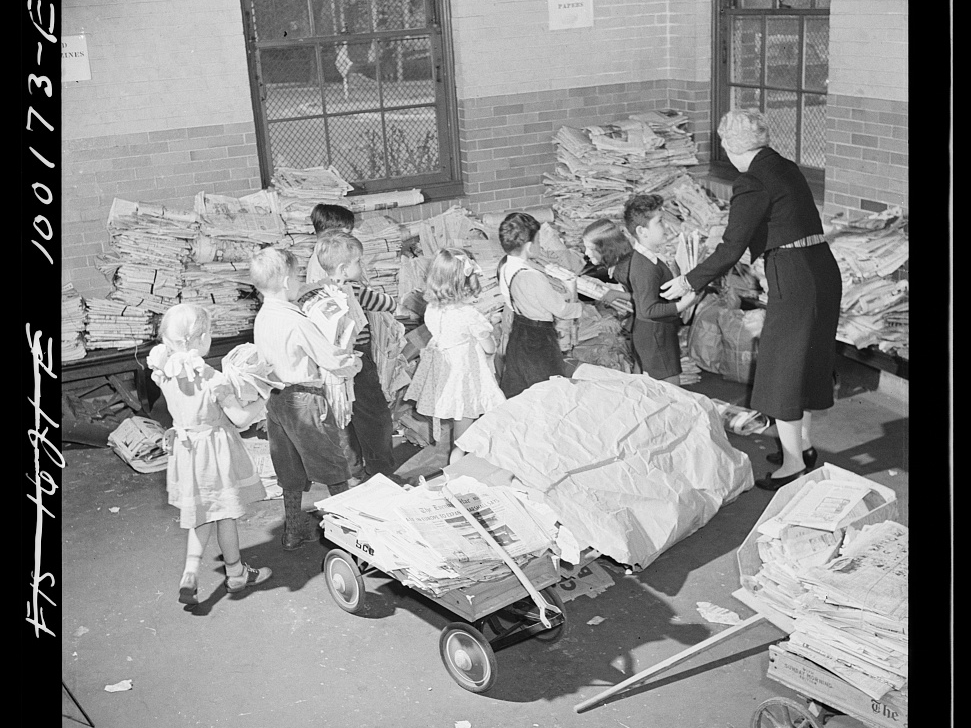
The paper drive was announced at school on a Monday and ran for two weeks, and for those two weeks every child in the building became a collector. You went door to door asking for old newspapers, you dragged them home in a wagon, and you stacked them in the schoolyard where somebody weighed them and wrote a number against your class. In 1964 that was a completely ordinary way for a school to raise money, and the mechanics of it are more interesting than the memory.
The School Was Selling a Commodity, Not Asking for Donations
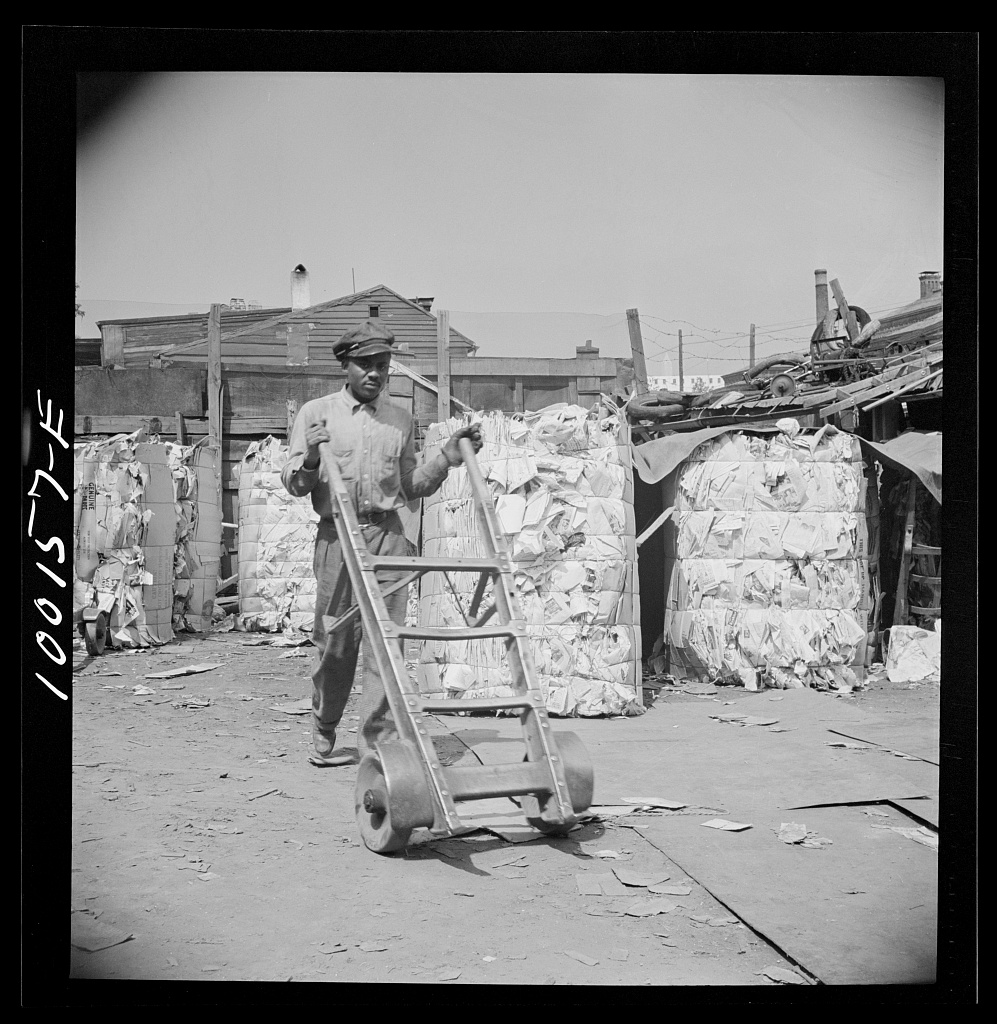
Start with the economics, because the drive is usually remembered as a charity appeal and it was not one. Waste paper had a market price, and a mill or a dealer would pay for it by weight.
So the school was not asking for money. It was asking for raw material it could sell, which is a completely different transaction – the neighbour handing over a stack of newspapers was giving away something they would otherwise have thrown out, and the school was converting that into cash at the going rate.
Like our content? Follow us for more.
Weight Was the Only Thing That Counted
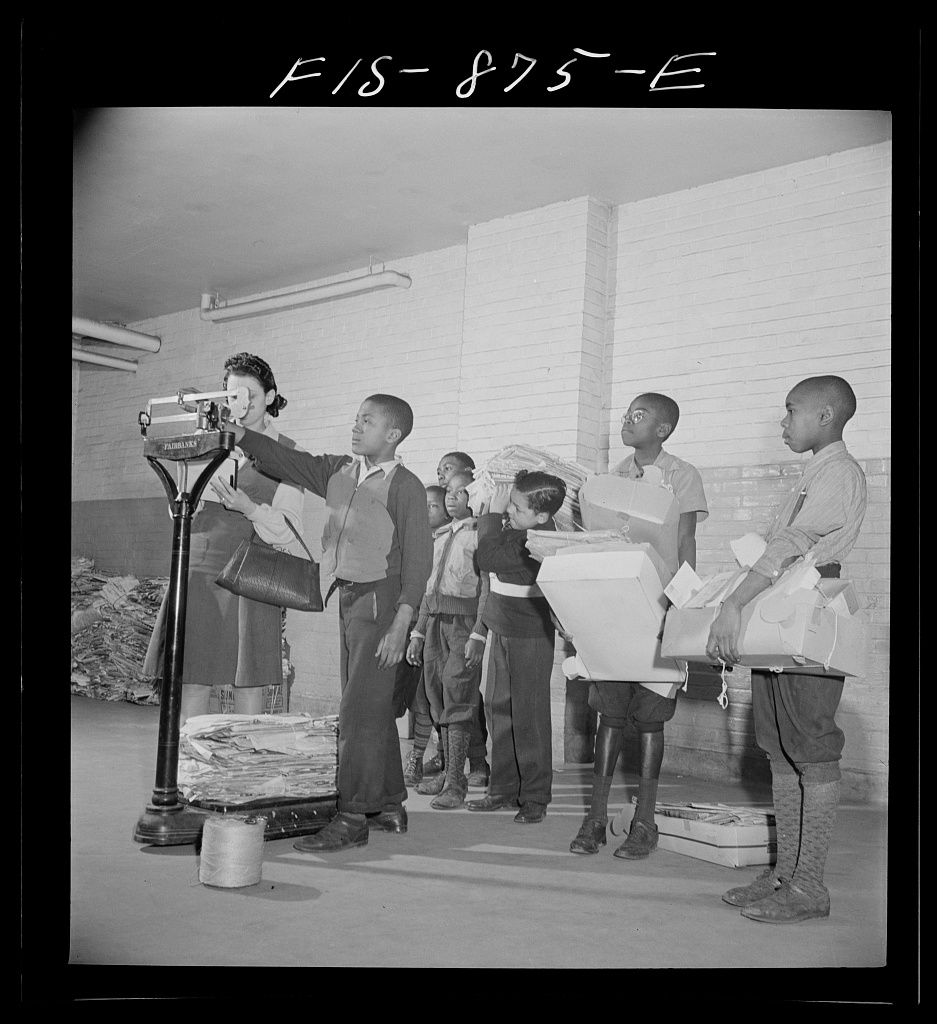
Nothing about the quality, the age or the content of the paper mattered. It was bought by the pound, so the entire effort was a mass-collection problem.
That single fact explains every strange behaviour the drive produced. A child who understood it stopped thinking about how many houses they had visited and started thinking about how to get the heaviest possible paper into the yard – which is a genuinely useful piece of reasoning for a nine-year-old to arrive at on their own.
Newspapers Were Heavy and Everybody Had Them
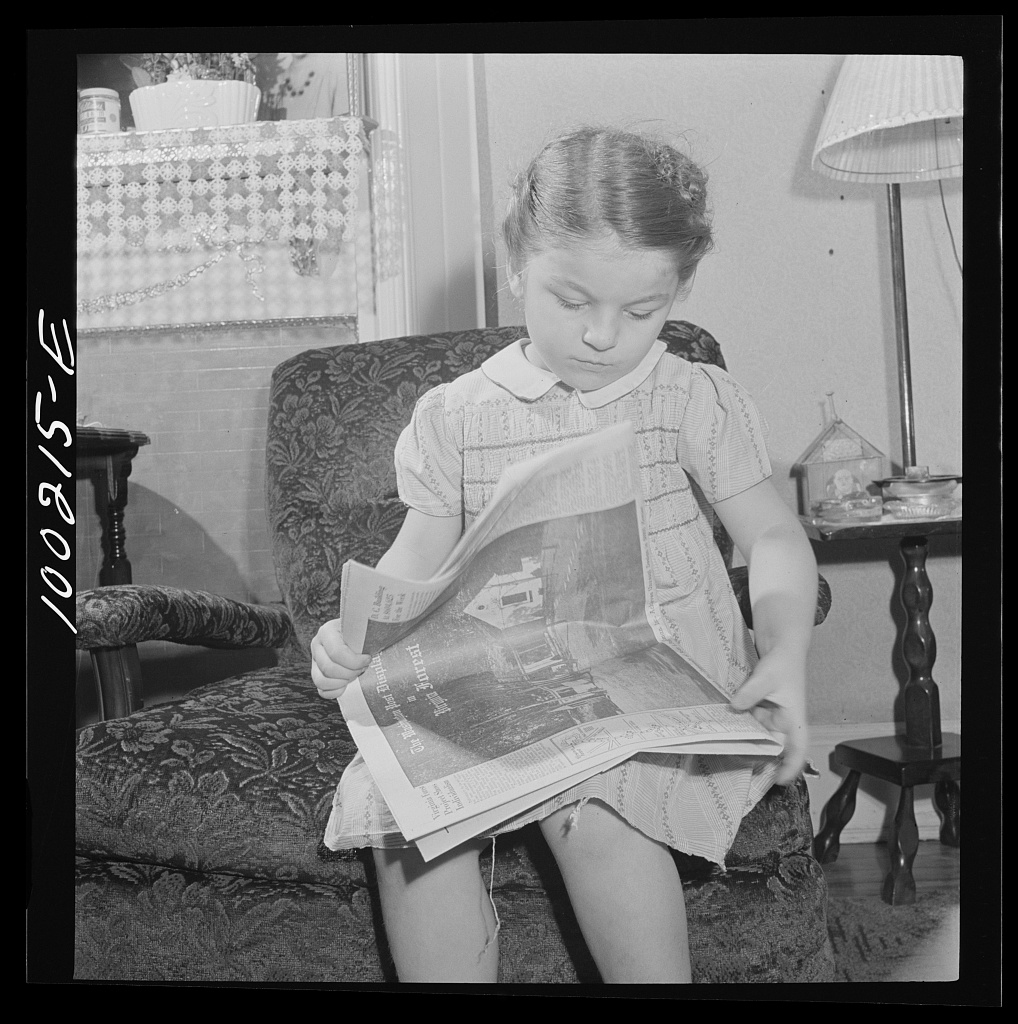
Paper is dense when stacked flat, and a household in 1964 generated a newspaper a day with no way to dispose of it except burning it or throwing it out.
Which means every house on every street had a pile of exactly the right commodity sitting in a cellar or a porch, accumulating, unwanted. The drive worked because it tapped a resource that existed in quantity in every single home and cost its owner nothing to give away.
Tying the Bundles Was the Skill
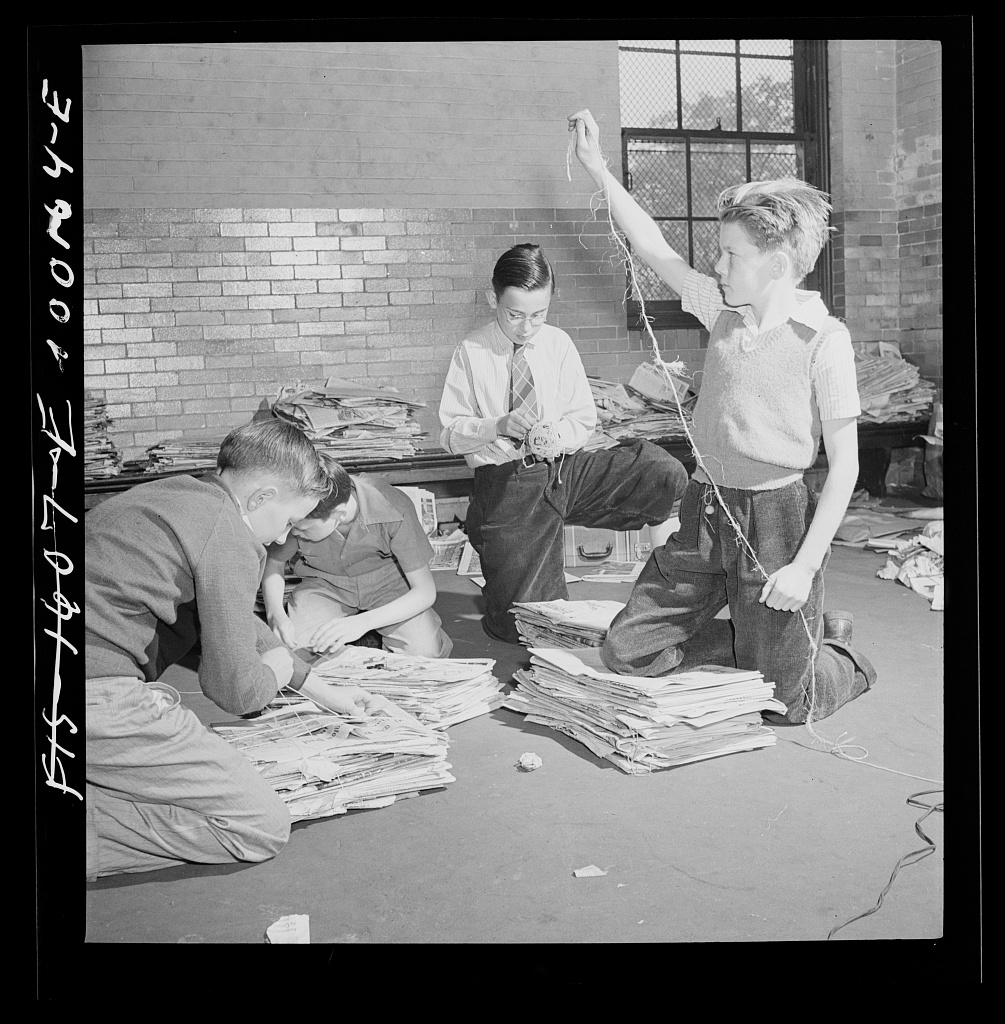
Loose paper is unmanageable, unweighable and will not stack, so papers had to be tied into tight flat bundles with twine.
Doing that well is a real knack – squaring the edges, compressing the stack with a knee, getting the string tight enough that the bundle holds when lifted by it. A badly tied bundle burst on the way, which meant collecting it again off the sidewalk, and everybody learned the technique in about three attempts.
The Wagon Was the Limiting Factor
A child can carry one bundle. A wagon holds eight or ten, which is the difference between a street and a block.
So the equipment determined the range, and families with a good wagon collected more than families without one. Children borrowed, shared and queued for wagons, and the ones with none made multiple short trips – which meant the geography of what any individual child could cover was set by the transport available to them.
Competition Between Classes Was the Engine
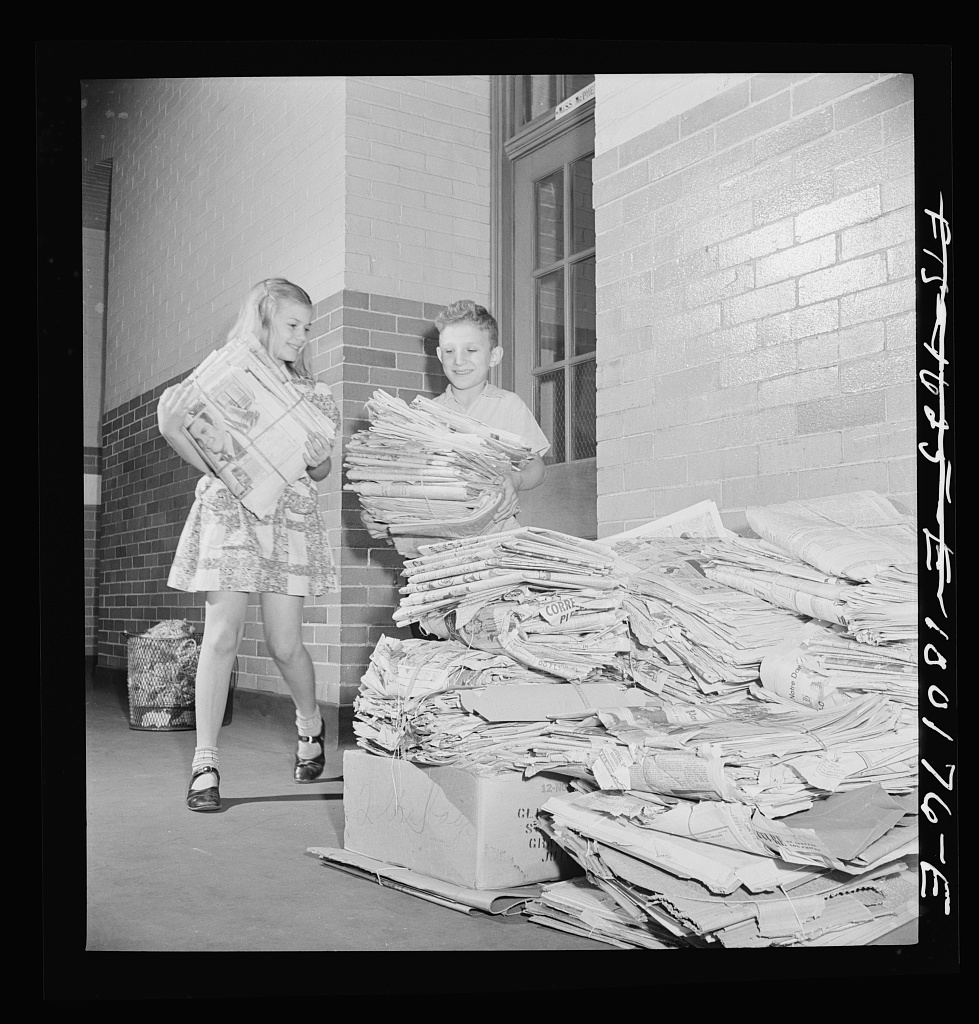
The drive was run as a contest, with weights posted by classroom, and that scoreboard was doing almost all of the motivational work.
A child asked to help the school is mildly motivated. A child whose class is forty pounds behind the class next door is extremely motivated. The competitive frame turned a fundraising exercise into something children pursued aggressively on their own time, which is why these drives collected the quantities they did.
Children Negotiated With Adults All Over the Neighbourhood
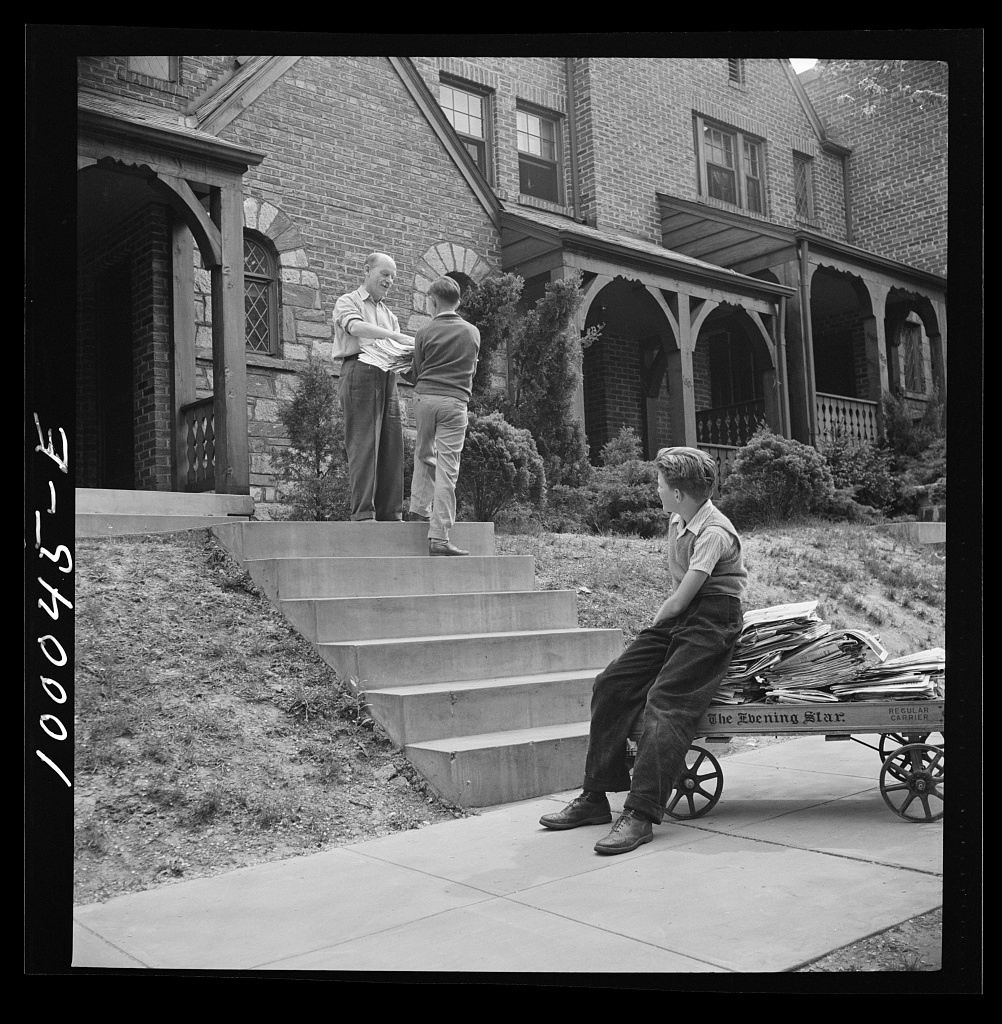
The actual work was knocking on doors and asking, which meant a child conducting dozens of short transactions with adults they did not know well.
That is the part that would be unusual now and it was routine then. A child explained what the drive was for, asked whether there was any paper, carried it out of a cellar if there was, said thank you, and moved on – repeated forty or fifty times over a fortnight.
Regular Customers Emerged Within Days
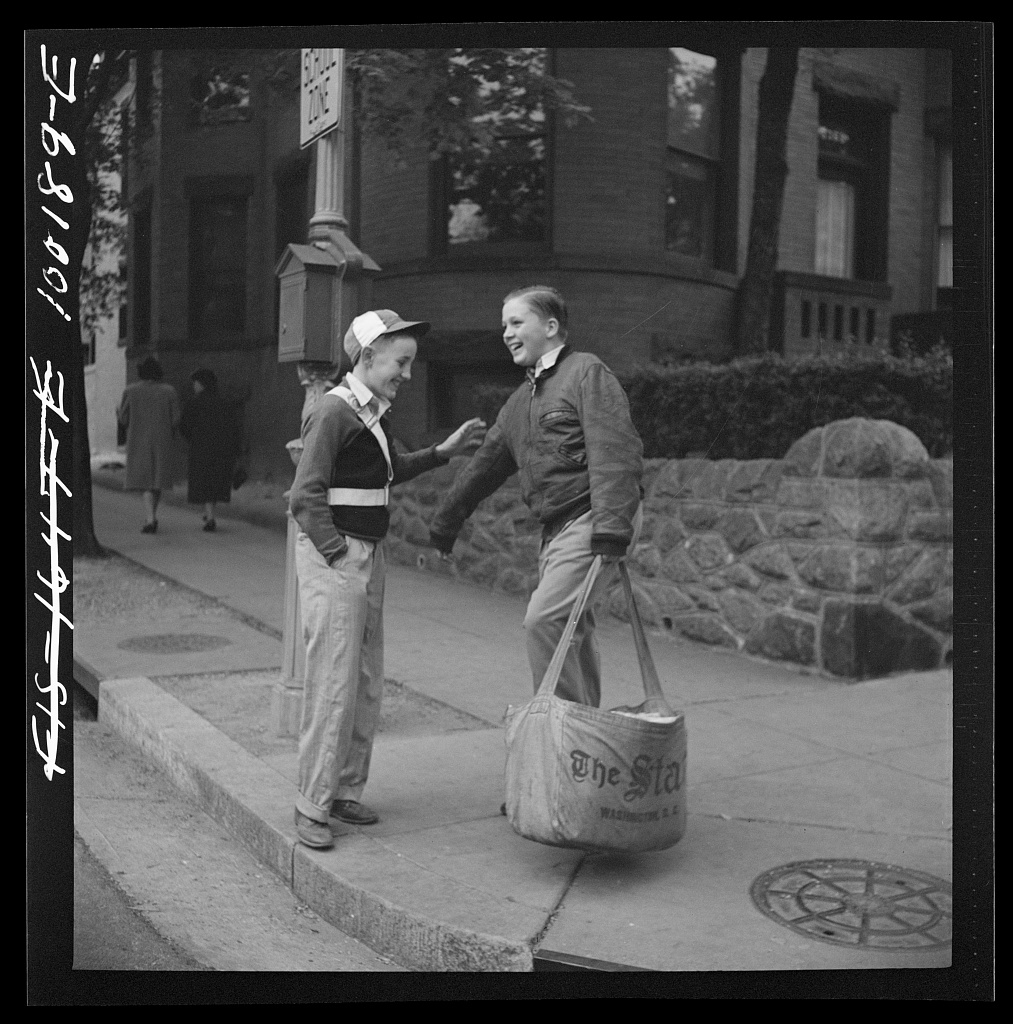
Houses that gave once gave again, so children quickly learned which doors were worth revisiting and built informal routes.
Within a week the neighbourhood had sorted itself into a map that existed only in children’s heads: this house saves them for you, this one never has any, this one has a cellar full going back years. Which is the same local knowledge a paper route or a delivery round produced, built in a fortnight instead of a year.
The Big Score Was a Business or a Garage
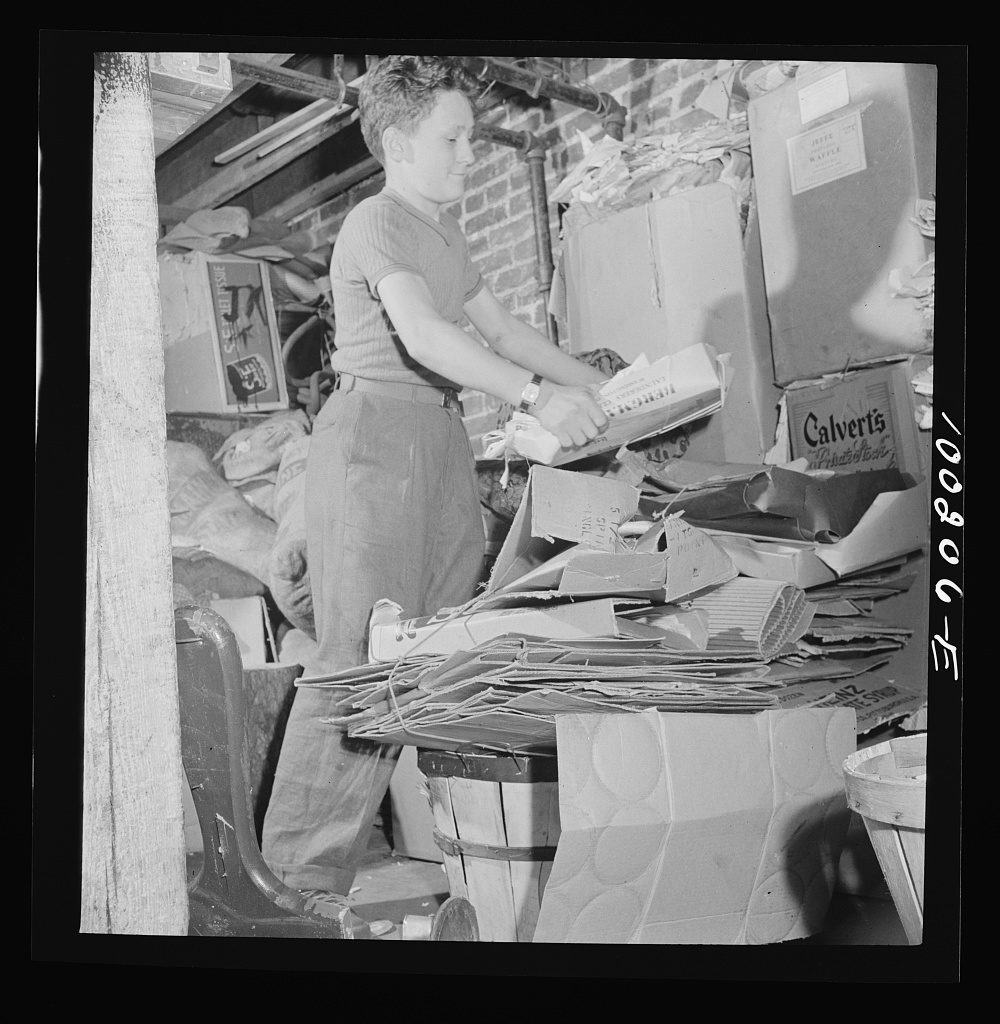
A house yields a stack. A shop, an office or somebody’s garage full of decades of accumulated paper yields a load – and finding one was the equivalent of winning.
So the clever children stopped working houses and started asking at businesses, which is a step up in sophistication: fewer approaches, far larger returns, and a conversation with somebody who had a genuine disposal problem you were offering to solve for free.
Rain Was the Catastrophe
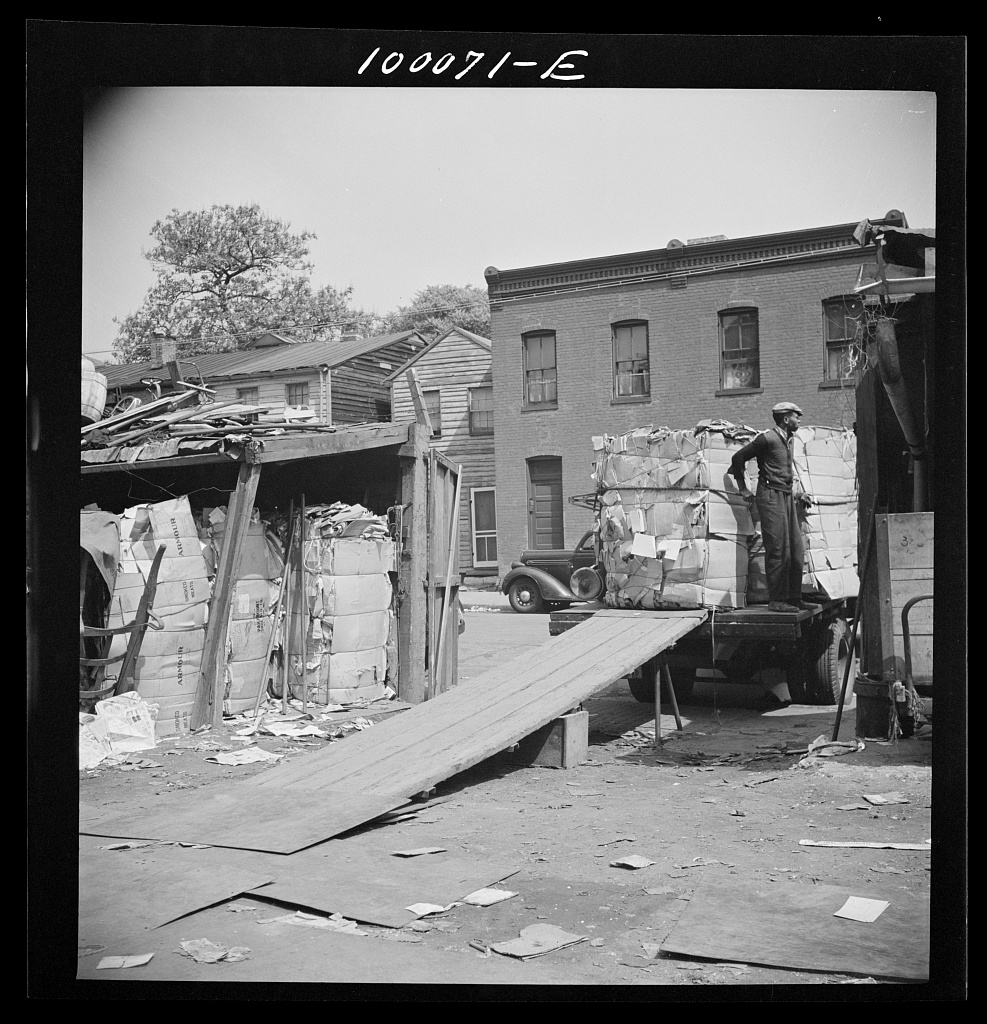
Wet paper is heavier, which sounds like an advantage and is not, because wet paper is also worthless to a mill and the dealer knew it.
So a drive caught by rain lost its stacks, and the schoolyard pile had to be covered, sheltered or moved. Weather could wipe out a week of a hundred children’s work in an afternoon, and nothing about the arrangement offered any protection against it.
The Schoolyard Pile Was the Visible Result
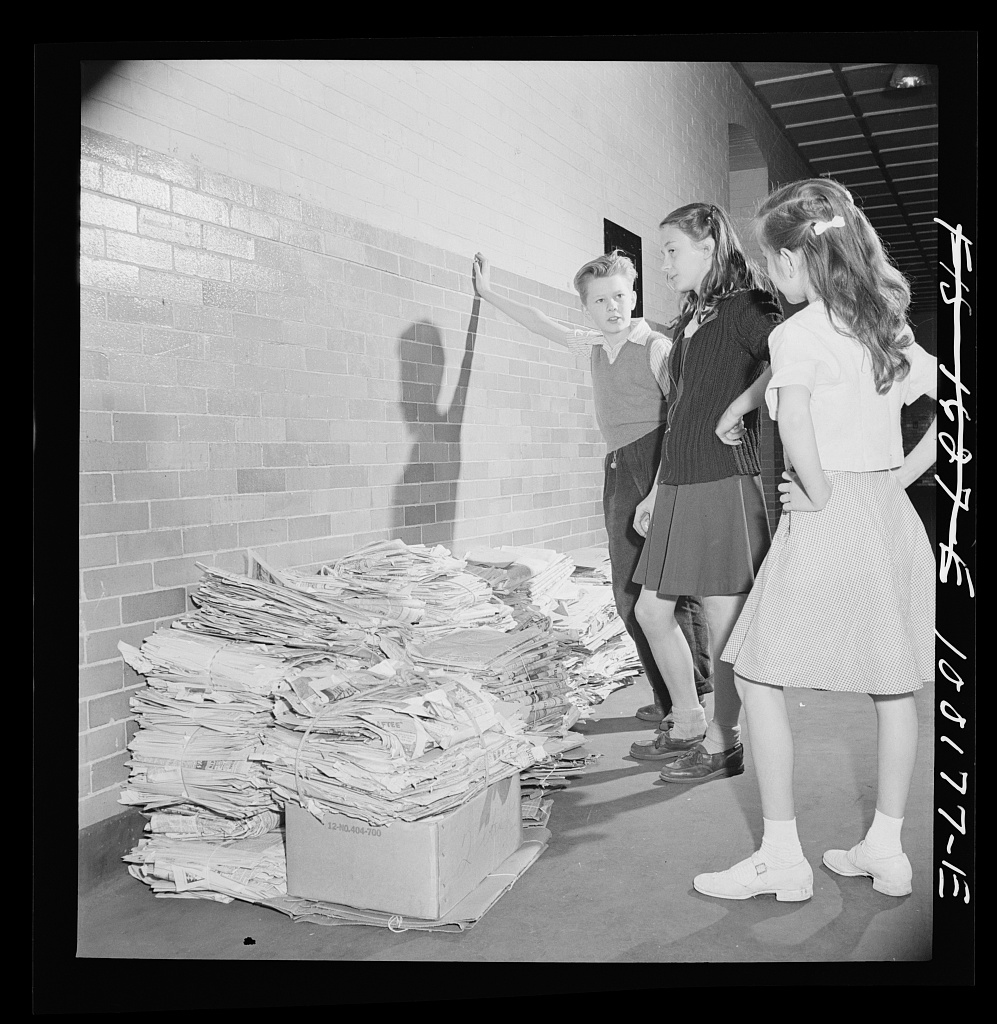
Everything collected ended up in one place, growing daily into a wall of bundles that the whole school walked past.
That visibility mattered more than any announcement. A pile you can see getting bigger is a progress bar, and the children adding to it could measure the collective effort directly – which is a far better feedback mechanism than a figure read out at assembly.
The Money Bought Something Specific
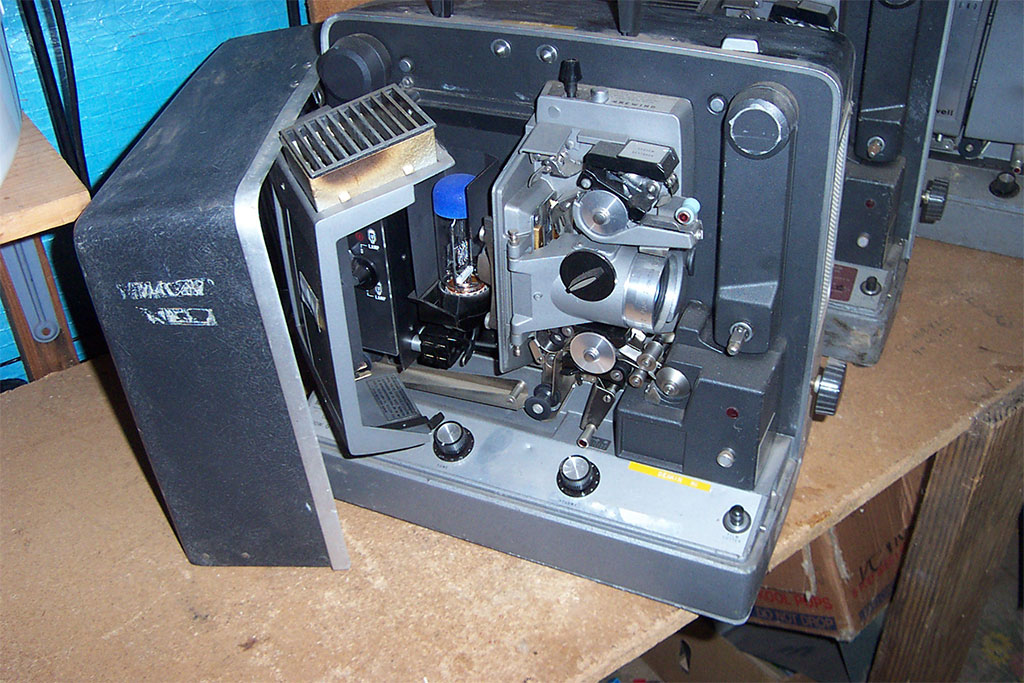
The proceeds were almost always earmarked for an object or a trip rather than absorbed into general funds, and that was deliberate.
Nobody collects paper for a budget line. A named target – equipment, a film projector, a band instrument, a bus for a trip – gives the effort a destination, which is the same mechanism that made trading stamp catalogues work. The reward had to be nameable or the drive would not have run.
Magazines Were Worth Less and Everybody Learned It
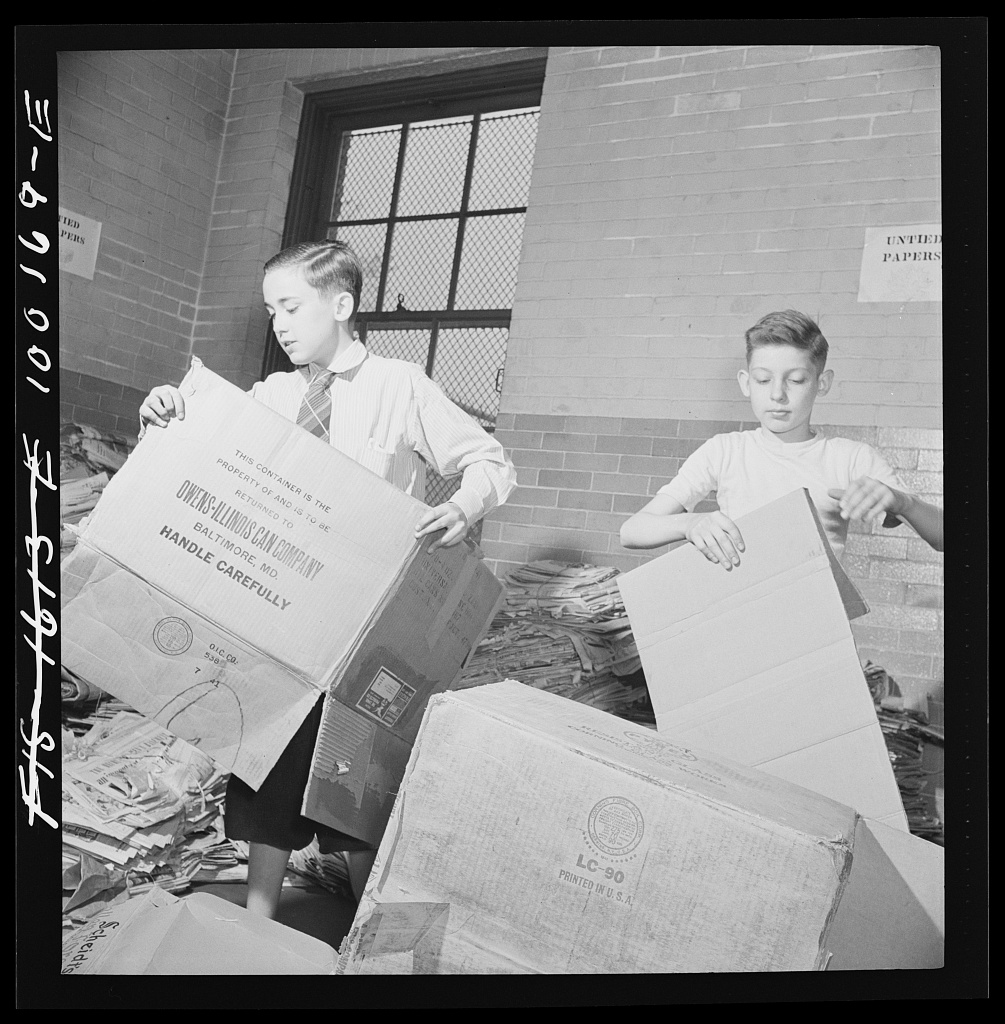
Not all paper was equal to a dealer, and children worked that out quickly even when nobody had explained it.
Glossy magazines, coated stock and cardboard were handled differently from plain newsprint, and a yard full of mixed material was worth less per pound than a yard full of clean newspaper. Which meant the drive quietly taught a fairly sophisticated lesson about grading: that the same weight of two similar-looking things can be worth different amounts, and that sorting at the source is where the value is added.
Wartime Drives Were the Origin of the Habit
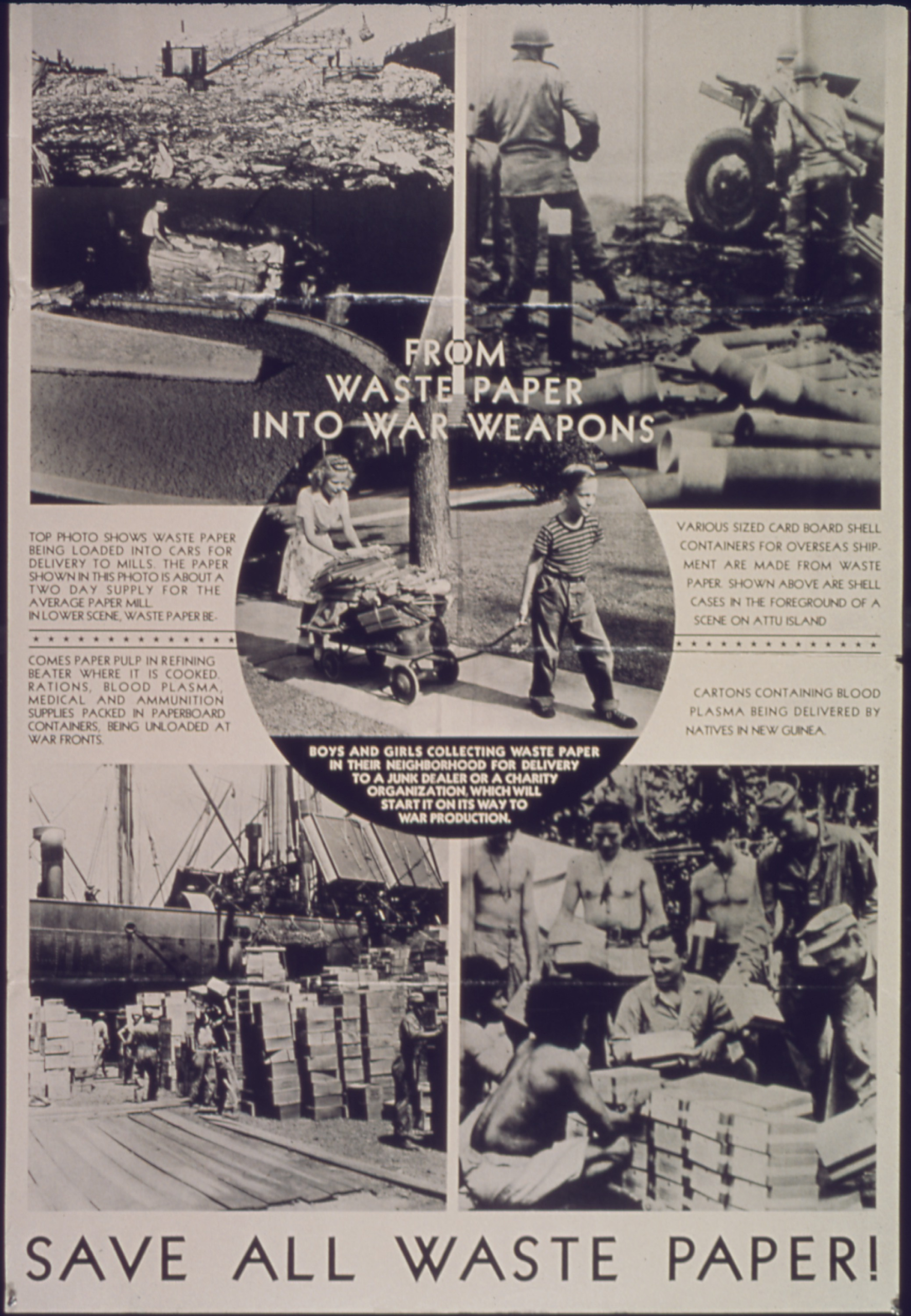
The practice did not start as a fundraiser. Organised collection of paper, metal and other materials by schools and children was a wartime mobilisation, and it continued afterwards in a changed form.
That history is why the machinery existed – schools already knew how to organise a drive, the public already understood that children would come to the door asking, and the collection networks were already in place. The fundraiser is a peacetime reuse of an apparatus built for something else.
The Paper Really Was Recycled, Decades Before the Word
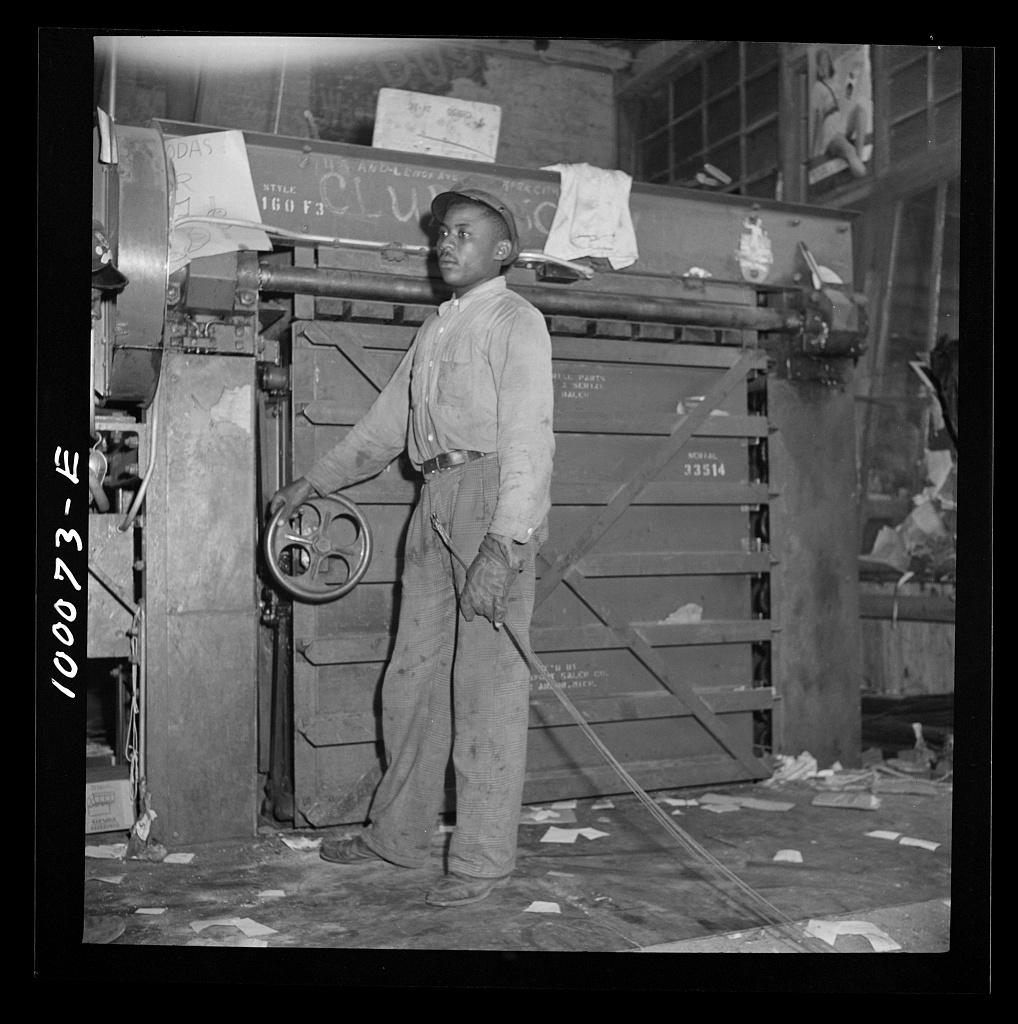
It is worth stating plainly that this was material recovery, and it was ordinary, universal and entirely unsentimental about itself.
Nobody involved described it as environmental. The paper was collected because it was worth money, sold because a mill wanted fibre, and reused because reusing it was cheaper than making new – which is the same economic logic that drives recycling now, operating thirty years before anybody framed it as a virtue.
Then Municipal Collection Took the Supply Away
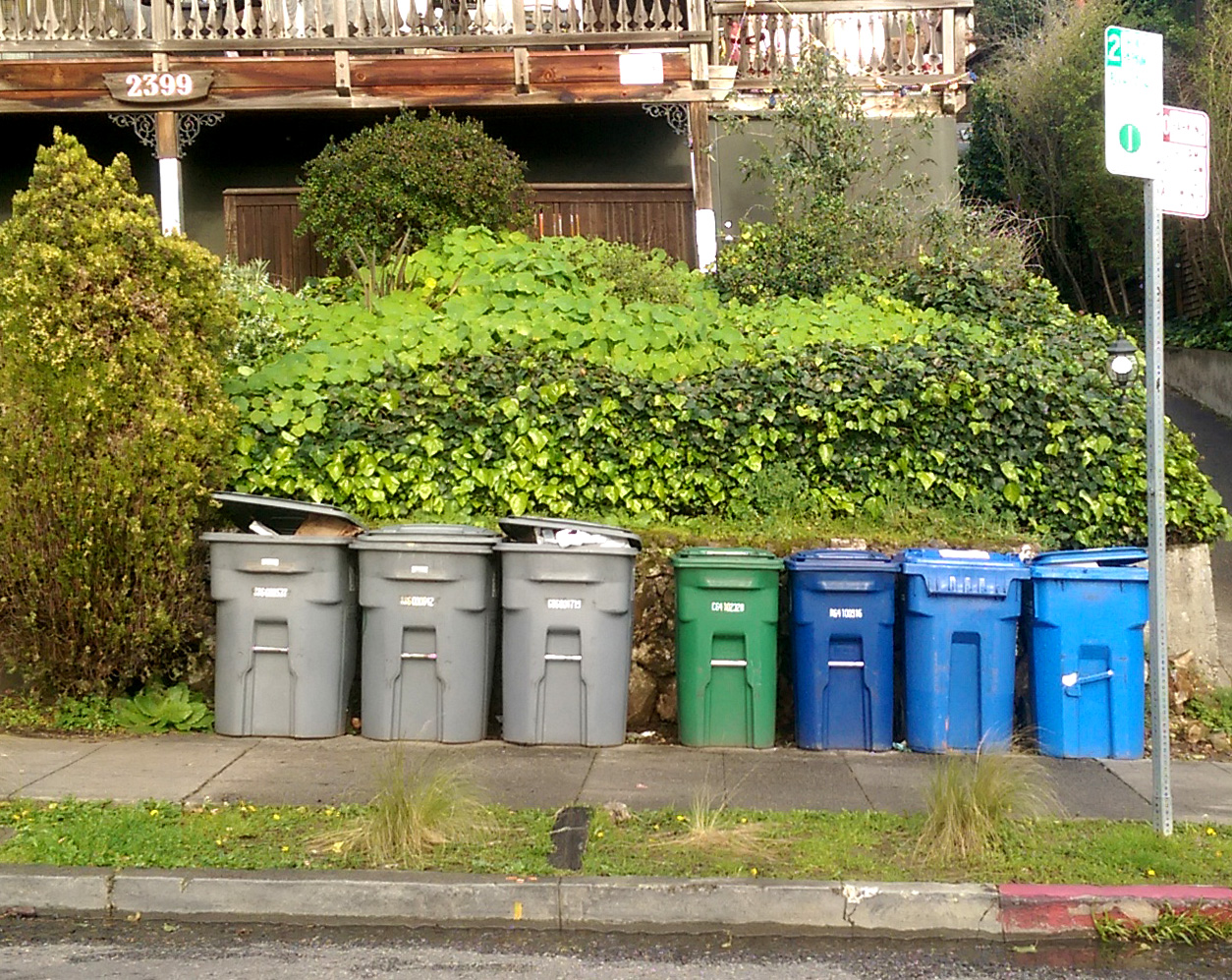
The decisive change is the obvious one in hindsight. Once a town collected paper from every kerb on a schedule, the resource the drive depended on stopped being available.
A household with a recycling collection has nowhere for a stack to accumulate, so there is nothing in the cellar for a child to ask for. The drive did not become less popular – its raw material was intercepted upstream, by a service doing the same job more thoroughly.
And the Price Collapsed Along With the Scarcity
The second half is the market. When recovered paper is collected everywhere by machine, its price per pound falls, and a fundraising method that depends on selling a commodity dies when the commodity gets cheap.
So the paper drive ended twice over – no supply, and no margin. What disappeared with it is a specific education that nobody designed and everybody got: that a worthless thing can have a price, that the price is per pound and not per visit, that a business is worth ten houses, that a bundle has to be tied properly or you carry it twice, and that forty short conversations with strangers is a thing a nine-year-old can simply do. None of that was in the curriculum. It was in the schoolyard, stacked up against the wall where everybody could see how much there was.
Like our content? Follow us for more.