In 1964 the whole afternoon depended on the snow being within a narrow band of conditions, and most snowfalls were not. Snow needs a small amount of liquid water between the crystals to bind, which means it has to be close to melting – and snow that is too cold will not compact however hard anybody presses. Children knew the test by hand: one handful squeezed once told you whether the day was possible, and a great many promising snowfalls were written off inside thirty seconds. Here are sixteen things every kid remembers about building a snowman in 1964, and why winters no longer line up for it.
1. The Snow Had to Be Exactly Right and Usually Was Not

Only a narrow band of conditions produces snow that will hold together, and most snowfalls fell outside it.
The physics decided everything. Snow needs a small amount of liquid water between the crystals to bind, which means it has to be close to melting, and snow that is too cold simply will not compact however hard anybody presses.
Children learned the test by hand. A handful squeezed once told you whether the whole afternoon was possible, and a great many promising snowfalls were written off inside thirty seconds by somebody who had done that.
Like our content? Follow us for more.
2. The Right Snow Arrived at the Wrong Time
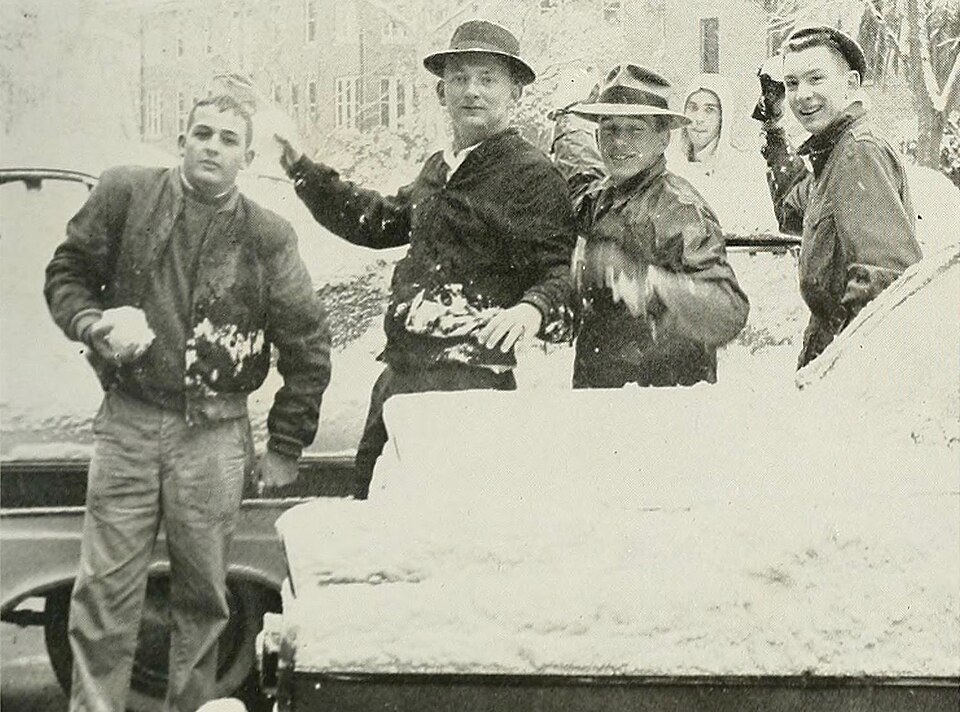
Usable conditions frequently occurred on a school day, or late in the afternoon, or while everybody was somewhere else.
The timing was the real constraint. Snow that will bind does not stay in that state for long, which means the window was measured in hours, and the window did not consult anybody’s schedule.
That produced a particular urgency. Children who came home to good snow went out immediately, in whatever they were wearing, because the alternative was finding it unusable the following morning.
3. You Rolled It Rather Than Piled It
The method was to start with a handful and roll it across the ground until it picked up everything in its path.
The technique works because of accretion rather than compaction. A ball rolled over snow that will bind gathers a layer with every revolution, which means the structure builds itself and nobody has to lift anything until the end.
Nobody taught this and everybody did it. The rolling method was arrived at independently by every child who ever tried, because piling snow by hand produces something that falls apart immediately.
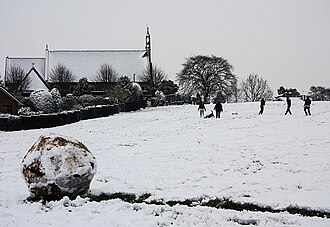
The ground underneath mattered as much as the snow on top of it. A lawn gave the ball something to pick up and a path or a driveway gave it nothing, which meant the whole operation had to happen on grass whatever anybody would have preferred, and a garden with very little lawn in it effectively could not host one at all.
4. It Got Too Heavy to Move Long Before It Got Big Enough
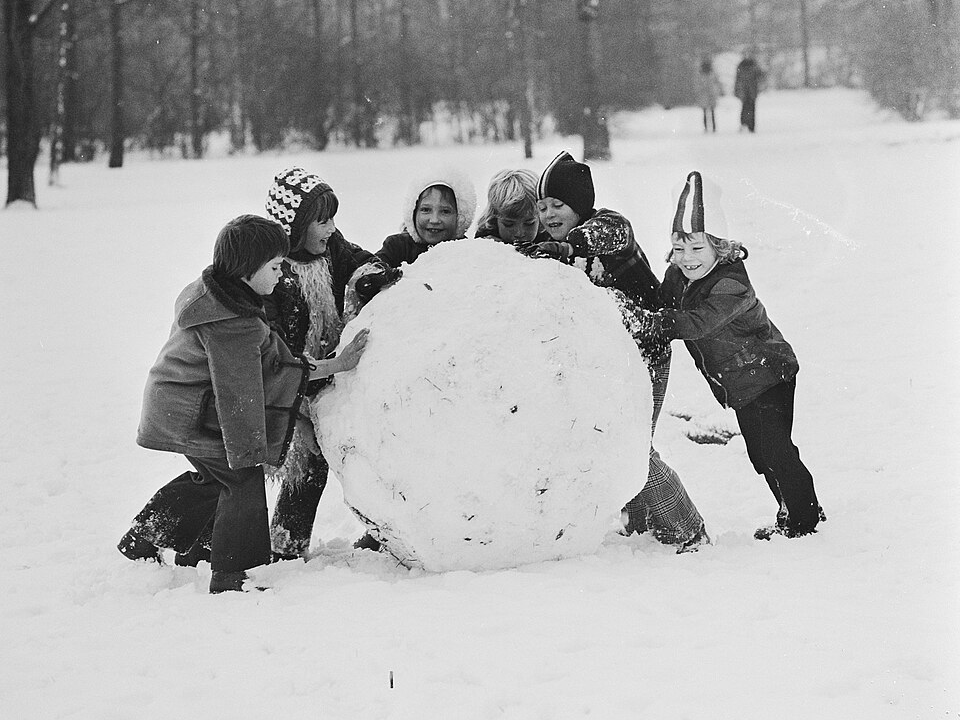
Rolling works until the mass exceeds what children can push, which happens sooner than anybody expects.
The problem is geometric and brutal. Doubling the diameter multiplies the weight several times over, which means the thing becomes immovable very suddenly, at whatever point on the lawn it happened to be.
So the location was decided by the snow. Nobody chose where these structures went; they stopped where the first ball stopped, which is why so many of them ended up in the middle of a lawn or against a fence.
5. Rolling It Stripped the Lawn
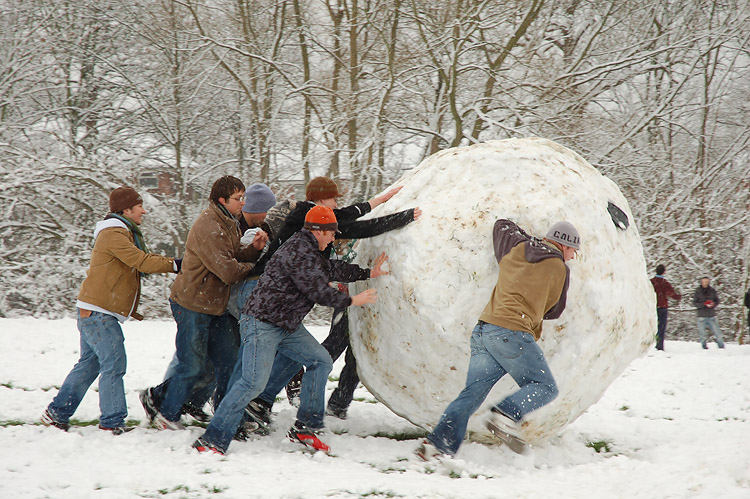
A ball rolled across grass takes the snow and whatever is immediately underneath it, leaving a visible track.
The damage was predictable and unregarded. A clean green stripe across a white lawn, several inches wide and following a wandering path, is the signature of this activity and it was left behind in every garden where it happened.
Adults minded in spring rather than in winter. The complaint about the state of the grass arrived months later, by which point nobody connected it to an afternoon in January.
6. Getting the Second Part On Top Was the Only Hard Part
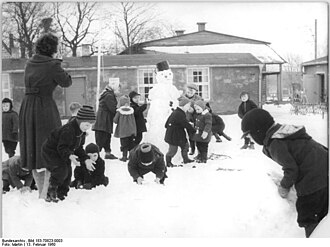
Lifting a heavy sphere onto another one, without either breaking, was the single genuine difficulty of the whole operation.
The problem was grip and purchase and nothing else. Two children can lift what one cannot, and a ball lifted badly splits along whatever line it was rolled on, which meant the critical moment was the one requiring the most cooperation.
A proportion of these projects ended there. The thing broke, there was no repairing it, and the afternoon concluded with two unequal lumps and an argument about whose fault it had been.
7. The Third Part Was Always Too Small

By the time children got to the top section everybody was tired, and the result was visibly out of proportion.
The decline in effort was consistent across the country. Enthusiasm is highest at the start and the smallest component was built last, which produced a characteristic shape with a head too small for the body underneath it.
Nobody ever corrected it. Rebuilding the top section was theoretically simple and effectively never happened, because by that point the construction phase was over as far as everybody was concerned.
8. The Face Came Out of the House and Was Not Authorised

Every component of the face was a household item taken outside without asking, and most of them were not returned.
The raiding was the second phase of the operation. A structure without a face is unfinished, the only available materials were indoors, and children of that period did not regard asking as a necessary step.
The losses were discovered later. A household missing several small items in February had generally lost them to a structure in the garden, and nobody made the connection until it melted.
9. Something Was Always Borrowed From a Person
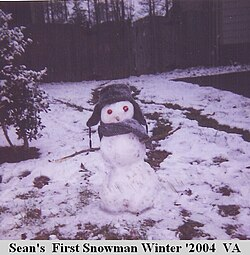
A scarf, a hat or something similar was removed from a household member’s supply and left outside for days.
The appropriation followed the same logic as everything else. The structure needed finishing, the items existed, and the fact that somebody would want theirs back in the morning was not a consideration at the time.
That produced the standard confrontation. An adult looking for something they needed, in weather that required it, discovering it in a garden, is a scene almost every household of the period staged at least once.
The gloves were finished within twenty minutes. Whatever a child had on their hands was soaked through almost immediately, and the standard response was to carry on without them, which is why so many people remember the specific state of their hands at the end of one of these afternoons rather than the structure itself.
10. The Height Was Measured Against the Children
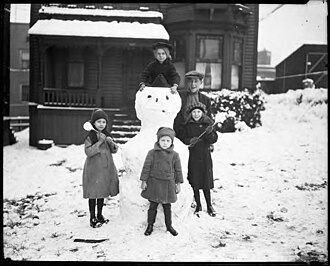
Nobody had a tape measure and nobody needed one, because the comparison was always with whoever had built it.
The reference was the only one available. A structure taller than the child who made it was a success and one that came up to their shoulder was not, and that judgement was made by standing next to it.
The claims grew afterwards. A structure remembered as taller than an adult was almost certainly not, and the figure has increased steadily over the sixty years since without anybody having had any evidence.
11. Everybody in the Street Built One and They Were Compared
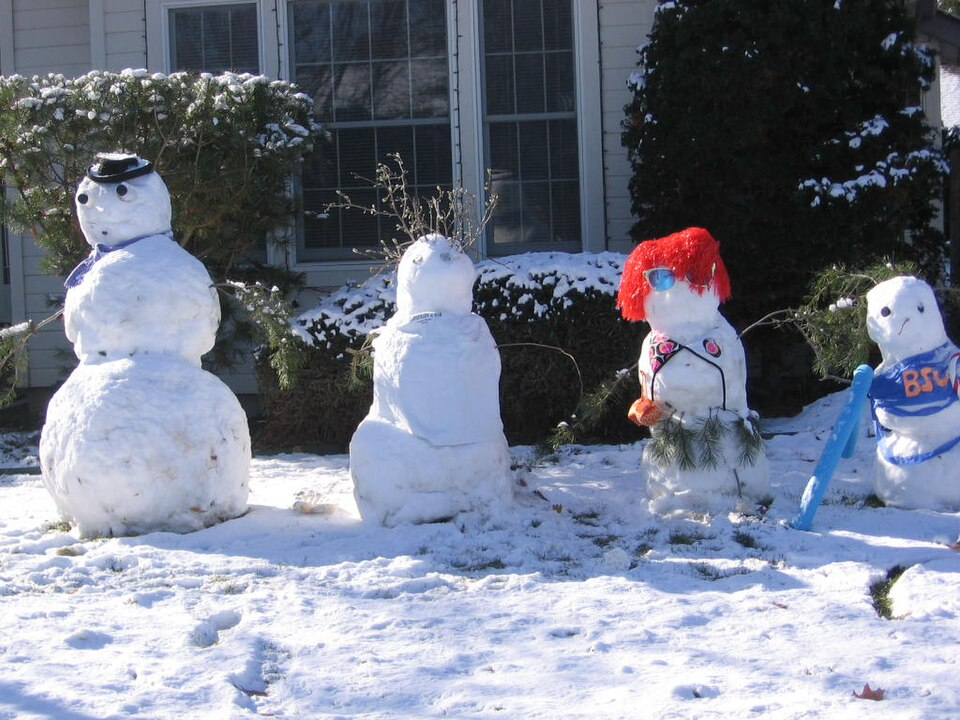
A snowfall produced a row of these structures along a street, which were assessed by every child who passed.
The comparison was immediate and unavoidable. Several structures of the same kind, built on the same afternoon from the same material, visible from the pavement, constitute a competition whether anybody declared one or not.
The rankings were discussed at length. Which one was biggest, best and most ridiculous was settled among the children of a street within a day and was never communicated to any adult.
12. They Were Never Photographed
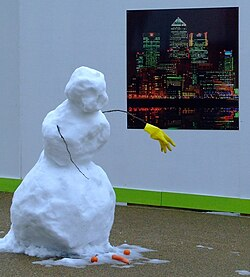
A structure that existed for three days in 1964 was almost never recorded, because photographing it required a decision nobody made.
The absence is about cost and effort. Film was finite and expensive, a camera had to be fetched and loaded, and nothing in the household’s thinking classified this as an occasion worth using a frame on.
That is why almost no evidence survives. A practice that happened in every garden in the country for decades left behind remarkably few pictures, and the ones that exist are generally accidental.
13. The Collapse Was Gradual and Awful to Watch
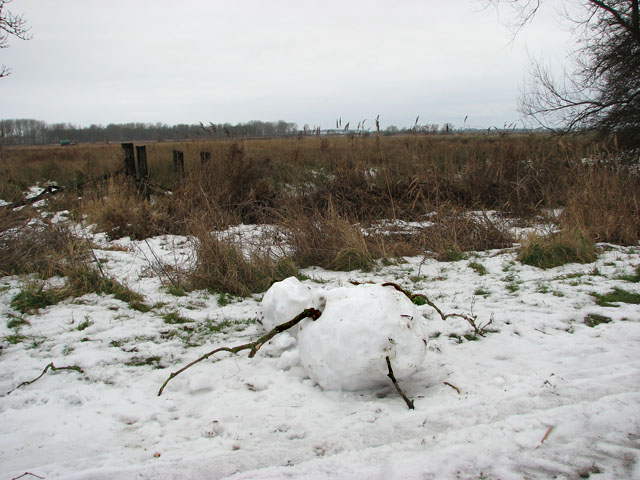
These structures did not vanish; they slumped, leaned and lost their features over several days.
The failure mode was unpleasantly slow. Melting happens unevenly, which means the whole thing settles, the head slides, the face falls out and the result is considerably worse than nothing for a day or two before it goes.
Children watched the whole process. The slow deterioration of something they had built was observed daily on the way to school, and almost everybody describes finding it genuinely dispiriting.
14. The Last Part to Go Was Always the Same
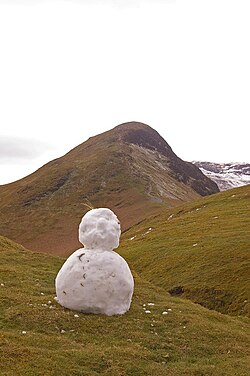
Whatever had been densest survived longest, which meant a small hard remnant sat on a lawn for days after everything else had gone.
The persistence is a function of compaction. Snow that has been rolled and compressed melts considerably more slowly than the loose snow around it, which is why the base outlasted the structure by a week.
Those remnants were strangely affecting. A grey lump on an otherwise green lawn, recognisable only to the people who had built it, is a specific and widely shared memory of the period.
What the remnant actually was also surprised people later. A base that had been rolled across a lawn contained grass, soil and whatever else had been on the ground, which is why it survived as something grey rather than white and why it left a mark on the lawn for the rest of the spring.
15. Nothing Was Ever Made of It Afterwards
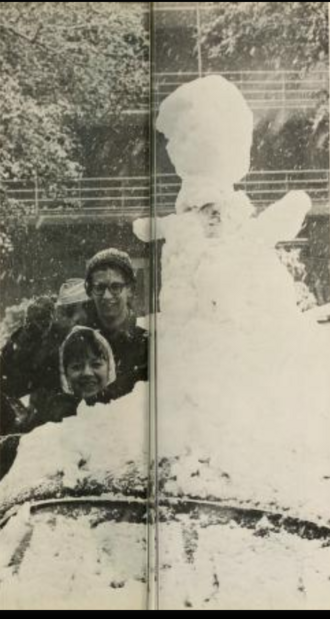
The whole project was undertaken, completed and lost with no record, no comment and no acknowledgement.
The absence of ceremony was ordinary. Children built these things for the afternoon rather than for any purpose, nobody congratulated anybody, and the structure’s disappearance was not an event.
That is what makes the memory unusual. A great many people remember building one specific example, in one particular year, in considerable detail, about which nothing was ever said by anybody at the time.
16. Then the Afternoons for It Stopped Lining Up
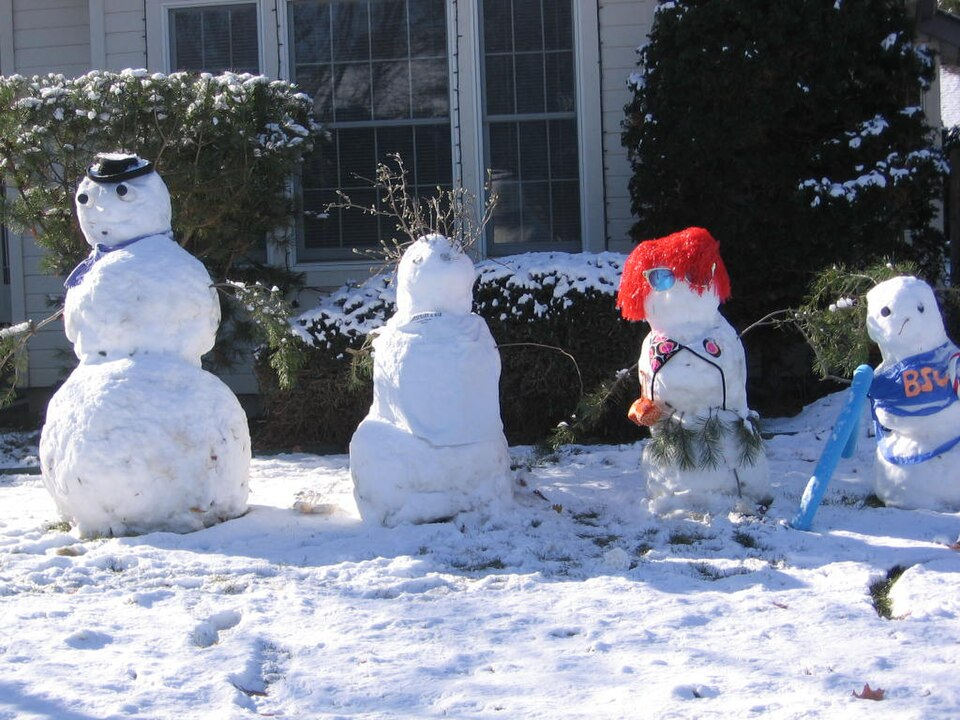
Fewer children per street, more structured time, less unsupervised outdoor play and, in many places, less reliable snow removed both the occasion and the company.
None of that is anybody’s fault and most of it is not a loss. Children are differently occupied, which is largely an improvement, and nothing here is an argument about how anybody should spend an afternoon.
What went with it is a window measured in hours. A handful of snow squeezed once to see whether the day was possible, a ball that stopped where it stopped and decided the location, a head too small because everybody was tired, a face taken from a kitchen without asking, and a grey compacted remnant on a green lawn a week after everything else had gone.
What the Physics Decided
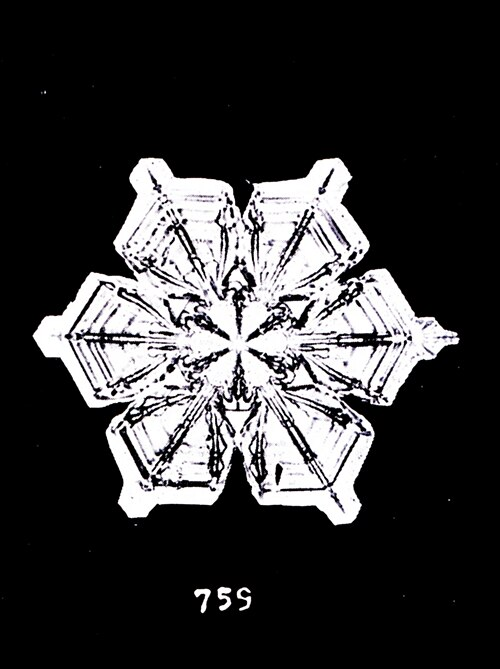
Read in order, the sixteen are governed almost entirely by material properties rather than by anybody’s intentions. The binding window decided whether the afternoon happened at all, and it was measured in hours and did not consult anybody’s schedule. The rolling method – arrived at independently by every child who ever tried, because piling snow by hand produces something that falls apart – works by accretion rather than compaction, which is why nobody has to lift anything until the end.
Then geometry ends it. Doubling the diameter multiplies the weight several times over, so the ball becomes immovable very suddenly, at whatever point on the lawn it happened to reach. Nobody chose where these structures stood; they stopped where the first ball stopped, which is why so many ended up in the middle of a lawn or against a fence – with a clean green stripe behind them that nobody complained about until spring.
The two human failures are just as consistent. The lift onto the second section was the only genuine difficulty, needed two people, and split the ball along whatever line it had been rolled on – which is where a proportion of these projects ended, in two unequal lumps and an argument. And the head was always too small, because enthusiasm is highest at the start and the smallest component was built last. Rebuilding it was theoretically simple and effectively never happened.
Nothing about the change is anybody’s fault and most of it is not a loss: children are differently occupied, which is largely an improvement, and nothing above is an argument about how anybody should spend an afternoon.
What went with it is a window measured in hours – a handful squeezed once to see whether the day was possible, a ball that decided its own location, a face taken out of a kitchen without asking, a scarf an adult eventually found in the garden, and a grey compacted base still sitting on green grass a week after everything else had gone.
Like our content? Follow us for more.