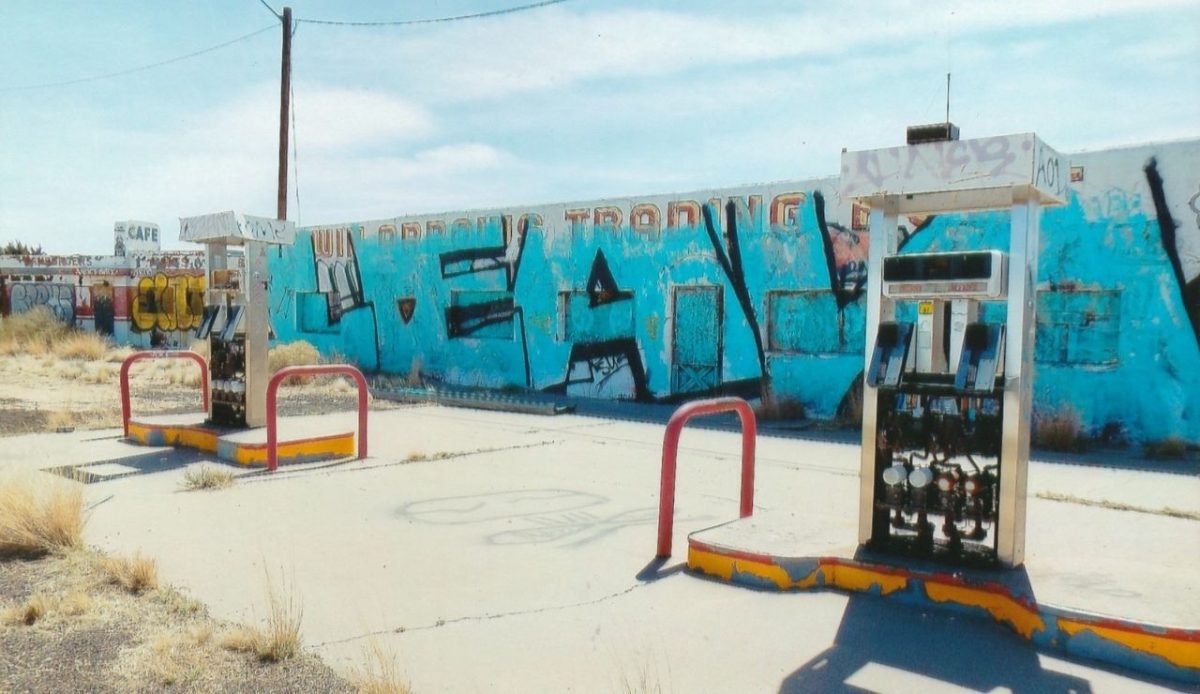
For those driving the 550-mile stretch of Interstate 90 that bisects Montana, the scenery is breathtaking, but the gaps between civilization are staggering. While most exits are marked with the familiar glow of national chains, there are dozens of “Ghost Exits”, forgotten turnoffs with rusted pumps and darkened storefronts. According to Montana Highway Patrol and local survival experts, stopping at these unlit, unbranded stations is more than just a spooky experience; it is a significant safety risk.
1. The “Abandoned Infrastructure” Danger
Montana’s I-90 is a major freight corridor, but it is also prone to “economic evaporation.” When a station loses its franchise branding, it often loses its security standards. Many of these stations have Underground Storage Tanks (USTs) that are decades old. According to Grist and the EPA, abandoned gas stations are leading sources of groundwater contamination, but for the traveler, the danger is more immediate: old pumps are frequently “unmonitored,” meaning there is no automatic shut-off or fire suppression system in place. If you are desperate for fuel at a “ghost” pump, you are operating heavy machinery in a zone with zero safety oversight.
2. The “Predatory Towing” and Service Scams
Locals warn that unlit exits are often prowled by “independent” operators. Without the bright lights and security cameras of a Love’s or Flying J, travelers are vulnerable to predatory towing schemes. In remote areas near the Pipestone or Columbus Hills exits, a vehicle that appears stalled can be “serviced” by unauthorized tow trucks that charge upwards of $1,000 for a five-mile tow to an equally unbranded mechanic shop. Without a well-lit lobby and a corporate paper trail, travelers have little recourse once their vehicle is hooked up.
3. The 80-Minute Ambulance Gap
The most sobering data point for Montana travelers is the “Response Time Paradox.” While I-90 is a federal interstate, large portions of it, specifically between Hardin and Billings or near Whitehall, are classified as “Frontier” by the Department of Health. Data from the Center for Excellence in Rural Safety shows that in these remote stretches, the average ambulance response time can exceed 80 minutes. If you stop at an unlit exit and experience a medical emergency or a physical altercation, you are essentially on your own for over an hour.
4. The “Intoxication Corridor” Risk
According to the National Highway Traffic Safety Administration (NHTSA), Montana consistently ranks among the highest in the nation for per-capita drunk driving fatalities. Unlit, abandoned gas stations often serve as “pull-off” spots for impaired drivers who want to avoid the high-visibility patrols at major truck stops. Locals avoid these exits because they are frequently used as “loitering zones” where the risk of encountering an unpredictable or intoxicated individual is statistically much higher than at a brightly lit, staffed facility.
5. The “Black Ice” and Wildlife Trap
Beyond human threats, the geography of unlit exits is a hazard. Montana’s I-90 passes through some of the deadliest wildlife corridors in the U.S. According to The Advocates, Montana sees over 3,000 wildlife-vehicle collisions annually. Unbranded exits often lack the “light pollution” that keeps deer and elk away from the pavement. Furthermore, the lack of heated pavement or regular sanding at these abandoned turnoffs means that an exit ramp can be a sheet of black ice even if the main interstate appears clear.