

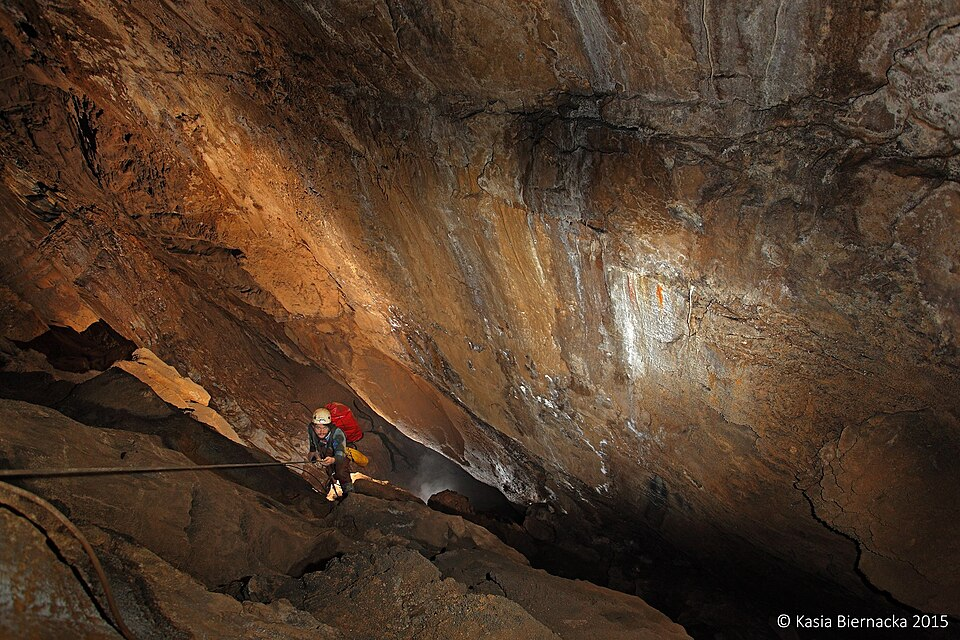
Most of the world’s great exploration targets have been reached. The poles went early, the high summits went by the middle of the last century, and the ocean trenches have been visited. What is left, in terms of places on this planet that human beings have genuinely not been to and are actively trying to get to, is a short list, and near the top of it is the bottom of a limestone cave system in the Sierra Juarez of northern Oaxaca.
The target is called Sistema Cheve. It has been the object of sustained American-led expeditions since the mid-1980s, it has consumed careers, and it has not been finished. The reason it remains unfinished is not that anybody is unsure where the bottom is. The bottom has been located, from the outside, with reasonable confidence. The problem is getting a human being along the route in between.
What the dye proved
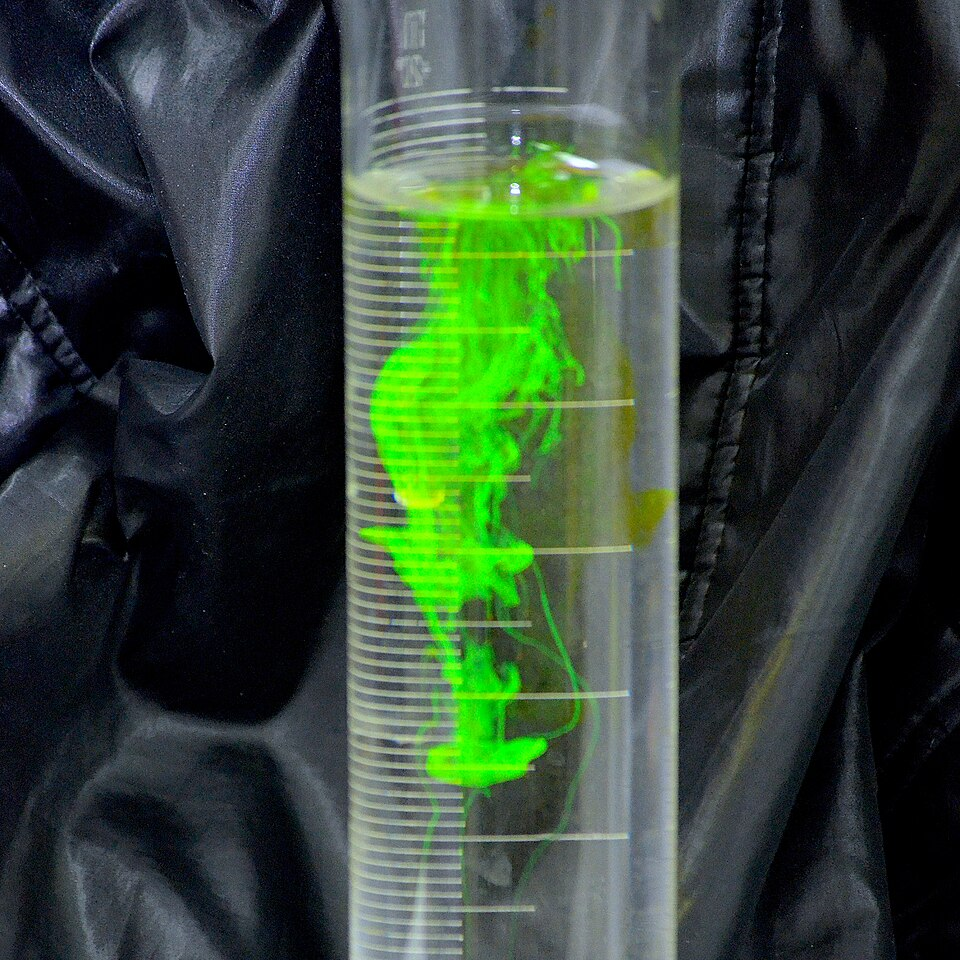
The decisive piece of evidence is a hydrology experiment rather than a descent. Cavers working in the system introduced a fluorescent tracer dye into the underground river deep inside the cave, and then watched the springs in the canyon country far below and to the north. The dye came out at a resurgence in the Santo Domingo canyon system, a long way away and a very long way down.
The numbers that come out of that are the reason anybody cares. The vertical difference between the entrance in the highlands and the resurgence is on the order of 8,000 feet, which is more than two and a half thousand metres. The deepest cave currently known to have been physically explored to its lowest point, in the Western Caucasus, is a little over 2,200 metres deep. So the dye established that there is a continuous water route through the mountain with more vertical extent than any cave anyone has walked, crawled or swum to the end of. The route exists. It carries water. What nobody knows is whether it carries people.
Like our content? Follow us for more.
Why it is so hard
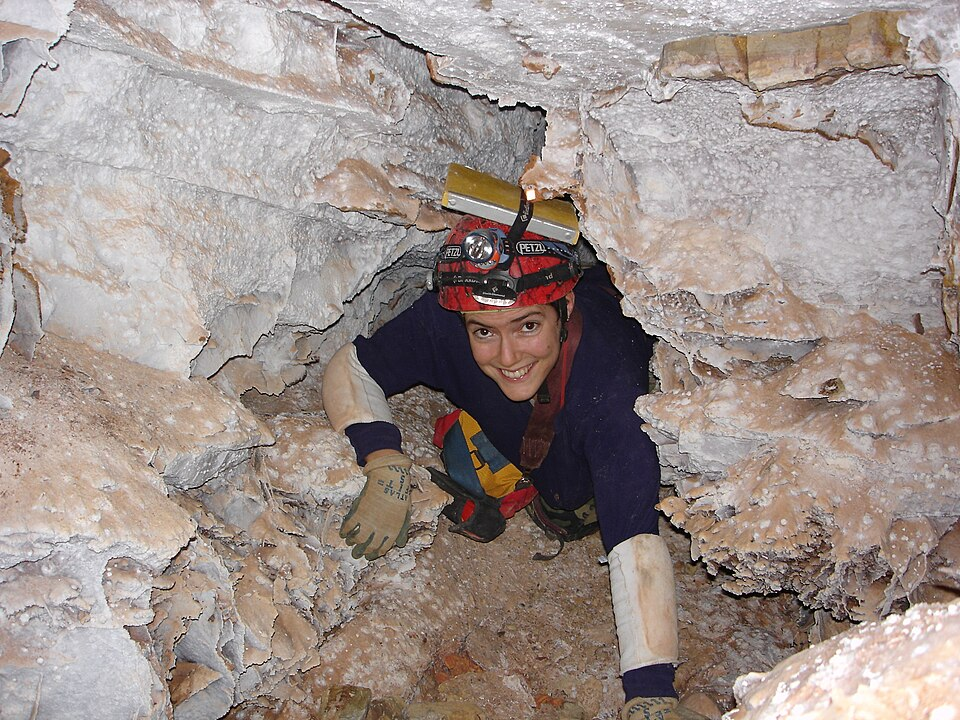
A deep cave is not a hole. It is a route, and the difficulty compounds in a way that has no real parallel in other kinds of exploration. Every item taken to the deep part has to be carried there by a person, through squeezes, down pitches that have to be rigged with rope and bolts, and along passages that may be waist-deep in cold water for hours at a stretch.
By the time a team is near the current limit it is days of travel from daylight. That means underground camps: sleeping platforms, stoves, food, spare lights, and the discipline of living in a cold wet place with no horizon and no daylight cue for weeks. It also means that a problem at the limit cannot be solved by turning around quickly, because there is no quickly. The exploration has been organised more like a Himalayan siege than like a day’s caving, with staged camps, carry teams and a small group pushing the front.
It has also cost lives over the decades, and the community involved is careful and unsentimental about saying so. That is part of the honest account of the place and is the reason the expeditions are run the way they are.
The sump
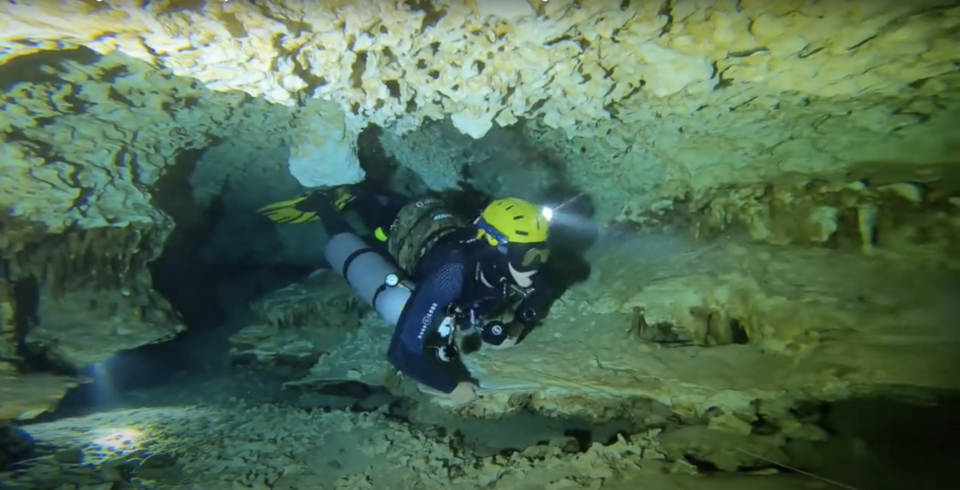
The specific thing standing in the way is water. At the deepest explored point the passage floods to the roof. A sump, in caving terms, is a water-filled section, and the only way through one is to dive it.
Cave diving at the end of a multi-day underground approach is about as serious as civilian exploration gets. The diver has to reach the sump carrying cylinders that other people have hauled down for days, in cold water, with no surface to go to and no possibility of outside assistance. If the sump turns out to be long, or to go down and not come back up, the dive ends the push. Several of the Cheve expeditions have turned on exactly this question, and the system has a reputation for answering it unhelpfully: a sump is passed, a few hundred metres of new passage is gained, and another sump appears.
The other way in
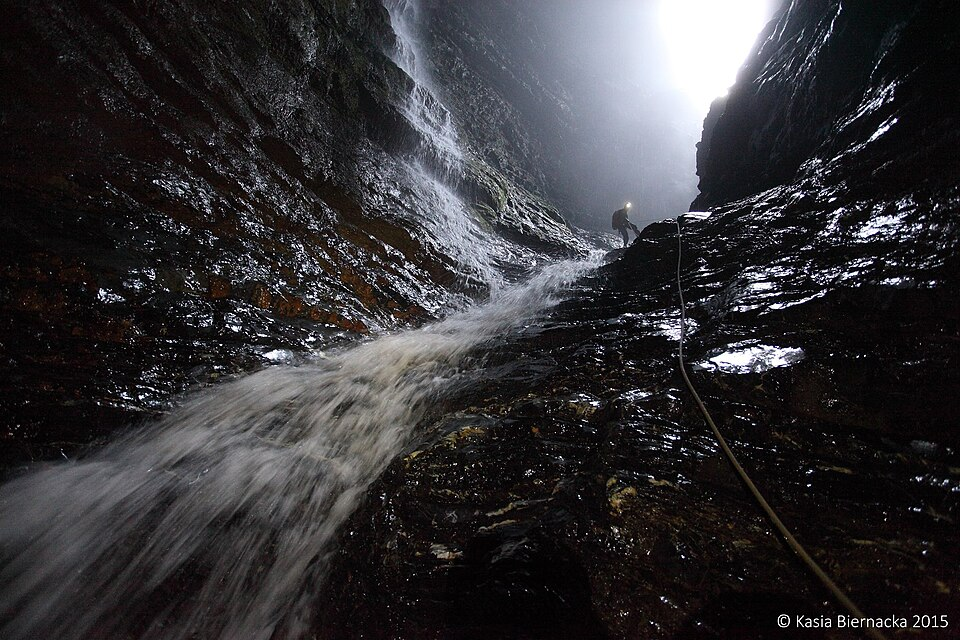
Because the main route is so hard, a great deal of effort has gone into the alternative, which is to find a different entrance higher up or further along and come at the deep system sideways. This is why the surface above the system has been searched so exhaustively. Every shaft, sinkhole and hole in the ground over a wide area of karst highland has been catalogued and most of them have been descended.
One of those, known in the expedition literature by a short code rather than a name, became a major objective in its own right and was pushed to great depth with its own chain of camps. The hope in all this work is a connection: that one of the surface entrances will be shown to link into the known system, in which case the cave’s official explored depth jumps by whatever the new entrance adds, without anybody having to dive the sump at all. This is how most of the world’s depth records have actually been set. Caves get deeper on paper when two known caves are proven to be one cave.
The surface search has its own character, quite different from the descents. It is weeks of walking a high limestone landscape with a GPS and a notebook, looking for holes, in country where the vegetation hides them and where local knowledge is often the fastest route to a find. Shepherds and farmers in the highland villages know where the ground swallows water, because it matters to them, and a great deal of the catalogue exists because somebody was willing to ask and to listen.
What a cave like this is made of
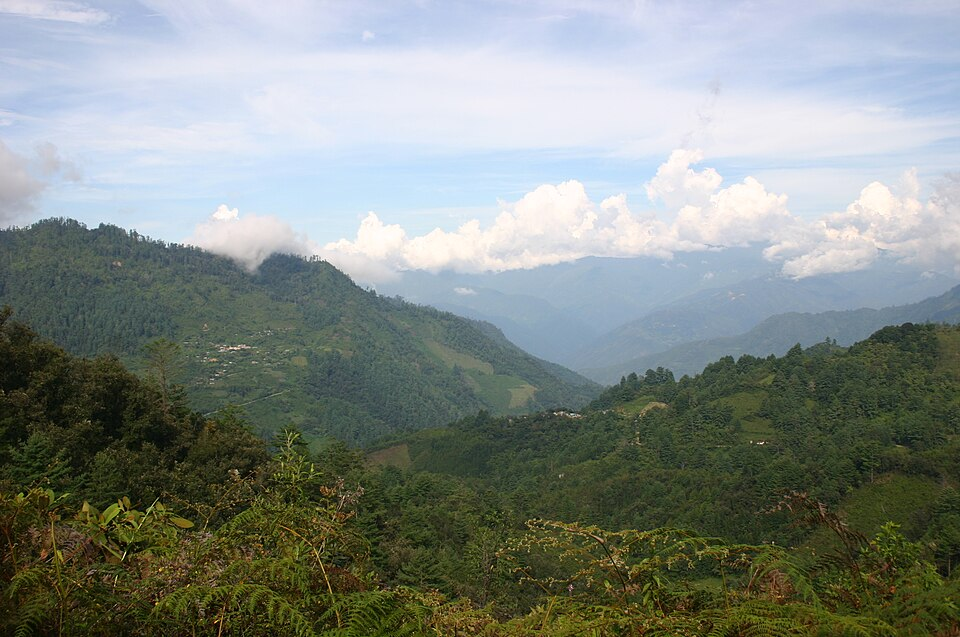
The geology is the reason the target exists at all. The Sierra Juarez has a thick sequence of limestone, uplifted and tilted, sitting high above a deeply incised canyon system. Rain falling on the highland has to get to the river in the canyon, and in limestone it does that by dissolving its way through rather than running over the surface.
Given enough time and enough rain, that produces exactly what the dye trace demonstrated: a plumbing system through the whole thickness of the mountain. The region’s rainfall is substantial and seasonal, which matters enormously for the exploration, because the passages the teams are working in are the drains. Expeditions are scheduled in the dry season, and the single most serious hazard in the system is not the depth or the dark but the arrival of water in a passage that was dry an hour earlier.
Forty years for a negative result
There is something worth noticing about an expedition programme that has run for four decades without achieving its stated objective. The depth record has not been taken. The connection has not been made. The resurgence has not been reached from above.
And yet the body of work is substantial and entirely real: a mapped system of very great extent, a solved hydrology, a catalogue of the surface karst, and a set of techniques for deep cave exploration that were largely developed here and are now standard. This is what a hard problem in exploration actually looks like from the inside, as opposed to in the retelling. The retelling wants a summit photograph. The work is thirty-five expeditions, most of which ended at a sump or at the top of a shaft that turned out to close down, written up carefully so that the next team does not spend a week finding out the same thing.
That accumulated negative result has a value that is easy to miss. A map of a cave system is largely a record of where the cave is not, and the surveys from Cheve constrain the problem for whoever eventually solves it. The same is true of the surface catalogue: every shaft descended and found to close is one fewer candidate, and the list of remaining candidates is short in a way it could only become by somebody spending forty years crossing things off.
Whether it will be finished
It may be. Each generation of equipment has moved the limit a little: better lights, better rope technique, better cold-water protection, better rebreathers for the sumps. The surface search keeps producing candidates. And the thing being looked for is known to exist, which is a luxury that most exploration does not have.
It is also possible that the connection is simply not passable by a human body — that the water goes through cracks a person cannot follow, in which case the deepest cave on earth will have been located, measured and never entered. That outcome would be a strange one to sit with after forty years, and the people involved talk about it openly. Either way, the mountain in Oaxaca is one of the very few places left where the question of what is down there is genuinely open, and where the answer is going to be found by somebody climbing into a hole with a rope rather than by an instrument in orbit.
Like our content? Follow us for more.
