
Medical provision at sea is the part of a cruise that almost nobody examines before booking and the part with the largest gap between expectation and reality. A ship’s medical centre is an urgent care facility designed to hold a patient safely until land is reachable, and it is some distance from being a hospital.
Everything else follows from that — the direct billing, the insurance requirements, the fitness declarations, the equipment approvals and the fact that distance from a capable port is a real variable in choosing an itinerary. Here are fifteen things to establish before you book.
1. The medical centre is an urgent care facility, not a hospital

A ship’s medical centre is equipped to stabilise, assess and treat minor illness and injury, with a small number of beds, basic imaging, a laboratory for simple tests and a stock of common medicines. It is not equipped for surgery, intensive care or complex diagnosis.
The design intention is to hold a patient in a safe condition until the ship reaches a port with a hospital, or until an evacuation can be arranged. That is a different purpose from treatment and it shapes everything about what the facility can do.
Understand the facility as a bridge rather than a destination. Anything serious ends with leaving the ship.
Like our content? Follow us for more.
2. The medical staff are usually contractors, and standards are not uniform

Doctors and nurses at sea are typically employed through a concession or an agency rather than by the cruise line itself, and the qualifications they hold are those of their own country, which may not be the country whose passengers they are treating.
Industry guidelines on staffing, equipment and competence exist and are widely followed by the larger operators, but they are guidelines rather than a regulatory regime with inspection and enforcement in the way a hospital is regulated.
If medical provision matters for your trip, ask the operator what guidelines their medical centre follows and what equipment it holds, in writing, before booking.
3. You pay directly, and the bill is settled before you leave the ship

Treatment at sea is charged to the onboard account at commercial rates, including the consultation, any test, any medication and any time in a bed. There is no reciprocal health arrangement at sea and no national health service.
The account has to be settled before disembarkation. Insurers reimburse afterwards on production of the invoice, which means the passenger funds the treatment first and claims it back later.
Make sure the card on the onboard account has enough available credit for a medical bill, because that is the constraint people meet in practice.
4. Your insurance has to name cruising and cover evacuation

Many standard travel policies either exclude cruises or treat them as an optional extension, and the extension is what brings in cover for missed ports, cabin confinement and medical disembarkation.
The critical figure is the medical evacuation and repatriation limit rather than the treatment limit. An evacuation at sea is the expensive event and a policy with a modest overall medical limit will not cover one.
Read the policy for the words covering cruise travel and for the evacuation and repatriation limit specifically, and buy the extension if there is one.
5. Evacuation from a ship is slow, weather-dependent and sometimes not possible
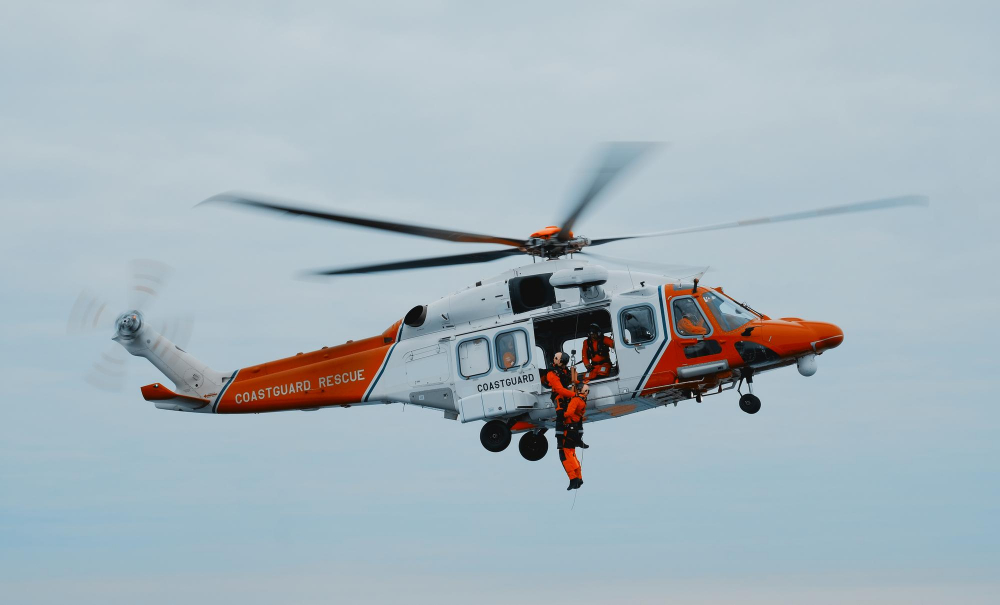
A transfer off a ship at sea requires either a diversion to a port or a helicopter, and a helicopter has a range limit, needs daylight or appropriate equipment, needs weather within limits, and needs the ship to be inside reach of a service willing to come.
A diversion is the more common outcome and takes as long as it takes, at the ship’s speed, to reach somewhere with both a berth and a hospital. On some itineraries that is more than a day and occasionally several.
This is the fact that should inform how anybody with a significant health concern chooses an itinerary. Distance from a capable port is the variable that matters.
6. Some itineraries are much further from medical care than they look
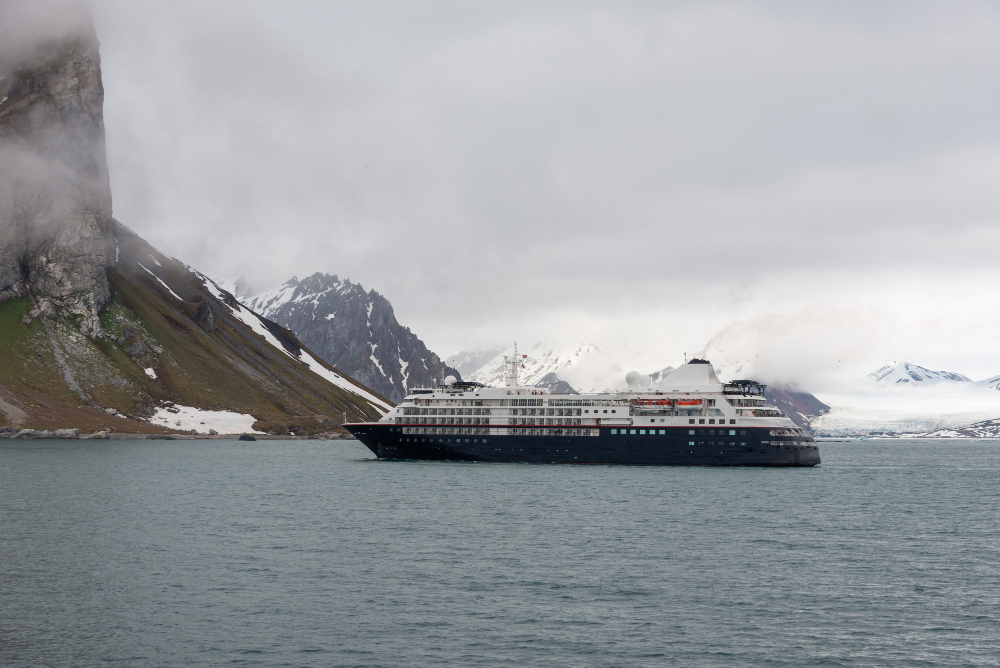
Ocean crossings, expedition routes, polar regions and long stretches of open water in the Pacific put a ship a long way from a hospital capable of complex care, and the nearest port is not necessarily the nearest capable port.
Even on busy routes, a port of call may have a small facility rather than a tertiary hospital, and a passenger landed there may then need a further transfer — which is a separate journey, separately arranged and separately paid for.
Look at the itinerary as a map of distances from hospitals rather than as a list of destinations, if health is a consideration for anybody travelling.
7. The operator can require a fitness declaration and can refuse boarding

Cruise lines publish conditions of carriage requiring passengers to be fit to travel, to declare certain conditions, and in some cases to provide a medical certificate. The operator may refuse boarding or disembark a passenger on medical grounds.
Refusal at the terminal, after travel to the port, is the worst version of this and it happens. It is also generally within the operator’s published rights, which means recovery depends on insurance rather than on the operator.
Read the conditions of carriage for the medical declaration requirement, and if a certificate is required, obtain it in the form and within the time window the operator specifies.
8. Pre-existing conditions have to be declared to the insurer, and sometimes to the line

An undeclared pre-existing condition is the most common reason a medical claim fails, and on a cruise the amounts involved are larger because evacuation is in play. Declaration is to the insurer as a matter of the policy and to the operator as a matter of the conditions of carriage.
The two are separate processes with separate forms, and satisfying one does not satisfy the other. Specialist insurers exist for travellers with medical conditions and are often the only practical route to adequate cover.
Declare everything, in writing, to both, and keep the acknowledgements with your travel documents.
9. Bring all your own medication, with a margin, and in original packaging

A ship’s pharmacy stocks common medicines for acute problems and does not stock a passenger’s regular prescriptions. Running out at sea is not recoverable, and a port pharmacy may not hold the same product or may require a local prescription.
Carry enough for the whole trip plus a meaningful margin for a delay or a diversion, split between two bags, in original labelled packaging, with a copy of the prescription and a letter listing the medicines by their generic names.
Keep the whole supply in hand baggage rather than in a case that is being handled, and never pack it in checked luggage.
10. Medical equipment needs advance approval

Oxygen concentrators, dialysis, breathing support equipment and similar devices generally require notification and approval before sailing, sometimes with a specified device type, and the operator may require a medical form or decline the request.
Power supply, storage, servicing and the availability of consumables all have to be arranged in advance, and some lines run scheduled dialysis arrangements on particular sailings rather than offering it generally.
Start this months rather than weeks ahead, because approval depends on the specific device and on the itinerary, and a late request is usually refused.
11. Pregnancy has a cut-off and it is applied at the terminal

Cruise lines apply a limit expressed in weeks of pregnancy at any point during the voyage, typically falling before the later stages, and require a letter from a doctor confirming the stage and fitness to travel.
The rule is applied at check-in and refusal is final, because a ship has no facility for obstetric care and may be days from one. The cut-off is calculated against the end of the voyage, not the start.
Check the operator’s published figure, calculate it against the final day of the itinerary, and obtain the doctor’s letter in the form the operator specifies.
12. Outbreak protocols mean isolation in a cabin

Ships are closed environments and gastrointestinal and respiratory illness spread quickly, so operators run reporting, screening, cleaning and isolation procedures, and a passenger who reports symptoms may be confined to a cabin for a defined period.
Confinement is not optional and compensation is governed by the conditions of carriage, which generally offer a pro-rata credit rather than a refund. Travel insurance with cruise cover sometimes pays for confined days and standard policies rarely do.
Report symptoms rather than concealing them — concealment is both a breach of the conditions and the mechanism by which an outbreak grows — and check what your policy says about cabin confinement.
13. Which country’s law applies is a genuinely complicated question

A ship is registered in a flag state whose law governs much of what happens on board, the operator may be incorporated somewhere else, the ticket contract usually specifies a jurisdiction and a venue for disputes, and the passenger may be a national of a fourth country.
The practical consequence is that a claim arising at sea can be harder to pursue than an equivalent claim on land, with shorter notification periods and a specified court often far from home written into the ticket.
Read the dispute and jurisdiction clauses in the conditions of carriage before booking. They are the part nobody reads and the part that matters if something goes wrong.
14. Shore excursions have their own medical and liability position
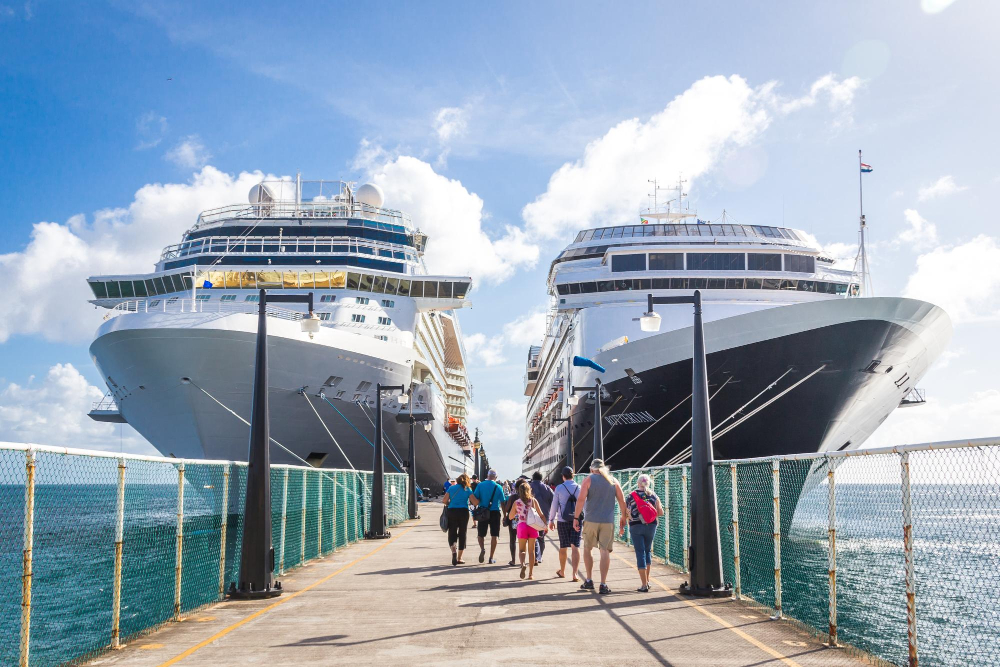
An excursion sold by the ship is often operated by a local company, and the standard of equipment, guiding and emergency provision is that of the local operator rather than the cruise line, with liability frequently limited by the excursion terms.
Medical facilities in a port of call vary enormously, and an injury ashore may be treated locally, at the passenger’s cost, with the ship’s departure time as a hard deadline that can leave a passenger behind.
Carry your insurance details and the ship’s port agent contact ashore, and know the all-aboard time rather than the departure time.
15. And what to carry and tell them

A folder with the insurance policy number and its twenty-four hour assistance line, a list of medications by generic name, a summary of relevant conditions, the doctor’s letters the operator required, and a next of kin contact.
Then tell the right people: the insurer when you book, the operator on the medical declaration, and the medical centre at the start of the voyage if anything about your health is relevant — which is a routine conversation and a short one.
The honest summary: the medical centre exists to stabilise rather than to treat, the evacuation and repatriation limit is the number that matters in a policy rather than the treatment limit, distance from a capable port is the variable that should shape an itinerary for anybody with a health concern, and an undeclared pre-existing condition is the most expensive mistake available on a cruise.
The three things to get right before booking

The insurance first, and specifically the right number in it. Many standard policies exclude cruises or treat them as an optional extension, and the figure that matters is the medical evacuation and repatriation limit rather than the treatment limit. An evacuation at sea is the expensive event; a policy with a modest overall medical limit will not meet one. And an undeclared pre-existing condition is the most common reason such a claim fails, which on a cruise means the largest bills.
The itinerary second. A transfer off a ship requires a diversion or a helicopter, and a helicopter needs range, weather, light and a service willing to come. The usual outcome is a diversion at the ship’s speed to somewhere with both a berth and a hospital, which on crossings, expedition routes and long Pacific legs can be more than a day. Even a port of call may have a small facility rather than a tertiary hospital, with a further transfer needed after that.
The paperwork third, because it runs in two separate channels. Declaration to the insurer is a policy matter and declaration to the operator is a conditions of carriage matter, with separate forms, and satisfying one does nothing for the other. Equipment approvals and pregnancy or fitness certificates are operator processes with their own formats and deadlines, and a late request is usually refused.
Carry one folder: the policy number and its twenty-four hour assistance line, a list of medications by generic name, a short summary of relevant conditions, any letters the operator required, and a next of kin contact.
Carry the whole medication supply in hand baggage, in original labelled packaging, with enough for the trip plus a real margin for a diversion, split between two bags, and never in checked luggage. A ship’s pharmacy will not have your prescription and a port pharmacy may not hold the product.
And read two things in the conditions of carriage that almost nobody reads: the medical declaration requirement, and the jurisdiction and dispute clauses. The first decides whether you board. The second decides what you can do if something goes wrong.
Like our content? Follow us for more.