Here are fifteen airline rules on flying with an infant that do not appear on a booking page. Several of them are certification limits rather than airline preferences, which is why asking nicely at the gate does not change them. Everything here is general information dated 2026 rather than advice, and carriers’ rules on infants differ considerably and change.
1. An infant on a lap is a different booking from an infant in a seat
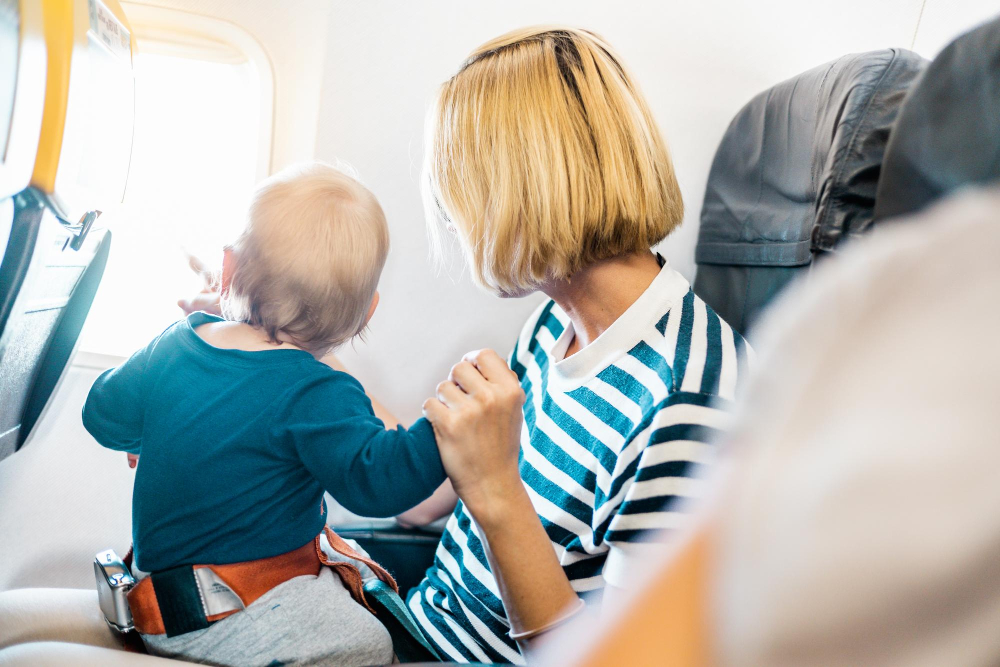
Under about two years of age a child can normally travel on an adult’s lap, held with a supplementary belt looped onto the adult’s own, or in a purchased seat of their own with an approved restraint. These are separate products with separate prices and separate rules.
The lap option is much cheaper and the seat option is the one safety authorities prefer, because a restrained child in their own seat is secured in the way every other passenger is. That is the trade-off and airlines do not generally present it as one.
Decide which you are booking deliberately, and if you want a seat for the infant say so at booking rather than hoping to be given a spare one. This file is general information dated 2026 and not advice; airline rules differ and change, and the carrier’s current conditions of carriage govern.
Like our content? Follow us for more.
2. The lap infant is not free

A lap infant on an international flight normally attracts a percentage of the adult fare plus taxes, and on domestic flights the charge varies from nothing to a flat fee depending on the carrier and the market.
The charge frequently does not appear in the headline price and sometimes cannot be added online at all, which is why some bookings have to be completed by telephone and why the final price can differ from the one quoted.
Add the infant at the time of booking rather than afterwards. Adding one later is possible and is more expensive and occasionally impossible on a full flight, because the number of infants per cabin is limited.
3. There is a limit on how many infants a cabin may carry

Cabins are certificated with a fixed number of supplementary oxygen masks per row, and a lap infant shares a seat row’s provision. That sets a hard ceiling on lap infants per cabin and per row.
The practical result is that a flight can be open for sale and closed to lap infants, and that two adults travelling with an infant each cannot always sit together.
This is also why the airline will not seat two lap infants in the same row. It is a certification limit rather than a preference, and no amount of asking at the gate changes it.
4. Bassinets are limited, positional and conditional
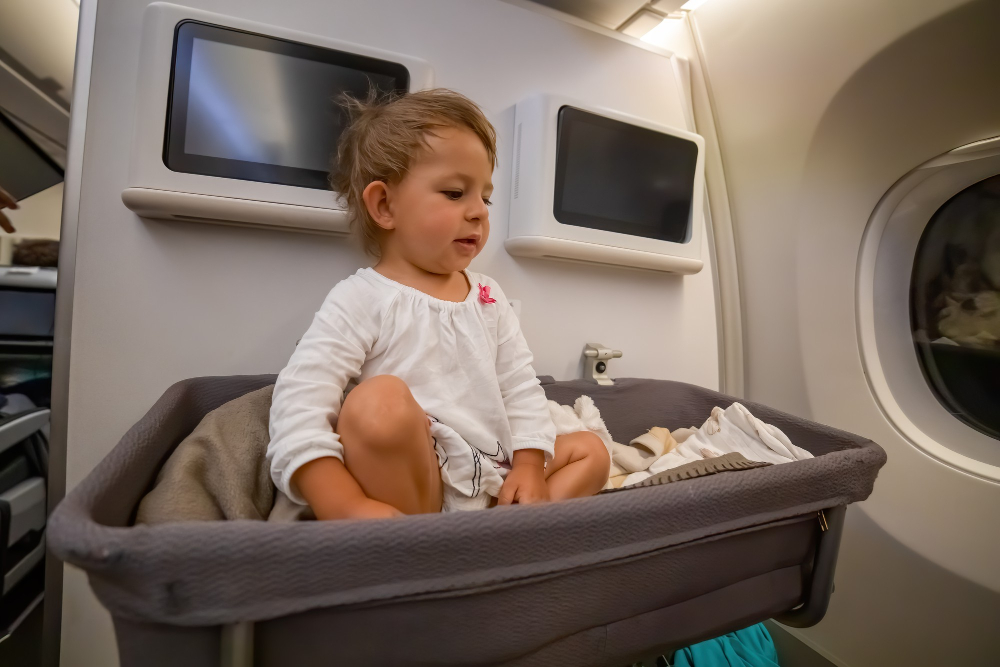
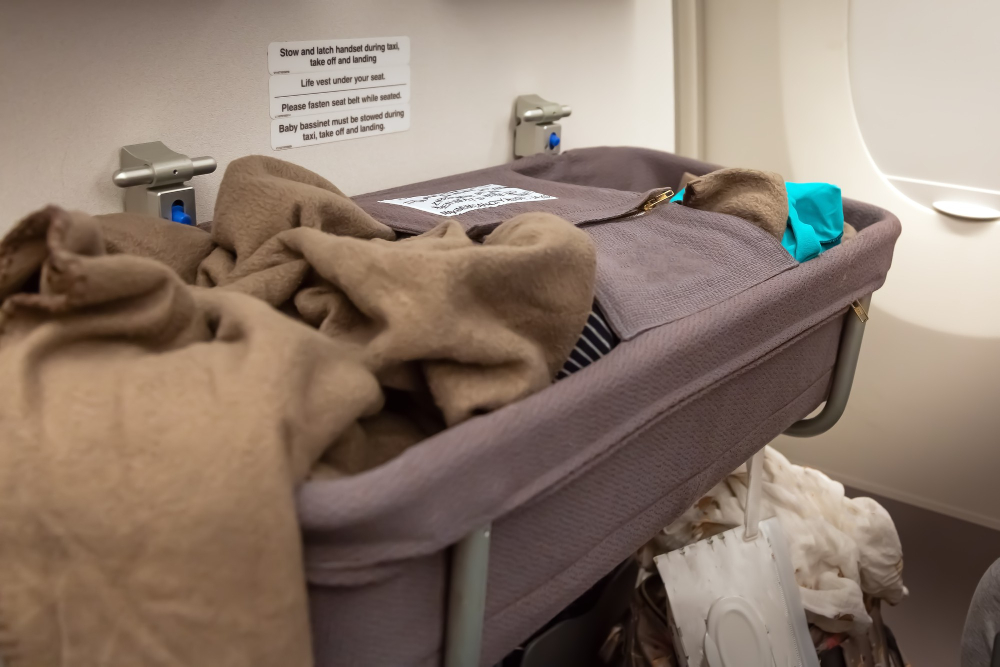
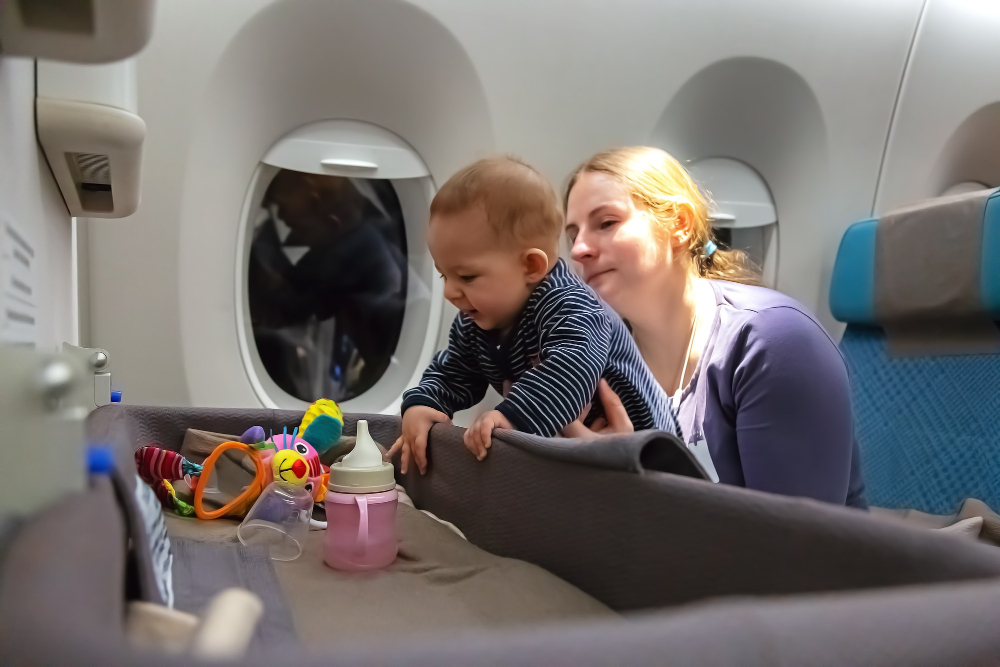
A bassinet attaches to a bulkhead wall, so it exists only in specific rows, in limited numbers, and on aircraft fitted for it. Short-haul flights generally have none at all.
Eligibility is set by the infant’s weight and length and by whether they can sit up unaided, and the limits differ between carriers and between aircraft types. A baby who fits on the outbound flight may not fit on the return if the aircraft differs.
Request one at booking, reconfirm at check-in, and treat it as a hope rather than a plan. Bassinets are allocated rather than reserved on many carriers, and they are removed for taxi, take-off, landing and turbulence.
5. A car seat on board has to be an approved one
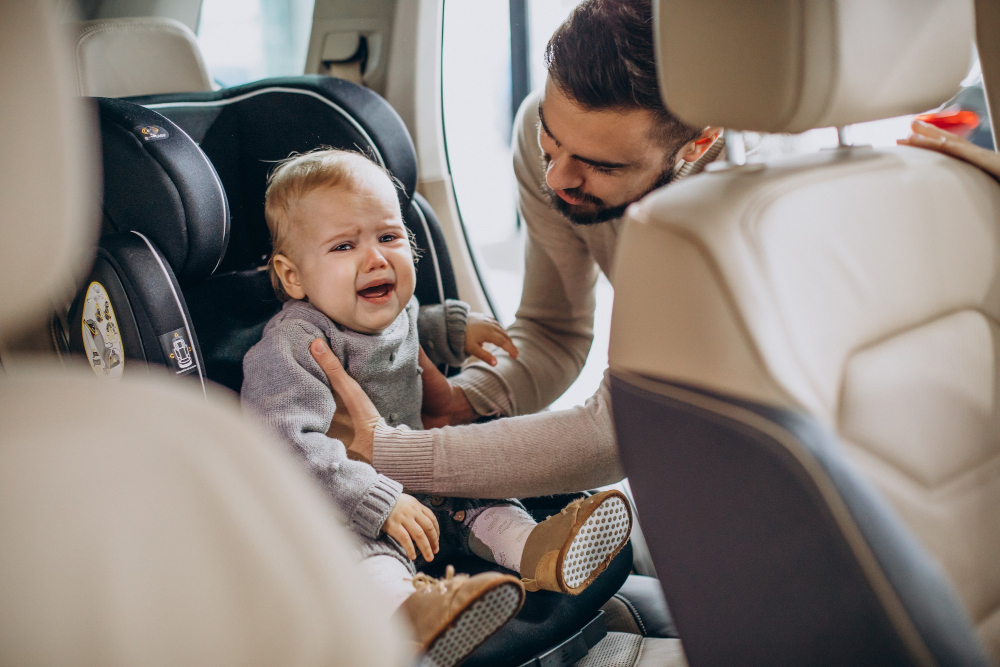
Where an infant occupies a purchased seat, the restraint used must be approved for aircraft use, which is a specific certification and is marked on the seat. A seat that is lawful in a car is not automatically acceptable on an aircraft.
Fitting is also constrained: approved seats are generally not permitted in exit rows or bulkhead rows and may not be allowed in certain cabins, and a rear-facing seat can conflict with the seat in front reclining.
Check the carrier’s list of accepted restraints and the marking on your own seat before travelling, and tell the airline you are bringing it so the seat allocation accounts for it.
6. Pushchairs and car seats usually travel free, and not always to the gate
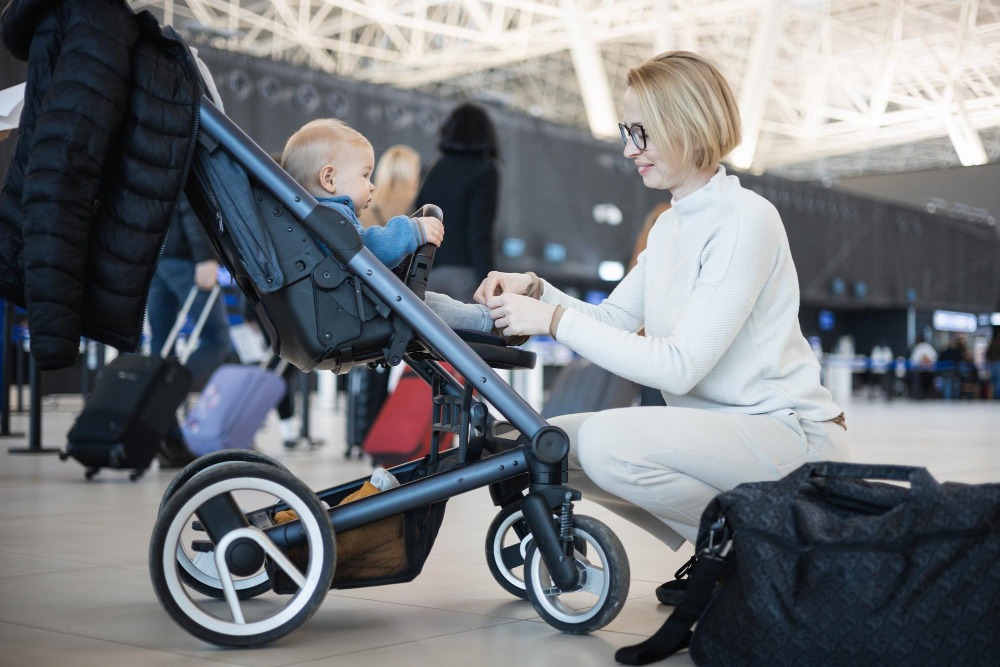
Most carriers carry a pushchair and a car seat for a ticketed infant free of charge and outside the normal baggage allowance, which is a genuinely useful concession.
Whether the pushchair can be used to the aircraft door and returned there afterwards depends on the airport, the aircraft and whether the flight boards by jet bridge or by steps. On some routes it goes into the hold at check-in and comes back at reclaim.
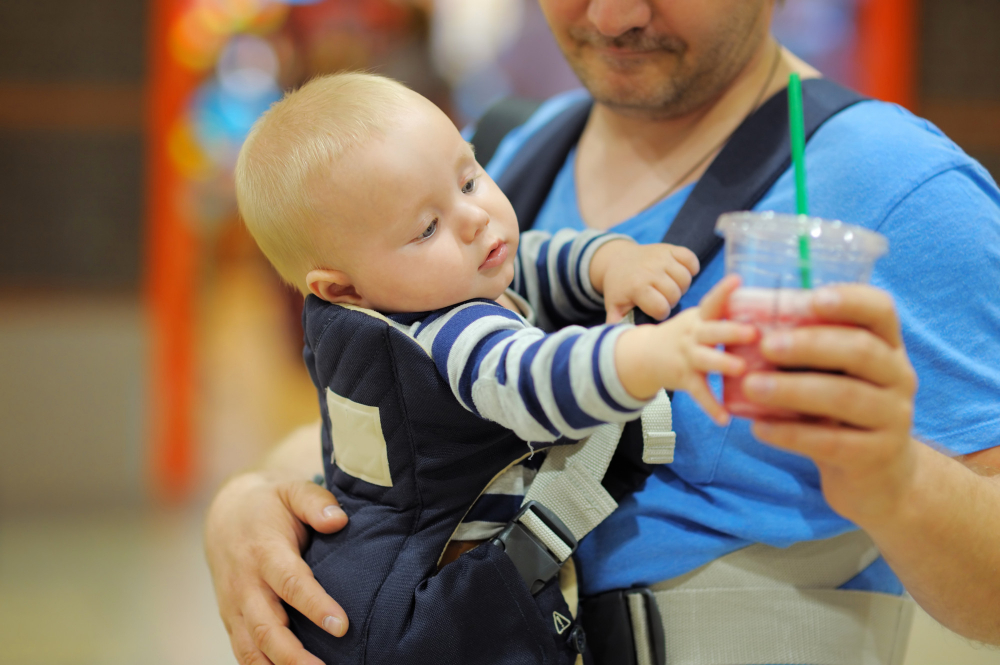
Assume you may have to carry the child from check-in on some legs. A compact sling or carrier for exactly that stretch is the single most useful thing in the bag.
7. Infants have little or no baggage allowance of their own
A lap infant typically has no checked allowance or a reduced one, and little or no cabin allowance, which is counterintuitive given how much a baby requires. An infant in a purchased seat usually has a full allowance.
The equipment concession for a pushchair and car seat is separate from the baggage allowance and does not extend to anything else, so a travel cot, a bouncer or a second bag is ordinary baggage.
Check the infant’s specific allowance for every leg and every carrier on the itinerary. Mixed-carrier bookings are where this goes wrong.
8. Liquids for an infant are treated differently at security
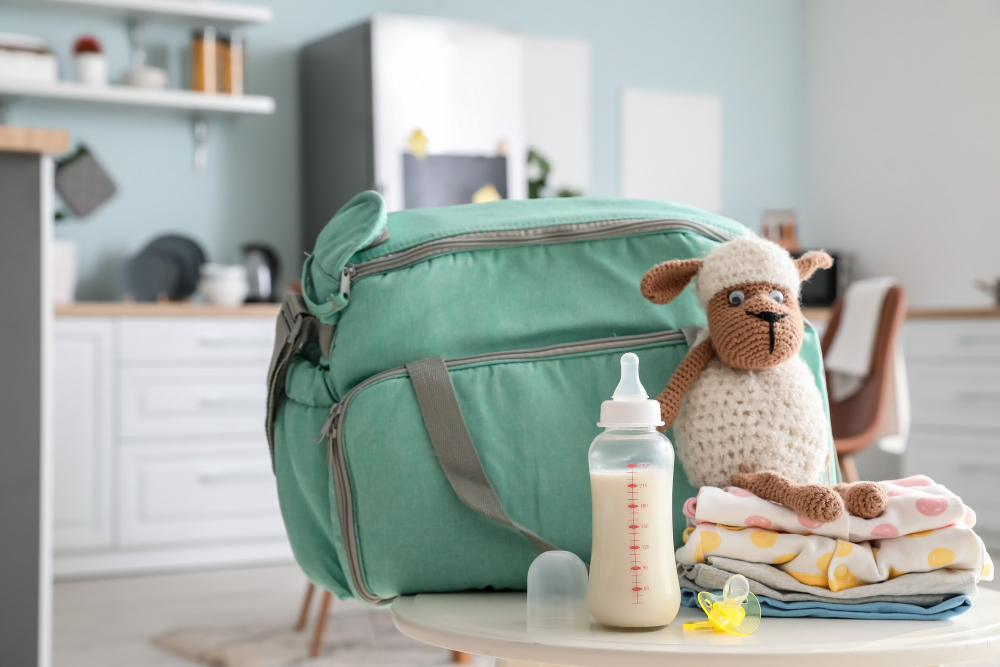
Security regimes in most jurisdictions exempt baby milk, formula, sterilised water and baby food from the general cabin liquid restriction, in quantities sufficient for the journey, and that exemption generally requires the infant to be travelling.
Screening of those items may be more involved: they can be opened, screened separately or subjected to additional checks, and the parent may be asked to demonstrate that a container is what it is said to be.
Allow extra time at security, pack those items where they can be removed easily and separately, and check the specific rule for the airport you are departing from rather than assuming the one you know.
9. Carriers set minimum ages and they vary

Airlines set a minimum age before which a newborn will not be carried, expressed in days, and the figure differs between carriers and sometimes between routes. Some require medical clearance below a further threshold.
No figure is given here because they differ and change. The carrier’s conditions of carriage state the minimum and the clearance requirement, and a travel agent’s assurance is not a substitute for that.
If you are booking travel for a very young infant, establish the carrier’s minimum before buying anything, and build in time for any clearance process the carrier requires.
10. An infant needs their own documents, including on domestic flights in some markets
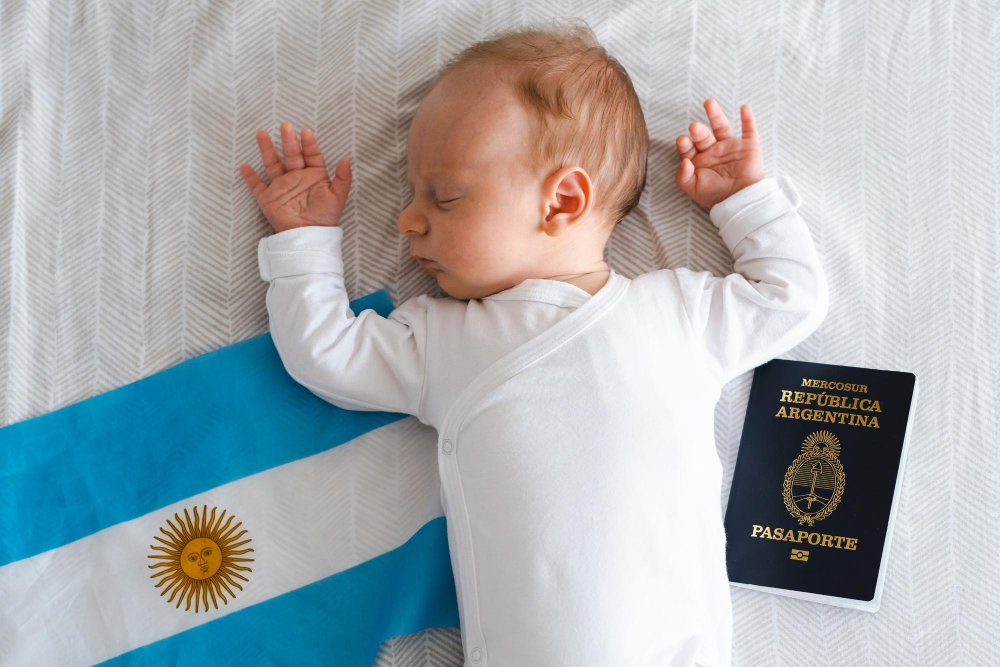
An infant requires a passport for international travel in their own right, with the same validity requirements as any other traveller, and a visa or travel authorisation where one applies to their nationality.
Some markets also require proof of age for a lap infant on domestic flights, and a birth document is the usual proof. Where parents have different surnames from the child, carrying documentation linking them avoids a conversation.
Apply for an infant passport far earlier than feels necessary. Processing times for first applications are longer than renewals and a newborn’s application cannot be started before the birth is registered.
11. The supplementary belt is not a restraint and comes off in turbulence
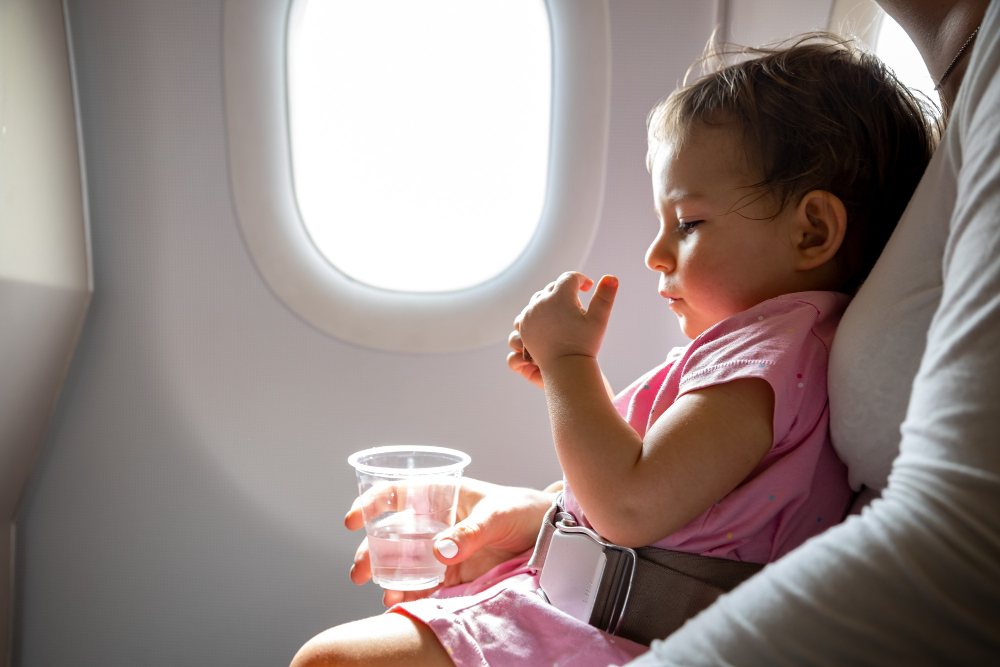
A lap infant is secured by a loop belt attached to the adult’s belt, and in many jurisdictions and carriers it must be removed for certain phases or is not used at all, with the infant held instead.
Crew instructions on this differ and are sometimes the opposite of what a parent expects, and the reason is that the arrangements for a lap infant are a compromise rather than an engineered restraint.
Follow the crew’s instruction on the day without arguing, and if this matters to you, the answer is a purchased seat with an approved restraint rather than a better belt.
12. Changing facilities depend on the aircraft, not the airline’s intentions
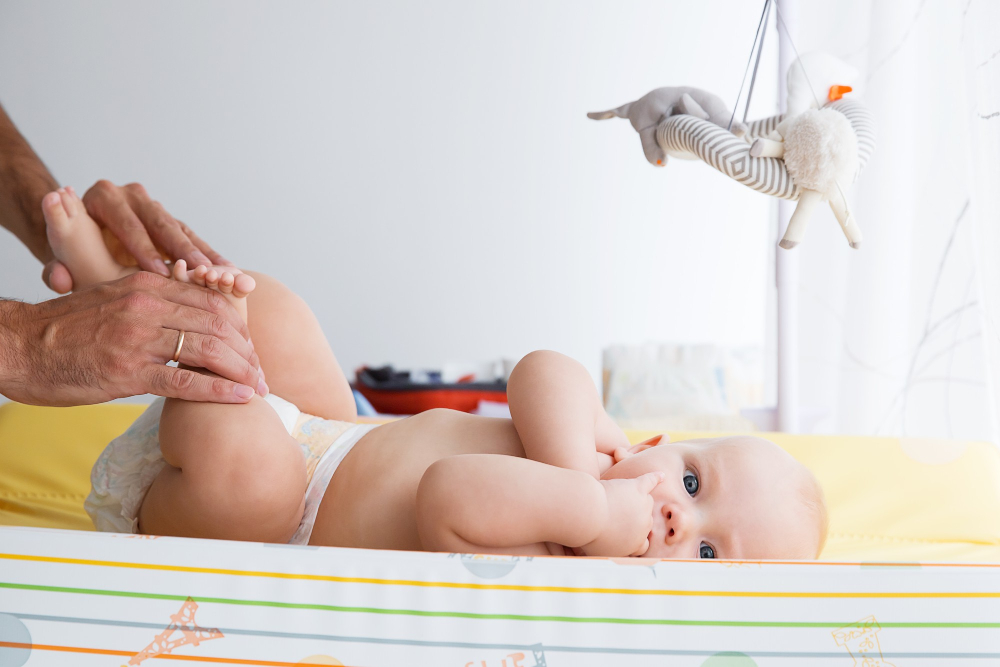
A changing table folds down over a lavatory seat and exists only in lavatories fitted for it, which is not all of them and on some short-haul aircraft is none of them.
Space is extremely limited and there is frequently a queue, so the practical approach is to change before boarding and to carry a mat for improvising.
Ask the crew which lavatory has the table rather than working through them, and do it early in the flight rather than during the service.
13. Seat allocation for a family is a separate question from infant rules
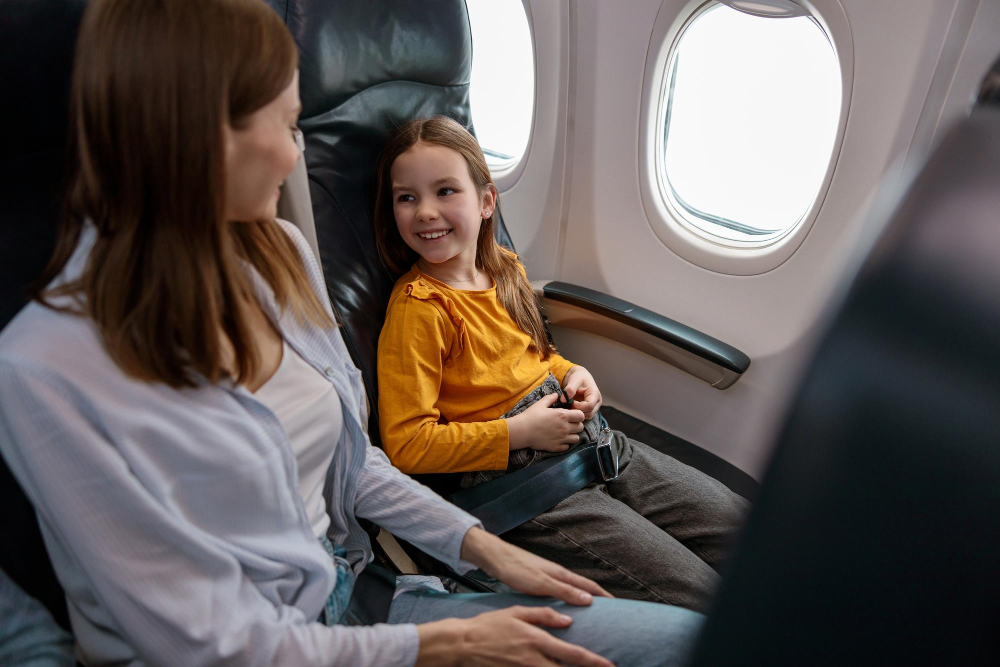
Everything above concerns how an infant may travel. Whether an adult is seated next to the child they are responsible for is a different subject with its own rules, airline commitments and policy arguments, and it is covered elsewhere.
The infant-specific constraint is the one described above: the oxygen provision per row limits where lap infants sit, which can cut across a family’s seating preference regardless of any seating policy.
Book seats at the time of booking where the carrier allows it, and raise an infant seating problem at check-in rather than at the gate, where there is far less that anybody can do.
14. A child who turns two mid-trip changes category
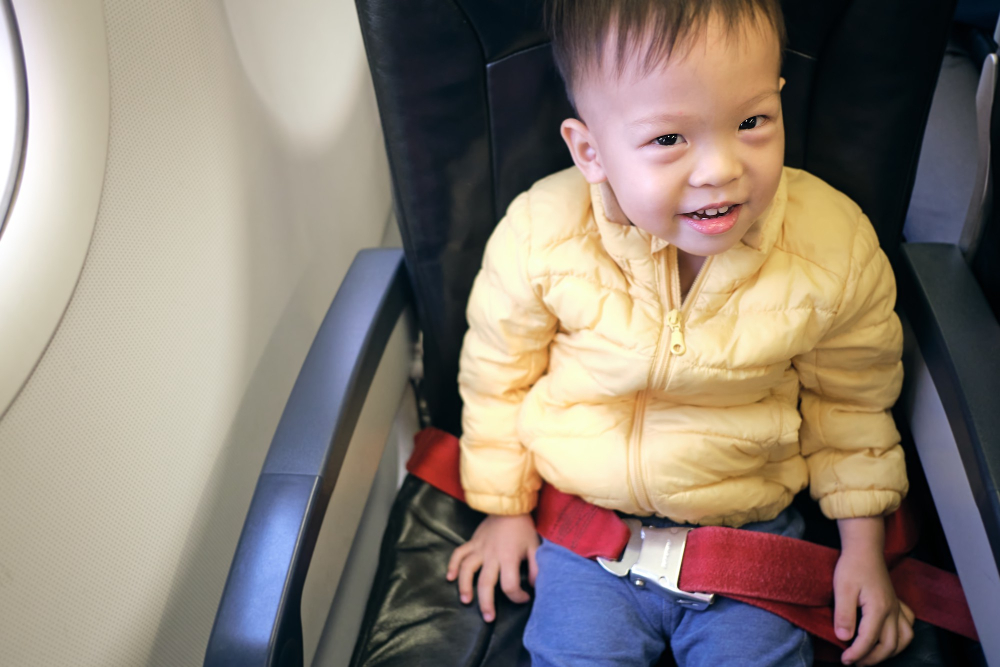
Age is assessed against the date of each flight, so a child who is under two on the outbound and over two on the return must be booked as a lap infant one way and as a child in a seat the other.
Airlines handle this routinely and booking systems frequently do not, which is another reason some of these bookings have to be made by telephone.
Check the birthday against every flight date in the itinerary before booking, including any date changes you might later make.
15. And the short list that covers nearly all of it
At booking: add the infant, decide lap or seat, request a bassinet if you want one, declare a car seat, and check the infant’s baggage allowance for every leg. Before travelling: confirm the bassinet, check the minimum-age and clearance position if the baby is very young, and have the passport and any proof of age.
On the day: allow extra time at security for infant liquids, expect the pushchair to go in the hold on some legs, carry a sling for those legs, and change the baby before boarding.
Everything in this file is general information dated 2026 and not advice of any kind. Airline rules on infants differ considerably between carriers and change, and the carrier’s current conditions of carriage are the only thing that governs your booking.
The four that are not negotiable
The oxygen provision per row is a certification limit, so the number of lap infants a cabin may carry is fixed and two cannot sit in one row however the family would prefer to be arranged. The approved-restraint requirement is a certification matter too: a car seat that is lawful in a car is not automatically acceptable on an aircraft, and only a marked, accepted seat may be used. The carrier’s minimum age for a newborn is a condition of carriage and is not waived at a desk. And a bassinet exists only where the aircraft has a bulkhead fitted for one, in limited numbers, subject to the infant’s weight and length.
Everything else on the list is a matter of allowance, timing or preparation, and nearly all of it is settled at the point of booking rather than on the day. The single most common failure is adding the infant to the booking afterwards, which is more expensive, occasionally impossible, and the point at which the oxygen limit is discovered.
The one item worth over-preparing for is security. Infant milk, formula, sterilised water and baby food are exempt from the general liquid restriction in most jurisdictions, in quantities sufficient for the journey, and they may be screened more thoroughly rather than less. Pack them where they come out of the bag in one movement and allow the extra time.
Like our content? Follow us for more.