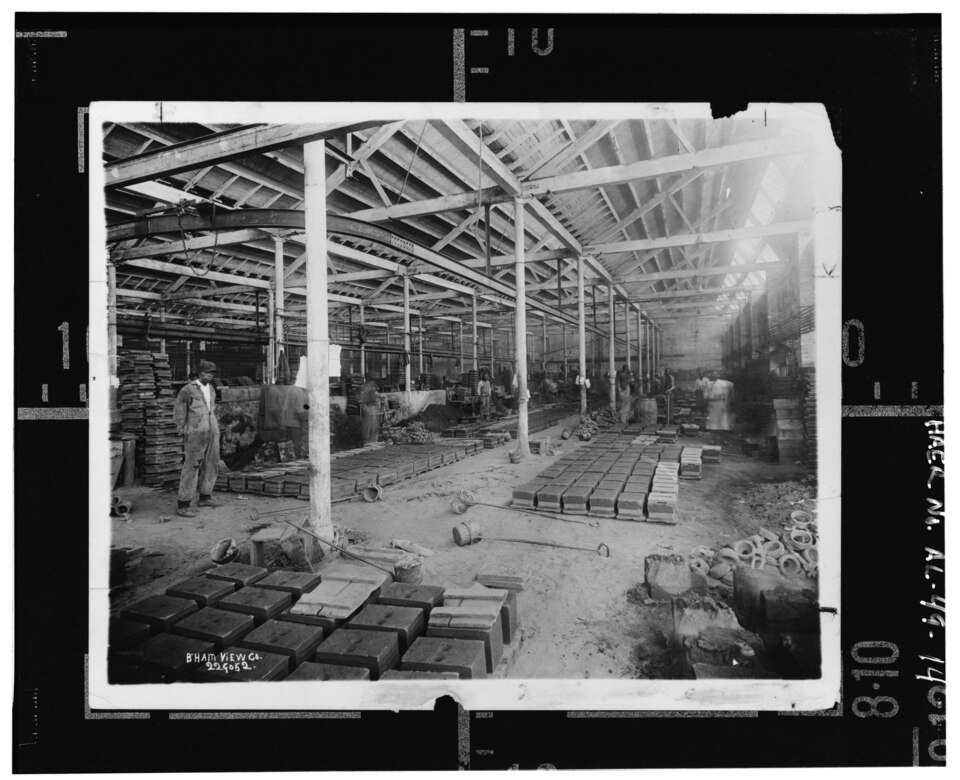
A moulder’s job was to make a hole and then keep it. He packed sand around a shape, took the shape out, and was left with a cavity that had to hold its form while liquid metal filled it, rose through it and solidified in it. Everything difficult about the trade is in that sentence.
Sand should not be able to do this. It is loose, it has no strength and it will collapse under its own weight, and the reason it works is that moulding sand is not simply sand: it is a mixture whose clay content binds the grains together when it is damp and packed, and whose grains stay loose enough to let gas escape through them.
Getting that balance right is the whole of the craft, and in 1960 a moulder judged it by squeezing a handful and looking at what his fist had left behind.
The hand test was the only test that mattered

A moulder picked up a handful of prepared sand, closed his fist, opened it and read the result. Sand that held the impression of his fingers cleanly and broke in half without crumbling was right.
Too dry and it would not hold the mould; too wet and the water would turn to steam under the metal and blow the casting. Too much clay and it would not vent; too little and it would not bind.
That is four variables judged by a squeeze, and an experienced moulder was reliably better at it than the tests available to him.
Modern foundries measure all of it: moisture, clay content, permeability, green strength and compactability are tested continuously on prepared sand and controlled automatically. The hand squeeze survives as a quick check and no longer as the specification. Moulders who learned it describe the feel as unmistakable once you have it and impossible to describe to anybody who has not, which is the usual signature of a sensory skill.
Like our content? Follow us for more.
Ramming had to be uneven on purpose
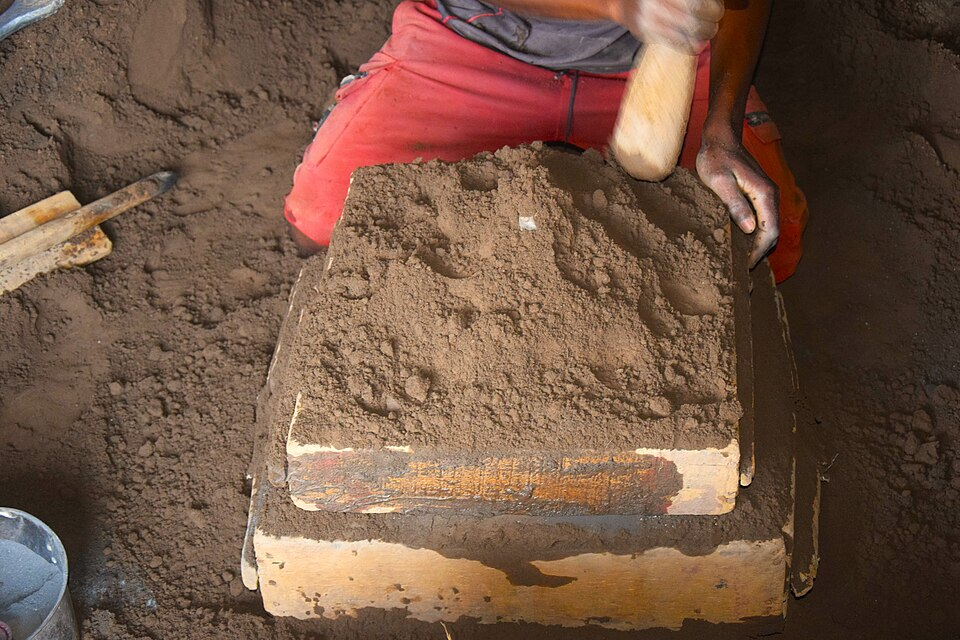
Packing the sand — ramming — is not done evenly. A mould must be hard enough near the cavity to hold a sharp surface and softer further out to let gas escape, so the pressure is graded deliberately.
A moulder rammed with a tool that was blunt at one end and wedge-shaped at the other, working around the pattern in a sequence that built up density where it was needed.
Over-ramming is the commonest fault and produces a mould that cannot vent, which spoils the casting. Under-ramming produces a mould that will not hold its shape against the metal.
Machine moulding, jolt-squeeze machines and later high-pressure automatic lines replaced hand ramming for volume work and produce far more consistent density than any person can. Hand moulding survives for one-offs, for very large work and for repairs. Very large moulds are still rammed by hand for the simple reason that no machine is built to the size, and a mould for something the size of a ship’s component is made in a pit in the floor.
The mould was made in two halves that had to meet exactly
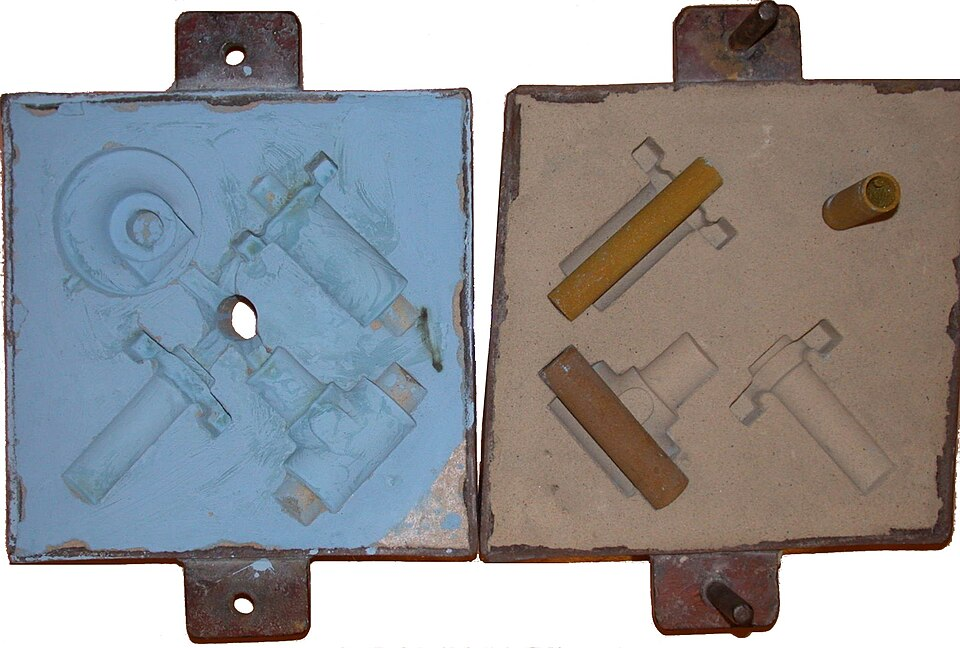
A mould is made in a flask: a box in two parts, the upper half and the lower, which are rammed separately around the pattern and then closed together.
The halves locate on pins, and any error in closing them shows on the casting as a step along the join, so the joint faces were cleaned carefully and the closing was done slowly and deliberately.
The pattern is withdrawn before closing, which means the moulder is working blind from that point: he closes a box over a cavity he can no longer see and cannot check.
That is why the sequence was so disciplined and why an experienced moulder would rather start again than close a mould he was unsure of. Modern practice is the same in principle and verified by process control rather than by nerve. The blind closing is the part that most surprises people who see it described. Everything the moulder has made is inside a box he is now shutting, and the next time anybody sees it, it will be full of metal.
Gates and risers are the part nobody outside the trade notices
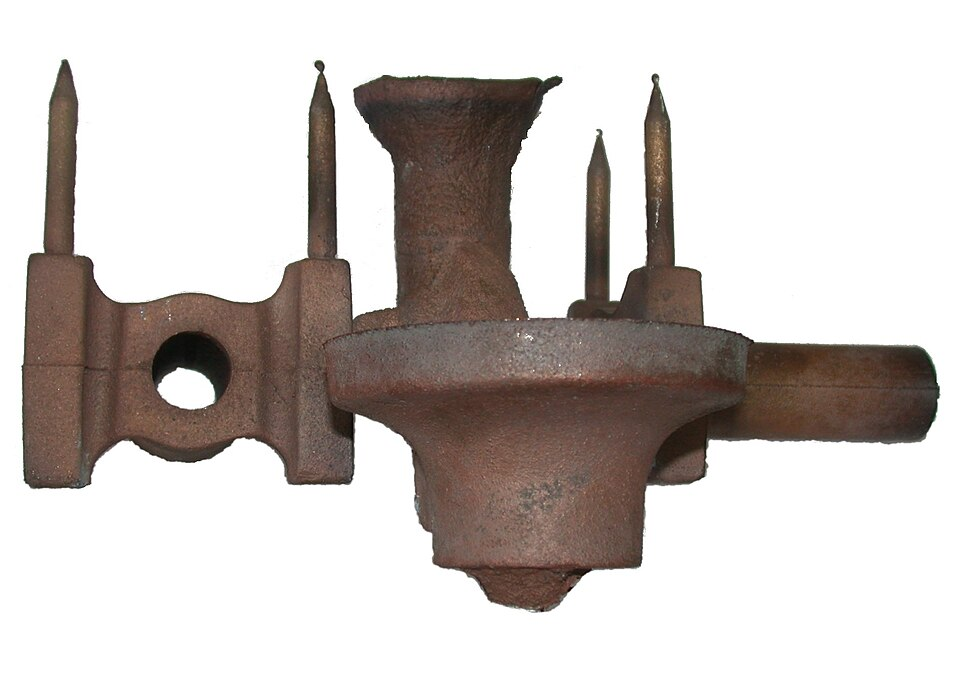
Metal has to get into the cavity and it has to keep feeding it as the casting shrinks while solidifying, which means the mould needs channels for both purposes.
The running system brings the metal in; risers are reservoirs of metal that stay liquid long enough to feed the casting as it contracts. Both are cut into the sand by the moulder and both end up as scrap metal on the finished casting.
Placing them is a judgement about how the metal will flow, where it will cool first and where the last liquid will be needed, and getting it wrong produces a casting with a cavity inside it that nobody can see.
That judgement is now simulated before the mould is designed, with solidification modelled and feeding calculated. It is one of the clearest cases in manufacturing of a hand skill being replaced by a calculation that does the same job better.
Venting was done with a wire and a judgement

When metal enters a mould, the water in the sand turns to steam and the air in the cavity has to leave, and if it cannot the gas pushes back into the metal.
A moulder vented by pushing a fine wire through the sand in a pattern around the cavity, creating paths for gas without weakening the mould or letting metal escape.
How many vents, where, and how deep was entirely a matter of experience, and it is the operation that most obviously looks like superstition from outside and is not.
Modern sand systems are formulated for permeability and moulds are vented by design rather than by hand, so the operation has largely disappeared while the physical problem it solved has not changed at all.
The foundry floor in 1960 was a hard place to work
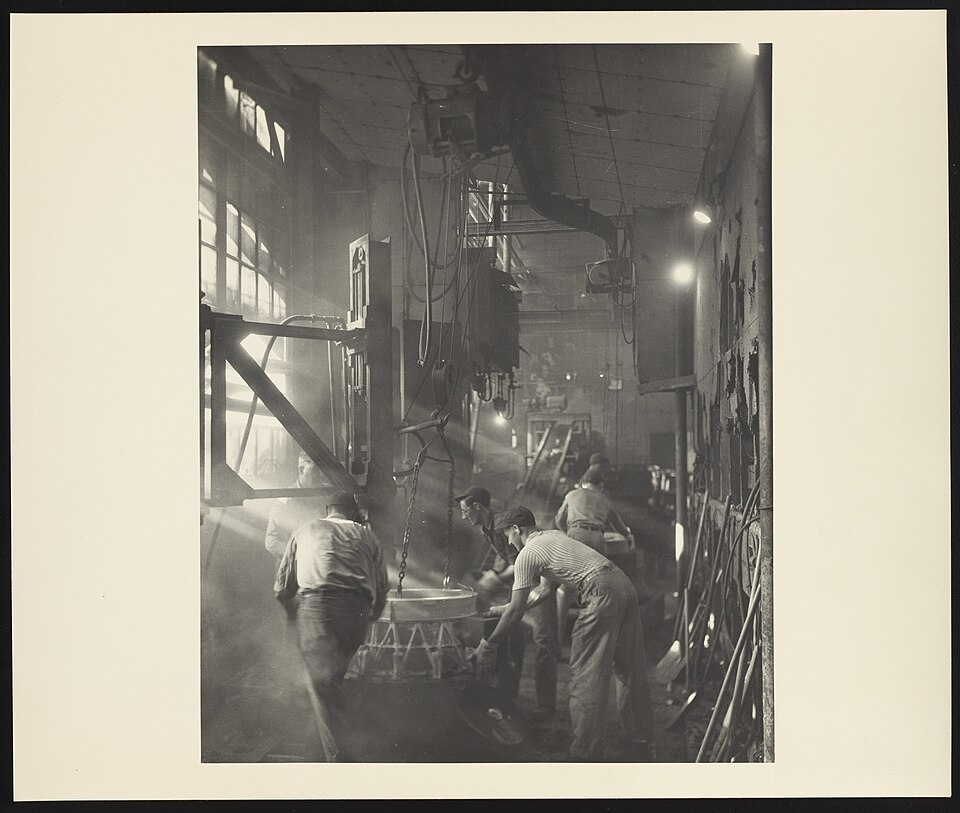
Hand moulding is heavy, repetitive, dusty, hot work carried out close to molten metal being moved and poured, on a floor covered in sand, in a building where several operations happen at once.
Foundry sand contains crystalline silica, and the dust generated by preparing, ramming, knocking out and reclaiming sand was a recognised feature of the environment long before anybody controlled it. Moulders in 1960 worked in it with no extraction and no respiratory protection.
That is now a regulated workplace exposure with limits, mandatory controls — enclosure, local exhaust ventilation, water suppression, respiratory protection — and health surveillance for the people who do this work. The same applies to the heat, the noise and the handling of molten metal, each of which has its own control regime and its own mandatory equipment.
Anybody with a professional reason to be near any of this should be working from current regulation and competent advice. This file describes no pouring procedure, no temperature and no protective specification, because none of that belongs in an article about the past.
Knocking out destroyed the mould every time
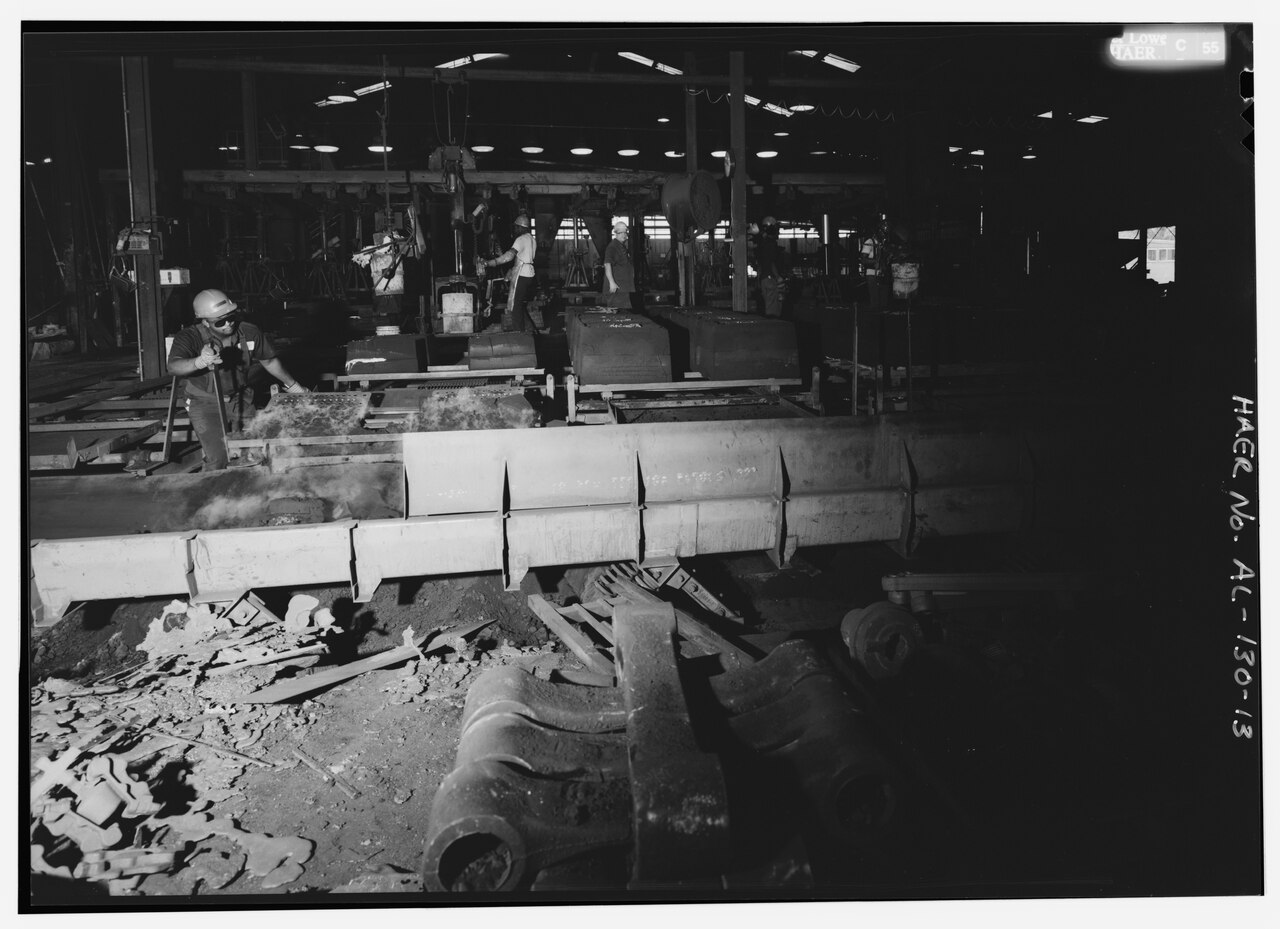
A sand mould is used once. When the casting has solidified it is broken out of the sand, the sand is reclaimed and remixed, and the mould no longer exists.
That is an extraordinary arrangement when you think about it: the most skilled part of the process is deliberately demolished to get at the result, and the next casting requires the whole thing to be made again.
It is also why moulding was paid by the piece and why speed mattered so much, because the mould is not an asset and the only output is castings.
Permanent moulds, die casting and investment processes exist precisely to avoid this, and each is used where the volumes justify the tooling. Sand moulding survives because it will make almost any shape in almost any size with tooling that costs comparatively little, which no other process does.
What the trade became
Mostly automated, and still skilled where it is not. Volume castings are made on automatic moulding lines with controlled sand, simulated feeding and robotic handling, and the moulder’s judgement has been converted into measured parameters.
Hand moulding survives for large castings, prototypes, repairs and heritage work, and the people doing it are few, qualified and in demand, because the ability to make a one-off mould for an unrepeatable part has not been replaced by anything.
The environment is the part that changed most. A modern foundry is enclosed, extracted, monitored and quiet by the standards of 1960, and every person who worked in the old ones says so first.
The honest summary: a moulder made a cavity in sand and had to keep it while metal filled, rose and solidified in it; moulding sand works because its clay content binds the grains when damp and packed while the grains stay loose enough to vent gas, a balance judged in 1960 by squeezing a handful and reading what the fist left; ramming was graded deliberately, harder near the cavity and softer further out; the mould was made in two halves that located on pins and were closed over a cavity the moulder could no longer see; gates bring metal in and risers feed the casting as it contracts, and placing them wrong leaves an invisible void inside; venting was done by pushing a fine wire through the sand by experience; and the mould is destroyed to get the casting out, which is why the process survives on low tooling cost rather than on efficiency.
Like our content? Follow us for more.