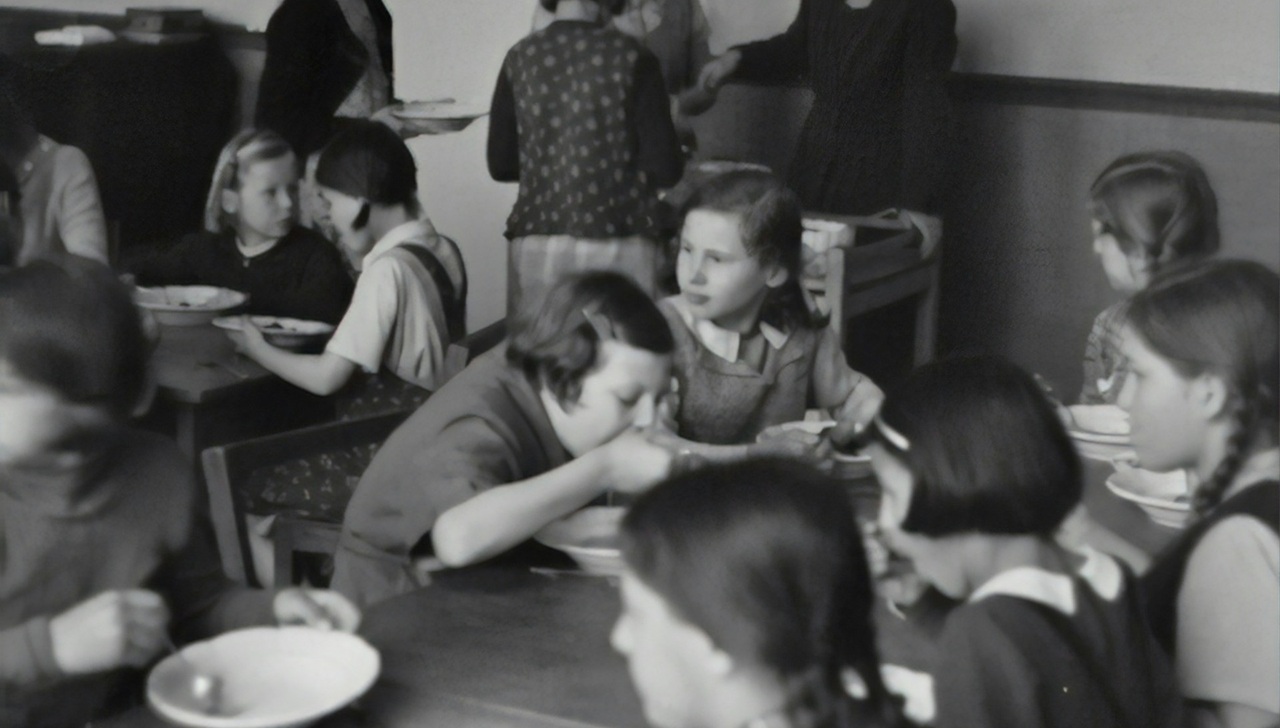
The American school cafeteria of the 1950s was a far cry from the strictly regulated, allergy-conscious environments of today. During the post-war era, the focus was on calories, convenience, and the dawn of industrial food processing. Nutritionists of the time prioritized “bulking up” children, leading to a menu filled with heavy fats, gelatin-encased mysteries, and ingredients that would send a modern school board into a tailspin. Here are the 13 school lunch items from the mid-century that have officially been retired for the sake of student health and safety.
The “Salad” Made of Lime Jell-O and Canned Tuna
Nothing defines 1950s school lunches quite like the savory gelatin mold. At the time, Jell-O was considered a sophisticated and efficient way to serve protein and vegetables. Cafeterias would frequently serve lime or lemon gelatin filled with flakes of canned tuna, chopped celery, and sometimes even a dollop of mayonnaise. Today, the sheer lack of nutritional value combined with the high sugar content and food safety risks of room-temperature fish in gelatin would make this an instant violation.
Liver and Onions
In an era before fortified cereals and widespread vitamin supplements, liver was the primary source of iron for American school children. Cafeteria workers would pan-fry large batches of beef liver smothered in onions to mask the metallic taste. Given the intense flavor profile that most children find unpalatable and the modern shift toward leaner, more “kid-friendly” proteins, liver has almost entirely vanished from the national school lunch program.
Hot Dogs Simmered in Grape Jelly and Chili Sauce
Mid-century “cocktail” style hot dogs were a staple of the 1950s cafeteria. Sliced franks were simmered in a thick, syrupy sauce made from equal parts grape jelly and bottled chili sauce. This combination provided a massive hit of sugar and sodium that would far exceed the strict nutritional guidelines established by the Healthy, Hunger-Free Kids Act. The modern focus on reducing processed meats and added sugars has effectively banned this sweet-and-savory hybrid.
Unfiltered, Full-Fat Raw Milk
While milk remains a lunchroom staple, the 1950s version was often delivered in glass bottles directly from local dairies with the cream still rising to the top. In some rural districts, the milk was barely pasteurized compared to today’s rigorous standards. Modern regulations now require low-fat or fat-free options and strictly prohibit the high saturated fat content that was once encouraged to help children gain “healthy” weight.
The Fried Bologna Sandwich
Bologna was the king of 1950s cold cuts because it was cheap and shelf-stable. Cafeterias would often fry the bologna until the edges curled into a “cup” before serving it on white bread with a heavy smear of butter. Between the high nitrates, sodium levels, and the frying process itself, this sandwich represents everything modern school nutritionists try to avoid in a daily meal plan.
Cigarette-Shaped “Candy” Sticks
It wasn’t just the food that was different; it was the culture surrounding it. In the 1950s, it was common for school stores or the “extras” line in the cafeteria to sell chalky sugar sticks packaged to look exactly like cigarettes. In a world before the Surgeon General’s warnings were common knowledge, these were seen as a harmless novelty. Today, the promotion of smoking-adjacent products to minors is strictly forbidden in any educational environment.
Creamed Chipped Beef on Toast
Commonly known by its less-than-appetizing military nickname, this dish consisted of dried, salted beef rehydrated in a heavy white bechamel sauce made from flour, lard, and milk. It was then served over thick slices of white bread. The sheer amount of sodium required to preserve the beef, combined with the refined carbohydrates of the bread and the saturated fat of the gravy, makes this a caloric nightmare by modern standards.
Mashed Potatoes Fortified with Lard
In the 1950s, the goal of a school side dish was to be as filling as possible. Mashed potatoes weren’t just mixed with milk; they were often whipped with significant amounts of lard or heavy animal fats to ensure the kids stayed full until dinner. Modern school kitchens have replaced these heavy fats with vegetable oils or eliminated them entirely in favor of lower-calorie preparation methods.
Stewed Prunes in Heavy Syrup
Before the advent of fresh fruit cups and apple slices, prunes were the primary “fruit” served to students to ensure digestive health. They were typically served swimming in a bowl of heavy, sugary syrup. While prunes are still healthy, the modern school lunch program favors fresh or frozen fruits without the massive amounts of added corn syrup that characterized mid-century “stewed” fruit.
Peanut Butter and Bacon Sandwiches
Peanut butter was a cheap protein source, and in the 1950s, it was often paired with crispy bacon or even bacon grease for extra flavor. With the rise of severe peanut allergies leading to many schools becoming “nut-free” zones, and the modern crackdown on the saturated fats found in processed bacon, this high-calorie combination has been wiped from the menu.
White Bread with Every Meal
In the 1950s, “Wonder Bread” style white bread was seen as a miracle of modern food science—clean, soft, and fortified. It was served as a side to every single meal, often with a side of margarine. Current regulations now mandate that at least 80% of grains served in schools must be whole-grain rich, effectively ending the reign of the bleached white flour roll.
Cottage Cheese with a Maraschino Cherry
This was the “diet” option of the 1950s. A large scoop of full-fat cottage cheese was topped with a neon-red maraschino cherry preserved in high-fructose corn syrup and red dye #40. While cottage cheese is still around, the heavy dyes and syrupy toppings used in the 50s would fall short of modern “clean label” initiatives in schools.