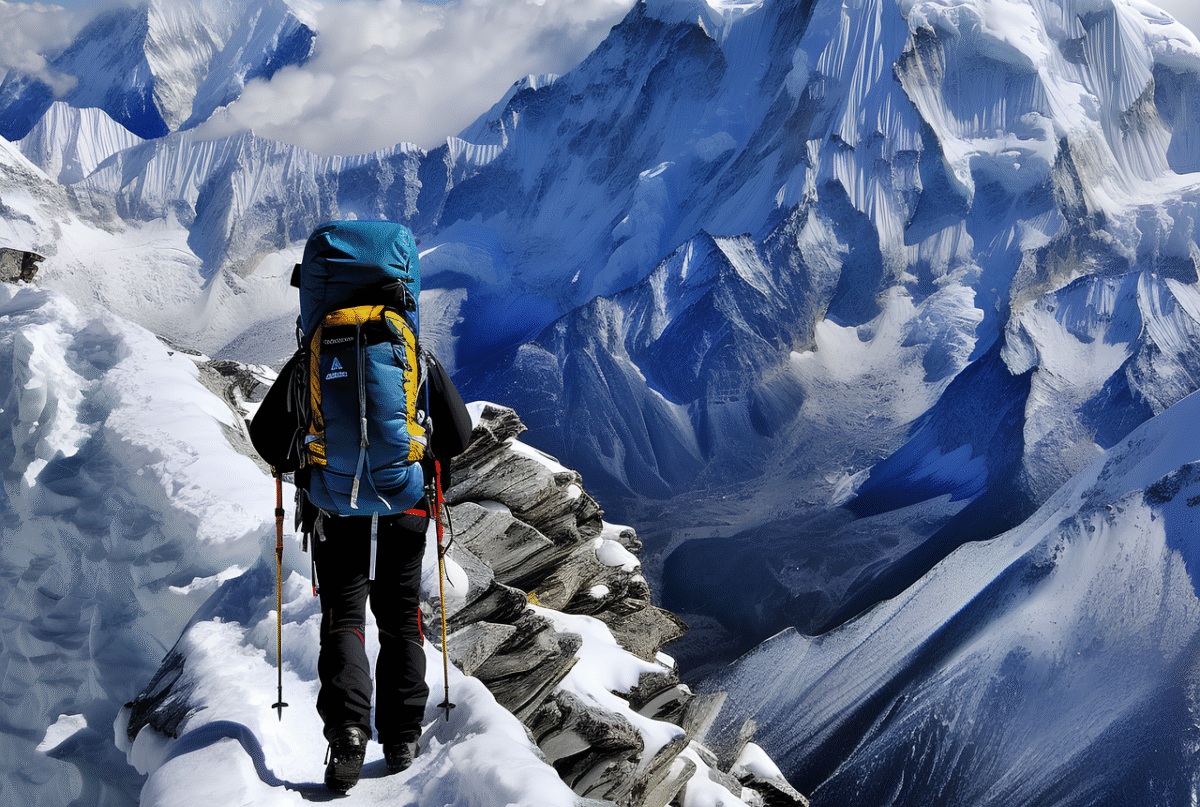
The final miles toward the summit of Mount Everest are not merely a climb; they are a transit through a realm hostile to human physiology, universally known as the Death Zone. This altitude, beginning around 26,000 feet, marks the absolute limit of viable survival, where the air pressure provides only a third of the oxygen available at sea level. It is a slow, methodical suffocation where judgment fades and the cost of stopping—even briefly—is permanence. The sheer impossibility of efficient rescue at this elevation has rendered nearly 200 fallen adventurers into enduring, silent monuments along the South Col and Northeast Ridge routes, frozen in time and ice.
Above the Cloud Line: Defining the Death Zone
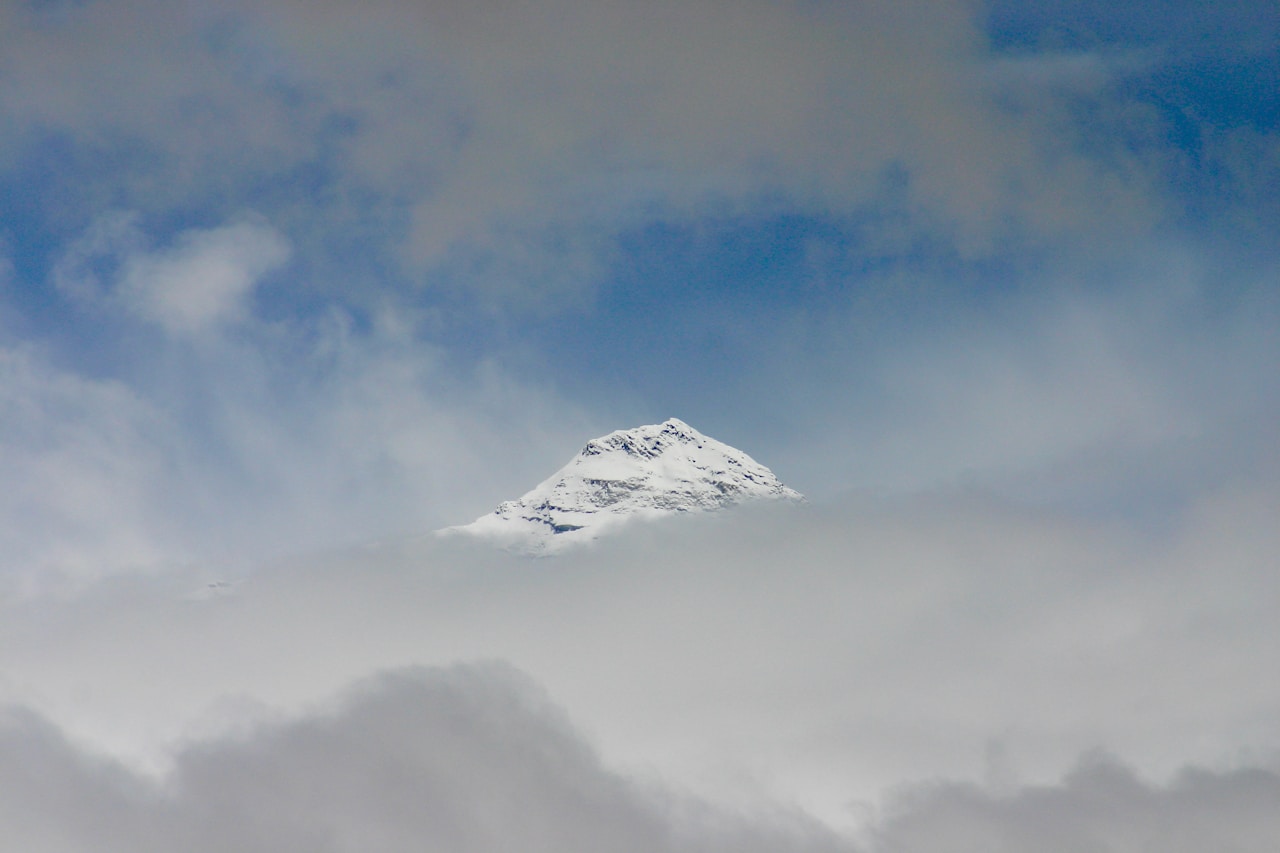
The official threshold of the Death Zone, extending above 8,000 meters (approximately 26,000 feet), is where the human body begins a rapid, irreversible decay. Even with supplemental oxygen, the extreme hypoxia starves muscles and, crucially, the brain, leading to impaired cognition and severe lack of coordination. This environment is characterized by temperatures that rarely rise above minus 20 degrees Fahrenheit and wind chills that plummet far lower, creating a hyper-accelerated hypothermia risk. Every step here demands astronomical caloric expenditure, and the simplest movement becomes an act of monumental willpower. This section of the ascent is less a climb and more a controlled physiological surrender, where the body’s primary mandate shifts from survival to sheer forward momentum, regardless of the consequences waiting just beneath the frozen surface. The unforgiving altitude ensures that any extended delay is a death sentence, sealed by ice.
When Judgment Fails: The Hypoxic Reckoning
Hypoxia, the severe lack of adequate oxygen reaching the tissues, is the silent predator of the high Himalayas, uniquely targeting the cognitive functions necessary for safe descent. Climbers often experience euphoric delusion, apathy, or profound stubbornness—conditions that prevent them from acknowledging when a retreat is necessary. Acute Mountain Sickness morphs into High Altitude Cerebral Edema, causing swelling of the brain, leading to hallucinations, motor function loss, and profoundly skewed risk assessment. Many climbers who perish are not killed by a sudden fall but by the collective effect of poor decisions made over agonizing hours of oxygen deprivation. They stop to rest, believing they only need a moment, and that moment turns into a permanent, fatal repose. The mountain does not actively claim its victims; it simply waits for the internal mechanisms of the human mind to fail.
The Price of Piety: Why Retrieval is Impossible
The task of retrieving a deceased climber from the Death Zone is exponentially more dangerous and costly than the ascent itself, demanding a logistical and financial burden few expeditions can justify. A single, relatively intact body can weigh significantly more than 300 pounds when encased in ice and equipment. Moving this mass requires a team of at least six Sherpas, all relying on supplemental oxygen, who must maneuver the body across treacherous icefalls and exposed ridges. The estimated cost for such an operation easily exceeds $70,000, not including the immense risk to the retrieval team. This brutal calculation means that once a climber succumbs above 8,000 meters, their body effectively enters a state of preservation by freezing, where it remains due to the insurmountable odds against ethical closure. The mountain dictates that the deceased will serve as a continuous warning.
The Silent Markers: Corpses as Navigational Points
In the white-out confusion and exhaustion of the high climb, where visibility often drops to zero and landmarks are nonexistent, the frozen bodies of past climbers have tragically become navigational signposts. These morbid markers provide climbers with crucial, if psychologically scarring, verification of their location and altitude along the most difficult stretches of the South Col route and the Northeast Ridge. Certain figures, identifiable by their brightly colored suits or specific resting positions, are known by macabre nicknames, serving as checkpoints that confirm the distance remaining to the summit or the safety of Camp IV. This utilization of the deceased underscores the profound dehumanization that occurs in this extreme environment, where the imperative of self-preservation overrides almost all ethical concerns regarding respect for the dead. They are not merely bodies; they are grim mileposts in the ultimate high-altitude race.
The Iconography of Failure: Notable Figures in Ice
Among the estimated 200 bodies that line the trails, a few have achieved morbid international recognition, serving as stark illustrations of the mountain’s power. Perhaps the most famous is “Green Boots,” the body of an unidentified climber—often believed to be Tsewang Paljor—whose position in a small overhang near the summit ridge offered a shelter that all passing climbers had to step over for decades. Similarly, the bodies visible near the notorious Second Step on the North Face are constant reminders of the historical challenges of that route. These individuals, initially setting out for glory, now rest in a state of cryogenic permanence, their bright, synthetic gear standing out against the monochrome ice field. While some bodies have been discreetly moved off the main path in recent years out of respect and to mitigate the psychological strain on current climbers, many remain exactly where they fell, immutable fixtures of the ultimate climb.
The Ethical Calculus: Leaving the Fallen Behind
One of the most harrowing decisions a climber must make in the Death Zone is the choice to abandon a struggling or dying companion. This ethical dilemma is resolved by the mountain’s harsh geometry: diverting resources or time to assist someone who has already succumbed to acute altitude sickness almost certainly guarantees the demise of the rescuer. Guides and team members are bound by a code, tacitly understood by all who attempt the summit, that survival dictates prioritizing the living. Attempts at heroic rescue are rare and often fatal for multiple parties, reinforcing the notion that Everest is the ultimate test of pure self-reliance. This is not a failure of character but a consequence of physics; there is simply not enough margin for error or altruism when the clock on life is counting down due to terminal oxygen deprivation.
Commercialization and the Congestion Crisis
The exponential rise in commercial expeditions and the subsequent increase in human traffic on the mountain have exacerbated the congestion issues, paradoxically adding to the number of deaths and the visibility of the deceased. During peak climbing windows, bottlenecks form at critical chokepoints like the Hillary Step, forcing climbers to wait for hours in the lethal altitude, rapidly consuming their limited oxygen supply. This commercial pressure to reach the top, driven by high guiding fees and clients with varying skill levels, compounds the risk. When bodies accumulate or when a climber collapses during a jam, the entire flow of traffic is affected, increasing the danger for everyone trapped above or below. The permanent landmarks serve as chilling proof that even as Everest becomes more accessible to wealth, it remains fiercely resistant to human control and compassion.