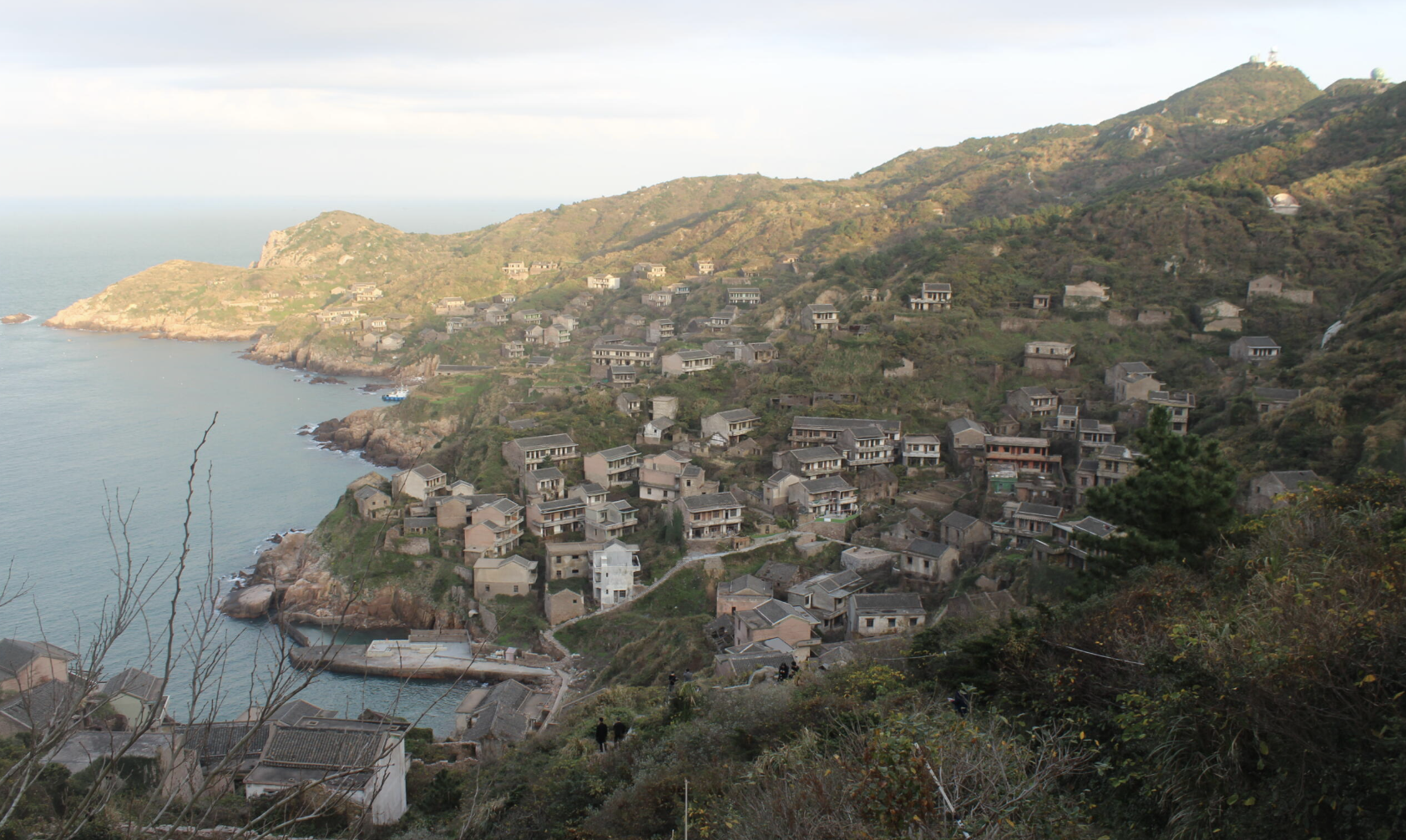
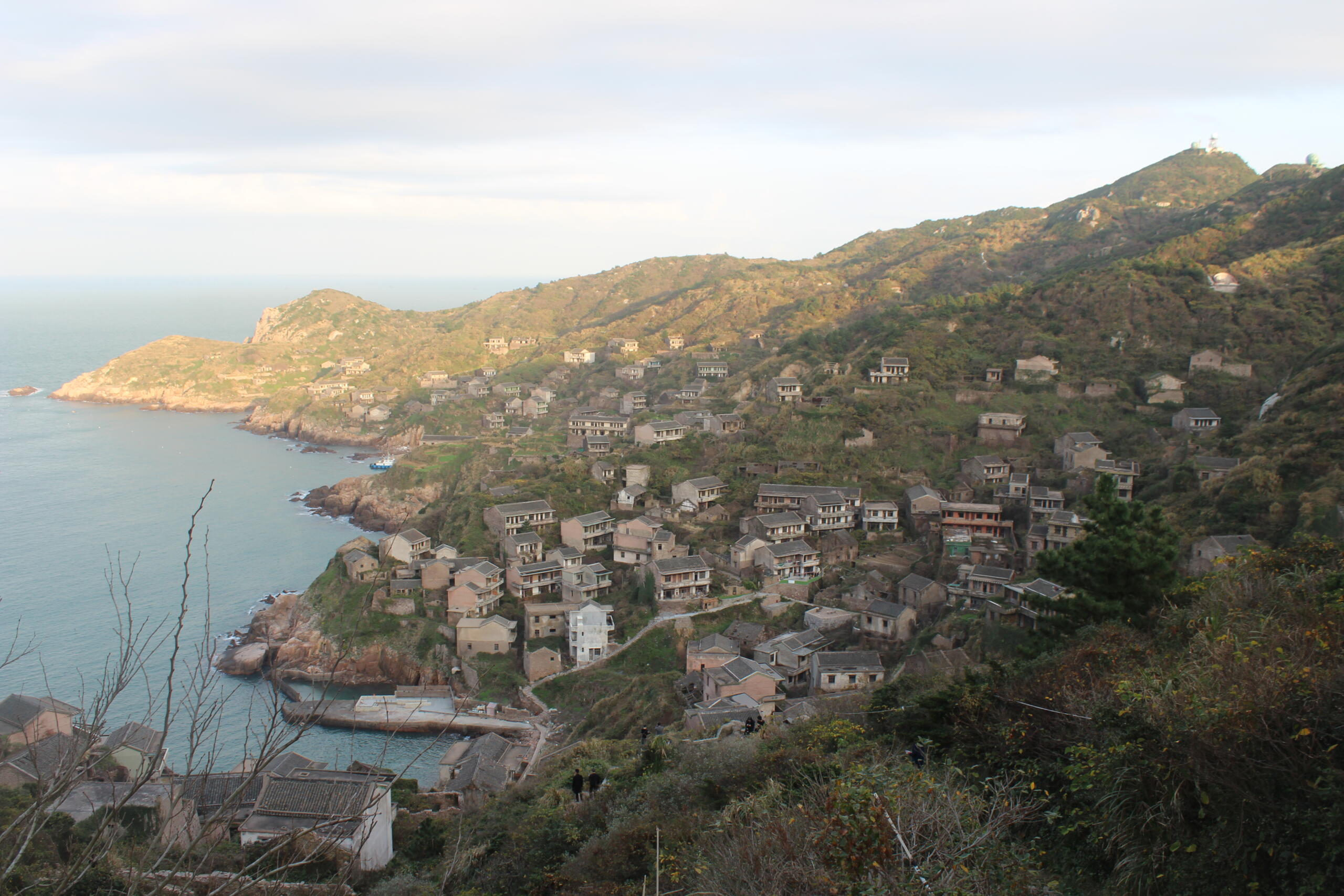
Houtouwan, on Shengshan Island 40 miles from Shanghai, was a thriving fishing port until its harbor became too shallow for modern boats. The last residents left in 2002. Two decades later, the entire village has been almost completely swallowed by climbing vines.
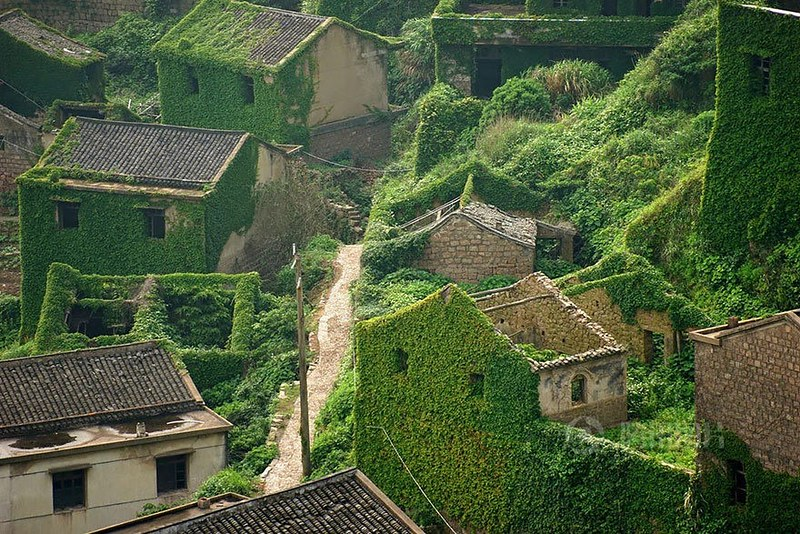
If you arrive at the top of the hill above Houtouwan, the first thing you see is a slope of green so dense that the village beneath it appears to have been erased. Then the architecture begins to emerge from the foliage. White-painted walls peeking through ivy. Right angles that the vines couldn’t quite cover. Roofs that have collapsed under the weight of two decades of growth. Windows that frame nothing but more leaves.
This is what happens to a Chinese fishing village when 2,000 people leave in the span of a few years and the subtropical vines arrive afterward.
1: A village swallowed entirely by green
Houtouwan, on the eastern face of Shengshan Island in the Shengsi Archipelago, was settled in the 1950s and reached its peak in the 1980s and early 1990s. At that point, the village held approximately 2,000 to 3,000 residents. Today, the village has zero permanent residents. The abandoned houses are still there, but most of them are no longer recognizable as buildings — they’ve been completely consumed by the climbing vine Parthenocissus tricuspidata, also known as Boston ivy or Japanese creeper. The vines now grow across the entire village in a continuous green blanket.
2: The fishing boom that built it

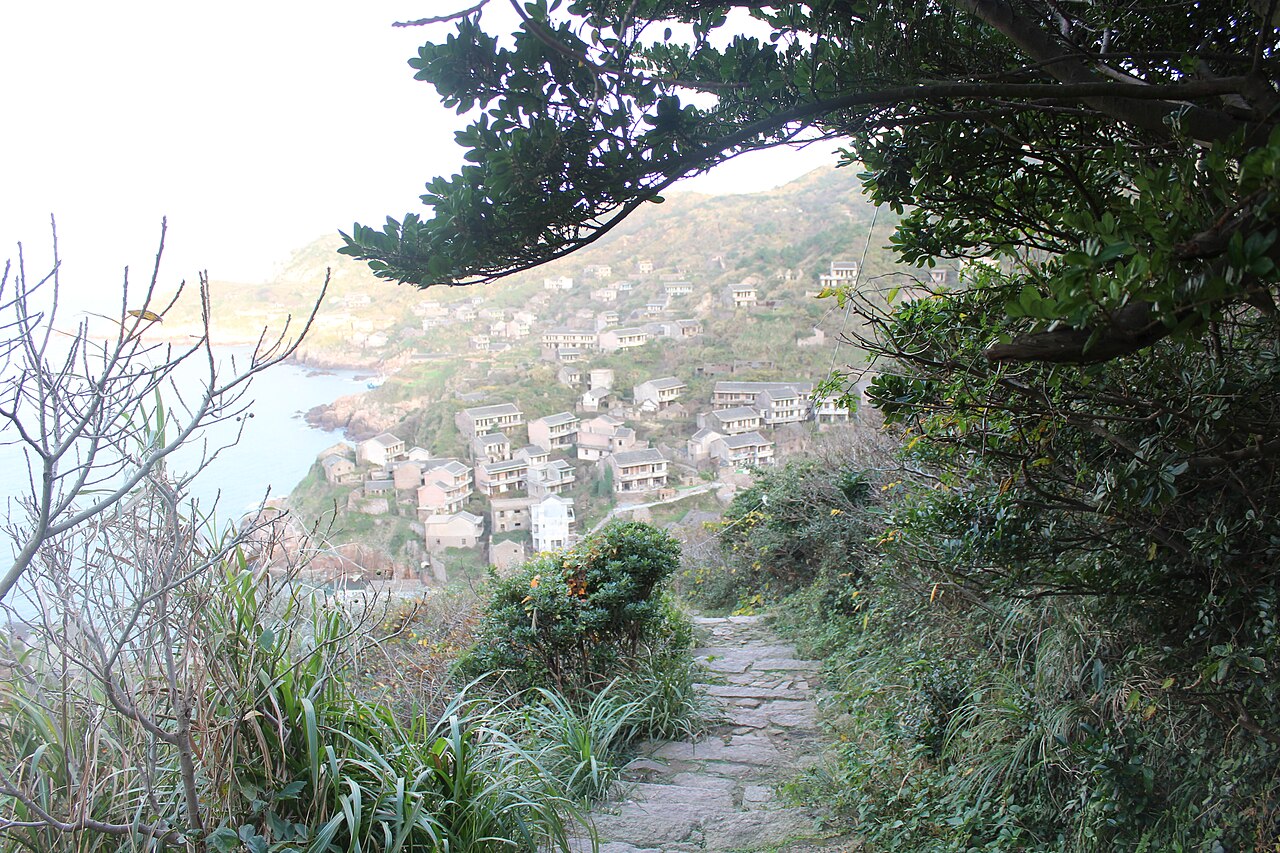
The village was settled in the 1950s. Locals nicknamed Houtouwan “Little Taiwan” because of its relative wealth and bustling activity. As China’s coastal fishing industry expanded through the 1960s, ’70s, and ’80s, Houtouwan grew rapidly. At its peak, the village had a fully functional fishing economy with boats, processing facilities, and a population of fishermen and their families spread across narrow concrete houses cascading down the hillside toward the harbor.
3: How a harbor depth killed it
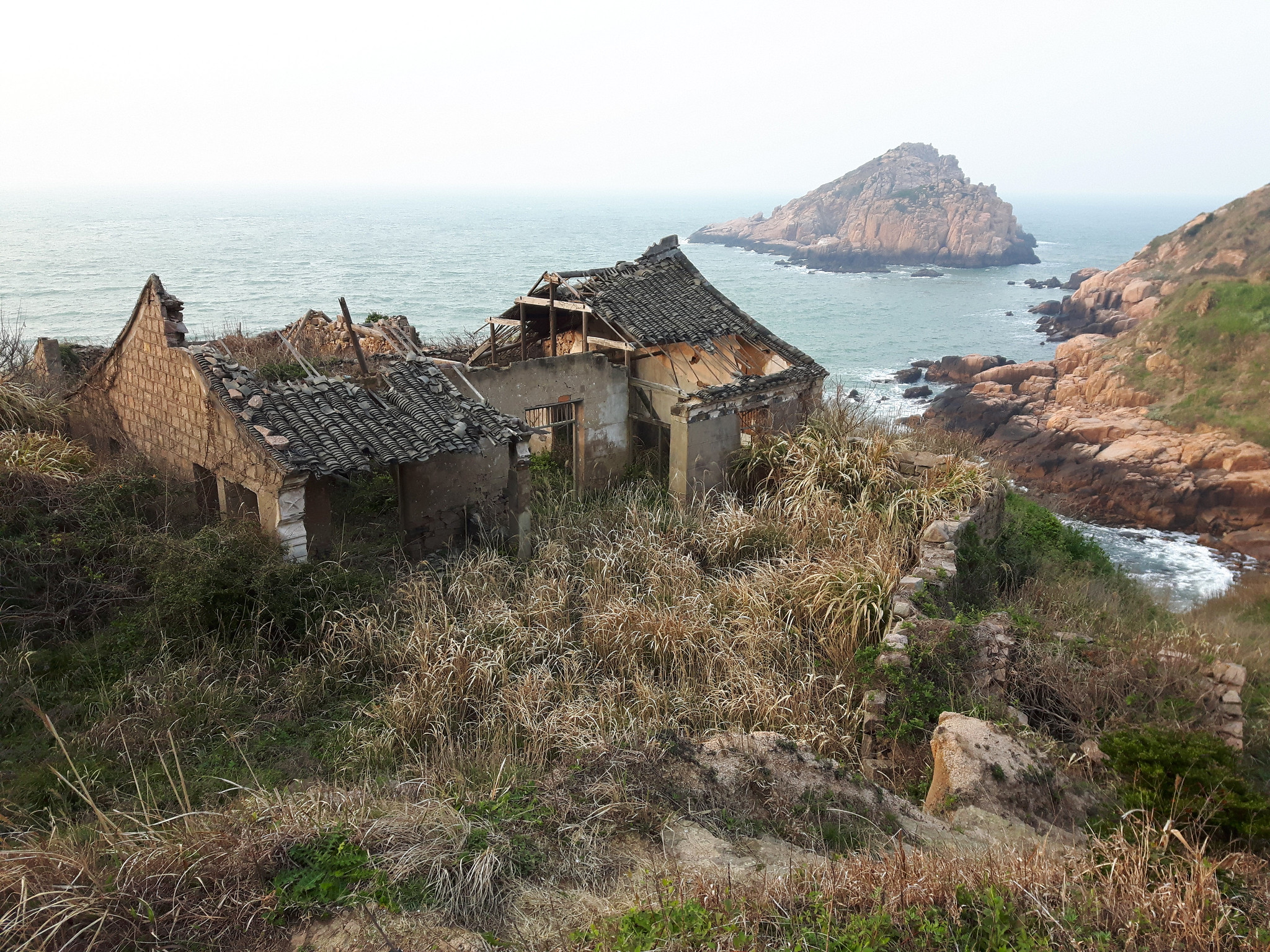
Despite the dramatic visual result, the actual reason the village was abandoned is mundane. Houtouwan died because of a logistical problem the village’s founders couldn’t have predicted: the harbor became too shallow. In the 1950s, when the village was settled, the small bay below Houtouwan was perfectly adequate for the fishing boats of the era. Wooden vessels with shallow drafts could navigate easily. By the 1990s, fishing technology had changed. Modern fishing trawlers — the larger steel-hulled boats that could reach more distant fishing grounds — had deeper drafts. They couldn’t safely use Houtouwan’s shallow bay.
4: The gradual exodus
The migration was gradual rather than sudden. Throughout the 1990s, fishermen and their families moved to the larger Shengsi Island, to Ningbo on the mainland, or to Shanghai if they could afford the move. Two of the world’s largest mussel farms operate within ten minutes by boat from Houtouwan — but the larger ports that serve those farms are on different parts of the same archipelago, not at Houtouwan. By the early 2000s, only a handful of older residents remained. The Chinese government formally relocated the last residents to a nearby village in the early 2000s. By 2002, Houtouwan was officially empty.
5: How the vines took over
What happened next is, in environmental terms, a textbook case of ecological succession in a humid subtropical climate. With no humans to maintain buildings, clear vegetation, or repair roofs, the surrounding plant community began moving in. The dominant species in the takeover is Parthenocissus tricuspidata — Boston ivy, despite the name, is actually native to East Asia. The vine is exceptionally well-adapted to climbing on stone and concrete surfaces, using small adhesive disks at the ends of its tendrils. It grows rapidly in the warm, humid summers of coastal Zhejiang Province.
6: Total takeover in just 13 years
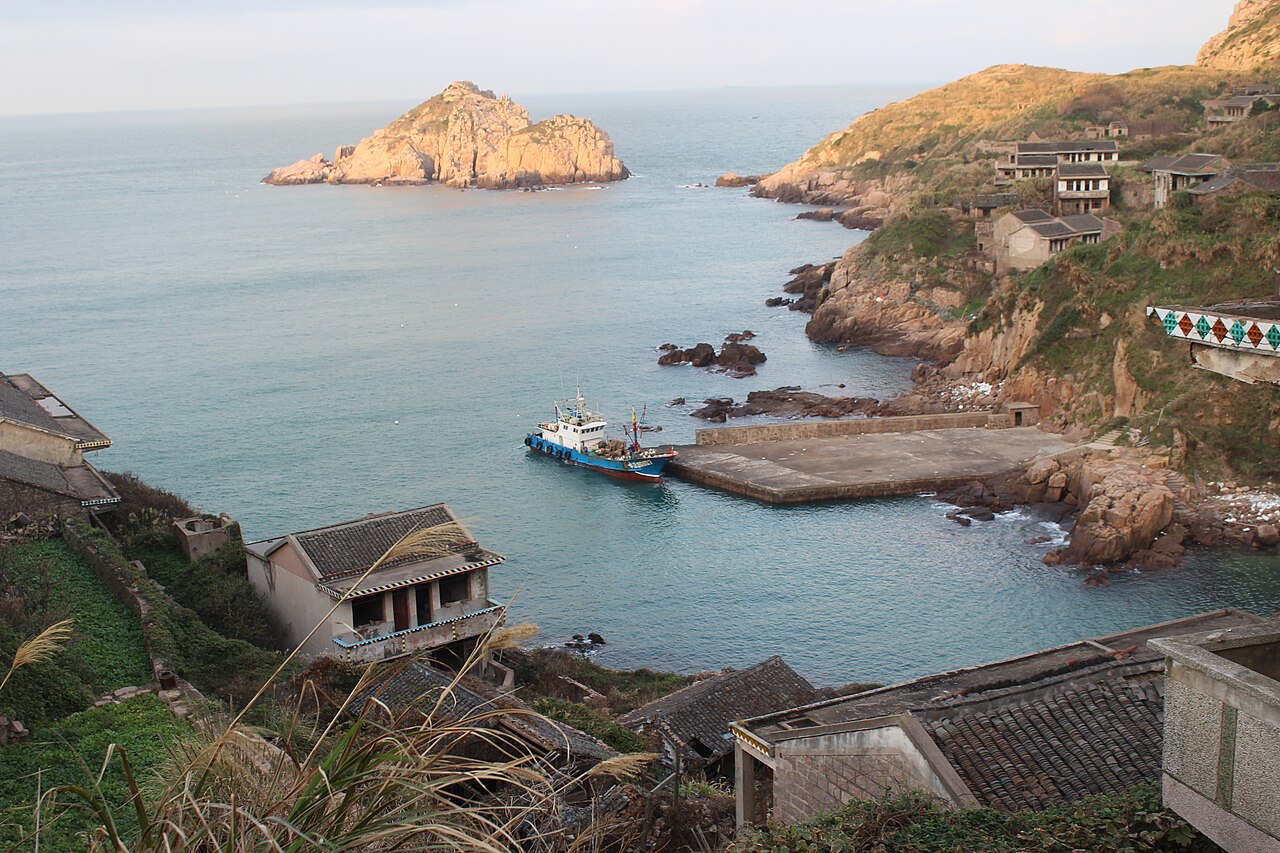
By 2010, the vines had begun covering the lower walls of Houtouwan’s abandoned houses. By 2015, the takeover was nearly complete. Roofs had been blanketed. Windows were sealed shut by foliage. Doors were buried under cascading green tendrils. The vines extended down hillsides connecting one house to the next, creating a continuous green canopy over what had been the village’s streets. Photographs from inside the abandoned houses show another dimension of the transformation. Many residents left their belongings behind when they relocated, and these objects remain — decaying furniture, kitchen items, books, photographs — as the vines grow through windows and across walls inside the rooms.
7: The 2015 viral moment
For roughly 13 years after the village was abandoned, Houtouwan remained obscure. A handful of urban explorers and local photographers had visited, but the village was unknown outside the Zhoushan archipelago. That changed in 2015. A series of aerial and ground-level photographs taken by Chinese photographers were posted to Weibo, China’s dominant social media platform. The images went immediately viral. Within weeks, Western media had picked up the story — CNN, National Geographic, The Atlantic, The Guardian, and the Daily Mail all published features. The village was nicknamed “the Wizard of Oz village” and “the most beautiful abandoned village in the world.”
8: How the local government responded
The local government of Shengshan was overwhelmed by the sudden interest. Ferry terminals were jammed, tourists were arriving demanding directions, and infrastructure intended for the small population of nearby Gouqi and Shengshan was insufficient to handle the influx. The local response was, in retrospect, fairly elegant. Rather than try to limit access, the local government formalized tourism. A viewing platform was constructed on the hill above Houtouwan, providing the now-iconic overview shots. Hiking trails through the village were laid out and maintained. A modest entrance fee was implemented (currently around $3 USD for the viewing platform, $8 USD to hike through the village itself).
9: Some former residents returned
Some former residents were licensed to return to the village to sell water to tourists, generating modest income for what had been an economically displaced community. The water sellers — typically older women who once lived in Houtouwan — sit at the entrance to the viewing platform with cardboard boxes of bottled water. The infrastructure is minimal. There’s a small ticket office, taxis available for the return trip, and the water sellers from the former resident community. There are no restaurants in Houtouwan itself.
10: Getting there is a 6-hour journey

The journey from Shanghai to Houtouwan is genuinely difficult. The route involves approximately 2 hours by bus from Shanghai’s Nanpu Bridge bus station to the deep-sea port at Yangshan, then a 1-3 hour ferry to Shengsi Island, a change of docks, another ferry from Shengsi to Gouqi/Shengshan Island, and finally a taxi from the port to Houtouwan. Total travel time: 4 to 6 hours one way. Most visitors stay at least one night on the islands rather than attempting a same-day round trip.
11: Why Houtouwan matters
What makes Houtouwan unusual is the speed and completeness of nature’s reclamation. In most abandoned settlements, decay happens slowly — buildings collapse, materials weather, but the village’s basic outlines remain visible for decades or centuries. Houtouwan went from active fishing village to nearly-invisible green hillside in less than 25 years. The pace of the transformation is itself a kind of evidence — about how powerful subtropical plant ecologies are when human maintenance disappears, and about how thin the membrane between “active community” and “ruined landscape” actually is.
12: The fantasy made real
For international visitors, Houtouwan offers something rare in the abandoned-places category: a destination that is genuinely beautiful rather than just historically interesting. The vine-covered buildings cascading down a green hillside toward a blue sea are aesthetically striking in a way that most abandoned places aren’t. The Houtouwan photographs have spread widely on Pinterest, Instagram, and travel websites partly because they look like fantasy — like something out of a Studio Ghibli film rather than a real place. As long as the islands remain difficult to reach and the local government keeps tourism low-impact, Houtouwan will likely continue to be one of the world’s most beautiful abandoned places — gradually decaying further, but at the slow pace of a place that has already been thoroughly reclaimed.