Airport baggage handlers in multiple interviews have warned that the popular practice of tying ribbons to suitcase handles can cause the bag to be diverted to manual processing — sometimes missing the flight entirely. The science: automated baggage scanning systems depend on clean readable barcodes, and dangling fabric can interfere. Here’s what handlers actually say, and the better ways to identify your luggage that don’t risk it going missing.
You’ve probably seen the advice in your social media feed at some point: never tie a ribbon to your luggage handle. Multiple variations of the warning have gone viral over the past few years, with airport baggage handlers quoted in interviews explaining that the practice can cause your bag to miss its flight entirely.
The advice is partially correct but typically oversimplified. The actual situation, as documented in interviews with baggage handlers in publications including IFLScience, The Mirror US, and Irish Star, involves a real but specific risk: ribbons tied loosely or in ways that interfere with automated baggage scanning systems can cause bags to be diverted to manual processing. In high-volume airports during tight connection windows, that diversion can mean your bag misses the flight.
But the underlying issue isn’t ribbons specifically — it’s loose external items that interfere with the automated systems airports increasingly depend on. The same logic applies to long straps, dangling tags, hoodie sleeves caught in zippers, and various other external attachments. Ribbons just happen to be the most common version of the problem because the “tie a colorful ribbon to identify your bag” advice has been recommended by travel writers for decades.
Here’s what baggage handlers actually say, what the underlying issue is, and the 5 better identification methods that don’t risk your bag missing the flight.
What baggage handlers actually said in the interviews

The most-quoted source is an airport baggage handler interviewed by RSVP Live (an Irish publication), with the quote subsequently picked up by IFLScience, The Mirror US, Irish Star, and various other outlets. The handler’s specific quote:
“Ribbons that people tie onto their suitcases to help identify them can cause issues with the bag being scanned in the baggage hall. If the bag can’t be scanned automatically it can end up in manual processing, which could mean your bag doesn’t make it to the flight. Take old stickers off the bag, it can cause confusion with the scanning process.”
The same handler offered an additional unusual warning: avoid packing marzipan. The confection’s density is similar to that of certain explosives, which can trigger security alerts that result in both the bag and its owner being removed from the flight.
Multiple other baggage handlers and aviation industry workers have provided similar warnings in various interviews and forum discussions. The consensus across these sources:
- Ribbons themselves aren’t inherently problematic
- The issue is when ribbons (or any other external attachment) are loose enough to interfere with scanning
- The interference can divert bags to manual processing, which adds time
- During tight connection windows, the time addition can mean the bag misses the flight
- Old stickers and tags from previous trips compound the problem by confusing scanning systems
The actual physics of automated baggage handling
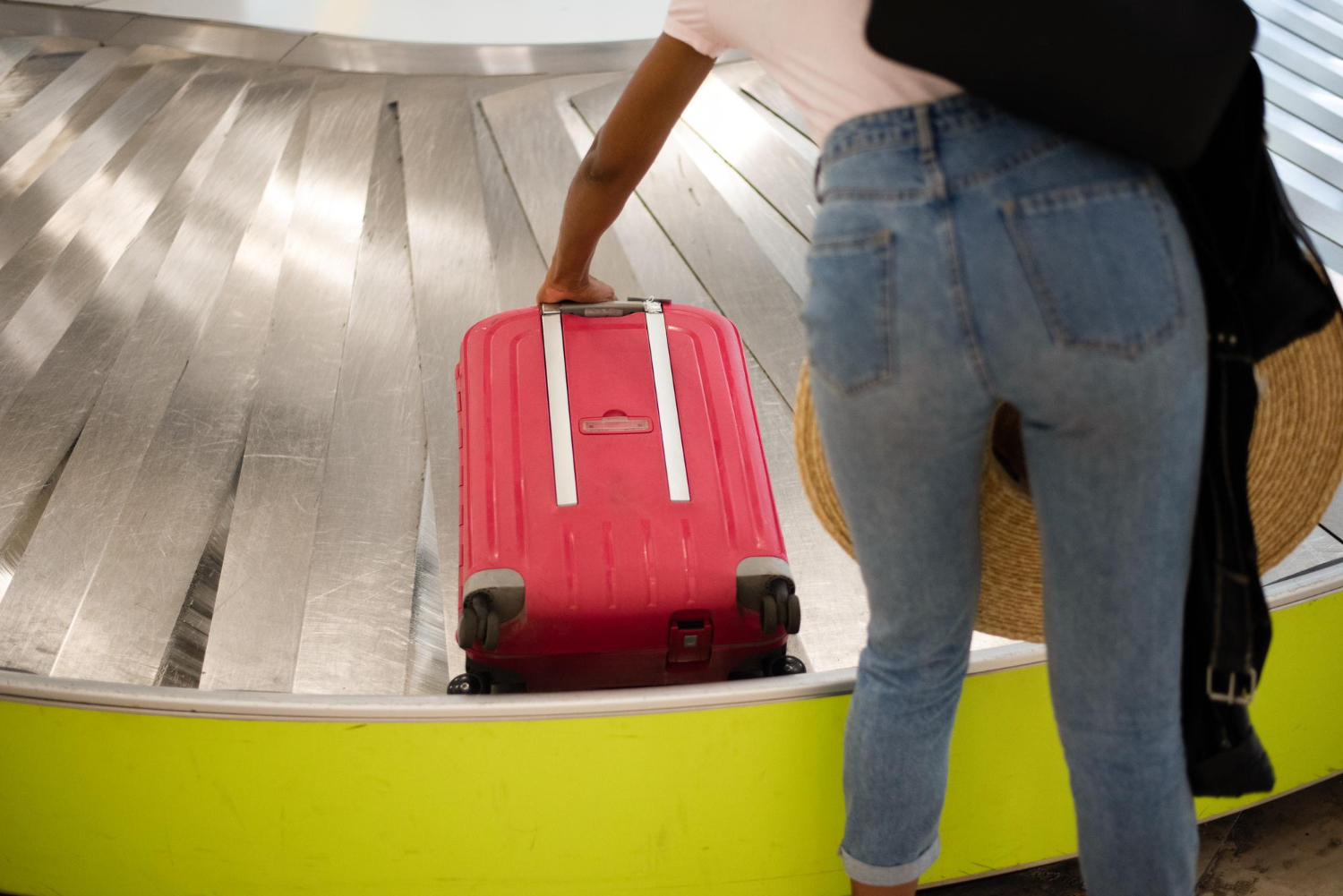
To understand why ribbons matter, it helps to understand what actually happens to your bag after you check it.
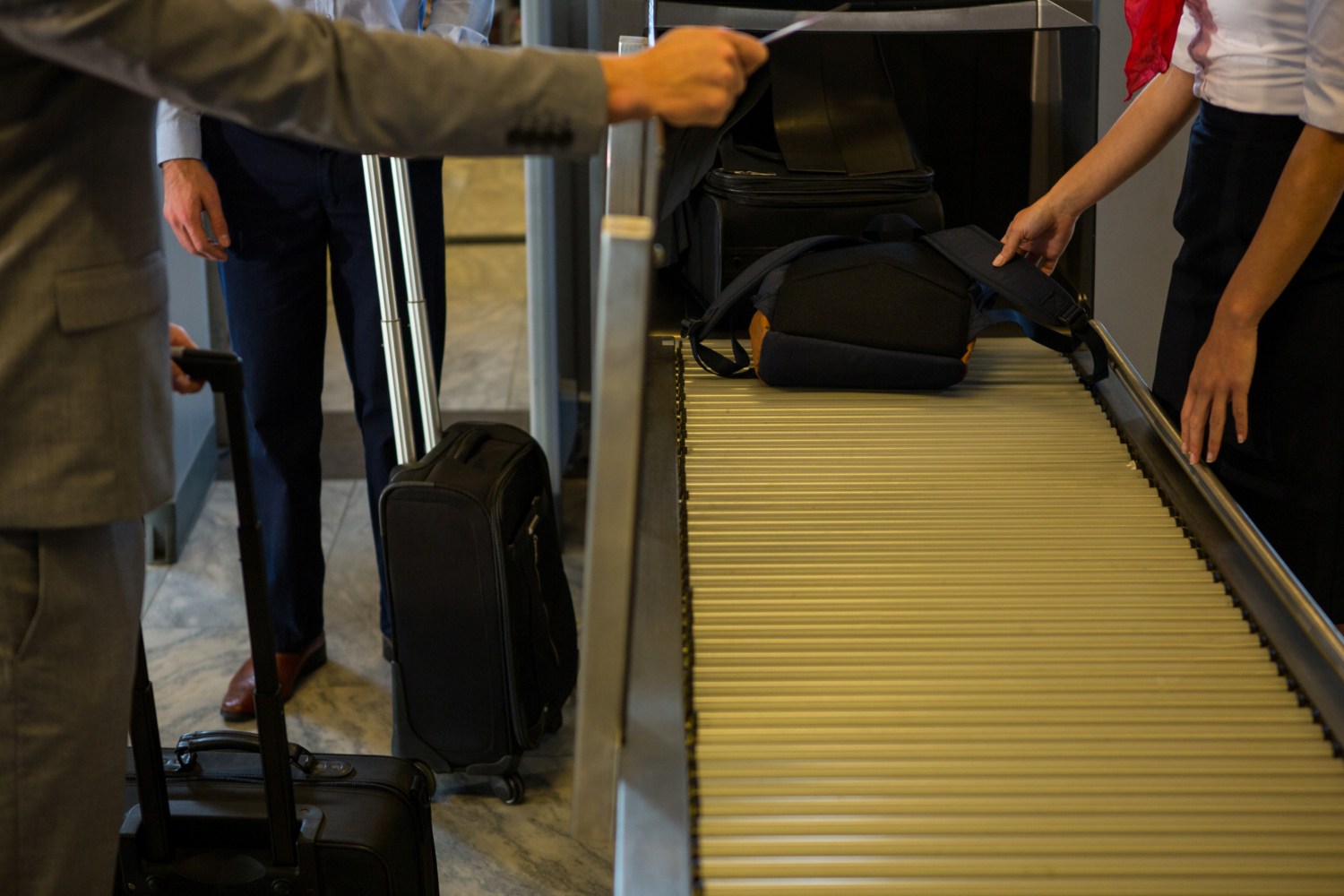
Modern airports use highly automated baggage handling systems. Your bag rides on conveyor belts that can run at substantial speeds. At various points along the journey, automated scanners read the barcode tag attached at check-in to determine where the bag should be routed. The scanners depend on:
Predictable orientation. The bag is expected to settle on the belt in a relatively consistent way, with the barcode in a readable position.
Clean barcode visibility. The scanner needs to read the barcode in a single pass. Anything blocking, covering, or obscuring the barcode causes the read to fail.
Stable belt movement. The bag is expected to move at consistent speed without bouncing, twisting, or shifting position.
Single tag identification. The system expects to find one current routing tag. Multiple tags from previous flights, partial old tags, or other barcodes can cause confusion.
When any of these conditions is disrupted, the bag is “exception-handled” — diverted to a manual processing station where a human worker physically inspects the bag, identifies the correct routing, and reintroduces the bag into the system.
Manual processing isn’t slow because the workers are slow — they’re typically very efficient at their specific task. It’s slow because:
- The bag has to physically travel to the manual station (added transit time)
- Workers have to assess what went wrong (decision time)
- Workers have to manually enter routing information or scan secondary identifiers (entry time)
- The bag has to physically travel from the manual station to wherever it should have been (more transit time)
Each step adds minutes. In a connection scenario where the bag has 45 minutes to transfer between flights, adding 15-20 minutes of manual processing can be the difference between making the flight and missing it.
How ribbons specifically cause problems
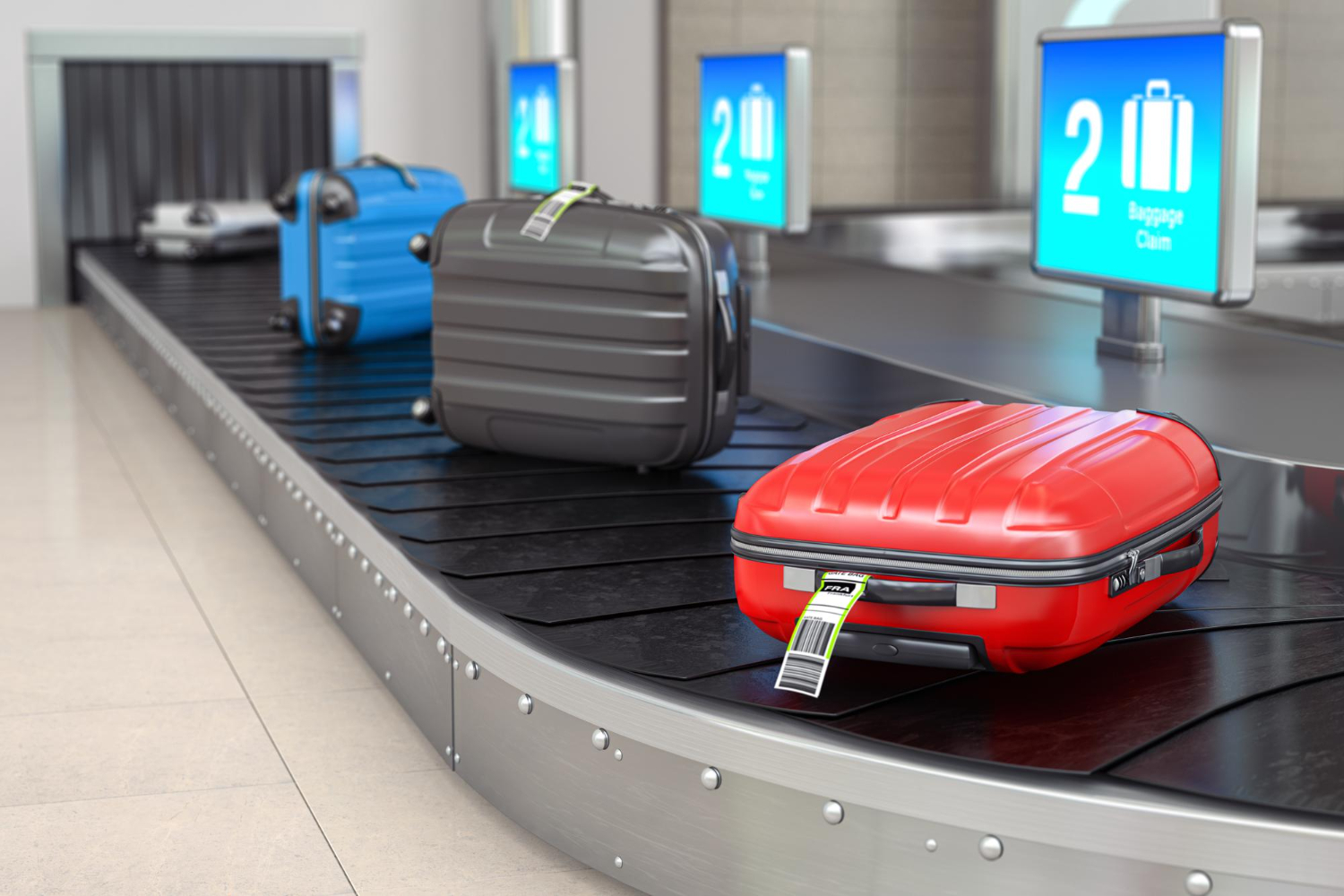
The mechanisms by which ribbons interfere with automated handling:
Direct barcode coverage. A ribbon tied near the handle can drape over the barcode tag, blocking the scanner’s read. This is the most common mechanism.
Tag flipping. A loose ribbon can catch on belt mechanisms or other bags, causing the routing tag to flip face-down. Most scanners can only read tags in one orientation.
Belt motion disruption. A long ribbon hanging over the side of the bag can drag on the belt sides or catch on other equipment, causing the bag to twist or rotate during scanning. Inconsistent motion produces unclear scanner images.
Snagging on equipment. Long, loose ribbons can become physically caught on conveyor mechanisms, rollers, or sorting equipment. This typically produces an immediate manual intervention.
Mistaken identification. A ribbon tied in a way that resembles or partially covers other identifying elements can confuse the scanning systems’ image recognition.
Removal during screening. During secondary security screening, officers may remove external items to ensure the bag moves through follow-up equipment cleanly. Ribbons can be cut off without notice and rarely reattached.
The risk varies substantially based on:
How the ribbon is tied. Short, tightly-secured ribbons (3-4 inches, double-knotted) cause far fewer problems than long, loosely-secured ribbons.
Where the ribbon is positioned. Ribbons positioned away from the barcode tag area cause fewer problems than ribbons positioned near the tag.
The specific airport. Newer airports with more sophisticated automated systems handle ribbons better than older airports with simpler scanning equipment.
The connection window. A ribbon causing 15 minutes of delay matters far more for a 45-minute connection than for a non-connecting destination flight.
The specific handling sequence. Some airports use particular automated systems (rotating screening, tilt-table verification) that interact with external attachments in specific ways that may or may not be problematic for ribbons.
The 5 better identification methods that actually work
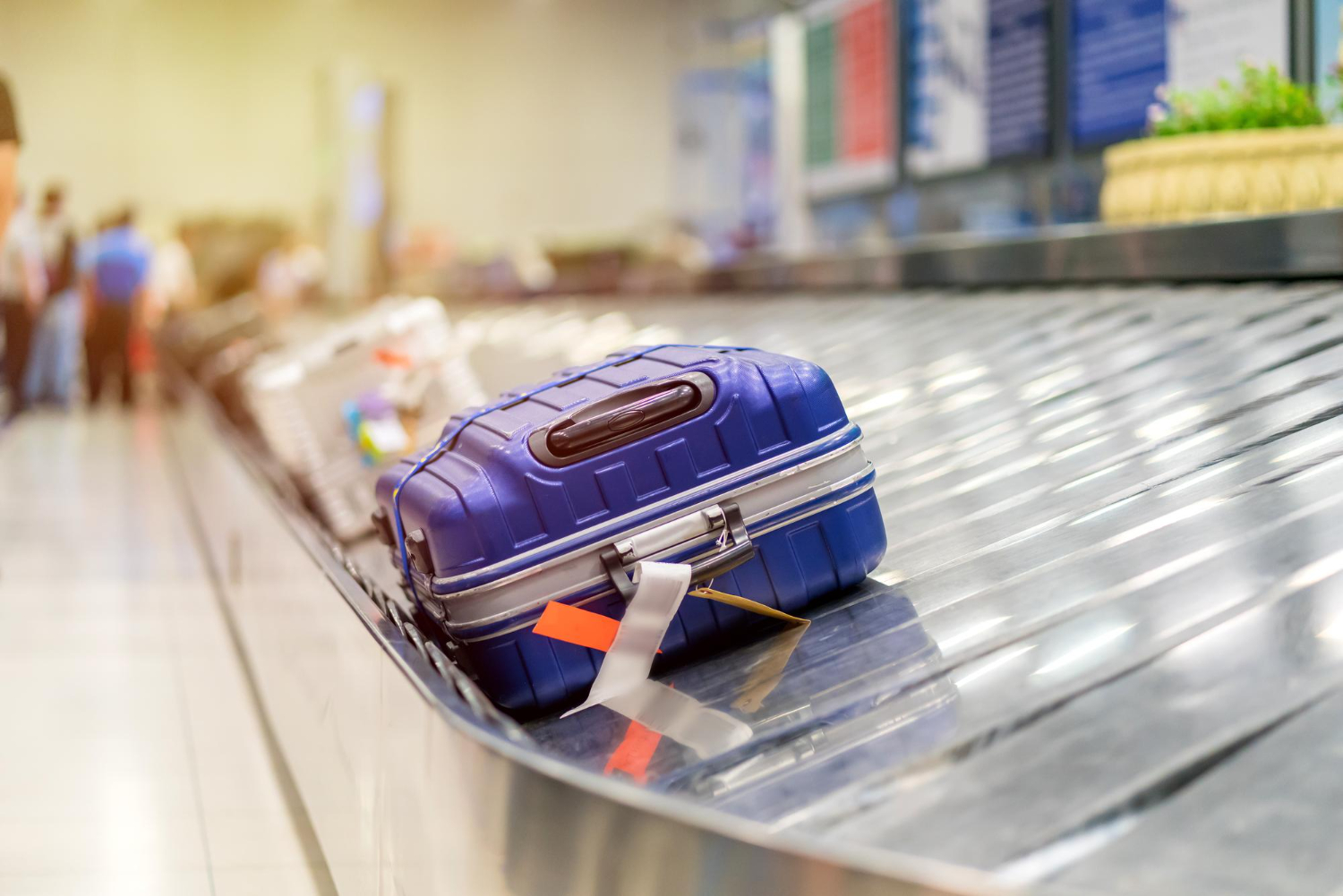
If the goal is to make your luggage easy to identify on the carousel, several alternatives provide the visual differentiation without the scanning interference:
1. Choose distinctive luggage to begin with
The simplest solution is to buy luggage that doesn’t look like everyone else’s. The reason ribbons became popular is that black rolling suitcases dominated luggage purchasing for decades, making identification difficult. The solution that doesn’t require ribbons is to choose:
- Bright colors (red, orange, yellow, lime green, electric blue, hot pink)
- Distinctive patterns (geometric prints, photographic patterns, brand-specific designs)
- Unusual shapes (specific brands have signature silhouettes)
- Specific brand identifiers (some luggage has prominent visual branding)
The cost difference between standard black luggage and distinctive alternatives is often minimal. The identification benefit lasts for years rather than for a single trip.
2. Bright colored luggage straps that wrap the entire bag
Instead of ribbons tied to handles, full luggage straps wrap around the entire suitcase. The benefits:
- Highly visible from across the baggage claim
- Functional secondary purpose (keeps the suitcase closed if zippers fail)
- Don’t dangle — they sit flush against the bag surface
- Don’t interfere with scanning because they don’t cover the tag area
- Can be customized with names, monograms, or distinctive patterns
Quality luggage straps typically cost $15-25 and last for years.
3. Permanent visual identification (paint, stickers, decals)
For travelers comfortable modifying their luggage permanently:
- Fabric paint can create distinctive patterns that won’t interfere with scanning
- Vinyl decals designed for luggage adhere securely without dangling
- Permanent markers can add specific identifying marks
- Custom embroidery for soft-sided luggage
The advantage: the identification stays put and doesn’t risk removal during security screening.
4. Silicone handle wraps in distinctive colors
Silicone handle wraps slip over your suitcase handle, providing both bright color identification and grip improvement. They:
- Stay attached securely without dangling
- Come in many bright colors
- Can be removed and reused
- Don’t interfere with automated scanning
Cost: typically $5-15.
5. Bluetooth trackers (the technology solution)
Apple AirTags, Tile trackers, Samsung SmartTags, and similar Bluetooth tracking devices have become substantially more useful for luggage identification. Place one inside your luggage and you can:
- Track the bag’s location through your phone
- Verify the bag is on your flight
- Locate the bag in baggage claim before it appears
- Identify the bag definitively if there are duplicates
- Document where the bag was last detected if it goes missing
Cost: $25-35 per tracker, plus a smartphone you presumably already have. The tracking technology has been credited with locating thousands of mishandled bags annually.
What about the ID information question

Beyond identification at the carousel, consider the broader question of bag identification if it actually goes missing. Several practices significantly improve recovery odds:
Always include ID information inside the luggage. External tags can be lost, damaged, or removed. An ID card placed inside the suitcase (with name, phone, email, and destination address) substantially improves recovery if external identification fails.
Photograph your bag and contents before traveling. A few smartphone photos of the closed bag, the open bag with main contents visible, and any specific identifying features make claims processing dramatically faster if needed.
Note the bag’s specific identifying features. Brand, model, color, size, distinctive marks, monogramming, or other features that help airline customer service identify your specific bag among thousands of similar bags.
Keep your baggage claim ticket. The receipt the airline gives you at check-in contains the specific routing tag information that’s necessary if the bag goes missing.
Use TSA-approved locks. Locks marked with the TSA logo can be opened by TSA workers using master keys without damaging the lock. Other locks may be cut off during inspection.
The bigger picture: what really matters for not losing your luggage

Ribbons are a relatively minor factor in luggage loss. The bigger factors:
Tight connections. Connections under 60 minutes substantially increase the risk of luggage missing the connecting flight, regardless of ribbons. Ironically, your bag is more likely to make a tight connection if it’s checked through to your final destination than if you have to claim and re-check it.
Multiple-airline itineraries. Bags transferred between airlines have substantially higher loss rates than bags staying within one airline’s system.
Last-flight-of-the-day check-ins. Bags checked very close to flight departure (within the airline’s stated cutoff but barely) are more likely to miss the flight than bags checked earlier.
Unusual routings. Connections involving airports without much traffic between them can result in routing complexity that increases handling errors.
Peak travel periods. Holiday seasons, weather disruptions, and other peak periods produce substantially higher mishandling rates than normal travel periods.
Aircraft equipment changes. When airlines swap aircraft between scheduled departure and actual departure, baggage transfer procedures occasionally fail to keep up.
The most-effective ways to reduce luggage loss risk:
- Choose longer connections when booking (90+ minutes minimum, 120+ for international)
- Prefer same-airline itineraries (the airline has incentive to keep your bag with you)
- Check in well before cutoff times (60-90 minutes before departure for domestic, 2+ hours for international)
- Use Bluetooth trackers to verify your bag’s location independently
- Carry essentials in your carry-on (medications, valuables, change of clothes for at least one day)
- Take a photograph of your checked bag before handing it over, so you can describe it accurately if needed
- Don’t tie loose ribbons that could interfere with automated scanning
The ribbon issue is real but minor. The bigger lessons from baggage handler interviews involve the broader category of “things that interfere with automated systems” — not just ribbons but anything dangling, anything obscuring tags, and anything that makes your bag fail to behave like the predictable rectangular object the automation expects.
For most travelers, the practical adjustment is simple: skip the ribbon, choose distinctive luggage or use a wraparound luggage strap, drop a Bluetooth tracker inside, and trust the airline’s automated systems to do their job. The combination provides better identification than ribbons ever did, eliminates the risk of scanning interference, and gives you actual real-time location data that ribbons can’t provide.
The next time someone tells you that ribbons on luggage will cause your bag to miss the flight, you can give them the more nuanced answer: it’s not the ribbon itself, it’s the way ribbons interfere with the systems that move millions of bags through airports every day. The fix isn’t to abandon visual identification — it’s to use identification methods that work with the automated systems instead of against them.