
The small pocket above the right front pocket on your jeans has been there since May 20, 1873 — when Levi Strauss & Co. and tailor Jacob Davis received U.S. Patent No. 139,121 for “Improvement in Fastening Pocket-Openings.” Its original purpose: protecting cowboys’ pocket watches. Despite wristwatches replacing pocket watches a century ago, every pair of Levi’s still includes the watch pocket — making it one of the oldest unchanged design features in modern clothing. Here’s the full story Levi Strauss & Co.’s own historian Tracey Panek has documented.
If you’re wearing jeans right now, run your finger along the top of the right front pocket. You’ll feel a smaller pocket nestled inside it — typically two to three inches across, just deep enough to hold a few coins or a tube of lip balm, too small for almost anything else you’d want to carry.
The mystery of what this pocket is for has gone viral repeatedly over the past decade. Reddit threads, TikTok videos, and Twitter discussions have proposed various theories: it’s for coins (sort of), for keys (no), for matches (definitely no), for “condoms” in 1970s slang (popular myth, not the original intent), or it’s just decorative.
The actual answer is documented in primary sources from Levi Strauss & Co. itself, including Britannica’s coverage and the company’s own corporate historian Tracey Panek. The small pocket is called a “watch pocket” and has been a feature of Levi’s jeans since their original 1873 patent. Its purpose was specifically to protect 19th-century pocket watches — bulky, fragile timepieces that were essential equipment for cowboys, miners, railroad workers, and other manual laborers who made up the original target market for blue jeans.
The fascinating part isn’t just the history. It’s that this tiny pocket has remained essentially unchanged for 152 years — making it arguably the oldest continuously-produced design feature in modern Western clothing. While almost every other element of fashion has cycled through countless trends and reinventions since 1873, the watch pocket has been quietly riding along on Levi’s jeans for a century and a half, occupying a permanent spot above the right front pocket regardless of changing fashions, lifestyles, or actual function.
Here’s the full story.
The 1873 patent that started it all
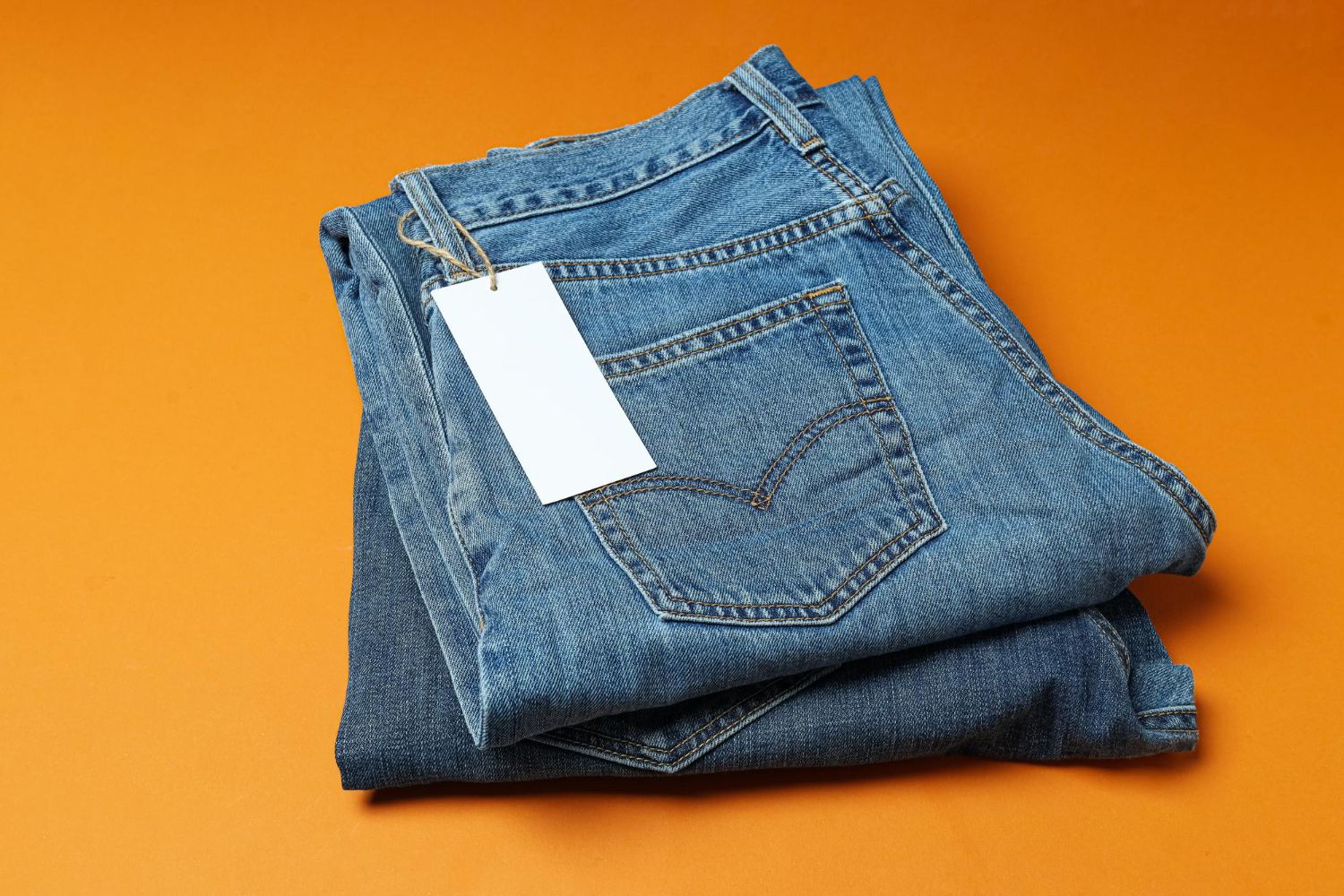
On May 20, 1873, Levi Strauss & Co. and tailor Jacob Davis received U.S. Patent No. 139,121 for “Improvement in Fastening Pocket-Openings.” This patent is the founding document of modern blue jeans — the legal beginning of what would eventually become a global denim industry generating tens of billions of dollars annually.
The backstory: Jacob Davis was a Latvian-Jewish immigrant tailor working in Reno, Nevada in the late 1860s. He had been making custom work pants for local miners using a heavy denim fabric supplied by the San Francisco wholesale dry goods firm Levi Strauss & Co. A miner’s wife had asked Davis to make a particularly sturdy pair of pants for her husband, who kept tearing his pockets while doing manual labor.
Davis came up with an innovative solution: reinforcing the corners of the pockets with copper rivets, the same type of rivets used to attach hooves to horseshoes. The riveted pockets proved dramatically more durable than conventionally-stitched pockets. Word spread among miners and other manual laborers, and Davis found himself unable to keep up with demand.
Lacking the capital to patent his invention himself, Davis wrote to Levi Strauss in 1872 proposing a partnership. Strauss recognized the commercial potential immediately. The two filed a joint patent application, which was granted on May 20, 1873.
The patent specifically covered the riveting technique, but the design as patented included four pockets:
- One large left front pocket
- One large right front pocket
- One small pocket above the right front pocket — the watch pocket
- One back pocket on the right side — beneath the leather patch
This was the original blue jean design. The watch pocket was part of it from the beginning. According to Tracey Panek, the historian who manages the Levi Strauss & Co. Archives: “The small pocket on the right front side is called a watch pocket, since it was intended to store a pocket watch — a typical possession during the late 1800s.”
Why pocket watches mattered so much

To understand why Levi Strauss and Jacob Davis specifically designed protection for pocket watches into work pants, you need to understand how integral pocket watches were to 19th century working life.
In the 1870s American West, the pocket watch was substantially more than a fashion accessory. It was essential professional equipment for:
Railroad workers. Train scheduling depended on accurate, synchronized timekeeping. Railroad workers were typically required to carry approved pocket watches and have them regularly serviced for accuracy.
Miners. Mining operations involved coordinated shifts, controlled blasting schedules, and various time-sensitive activities. Miners needed reliable timepieces for both safety and operational reasons.
Cowboys and ranch hands. Cattle drives, branding operations, and various ranching activities required time coordination across teams that might be working miles apart.
Farmers and laborers. Agricultural work required timing for various activities, and laborers were often paid by the hour, requiring accurate time measurement.
Skilled trades. Carpenters, blacksmiths, and other tradespeople needed timepieces for their work.
The watches themselves were substantial pieces of mechanical engineering. A typical 1870s railroad-grade pocket watch might be:
- Approximately 50mm in diameter — significantly larger than modern wristwatches
- 15-20mm thick — substantially thicker than modern timepieces
- 75-150 grams in weight — heavier than most modern watches
- Connected to a watch chain — a metal chain that would be attached to a vest button, pocket loop, or belt
These watches were also extraordinarily valuable. A good railroad-grade pocket watch in 1873 could cost $50-200 — equivalent to several months of working-class wages, possibly $2,000-8,000 in 2024 dollars. For a working man, his pocket watch was often his single most valuable possession besides perhaps his horse and his rifle.
Carrying such a valuable, fragile, and bulky item in regular pants pockets created multiple problems:
- The watch could be damaged by physical impact during manual labor
- The chain could snag on tools, equipment, or saddles
- The watch could be stolen more easily from a regular pocket
- The watch could fall out during physical activity
The watch pocket solved all of these problems. The smaller dimensions held the watch securely. The riveted construction prevented tearing. The position high on the front of the pant made the watch accessible while protected. The watch chain could pass through the pocket opening to a vest button or belt loop, providing additional security.
For a cowboy or miner in the 1870s, blue jeans with a proper watch pocket were genuine work equipment, not fashion. The watch pocket was a meaningful upgrade over the alternatives.
The “fifth pocket” misconception
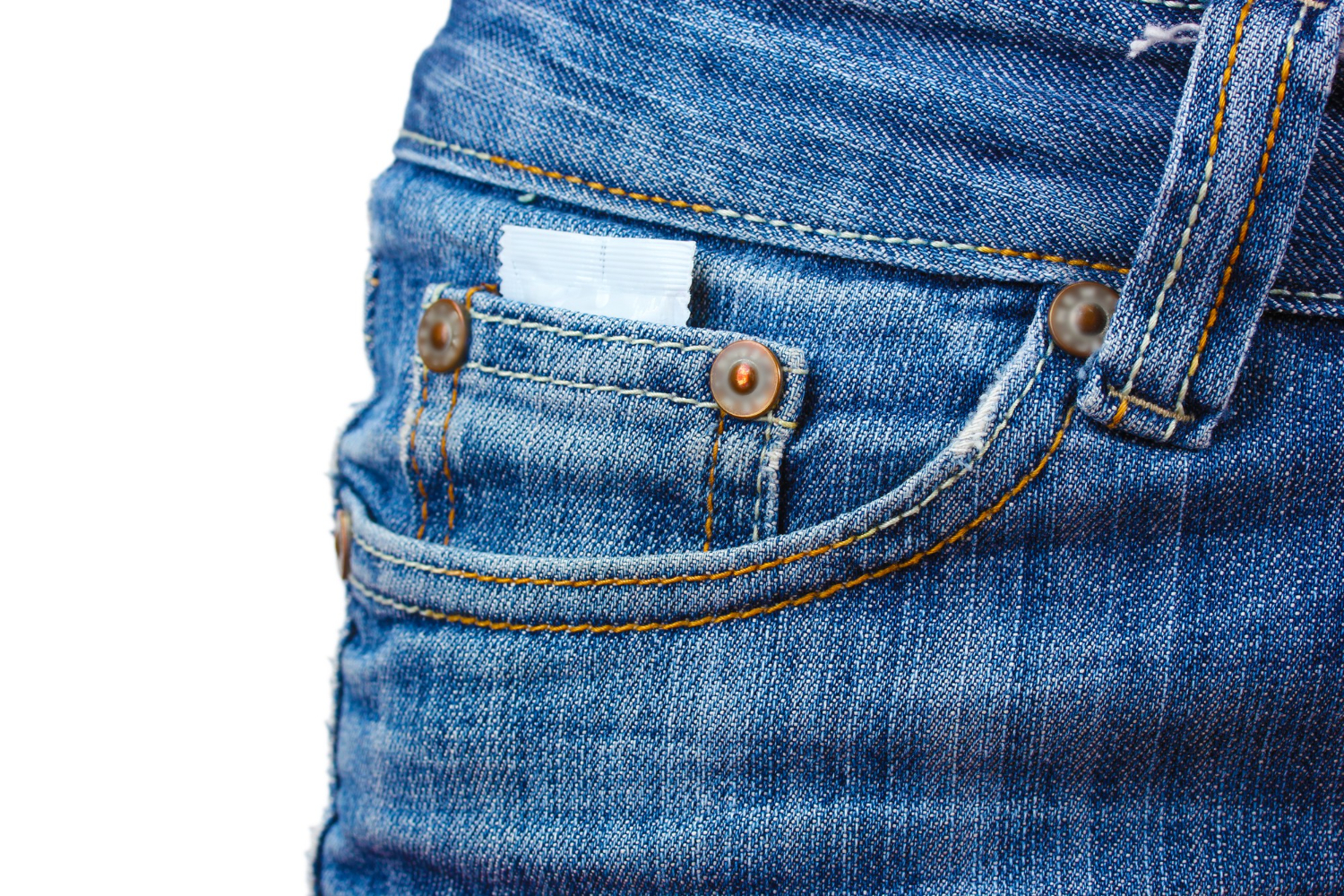
A common misconception about the small pocket — perpetuated even by Levi Strauss & Co.’s own marketing for decades — is that it’s the “fifth pocket” on jeans. The famous 1996 Levi’s 501 advertising campaign called it “The Fifth Pocket, Overlooked Since 1873.”
This isn’t quite right. According to Tracey Panek and the Levi Strauss Archives, the original 1873 jeans had only four pockets total:
- Left front pocket
- Right front pocket
- Watch pocket (above the right front)
- Right back pocket (single back pocket)
The “fifth pocket” — the second back pocket on the left side — wasn’t added until 1901, nearly three decades after the original patent. The watch pocket is actually the fourth original pocket, not the fifth.
The “fifth pocket” terminology appears to have caught on through marketing convenience and stuck despite being historically inaccurate. The pocket has many other names that have emerged over its 150+ years of existence:
- Watch pocket (the original and most accurate name)
- Coin pocket (common modern usage)
- Ticket pocket (British terminology)
- Fob pocket (also British, referring to the watch fob/chain)
- Condom pocket (1960s-70s slang, though never the original intent)
- Lighter pocket (smoker’s slang)
- The fifth pocket (corporate marketing terminology, technically inaccurate)
How the watch pocket survived its own obsolescence

By the 1920s, wristwatches had largely replaced pocket watches in everyday use. The shift happened relatively quickly — World War I had popularized wristwatches among soldiers (who needed instantaneous time access while their hands were occupied), and post-war fashion adopted wristwatches as standard menswear.
By 1930, pocket watches had become primarily ceremonial or specialty items. The original purpose of the watch pocket was essentially obsolete. Yet Levi’s continued including it in every pair of jeans they manufactured, and other denim brands followed.
Why? Several factors:
Manufacturing inertia. Once production lines were configured to make jeans with watch pockets, changing the design required substantial retooling. Continuing to make the established design was easier than redesigning.
Brand identity. The watch pocket had become part of the visual signature of blue jeans. Removing it would have made the pants look incomplete to consumers who associated the pocket with the established jean aesthetic.
Useful enough to keep. Even without pocket watches, the small pocket continued to find practical uses — for coins, matches, small folding knives, and various other small items.
Historical trademark value. The watch pocket became part of the brand heritage that Levi Strauss & Co. and other denim makers used to differentiate their products as authentic, traditionally-constructed work pants.
The result is that the watch pocket has continued as a standard feature of jeans from essentially every major denim manufacturer for over 100 years after its original purpose became obsolete.
What people actually use the watch pocket for now

Modern uses for the watch pocket have evolved significantly from the original pocket-watch protection role:
Coins. The most common modern use. The watch pocket holds a few coins more securely than the larger front pocket, where coins tend to migrate to the bottom and become difficult to retrieve.
Lip balm and ChapStick. A perfect size for standard lip balm tubes, which fit snugly enough to stay in place during normal activity.
Small folding knives. Pocket-knife enthusiasts often use the watch pocket for small EDC (everyday carry) knives, particularly those with clips designed to mount on pocket edges.
USB drives. Small USB flash drives fit perfectly in the watch pocket and stay secure during movement.
Concert/event tickets. The watch pocket holds a folded paper ticket securely without folding it further.
Cash. Folded bills fit well in the watch pocket and are less likely to fall out than from larger pockets.
Small electronics. AirPods cases (depending on size), small Bluetooth devices, and various tech gadgets often fit appropriately.
Lighters. Standard disposable lighters fit comfortably in the watch pocket.
Guitar picks. Musicians often store guitar picks in the watch pocket for easy access.
Pills/medications. Small pill containers or individual emergency medication doses (epinephrine auto-injectors generally don’t fit, but emergency nitroglycerin tablets often do).
Hair ties and bobby pins. A common use for people who wear their hair up.
For all the uses the modern watch pocket has accumulated, none have generated the kind of universal adoption that pocket watches had in 1873. The pocket persists primarily as a historical artifact rather than a feature designed for current uses.
What this represents about clothing design more broadly

The watch pocket is an interesting case study in how design features persist far beyond their original purposes. Several other examples follow similar patterns:
Buttons on jacket sleeves. These originated as functional buttons that allowed military officers to roll up their sleeves while still maintaining proper uniform appearance. Modern jacket sleeve buttons are typically decorative — they don’t actually unbutton on most modern garments. But they persist because the visual signature of buttoned sleeves became part of formal jacket design.
The vestigial collar button on dress shirts. Originally designed to attach detachable collars (which were common in the 19th and early 20th centuries when collars were laundered separately from shirts). Modern dress shirts have permanent collars, but most still feature the small button at the back of the collar.
The fabric loop on the back of dress shirts. Originally designed to hang the shirt on a hook in changing rooms or shared bathrooms before household closets were standard. Modern shirts often retain the loop despite most users hanging shirts on hangers in private closets.
The “key” pocket on cargo shorts. A small pocket originally designed for car keys, now serving as a generic small-item pocket as keyless entry has reduced the importance of physical keys.
Decorative epaulettes on military-styled clothing. Originally functional military rank indicators, now purely decorative on civilian clothing inspired by military aesthetics.
All of these features persist because clothing design tends to preserve elements that consumers associate with established forms, even when the original functional purpose has become obsolete. The watch pocket on jeans is one of the most prominent examples of this phenomenon.
The watch pocket as historical artifact

The next time you reach for a pair of jeans and notice the small pocket above the right front pocket, you can appreciate something specific about it: you’re wearing a piece of 19th-century manufacturing technology that has been continuously produced essentially unchanged for over 150 years.
The watch pocket isn’t just a decorative element. It’s a direct, traceable connection to:
- A specific 1872 letter Jacob Davis sent to Levi Strauss proposing the partnership
- A specific U.S. patent filed and granted on May 20, 1873
- The specific working populations that made jeans successful — cowboys, miners, railroad workers, farmers
- A specific 19th century artifact (the pocket watch) that no longer exists in everyday use
- A specific design philosophy that prioritized worker protection of valuable equipment
Few design elements in modern clothing have such direct historical lineage. The watch pocket has outlasted countless fashion trends, multiple economic eras, the entire history of automobile transportation, two world wars, the rise of mass media and the internet, and the global transformation of working populations from primarily agricultural to primarily knowledge-based.
The pocket watches it was designed to protect have largely disappeared from everyday use. The cowboys, miners, and railroad workers who constituted its original target market have largely been replaced by office workers, baristas, and software engineers. The American West where blue jeans were initially marketed has been transformed beyond recognition.
But the watch pocket remains, riveted into the upper right front of essentially every pair of jeans produced anywhere in the world. It’s empty for most modern wearers. It’s barely noticed for most. It’s frequently mocked in social media posts asking what it could possibly be for. And it’s still there, exactly where Levi Strauss and Jacob Davis put it in 1873, doing what design features sometimes do — outlasting their original purpose by simply continuing to exist, becoming a historical artifact embedded in the most ordinary piece of clothing most people own.
Most people don’t know what the small pocket is for. Now you do. Whether you actually use it for anything or not, you’re wearing a piece of working-class American history every time you pull on a pair of jeans. The cowboys whose pocket watches it was designed to protect would probably be confused that their work pants became global fashion. They’d probably be even more confused that the design feature meant to save their valuable timepieces is now being asked about by people who’ve never seen a pocket watch in their lives. But they’d recognize the pocket itself, because it hasn’t changed since they first wore it 150 years ago.