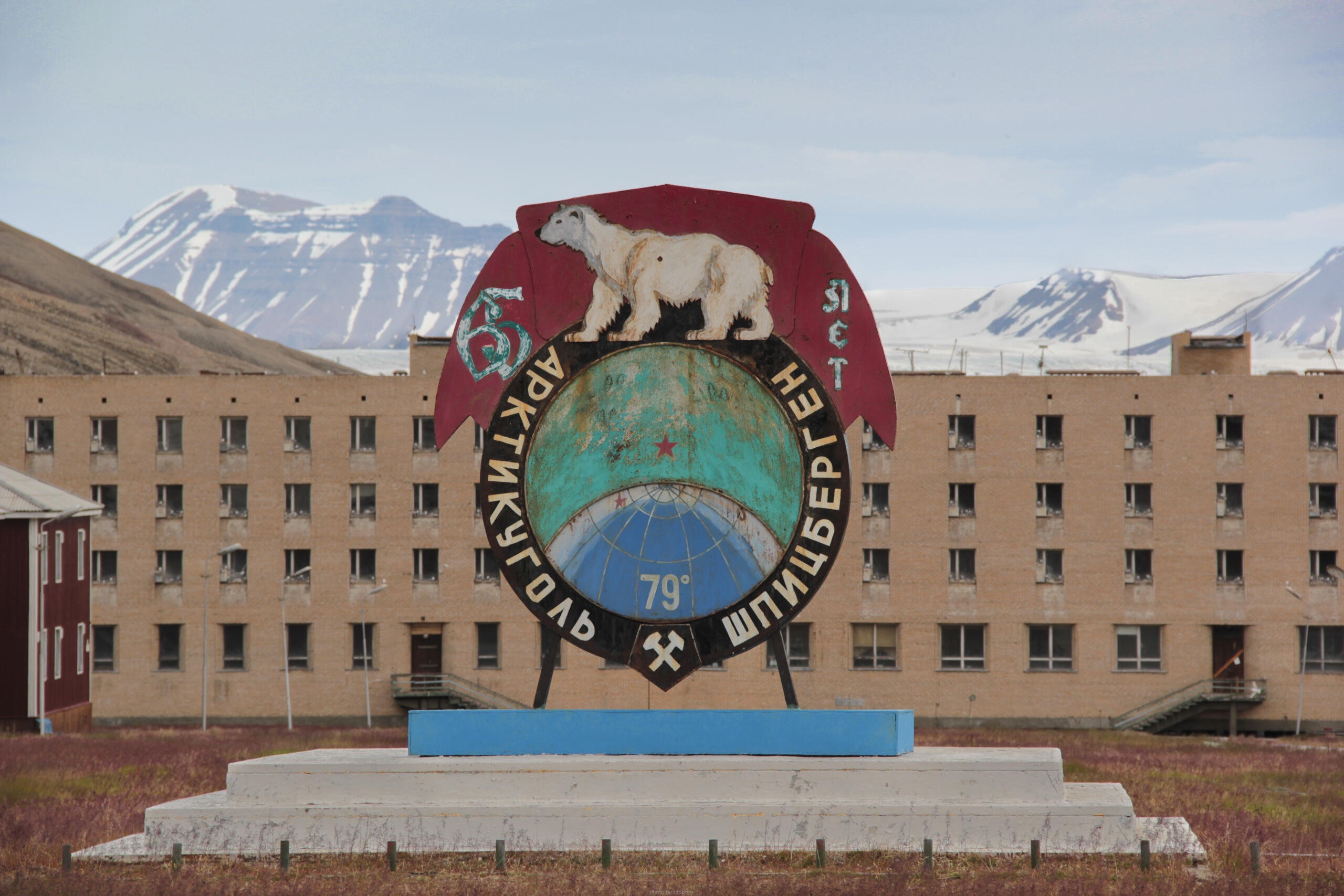
Pyramiden was the Soviet Union’s “ideal society” — a coal-mining town built on Norwegian territory in the high Arctic, complete with the world’s northernmost statue of Lenin, a saltwater swimming pool, a 1,000-volume library, and grass imported from Siberia to make the place feel like home. By March 1998, falling coal prices and a catastrophic plane crash had destroyed the community. Within months, all 1,000 residents were gone. The town remains essentially intact today, preserved by Arctic cold. Here’s the full story.
1: A Town 800 Miles from the North Pole
Pyramiden sits at the foot of Billefjorden on the island of Spitsbergen, part of the Norwegian archipelago of Svalbard. It’s one of the northernmost permanent human settlements ever built — roughly 800 miles from the North Pole, well inside the Arctic Circle. The nearest other settlements are Longyearbyen 50 kilometers south and Barentsburg 100 kilometers southwest.
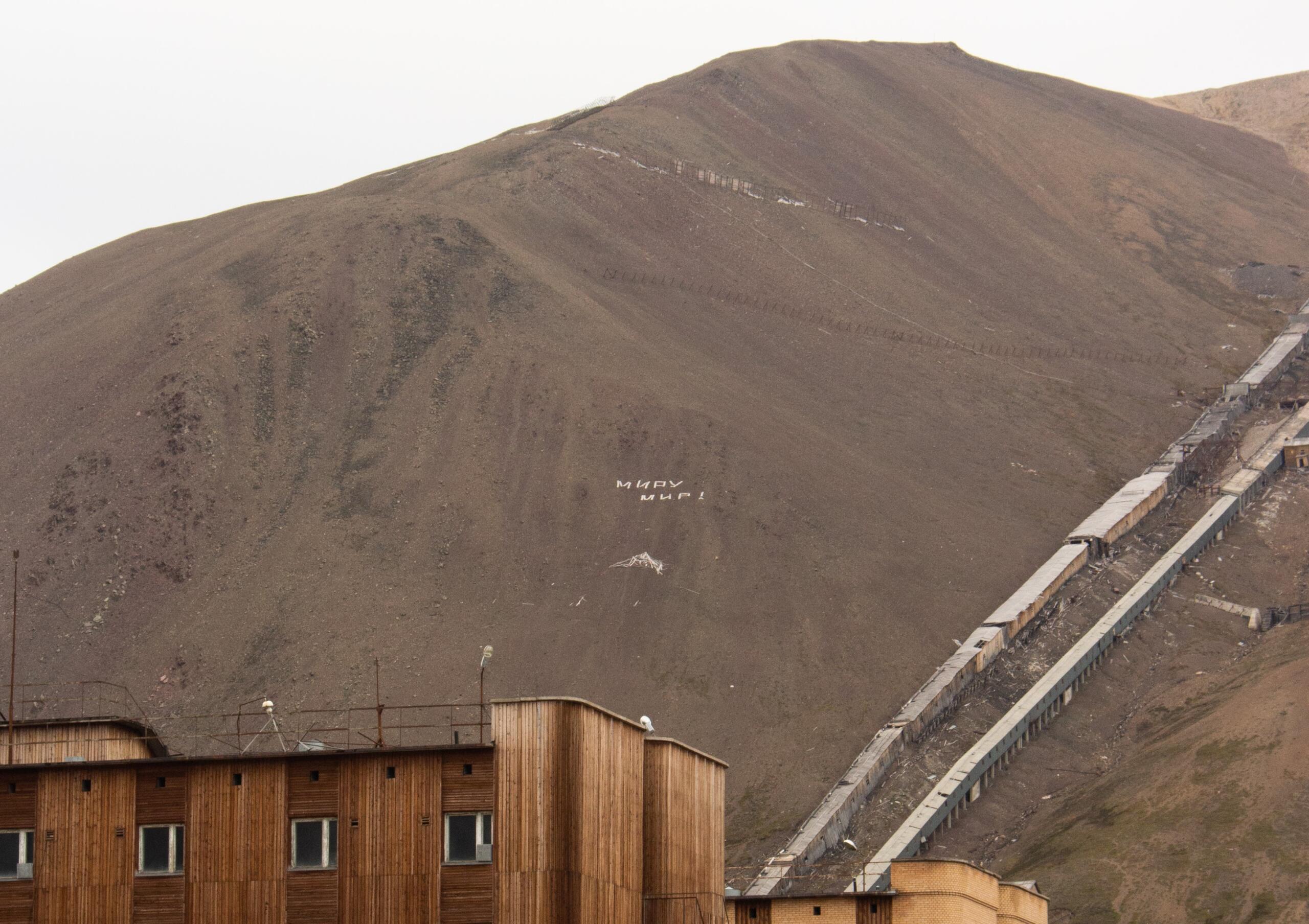
The town takes its name from the pyramid-shaped mountain that towers over it. The location was chosen for one specific reason: there was coal in that mountain, and the Svalbard Treaty of 1920 allowed any signatory nation to mine on the archipelago.
2: From Swedish Mining Camp to Soviet Showcase
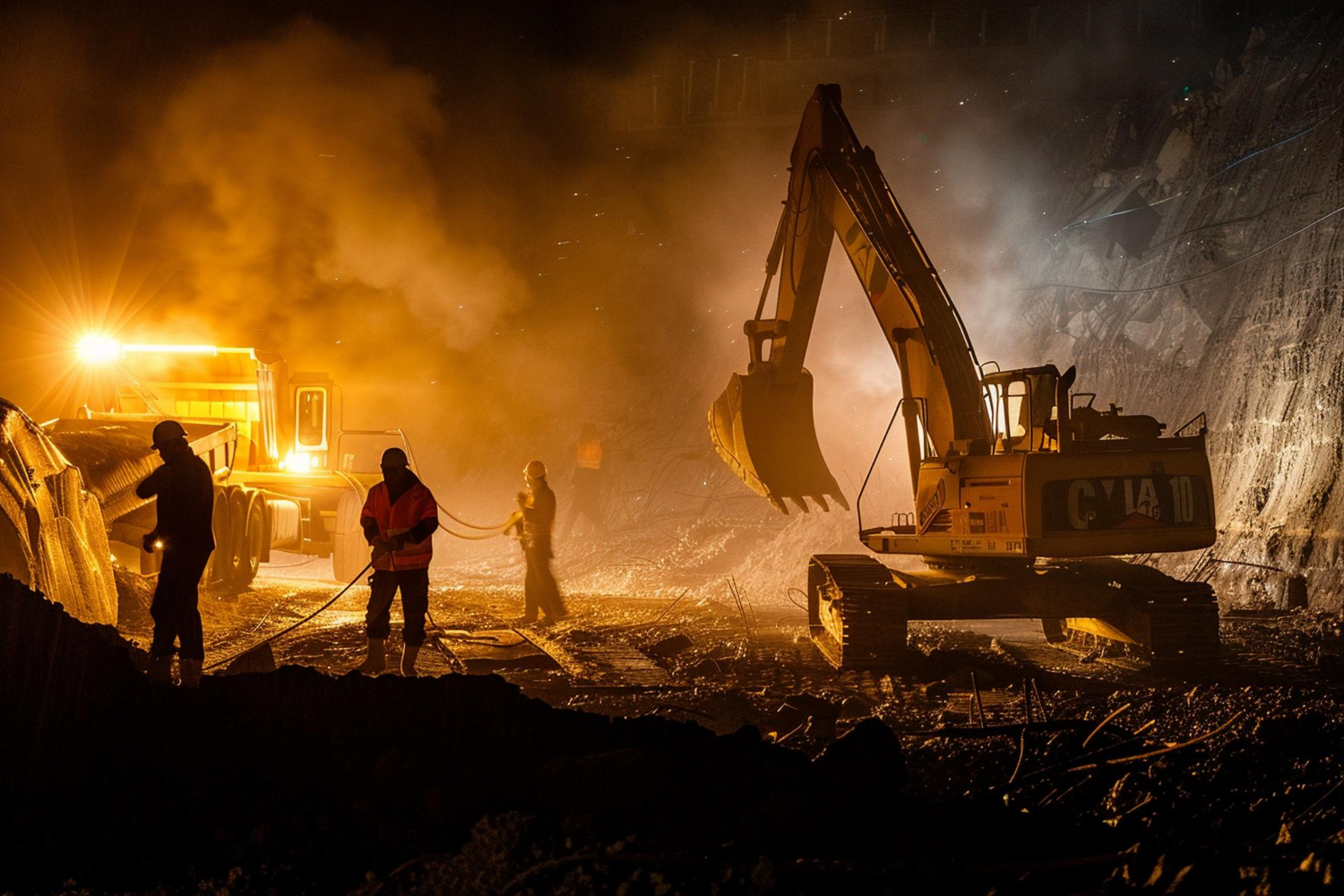
Sweden founded Pyramiden in 1910 as a small coal-mining operation. The Swedes never developed it significantly. In 1927, they sold the settlement to the Soviet Union. The Soviets bought another nearby town, Barentsburg, around the same time.
Both mines were operated by Trust Arktikugol — a Soviet state-owned mining company. Full-scale Soviet mining didn’t begin until after World War II. Pyramiden survived the war partly by accident: in September 1943, German battleships Tirpitz and Scharnhorst destroyed Longyearbyen, Barentsburg, and Grumant in Operation Zitronella, but ice conditions prevented the ships from reaching Pyramiden.
3: The Soviet “Ideal Society” Project
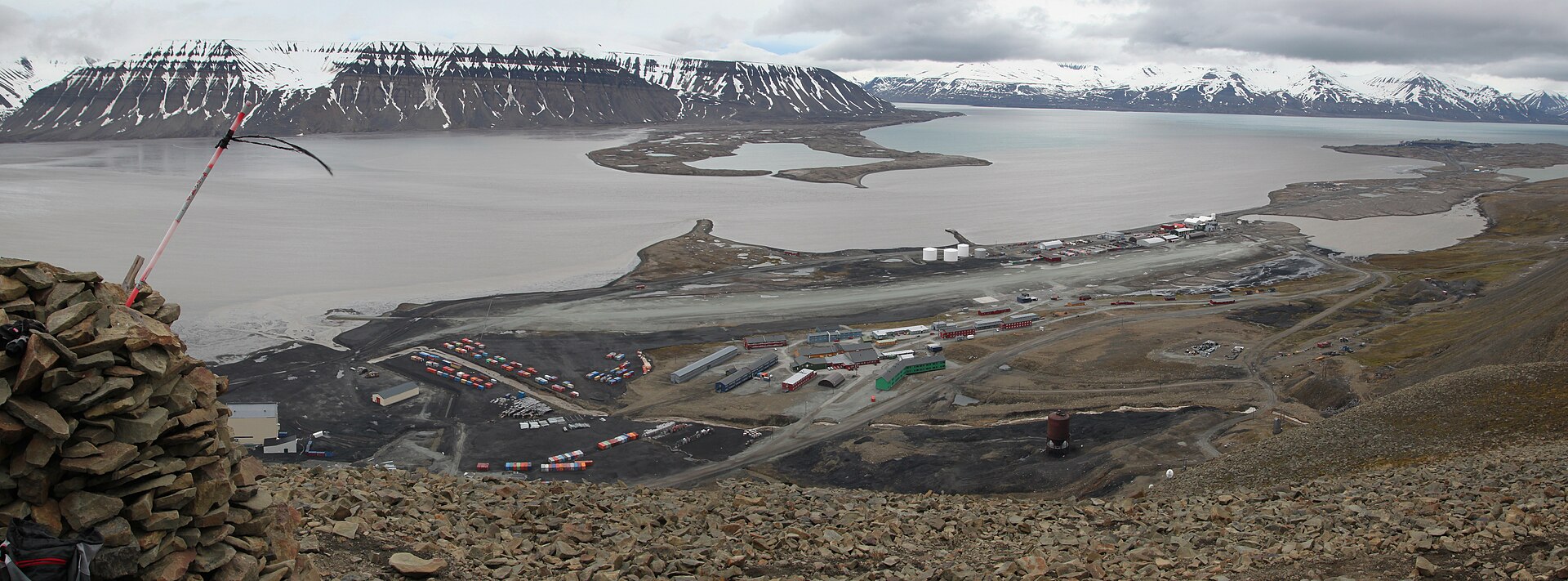
After the war, the USSR needed coal for reconstruction (many Donbas mines had been destroyed). The Soviets resumed Svalbard mining in 1946 and made Pyramiden the base of Soviet operations.
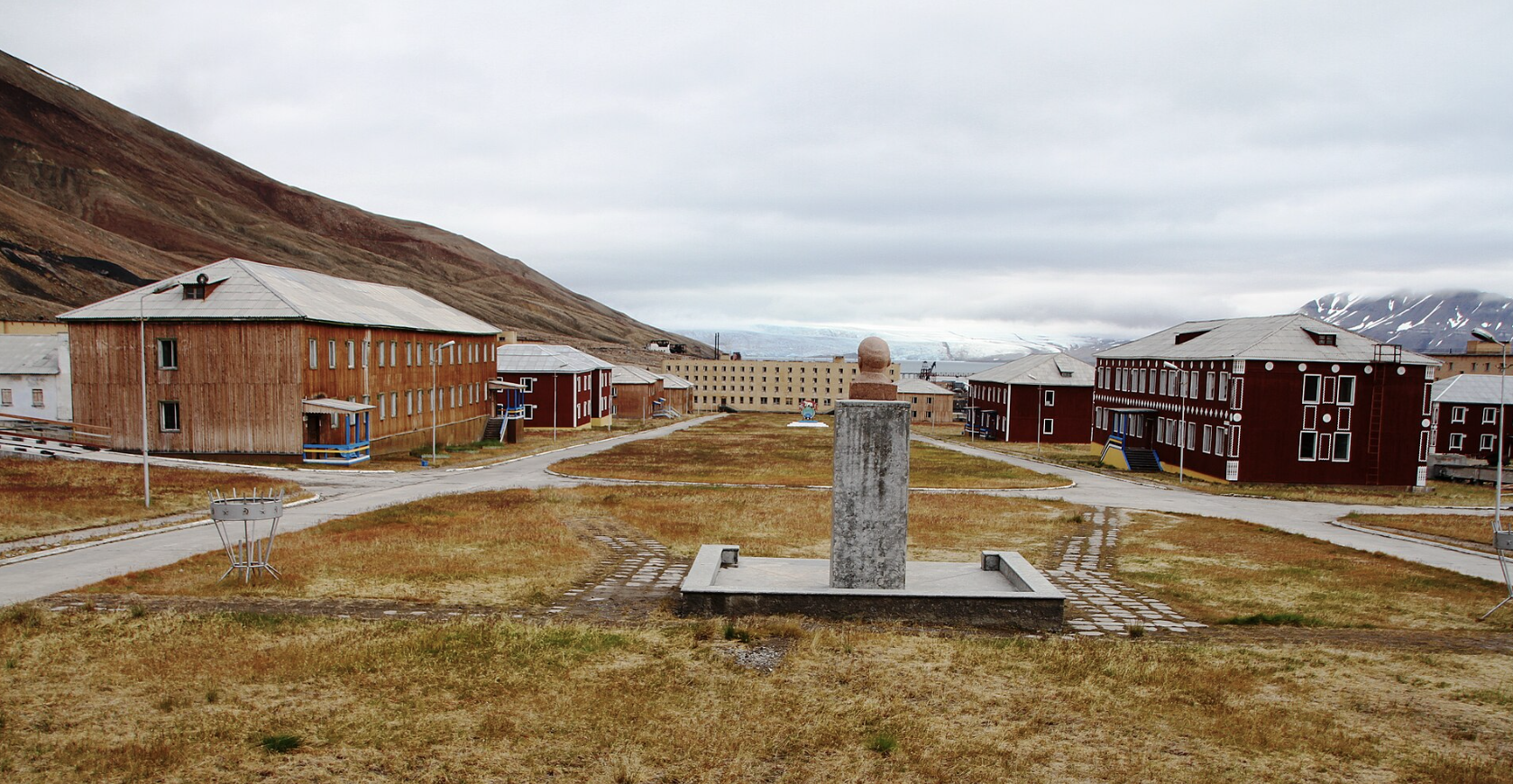
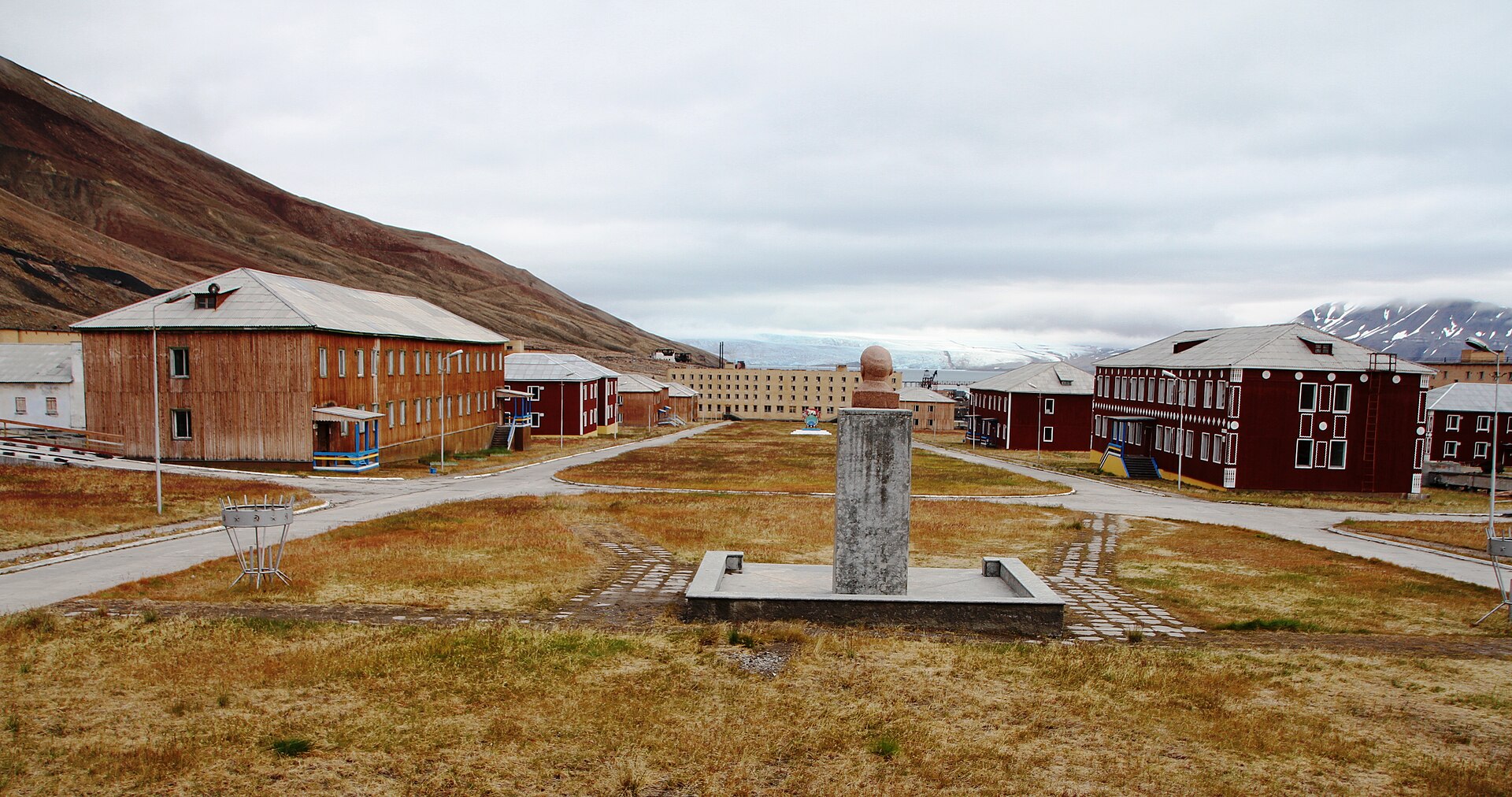
The expansion went beyond mining. The USSR allocated significant funding to make Pyramiden a propaganda showcase — proof that Soviet society could thrive even in the extreme Arctic. Between 1971-1975, as part of the Ninth Five-Year Plan, facilities were modernized: a massive cultural center, a heated saltwater swimming pool, a library with 1,000+ volumes, dedicated cinema, hospital, school, kindergarten, hotel, restaurants, and the world’s northernmost statue of Lenin (a bronze bust still standing in the town center today).
4: Imported Soil for the Imported Grass
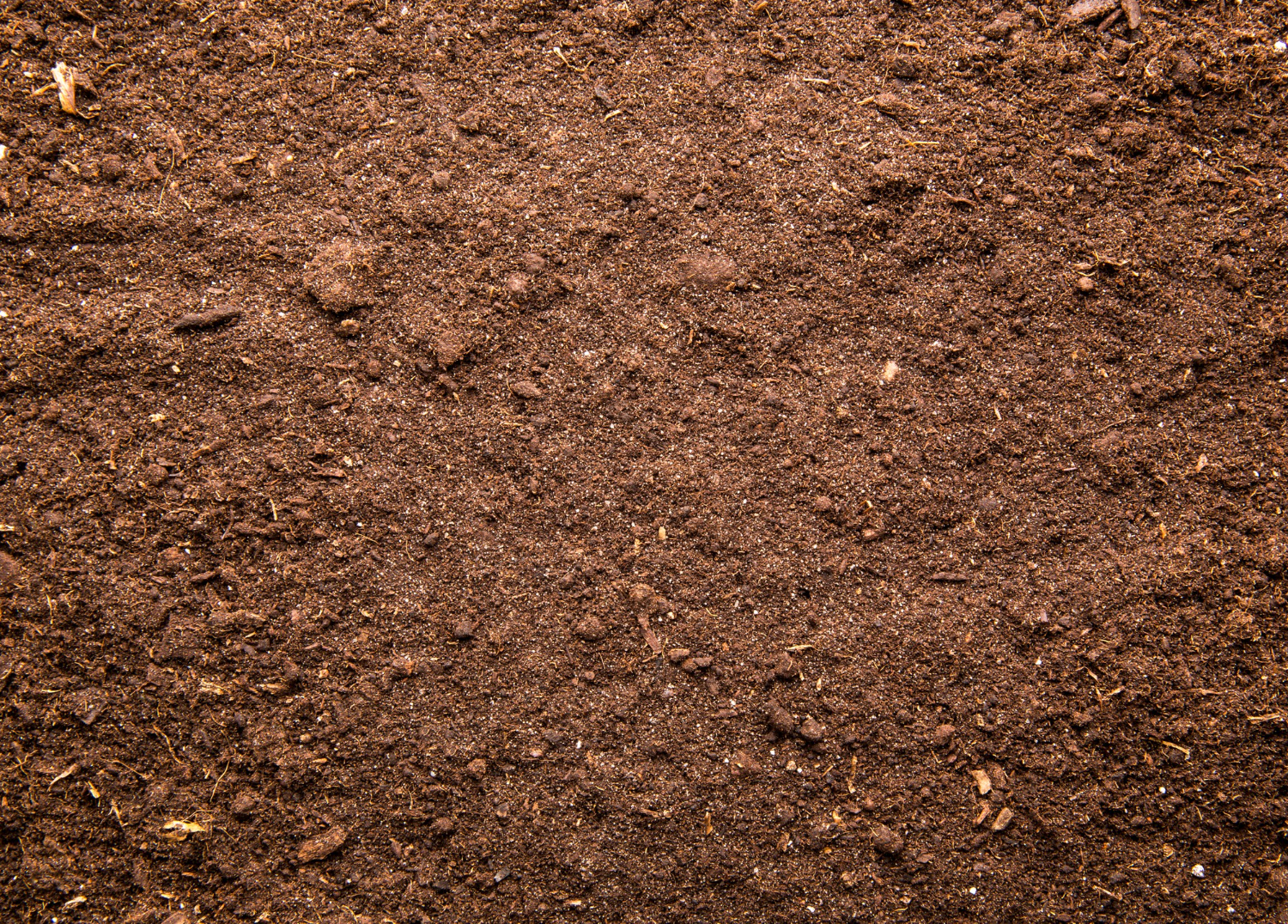
One particular detail captures the ambition of Soviet Pyramiden: the town imported topsoil from mainland Russia and Siberia in massive quantities. The soil was used to grow grass in the town center, around the buildings, and in heated greenhouses where Crachesi cultivated tomatoes, lettuce, cucumbers, and other fresh vegetables that wouldn’t otherwise grow at 78° North latitude.
The town also maintained a small farm with cows (for fresh milk and beef), a pigsty, and a chicken house. Workers had access to fresh dairy products, eggs, and vegetables in a location where these would otherwise have been impossibly expensive imports. The lifestyle was, by Soviet standards, genuinely comfortable. Pyramiden residents were considered among the more privileged citizens of the USSR.
5: Life in the Arctic Soviet Utopia
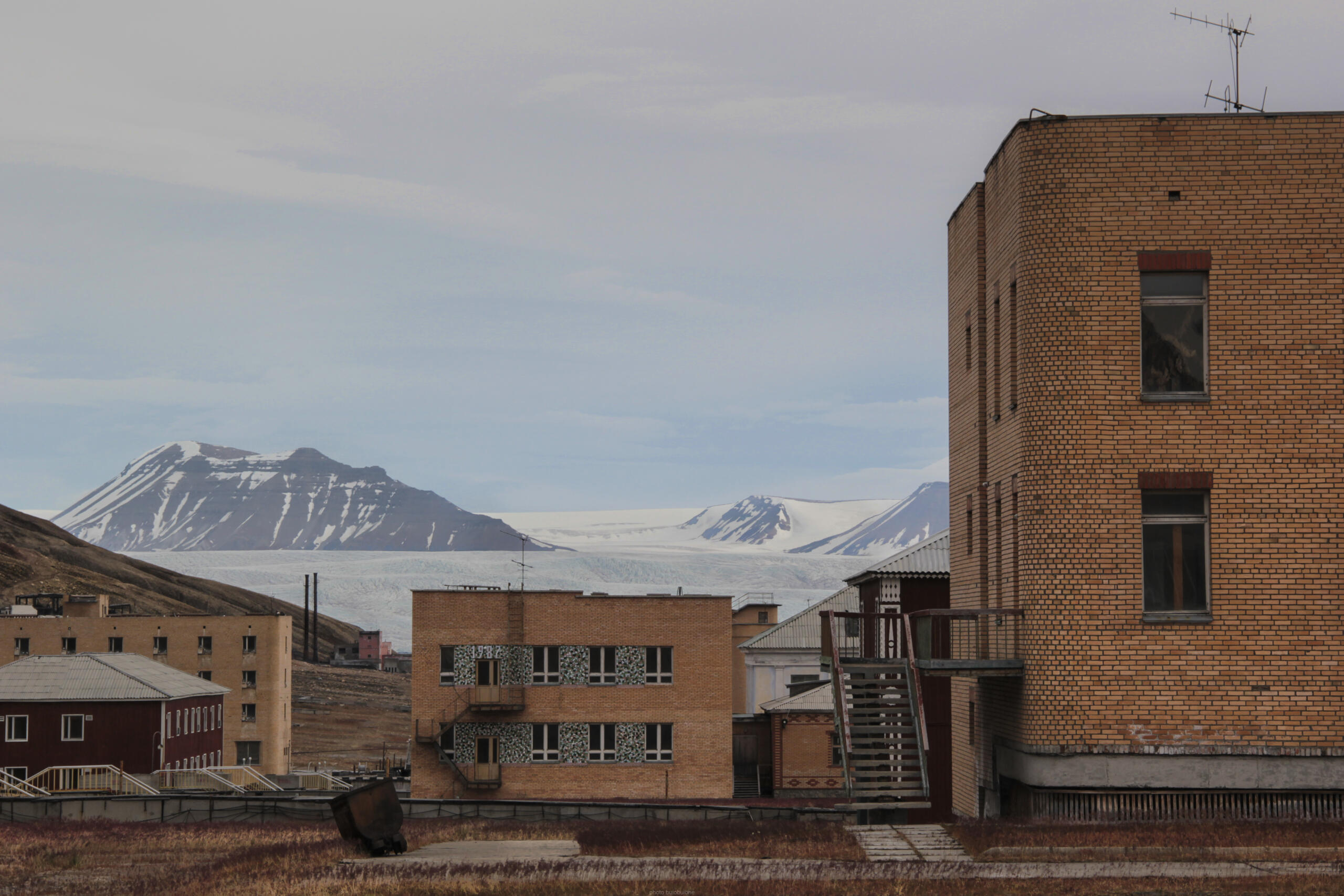
By the 1980s, Pyramiden’s population had reached around 1,000 — counting workers and family members. Most workers were on two-year contracts. Many had left families behind in Russia and Ukraine. Salaries were higher than equivalent jobs on the mainland.
The town’s culture was distinctly Soviet. Communist Party propaganda was prominent. The cultural center showed Soviet films, hosted political meetings, and provided concert spaces. The Lenin bust dominated the central square. Russian and Ukrainian workers lived together in a community that — despite the harsh climate — many residents recall as genuinely cohesive and pleasant.
Pyramiden’s coal mines, however, were never profitable. The USSR subsidized the town heavily, justifying the expense as maintaining a Soviet presence in the geopolitically important Western Arctic.
6: The Soviet Collapse Hits the Arctic
When the USSR dissolved in December 1991, the subsidies that had supported Pyramiden began to dry up. Russia’s economic crisis of the 1990s hit Arktikugol hard. Salaries were delayed. Living standards declined. Equipment maintenance became inconsistent.
The Russian government still wanted to maintain a presence on Svalbard for geopolitical reasons — the territory was strategically valuable, and abandoning it would weaken Russia’s claims under the Spitsbergen Treaty. But there was less and less money to support the operation. By the mid-1990s, Pyramiden’s population had dwindled from its 1,000-person peak to a few hundred. Schools closed. Most families with children left. The remaining workers were primarily men on shorter contracts.
7: The Plane Crash
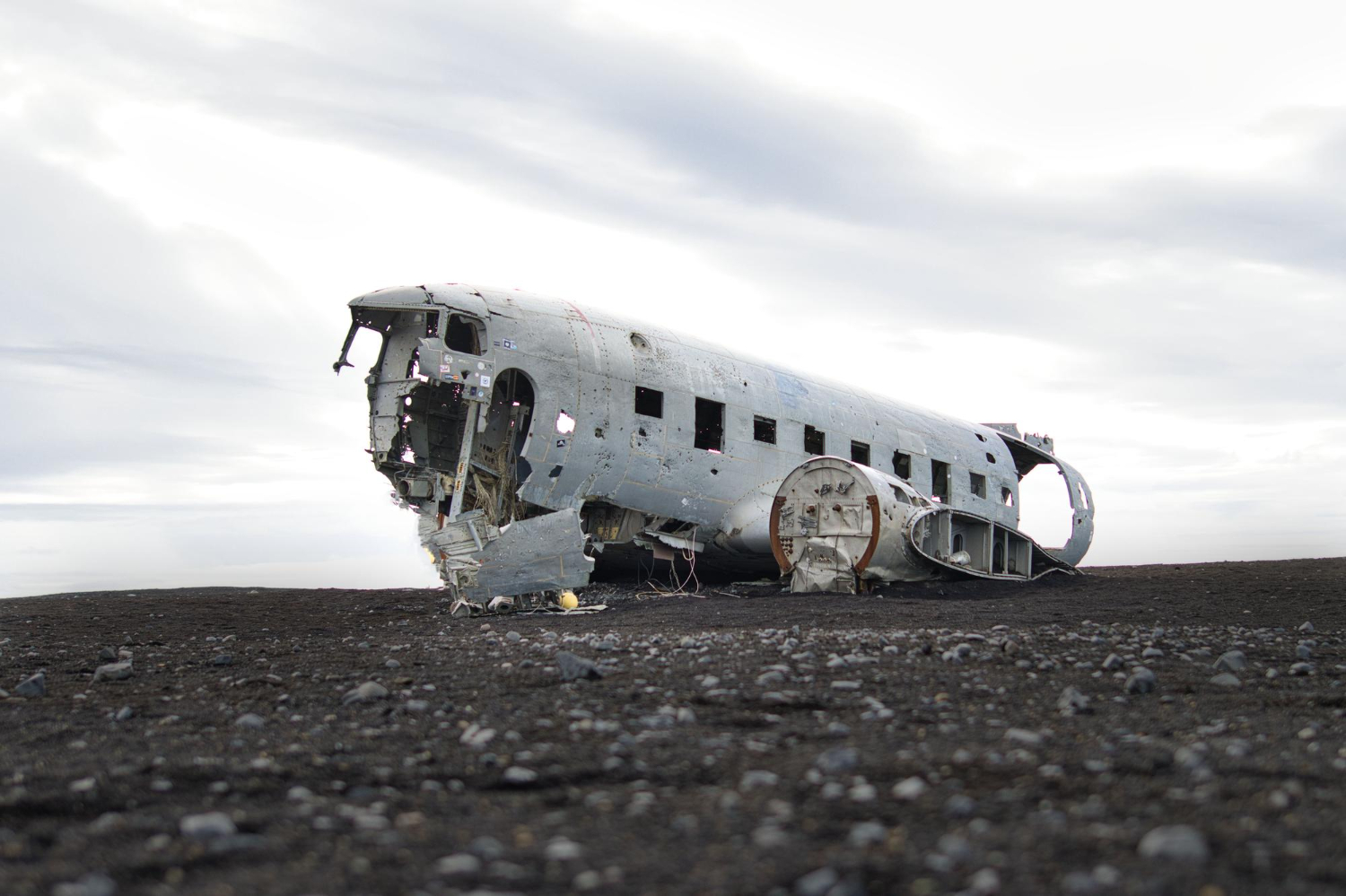
On August 29, 1996, Vnukovo Airlines Flight 2801 — a Tupolev Tu-154 chartered by Arktikugol — was approaching Svalbard Airport from Moscow. Aboard were 141 people: mineworkers returning to their jobs, family members coming for visits, including three children.
The plane crashed into Operafjellet mountain on its approach. All 141 people were killed. It was, and remains, Norway’s deadliest aviation accident. The death toll was equivalent to nearly 10% of the combined population of Pyramiden and Barentsburg.
The community never psychologically recovered. As Vadim Prudnikov, a former Pyramiden tour guide, later told Smithsonian Magazine: “The crash led to a great depression in the company and workforce. It contributed to the decision to close down one of the settlements.” After the crash, the question shifted from whether Pyramiden could continue to which of the two Russian Svalbard towns to close.
8: The Decision to Close
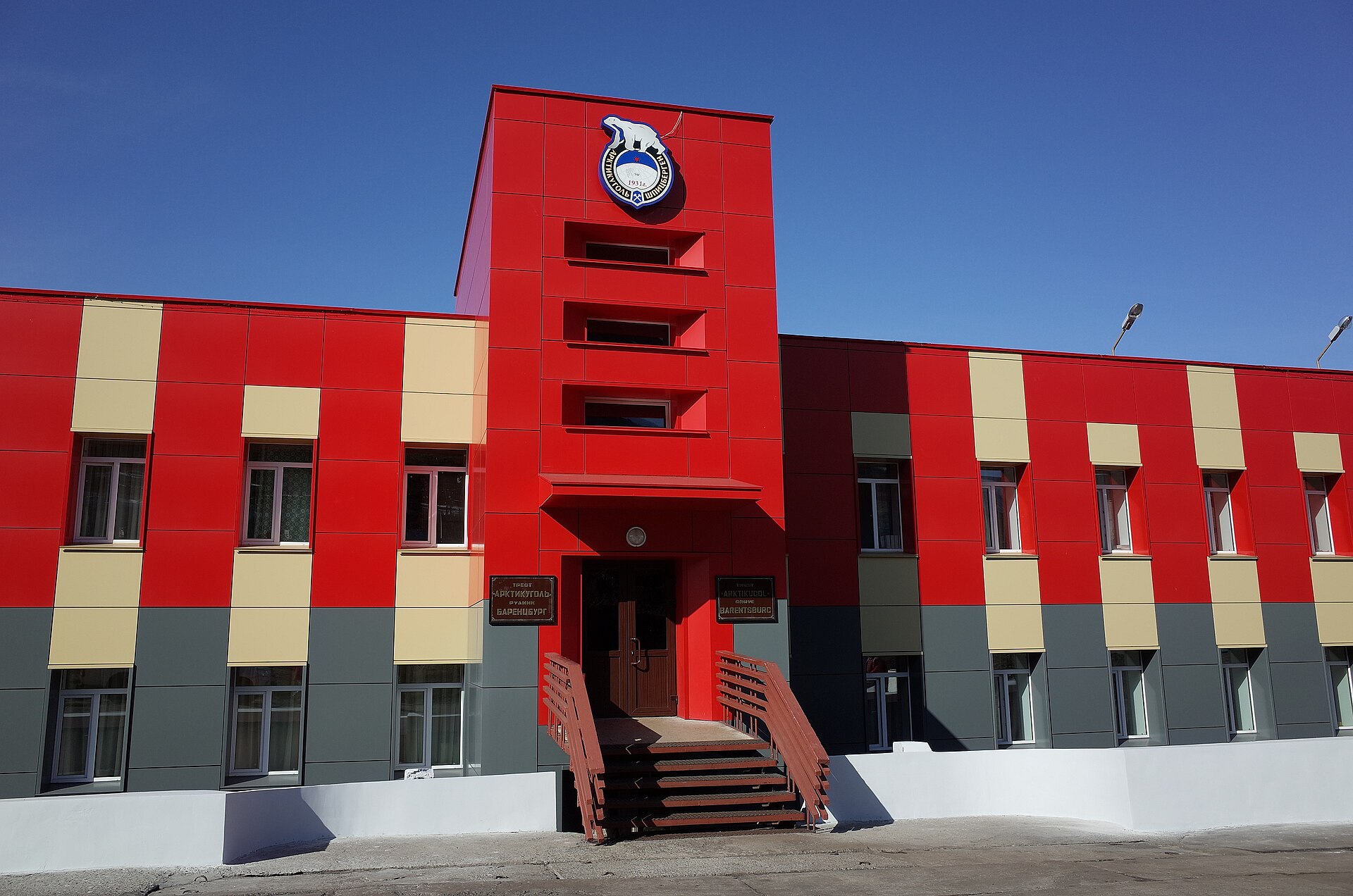
By late 1997, Arktikugol had decided. Barentsburg, with its better port access and slightly more profitable mining operations, would continue. Pyramiden would close.
The decision was communicated gradually rather than as a dramatic announcement. Norwegian archeology professor Hein Bjerck, who visited Pyramiden multiple times during the closure period, later recalled: “Nobody talked about leaving the place. Each time we came there were fewer and fewer people. Every time there was a boat or helicopter, people left with their small backpacks.” The closure unfolded over several months in early 1998.
9: The Final Coal Extraction
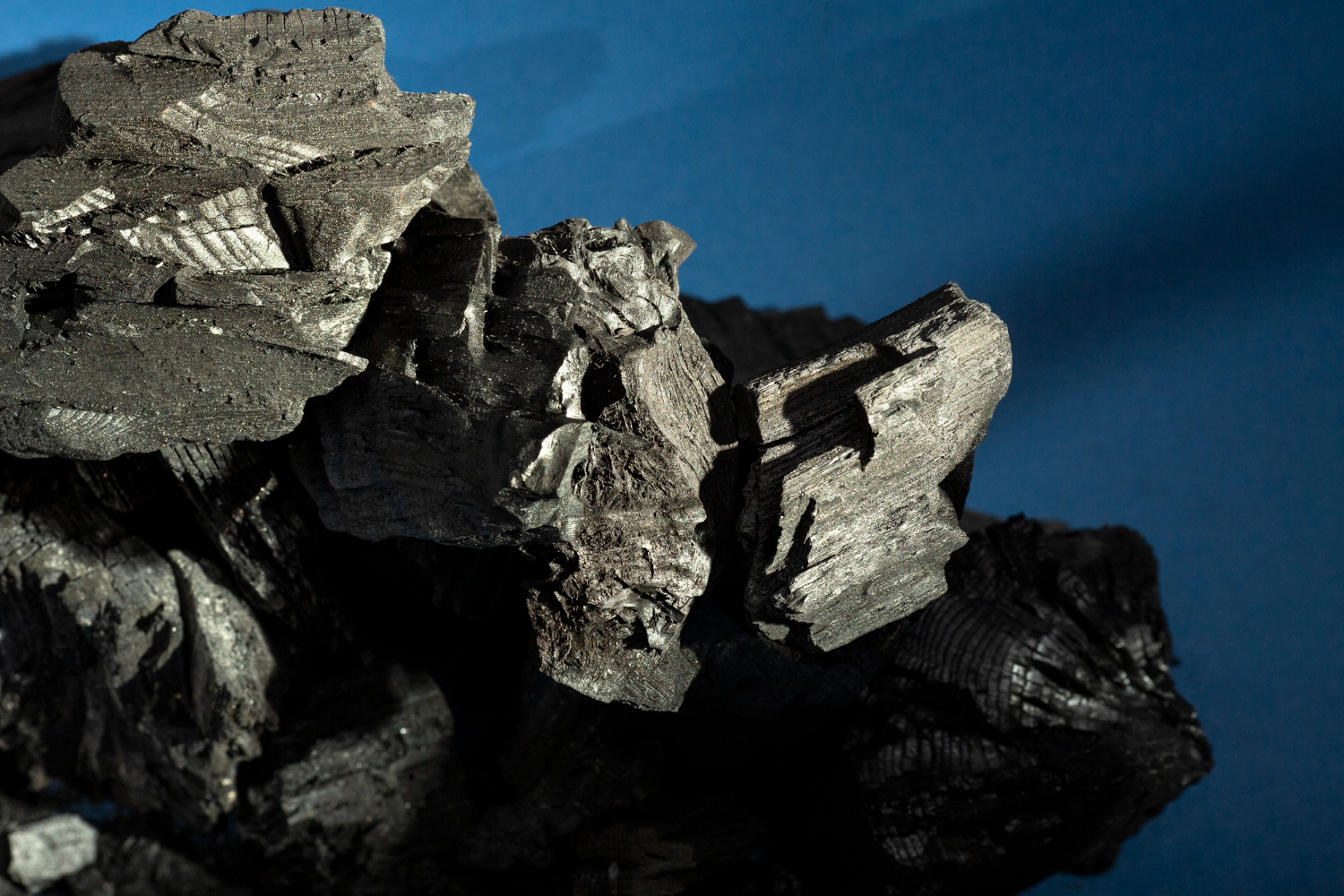
On March 31, 1998, the last coal was extracted from Pyramiden’s mine. Between 1955 and 1998, the mine had produced approximately 9 million tonnes of coal. The final tonne was preserved as a memorial — a minecart filled with the last coal extraction, displayed in the town center.
After the mining ended, there was no economic reason for residents to remain. Most workers were transferred to Barentsburg or returned to Russia and Ukraine. Some workers gathered for emotional farewells. Bjerck recalled “several workers — a handful of men and a couple of women — sitting on the town’s central monument at the end of the summer, laughing together.”
10: October 10, 1998 — The Last Resident Leaves
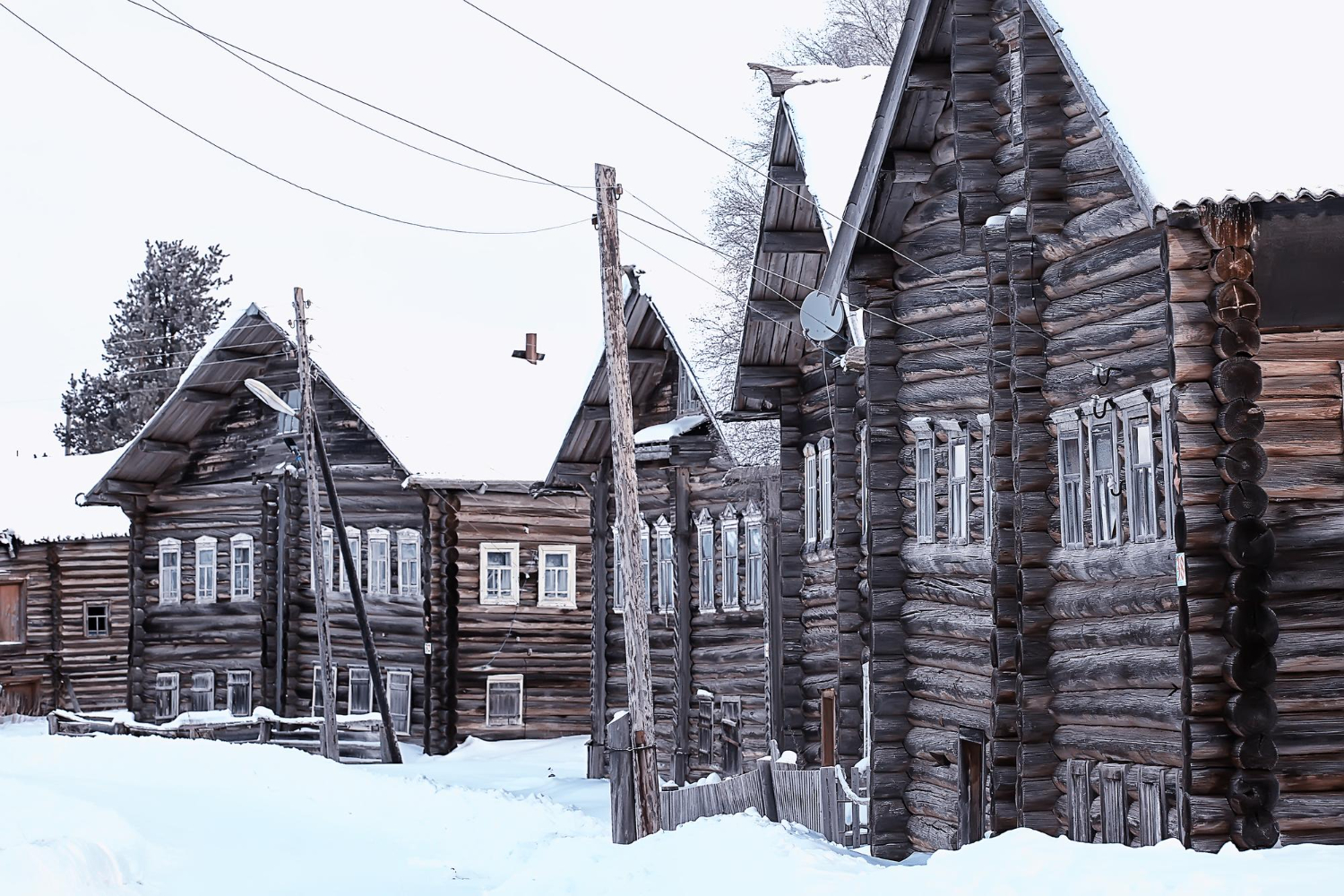
The last permanent resident departed Pyramiden on October 10, 1998. The town had been continuously inhabited for 88 years. Within hours, it became one of the world’s most unusual ghost towns — a Soviet community of 1,000 people simply vacated.
The departure left behind essentially everything that wasn’t easily portable. Furniture remained in apartments. Books stayed on shelves. The Lenin bust kept watching over the empty central square. The library kept its 1,000+ volumes. The cinema preserved over 1,000 Soviet films in storage. The cafeteria’s clean dishes remained stacked. The folded sheets remained on residents’ beds. Plants withered on windowsills.
11: The Cold That Preserves Everything
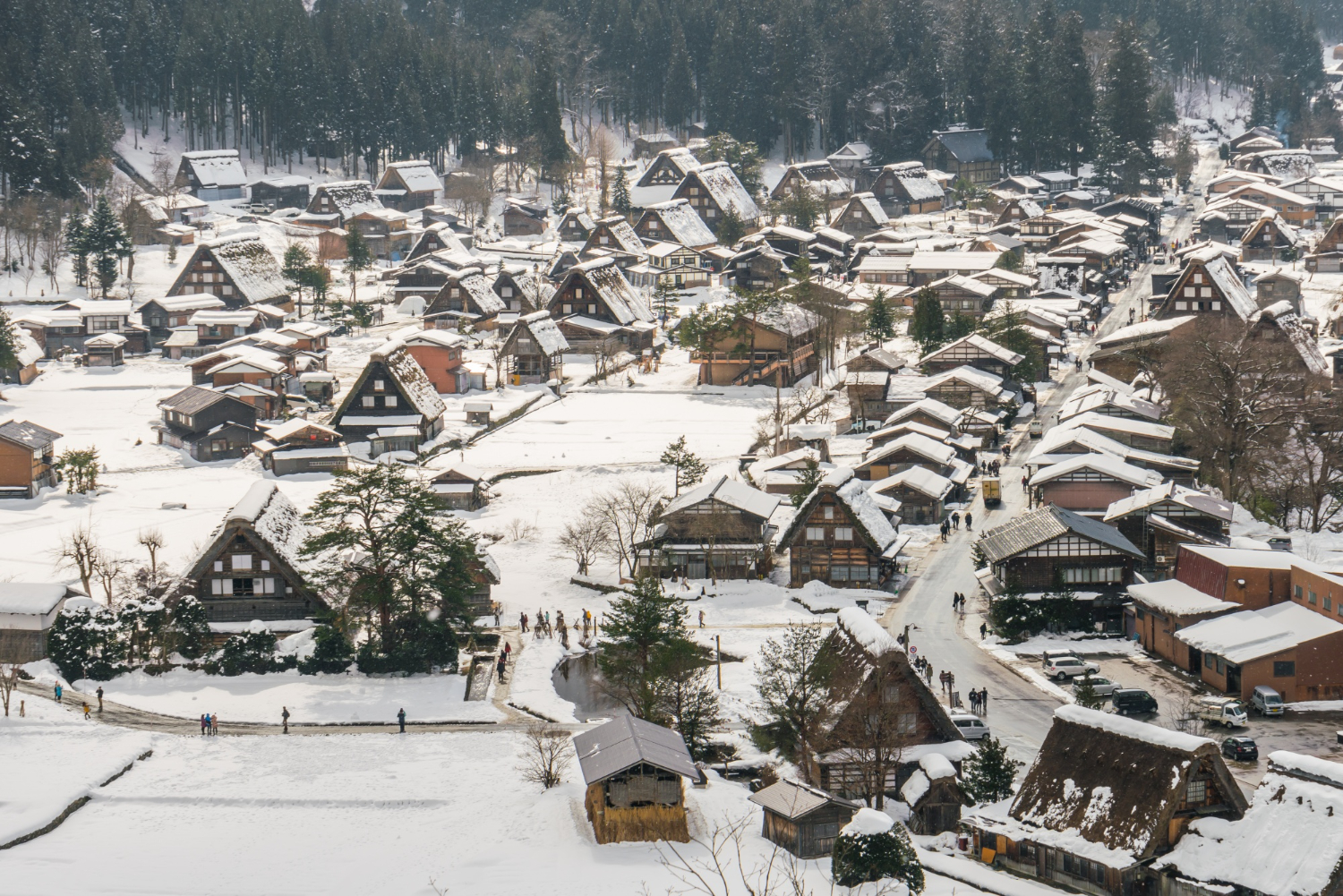
Pyramiden’s preservation owes substantially to its Arctic climate. Average annual temperatures hover around -6°C. The cold dramatically slows decay processes — wood doesn’t rot quickly, paint doesn’t peel rapidly, fabrics don’t decompose at typical temperate-zone rates.
The result is that Pyramiden in 2026 looks remarkably similar to Pyramiden in 1998. Buildings remain structurally sound. Interiors look like residents stepped out for the day. The grass imported from Siberia still grows in the town center during summer months. The Lenin bust still maintains its 24/7 watch over the empty boulevard.
Polar bears wander through periodically. Arctic foxes have established residence. Sea birds nest in windowsills. But the human structures themselves remain remarkably intact — a permanently frozen Soviet artifact at the top of the world.
12: The Tourist Town That Almost Wasn’t
Starting in 2007, Arktikugol began renovating Pyramiden as a tourist destination. The Hotel Tulipan reopened in 2013, allowing overnight stays. The cultural center received renovations in 2018. A small year-round caretaker staff (typically 6-30 people depending on season) maintains buildings and guides tours.
Aleksandr Romanovsky, a Russian musician and tour guide, became the first person to return to live in Pyramiden in 2012. He has since called himself “the world’s most northern head-banger.” On August 27, 2019, the world’s northernmost film festival was held in Pyramiden, dedicated to the 100th anniversary of Soviet cinema.
Tourism has been complicated since 2022. After Russia’s invasion of Ukraine, Visit Svalbard removed all Russian-state-owned tour operators from its platforms. Tours still operate but with reduced visibility in the official Norwegian tourism infrastructure.
What Pyramiden Actually Represents
Pyramiden’s preservation makes it something specific: a uniquely complete time capsule of late Soviet life, kept intact by an accident of climate and geography. Most Soviet towns that emptied during the 1990s collapse have been substantially altered — buildings repurposed, materials scavenged, structures demolished. Pyramiden was abandoned somewhere too remote, too cold, and too logistically difficult for any of those processes to occur. The town survived not because anyone tried to preserve it, but because the Arctic refused to let it decay. For visitors who reach it (the journey requires Longyearbyen as a base, then a guided boat or snowmobile tour), Pyramiden offers something unavailable anywhere else: the Soviet Union, essentially intact, exactly as it was when its residents quietly left.