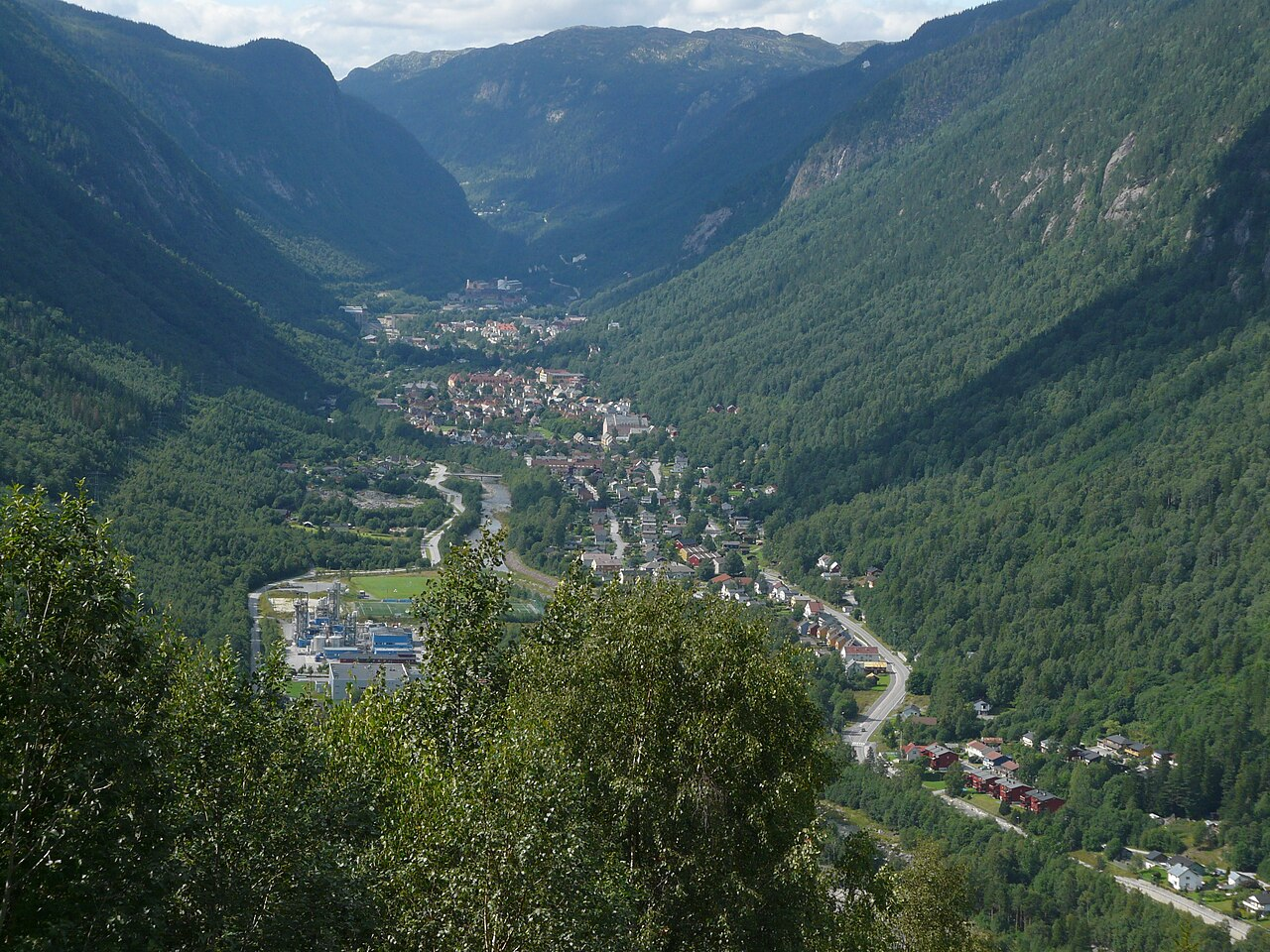
Rjukan sits in Tinn Municipality, in the Telemark region of southern Norway, roughly 110 miles west of Oslo. The town was built almost from scratch starting in 1907, when industrialist Sam Eyde chose the site for a planned company town to house workers at the nearby Vemork hydroelectric plant — at the time, the largest in the world.
What Rjukan’s founders did not fully appreciate was that the mountain walls of the Vestfjorddalen valley are tall enough and the valley narrow enough that direct sunlight cannot reach the valley floor between approximately September 28 and March 12 each year. Around 3,400 people lived there in the early 2000s, and for most of the town’s history, residents spent half of every year in indirect light.
That changed on October 30, 2013, when three computer-controlled mirrors — called the Solspeilet, or Sun Mirror — were officially activated on a cliff face above the town. For the first time in its history, Rjukan’s main square received reflected sunlight during the winter months.
How a 1913 Idea Became Reality a Century Later
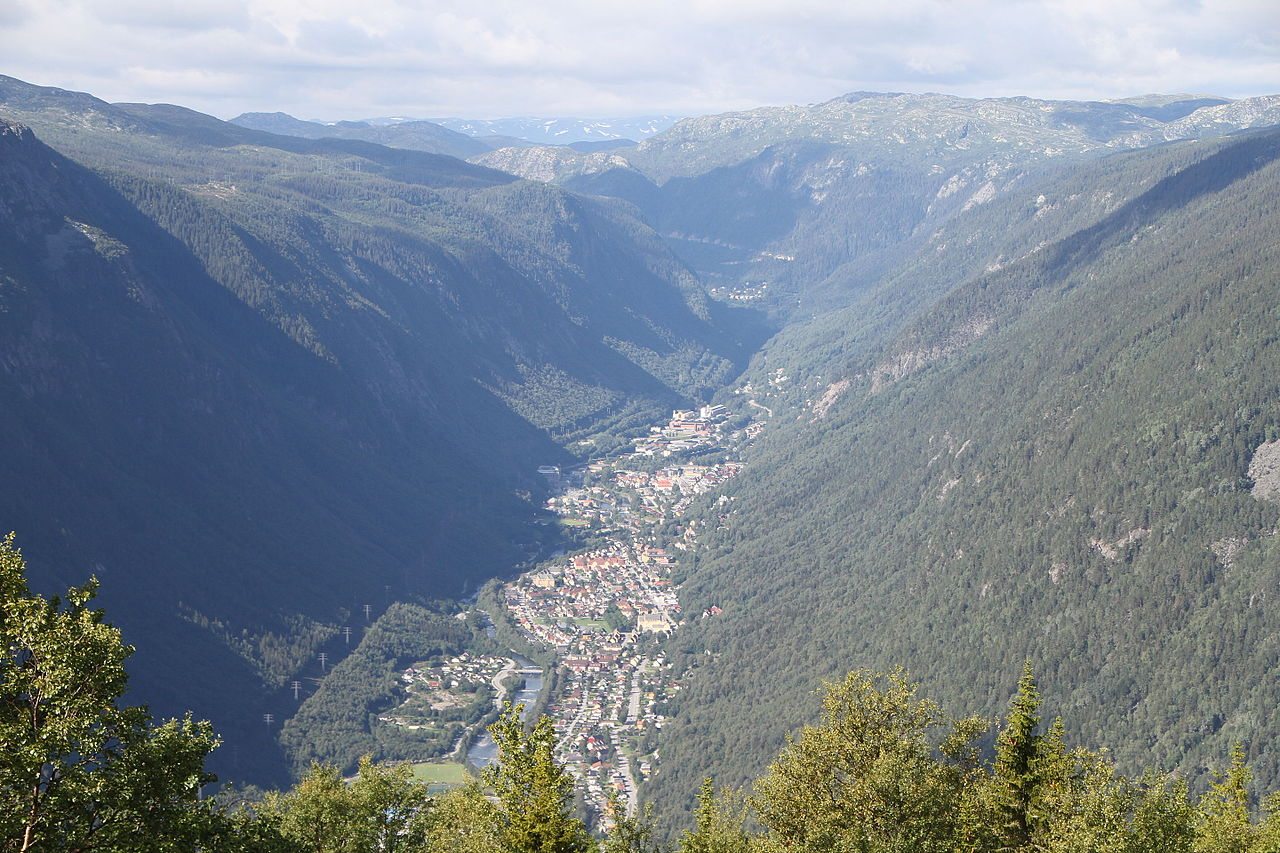
Sam Eyde understood that the morale and health problems his workforce would face after the first dark winter needed addressing. As early as 1913, he proposed building a solar reflector on the mountain above the town to throw sunlight down into the square. The engineering wasn’t there yet. What Eyde did instead was build a cable car. The Krossobanen, opened in 1928, was Northern Europe’s first cable car, and its original purpose was specifically to let Rjukan residents ride up out of the shadow during dark months. From the top station at Gvepseborg, 886 meters above sea level, passengers could stand in actual sunlight and look down at their town sitting in shade.
In 2002, a Rjukan-based artist named Martin Andersen began publicly arguing that modern technology — specifically computer-controlled heliostats developed for solar power generation — finally made Eyde’s century-old mirror proposal feasible. Andersen had moved to Rjukan with young children and disliked watching them grow up in winter shadow.
The Technology Behind the Mirrors
The Sun Mirror uses three large heliostats mounted at approximately 450 meters elevation on the cliff face above Rjukan. Each mirror is roughly 17 square meters and is controlled by a computer that tracks the sun’s position and adjusts the mirror’s angle continuously throughout the day. The reflected light is directed onto a 600-square-meter patch in Rjukan’s main square — roughly the area of a basketball court.
The mirrors don’t create artificial sunlight. They reflect real sunlight that’s already striking the upper part of the mountain. On a clear day in January, the mountain top is in bright direct sun even when the town square below is in deep shadow. The heliostats capture some of that light and redirect it downward. The illuminated patch is bright enough to read by and warm enough to feel against your skin. On cloudy days, the mirrors do nothing.
The total project cost approximately 5 million Norwegian kroner — roughly USD $600,000-$850,000 at the 2013 exchange rate. About half came from the Tinn municipality, with the remainder from private donors, grants, and local sponsorships. The mirrors are also a tourism draw, which has helped Rjukan recover part of the investment through increased winter visitor traffic.
UNESCO Recognition and Industrial Heritage

In 2015, two years after the mirrors were installed, UNESCO inscribed Rjukan and the neighboring town of Notodden on the World Heritage List — but not for the mirrors. The designation recognizes Rjukan-Notodden as an outstanding example of an early-20th-century industrial company town and the hydroelectric infrastructure that made it possible. The Vemork plant, the company housing, the worker amenities, and the integrated transport network (including the Krossobanen) together represent one of the most complete surviving examples of the industrial-heritage category of UNESCO sites.
The mirrors aren’t part of the UNESCO designation — they’re a modern addition — but they fit with the town’s broader narrative of human ingenuity working against environmental constraints.
Visiting Rjukan Today
Rjukan is reachable from Oslo by car in approximately 3 hours via routes E134 and Rv37. Public transport requires a combination of train to Notodden and bus connections; not all schedules run consistently in winter. The town is a year-round destination with different character in each season. In summer, the surrounding Hardangervidda National Park offers hiking. In winter, the nearby Gaustablikk ski area provides downhill skiing on Mount Gaustatoppen.
The Vemork museum (now branded as Norsk Industriarbeidermuseum, the Norwegian Industrial Workers’ Museum) houses extensive exhibits on the World War II sabotage operations where Norwegian resistance fighters destroyed the facility to prevent German access to heavy water. The sun patch in the Torget is at its most striking between November and February, when the surrounding ambient light is at its dimmest and the contrast with the reflected light is most dramatic.
The mirrors are pointed at the patch by default; visitors don’t need to do anything to see them in operation other than show up in the square on a clear day.
What Rjukan Represents
The Solspeilet is a statement: that the constraints of geography can sometimes be partly engineered around, and that small communities can do interesting things if they’re willing to commit modest resources to a long-shot idea proposed by an artist nobody had heard of. Sam Eyde’s original 1913 proposal had to wait 100 years for the technology to catch up. The waiting was not wasted time — it was the time the idea needed to mature into something practical.