Nettles are so ordinary in temperate countries that nobody looks closely at them, which is a shame, because the stinging apparatus is one of the more precisely engineered things growing in a hedgerow. It is not a rough irritant hair like the ones on a tomato plant. It is a single-use hypodermic syringe, built out of glass, mass-produced by the thousand, and designed around the specific problem of getting a liquid through skin.
What the Hair Actually Is
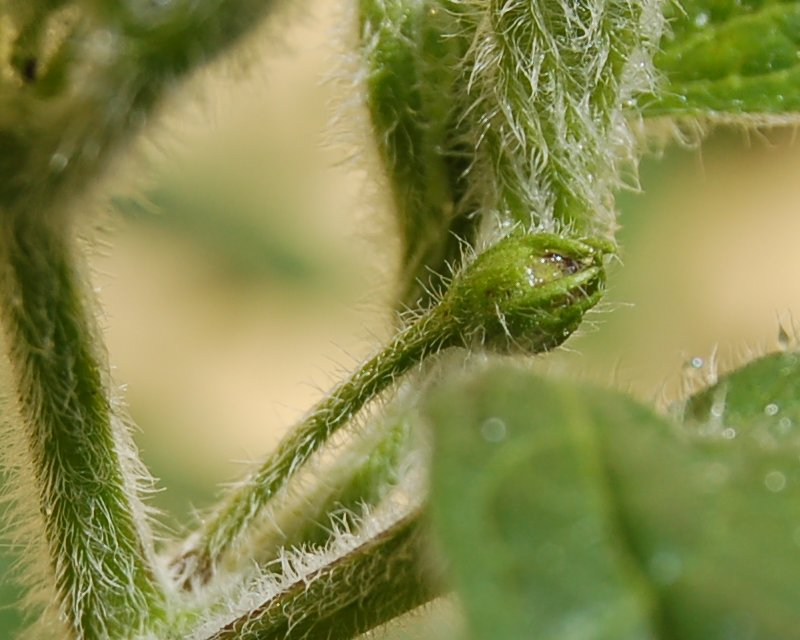
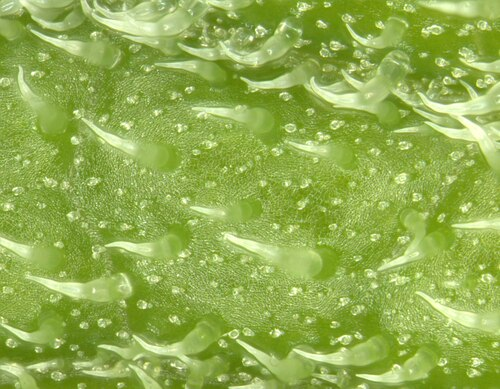
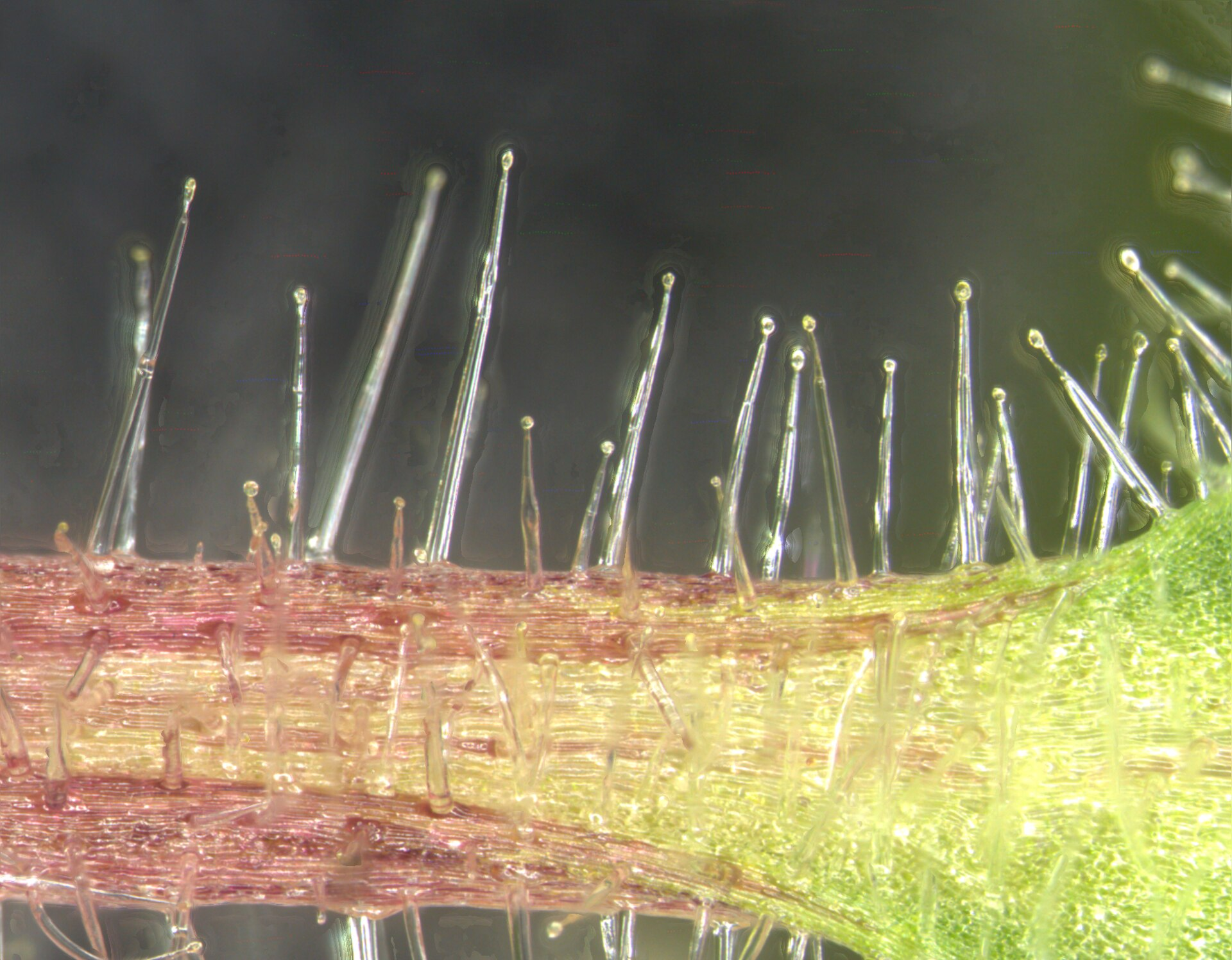
Look at a nettle stem under magnification and you see two kinds of hair. Most are ordinary: soft, flexible, harmless, and doing the usual plant-hair jobs of slowing airflow and reflecting light. Scattered among them are the stinging hairs, which are structurally different in every respect that matters.
A stinging hair is a single elongated cell, typically one to two millimetres long, sitting on a small pedestal of other cells. The lower part of the cell is flexible. The upper part is reinforced with silica, mineral glass laid down in the cell wall, making it rigid and brittle. At the very top is a rounded bulb, and between the bulb and the shaft the wall is deliberately thin.
The cell is sealed, and inside it is under pressure, filled with fluid pressing outwards against the walls. Nothing is happening while it is intact. The whole thing is a loaded mechanism waiting for contact.
The Tip Is Designed to Break
When something brushes against the hair, the rounded bulb at the top snaps off at the thin-walled line beneath it. It does not tear or crumple. It shears cleanly, and this is the critical design feature.
What is left is not a broken stump. It is a short, rigid, silica-stiffened tube with an open end and a sharply bevelled rim, which is very close to the geometry of a hypodermic needle and works the same way. The angled tip concentrates force on a tiny area and penetrates skin with almost no resistance.
The flexible base then does the second half of the job. As the hair bends under the contact that broke it, the rigid tip is pushed sideways and downwards into the skin rather than simply being knocked aside. And because the cell is pressurised, once the tip is in, the fluid is driven out through the open end and into the tissue. The plant is not waiting for the chemicals to soak in. It is injecting them.
The whole sequence, break, penetrate, inject, takes place in the instant of contact, and it happens thousands of times across whatever part of you touched the plant.
This is also the mechanism behind the old advice that grasping a nettle firmly hurts less than brushing it. There is something to it, because a firm grip in the direction the hairs lie can flatten a proportion of them without shearing the tips. It is not reliable, the hairs point in more than one direction, and it is a poor plan in practice, but the reasoning is real.
What Is Inside
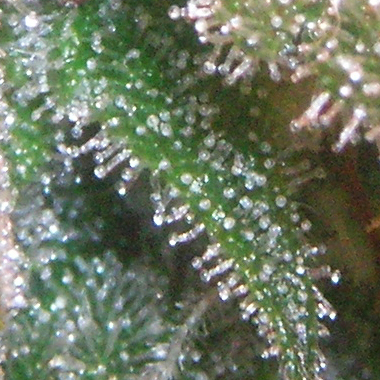
The fluid injected is a mixture, and the composition is still not completely settled, which is a slightly surprising thing to say about a plant this common.
Histamine is present, and it produces the immediate flushing, swelling and itch, because histamine is precisely the compound your own body releases during an allergic reaction. Acetylcholine and serotonin are also present, both of which act on nerve endings and contribute to the sharpness of the initial pain. Formic acid, the compound in ant venom, is often named as the main agent in older accounts, and it is present in small amounts but it is not the principal cause of the sting.
The more interesting finding is that these known compounds together do not fully account for how much a nettle sting hurts or how long it lasts. Research on nettles and on their much more severe relatives has identified small peptide toxins that act directly on the sodium channels in sensory nerves, which is the same general mechanism used by some spider and scorpion venoms. That is closer to a venom than to a simple chemical irritant.
It also explains the two-phase experience most people recognise: a sharp immediate sting from direct action on nerve endings, followed by a longer-lasting itch and raised white weal as the histamine response develops in the surrounding skin.
Why the Sting Lingers
A nettle sting from the common European species typically stings sharply for a few minutes and itches for an hour or two, occasionally longer. Two things drag it out.
The first is that the injected compounds are not all removed at once, and the histamine response recruits the skin’s own inflammatory machinery, which continues after the original chemicals have dispersed. The weal is your tissue reacting, not the plant’s fluid sitting there.
The second is that the broken silica tips can remain embedded in the skin. They are small, hard and brittle, and they do not dissolve. Rubbing the area moves them around and can drive them further in, which is why the standard advice is not to rub a nettle sting, and why washing the area gently or lifting the fragments off with adhesive tape is more sensible than scrubbing at it.
As for the dock leaf, the traditional remedy that grows conveniently near nettles, there is no good evidence that anything in a dock leaf neutralises anything in the sting. The relief people report is generally attributed to the cool moisture of the crushed leaf and to the act of doing something, and the sting was going to settle on that timescale anyway. It is harmless, and the folklore is older than the explanation.
Some Relatives Are Dangerous on a Different Scale
The common nettle is a minor nuisance. The family it belongs to contains species operating at a completely different level, using the same apparatus.
The Australian stinging trees of the genus Dendrocnide are the extreme case. The mechanism is recognisably the same, silica-tipped hairs that break and inject, but the toxins are far more potent, and the pain is described by people who have experienced it as severe, and as recurring in waves for weeks or months afterwards. The peptides involved have been characterised and are structurally similar to toxins found in spider and cone snail venom, which is why the pain behaves so unlike an ordinary plant irritation.
Part of what makes them so persistent is the same physical fact as with the common nettle, amplified. The silica needles lodge in the skin and are difficult to remove, so the exposure continues long after the contact. The hairs on dried herbarium specimens decades old have been reported to still sting.
That this range exists within one family is the useful point. The delivery system is the same piece of engineering throughout; what varies is the payload.
What the Plant Gets Out of It
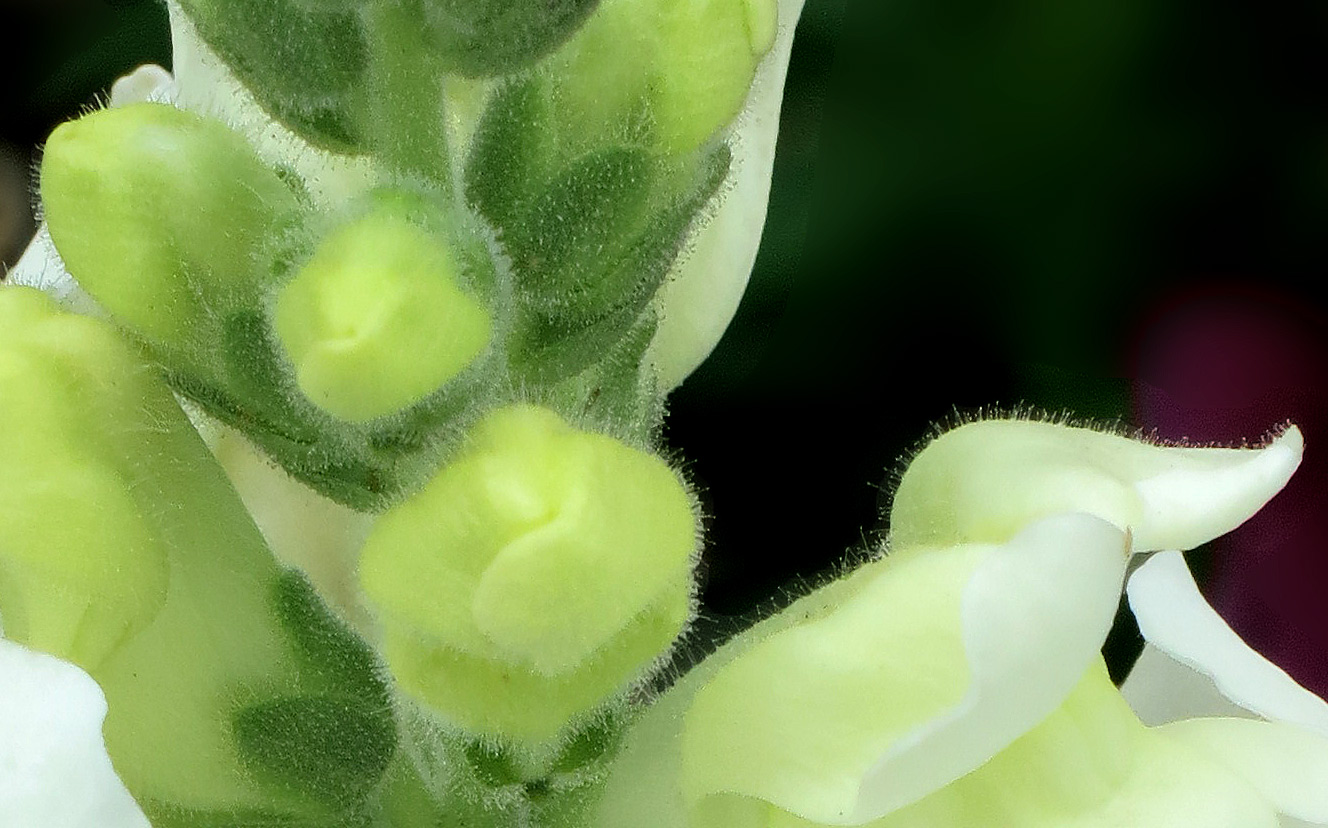
Stinging is expensive. Silica has to be taken up from the soil and deposited, the hairs are single-use and cannot be reloaded, and the plant is manufacturing specialised compounds to fill them. It is worth it because of what it prevents.
The target is grazing mammals. A nettle bed is not defending itself against insects, which are largely unaffected and in fact use nettles heavily; several butterfly species depend on them as a food plant for their caterpillars, which feed on the leaves without difficulty. The defence is aimed at large herbivores with soft mouths and noses, and against them it works extremely well. Livestock learn to avoid nettles quickly and permanently.
This is why nettles thrive in places that are otherwise heavily grazed, and why a nettle patch in a field is often a good indicator of what the ground has been used for. Nettles also strongly prefer soil rich in nitrogen and phosphate, which is why they mark old farmyards, middens, muck heaps, disused buildings and anywhere livestock were concentrated. A dense stand of nettles on apparently empty ground is frequently a sign that something used to be there.
And the defence is entirely defeated by heat or drying. Cooking, blanching or thoroughly wilting nettles destroys the hairs and the compounds inside them, which is why nettles have been eaten as a spring green across Europe for as long as there are records of people eating anything, and why nettle fibre was used to make cloth. The plant’s protection is effective against a mouth and useless against a pot.
A Syringe Made by a Plant
What is worth holding onto is how specific the design is. This is not a plant that happens to contain an unpleasant chemical, which describes a great many plants. It is a plant that has solved the delivery problem.
A chemical defence only works if it reaches tissue that can feel it, and skin is a good barrier. The nettle’s answer is to grow thousands of rigid glass needles, each pre-scored to break at exactly the right point, each mounted on a flexible base that drives the broken tip inwards, and each pressurised so that breaking it is the same action as firing it.
The next time you catch one on the back of your hand, that is what happened: not a scratch, and not a rash. Several hundred tiny glass syringes, all triggered at once by the same movement, all of them working exactly as designed.