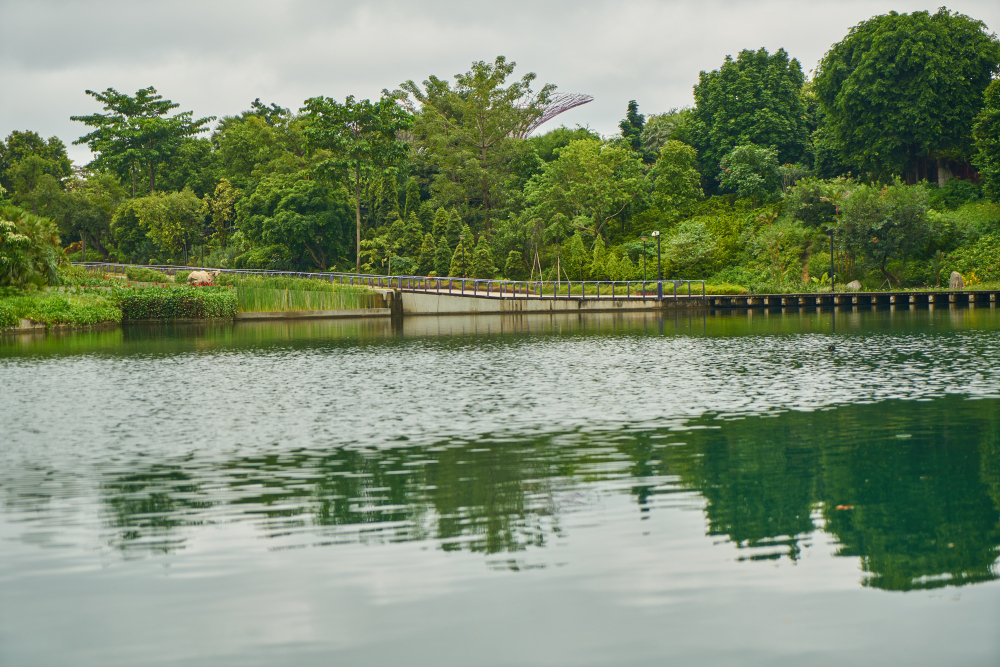
There is a way of looking at a pond that changes it from a fixed feature into a process with a direction.
The ordinary view treats a pond as a place — a patch of water that is there, with things living in it, which will still be there next year looking much the same.
The more accurate view treats it as a stage. A small body of still water is continuously receiving material and losing depth, and the sequence it follows is predictable enough that the stage it has reached can be read from the edge.
That sequence explains why ponds are so rich in life, why new ones are colonised so quickly, why the ones that occasionally dry out are frequently the richest of all, and why a landscape that once held a great many ponds now holds far fewer.
Why Still Water Fills In
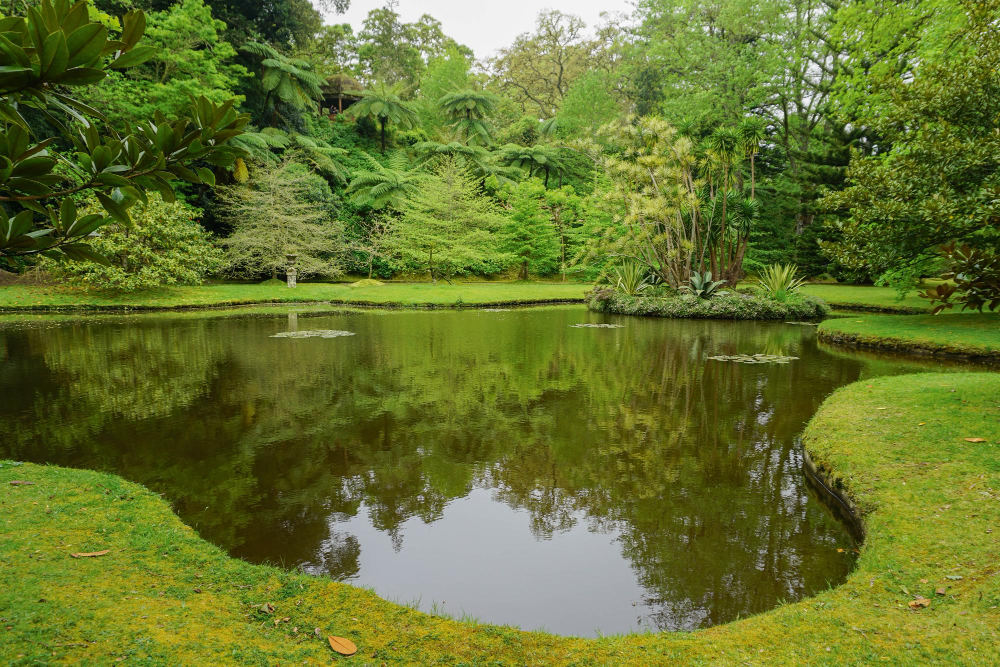
The mechanism is simply that material arrives and does not leave.
A river carries sediment away. Still water does not — anything that enters settles to the bottom and stays there.
Material arrives from several directions at once. Soil washes in from the surrounding ground with rain. Leaves fall in from overhanging plants. Plants growing in the water die back each year and sink. Animals living there die and are added to the bottom.
The cold, low-oxygen conditions at the bottom of still water slow decomposition, which means material accumulates faster than it breaks down.
The result is a steady rise in the floor, measured in millimetres to centimetres a year depending on the setting — slow on the scale of a season and rapid on the scale of a century.
And the process accelerates. As the water shallows, more of it becomes suitable for rooted plants, which produce more material, which fills it faster.
Like our content? Follow us for more.
The Sequence From the Edge Inward
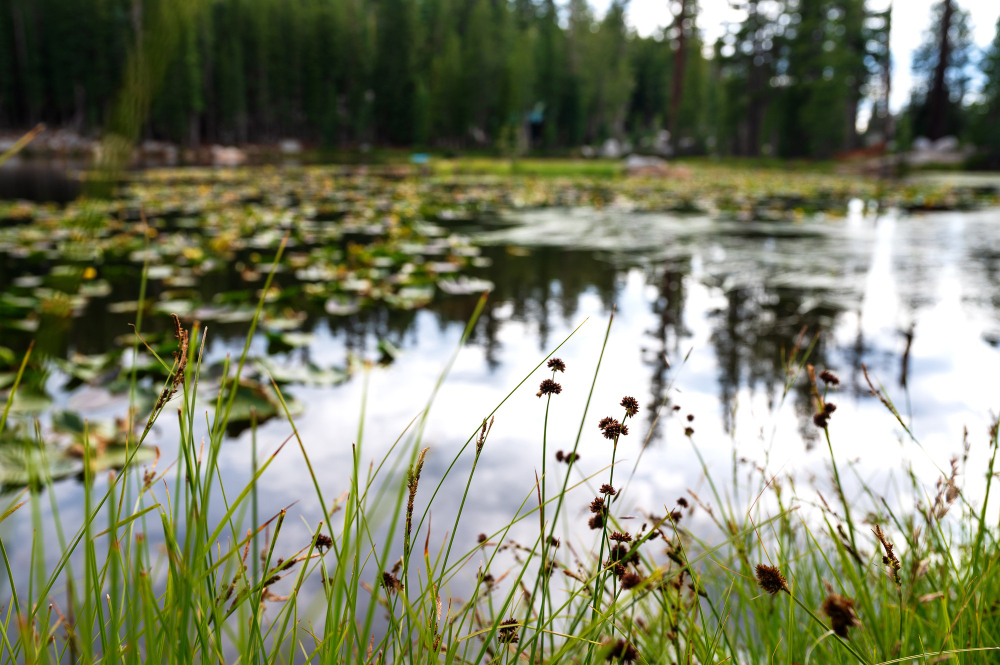
The stages are visible simultaneously in any established pond, arranged as rings from the bank to the centre.
At the edge, where the ground is saturated but not submerged, plants tolerant of waterlogged soil grow densely.
In shallow water, tall emergent plants root in the bottom and grow up through the surface into the air, forming a fringe.
Further out, where the water is deeper, plants root in the bottom and float their leaves on the surface.
In the deepest part, if it is deep enough, plants are fully submerged or there is open water.
Each ring advances toward the centre as the bottom rises, because each group follows the depth it needs — so the whole arrangement contracts inward over time until the open water disappears.
Which means a pond with a wide fringe and a small open centre is further along the sequence than one with a narrow fringe and broad open water, and the proportions are a reading of age.
Why Ponds Are So Full of Life
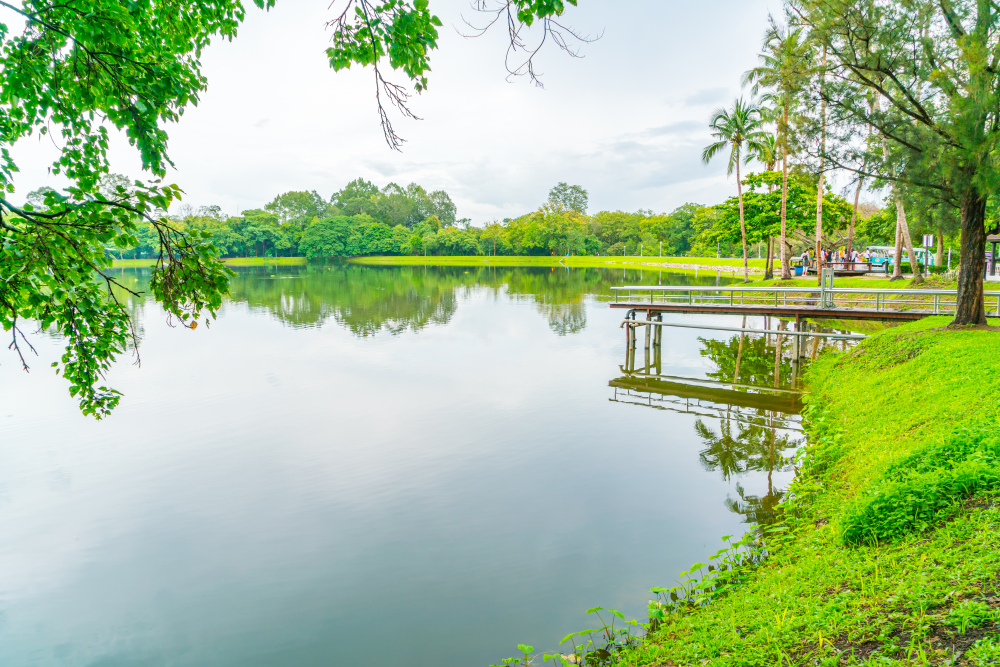
The biological richness of small still water is out of proportion to its size, and the reasons are specific.
Shallow water warms quickly in sunlight, which supports rapid growth of the microscopic organisms at the base of every food chain.
The edge is long relative to the area, and the edge is where the most varied habitat sits — so small ponds have a great deal of the most productive zone.
The absence of flow means small and weak-swimming organisms can live in open water without being carried away, which is not possible in a stream.
And many ponds hold no fish, which matters enormously. A fishless pond lacks the principal predator of larvae and small invertebrates, which is why ponds that dry out occasionally, and therefore cannot sustain fish, are frequently richer in insect and amphibian life than permanent ones.
That last point is one of the more counterintuitive findings in freshwater ecology: a pond that periodically fails as a pond may support more life than one that never does.
How Quickly New Ponds Are Colonised
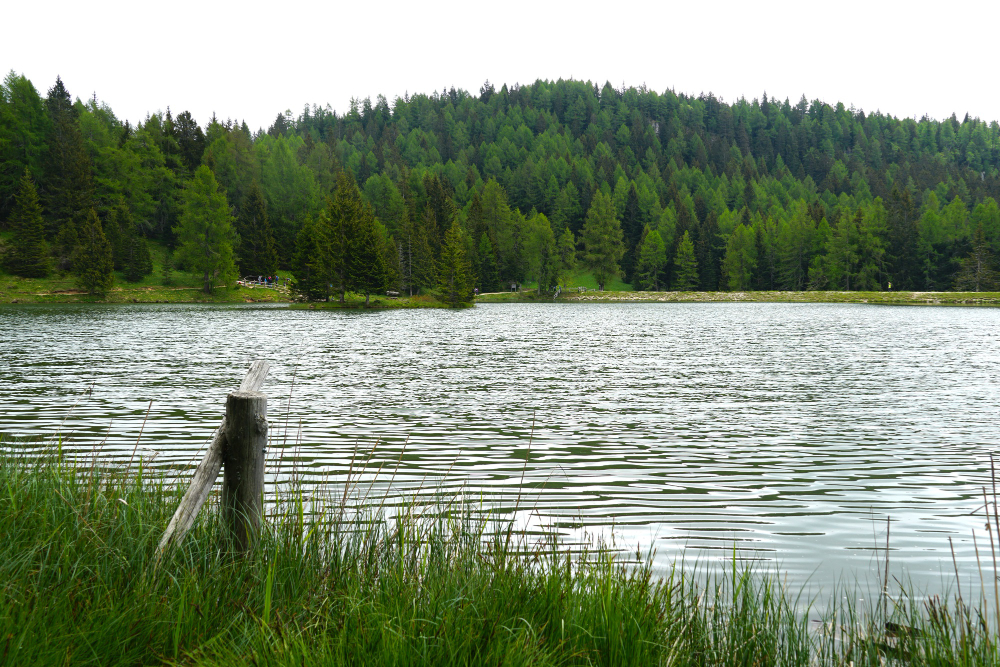
The speed of arrival surprises almost everybody who digs one.
Within days of filling, flying insects arrive — many aquatic insects fly as adults and actively search for new water, which they locate partly by the light it reflects.
Microscopic organisms arrive on the wind, on the feet and feathers of birds, and in the dust that falls on everything.
Plants arrive as seeds carried by birds and wind, and as fragments transported by animals moving between water bodies.
Amphibians find new water within a season or two where there are populations nearby, and the distance they travel to do so is further than people expect.
So a new pond is not stocked; it is discovered, and the community that assembles is determined largely by what is within travelling distance rather than by anything introduced.
That is why the placement of new ponds relative to existing ones matters more than their design, and why a cluster of small ponds supports more than one large one of the same total area.
Where the Ponds Went
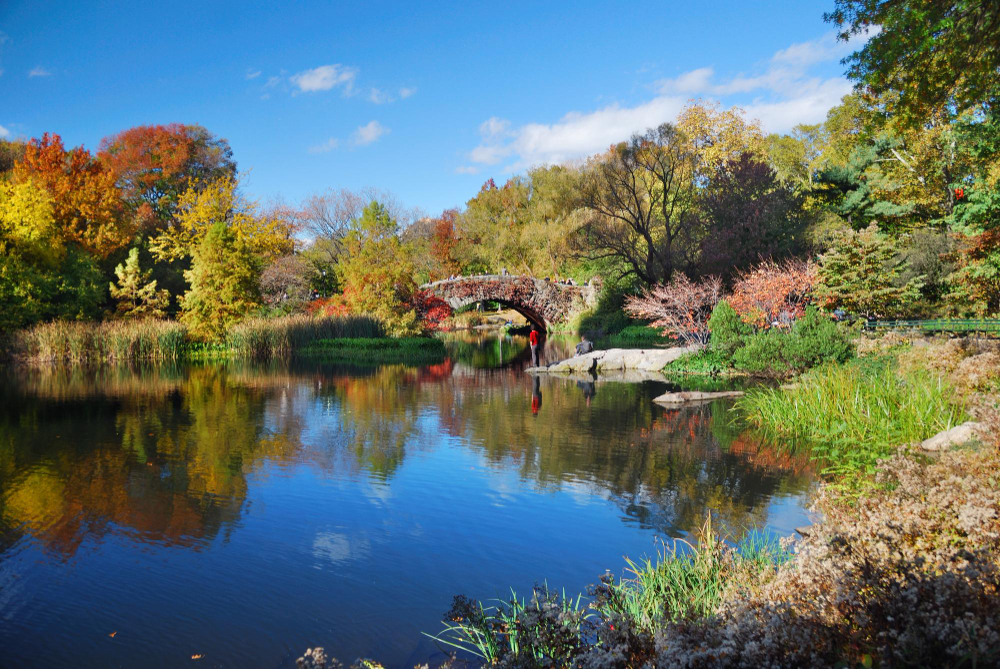
The decline in small ponds across many landscapes has several causes and is worth stating plainly.
Many existed for a purpose — watering livestock, supplying a household, powering a process, or as the by-product of digging for material — and when the purpose ended, the maintenance ended with it.
Without clearing, they followed the sequence above and became marsh and then ground, frequently within a few decades.
Others were deliberately filled, because a pond in a field is an obstruction and land is worth more dry than wet.
Drainage lowered water tables across whole areas, which removed the supply feeding ponds that had depended on high groundwater.
The combined effect in some landscapes is a very large reduction in the number of small water bodies over the past century or two, which is documented from historical maps compared with the present.
Reading a Pond
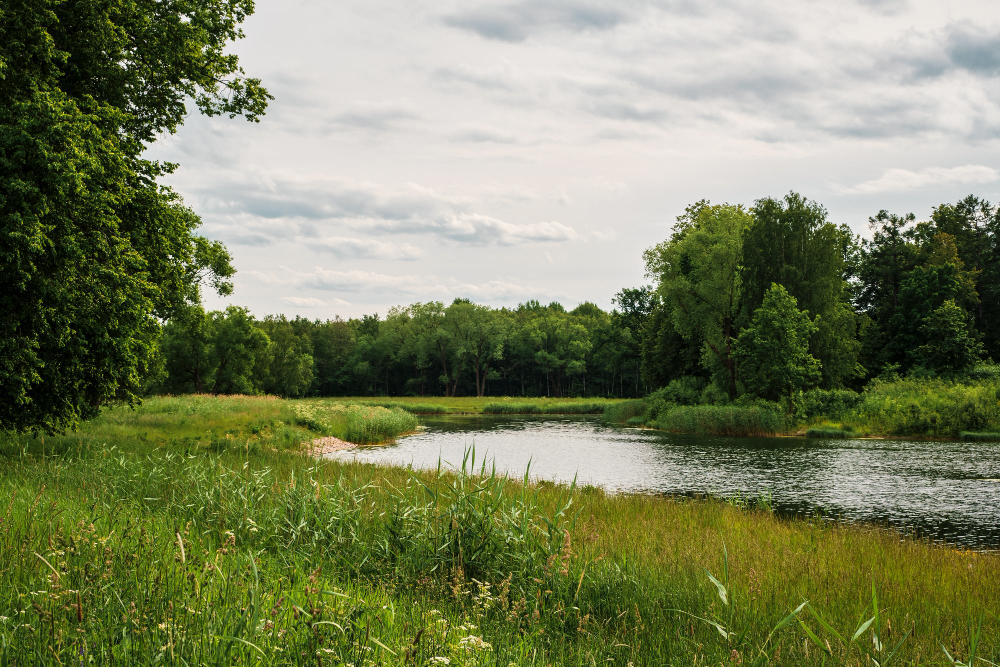
A handful of observations reveal what stage a pond has reached and what its history probably was.
The ratio of fringe to open water indicates how far the infilling has progressed.
The shape of the basin frequently indicates origin: a regular outline or steep sides suggest something dug, while an irregular shallow basin suggests natural formation.
The presence of an inflow and outflow, or the absence of both, indicates whether the pond depends on rainfall, groundwater or a stream.
Trees along the edge indicate how much leaf material arrives each autumn, which is frequently the fastest route to infilling.
And any sign of clearing — banks disturbed, spoil heaps nearby, the edge cut back — indicates that somebody is holding the sequence in place.
Why Temporary Ponds Matter So Much
The ponds that dry out deserve a section of their own, because they are the most undervalued water in any landscape.
A shallow hollow that holds water through winter and spring and dries in summer is frequently dismissed as a puddle or a nuisance, and is among the first things filled or drained.
Its drying is precisely its value. Because it cannot hold fish, the insects, crustaceans and amphibians that breed in it face far lower predation during the weeks when their young are most vulnerable.
Many species are specialists in exactly this habitat, with life cycles timed to complete development before the water disappears, and eggs or resting stages that survive the dry period in the mud.
Some of those resting stages can remain viable for years, which means a dry hollow may contain a dormant community waiting for the next wet season.
That makes temporary water a distinct habitat rather than a failed version of permanent water — and its loss is frequently invisible, because nobody records the disappearance of something that was only there for half the year.
It also changes the management picture. Deepening a temporary pond to make it permanent can reduce its value, because it opens it to fish and removes the conditions its specialist species depend on.
What Keeps a Pond a Pond
The practical conclusion is simple and is the whole explanation for any old pond that still exists.
The natural direction is toward dry land, and the only thing that reverses it is removal of the accumulated material — which means digging, periodically, forever.
That is why a pond that has lasted for centuries almost always has a history of management, and why the oldest ponds in any landscape are generally associated with a use that justified the work.
It also means that a pond is not a feature that can be created and left. It is a stage in a sequence that can be held back but not stopped, and every pond anybody has ever admired was either young or looked after.
Which is a reasonable thing to keep in mind standing on the bank of one. The water in front of you is shallower than it was ten years ago, and in a few more decades, unless somebody intervenes, it will be a slightly damp patch of ground with some reeds in it.
Like our content? Follow us for more.