There is a question that sounds simple and is not: what is the minimum an animal needs in order to be an animal?
Most of the answers people reach for — a brain, a heart, a stomach, the ability to move — turn out to be optional, and sponges are the proof.
A sponge has none of those. It has no nervous system, no muscle tissue, no digestive cavity and no organs. It is fixed in place for its entire adult life. For a long time, it was not clear to observers that it was an animal at all.
And yet it is unambiguously one, it has been around for an extraordinarily long time, and it does something that almost no other animal can: it survives being taken completely apart.
What a Sponge Is
The body plan is a system of water channels, and understanding it explains everything else.
The surface is covered in small openings through which water enters.
Inside, the water passes through chambers lined with specialised cells, each carrying a single whip-like projection that beats continuously.
The combined beating of enormous numbers of those cells drives water through the system, drawing it in through the small openings and expelling it through larger ones.
As water passes the lining cells, they capture food particles from it — bacteria and fine organic material — which they take in directly.
So the whole animal is a pump with a filter built into it, and every structural feature exists to move water through that filter as efficiently as possible.
Like our content? Follow us for more.
How Much Water Moves
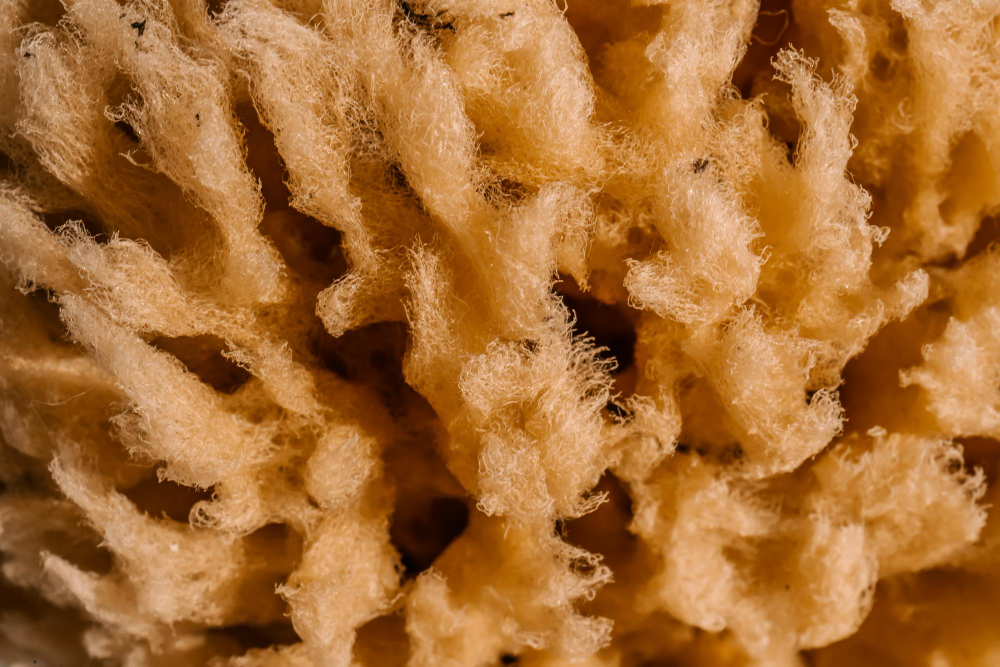
The volume processed is remarkable given how passive the animal appears.
A sponge can pump a volume of water equal to its own body volume in a very short time, repeatedly, for as long as it lives.
A large sponge processes an enormous quantity each day, and in places where they are abundant, sponge communities filter a substantial proportion of the surrounding water.
That makes them significant in their environment out of all proportion to their conspicuousness, removing particles, recycling nutrients and affecting water clarity.
The channel arrangement is also optimised. Water slows in the filtering chambers, where slow flow allows capture, and speeds up in the exit channels, where fast flow carries expelled water clear of the animal so it is not drawn back in.
There is a shape point worth noting. Sponges take an enormous range of forms – crusts, cups, tubes, branches, fans, barrels and shapeless masses – and many species vary their shape according to water flow and space.
The form is set partly by the environment rather than entirely by the species.
The Skeleton That Is Not a Skeleton
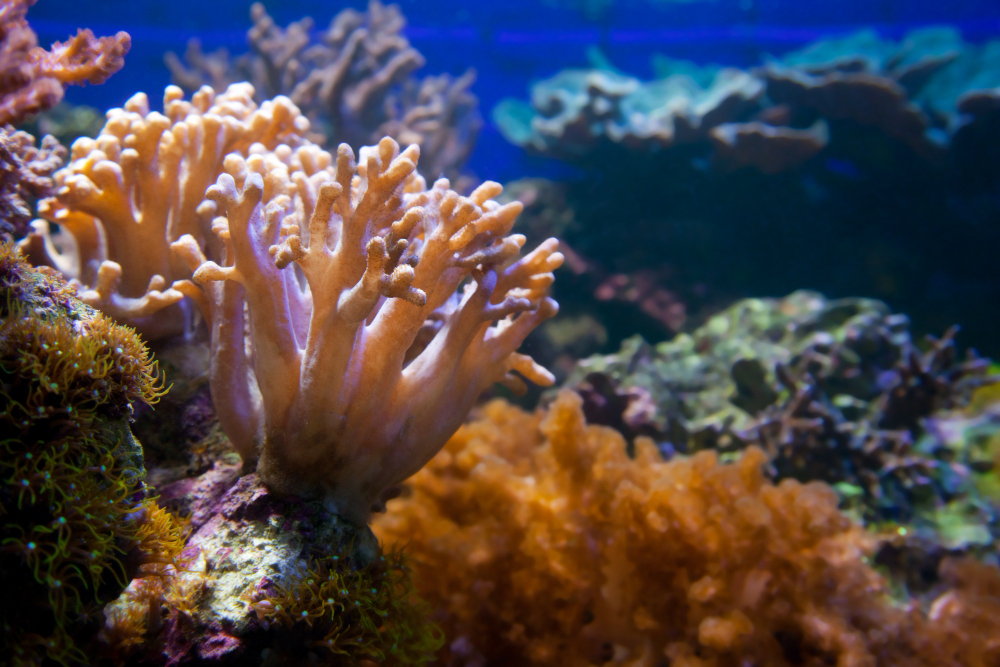
Sponges have supporting structures, and they are unusual.
Many produce tiny mineral elements, each shaped like a needle, a star or a multi-pointed form, which interlock to give the body rigidity.
Those elements are made either of glass-like silica or of calcium carbonate, depending on the group, and their shapes are distinctive enough to identify species.
Others produce a flexible network of a tough protein fibre, which is what remains when the living tissue is removed — and that fibrous network is what was traditionally harvested and used for washing.
Some combine the two, and some glass-producing forms build intricate lattices of fused silica that are regarded as notable structures in their own right.
The glass elements also have optical properties, conducting light along their length in a way that has attracted research interest.
There is a defence point worth adding. With no ability to move away and no nerves to coordinate a response, sponges rely on their spicules and on chemical compounds that make them unpalatable or harmful to animals that might eat them.
That chemistry is diverse and is part of why they attract research attention.
Coming Back Together
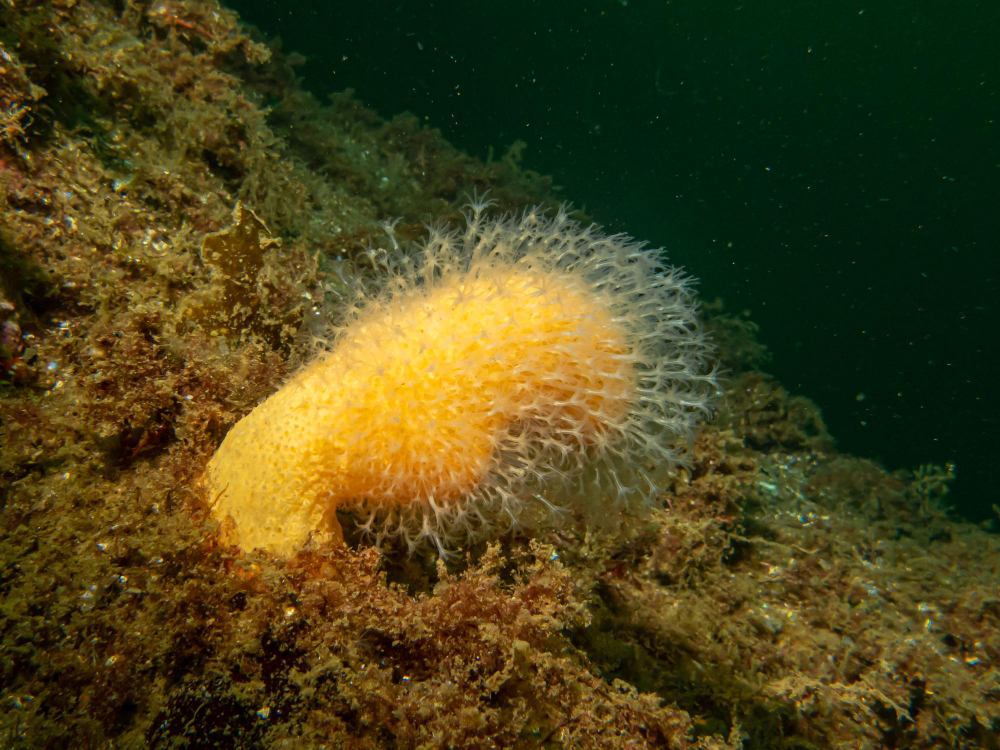
The reaggregation behaviour is the remarkable part and it deserves a careful account.
If a living sponge is broken up and passed through fine mesh, it separates into individual cells and small clusters suspended in water.
Left in suitable conditions, those cells move, contact each other, adhere, and progressively form clumps.
The clumps then reorganise — cells sort themselves by type, channels form, and the structure develops into a functioning small sponge.
Where cells from two different species are mixed, they frequently sort back into separate aggregates by species, because the adhesion between cells depends on recognition molecules on their surfaces.
That sorting was one of the early demonstrations that cells recognise one another chemically, and it made sponges important in understanding how cells in any animal hold together and organise.
The capacity is related to their general ability to regenerate, which is extensive — fragments can grow into complete animals, which is also one way they reproduce.
There is a reproduction point worth adding. Besides fragmentation, sponges reproduce sexually, releasing sperm into the water to be drawn into other individuals, and many species produce both eggs and sperm, sometimes at different times.
The larvae that result swim briefly before settling.
Some release their larvae into the water in synchronised events, turning the surrounding sea cloudy for a short period.
Why They Matter for Understanding Animals
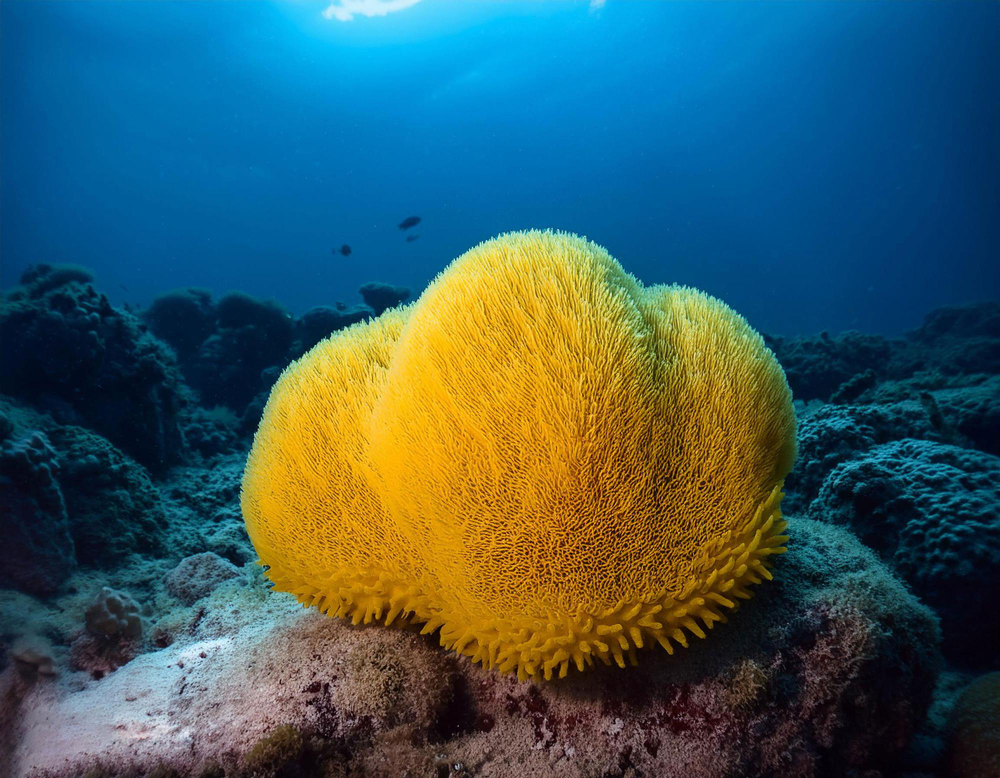
The evolutionary position of sponges is the reason they receive scientific attention far beyond their ecology.
They are among the earliest branching lineages of animals, and they share features with the single-celled organisms most closely related to animals.
In particular, the collar cells that drive the water flow closely resemble a group of single-celled organisms that live alone or in small colonies, which suggests how multicellular animals may have originated from cooperative single cells.
That makes sponges a window onto what the earliest animals might have been like, with the important caution that a living sponge is a modern organism with its own long history rather than a surviving ancestor.
The precise branching order at the base of the animal family tree is still debated, and sponges’ position within it has been revised more than once.
There is a history point worth adding. Because sponges lack obvious organs and do not move, early naturalists classified them in various ways, including as plants, and their animal status was established by observing the water currents they generate and the behaviour of their cells.
That debate lasted a surprisingly long time for something so common.
The decisive evidence was the flow itself – a living sponge visibly drives water through its body, which no plant does.
Where They Live and How Long
The range of habitats and lifespans is far wider than the familiar image suggests.
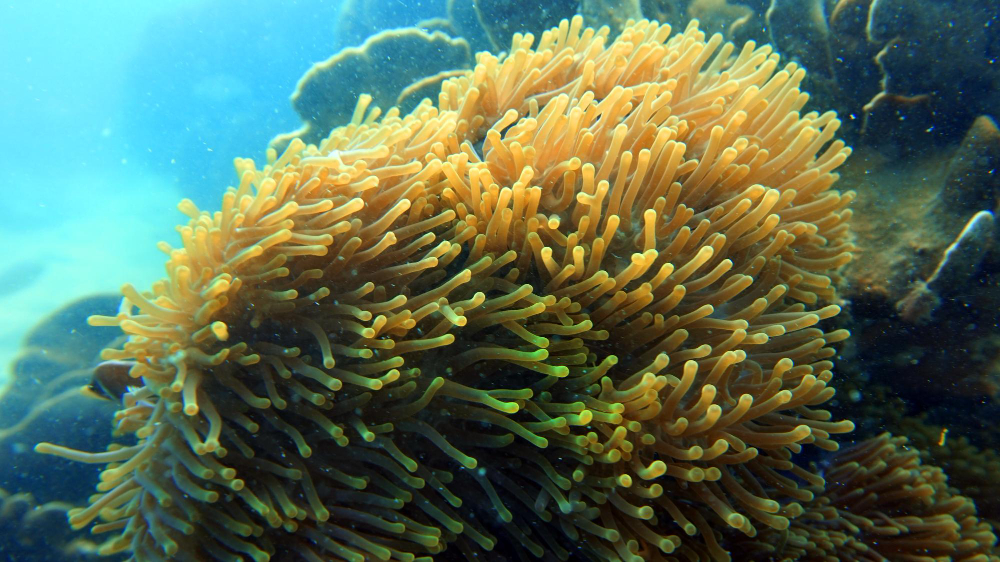
Sponges live from shallow water to the deepest parts of the ocean, in polar seas and tropical ones, and a smaller number live in fresh water.
In cold deep water, some grow extraordinarily slowly and are thought to live for very long periods, with estimates for certain individuals running to thousands of years — figures that are debated and difficult to confirm, but consistently very large.
Some form extensive grounds on the deep seabed, creating habitat for other animals in places where hard surfaces are rare.
Freshwater sponges survive unfavourable seasons by producing small resistant packets of cells that can endure drying and freezing and resume growth when conditions improve.
Many harbour dense communities of microorganisms within their tissue, which can make up a substantial proportion of the sponge’s mass and contribute to its chemistry.
So an organism with almost no internal complexity occupies nearly every aquatic environment on the planet, and some individuals may be among the oldest living animals anywhere.
What They Do Not Have and Still Manage
The list of absent features makes the achievement clearer.
Without nerves, a sponge still responds to its environment — contracting openings, reducing flow when water is laden with sediment, and in some species expelling water in coordinated pulses.
That coordination happens through slower chemical and electrical signalling between cells, which demonstrates that responsive behaviour does not require a nervous system.
Without a gut, food is captured and digested inside individual cells rather than in a shared cavity.
Without muscle, the body changes shape slowly through the contraction of specialised cells.
And without moving as adults, they disperse through free-swimming larvae, which settle and begin the fixed life that the adult leads.
Which is a reasonable answer to the opening question. An animal does not need a brain, a gut, a heart or the ability to move. It needs cells that cooperate, recognise each other and divide the work — and a sponge is what that looks like with almost nothing else added.
That is a humbling answer in its way. Much of what seems essential to being an animal turns out to be optional, and the sponge has managed without it for a very long time – pumping water, filtering it, and reassembling itself when anybody takes it apart.
Like our content? Follow us for more.