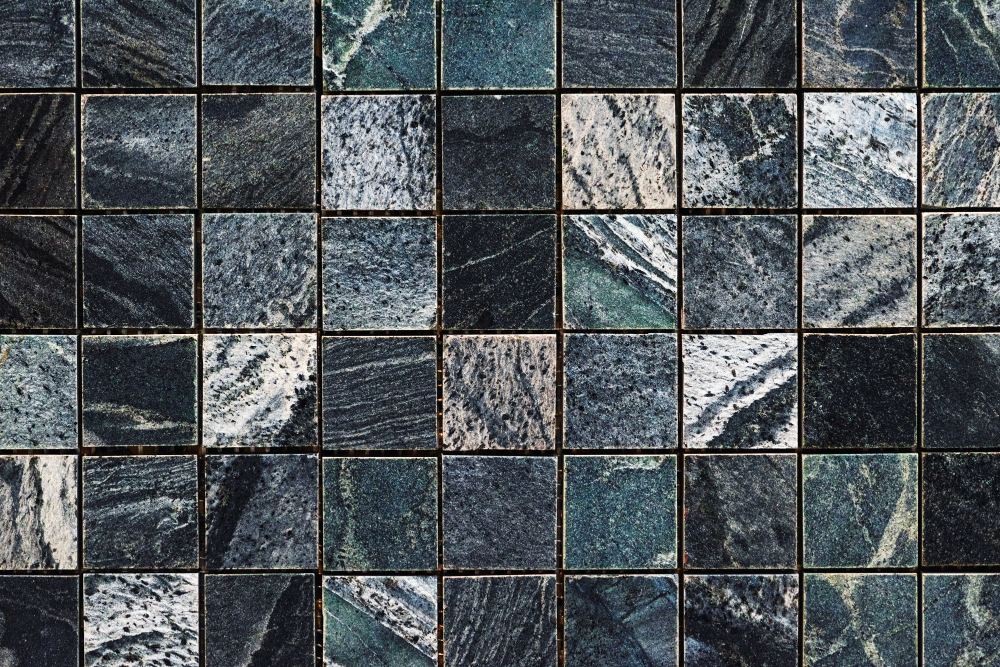
There is an assumption about mosaic that treats it as decoration applied to a finished surface — small pieces stuck onto a floor or a wall, like tiles.
That is close to backwards. In the traditional technique, the mosaic is the surface, built up from the ground in layers, and the small pieces are the top layer of a structure designed to carry load and resist wear for a very long time.
That is why mosaic floors survive in places where almost nothing else from the same buildings does. Walls fall, roofs collapse, timber rots, and the floor remains — sometimes under metres of later material — because it was built as ground rather than laid on it.
Understanding the construction explains the durability, the appearance, the way damage behaves, and why conserving one is so difficult.
The Layers Beneath
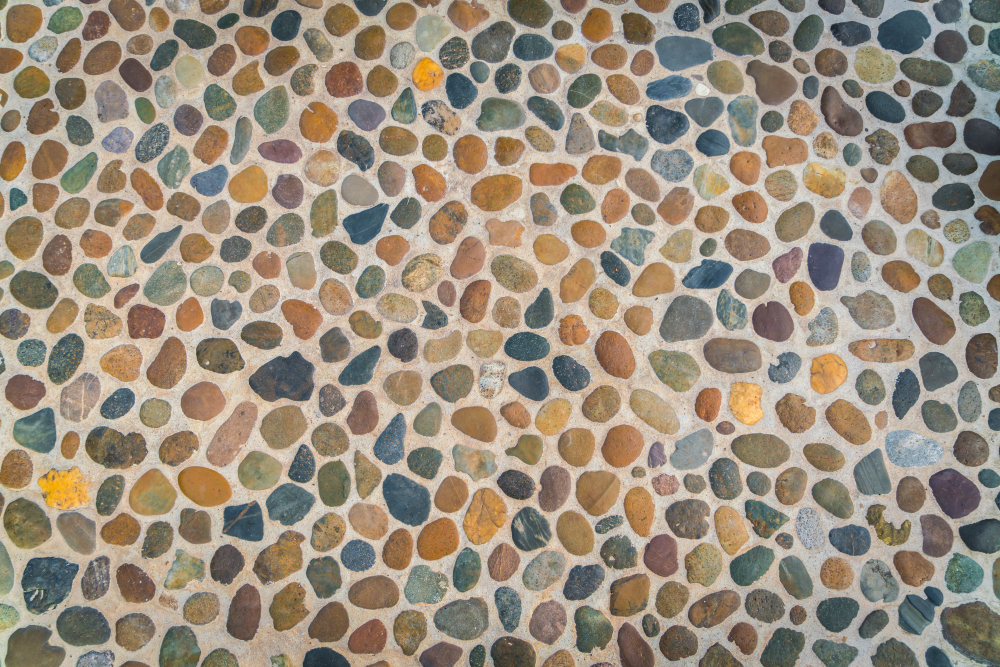
The foundation is the part nobody sees and the part that matters most.
The ground is prepared and compacted, and then a series of layers is laid on top of it, each finer than the one below.
The lowest is coarse — large stones or rubble, providing drainage and a stable base.
Above that comes a layer of coarser mortar mixed with broken material, compacted hard, which distributes load and resists settlement.
Above that, a finer layer levels the surface and provides a smooth, firm bed.
And finally a thin setting layer, laid in small areas at a time while still soft, into which the pieces are pressed.
The total depth can be substantial, and the whole assembly functions as a single slab that spreads any load over a wide area — which is why a mosaic floor does not crack under the weight that would break a thinner surface.
There is a drainage point worth adding. The coarse lowest layer lets water pass through rather than collecting beneath the surface, which prevents the whole slab being lifted or cracked by water freezing underneath it.
A floor with a poor base fails from below regardless of the quality of the surface.
Like our content? Follow us for more.
Why the Pieces Are Small
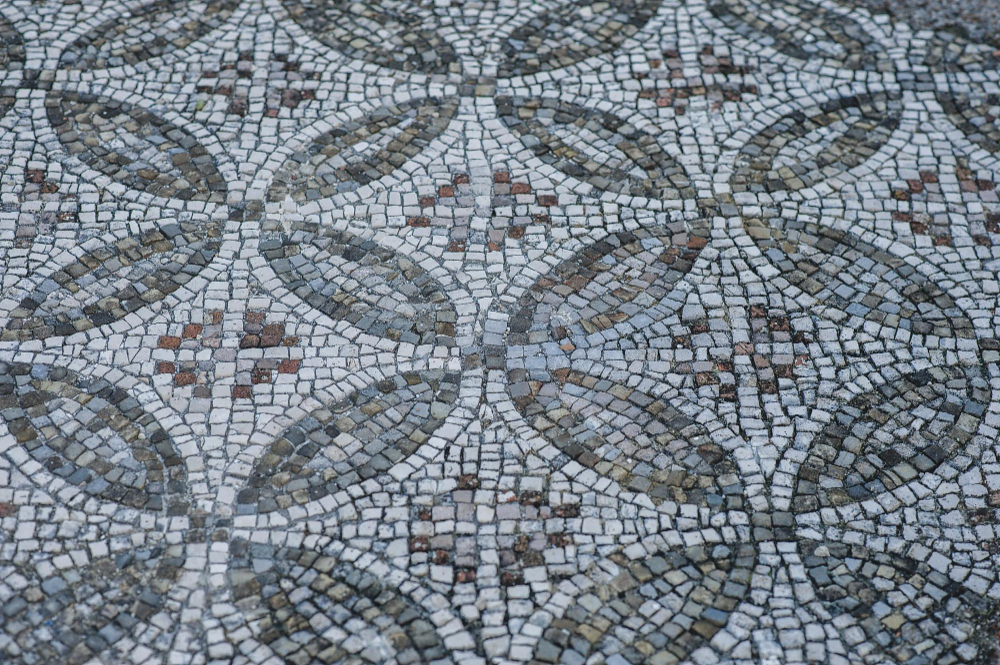
The size of the individual pieces is not only about detail.
Small pieces allow curves, gradations and fine patterns that large tiles cannot produce, which is the obvious reason.
The less obvious reason is structural. Many small pieces, each surrounded by mortar, form a surface that can accommodate slight movement in the ground beneath without cracking, because each joint takes a little of the movement.
A large rigid tile on moving ground cracks across its width. The same area in small pieces shifts slightly at many joints and remains intact.
It also means wear is distributed. A worn area is a few pieces rather than a whole tile, and the surface degrades gradually rather than failing.
And it makes repair local. A damaged patch can be replaced piece by piece without disturbing the surrounding surface, which is how floors in continuous use were maintained for centuries.
There is a grout point worth adding. Once pieces were set, the gaps between them were filled with fine mortar and the surface was cleaned and in many cases ground and polished flat, which is why some floors have an almost glassy finish.
That polishing also sealed the joints against water and dirt.
How the Pieces Were Made
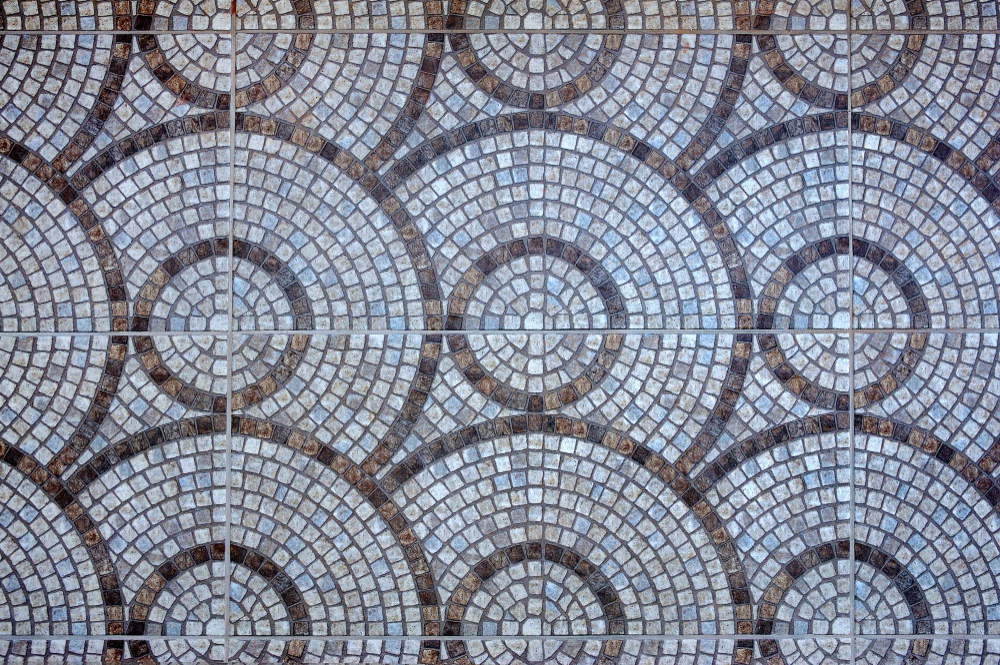
The individual units were cut from larger material, and the choice of material determined what was possible.
Stone of different natural colours was the basic material — split and cut into small roughly cubic pieces, with the range of available colours set by local geology.
That limitation is visible in the palette of many floors, which uses a handful of tones repeated across the whole design.
Fired clay provided reds and browns where suitable stone was not available.
Glass extended the range enormously, since it could be made in colours stone does not provide, and it was used especially in walls and vaults where it would not be walked on.
Metal leaf sealed between layers of glass produced gold and silver pieces that reflect light strongly, which is why the finest wall mosaics shimmer.
The cutting itself was done with a hammer and a fixed blade, striking each piece to split it cleanly, and a skilled worker produced very large numbers in a day.
Why They Look the Way They Do
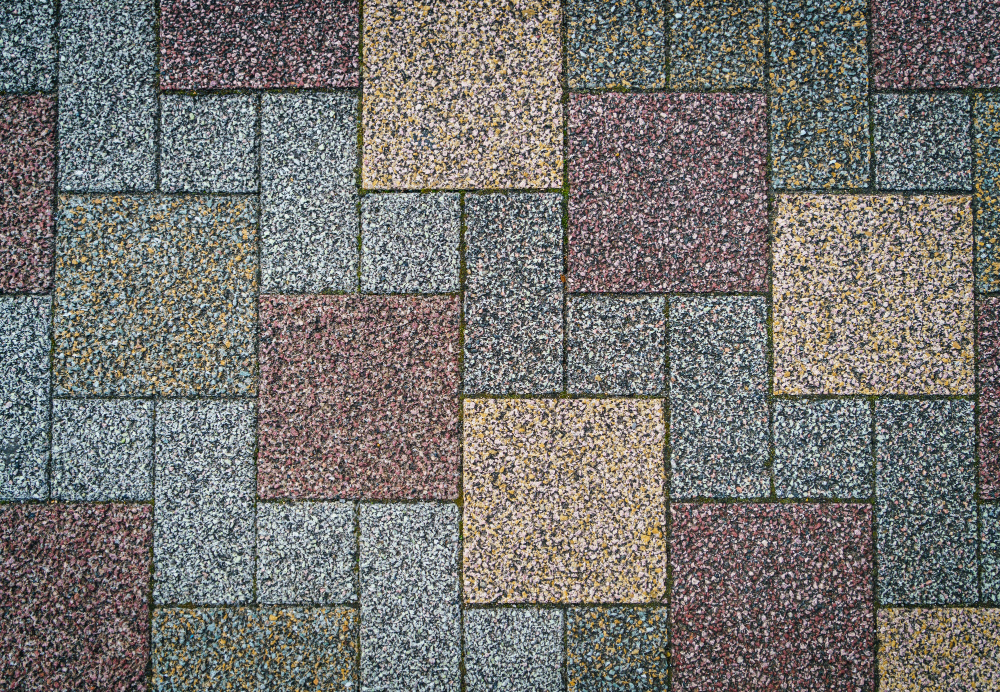
Several characteristic features of mosaic appearance come from the technique rather than from choice.
Outlines are frequently emphasised with a single row of pieces following the contour, which defines shapes clearly and was a standard method.
Backgrounds are laid in rows following the outline of the figures, spreading outward like ripples, which gives a sense of movement even in a plain area.
Pieces in wall mosaics are frequently set at slight angles to each other rather than flat, so that each catches light differently and the surface glitters as the viewer moves.
Distance changes what is seen. Up close, a mosaic is visibly made of separate pieces; from further away, the eye blends them into continuous tones — which means the designer was working for a particular viewing distance.
And wall mosaics high in a building were designed with that distance in mind, sometimes with deliberate distortions that correct for the angle from which they would be seen from the floor.
There is a speed point worth including. A floor of any size required an enormous number of individually placed pieces, and the work was organised in teams with divided tasks – cutting, preparing the bed, setting the plain areas and setting the fine work.
That division is sometimes visible in the finished floor.
What Happens When One Is Found
Discovery is frequently where the danger begins.
A floor buried under later material is protected from weather, frost and traffic, and it may be in remarkable condition when uncovered.
Once exposed, it is subject to everything it had been protected from: freezing water in the joints, plant roots, salt crystallisation, foot traffic and the drying of the mortar bed.
That is why many excavated floors are recorded and then reburied, which is a legitimate conservation choice rather than an admission of defeat — the ground is frequently the best protection available.
Lifting a floor to move it is possible and extremely difficult, involving facing the surface with fabric and adhesive, cutting the bed beneath and relaying the whole thing on a new base — a process with a real risk of loss.
Leaving one exposed in place requires shelter, drainage, climate control and continuous maintenance, which is a commitment for as long as it is to be displayed.
Reading One Up Close
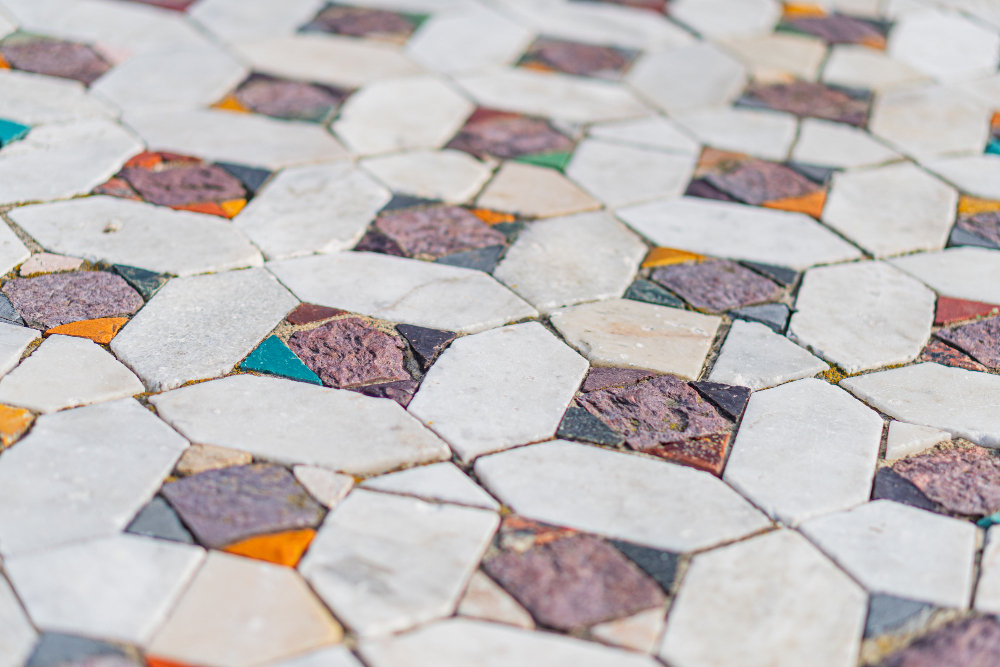
Several details reward close attention and reveal how a floor was made.
The size of the pieces often varies across a single floor — larger and coarser in borders and plain areas, smaller and finer in figures and faces — because fine work was slower and was reserved for where it mattered most.
The regularity of the rows indicates skill and speed. A background laid in perfectly straight lines was usually done quickly by less senior workers, while flowing rows following contours show more careful hands.
Panels made separately in a workshop and set into the floor afterwards sometimes show a visible boundary, a slight change of level or a different mortar, which reveals how the work was divided.
Repairs are visible too, because later patches rarely match the colour of the original stone exactly and are frequently laid with less care.
And guidelines survive occasionally in the bedding layer beneath, where the design was sketched before the pieces were set — visible only where the surface has been lost.
So a floor records not only a design but a workforce, a sequence of making and a history of repair.
Why It Still Works
The general point concerns durability as a design outcome.
A mosaic floor lasts because every element of its construction distributes stress: a deep layered bed spreads load, small pieces spread movement, mortar joints absorb shifting, and local damage stays local.
None of those depends on a strong material. The stone is ordinary, the mortar is ordinary, and the pieces are small. The durability comes from how they are arranged.
That is the same principle that makes a drystone wall stand and a brick wall with weak mortar outlast one with strong mortar — the system is designed so that damage goes somewhere harmless.
Which is why a floor laid for a household that has long since vanished can still be walked on, and why the parts of buildings that survive longest are frequently the ones built from the smallest pieces.
Which runs against the usual intuition about durability. Large solid pieces seem as though they should last longest, and it is frequently the opposite – a surface made of thousands of small parts, each allowed to move a little, outlasting almost everything built around it.
Like our content? Follow us for more.