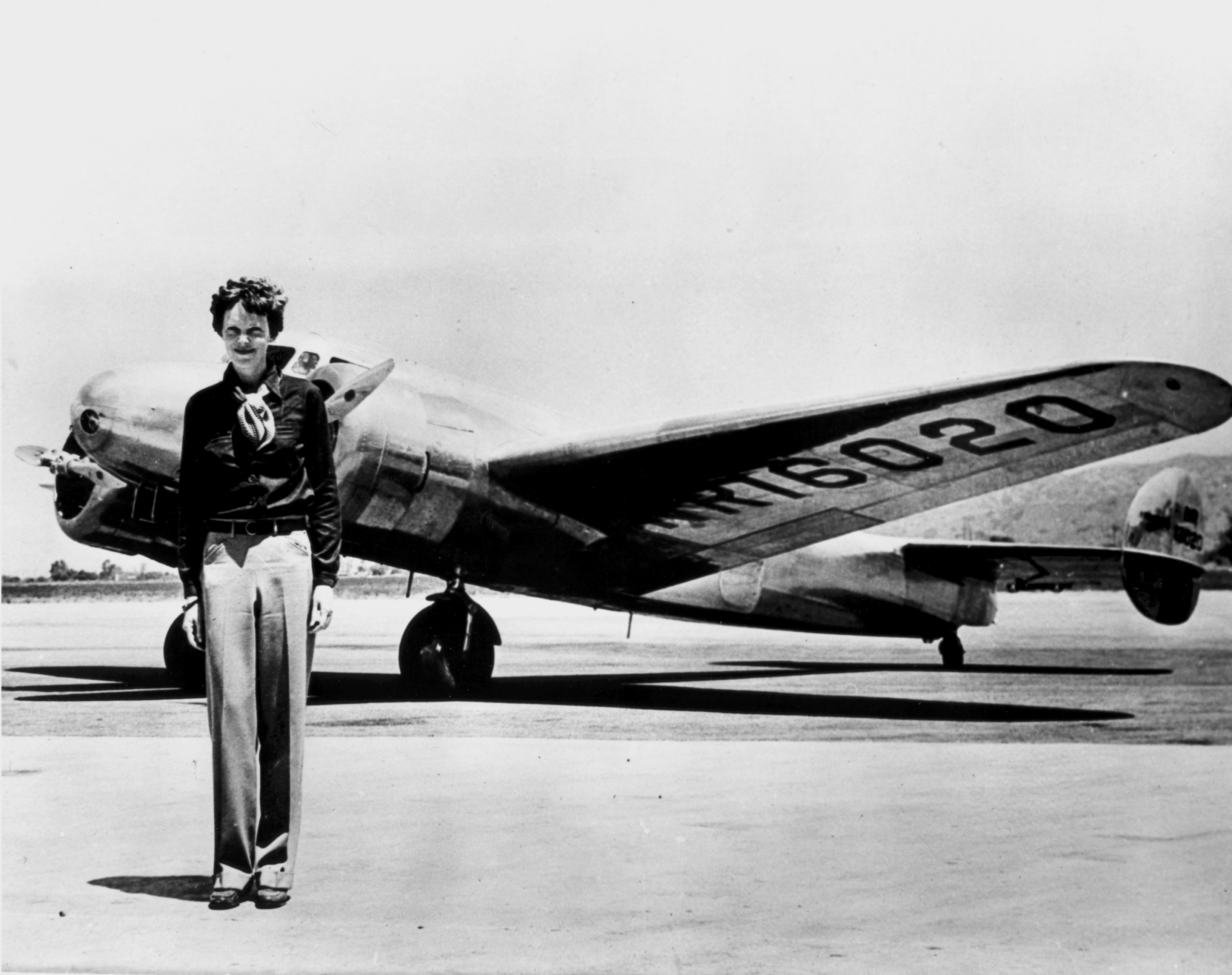
Every July 24, Amelia Earhart Day marks the birthday of the most famous aviator in American history — a woman who was, in her own lifetime, one of the most recognized people on the planet, and who has been missing for 89 years. Her disappearance over the Pacific in the summer of 1937 is arguably the most enduring mystery of the twentieth century, a puzzle that has outlived everyone who searched for her and generated theories ranging from the sober to the wildly implausible.
What makes this year’s observance different is that the story is, unusually, moving. In late 2025 the U.S. National Archives published thousands of declassified government documents relating to Earhart’s final flight and the search that followed. And a research team has spent years working toward an expedition to a remote Pacific island to examine a mysterious object in its lagoon — a mission that, after repeated delays, is scheduled to sail imminently. For the first time in a long while, the possibility that the case might actually be closed feels less like wishful thinking and more like a date on a calendar.
The Woman Before the Mystery
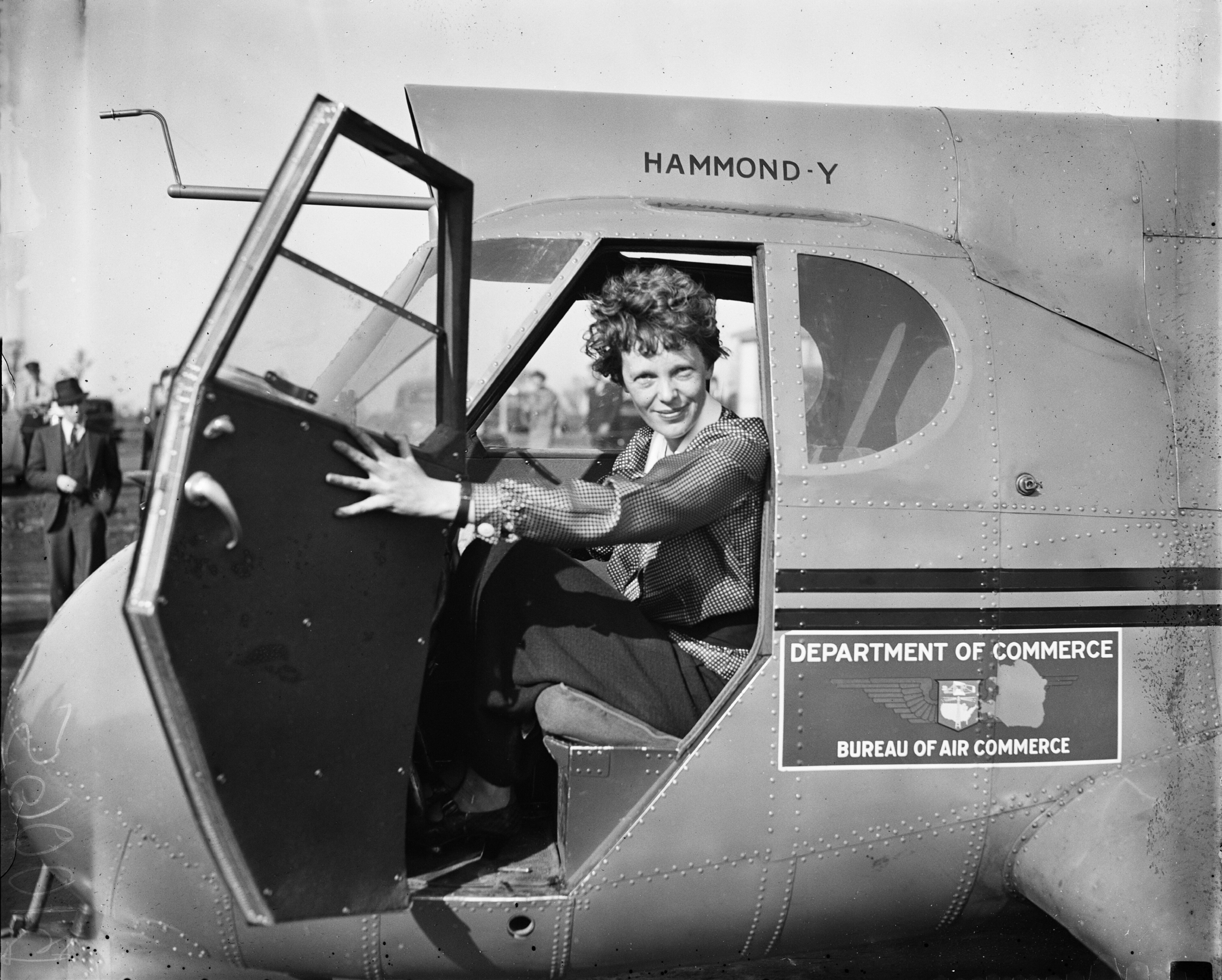
It’s worth remembering that Earhart was famous long before she was missing. Born in Atchison, Kansas, in 1897, she came to flying relatively late and rose fast, and in 1932 she became the first woman to fly solo across the Atlantic — a feat that made her an international celebrity and a symbol of what women could do in a field that had largely excluded them. She set records, wrote books, lectured widely, promoted commercial aviation, and used her fame deliberately to advocate for women in flying and beyond.
By 1937 she was attempting the achievement that would cap the whole career: to become the first woman to fly around the world, and to do it near the equator, the longest possible route. She had tried once already that year and had to abandon the attempt after a crash on takeoff in Hawaii damaged the plane, which was shipped back for repairs. In late May 1937 she set out again, this time flying eastward, accompanied by navigator Fred Noonan, an experienced Pacific aviator. Over the following weeks the pair crossed the Americas, the Atlantic, Africa, Asia, and Southeast Asia, and by the end of June they had covered the overwhelming majority of the distance. Only the Pacific remained.
Like our content? Follow us for more.
The Last Flight

On July 2, 1937, Earhart and Noonan took off from Lae, in what was then the Territory of New Guinea, bound for Howland Island — a flat coral speck roughly two miles long and half a mile wide, sitting almost on the equator about 2,500 miles away. It was the most demanding leg of the entire journey by a wide margin: an enormous overwater flight to a target so small that finding it required near-perfect navigation, with no room for error and little margin in the fuel load.
The U.S. Coast Guard cutter Itasca waited at Howland with fuel, tasked with helping guide them in. In the early hours, the Itasca’s radio operators began receiving Earhart’s voice transmissions, and as the morning wore on her signals grew stronger, indicating she was getting closer. But two-way communication never properly worked. She apparently could not hear the ship’s replies, and the Itasca could not get a reliable bearing on her position. Her messages grew more urgent, reporting that she was running low on fuel and could not see the island. The ship poured out black smoke to make itself visible; she never sighted it. The final transmission attributed to her aircraft came in the morning of July 2, and then nothing. A massive search by the Navy and Coast Guard covered a vast area of ocean and found no confirmed physical trace. The official search was called off on July 18, 1937.
What Most Experts Actually Think Happened

Given how many exotic theories circulate, it’s worth stating the mainstream position plainly. The prevailing view among aviation historians and researchers is the simplest one: Earhart and Noonan, unable to locate Howland Island, ran out of fuel and went into the ocean somewhere near it, and the aircraft sank in extremely deep water. This “crash and sink” explanation fits the radio evidence, the fuel calculations, and the absence of wreckage on land, and it remains what most serious researchers consider the likeliest outcome.
The complicating factor is that deep-ocean searches for the aircraft have so far come up empty, and the seabed in that region is punishingly deep and vast. Several well-funded expeditions using sonar and submersibles have hunted for the Electra without confirmed success. Absence of wreckage is not, by itself, evidence against the theory — the Pacific is very good at keeping things — but it has left just enough room for alternative explanations to persist, and persist they have, for the better part of a century.
The Nikumaroro Theory and the Object in the Lagoon

The most serious alternative to crash-and-sink holds that Earhart, unable to find Howland, turned and flew along a navigational line to the south, reaching an uninhabited atoll then called Gardner Island and now known as Nikumaroro, where the pair may have landed on a reef flat and survived for a time. Researchers advancing this theory have pointed to a collection of circumstantial material gathered over decades: post-loss radio signals reported by various listeners, a partial skeleton found on the island in 1940 whose measurements have been re-analyzed and argued over ever since, and artifacts recovered from the island that supporters interpret as consistent with a 1930s American castaway. Critics counter that each individual piece is ambiguous and that none of it constitutes proof.
What has kept the theory in the news is a specific target: an anomaly visible in satellite and aerial imagery of the island’s lagoon, nicknamed the Taraia Object, which some researchers believe could be the remains of the Electra. A joint effort involving Purdue University’s research foundation — Purdue funded Earhart’s aircraft and holds her archives — and the Archaeological Legacy Institute has been working to reach it. The expedition was initially set for late 2025 but was postponed while the team worked through permit approvals with the government of Kiribati and around the South Pacific cyclone season, and it has been rescheduled into 2026, with the team planning to sail from Majuro in the Marshall Islands, spend several days at the island examining the object, and report what they find. If the object turns out to be aircraft wreckage, further seasons would follow to attempt identification and recovery. If it turns out to be coral or debris, as skeptics expect, the theory takes a serious blow.
The Declassified Files
The other recent development is documentary rather than archaeological. In September 2025, the president directed the release of government records relating to Earhart and her final flight, and in November 2025 the National Archives published thousands of pages online — Coast Guard radio logs, weather reports, search records, interagency correspondence, and a large volume of contemporary press clippings.
The honest assessment from experts is that this material enriches the historical record without overturning it. Much of it had been previously released or available to researchers, and aviation historians have generally said the files are unlikely to change the accepted explanation of what happened. For anyone fascinated by the case, though, the archive is a remarkable resource: the raw, hour-by-hour texture of a search unfolding in real time, the confusion and false leads, and the speed with which theories began to multiply in the weeks after she vanished. It is the closest thing available to standing on the deck of the Itasca while the radio calls came in.
Why She Still Matters
Amelia Earhart Day exists for the birthday, not the disappearance, and there’s a case for spending it on the former. The mystery is what keeps her name in headlines, but it is arguably the least interesting thing about her. She was an extraordinarily accomplished aviator in an era when the field was hostile to women, a bestselling author, a relentless advocate who used her celebrity to argue that women belonged in cockpits and careers, and a person who took on a truly dangerous project because she believed it was worth doing. Her legacy is visible in every woman who flies for a living.
And there is something fitting about marking her birthday in a year when the search is active again. Whatever the expedition finds — an aircraft, a rock, or nothing conclusive at all — the fact that people are still sailing thousands of miles to look says something about the hold this story has. Eighty-nine years on, a woman who vanished into the Pacific is still pulling ships toward remote islands. On July 24, that seems like the right thing to raise a glass to: not the mystery she left behind, but the life that made anyone care about solving it.
Like our content? Follow us for more.