There is a contradiction at the centre of making charcoal that explains everything about how it was done.
The wood has to be heated to a high temperature, and the only practical source of that heat is the wood itself burning. But if the wood burns properly, it turns to ash and nothing is left.
So the process consists of burning a small part of the heap in order to heat the rest, while deliberately starving the whole thing of the air it needs to burn completely.
That balance cannot be set and left. Air finds its way in through cracks, the heap settles as it shrinks, and a flame breaking out anywhere can consume days of work in an hour. Somebody had to be there continuously, which is the fact that shaped the entire trade.
Why Anybody Wanted It
Charcoal exists because wood is a poor fuel for certain jobs.
Wood contains a large amount of water, which must be boiled off before the wood itself can burn, and that absorbs a great deal of the energy released.
It also burns with a long smoky flame and produces a temperature too low for several important processes.
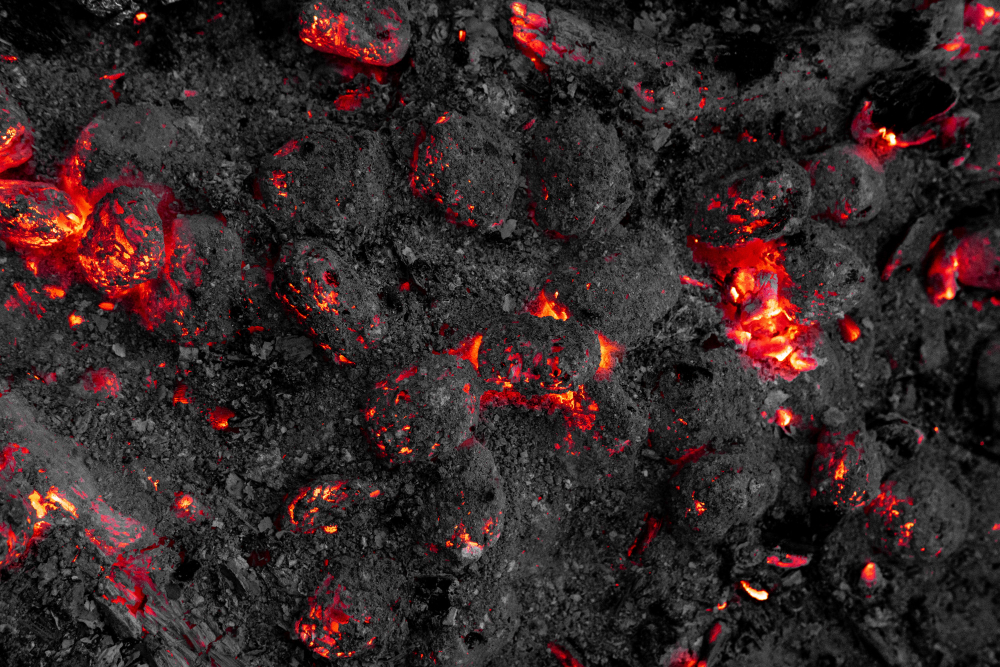
Charcoal has the water and the volatile material already removed, so it lights readily, burns with almost no flame or smoke, and reaches a far higher temperature.
It is also much lighter than the wood it came from, which mattered enormously when fuel had to be carried. Transporting charcoal from a woodland to a town cost a fraction of transporting the equivalent heat as timber.
Those properties made it the fuel for smelting and working metal, for firing pottery and glass, and for any process needing sustained high heat — which meant that for a very long period, industry depended on woodland.
Like our content? Follow us for more.
How the Heap Was Built
The construction is precise and the shape matters.
Wood was cut to consistent lengths and stacked on end around a central chimney, packed as tightly as possible in a circular mound so that air could not move freely through it.
The whole mound was covered with a layer of leaves, bracken or straw, and then with earth or turf, which sealed it against the air.
A fire was started down the central chimney, which was then closed, so that burning spread outward and downward through the heap rather than upward into the open.
Small holes were opened around the base to admit a limited amount of air, and those holes were opened, closed and moved as the burn progressed.
The colour and quantity of the smoke escaping told the burner what was happening inside: thick white smoke meant water still coming off, and a change to a thin blue haze meant the wood was charring and the heap needed closing down further.
That reading of the smoke was the central skill, and it could not be learned from a description.
Living With the Heap
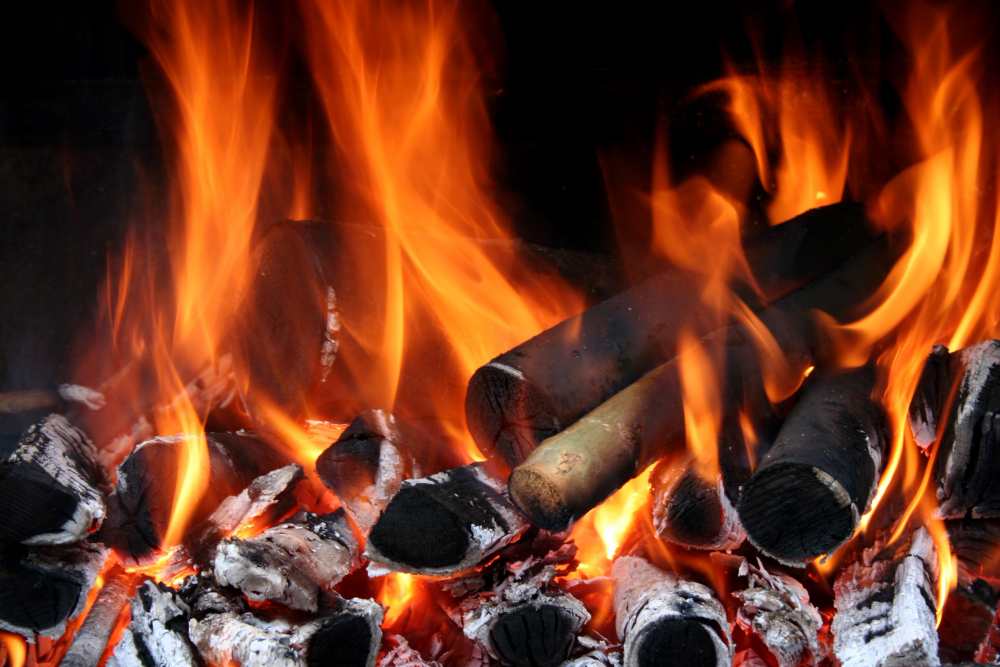
The requirement for constant attention created a way of life.
A burn took several days, sometimes longer for a large heap, and the heap could not be left unattended at any point during it.
Burners built temporary shelters beside their heaps — small conical huts of poles and turf — and slept in them in short intervals, waking to check the mound.
If a flame broke through the covering, it had to be smothered immediately with earth, because an open flame would consume the charcoal that had already been made.
If the heap settled unevenly, cavities formed inside and the burn went wrong, so the surface was walked over and beaten down as it shrank.
Families frequently lived on site for the season, moving to a new part of the wood when the nearby supply was worked, and the work was seasonal and weather-dependent since rain and wind both interfered.
That isolation gave charcoal burners a reputation as a people apart, which is reflected in a good deal of folklore and in the way they appear in older accounts.
What Was Driven Off
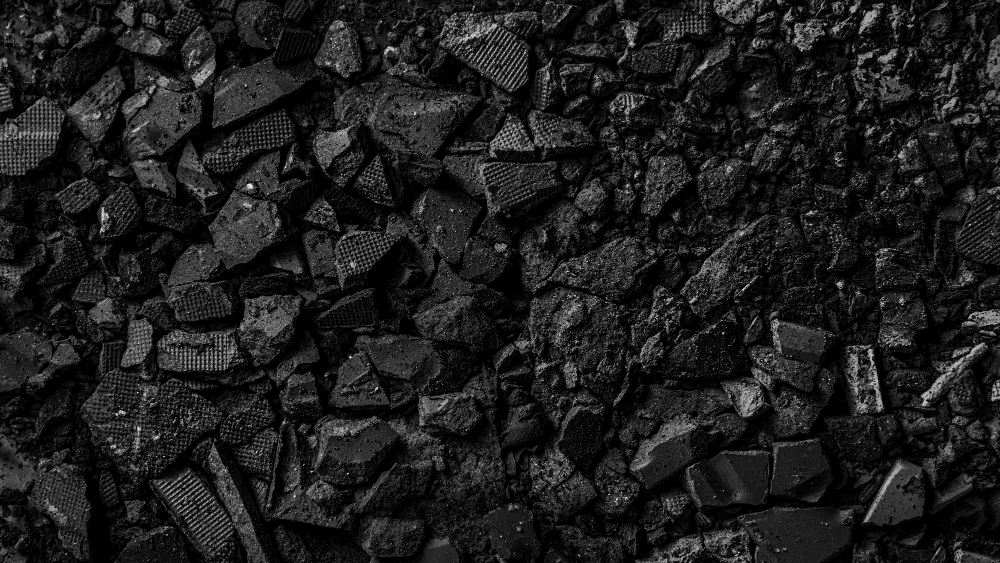
The material that left the heap was not simply waste, and recovering it eventually changed the industry.
Heating wood without enough air drives off water vapour, various gases, and a range of tarry liquids.
In the traditional earth-covered heap, all of that escaped into the air as smoke, and the smell of a working heap carried a considerable distance.
Later methods enclosed the process in sealed metal or brick chambers, which allowed those by-products to be collected and condensed.
That turned a single-product craft into a chemical industry producing several materials at once, with charcoal as one output among others.
It also removed the need for constant watching, since a sealed vessel heated from outside does not depend on judging airflow — which is what ended the traditional trade far more decisively than any change in demand for charcoal.
There is a size point worth adding. Wood was cut to consistent lengths because irregular pieces leave voids that admit air, so preparing the timber was as important as building the mound.
Why It Shaped Woodland
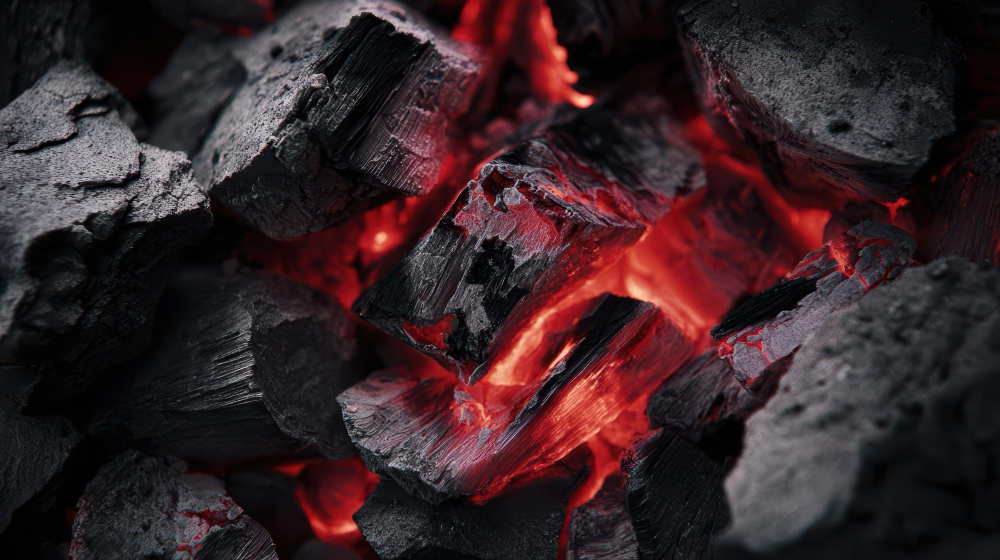
The demand for charcoal had a direct and lasting effect on the landscape.
A furnace consumed an enormous quantity of charcoal, and charcoal consumed a much larger quantity of wood, so ironworking districts needed a continuous supply from a large area.
That supply came from managed woodland cut on a cycle, where trees were harvested and allowed to regrow from the stump rather than being felled and cleared.
Managed in that way, a wood supplies fuel indefinitely, and the areas that supplied charcoal were frequently maintained rather than destroyed.
The common assumption that charcoal burning stripped the countryside of trees is therefore largely backwards for those places: the demand created a reason to keep woodland and manage it carefully.
Where woodland was lost, the cause was usually conversion to farmland or grazing, which removes the trees permanently, rather than a cutting cycle that regrows them.
That distinction matters, and the physical evidence of the managed system — the regrowth patterns, the flat platforms where heaps stood, the old boundaries — is still readable in many woods.
What It Was Worth
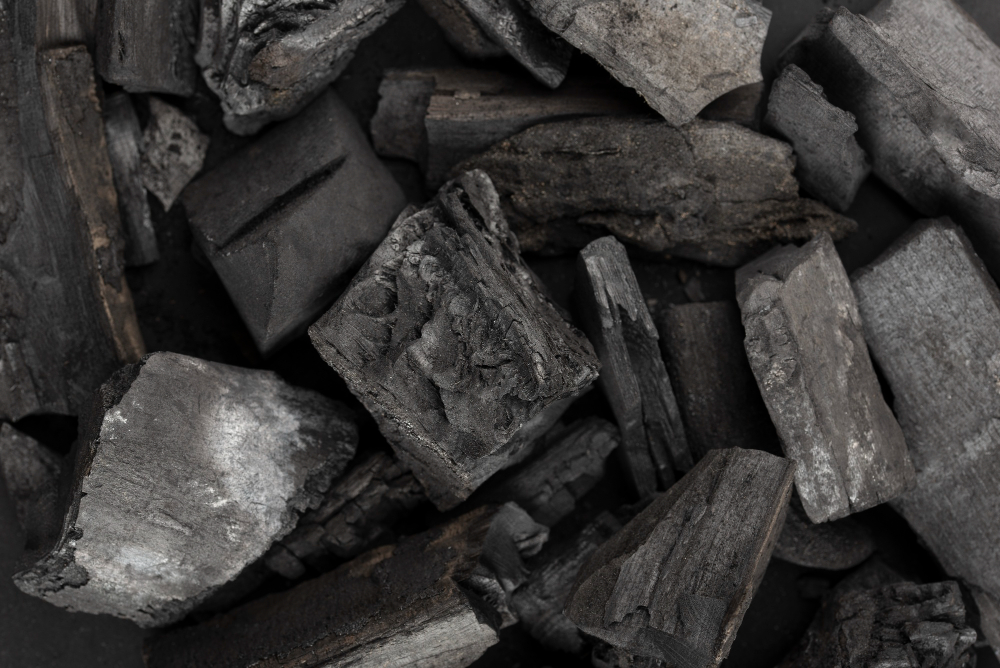
The economics explain why the trade persisted in the form it did.
Charcoal was expensive relative to the wood it came from, because a large volume of wood produces a much smaller volume of charcoal and the labour was substantial.
That cost was accepted because the alternative was not equivalent. For smelting and forging there was no substitute until a different fuel was successfully adapted, and attempts to use raw coal failed for a long period because impurities in it spoiled the metal.
Solving that problem — producing a coal-derived fuel that behaved like charcoal without its contaminants — was one of the significant industrial developments of its period, and it removed the dependence on woodland at a stroke.
After that, charcoal retained a much smaller set of uses where its particular properties still mattered, and the large-scale trade contracted quickly.
The people who had made a living from it moved to other work or continued at a far smaller scale, and the platforms in the woods stopped being made.
That transition is why the physical evidence is so consistently of one period: the technique changed very little for a very long time and then stopped almost everywhere within a few decades.
Finding the Evidence
A walk in an old wood can reveal where this work happened.
The heaps were built on level ground, and where the slope required it a flat platform was cut into the hillside, which survives as a distinct circular or oval shelf.
Those platforms frequently occur in groups at intervals through a wood, because a burner worked outward from a base as the nearby wood was used.
The soil on a platform is dark, containing charcoal fragments that do not decay, and a scrape of the surface frequently reveals them.
Nearby, the trees may show the multiple stems of a wood that was cut on a cycle, and old boundary banks may mark the extent of the managed area.
Which makes a quiet wood a substantially busier place in retrospect: smoke rising from several mounds, huts among the trees, and people living there for weeks at a time to keep the air out of a fire.
Which is a reasonable way to think about a great many lost trades. The skill was not in the product, which is simply carbonised wood, but in the judgement of somebody standing in the smoke at three in the morning deciding whether to open a hole or close one.
Which is a reasonable way to think about a great many lost trades. The skill was not in the product, which is simply carbonised wood, but in the judgement of somebody standing in the smoke at three in the morning deciding whether to open a hole or close one.
Like our content? Follow us for more.