

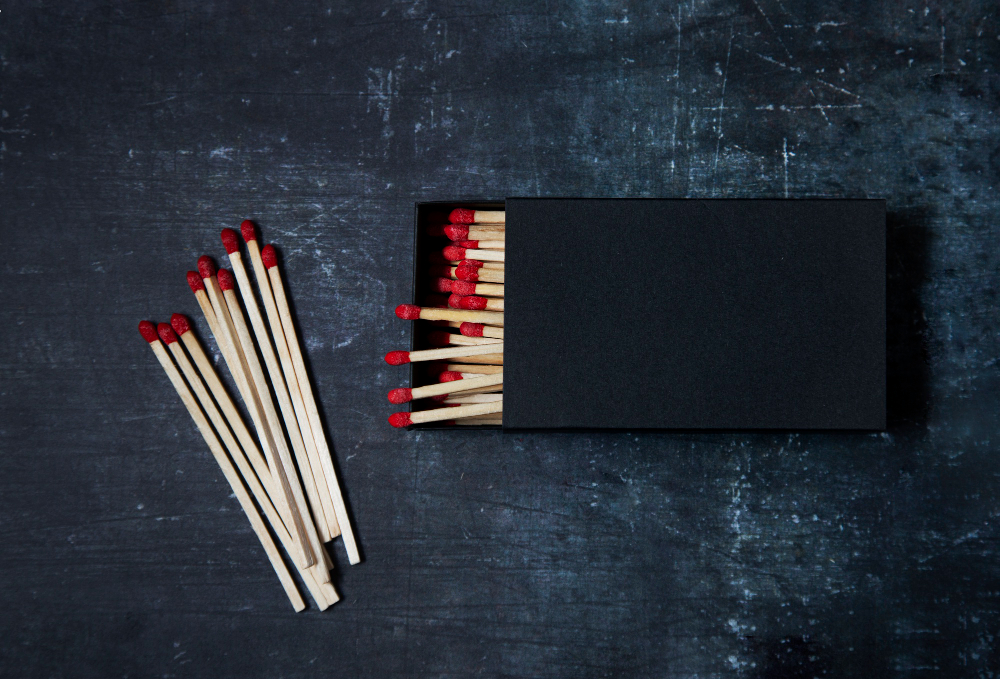
There is a useful exercise in considering how recently an ordinary thing became ordinary, and fire on demand is the most striking example available.
Fire itself is extremely old. Reliable instant fire is not. For almost the entire span of human existence, obtaining a flame required either maintaining an existing one continuously or spending several minutes producing sparks and coaxing them into a fire.
That distinction shaped domestic life completely. A household fire was kept in overnight rather than restarted, because restarting was a real undertaking. Fire was borrowed between neighbours. The person who let it go out had caused a real problem.
The object that ended all of that is a splint of wood with a chemical head, it cost almost nothing, and it appeared within the last two centuries.
What Came Before
The preceding method is worth understanding because it explains why the change mattered so much.
Striking a hard stone against steel produces small fragments of metal heated by the impact, which are the sparks. Those sparks must land on something that will catch — a prepared material that smoulders rather than flames.
That smouldering material is then transferred to something finer, breathed into flame, and used to light what was wanted.
Every stage can fail. The spark may not land, the material may be damp, the ember may not take, the flame may not catch. In poor weather the whole sequence becomes very difficult.
The equipment was carried in a container, kept dry, and represented a small kit that everybody who needed fire had to maintain.
Which is why keeping a fire in was standard practice. The effort of restarting was sufficient that not letting it go out was the rational approach.
Like our content? Follow us for more.
The First Devices That Worked
The early chemical attempts were ingenious and impractical, and they are worth noting because they show the problem being approached from several directions.
Some involved dipping a treated splint into a bottle of acid, which ignited it — effective and requiring a bottle of acid in the house.
Others used chemicals that ignited on contact with each other, contained in a fragile capsule that was crushed.
Those worked and none of them was a product anybody would want, which is why the friction match mattered: it required no additional substance, no liquid, and nothing but a rough surface.
The first commercially successful version used a head that ignited when dragged across any sufficiently rough material, which made it truly convenient and introduced a substantial hazard.
There is a transport consequence worth noting. Because early matches could ignite from friction, carrying them in quantity was a recognised hazard, and restrictions on shipping and storing them appeared well before the chemistry was changed.
Those rules are among the earlier examples of a product being regulated in transit for what it might do rather than for what it was.
Why the First Ones Were So Dangerous
The problem with a match that lights on any surface is precisely what it sounds like.
Such matches ignited in pockets, in boxes, under transport, when trodden on and when rubbed against one another, and fires caused by them were a recognised category.
The chemistry involved a substance that is highly reactive and also seriously toxic, and the people affected worst were those manufacturing them rather than those using them.
The occupational disease associated with that manufacture was severe and well documented, it affected a workforce that was largely young and poorly paid, and it became the subject of sustained campaigning.
That campaigning led eventually to the substance being prohibited by international agreement — which is an early example of a workplace hazard being addressed by treaty rather than by individual national regulation.
The chemistry had to change for the product to continue, which is what produced the version that followed.
There is a coexistence worth noting. Strike-anywhere matches did not disappear entirely, since they remain useful where no striking surface is available and are still made in reduced quantities using a less hazardous formulation.
The two products therefore serve different requirements, and the safety version dominates because most uses happen where a box is to hand.
The Safety Match
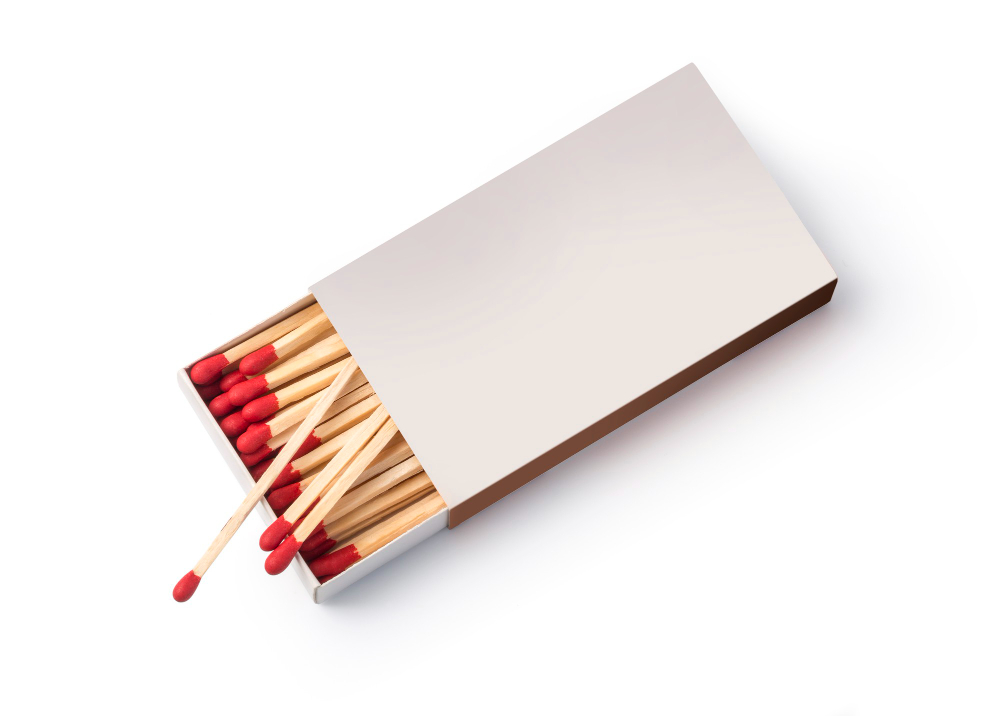
The redesign is a neat piece of engineering and is worth explaining because the name is misleading.
The essential idea is to separate the reacting components. The match head carries one set of chemicals and the striking surface on the box carries the other, and neither ignites without the other.
Dragging the head across the prepared strip brings them into contact and generates enough heat by friction to start the reaction.
That means such a match cannot be lit by rubbing it on a wall, a shoe, a table or another match, which eliminates essentially all of the accidental ignition that made the earlier version hazardous.
It also means the box is not packaging but part of the device, which is why a box without its strip is useless and why the two are sold together.
The substance substituted for the toxic one is a different form of the same element — chemically related, physically different and not poisonous in the same way — which is the detail that resolved the occupational problem.
What the Match Actually Is
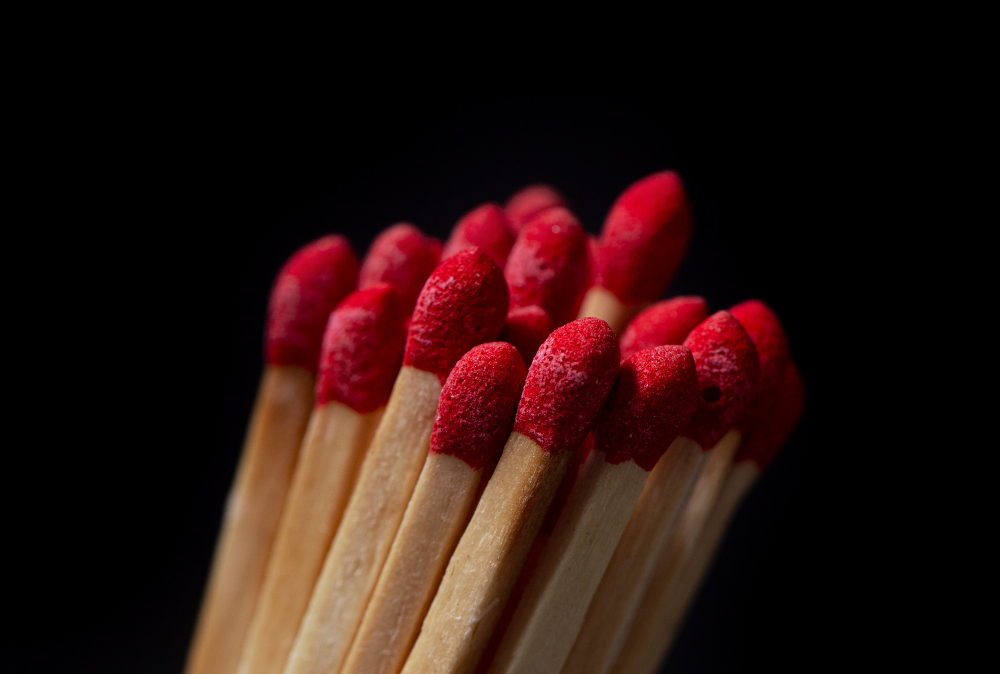
The object repays a closer look because more is going on than a chemical head.
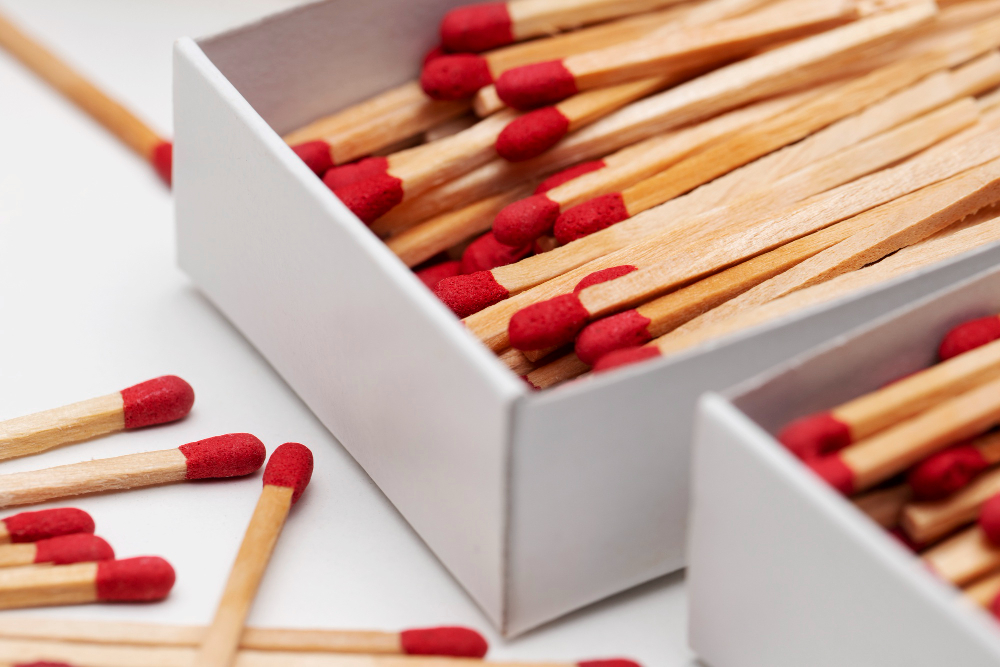
The splint is treated to control how it burns. Impregnation with a substance that prevents smouldering stops the match continuing to glow after the flame is out, which is what prevents a discarded match remaining hot.
The head is layered rather than uniform, with a tip that ignites easily and a body that burns longer and hotter, so the initial reaction is converted into a flame substantial enough to light the wood.
The wood itself is chosen and cut to burn steadily without spitting, and is frequently waxed at the head end to help the flame transfer.
And the striking surface is a coating containing abrasive material as well as the reactive component, because friction is required as well as chemistry.
So an object that costs a fraction of a penny contains at least four separate engineering decisions, arrived at over a century of iteration.
The Box and the Book
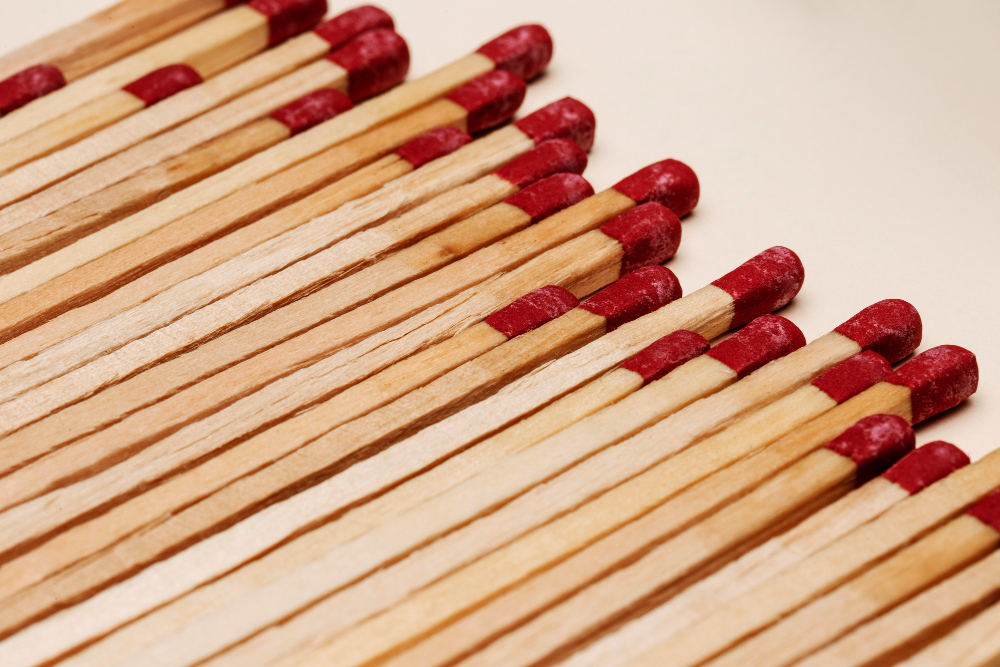
The packaging developed alongside the product and is more considered than it appears.
A container had to keep matches dry, since damp heads fail, and had to prevent them rubbing against each other in transit.
It had to carry the striking surface, which meant the box became functionally part of the device once safety matches were established — and that surface had to be positioned where it would not be struck accidentally by the contents.
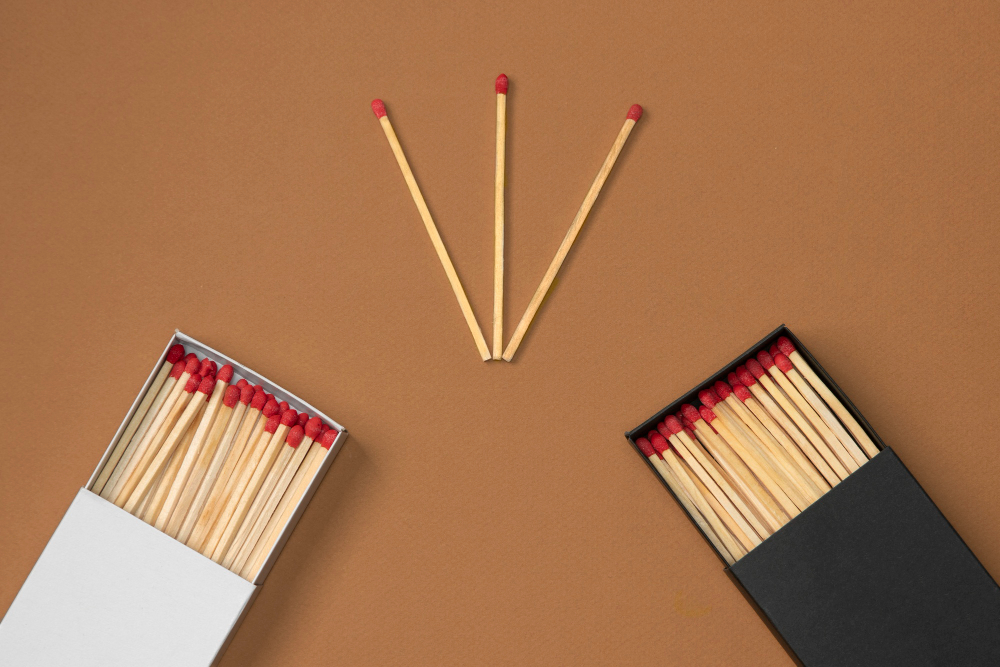
Wooden boxes gave way to card for cost, and the sliding drawer arrangement persisted because it opens partially, dispenses one, and closes without the contents being exposed.
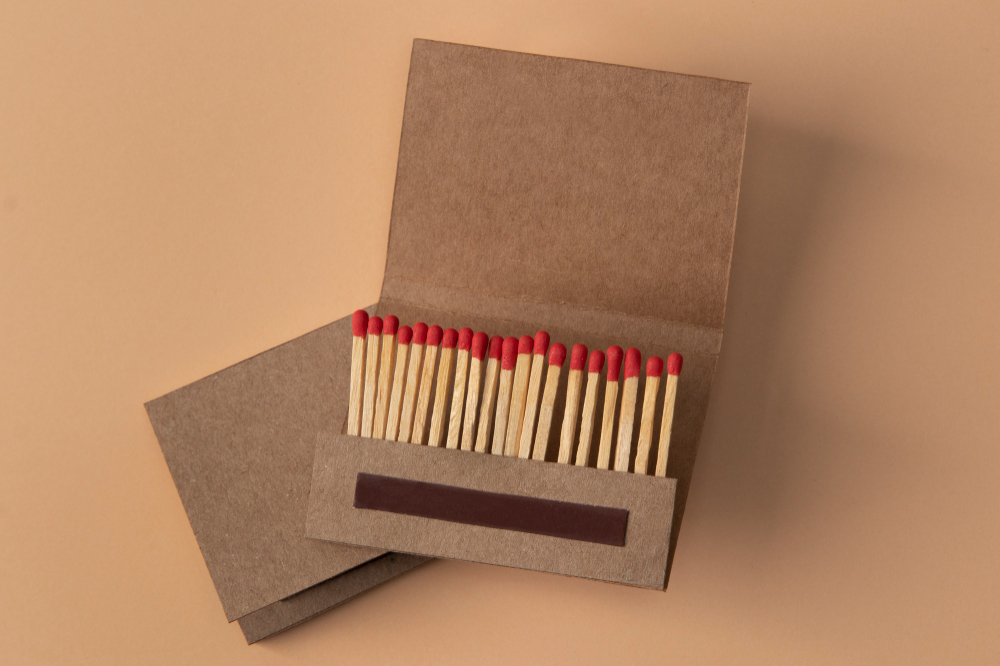
The book of paper matches was a separate development, using a flat card splint rather than wood, bound in a folder with a striking surface on the outside, and it solved a different problem: it is flat, cheap enough to give away and thin enough to carry without noticing.
That form became a advertising medium, produced in enormous quantities and distributed free, which is an unusual commercial outcome for a fire-lighting device.
And the striking surface on those was initially placed on the front, which meant striking toward the remaining matches — a design that was eventually reversed for reasons that are obvious in retrospect.
What It Changed
The consequences are easy to underestimate because the object is so trivial.
Domestic fire stopped being a continuous responsibility, which changed how households operated — a fire could be let out and relit as required, which is a substantial change in the rhythm of a day.
Lighting became flexible. A lamp or candle could be lit and extinguished freely rather than being kept going, which changed how rooms were used.
Portable fire became possible, which mattered for anybody working away from a building.
And smoking changed character entirely, since it had previously required access to a fire.
That last point is worth noting for scale: a substantial proportion of match production for a very long period existed to serve that one use.
Which is a reasonable way to end. An object that resolved a problem every human being had faced for the entire history of the species turned out to be principally used for something that only became convenient once it existed — and it is still on the shelf, costing almost nothing, doing instantly what used to take five minutes and a dry day.
Which is the usual position of a truly transformative object. It solved a problem so completely that the problem is now unimaginable, cost so little that nobody valued it, and is sitting in a drawer being ignored by people who would be in real difficulty without it.
Like our content? Follow us for more.
