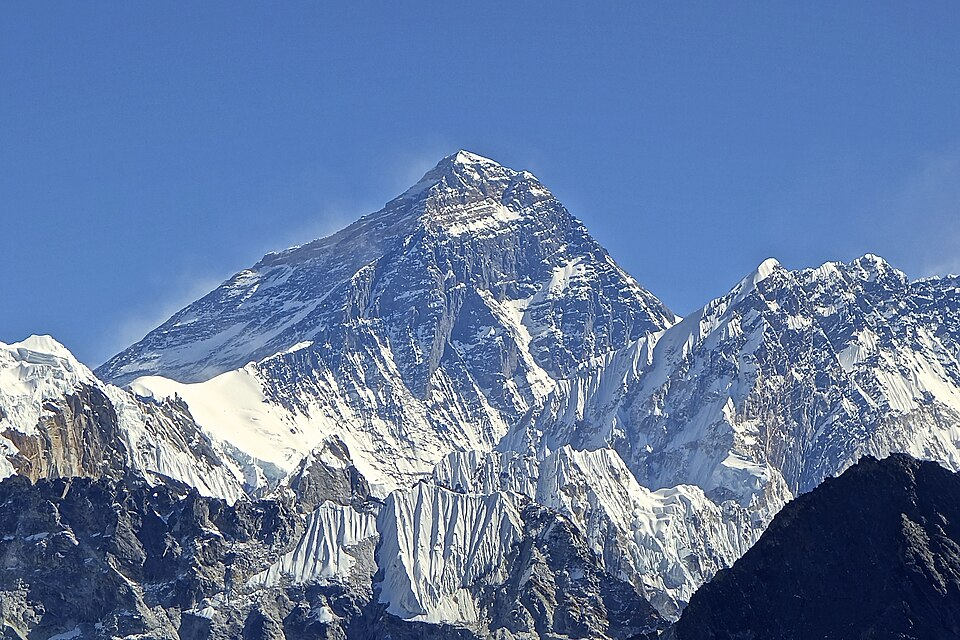
Ask which is the tallest mountain on Earth and you will get one answer, delivered with confidence, from essentially everyone. Everest. It is one of those facts that feels too solid to interrogate, reinforced by every atlas, quiz, and classroom wall.
The interesting part is what happens when you ask the follow-up question: tallest measured how? Because a mountain is a lump of rock rising out of a planet that is neither a perfect sphere nor a smooth one, and where you decide to put the zero on your measuring tape changes the winner completely.
There are three defensible ways to answer, and they produce three different mountains: Mount Everest in the Himalaya, Mauna Kea in Hawaii, and Chimborazo in Ecuador. These are not competing survey results, and nobody made an error. They are three truly different measurements, and understanding why is a small lesson in what our planet is actually shaped like. Here is how one question produces three winners.
Everest: Highest Above Sea Level
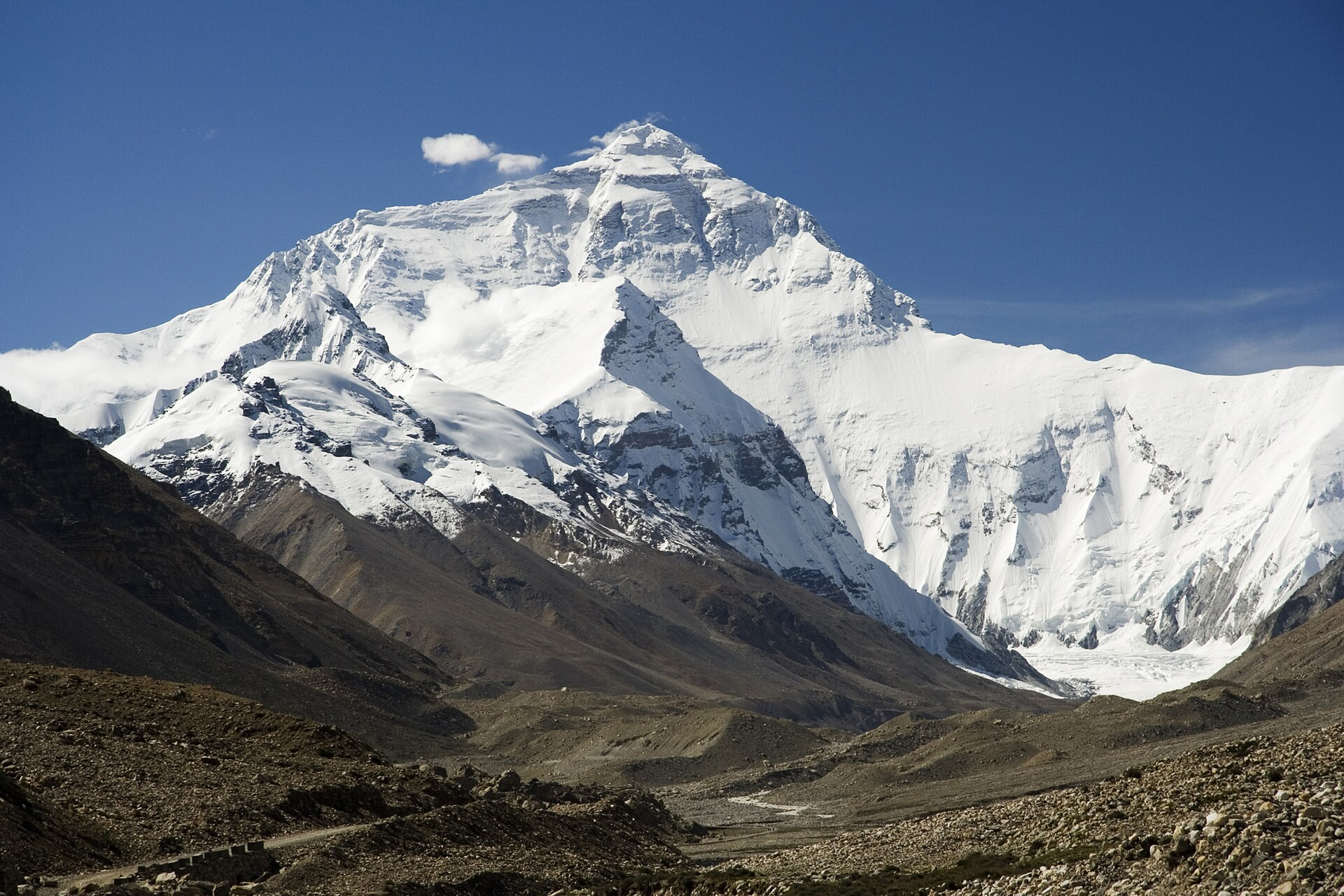
Start with the conventional answer, which is entirely correct on its own terms.
Everest’s summit sits 8,848.86 meters above mean sea level, a figure jointly announced by China and Nepal in 2020 after a coordinated resurvey. That is the standard used by maps, surveyors, and mountaineers, and by that measure no other mountain on Earth comes close to it.
The phrase “above sea level” deserves a moment’s attention, because it sounds more concrete than it is. There is no visible shoreline at the foot of Everest; the mountain sits deep inside a continent. Mean sea level is a mathematical reference surface extended notionally beneath the land, and elevations are measured against it. It is a convention, and a sensible one, but it is a convention.
Everest also wins on the criterion that matters to anyone actually going there. Elevation above sea level determines air pressure and oxygen availability, which is why Everest has a region climbers refer to in stark terms and why supplemental oxygen is standard. Whatever the other measurements say, no other summit puts you into air that thin.
There is a small footnote: Everest is still growing, pushed up roughly four millimeters a year by the tectonic collision that built the Himalaya. Its lead by this measure is, if anything, slowly increasing.
Like our content? Follow us for more.
Mauna Kea: Tallest From Base to Peak
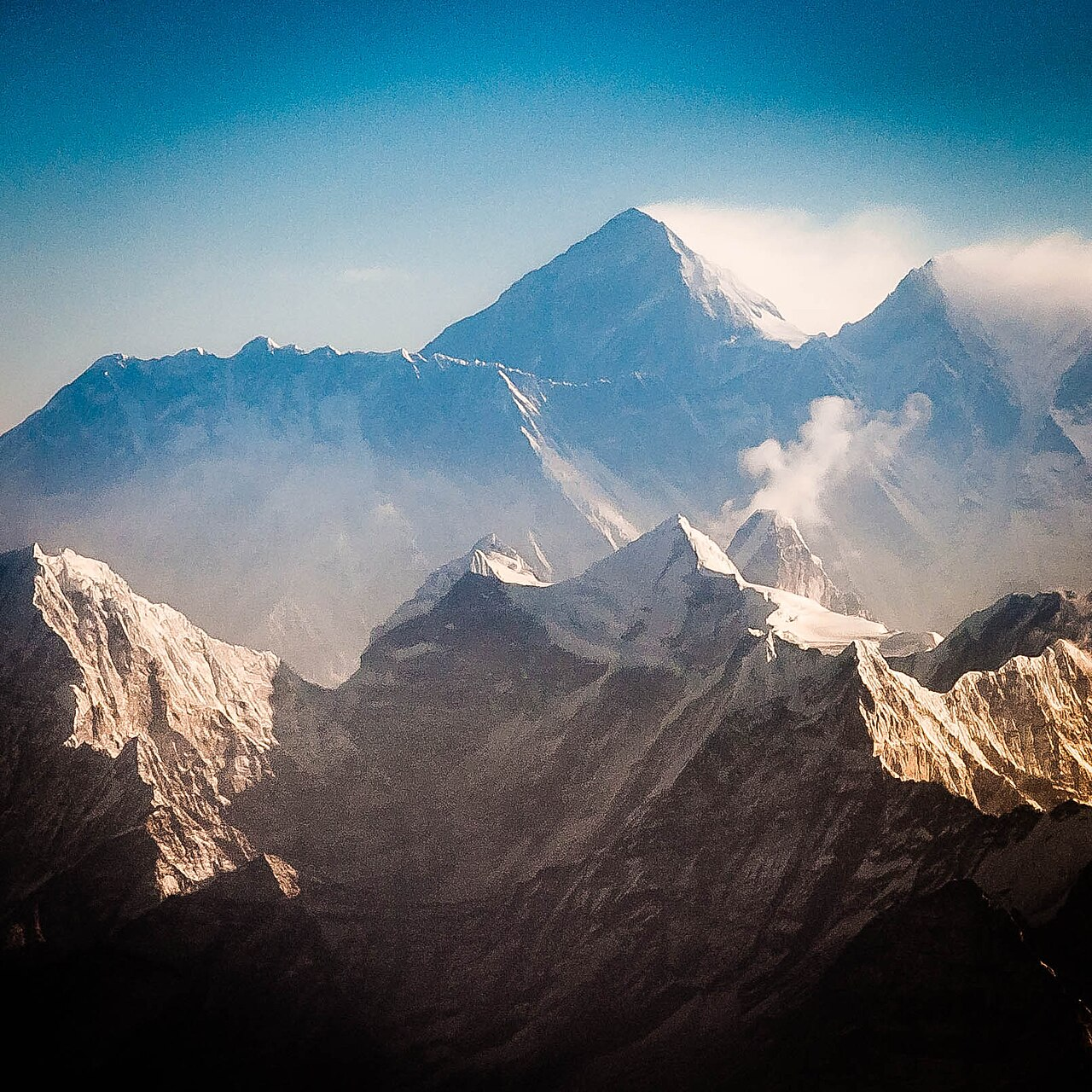
Now change the question. Instead of asking how high the summit sits above a reference surface, ask how tall the mountain itself is, from its base to its top. This is arguably the more intuitive question; it is how you would measure a building.
By that standard the winner is Mauna Kea, a dormant shield volcano on the Island of Hawaii, and it is not close. Mauna Kea reaches only 4,207 meters above sea level, less than half of Everest, which is why it never features in the popular ranking. But its base is not at sea level. It is on the floor of the Pacific Ocean, roughly 6,000 meters down.
Measured from that submarine base to its summit, Mauna Kea rises more than 10,210 meters, about 33,500 feet, according to figures published by the National Oceanic and Atmospheric Administration. That is well over a kilometer taller than Everest’s full elevation. Nearly six thousand meters of the mountain is simply underwater, invisible to anyone standing on the beach.
The exact figure varies somewhat depending on where you decide the base sits, since a shield volcano slopes gently and does not have a crisp edge. But the ranking does not change under the standard comparison. There is a further wrinkle that makes the mountain even more impressive: Mauna Kea is so massive that its weight has depressed the ocean crust beneath it by several kilometers, meaning part of the mountain has pushed the seafloor down.
Chimborazo: Farthest From the Center of the Earth
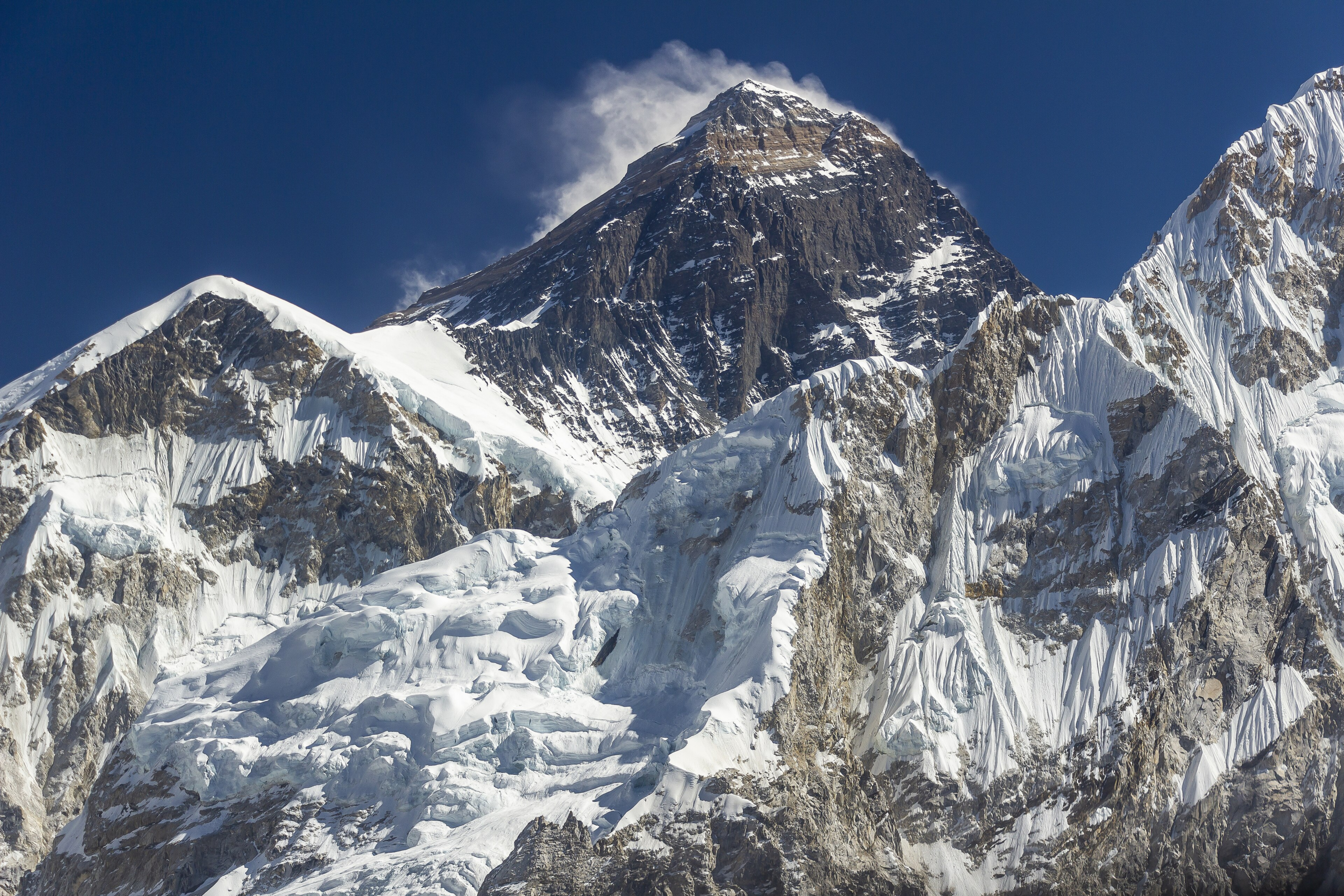
The third measurement is the least intuitive and the most revealing about the planet.
Earth is not a sphere. Its rotation generates a centrifugal effect that makes it bulge at the equator, so the distance from the planet’s center to its surface is greater there than at the poles. That means a mountain’s distance from the center of the Earth depends not only on its elevation but on its latitude.
Chimborazo is a volcano in Ecuador, sitting about one degree south of the equator, right where the bulge is greatest. Its summit is 6,268 meters above sea level, more than two and a half kilometers lower than Everest. And yet, because of where it stands, Chimborazo’s summit is over 2,072 meters, roughly 6,800 feet, farther from the center of the Earth than the summit of Everest.
By that measure, Chimborazo is the highest point on the planet’s surface, and NOAA says so directly.
Chimborazo is often described as the point closest to the stars, or closest to space. That framing is loose enough to be worth flagging. Two kilometers is nothing against stellar distances, and the atmosphere is not layered relative to the Earth’s center, so Chimborazo’s air is substantially thicker than Everest’s. The precise, defensible claim is geometric: its summit is the surface point farthest from the planet’s core.
The Mountain That Is Still Moving
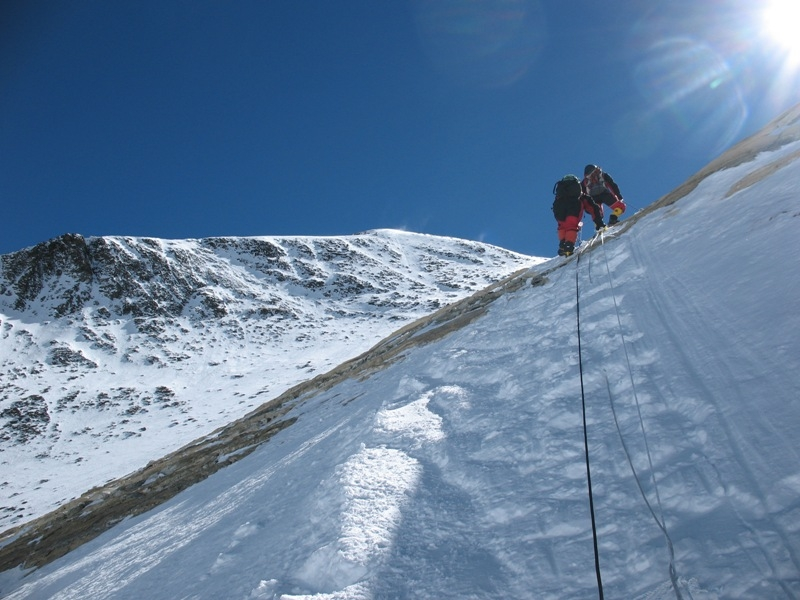
There is a further complication that makes “how tall is it” harder than it looks: the answer changes.
Everest sits on the collision zone between the Indian and Eurasian plates, which is still closing. That collision is what raised the Himalaya in the first place, and it has not stopped. The mountain is being pushed upward at roughly four millimeters a year, while erosion and the occasional major earthquake work in the other direction.
Measuring it is correspondingly difficult. The 2020 figure was the product of a joint Chinese and Nepali effort involving survey teams on the summit itself, satellite positioning, and a decision about how to handle the snow cap, which is not a fixed thickness. Earlier surveys produced different numbers, and the differences were not errors so much as different choices about what exactly to measure and when.
Mauna Kea, meanwhile, is doing the opposite. It is so heavy that it is slowly sinking under its own weight, pressing down the oceanic crust beneath it. Its base-to-peak figure is therefore also a moving number, in the other direction.
None of this changes the rankings, which are separated by comfortable margins. But it is a useful reminder that a mountain’s height is not a fixed property waiting to be read off. It is a measurement of a moving object, taken against a chosen reference, at a particular moment.
Why There Is No Single Right Answer
It is tempting to want an adjudication, some authority to declare which measurement is the real one. There isn’t, and there shouldn’t be, because each one preserves a different physical idea worth knowing.
Everest answers the question of elevation, which governs atmosphere, climate, and what it is like to be there. Mauna Kea answers the question of how large a mountain can actually get, revealing that the biggest structures on Earth are mostly hidden underwater. Chimborazo answers a question about planetary geometry, exposing the equatorial bulge in a way that is otherwise abstract.
The everyday vocabulary makes this messier than it needs to be, because English uses “highest” and “tallest” more or less interchangeably while the measurements do not. In careful usage, highest means farthest above sea level and tallest means greatest distance from base to summit. Everest is the highest. Mauna Kea is the tallest. Chimborazo is neither, and is instead the farthest from the center.
Other definitions produce other records still. Topographic prominence, which measures how independently a summit rises above the lowest saddle connecting it to higher ground, generates its own ranking, and there are mountains that score remarkably on it while being unremarkable in raw elevation.
What This Tells You About Measuring Anything
There is a broader point buried in the mountain trivia, and it generalizes well beyond geography.
“Tallest mountain” feels like a simple factual question with a lookup answer. It turns out to be a question that cannot be answered at all until you specify a baseline, and the choice of baseline is a human decision rather than a fact about the world. Once that decision is made the answer is unambiguous and measurable. Before it is made, the question is incomplete.
The same structure shows up constantly: longest river, largest country, biggest company, oldest building. In each case there is a hidden convention doing quiet work, and disagreements that look like factual disputes are often disagreements about the convention.
None of this diminishes Everest. It remains the highest point on the planet’s surface above sea level, it remains extraordinarily difficult and dangerous to climb, and it deserves its reputation. But it shares the podium with a Hawaiian volcano whose bulk is mostly submerged, and with an Ecuadorian peak that wins purely by standing in the right place on a slightly squashed planet.
Three mountains, three titles, no contradiction. The only error would be assuming there was ever just one question.
Like our content? Follow us for more.