

There is a category of everyday observation that everybody has seen and that turns out to have no settled explanation, and moths around a light are among the clearest examples.
The behaviour is universal. Leave a light on beside an open window on a warm night and moths arrive, circle it, bump against it and settle nearby, sometimes staying until morning.
Several explanations have been offered over a long period, and one became the standard textbook answer. It is elegant, widely repeated and, according to more recent evidence, probably wrong or at least incomplete.
Working through why the old answer struggles, and what the newer evidence suggests, is a useful illustration of how a plausible explanation can persist long after it should have been questioned.
There is a vision point worth adding. Moth eyes are highly sensitive in dim light, gathering what little is available very effectively, which suits a night-active animal and means a bright lamp is overwhelmingly intense by comparison.
The Moon Explanation
The classic account is worth setting out properly because it is truly clever.
A distant light source such as the moon produces rays that are effectively parallel by the time they reach the ground.
An insect keeping that light at a constant angle to its eye would fly in a straight line, which would make the moon a useful reference for holding a course.
A nearby lamp produces rays that spread outward in every direction. An insect trying to hold such a light at a constant angle would find itself turning continuously, and would trace a spiral inward toward the source.
That is a tidy mechanism and it predicts spiralling flight into lamps, which is roughly what people think they observe.
Like our content? Follow us for more.
Why It Probably Does Not Work

The difficulties are substantial and have accumulated.
Many moths do not appear to navigate by the moon at all, and many of the species attracted to lights are not long-distance travellers that would need a celestial reference.
The spiral prediction does not match close observation well. Careful tracking of moths near lights shows flight patterns that do not look like smooth inward spirals.
Moths are attracted to lights on nights when the moon is not visible, and are frequently attracted more strongly on moonless nights.
And the explanation struggles to account for why moths often settle near a light and stay there rather than circling indefinitely.
None of those individually refutes the idea, and together they make it hard to maintain as the main explanation.
There is a numbers point worth including. Moths are an enormously diverse group, with far more species than butterflies, and most of them are small, dull-coloured and rarely noticed – which means the insects at a lamp are drawn from a much larger hidden population.
Many are active on nights when nobody is looking.
The Newer Explanation
Recent work using high-speed tracking of insects around lights points to a different mechanism.
Flying insects need to know which way is up in order to stay level, and at night the brightest part of the view is generally the sky above.
Many insects therefore appear to keep their back toward the brightest light — a reflex that, under a natural night sky, keeps them upright.
Near an artificial light, that reflex misleads them. An insect turning its back toward a lamp at its side tilts sideways; one with the lamp below it can flip upside down.
The observed behaviours — orbiting the light, stalling, turning over and diving — are consistent with insects repeatedly trying to align themselves to a light that is in the wrong place.
That account explains why insects become trapped near lights rather than being drawn directly into them, and why the effect is so strong for such a wide range of flying insects.
It remains the subject of continuing research, and the question is not closed, but it fits the observations substantially better than the moon explanation does.
What Moths Are Actually Doing at Night
It is worth being clear about what the insects are doing when no lamp is involved, because it puts the attraction in context.
Most moths are active after dark, feeding, finding mates and laying eggs, and many do so using smell far more than sight.
Males of many species locate females from considerable distances by following scent released into the air, which is one of the most sensitive detection systems known in any animal.
Feeding adults visit flowers that open or release scent at night, and in doing so carry pollen between them.
Some species do travel long distances, and those movements have been tracked across large areas.
Light, in the natural night, is dim and comes from above – from the sky, the moon and the stars – and the reflex of keeping the brightest light overhead works well under those conditions.
So the lamp is not intercepting a moth that was looking for light. It is disrupting one that was doing something else entirely and happened to pass close enough for the reflex to take over.
There is a weather point worth adding. Warm, still, overcast nights generally bring the largest numbers of moths to lights, since more insects are flying in those conditions and there is no bright sky competing with the lamp.
Why Some Lights Attract More
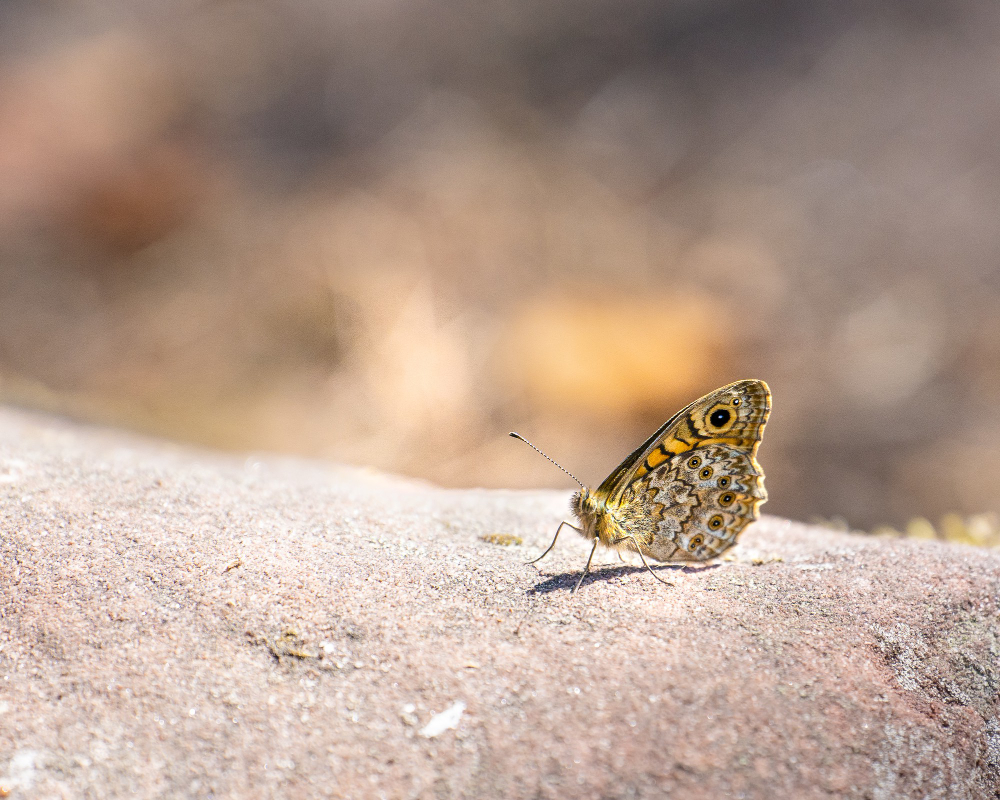
The type of light matters substantially, and the pattern is informative.
Insects’ eyes are sensitive to different wavelengths from human eyes, including ultraviolet, which humans cannot see.
Lights that emit a large amount of short-wavelength and ultraviolet light tend to attract more insects than those emitting mainly longer, warmer wavelengths.
That is why certain older lighting technologies were notorious for insect swarms and why lamps designed to reduce attraction concentrate their output in wavelengths insects perceive less strongly.
Brightness matters, direction matters, and whether the light is visible from a distance matters, since a light shining outward across open ground is seen by far more insects than one directed downward.
There is a daytime point worth adding. Many moths rest during the day on bark, walls or leaves, relying on colouring that blends with the surface, and remain motionless unless disturbed.
That resting behaviour is part of why they are so rarely noticed.
Why It Matters to the Moths
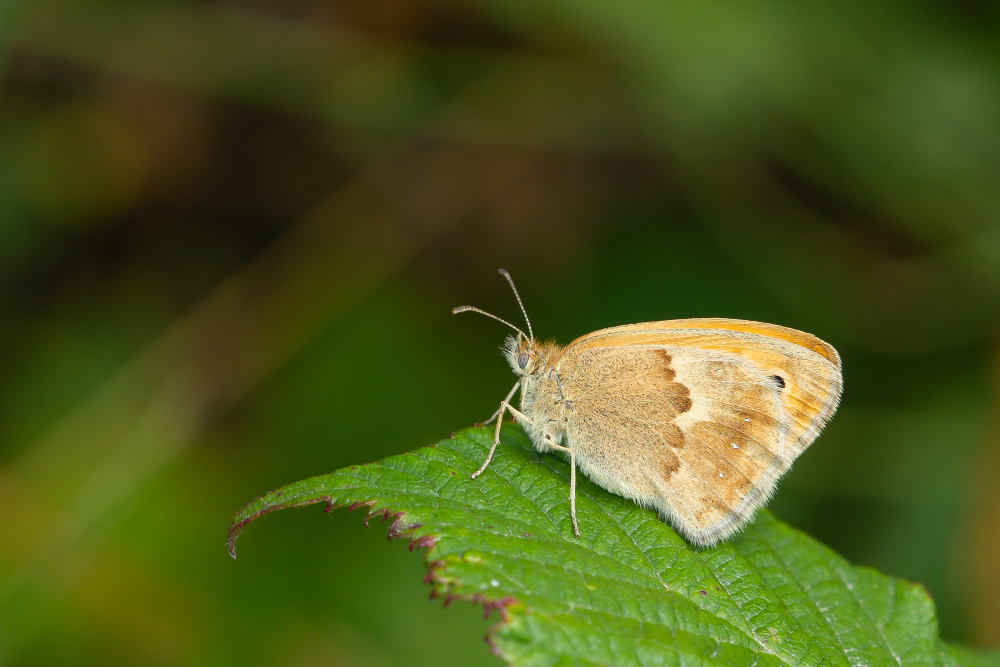
The attraction is costly for the insects, which is why the question has practical as well as scientific interest.
An insect held near a light is not feeding, not finding a mate and not laying eggs, and a night lost that way is a real cost in a short adult life.
Insects gathered around lights are also conspicuous to predators, which learn to hunt around lamps.
Some are exhausted, some are injured, and some remain near the light into daylight, when they are exposed.
Moths also play a part in pollination at night, visiting flowers that open after dark, so disruption to their behaviour can affect plants as well as insects.
The combined effect of artificial light on nocturnal insects is an active area of research, and the effects on populations are the subject of ongoing study rather than settled conclusions.
There is an observational point worth adding. Moths at a lamp often settle on nearby walls and surfaces rather than on the light itself, and may remain motionless there until dawn.
That settling fits the newer account better than the old one, since an insect trapped by a confused sense of up would stop flying when it reached a surface.
Why the Old Answer Lasted
The persistence of the moon explanation is worth a moment, because it is a common pattern.
It was clever, easy to explain, and produced a clear prediction that seemed to match casual observation.
It was repeated in textbooks and popular accounts, and each repetition made it seem more established, even without new evidence.
Testing it properly required tracking fast, small insects in the dark in three dimensions — something that became practical only relatively recently.
So the explanation survived not because it was confirmed but because checking it was difficult, and a plausible answer filled the gap.
That is a useful reminder about explanations in general. An account can be elegant, widely taught and still wrong, and the confidence with which it is repeated says very little about how well it has been tested.
Which leaves the moths circling the lamp outside a window as a truly open question sitting in plain view — one of the most familiar sights of summer, and one that the people studying it are still working out.
Which is a good reason to look again at familiar things. The most ordinary sights frequently rest on explanations nobody has checked for a long time, and a moth at a lamp is a small reminder that the obvious answer and the right answer are not always the same.
Like our content? Follow us for more.
