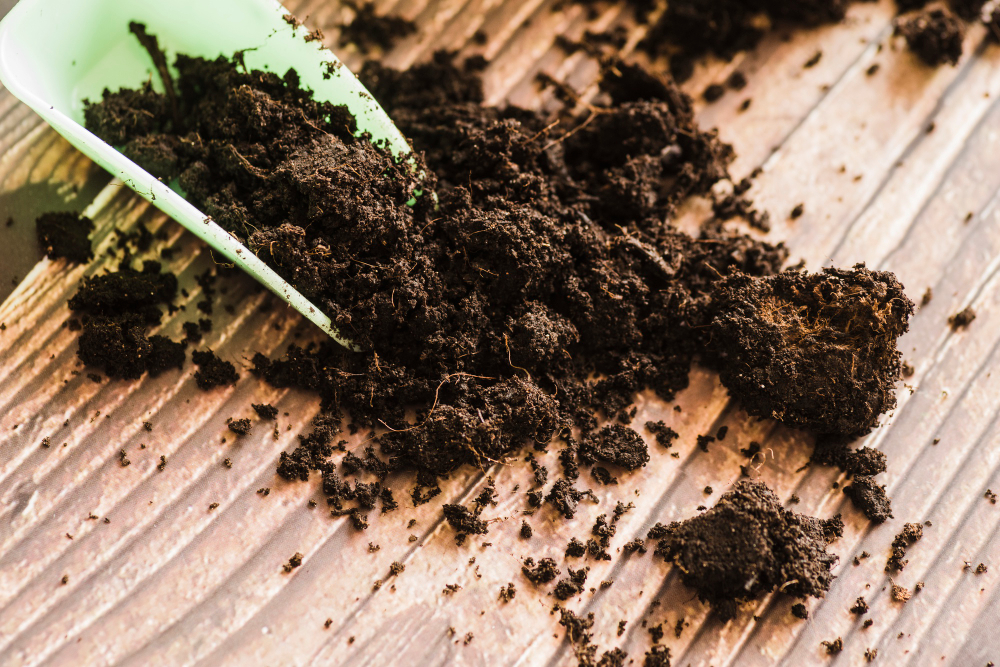
There is a process going on beneath almost every lawn, field and garden that is too slow to see and large enough to reshape the ground.
Earthworms eat their way through soil, digesting the organic material in it and passing the rest. A substantial proportion of what they swallow is deposited at the surface, in the small coiled heaps familiar from any damp lawn.
That means soil is continuously being carried upward from below and spread across the top, while tunnels are left behind underneath that eventually collapse.
The consequence, repeated across every square metre of ground where worms are common and continued for years, is that the surface is slowly renewed — and anything lying on it is gradually buried.
How Much Soil They Move
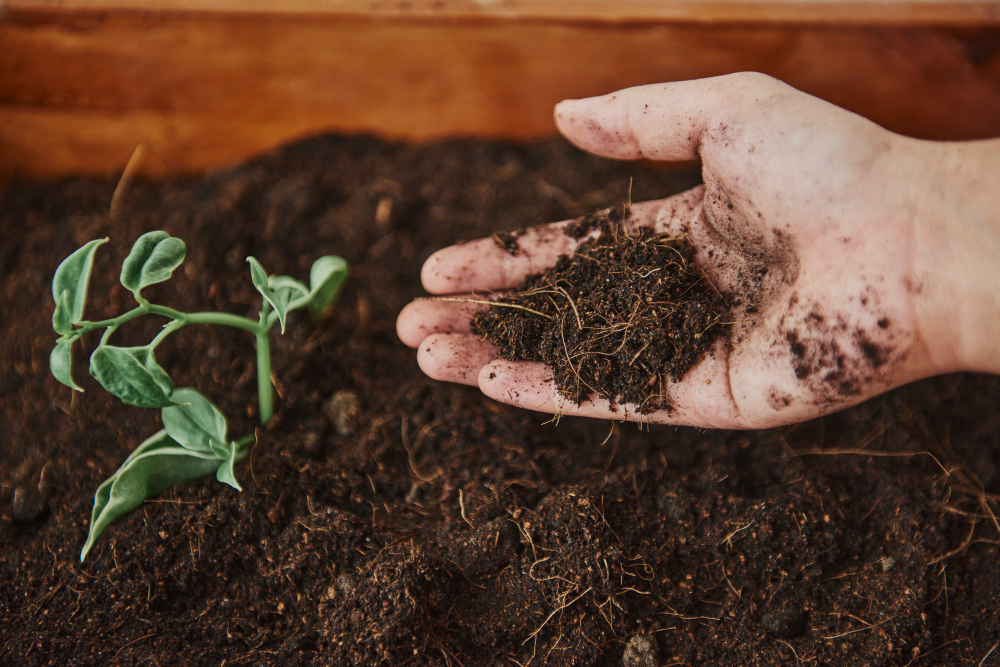
The quantities are larger than intuition suggests.
A single worm produces a modest amount of cast. A healthy field may contain a very large number of worms per square metre, and together they bring up a quantity of soil each year that forms a measurable layer when spread across the surface.
Estimates vary widely with soil type, climate and land use, and in fertile ground the annual deposit can amount to several millimetres of new material at the surface.
That sounds trivial, and it accumulates. Over a century it amounts to a substantial depth, and over the lifetime of a settlement it can bury an entire ground surface.
The work is also continuous and distributed. There is no season of great activity and no single location; the whole surface is being turned over slowly, everywhere worms live, all the time.
Like our content? Follow us for more.
Why Things Sink
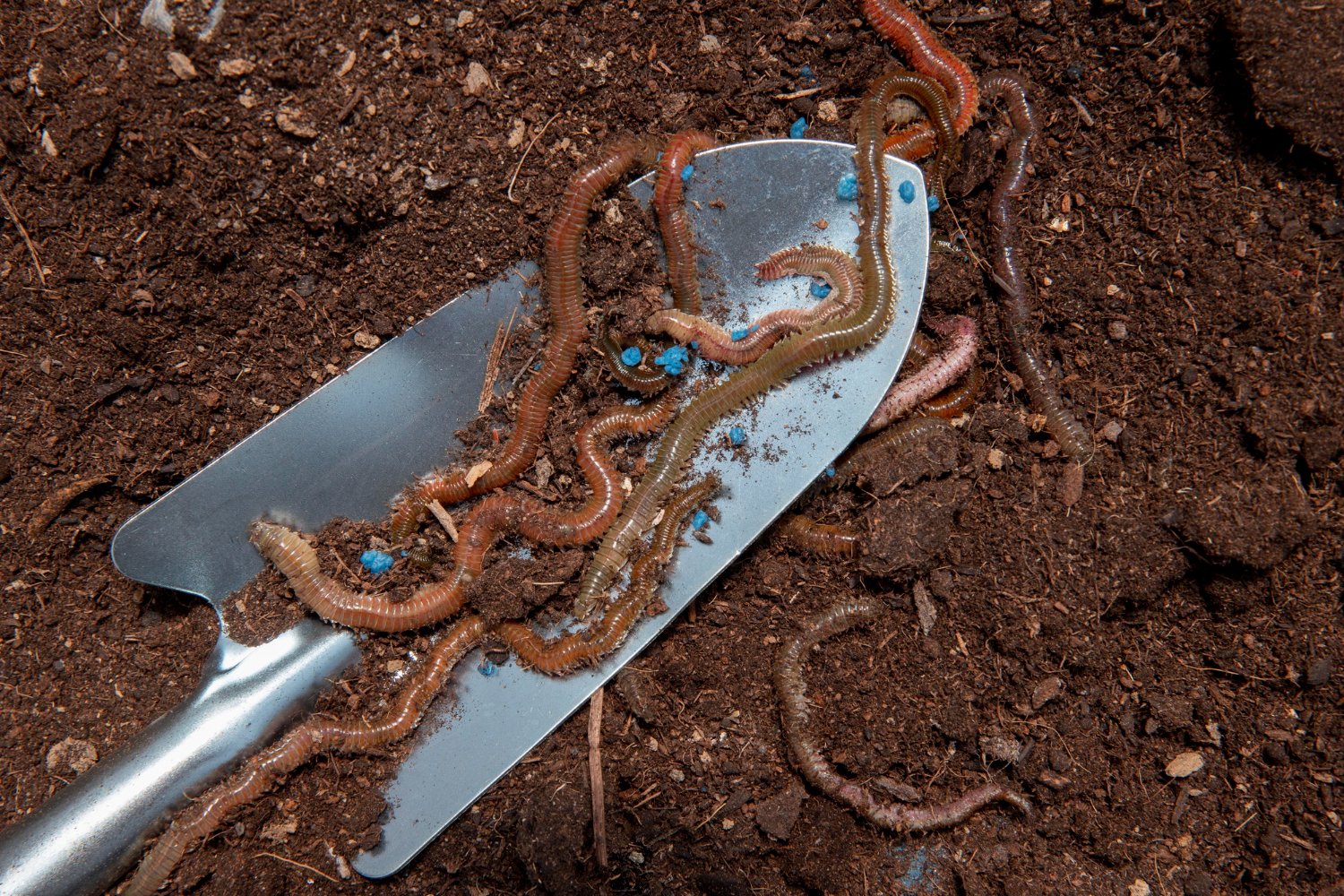
The burial mechanism has two parts working together.
Material is added on top. Casts are deposited around and against any object on the surface, and each year another thin layer accumulates around its edges and eventually over it.
Material is removed from underneath. Worms tunnel beneath an object as readily as anywhere else, eating soil from below it and carrying that soil up to the surface elsewhere.
The tunnels beneath collapse, and the object settles into the space. Meanwhile the ground around it rises.
The combination means an object does not simply get covered; it descends relative to the surface, which is why a stone left on a lawn gradually disappears into it, and why a pavement laid on soil slowly sinks unless it is maintained.
That same process affects anything left on the ground long enough — tools, coins, pottery, foundations — which is one of the reasons archaeological material is found beneath the surface rather than on top of it.
There is a speed point worth adding. The deposition is fastest in warm, moist conditions when worms are most active, and slows almost to nothing in drought or frozen ground, so the annual total is concentrated into a few favourable periods.
Casts are most visible on lawns in spring and autumn for exactly that reason.
What They Do for Soil
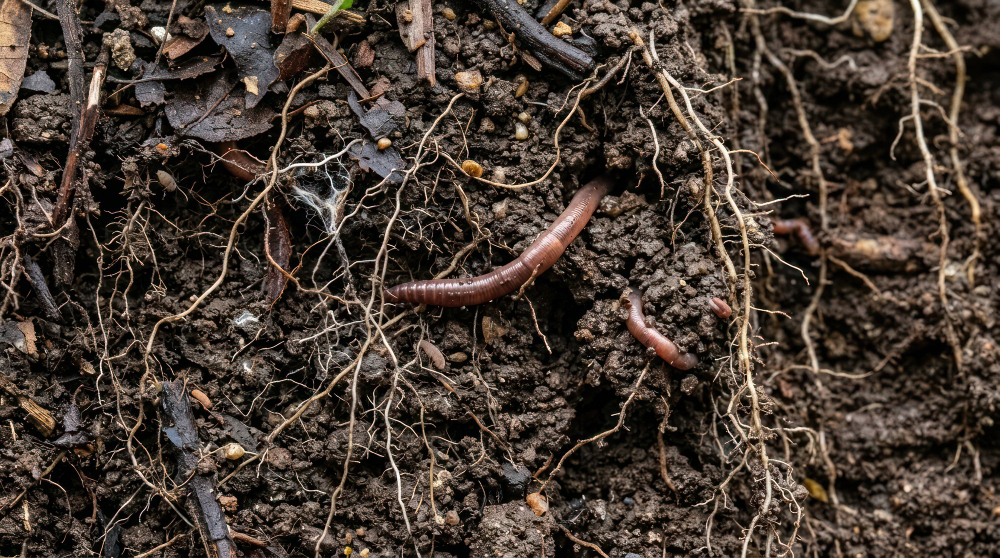
The ecological consequences are substantial and are the reason worms are valued.
Their tunnels allow air and water to penetrate deep into soil that would otherwise be compact, which improves drainage and allows roots to grow further.
Their feeding mixes organic material from the surface into deeper layers, pulling fallen leaves down into their burrows and incorporating them into the soil.
Their digestion breaks organic material into smaller particles and alters its chemistry, which makes nutrients more available to plants.
Their casts are richer in available nutrients than the surrounding soil, and have a crumbly structure that holds water and resists erosion.
And the continuous mixing prevents the layering that would otherwise develop, keeping the upper soil relatively uniform.
So a great deal of what makes soil fertile and workable is the cumulative result of animals that nobody sees doing work nobody notices.
There is a structural point worth including. The channels left by deep burrowers can persist for years, lined with material that stabilises their walls, and roots frequently follow them downward because they offer an easy route through compact soil.
So the tunnels of one generation become the pathways for the plants of the next.
The Different Kinds
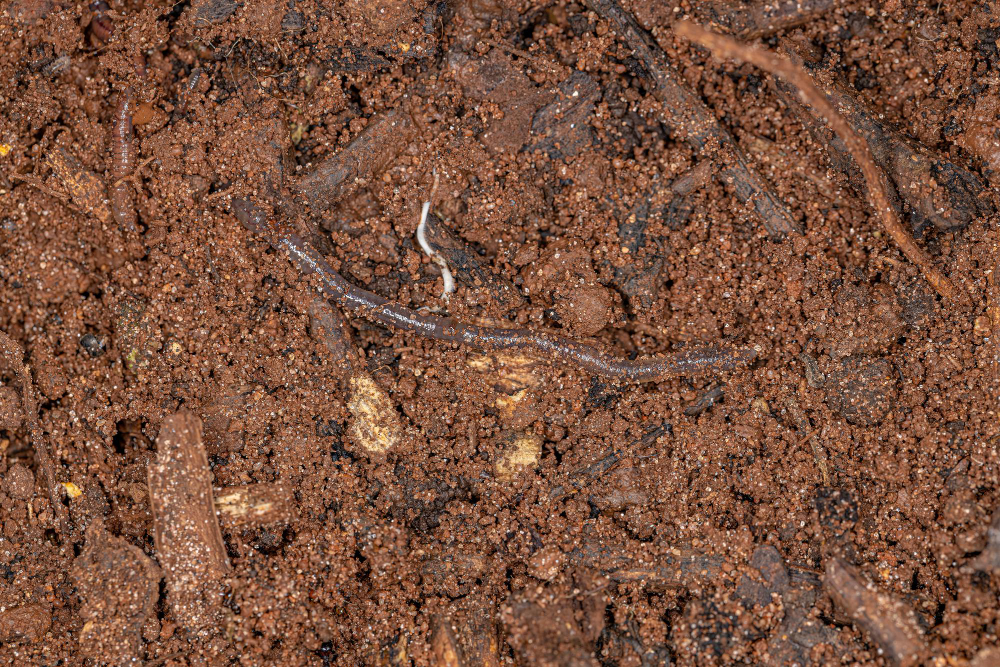
Worms are not one type of animal, and the differences matter for what they do.
Some live near the surface in leaf litter and compost, feeding on decaying material and rarely burrowing deeply. They reproduce quickly and are the ones found in compost heaps.
Some live within the upper soil, making horizontal burrows and feeding on the soil itself as they move through it.
Some make deep vertical burrows, sometimes extending well below the surface, and come up at night to pull leaves down into their tunnels. These move material between the surface and depth more than any other kind.
Each type has a different effect on the soil, and a healthy soil generally contains several, occupying different layers and performing different parts of the work.
That division means that disturbing the soil — by deep digging or by repeated ploughing — affects some types far more than others, particularly the deep burrowers, whose permanent tunnels are destroyed.
There is a feeding point worth adding. Worms pulling leaves into their burrows leave the stalks sticking up from the entrances, which is why small tufts of leaves can be seen standing upright on a lawn in autumn.
Each tuft marks a burrow and a worm collecting food at night.
Why They Come Up When It Rains
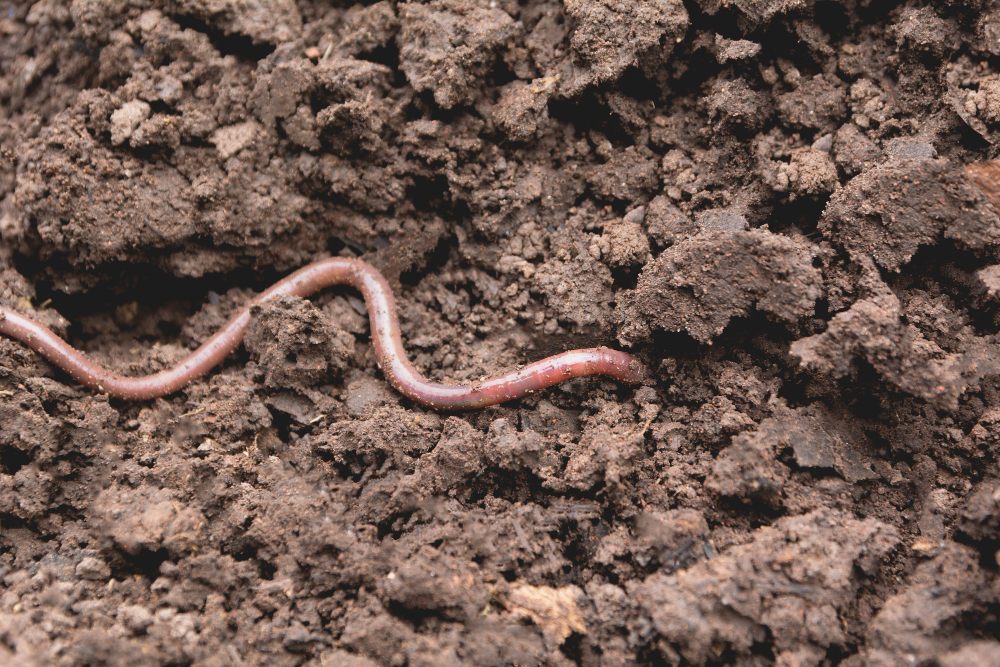
A familiar sight has an explanation that is still not fully settled.
After heavy rain, worms appear on paths and lawns in large numbers, frequently dying on hard surfaces.
The traditional explanation was that flooded burrows force them out to avoid drowning. That turns out to be incomplete, since worms can survive for extended periods in water with enough oxygen dissolved in it.
Other explanations have been proposed: that wet conditions allow them to travel across the surface without drying out, making rain an opportunity to disperse to new ground; that the vibration of raindrops resembles the vibration of predators digging, prompting them to surface; and that changes in the soil conditions during heavy rain make the burrows uncomfortable.
Each of those has some support and none is established as the complete answer, which is a good example of an everyday observation that science has not fully resolved.
What is not in doubt is that the behaviour is widespread, predictable after rain, and costly for the worms that end up stranded on hard surfaces when the ground dries.
There is a predator point worth adding. Worms are a major food source for birds, small mammals and other animals, which is why birds are so often seen hunting on lawns after rain or after digging – the soil is giving up its most abundant animal.
Why This Was Taken Seriously
The idea that worms shape landscapes was once considered faintly ridiculous and is now well established.
Careful observations over many years — measuring how quickly stones on a field sank, weighing casts collected from marked areas, and examining how ancient remains were buried — showed that the effect was real and quantifiable.
That work demonstrated a general principle that has become fundamental in geology and ecology: that very small processes, repeated over very long periods, produce very large effects.
The same reasoning underpins the understanding of erosion, sedimentation and many other slow processes that reshape the world at rates too small to notice in a lifetime.
Worms were an unusually clear demonstration because the process could be measured directly on ordinary ground, without any special equipment, by anybody patient enough to wait.
What It Means Standing on a Lawn
The practical upshot is a different way of looking at ground that seems permanent.
The surface underfoot is not the same surface that existed a century ago. A substantial part of it has passed through the bodies of animals and been redeposited on top.
Anything dropped on it long enough will be found below it, not because anybody buried it but because the ground rose around it.
And the richness of the soil — the thing that makes a garden grow — is to a considerable degree the product of that same slow digestion.
Which is a reasonable thing to consider the next time a lawn is covered in small coiled heaps after a wet night. Each one is a tiny addition to the surface, made of material that was underneath until very recently — and the lawn, like everything else lying on the ground, is very slowly being buried by the animals living beneath it.
And there is something steadily remarkable in that. The permanence people attach to the ground beneath their feet is an illusion produced by a timescale too slow to watch – and the thing doing most of the rearranging is an animal most people only notice when it rains.
Like our content? Follow us for more.