The Experience Is Extraordinarily Consistent
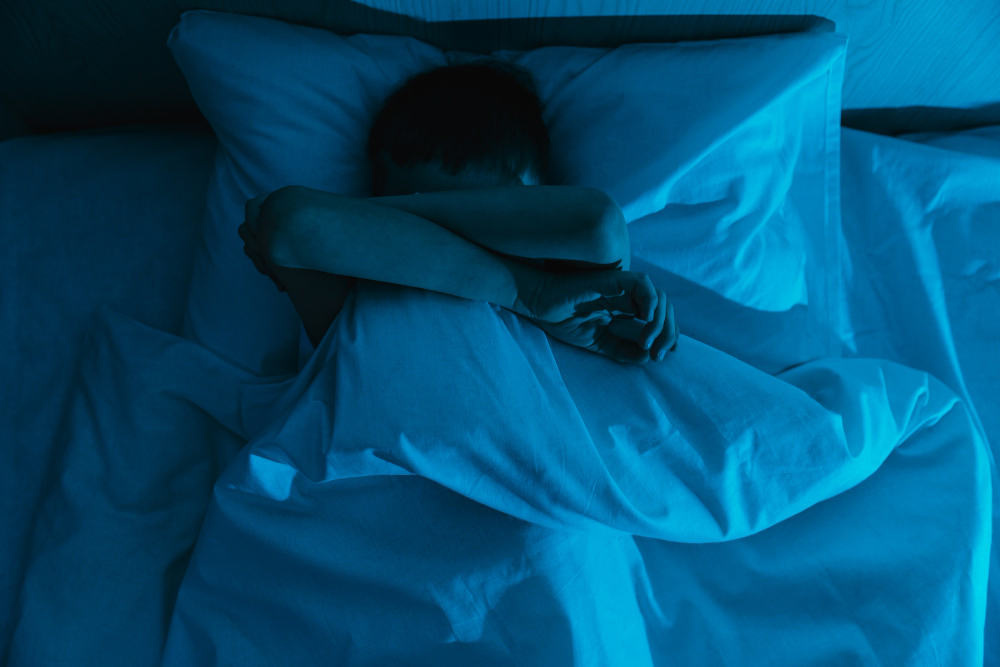
Somebody wakes, knows exactly where they are, can see the room, and cannot move. Not weakness, not stiffness, but a complete absence of response, as though the connection has been cut. They cannot speak, cannot call out and cannot turn over. Breathing feels shallow and effortful, and there is frequently a sensation of weight on the chest. Very often there is a powerful conviction that somebody else is in the room.
It lasts seconds to a couple of minutes, it ends on its own, and afterwards everything works perfectly.
What is remarkable is how little the description varies. Accounts from completely unconnected cultures, centuries apart, with no shared vocabulary for any of it, describe the same sequence in the same order: awake, aware, immobile, pressure, presence. It is one of the most reproducible subjective experiences there is, and it is reproducible because it is not really a mental event at all. It is a timing failure between two systems, and the content follows from the mechanism.
Like our content? Follow us for more.
Your Body Is Switched Off Every Single Night

The part that surprises people is that the paralysis is normal and happens to everybody, every night, several times, and is not the problem.
During the stage of sleep in which most vivid dreaming happens, the brain actively suppresses the signals that would otherwise reach the muscles. The pathway from the brain to the body is blocked, deliberately and almost completely, by inhibition applied at the level of the spinal cord and brainstem. The resulting state of near-total muscular shutdown lasts as long as that stage of sleep does.
The reason is straightforward once stated. During that stage the brain is generating motor commands that correspond to whatever is being dreamed: running, speaking, reaching. If those commands reached the muscles, a sleeping person would act them out, at speed, with their eyes shut, in the dark, next to furniture. The suppression exists so that the dreaming brain can issue instructions safely.
This is why the condition in which that suppression fails is a recognised and serious thing in its own right, and why people with it injure themselves and their partners. The paralysis is the safety mechanism. It is doing its job every night in everybody, unnoticed.
Sleep paralysis is not that mechanism going wrong. It is that mechanism working correctly for a few seconds longer than it should.
Three Things Are Deliberately Left Working

The shutdown is not total, and the exceptions explain almost everything about how the experience feels.
The muscles controlling the eyes are spared, which is why somebody in this state can look around the room, and why they can see perfectly well. This is the single reason the experience is terrifying rather than merely odd: the person has full visual access to a real room they cannot interact with.
The diaphragm is spared, because breathing cannot stop for an hour and a half. So respiration continues normally and nobody is ever in any danger of suffocating.
And the small muscles that stabilise the eardrum are spared, along with some of the autonomic machinery, which is relevant to a detail discussed further on.
Everything else, essentially, is off. The limbs, the trunk, the neck, the jaw and the muscles used to produce speech. Which is why the two things people invariably try, moving and shouting, are precisely the two things that are impossible, while the thing they are not trying, looking, works fine.
The Weight on the Chest Is Not the Chest
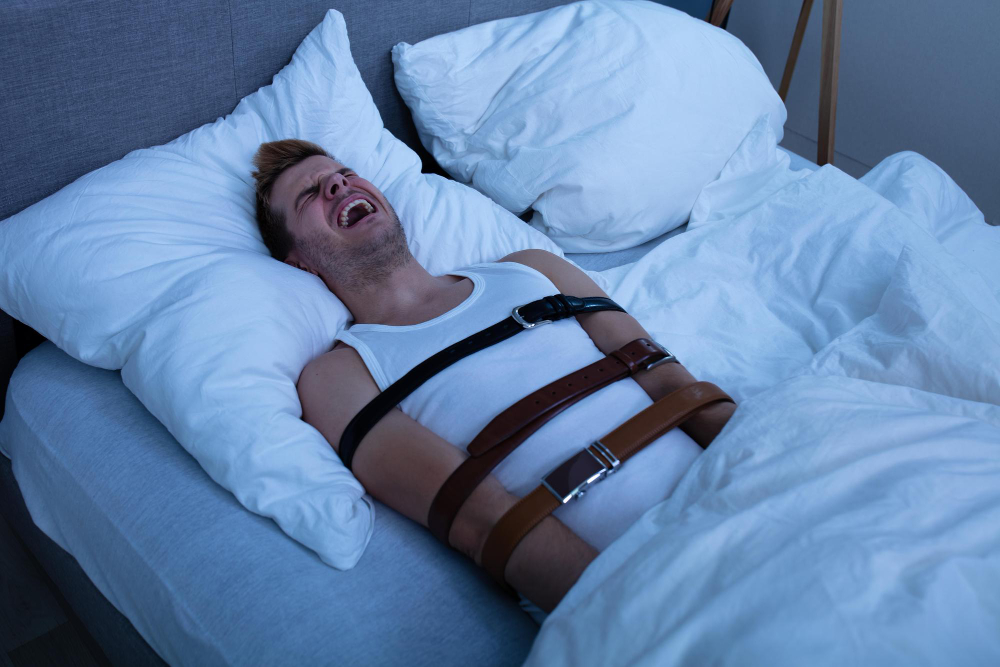
The sensation of something heavy pressing down is reported so consistently that it has given the phenomenon its name in several languages, and it is not coming from the chest wall.
What is happening is that the muscles of the rib cage and the abdominal wall, which normally assist breathing and which are responsible for deep or voluntary breaths, are suppressed along with everything else. The diaphragm alone continues, and diaphragm-only breathing produces shallow, automatic, unalterable breaths.
So a person in this state tries to take a deep breath and finds they cannot. Nothing is obstructing anything and oxygen levels are entirely normal, but the attempt produces no result, and the brain’s interpretation of an unanswerable instruction to breathe deeply is that something is preventing it.
That is where the weight comes from. It is an inference, not a sensation. The brain receives the report that a deliberate breath has failed and constructs the most plausible cause, which is a load on the chest. Given how the body usually works, that is an entirely reasonable conclusion for it to reach, and it is wrong.
The Figure in the Room Is the Same Three Figures Everywhere
The hallucinations fall into recognisable types, and the typing is consistent enough to be listed.
The commonest is the sense of a presence: a certainty that somebody is in the room, frequently behind or beside the sleeper, frequently without being seen at all. The conviction is extremely strong and does not depend on any visual detail.
The second is a visual or auditory intruder: a shadowy figure, footsteps, breathing, a door, a voice saying a name. These are typically brief, dim and peripheral rather than detailed.
The third is bodily: floating, falling, spinning, being dragged, or feeling as though one has left the body and is looking at it. This arises because the systems that normally tell the brain where the body is and how it is oriented are receiving almost no confirmation from suppressed muscles, so the brain’s estimate of its own position is unconstrained and drifts.
All three are the predictable products of a brain in a dreaming state, still producing the imagery that goes with it, while simultaneously receiving accurate visual information about a real bedroom. Dream content is being generated and the room is being seen, at the same time, and the brain integrates the two into one apparent event.
The presence in particular has a plausible explanation in the brain’s handling of other agents. A system that monitors for the presence of other people is one that must err toward false alarms, because the cost of missing somebody is far higher than the cost of imagining one. Deprive that system of reliable input while leaving it running, in a state of high alarm, and a presence is the output it is predisposed to generate.
Which Is Why Every Culture Has a Name for It
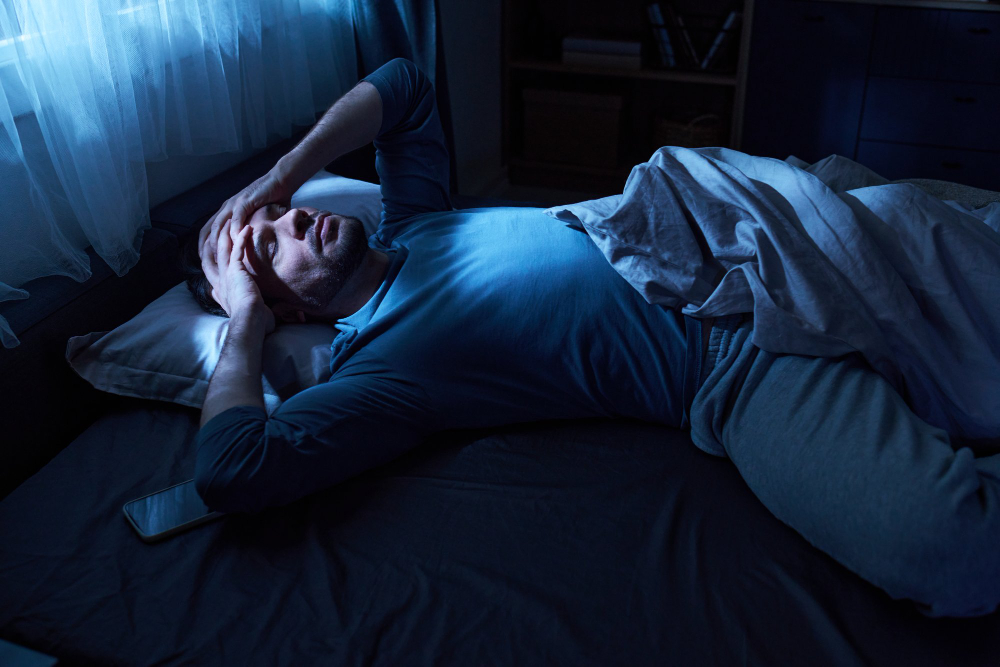
The cross-cultural record is the most interesting thing about the subject. Societies with no contact with each other have independently produced a figure that sits on a sleeper’s chest at night, holds them down and cannot be resisted.
The figures differ in identity, in what they are said to want and in what is supposed to deter them. The described experience does not differ at all: a person awake in their own room, unable to move, aware of a presence, with a weight on the chest.
The reason for the convergence is now clear enough. The experience is generated by a piece of neurology that every human being has, so the raw material is identical everywhere, and what varies is only the explanation each culture supplied. The phenomenon came first and the folklore was fitted to it, rather than the other way round.
This also accounts for the modern versions. Reports of being held down by figures matching whatever a given era finds frightening have continued without interruption, and the content tracks contemporary anxieties while the structure stays exactly the same. The experience is a template and each period fills it in.
It is one of the better available demonstrations that a piece of widespread folklore can have a specific physiological cause, and that finding the cause does not make the experience any less real for the person having it.
It Is Much More Common Than People Think
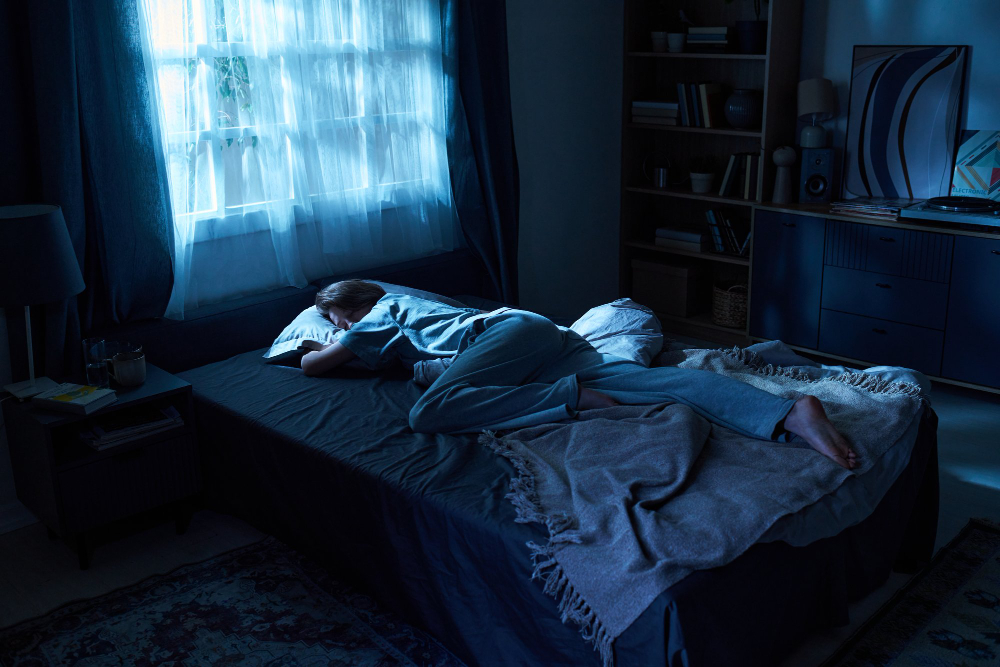
Surveys consistently find that a large minority of people, and by some estimates close to half, have experienced it at least once. A much smaller proportion experience it repeatedly.
It is more common in adolescence and early adulthood, more common when sleep is disrupted, and more common after a period of insufficient sleep followed by catching up, which is the pattern that produces the most pronounced rebound in the dreaming stage of sleep. It is more frequent when sleeping on the back than in other positions, by a margin large enough to show up reliably in the data.
It also runs in families to a measurable degree, and it occurs more often in people under sustained stress or with irregular schedules, including shift work and travel across time zones.
For most people it happens once or twice in a lifetime, is baffling and frightening at the time, and never returns. Almost nobody mentions it to anybody, which is why most people who have had it believe it is rare and are startled to discover how many others have.
Why It Ends, and What It Cannot Do
It ends because the suppression lifts. Any substantial sensory input tends to accelerate that, which is why being touched or spoken to by somebody else resolves it immediately, and why small voluntary movements of the parts that still work can help the rest to follow.
And it is worth stating plainly what the mechanism rules out. Breathing continues throughout, because the diaphragm is never suppressed. The heart is not involved. The state is self-limiting and has never been shown to cause harm by itself. The frightening content is generated by a dreaming brain and corresponds to nothing in the room.
Nothing in this piece is advice and no reader should use it to interpret their own sleep. It is included because the single most useful thing about understanding the mechanism is that it removes the two beliefs that make the experience worse: that something is sitting on you, and that you might not start breathing again. Neither is possible, and both are products of the same few seconds of overlap between a mind that has woken and a body that has not.
Like our content? Follow us for more.