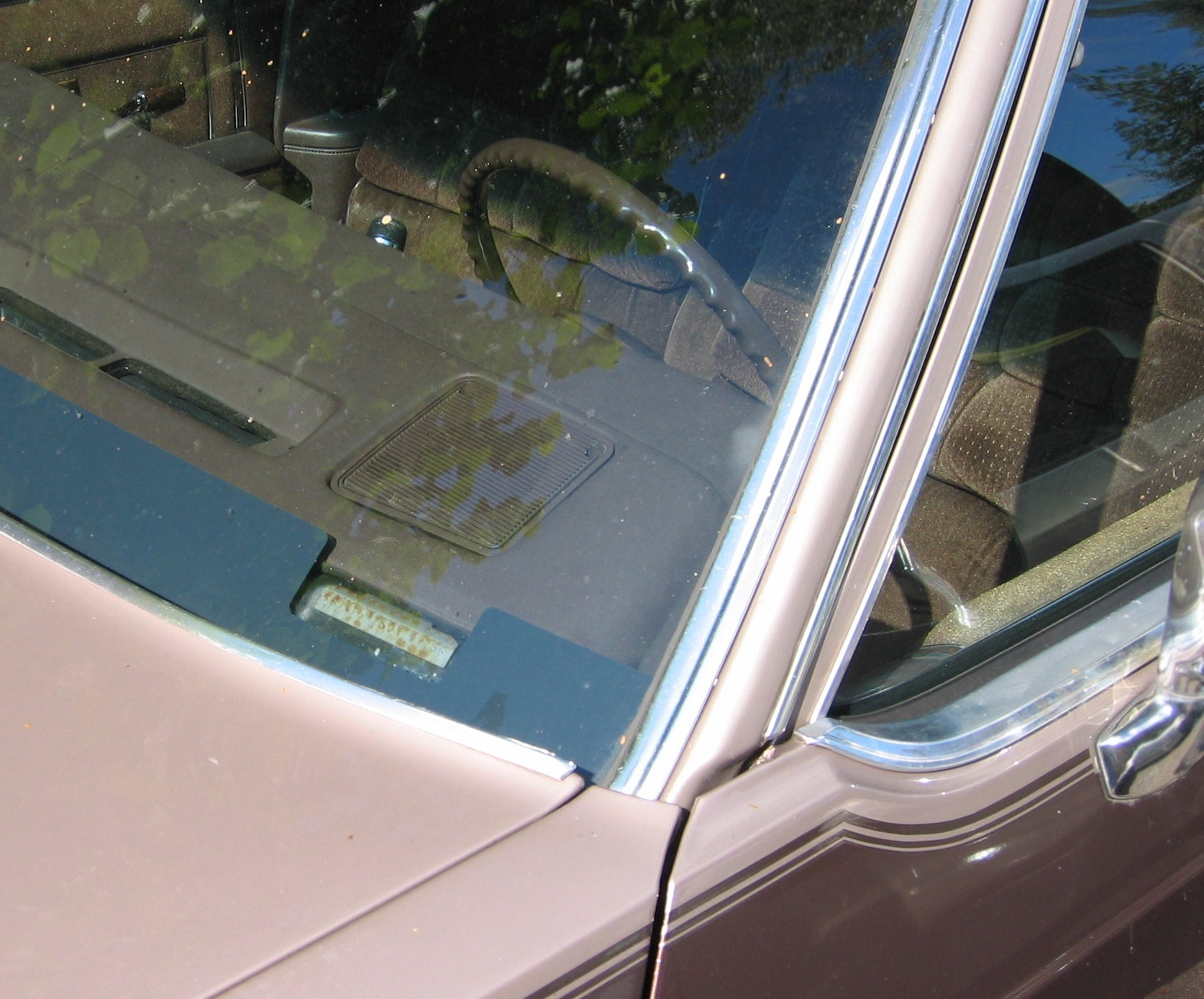
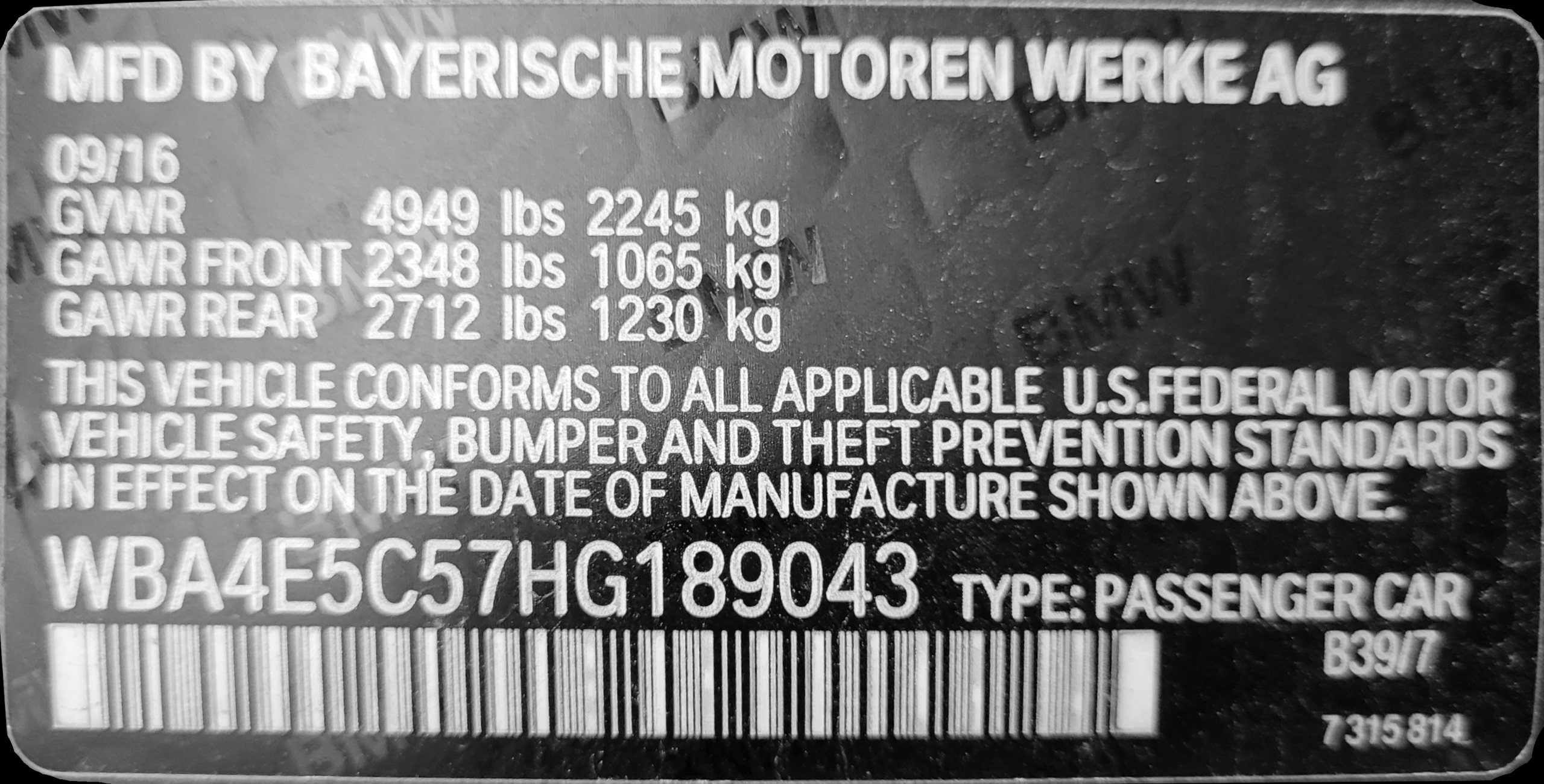
There is a seventeen-character string on every car built since the early 1980s – visible through the windscreen at the bottom of the glass, stamped on a plate in the door jamb, and etched into the body structure.
Most people treat it as a serial number. It is considerably more than that. Every position in the sequence carries defined information, the format is an international standard, and one character in the middle is a checksum whose only job is to make an invented number fail.
The Three Blocks
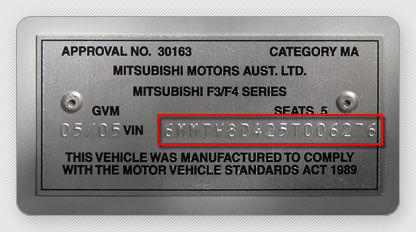
The seventeen characters divide into three sections.
The first three identify the manufacturer and the country or region of manufacture. This is the world manufacturer identifier, issued to the maker, and it is why two cars from the same brand built in different plants in different countries have different opening characters.
The next six describe the vehicle itself – the model, the body style, the engine, the restraint system and other attributes, encoded according to a scheme the manufacturer defines and publishes. This is the section that lets a parts supplier or an insurer determine exactly what a car is without seeing it.
The final eight identify the individual vehicle. The tenth character is the model year, the eleventh is the assembly plant, and the last six are the production sequence number.
Sitting between the two is the ninth character, which describes nothing at all.
Like our content? Follow us for more.
The Ninth Character Is a Calculation
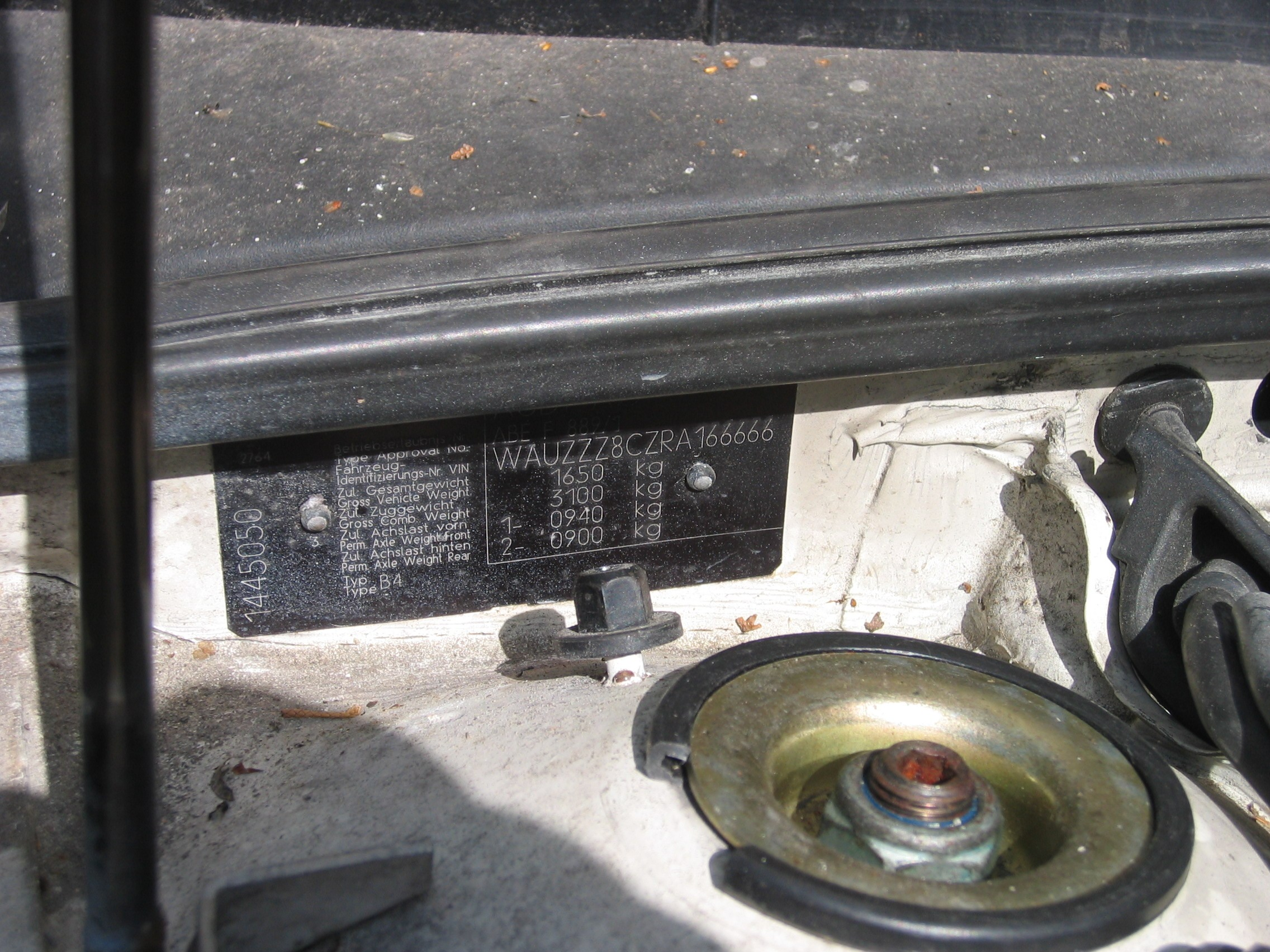
The check digit is derived from the other sixteen characters by a defined arithmetic procedure – each character is converted to a number, multiplied by a weight assigned to its position, the results are summed, and the remainder of a division gives the check value.
The point is error detection. A number mistyped into a database, misread from a dirty plate, or transposed in a handwritten form produces a string whose check digit no longer matches, and the system rejects it immediately rather than creating a record against a vehicle that does not exist.
The side effect is that it makes casual forgery fail. Somebody altering a digit on a stolen vehicle’s plate, or inventing a plausible-looking number, will almost certainly produce a string that does not validate – and any system that checks will say so instantly.
It is not a security feature in the sense of being hard to defeat. Anybody who knows the algorithm can produce a valid-looking number. What it defeats is the casual version, which is most of it.
No Letters That Look Like Numbers
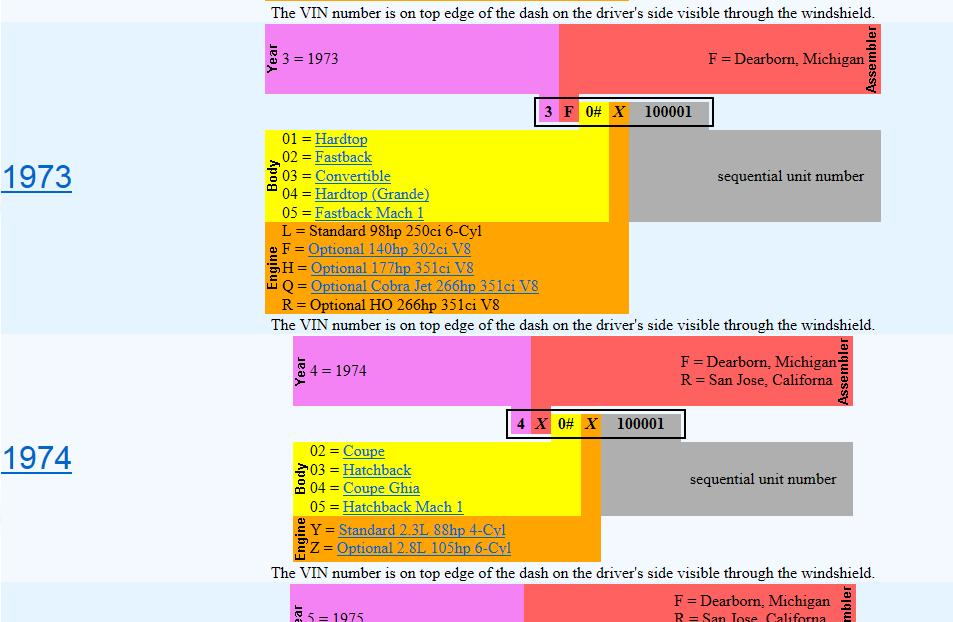
The standard excludes three letters from the entire seventeen characters: I, O and Q.
The reason is that they are confusable with the digits one and zero, in print, in stamped metal, in handwriting and in automated reading. A standard that permitted both would guarantee transcription errors on exactly the characters that matter most.
That is why a VIN never contains them and why anybody reading one can treat every circle as a zero and every vertical stroke as a one without hesitating. It is a small decision that removes an entire class of error, and the same reasoning appears in aircraft registrations, shipping container codes and a great many other identifier schemes.
The Tenth Character Tells You the Year, in Code
The model year is a single character, which means the scheme has to represent years in a sequence that does not run out.
It uses letters and digits in a defined order, cycling with a period of thirty years. The consequence is that the character alone is ambiguous across a long enough span – the same letter means two years three decades apart – and is resolved by reference to the rest of the number and to the vehicle itself.
In practice this is not a problem because a car of that age is distinguishable in every other respect. It is a good example of a standard designed for a world where thirty years was comfortably beyond the expected service life, which is a judgement that looks slightly different now.
Where It Is, and Why It Is in Several Places
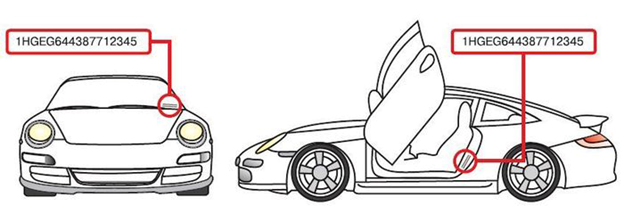
The number appears in multiple locations on purpose, and the purpose is to make alteration difficult.
The visible plate at the base of the windscreen is for inspection without opening anything. The label in the driver’s door jamb carries it alongside tyre pressures and weights. It is stamped directly into the vehicle structure, frequently in a place that requires dismantling to reach. On many vehicles it is etched into the glass, and it is held in the electronic control modules.
Altering a vehicle’s identity therefore means changing several physical and electronic records that are deliberately inconsistent in how they are applied, and a competent inspection compares them. A mismatch between the windscreen plate and the stamped structure, or between either and the engine management module, is one of the standard checks on a suspect vehicle.
Before the Standard, Every Maker Did As It Liked
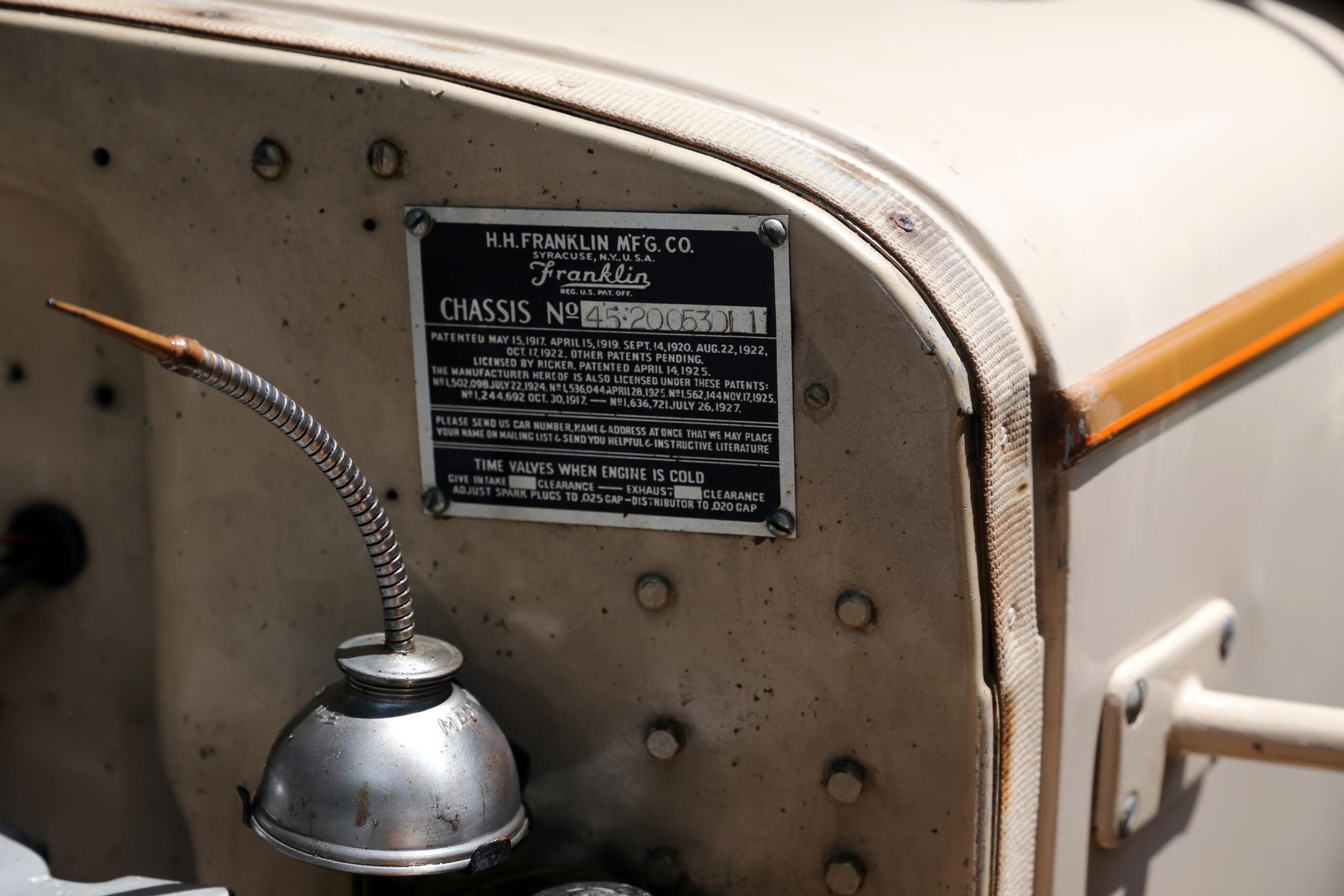
The seventeen-character format is younger than most of the cars people think of as classics, and what came before it was chaos.
Manufacturers numbered vehicles however they chose. Lengths varied, formats varied, the same manufacturer changed scheme between models and between years, and there was no agreement about what a number should contain or even where it should be put. A chassis number might be stamped on a frame rail, under a seat, on a bulkhead or in a place that required removing a wheel.
That was tolerable while cars were national products sold and registered close to where they were built. It stopped being tolerable once vehicles were traded internationally in volume, once safety recalls required a manufacturer to identify precisely which cars were affected, and once stolen vehicles began crossing borders routinely.
Recalls are the part people underestimate. A recall is only possible if the manufacturer can say exactly which vehicles have the defective component, which requires knowing what went into each one and being able to identify each one unambiguously. A standardised identifier with the build information encoded in it is what makes that work, and it is the reason regulators pushed for the standard rather than leaving it to industry.
So the number on the windscreen exists largely because somebody needed to be able to find every car with a particular part in it, years after it left the factory.
What You Can Actually Do With It
For somebody buying a used car this is the most useful thing in the article.
Check that the number is the same in every location you can see – windscreen, door jamb label, and the registration document. A discrepancy is a reason to walk away, not a reason to ask.
Look at the plate and the label physically. Rivets that do not match, a label that has been peeled and replaced, adhesive residue, or a plate that sits differently from the surrounding panel are all worth noticing.
Run it through a history check. Those services exist in most markets and will report whether the vehicle has been written off, has outstanding finance, has been stolen, or has a mileage record inconsistent with its declared reading. A check costs very little against the price of a car.
And confirm the number matches the document rather than assuming. The single most common serious problem in a private used sale is a vehicle that is not the vehicle the paperwork describes.
Everything Has One of These Now
The VIN is one instance of a general pattern that has quietly spread across almost every manufactured object of any value.
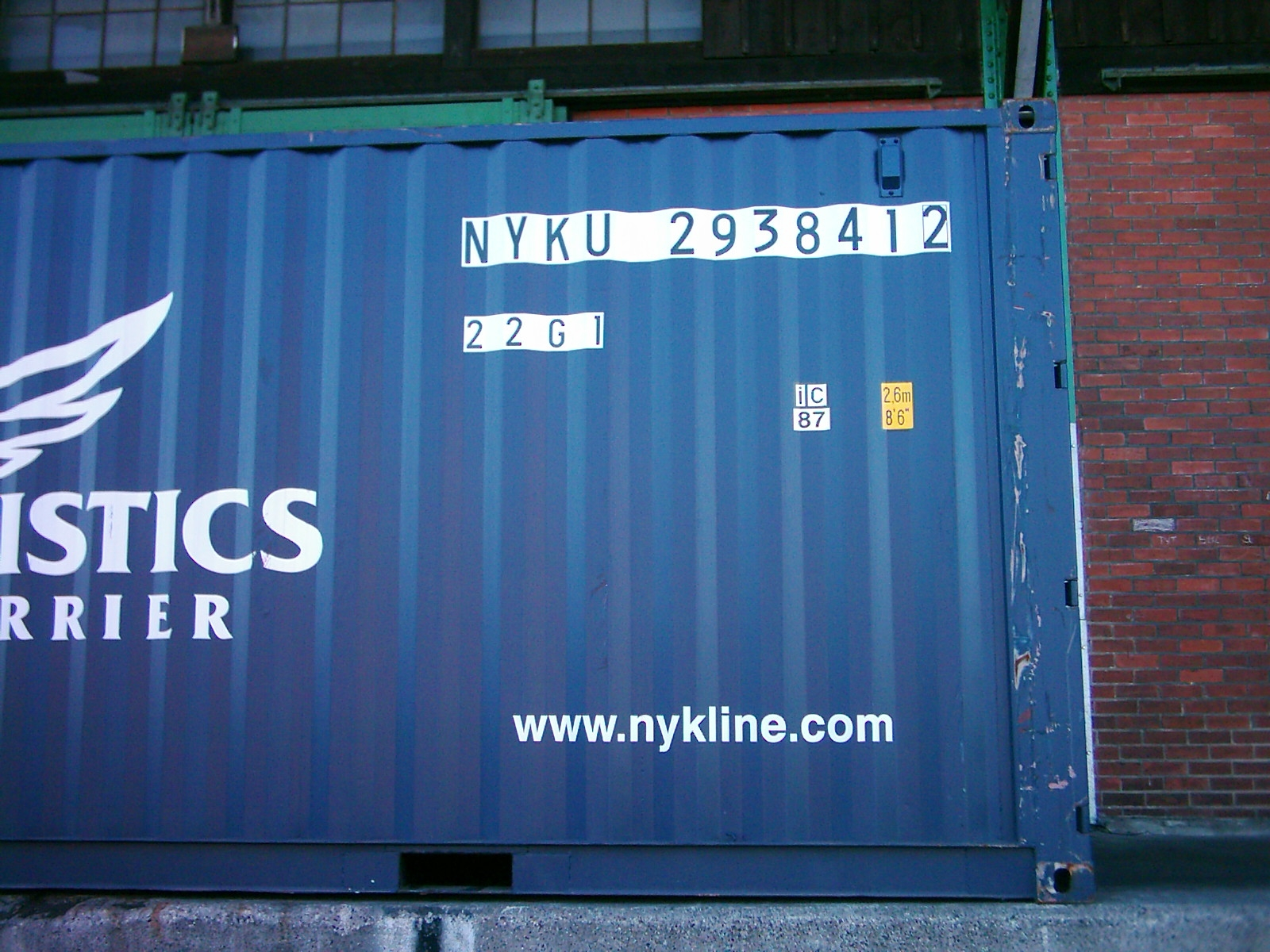
Shipping containers carry an identifier with a check digit on the same principle. Bank cards have a check digit in the account number, which is why a mistyped card number is rejected before anything is sent anywhere. Books have one in the ISBN. Barcodes carry one. Aircraft, locomotives, engines, gearboxes and electronic modules all have identifiers tied to records.
The common logic is worth stating because it is not obvious: an identifier is only useful if errors in copying it can be detected, and the cheapest way to do that is to make part of the identifier a function of the rest.
So the seventeen characters on a windscreen are not a name. They are a small, self-verifying database key, designed so that a number written down wrongly by a tired person at a counter does not silently attach a record to the wrong object – which is a problem almost nobody thinks about and which somebody had to solve before any of the systems that depend on it could work.
The next time you are sitting in a car, look down at the bottom corner of the windscreen on the driver’s side. The plate is small, it is deliberately placed to be readable from outside without opening the door, and it has been there on every car for forty years.
Three characters say who built it and where. Six say what it is. One says nothing except whether the other sixteen have been copied correctly. One says what year, one says which factory, and six say which one it was off the line that day.
It is a remarkably dense piece of design for something nobody reads, and it is the single most useful thing to check before handing anybody money for a used car.
Like our content? Follow us for more.