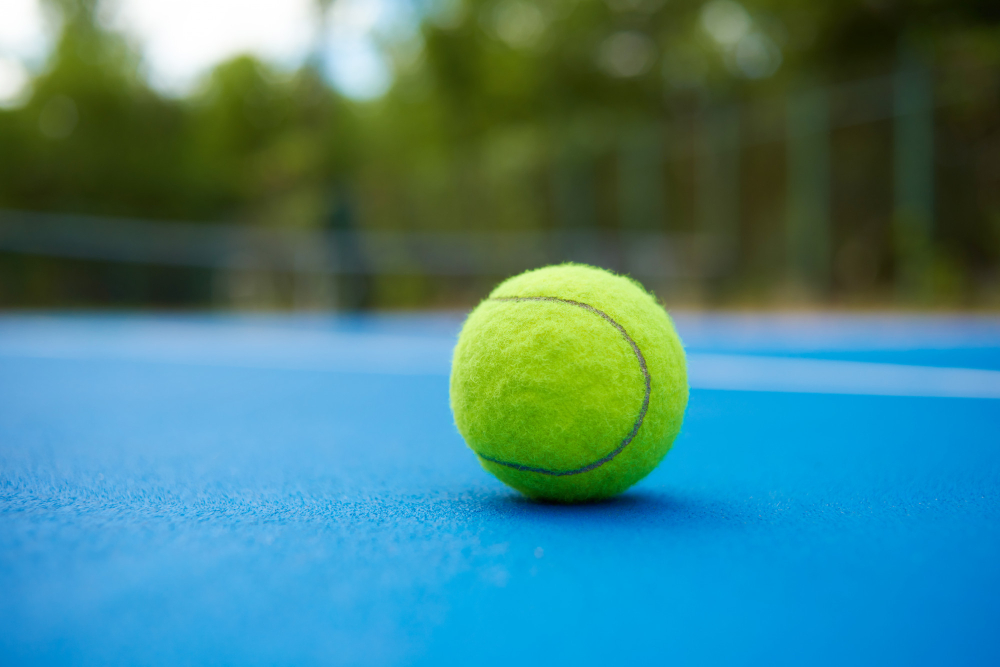
A tennis ball is a hollow pressurised rubber sphere covered in a layer of fuzzy felt, and the felt is not decoration or grip.
It is the single most consequential part of the ball’s design. Strip it off and leave the rubber core, and the resulting object travels dramatically faster, barely curves, bounces unpredictably and cannot be controlled. The game as it is played would not exist.
Most of What the Felt Does Is Slow the Ball Down
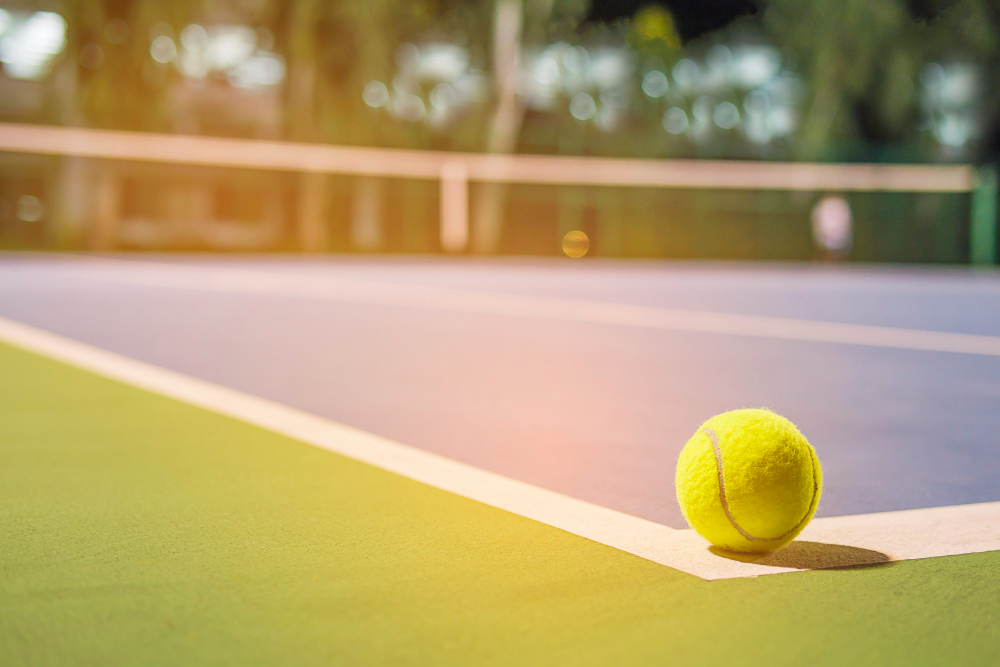
A smooth sphere moving quickly through air has a narrow turbulent wake behind it and relatively low drag. A fuzzy sphere has a thick boundary layer of air caught among the fibres, which effectively enlarges the ball aerodynamically and increases the drag substantially.
That slowing is the point. A served ball leaves the racket extremely fast, and the felt removes a significant fraction of that speed before it reaches the other end of the court. Without it, serves would arrive at a speed that makes a return essentially a matter of luck, and rallies would not happen.
Tennis is therefore a game whose entire pace is set by a deliberately draggy ball. Almost every other ball sport uses a ball designed to be as fast as the rules allow; tennis went the other way and built the ball to be slow, because the court is short and the players are close together.
This is also why ball manufacturers specify felt composition so tightly and why professional tournaments change balls at fixed intervals. A worn ball with flattened felt is a faster ball, and a fluffed-up ball with raised felt is a slower one – which players exploit deliberately, selecting the fluffier ball to serve with when they want more margin, and the smoother one when they want pace.
Like our content? Follow us for more.
It Is Also What Makes Spin Work
The second job is grip on the strings, and this is what makes topspin and slice possible at the level they are used.
When a racket strikes the ball obliquely, the strings have to bite into the surface and drag it into rotation rather than sliding across it. A smooth rubber ball would slip, and the amount of spin transferable would be far lower.
The felt gives the strings something to catch. The fibres compress and interlock with the string bed for the few milliseconds of contact, and that friction is what converts racket head speed into rotation.
Spin then interacts with the felt a second time, in the air. A spinning fuzzy ball drags its boundary layer around with it, producing the pressure difference that makes a topspin shot dive and a sliced shot float. The same surface that allowed the spin to be imparted is what makes the spin do anything once the ball has left the racket.
Remove the felt and you lose both ends of that: less spin generated and less effect from whatever spin remains.
The Bounce Depends on It Too
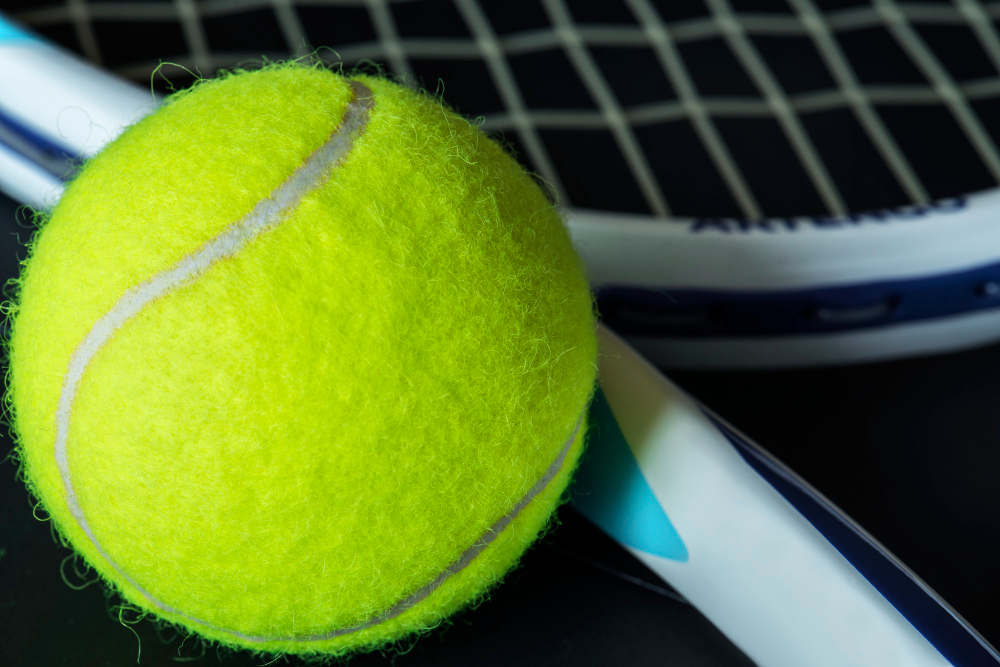
Third job: the felt mediates the contact with the court.
A bare rubber sphere hitting a hard surface would bounce high, fast and with very little predictability, because the contact is brief, hard and highly sensitive to any irregularity in the surface or the ball.
The felt layer compresses on impact, spreads the contact over a slightly longer time, and absorbs energy. That makes the bounce lower, slower and considerably more consistent – and it makes the ball behave differently on different surfaces in a way the game is organised around. Grass, clay and hard courts produce genuinely different bounces largely because of how the felt interacts with each one, and clay in particular grips the felt and slows the ball more than any other surface.
The felt also wears differently on each surface, which is why a ball used on clay looks and behaves differently within a few games.
Why Players Reject Two Balls Out of Three
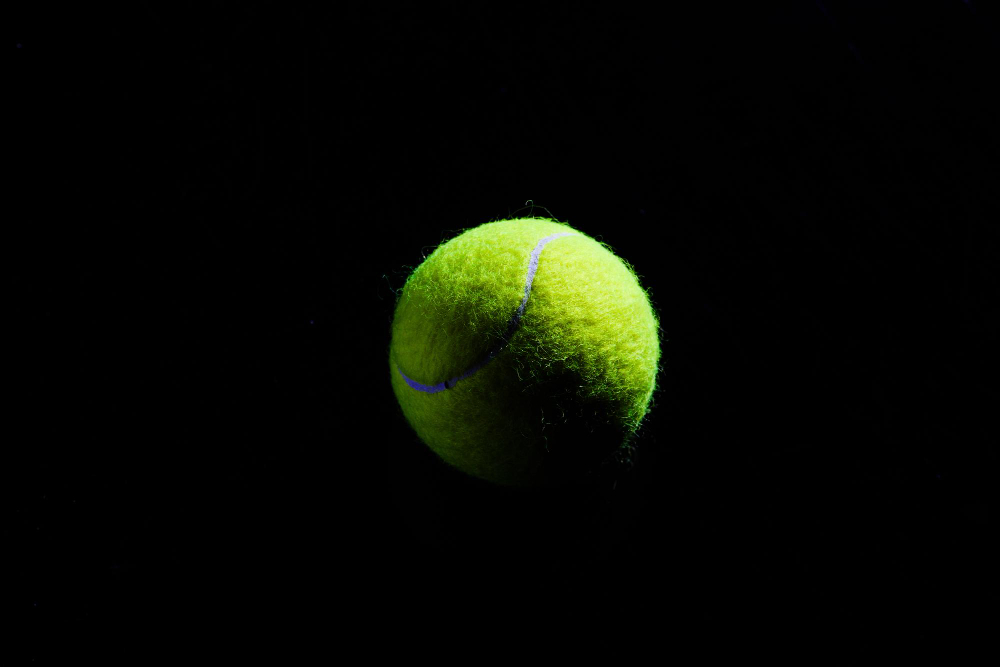
If you have watched a professional match you have seen a server given three balls, glance at them, and hand one or two straight back.
This looks like superstition and it is not. The felt on a ball changes measurably within a few games, and a player who is about to serve wants a specific condition.
A newer, fluffier ball has more drag. It travels slower, which gives more margin for a first serve that needs to land in, and it takes spin more readily. A ball that has been in play longer has flattened felt, less drag and more pace, which suits a flat serve hit for speed or a player who wants the ball through the court quickly.
Players develop a strong preference and can identify the state of a ball by sight and by feel in under a second. The ball boys and girls are trained to present balls so this choice can be made quickly, and the rotation of new balls at fixed intervals exists precisely because the difference is large enough to affect play.
The same effect operates at club level, where nobody is choosing deliberately and everybody has noticed that a tin of new balls plays completely differently from the ones that have been in the bag since last summer. The difference is real, it is mostly felt condition, and it is partly pressure.
And It Is Why the Ball Is Visible
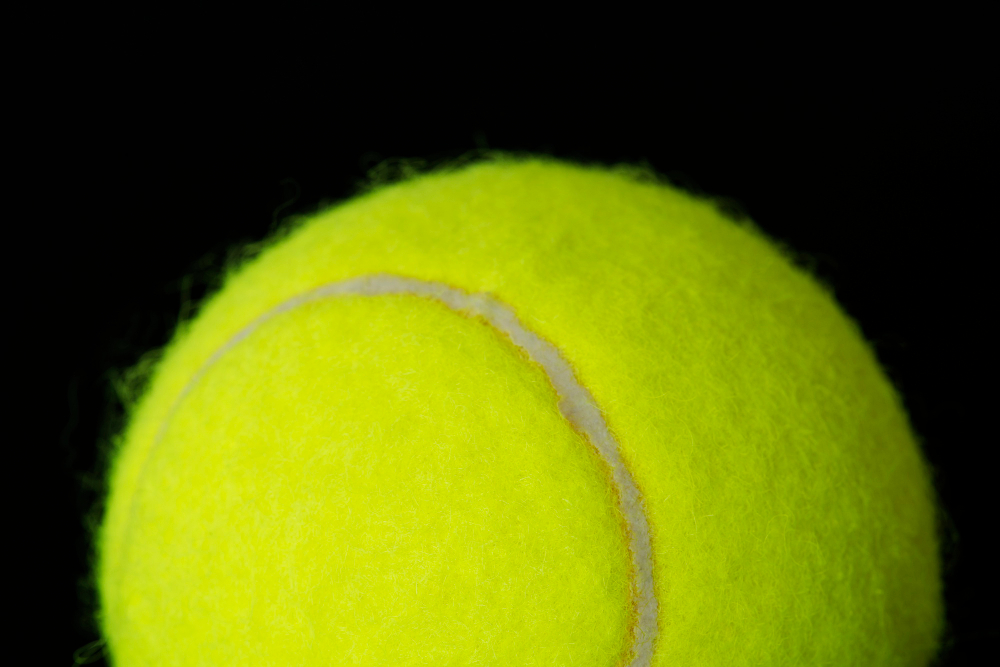
The fourth job is the one that got the colour changed.
Tennis balls were white for most of the game’s history. The switch to the now-familiar yellow-green came after research for television found that the fluorescent shade was substantially easier for viewers to follow against the varied backgrounds of a court, and it was adopted in professional play and then everywhere.
The felt is what makes that possible. A smooth coloured rubber ball reflects light specularly – it has highlights and dark sides, and it changes appearance dramatically depending on where the light is. A fuzzy surface scatters light diffusely in all directions, so the ball looks like a uniform bright object from any angle under any lighting.
That matters enormously for a small fast object that players and spectators have to track continuously. The felt is, among other things, a diffuser, and the ball’s visibility is a property of its texture at least as much as of its colour.
The Pressure Inside Is a Separate Problem Entirely
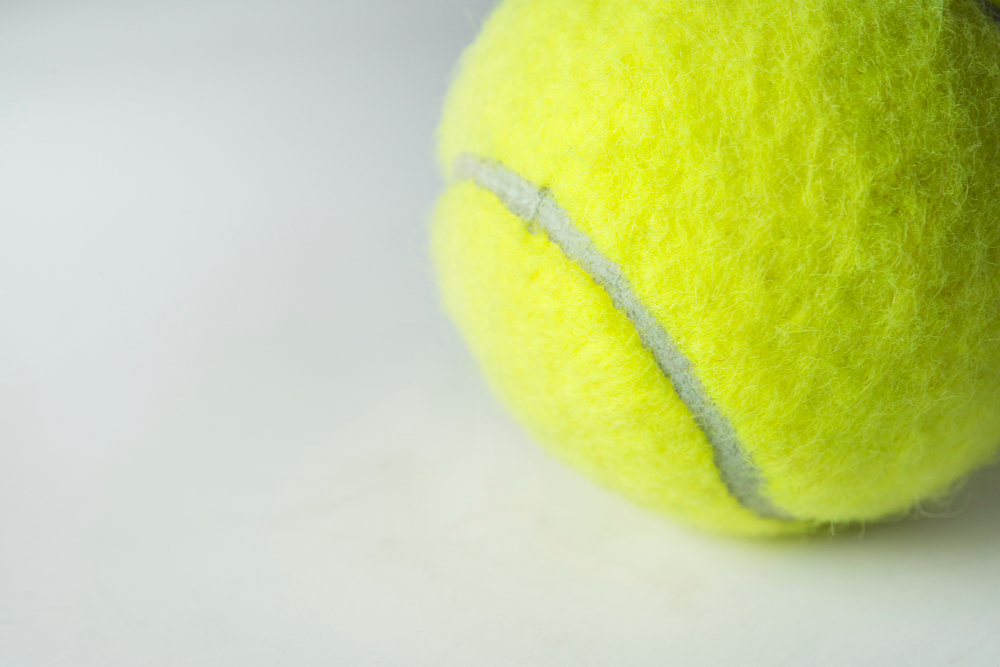
The felt gets the attention, but the ball has a second design constraint that is arguably harder: it is pressurised, and the pressure leaks.
A standard ball is inflated above atmospheric pressure, and that internal pressure is a large part of what gives the bounce. Rubber is not a perfect barrier, so gas gradually diffuses out through the wall, and the ball goes dead – not because the felt has worn, but because the inside has equalised with the outside.
This happens whether the ball is used or not, which is why tennis balls are sold in sealed pressurised containers and why opening a tube starts a clock that runs regardless of play. A tube left open in a cupboard for a year contains balls that are visibly perfect and functionally finished.
The alternative exists: pressureless balls, which get their bounce from a thicker rubber wall rather than from internal gas. They do not go dead, they last far longer, and they are widely used for practice and in teaching. They are also heavier, feel noticeably different on the racket, and are generally disliked for serious play – which is why the sport has stayed with a ball that has a short and unstoppable shelf life.
That is a genuinely unusual trade. Most equipment design chooses durability where it can, and tennis deliberately chose a consumable because the alternative feels wrong.
Why the Seam Is That Shape
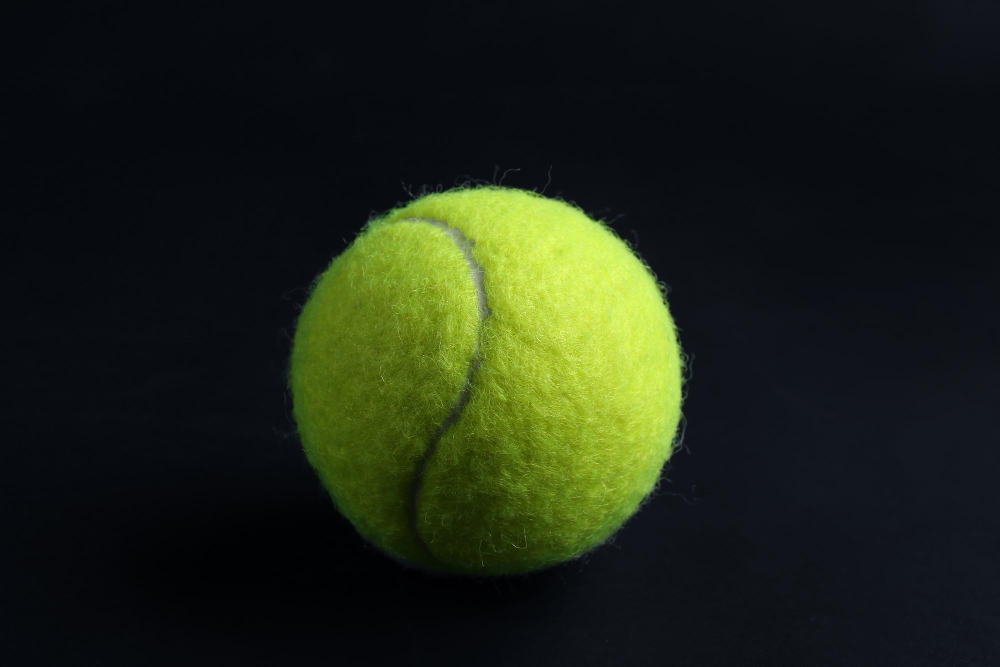
The curved line running round the ball is where two identical dumbbell-shaped pieces of felt meet, and the shape is the same problem a tennis ball shares with a baseball: covering a sphere with flat pieces.
You cannot wrap a sphere in flat material without stretching, cutting or wrinkling it. Two pieces shaped like that particular curve is one of the few ways to cover a sphere completely with two identical flat shapes, with a seam of constant width and no bunching at any point.
The seam is then a functional feature in its own right. It disrupts airflow slightly, and players and manufacturers both know that the orientation of the seam at the moment of contact has a measurable effect on how the ball behaves – which is part of why servers spin the ball in their fingers before tossing it.
So the whole object is four engineering solutions stacked on one another: a pressurised core for the bounce, a rubber shell for durability, a felt layer doing aerodynamics, spin, bounce and visibility simultaneously, and a seam geometry that exists because spheres cannot be wrapped.
Next time you hold one, run your thumb across the nap and then look at how much of it has flattened on an old ball.
That difference is why it does not play the same.
Like our content? Follow us for more.