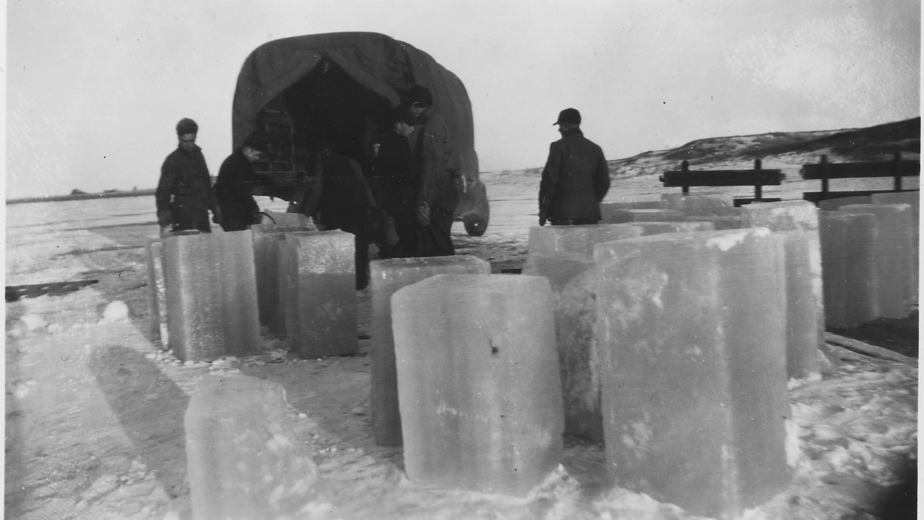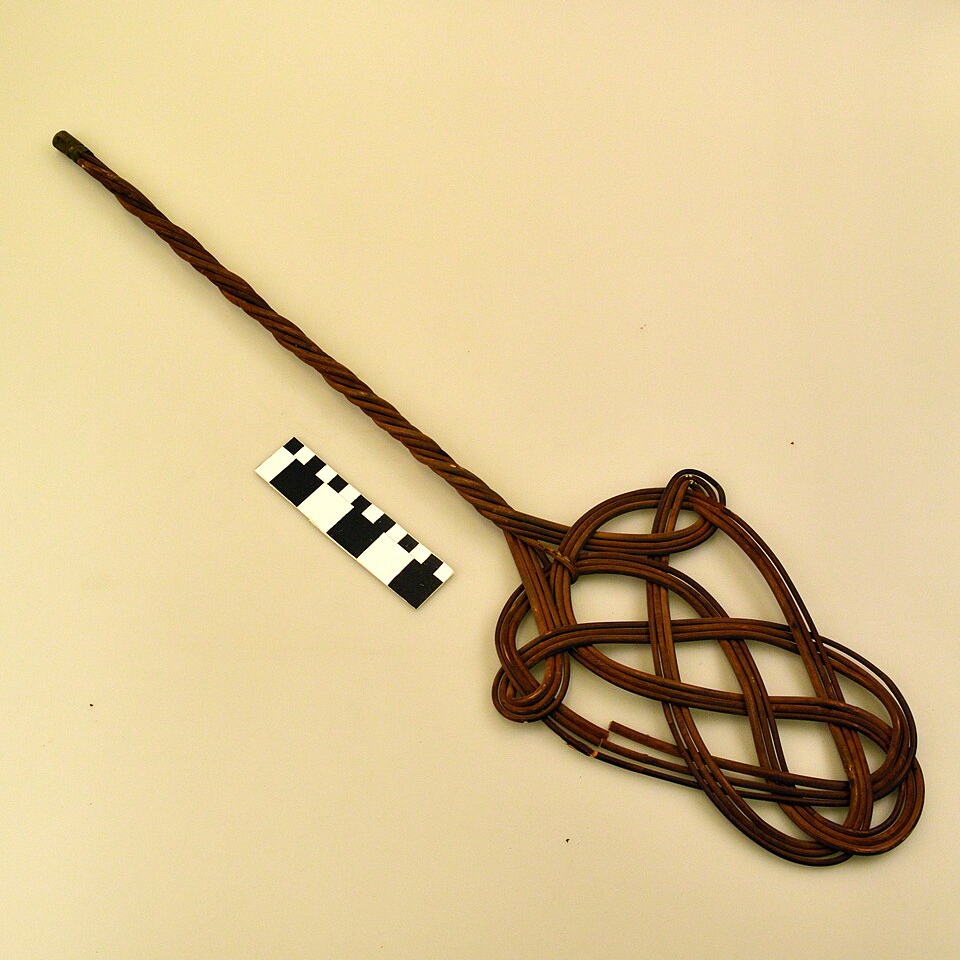
It looks like a tennis racket made by somebody who had only heard a description of one. A long handle, usually wood or twisted wire, opening into a flat loop or a series of loops of woven cane, rattan or heavy wire.
It hung in the wash house, on a porch nail or behind the kitchen door, and it was used in the most physically direct way imaginable. Rugs came up off the floor, got carried outside, hung over a line or a fence or a porch rail, and were hit until the dust stopped coming out.
That was house cleaning. Not a supplementary task – the primary method by which floor coverings were cleaned, in American households, for generations.
And the reason the beater disappeared is not that somebody invented a better way to beat a rug. It is that the floor covering changed shape. Once carpet was nailed down wall to wall across an entire room, it could not be taken outside, which meant it had to be cleaned where it lay – and that made a machine mandatory rather than optional.
Loose Rugs Were the Point
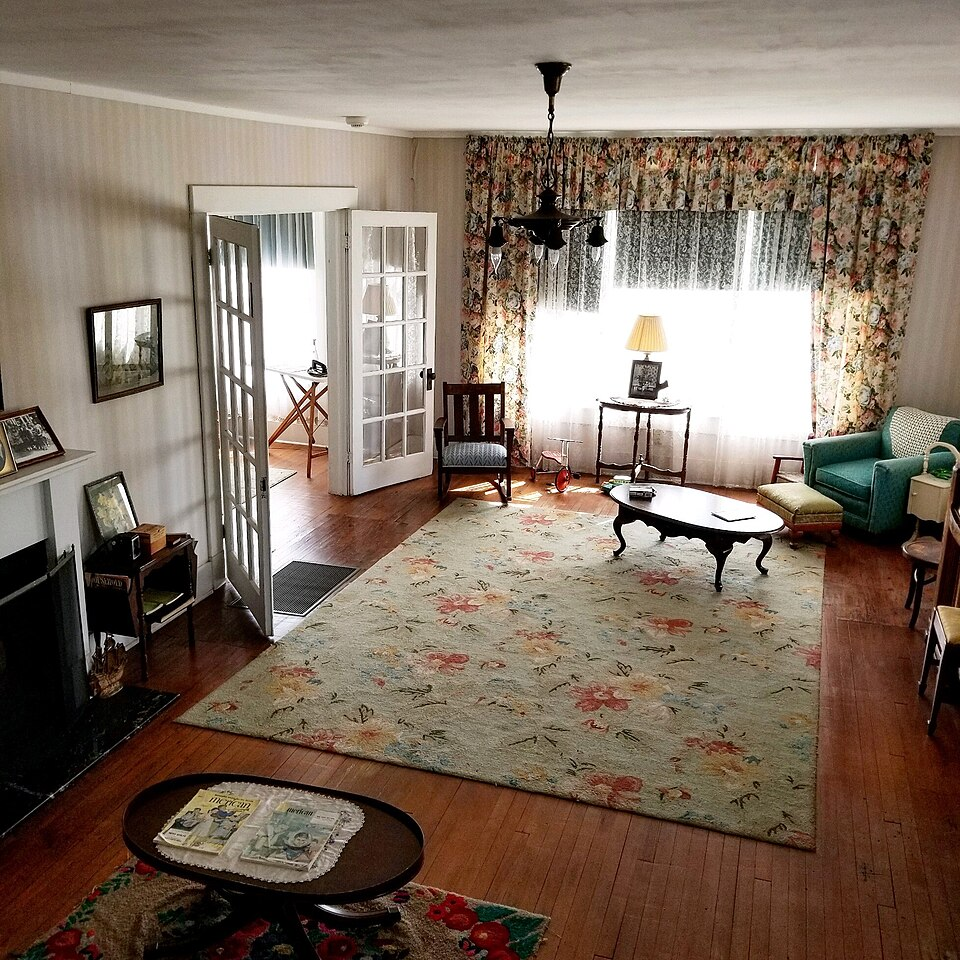
Before wall-to-wall, American floors were covered in discrete pieces. Room-sized rugs, hall runners, hearth rugs, scatter rugs by the beds and the doors, with bare wood or linoleum showing around the edges.
That arrangement existed for good reasons. Rugs could be bought one at a time as money allowed. They could be moved between rooms, turned to even out wear, rotated so the faded side went under the furniture, and taken up entirely in summer when a bare floor was cooler and easier.
And they could be removed for cleaning, which is the design feature that mattered most and which nobody thought of as a feature at all. A floor covering you can pick up is a floor covering you can take outdoors and treat as roughly as you like.
So the cleaning cycle was built around removal. Rugs came up in a seasonal cleaning and frequently much more often than that. They went over a line. They were beaten on both sides. Sometimes they were left out in sun or snow, which was believed to freshen them and in the case of snow actually worked reasonably well as a dry-cleaning method. Then they went back down over a swept floor.
Like our content? Follow us for more.
Beating Worked Better Than People Assume

It is tempting to treat this as primitive, and the mechanics deserve a fairer hearing than that.
Dirt in a rug is mostly not stuck to the fibres. It is loose particulate – soil, sand, ash, lint, hair, textile fragments – that has worked down between the fibres and sits in the pile, held there by nothing except being trapped.
Hitting the rug accelerates the whole structure sharply, and the loose particles do not accelerate with it. They come out of the pile and fall, which is why a beaten rug produces a visible cloud and why the cloud stops after a while – you have removed what was loose, and what remains is bonded to the fibres and will not come out by force.
A vacuum cleaner removes the same loose material, through suction and brushing, more conveniently and far more pleasantly. But on heavy embedded grit in a thick pile, a beating is genuinely effective, which is why professional rug cleaners still use mechanical agitation as a first stage on valuable rugs and why the dusting machine that does it is a recognised piece of equipment in that trade.
The beater was not a bad tool. It was a tool that required the rug to be portable.
It Was Heavy, Dirty, Gendered Work
Any honest account of this has to say what the job was actually like.
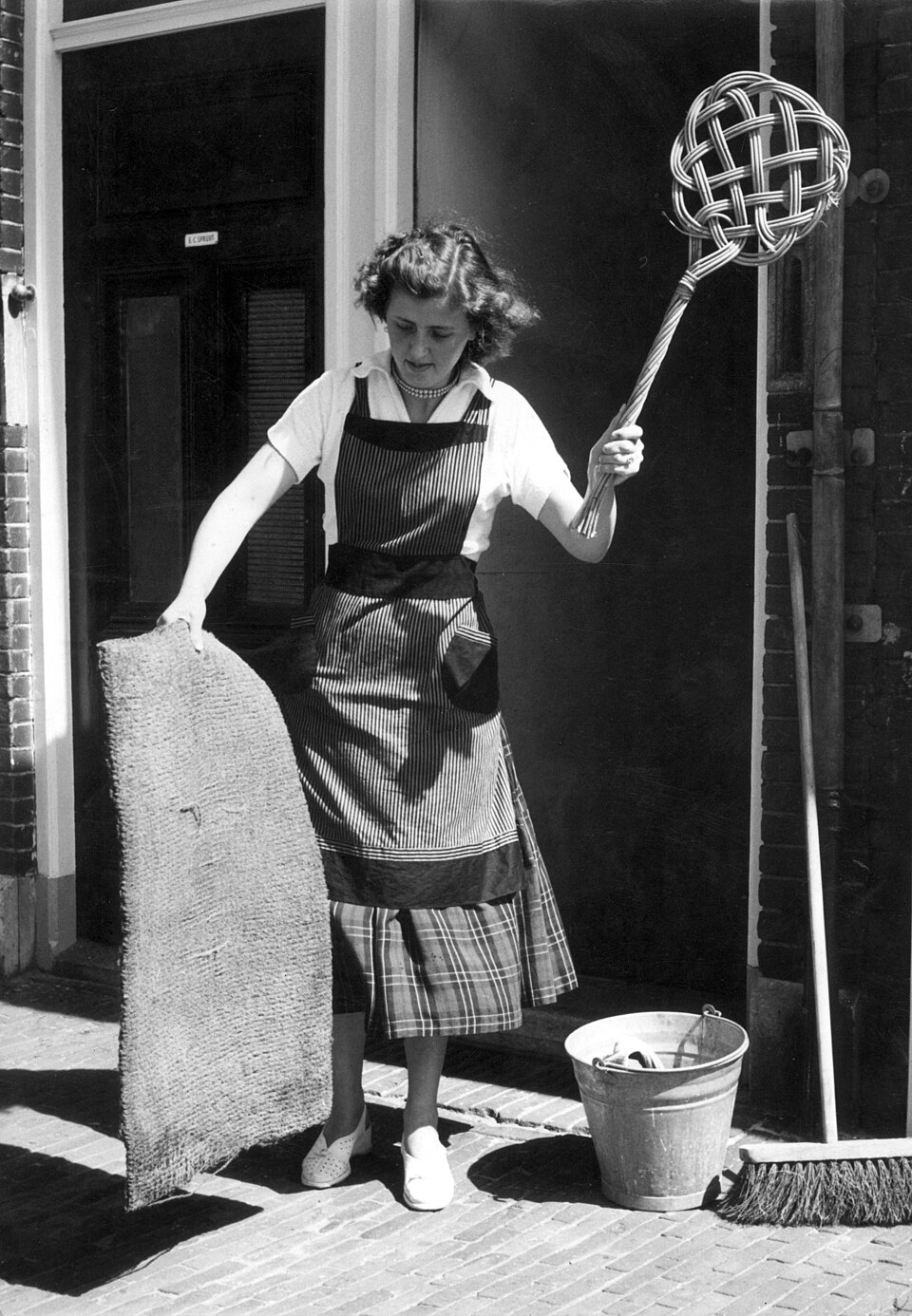
Carrying a room-sized wool rug out of a house, getting it over a line without dragging it on the ground, and then striking it several hundred times with a stick is genuinely hard physical labour. It is done standing, with both arms, in a cloud of the dust you are removing, in whatever weather there is.
It was overwhelmingly done by women, and in households that employed help it was done by the lowest-paid person available. It was part of a spring cleaning regime that in a great many American households meant stripping a house to its boards over a week or more – rugs out and beaten, curtains down and washed, walls wiped, windows done, mattresses turned and aired, everything moved.
So when the vacuum cleaner is described as a labour-saving device, it is worth being specific about whose labour was being saved and how much of it. This was not a minor convenience. It removed one of the heaviest recurring tasks in the domestic year.
Wall-to-Wall Changed the Arithmetic
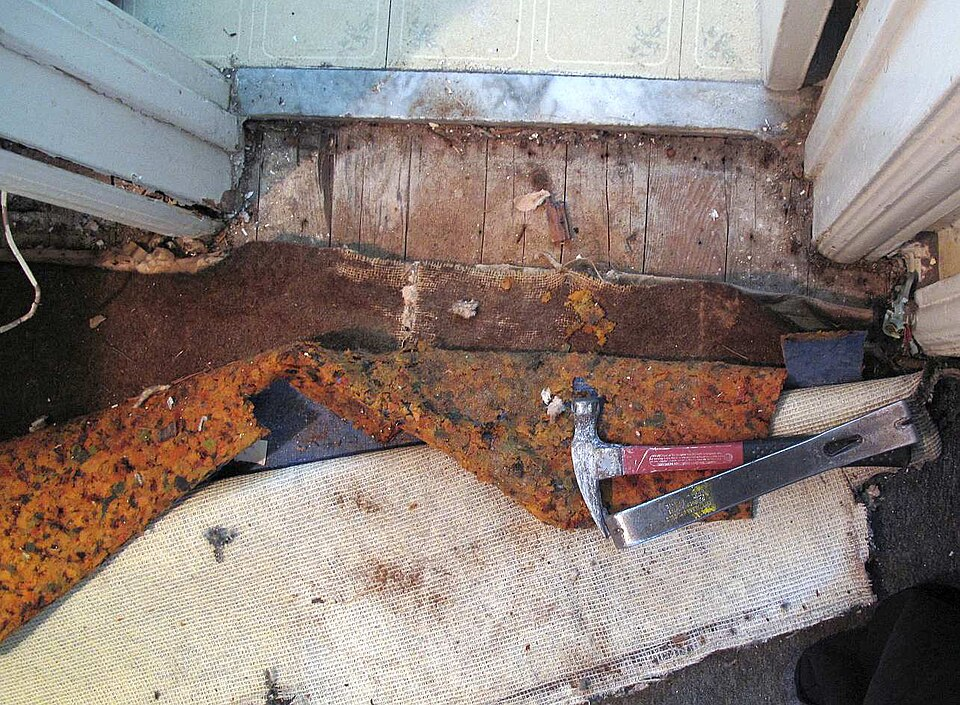
The spread of fitted carpet through American homes across the middle of the twentieth century was driven by cost. Tufting had made carpet cheap enough to cover a whole floor, which had never been true of woven carpet, and a continuous soft floor was warmer, quieter and read as a significant upgrade in comfort and status.
It also eliminated the possibility of removal. A carpet stretched over padding and fixed at the edges across an entire room is not coming up for cleaning. There is no version of taking it outside.
Which converts the vacuum cleaner from a convenience into a requirement. A household with loose rugs and no vacuum can keep its floors acceptably clean with a broom and a beater. A household with wall-to-wall carpet and no vacuum has no method at all – there is nothing to shake, nothing to hang, and a broom on a deep pile accomplishes very little.
That is the dependency at the centre of this, and it runs the opposite way to how the story is usually told. The vacuum cleaner did not kill the carpet beater by being better at the same job. The new kind of floor killed the beater, and in doing so made the vacuum cleaner something every household had to own.
And Then Carpet Created Problems of Its Own
The consequences continued, and the later ones were not anticipated.
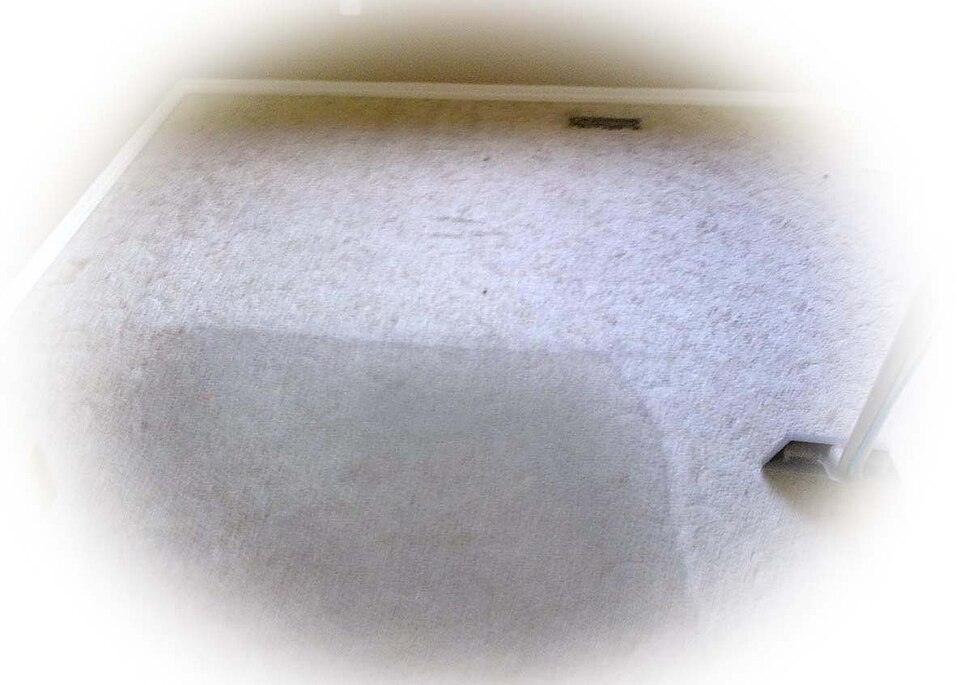
A fitted carpet accumulates everything that enters a house and holds it in place: grit, dust, hair, food, spills, whatever comes in on shoes. A loose rug can be removed and treated or replaced; a fixed carpet has to be cleaned in place, repeatedly, and eventually replaced entirely at considerable expense and disruption.
Carpet also made deep cleaning a specialist service rather than a household task, which is a whole industry that exists because floor coverings stopped being portable. And it created a long-running argument about whether soft fixed flooring is a good idea in rooms where food is eaten or where anybody in the household is sensitive to household dust – an argument this piece will not attempt to settle, since it depends on the household, the carpet and current guidance rather than on anything in a nostalgia article.
What is observable is the swing. Fitted carpet spread almost universally through American houses and then receded substantially, as hard flooring – wood, laminate, engineered board, tile, vinyl plank – came back into fashion and into price range, frequently with loose rugs laid over it.
Which is, in layout terms, approximately where things stood before wall-to-wall arrived.
The Rug Came Back and the Beater Did Not
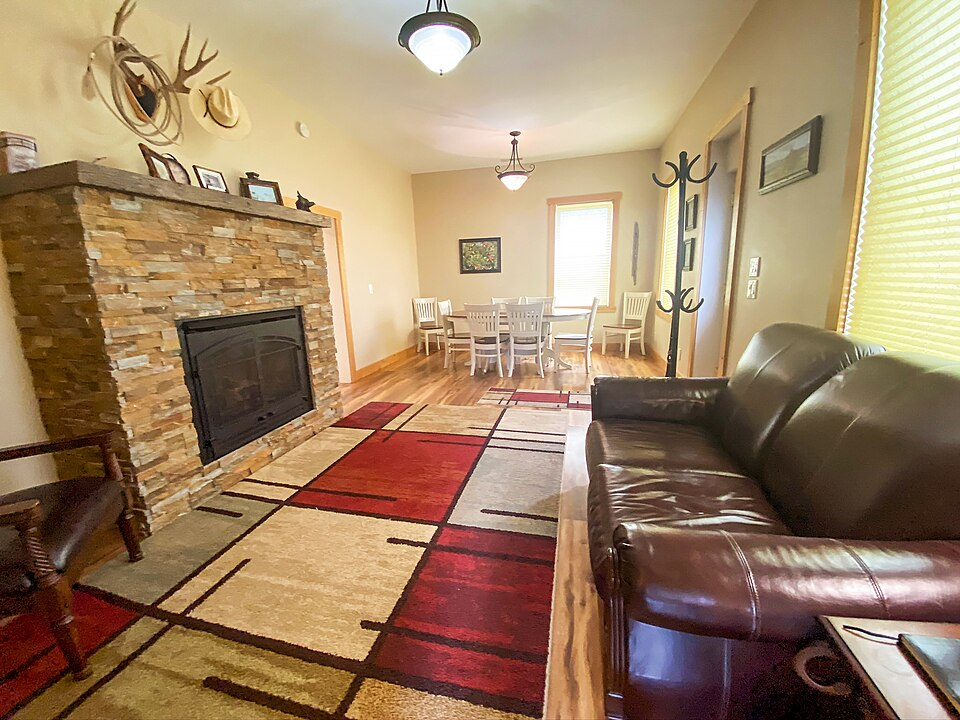
So the modern floor in a great many American houses looks structurally like a 1920s floor: a hard surface with discrete rugs placed on it.
The difference is that nobody takes the rugs outside. They get vacuumed in place, or sent out to be cleaned, or thrown away and replaced, because they are frequently cheap enough that replacement is rational and because nobody owns a beater or a line to hang one on.
The equipment went completely. Carpet beaters survive as decorative objects, as kitchen-wall ornaments in rustic interiors, and occasionally as mystery items in antique shops where somebody has labelled them agricultural implements. The clothesline that was half the system has gone the same way, since a rug needs something strong to hang over and a retractable line in a small yard will not do it.
And the seasonal rhythm went with them. Spring cleaning as a week-long dismantling of a house, with the rugs out in the yard as its most visible stage, has no modern equivalent – not because houses are cleaner but because the cleaning is distributed through the year by a machine instead of concentrated into an annual campaign.
One Object, Two Reversals
The carpet beater is a neat illustration of how household technology actually moves, which is rarely in a straight line.
Reversal one: the tool did not lose a competition. It was made unusable by a change in the surface it was designed to clean, and the machine that replaced it became compulsory as a direct result. The vacuum cleaner’s universality in American homes is downstream of fitted carpet, not merely of its own merits.
Reversal two: the floor covering that caused all of this has substantially retreated. Hard floors with loose rugs are back, which means the physical conditions that made beating possible largely exist again – and the practice is never coming back, because the machine is genuinely more pleasant and the rugs are cheap.
So the stick on the wall of somebody’s kitchen is not a relic of a cruder era of cleaning. It is a piece of evidence that the way a house is cleaned depends less on the available tools than on what the floor is made of.
Like our content? Follow us for more.