Every Olympic marathon produces drama. Only one has produced farce on this scale. The marathon held at the 1904 Games in St. Louis — staged alongside the World’s Fair, on dirt roads, in punishing summer heat — went so comprehensively wrong that officials afterward discussed dropping the event from the Olympic program entirely. It featured a man who completed most of the course by automobile and was nearly awarded the gold, a competitor who stopped mid-race for a nap and still beat most of the field, a runner chased a mile off course by dogs, and an eventual winner who finished in a state so alarming that his own handlers were essentially holding him upright.
More than a century later, the 1904 marathon endures as the most gloriously chaotic event in Olympic history. But the comedy has a serious core: nearly everything that went wrong flowed from decisions made by the organizers, and the race is remembered by historians less as a funny anecdote than as a case study in how not to run an athletic event. Here is how it happened.
A Race Designed to Go Badly
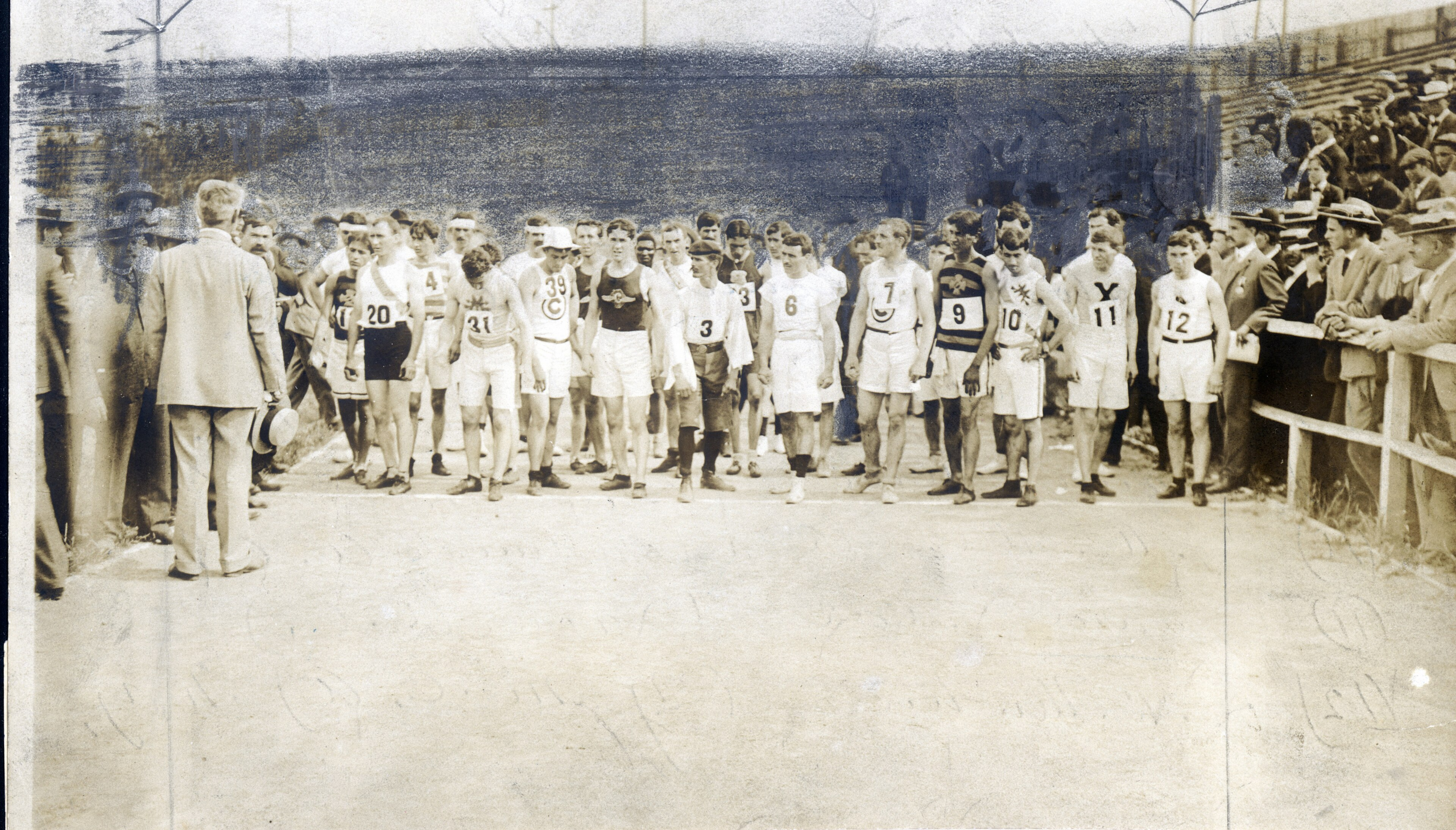
Start with the conditions, because they explain most of what followed. The marathon was held on a scorching afternoon in late August, with the temperature well up in the nineties and the race starting in the heat of the day rather than the cool of the morning. The course ran over rough country roads, unpaved and thick with dust, across a series of punishing hills.
Then came the decision that turned discomfort into danger. Officials accompanied the runners in automobiles — early, dust-throwing machines that churned the dirt roads into choking clouds directly in the athletes’ faces for the entire distance. And water was deliberately scarce: the race organizer was interested in the effects of dehydration on the human body, and the course was equipped with only minimal water along the route. Runners were therefore asked to race a marathon, in extreme heat, over dusty hills, while breathing exhaust and grit, with almost nothing to drink. Of 32 starters, only 14 would finish, and several of those who dropped out did so in truly serious condition. One runner suffered severe internal distress and required medical attention; the accompanying vehicles produced at least one crash of their own when officials ran a car into a ditch.
Like our content? Follow us for more.
The Man Who Rode
The most famous incident belongs to Fred Lorz, an American runner who worked as a bricklayer and trained at night. Around nine miles in, Lorz was overtaken by cramps and stopped running. His day, in any reasonable telling, was over — and he climbed into a passing automobile to get back to the stadium.
The car carried him roughly eleven miles along the course, and Lorz, by all accounts, enjoyed the ride, waving cheerfully at spectators as he passed. Then the car broke down. Lorz, now rested and feeling substantially better, hopped out and jogged the remaining distance to the stadium — and ran into a crowd that had been waiting for hours and had no idea he had ever stopped. He entered the arena to a roar, circled the track, and crossed the finish line first, in a time of a little over three hours.
He was, briefly, the Olympic champion. Preparations began to present him the honors, with the president’s daughter, Alice Roosevelt, on hand for the occasion. Then someone in the crowd who had witnessed the car ride raised an objection, the truth came out, and the cheers turned to boos. Lorz insisted he had never intended to accept the victory and had finished only as a joke. Officials were unamused and banned him — though the ban was lifted in time for him to win the Boston Marathon the following year, an outcome that says something about how seriously the whole affair was ultimately taken.
The Winner Who Had to Be Held Up
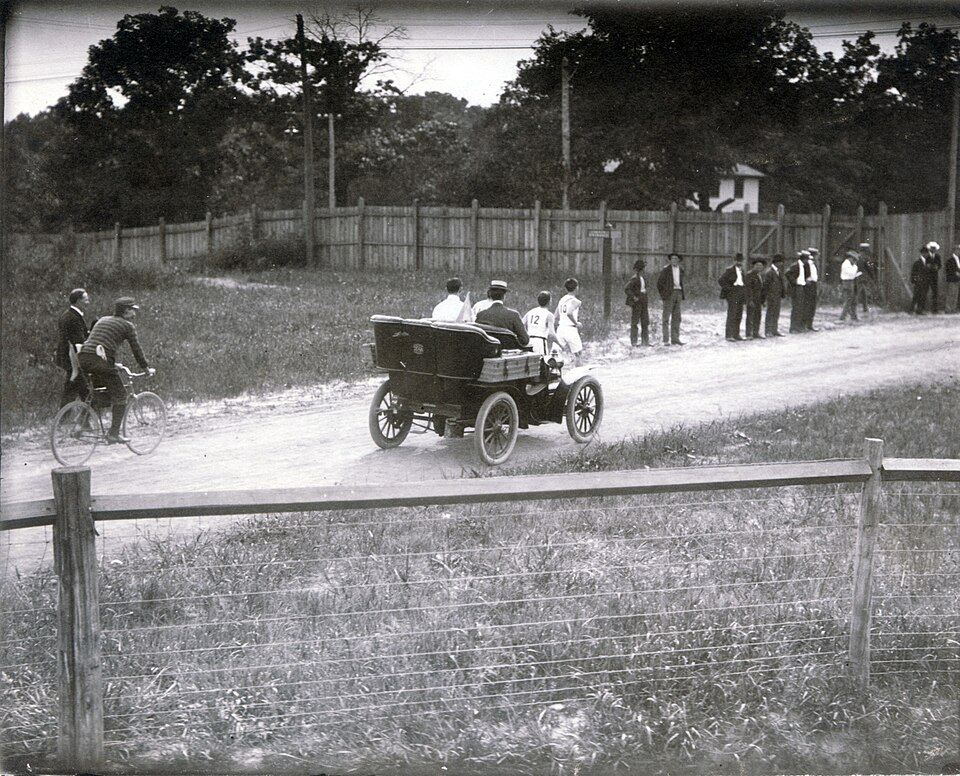
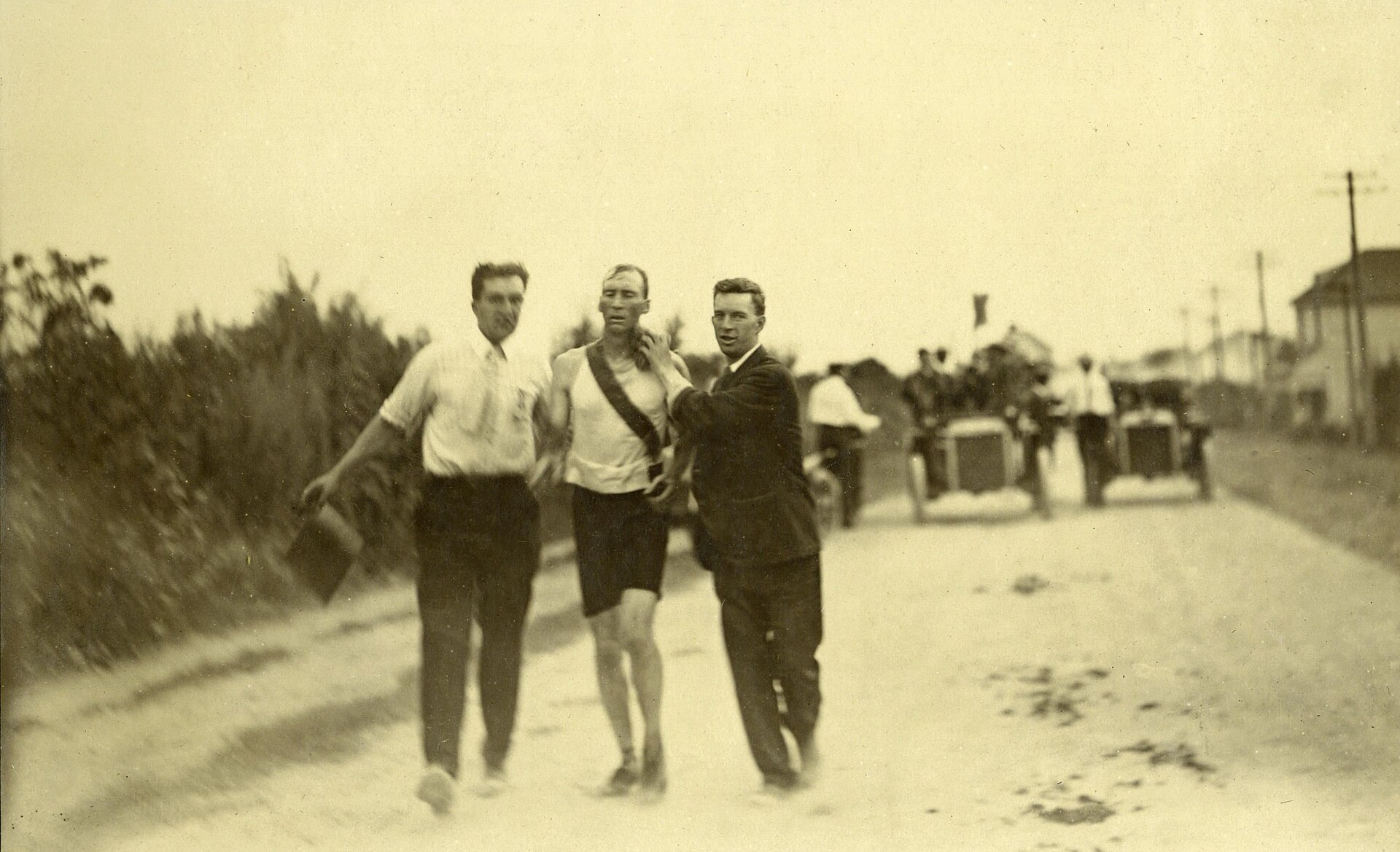
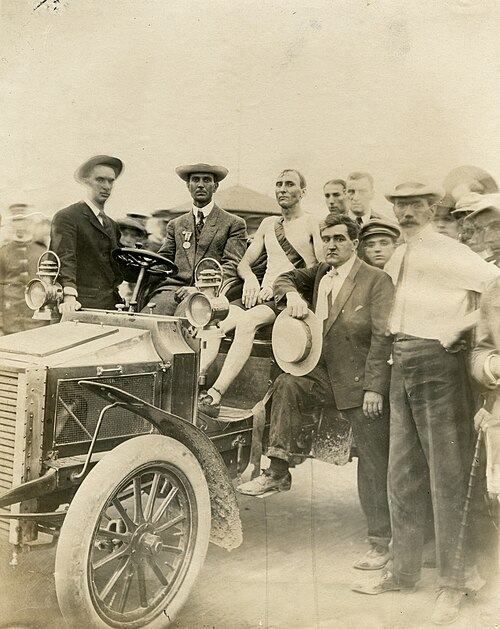
With Lorz disqualified, the actual victory went to Thomas Hicks, an American who had been running a truly strong race and was leading by a substantial margin with ten miles to go. He was also falling apart. Hicks begged his handlers to let him stop and lie down, and they refused.
What his team did instead would end any modern athlete’s career on the spot. Over the closing miles, Hicks’s trainers repeatedly administered small doses of strychnine — at the time a common stimulant in tiny quantities, and otherwise a rat poison — mixed with egg whites and, later, brandy. They also poured warm water over him. The effect was to keep him moving while his body shut down: contemporary accounts describe him turning ashen and glassy-eyed, hallucinating that he still had many miles to run, his legs dragging while handlers supported him under both arms. A race official who witnessed it wrote that over the final stretch Hicks was running mechanically, like a machine rather than a man.
He crossed the line in roughly three hours and twenty-nine minutes — still the slowest winning time in Olympic marathon history — essentially held up by his trainers, and was carried off to receive medical attention. He recovered, but he never ran a marathon again. Under modern rules he would have been disqualified several times over for the assistance he received; in 1904, none of it was against the rules, because the rules had not yet imagined it.
The Napping Postman and the Dog Chase
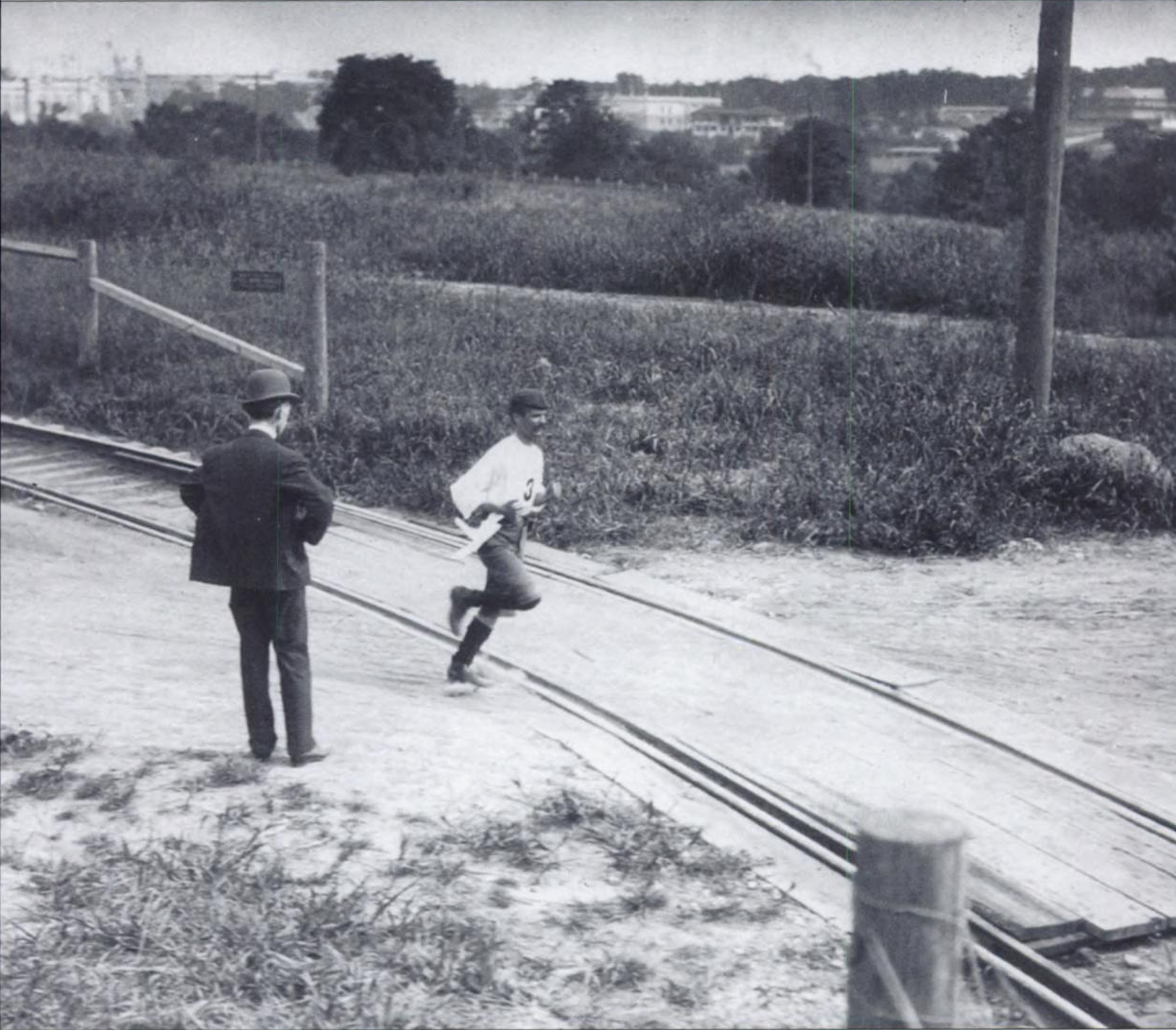
The supporting cast is what elevates the race from disaster to legend. Félix Carvajal was a Cuban postman who had raised his own travel money to compete, then reportedly lost it gambling in New Orleans and made his way to St. Louis by hitchhiking. He arrived at the start line in ordinary street clothes — long trousers, a long-sleeved shirt, heavy shoes — and another competitor took scissors to his trousers to cut them off at the knee so he could run.
Carvajal then ran one of the most relaxed marathons ever recorded. He chatted with spectators along the route in broken English. He asked a passing car’s occupants for some of the peaches they were eating. Hungry later, he detoured into an orchard and ate apples that turned out to be in poor condition, developed stomach cramps, lay down at the side of the road, and took a nap. He then got up, resumed running, and finished fourth. Had he skipped the apples, he might well have medaled.
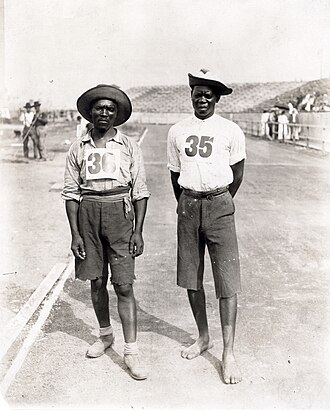
The race also produced a real milestone, and a mishap to go with it. Two Tswana men from South Africa, Len Taunyane and Jan Mashiani, competed in the marathon — the first Black Africans to compete in the modern Olympics. They were in St. Louis in connection with a World’s Fair exhibit rather than as part of a national team, a reflection of the era’s treatment of the people it put on display. Taunyane ran an excellent race and was in contention for a high placing when he was chased roughly a mile off the course by a pack of dogs. He still finished ninth — a result that, given the detour, the conditions, and the circumstances that brought him there, is one of the more remarkable performances of the day.
The Race That Nearly Killed the Marathon
The aftermath was appropriately grim for the organizers. The event had been so shambolic and so hazardous that officials seriously questioned whether the marathon belonged in the Games at all, with the Games’ director declaring the distance indefensible on any grounds except its history. The marathon survived, obviously — it is one of a handful of athletics events held at every modern Summer Olympics — but it survived with lessons attached.
Nearly every element of modern marathon organization exists as a response to the kind of failures on display that day: sealed and controlled courses, races started in cool hours, abundant water and aid stations, medical staff on hand, strict rules against outside assistance, and a firm prohibition on the sort of chemical help Hicks received. The 1904 race stands as the sport’s cautionary origin story, the demonstration of what happens when a grueling endurance event is run without any of the safeguards now taken for granted.
Why It Still Delights
More than 120 years on, the 1904 Olympic marathon endures as one of the great true stories in sport, retold constantly because every element sounds invented. A man drove most of the course and nearly took the gold. The winner was chemically propped up and half-carried across the line. A postman in cut-off trousers napped mid-race and still beat 10 of the 13 other finishers. A competitor was routed by dogs and placed ninth anyway.
But the affection the story attracts comes from somewhere real: these were people attempting something extraordinarily hard under conditions that were frankly indefensible, and the ones who finished did so through sheer stubbornness. Carvajal crossed an ocean and hitchhiked across a country to run in his street clothes. Taunyane ran a mile of unplanned detour and still came ninth. Hicks refused to stop when stopping was the sensible thing to do. The race was a fiasco of organization and a testament to the competitors, which is exactly the combination that makes a story last. The Olympics have staged far better marathons since. They have never staged a more entertaining one.
Like our content? Follow us for more.