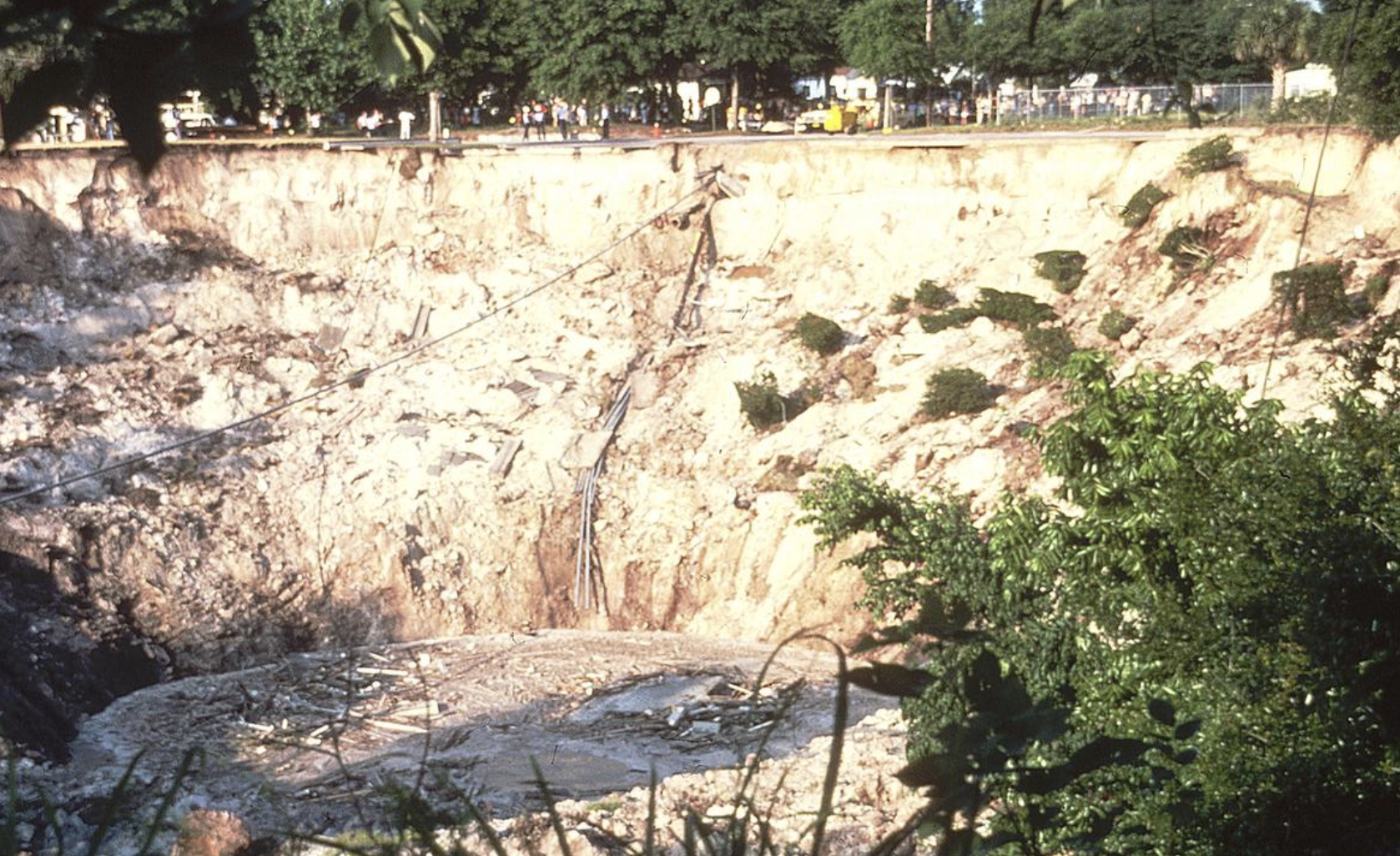
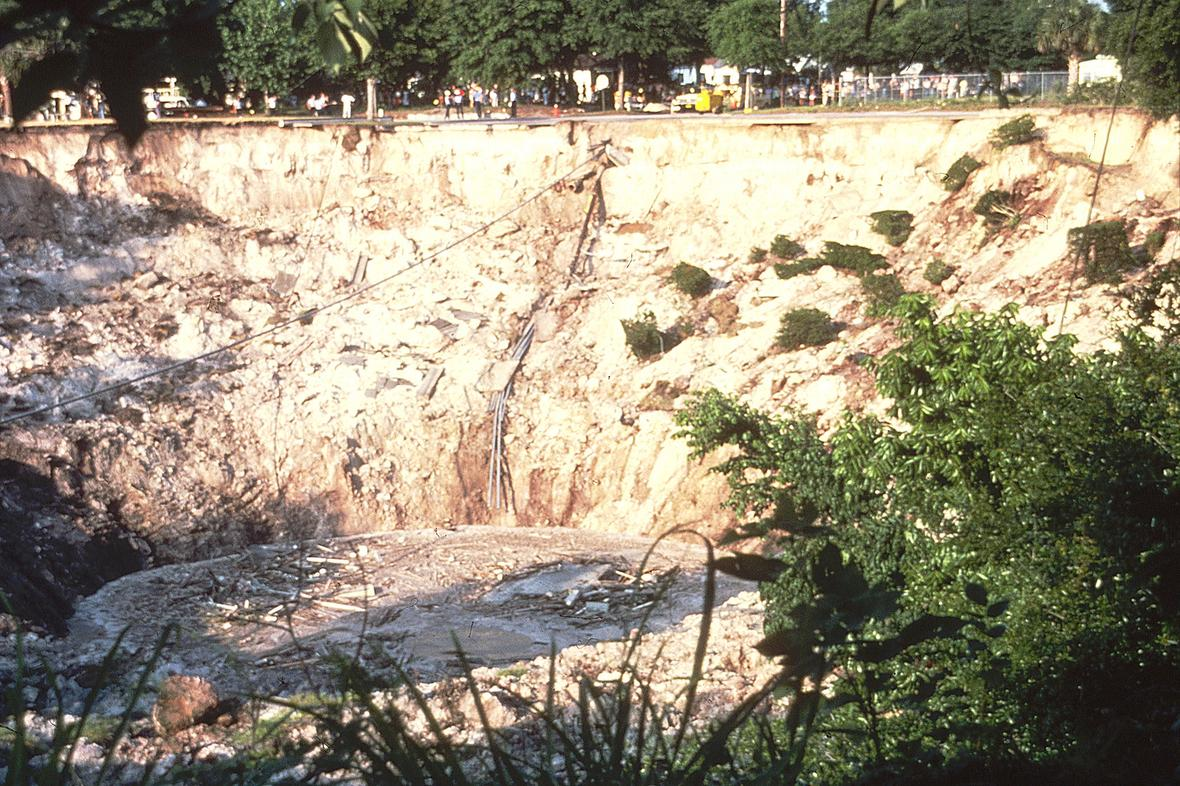
On the evening of May 8, 1981, Mae Rose Williams heard a sound “like giant beavers chewing” outside her Winter Park, Florida home. Within 48 hours, a 350-foot-wide, 75-foot-deep sinkhole had swallowed her house, a Porsche dealership’s inventory, half a city pool, and chunks of two streets. It became the largest natural sinkhole event ever documented. Here’s the actual story.
In May 1981, the world was paying attention to other things. Ronald Reagan had been shot six weeks earlier and was recovering. Pope John Paul II had been shot in Vatican City just five days before. The first Space Shuttle launch had occurred a few weeks prior. MTV was about to launch in August. The world was busy with major news.
Then, on the evening of May 8, 1981, in a residential neighborhood in Winter Park, Florida — a small affluent suburb of Orlando — something very different began. Mae Rose Williams, a Winter Park resident living near the intersection of South Denning Drive and West Fairbanks Avenue, heard an unusual sound outside her house. A 40-year-old sycamore tree near her home suddenly fell into what appeared to be a hole that hadn’t existed before. Within hours, the hole began to expand visibly.
Over the next 48 hours, the hole would grow to 350 feet wide and 75 feet deep. It would swallow Williams’s three-bedroom home. It would consume five Porsches at a nearby repair shop. It would eat a pickup truck with a camper top, half of a city Olympic-size swimming pool, sections of two streets, and approximately 250,000 cubic yards of earth. Florida engineers later described it as “the largest sinkhole event witnessed by man as a result of natural geological reasons or conditions.”
Today, that sinkhole is Lake Rose — named in honor of Mae Rose Williams. The lake is now surrounded by busy shops, restaurants, and condominiums. Most people walking past it have no idea what’s underneath. Here’s what actually happened during those 48 hours in May 1981.
1: The geology that made it inevitable
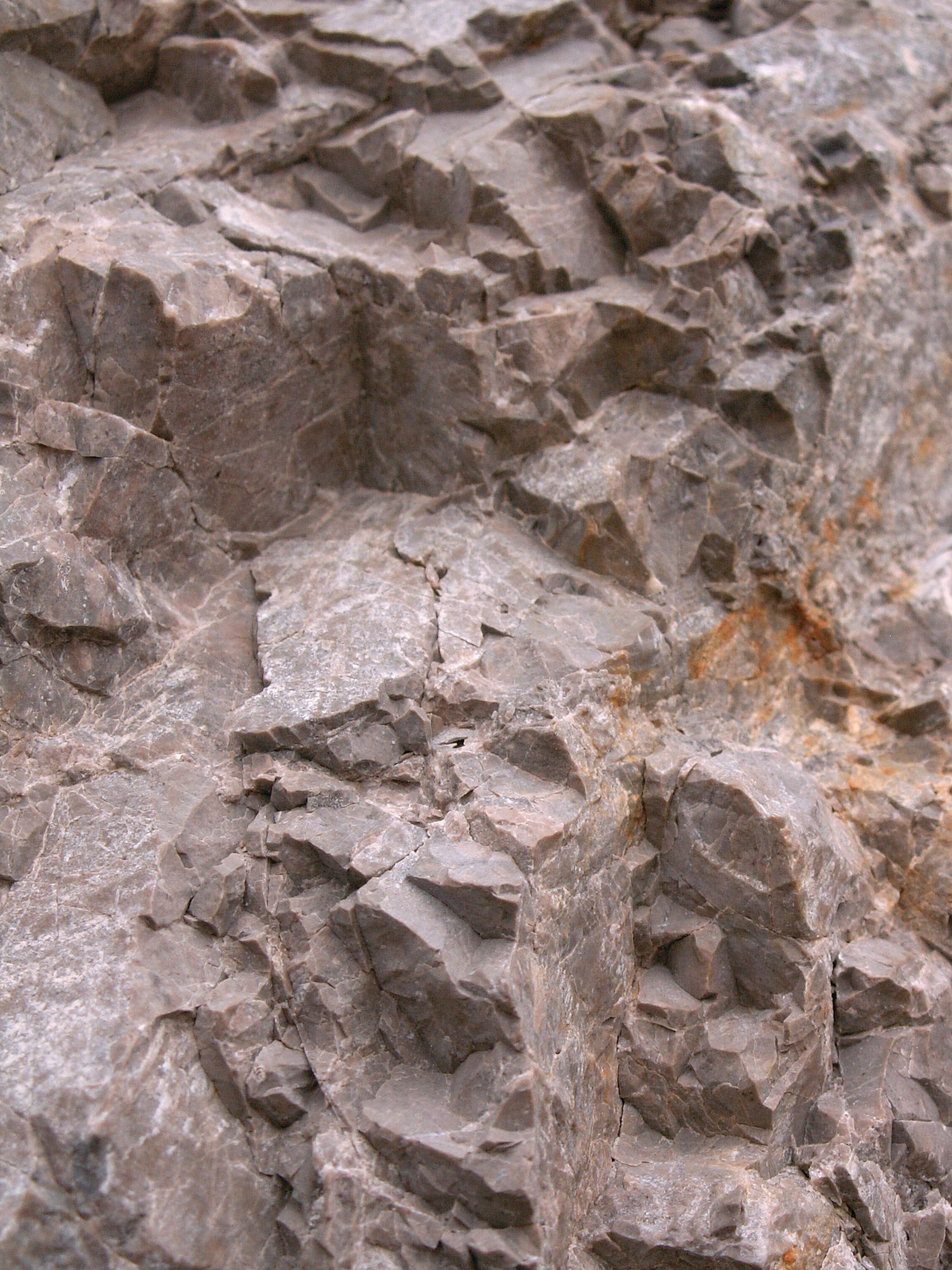
Florida sits on a foundation of limestone and dolomite — sedimentary rocks that are easily dissolved by water. This geological feature is called “karst terrain.” Across most of central Florida, slightly acidic rainwater (which becomes acidic by absorbing carbon dioxide from the atmosphere) percolates down through soil and into the underlying limestone. Over thousands of years, the water dissolves channels and cavities in the rock.
The result is a landscape that’s geologically unstable in a specific way. Florida has thousands of lakes — many of them perfectly circular, because they were formed when sinkholes opened, then filled with water. The Florida lake system that tourists associate with the state’s beauty is largely a sinkhole landscape that happened to fill with water rather than being maintained as ground.
Most Florida sinkholes are small and rural. They occur slowly enough that homeowners can sometimes notice the warning signs — small depressions, cracking in walls, dying vegetation patches — and address the issue before catastrophic collapse. Most of the time, when sinkholes do occur, they’re contained, predictable, and manageable.
The Winter Park sinkhole in 1981 was none of those things.
2: The Floridian aquifer — and the drought that lowered it
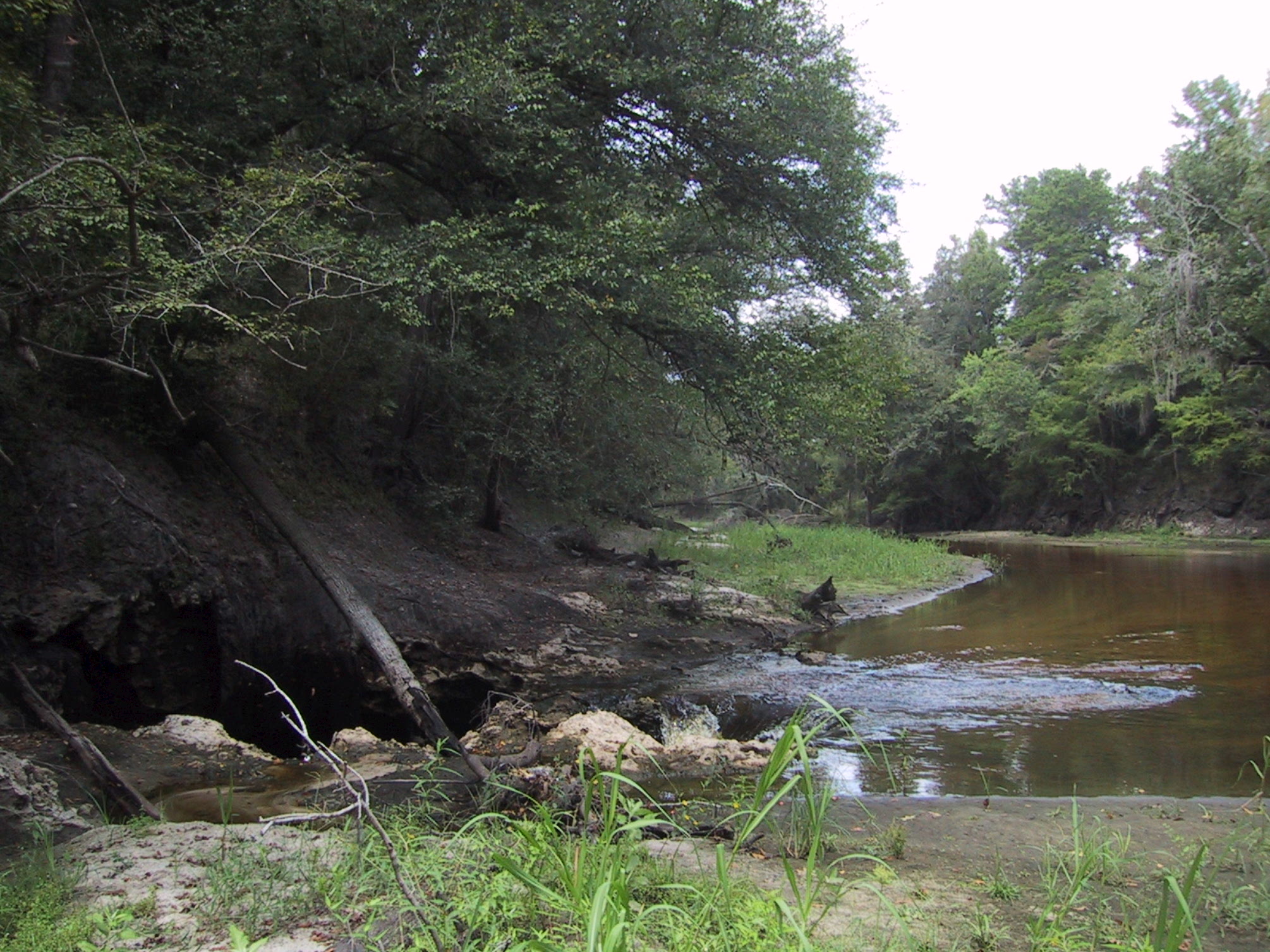
The 1981 Winter Park sinkhole occurred during a period when groundwater levels in the Floridan aquifer were relatively low. Subsequent geological research suggested that the lowered groundwater levels may have played a role in the collapse — water in underground caverns provides structural support for the soil and rock above. When water levels drop, that support diminishes, and previously stable terrain can suddenly become unstable.
The Floridan aquifer is one of the world’s most productive aquifers, providing drinking water to most of Florida and parts of Georgia and Alabama. It also extends through the limestone layers where sinkhole-forming dissolution occurs. The connection between aquifer levels and sinkhole risk has been studied extensively since the 1981 event — partly because the Winter Park collapse provided unprecedented data about what happens when these geological forces converge.
3: Friday evening, May 8, 1981
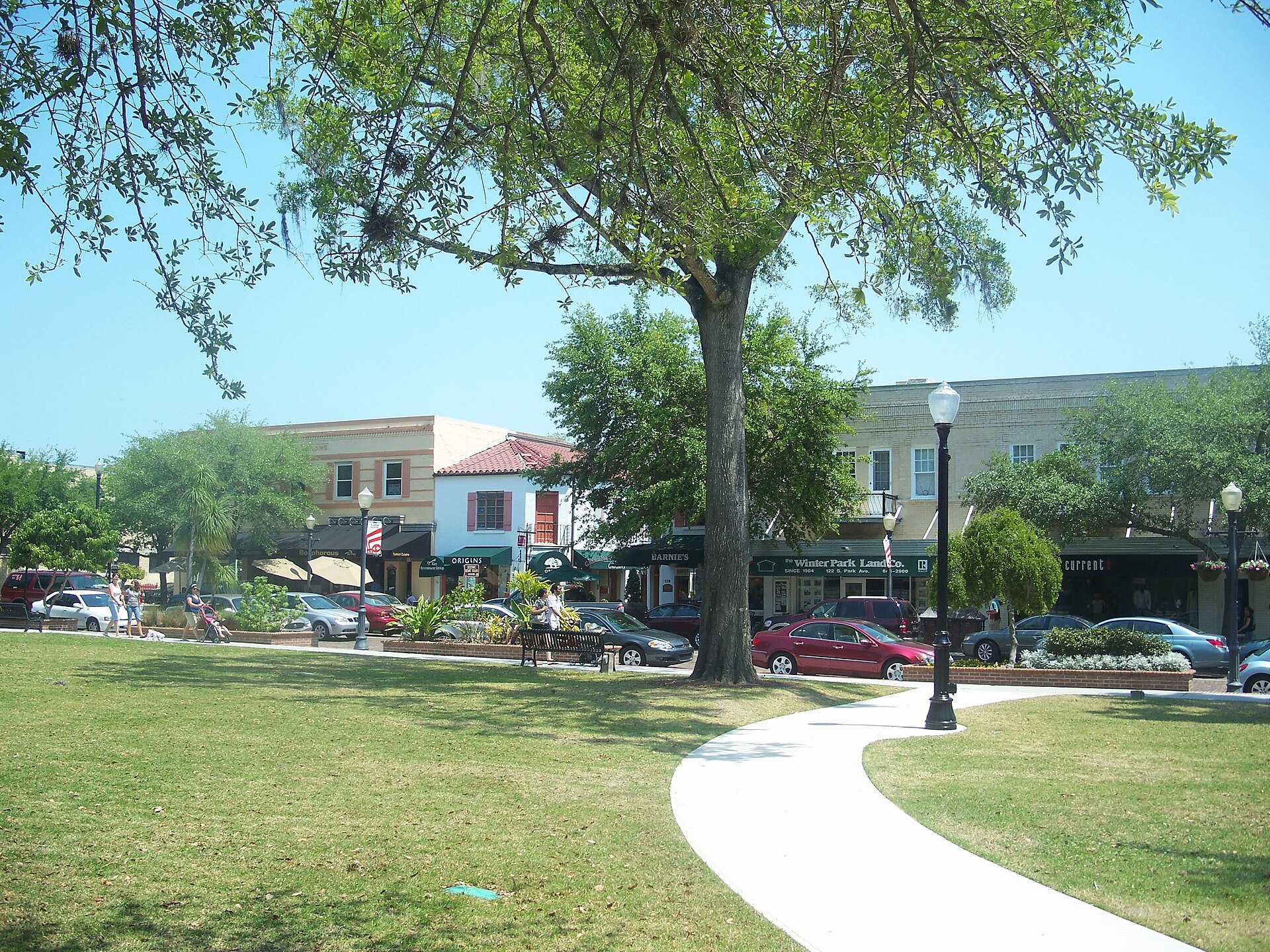
The first sign that something was wrong came on the evening of Friday, May 8, 1981. Mae Rose Williams (also known as Mae Rose Owens before remarriage) lived in a three-bedroom home near the intersection of South Denning Drive and West Fairbanks Avenue in Winter Park. The neighborhood was residential, with the Williams home near a Porsche repair shop, a community swimming pool, and various small businesses.
According to subsequent reporting and interviews, Williams heard a “swoosh” sound late Friday night. She went outside to investigate and saw a 40-year-old sycamore tree near her house begin to settle and fall into what appeared to be a depression that hadn’t existed before. The hole at that point was relatively small — perhaps 10-15 feet across.
Williams had no way to know what would happen next. Sinkholes were known phenomena in Florida, but typical sinkholes tended to stabilize at modest sizes. There was no reason to expect what occurred over the following 48 hours.
4: Saturday morning — “like giant beavers chewing”

By the morning of Saturday, May 9, 1981, the hole had expanded to approximately 40 feet wide. In a subsequent interview with the Orlando Sentinel, Williams described the sound she heard as the sun rose: “like giant beavers chewing.” The hole was visibly devouring more of her property in real time.
The sound was the result of soil, vegetation, and structural elements collapsing into the void below. Each collapse triggered additional collapses as support was removed from surrounding earth. The process was accelerating rather than stabilizing — the opposite of how typical sinkholes behave.
By noon on Saturday, Williams realized her home was slipping into the expanding sinkhole. She and her family evacuated, removing what belongings they could. By afternoon, her three-bedroom home was tilting visibly. Within a few more hours, the house was on its way down into the hole’s center, headed to depths nobody could yet measure.
5: The Porsches and the swimming pool
The Williams home was not the only structure affected. Nearby was Hannibal’s Porsche, a high-end automotive repair shop. As the sinkhole expanded, it began undermining the shop. Five Porsche automobiles — luxury cars valued in 1981 dollars at substantial sums — fell into the sinkhole. News reports at the time focused heavily on the destruction of these expensive vehicles, partly because the Porsches were more visually striking than the destruction of Williams’s home.
A pickup truck with a camper top also fell into the sinkhole. So did the deep end of the Olympic-size swimming pool at the Winter Park municipal pool complex. City employees were able to rescue toilets and other plumbing fixtures from the pool’s bathhouse before they were swallowed, but the actual pool — with its concrete structure and substantial water content — fell into the expanding hole.
The cascade was not gentle. Each major structural element falling into the sinkhole displaced air and water in ways that made surrounding terrain less stable. The pool’s collapse, for example, briefly increased sinkhole activity as the water content acted as lubrication for further soil movement.
6: The size that broke records
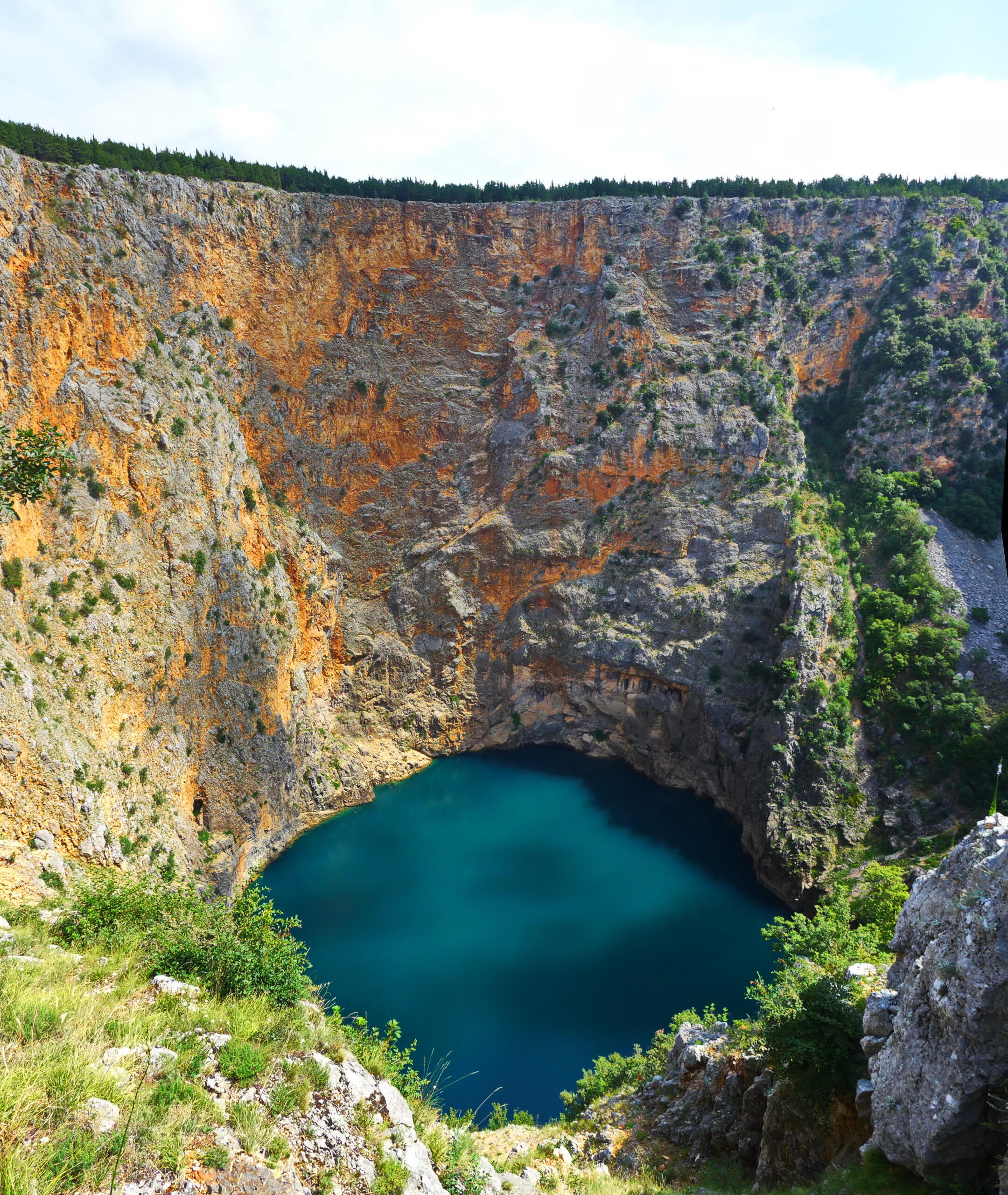
By May 9, the sinkhole had stabilized at approximately 320-350 feet (98-107 meters) in diameter and 75-90 feet (23-27 meters) deep. Approximately 250,000 cubic yards (190,000 cubic meters) of earth had fallen into the void.
Florida engineers, examining the data subsequently, classified the Winter Park event as “the largest sinkhole event witnessed by man as a result of natural geological reasons or conditions.” The classification was based on study of approximately 2,000 documented sinkholes over more than 40 years. Local engineering firm Ardaman & Associates confirmed the assessment.
The sinkhole remains the largest documented sudden natural sinkhole event in modern times. Other large sinkholes have occurred subsequently, but most have been related to mining operations, water main failures, or other human-caused factors. The 1981 Winter Park event was purely natural — the cumulative result of thousands of years of limestone dissolution, low groundwater levels, and probabilistic timing.
7: The damage estimate

Initial damage estimates ranged from $2 million to $4 million in 1981 dollars. In modern dollars (adjusted for inflation), that translates to approximately $7 million to $14 million.
The damage included:
- Williams’s three-bedroom home (lost completely)
- Five Porsche automobiles (most lost)
- One pickup truck with camper trailer
- The deep end of the Olympic-size municipal swimming pool
- Significant portions of South Denning Drive
- Portions of West Fairbanks Avenue
- The Porsche repair shop (substantially damaged)
- Various nearby business properties (foundation damage)
The community mounted a relief effort for Williams. Approximately $50,000 was raised to help her purchase land and rebuild. The municipal pool was eventually rebuilt at a different location.
8: The carnival that emerged
Within days of the sinkhole’s appearance, Winter Park became an unexpected tourist destination. Crowds gathered to view the still-active hole. Vendors began selling food, balloons, and t-shirts to visitors. The atmosphere has been described in subsequent reporting as “carnival-like.”
Recognizing the moment, the city of Winter Park began selling sinkhole photographs to the public starting July 9, 1981 — both to educate the community about sinkholes and to capitalize on tourism interest. The photographs raised modest revenue and helped pay for some of the cleanup costs.
The geological community took the event very seriously. Geologists and naturalists from around the world traveled to Winter Park to study the sinkhole directly. The event produced substantial subsequent research on sinkhole formation, prediction, and mitigation that continues to inform how Florida and other karst-terrain regions manage similar risks.
9: The engineer who studied the sinkhole
Jim Jammal, an engineer with the City of Winter Park, was assigned to study the sinkhole and lead the engineering response. Jammal’s work became foundational to modern Florida sinkhole engineering. His firm, Jammal & Associates, produced “The Winter Park Sinkhole: A Report to the City of Winter Park” in 1982 — a document that influenced subsequent Florida sinkhole regulation, building codes, and insurance requirements.
Jammal’s daughter Leila Jammal subsequently became an engineer herself, founding her own engineering firm. She has spoken publicly about her father’s work on the Winter Park sinkhole, describing it as both a moment of professional accomplishment and a deeply human moment of trying to reassure terrified residents about a phenomenon nobody fully understood.
The Winter Park event drove substantial improvements in Florida sinkhole science. Insurance industry responses, building code changes, and engineering practices all benefited from the data the 1981 event produced.
10: The stabilization and the formation of Lake Rose
After the sinkhole stopped actively expanding (within roughly 48 hours of initial collapse), engineers faced the challenge of stabilization. The sinkhole could not simply be filled with random fill material — additional collapses or settlement could occur if the void wasn’t addressed properly.
The engineering solution: filling the bottom with a combination of dirt and concrete. The concrete provided structural stability for the bottom of the void. The dirt above filled remaining space and allowed for water accumulation as the sinkhole gradually filled.
The sinkhole began filling with water in summer 1981. The water came partly from rainfall, partly from the surrounding water table. By mid-summer, the sinkhole had become a lake. On July 19, 1981, the water level suddenly dropped by 15-20 feet — a brief reminder that even stabilized sinkholes can still experience movement. The water levels stabilized by late summer.
The newly formed lake was named Lake Rose in honor of Mae Rose Williams, whose home had been swallowed at the start. Workers were able to recover four of the six vehicles that had fallen — the camper trailer (whose owner was able to drive it away after recovery), three of the five Porsches, and the pickup truck. Two Porsches and Williams’s home remain at the bottom of Lake Rose to this day.
11: The 1987 incident and beyond

In 1987, six years after the original sinkhole, Lake Rose experienced an unexpected event. The bottom of the lake suddenly dropped approximately 20 feet, causing erosion on the southern rim. The drop was a reminder that the area’s underlying geology had not been fully stabilized — the original concrete fill had not eliminated all subsurface voids.
The 1987 event was managed without significant damage to surrounding properties. The lake stabilized at a slightly lower level. Subsequent monitoring has not detected additional major events, though minor settlements have occurred.
Diver reports from 2009 suggested that Lake Rose has been used to dispose of unwanted vehicles over the years — meaning the bottom of the lake contains both the original 1981 vehicles and various subsequent additions. The lake bottom has not been comprehensively surveyed.
12: What Lake Rose looks like today
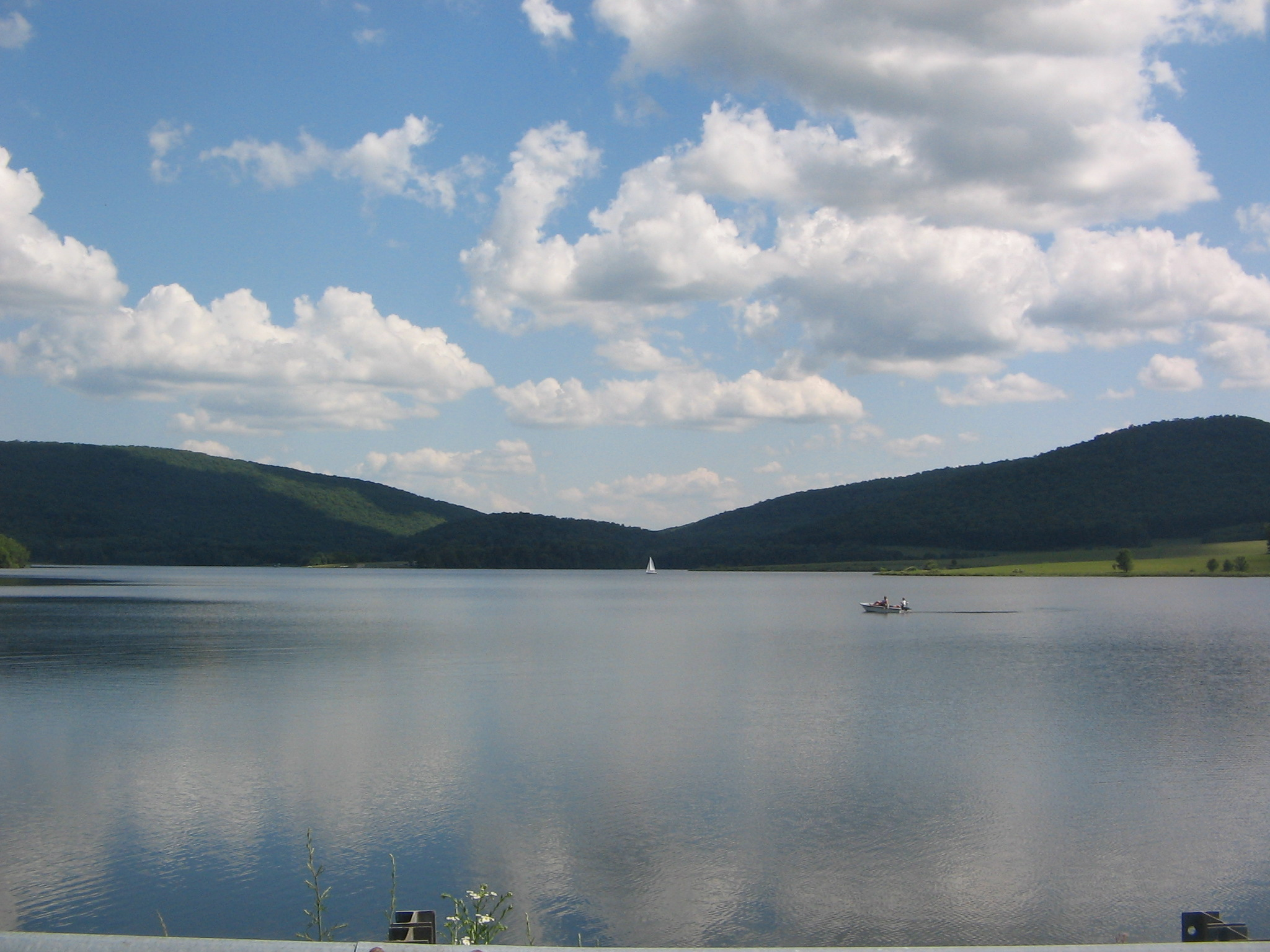
Today, Lake Rose is a small urban lake surrounded by Winter Park’s commercial district. The intersection of Fairbanks Avenue and South Denning Drive is now developed with shops, restaurants, condominiums, and office buildings. Austin’s Coffee Shop is one notable business currently located near the lake.
Most visitors walking past Lake Rose have no idea what’s underneath. The lake appears as a normal small Florida lake with vegetation, fish, and some wildlife. The connection to the 1981 sinkhole event is documented in local historical markers and Winter Park’s official history, but the visual experience of Lake Rose doesn’t communicate the dramatic event that created it.
Mae Rose Williams herself lived for many years after the 1981 event. The community fundraising helped her rebuild her home elsewhere in Winter Park. She passed away in 2009 at age 96. She was reportedly amused throughout her life by the lake bearing her name and by the sustained tourist interest in the sinkhole that destroyed her home.
13: What the Winter Park event teaches about Florida geology
The 1981 sinkhole remains, more than 44 years later, the most dramatic single sinkhole event in American history. The combination of urban setting, Olympic-size pool, luxury cars, and home destruction produced a story that captured national attention during a busy news month. The geological forces that produced the event remain present throughout Florida’s karst terrain — meaning similar events, while extremely rare, remain genuinely possible. Lake Rose stands as a monument to a moment when the ground beneath an American neighborhood simply gave way, and produced one of the most extraordinary geological events of the modern era.