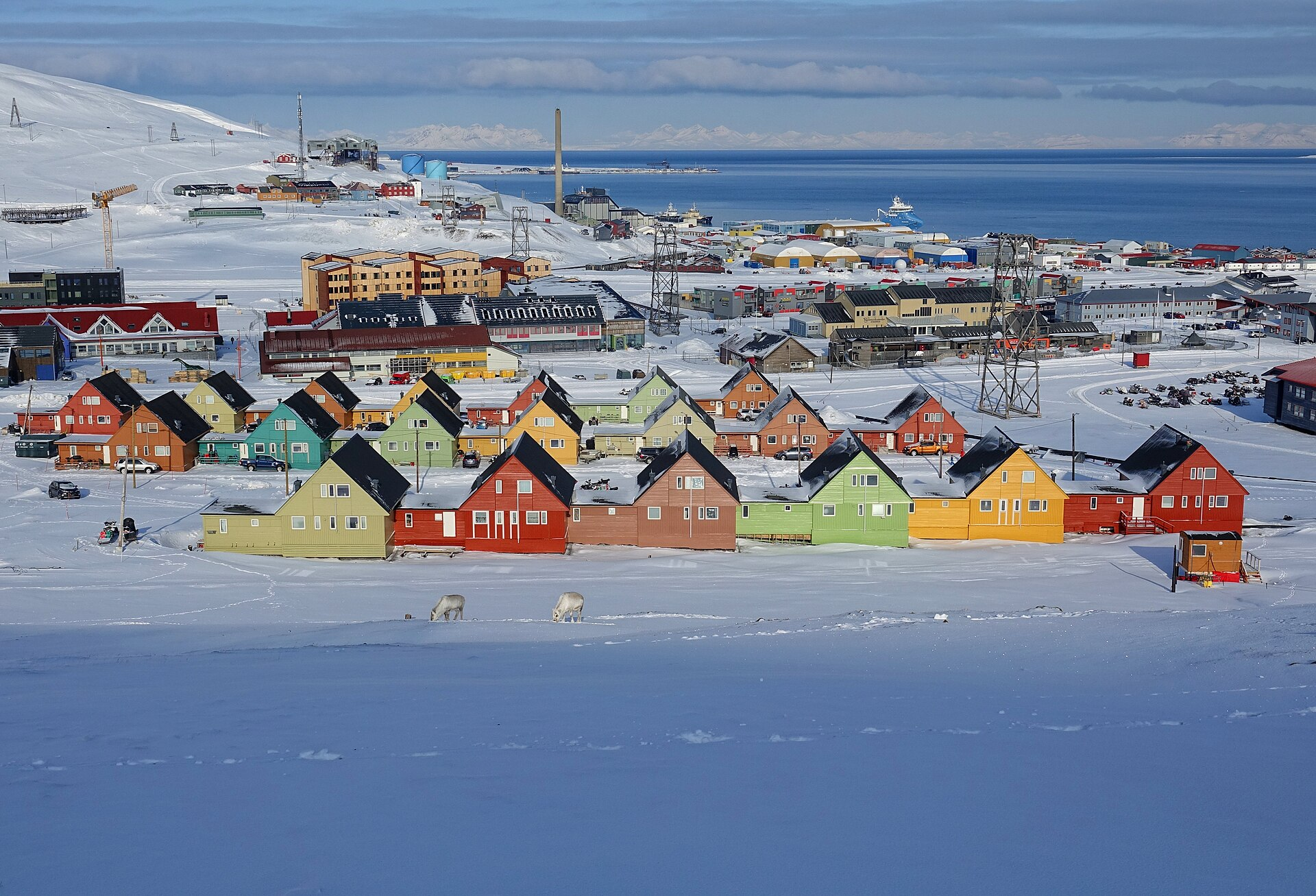
Halfway between the top of Norway and the North Pole, on an archipelago where glaciers outnumber people’s hometowns, sits a line of brightly painted houses that holds more world records per capita than anywhere on Earth: northernmost town, northernmost university, northernmost commercial airport, northernmost church, and — locals will add with a straight face — the northernmost place where you absolutely should not die.
Longyearbyen, Svalbard, population around 2,400, is the settlement behind one of travel’s most repeated “facts”: that it’s illegal to die there. Like most perfect facts, it’s wrong in the letter and right in the spirit — and the real story, involving frozen ground, preserved century-old victims of a global pandemic, and a town with no maternity ward and no cemetery plots, is far better than the meme. It’s also one of the most reachable extreme places on the planet: scheduled jets land there year-round from Oslo, no visa required, which makes Longyearbyen the rare polar destination an ordinary traveler can reach on a long weekend without an expedition budget or a single night on a ship.
The Cemetery That Closed and the Law That Isn’t
Start with the famous claim. Longyearbyen’s small cemetery, its white crosses climbing a hillside above town, stopped accepting burials around the middle of the twentieth century for a straightforwardly physical reason: the ground is permafrost. Bodies interred in it don’t decompose — the deep freeze preserves them more or less indefinitely — and the seasonal freeze-thaw of the surface layer has a grim habit of slowly working buried things back toward daylight.
The town learned exactly how well the permafrost preserves its dead in a way that made scientific history. In 1918, the Spanish flu reached the mining settlement and killed a group of young miners, who were buried on the hillside. Eight decades later, researchers exhumed several of them — carefully, with permissions and ceremony — and recovered traces of the 1918 influenza virus from the frozen tissue, work that contributed to reconstructing the genetic identity of history’s deadliest pandemic strain. The dead of Longyearbyen, it turned out, had kept the century’s most important medical evidence on ice.
So: no burials, and hasn’t been for some seventy years. But no statute makes dying illegal. What Svalbard actually has is a policy with the same practical effect — the archipelago is not set up for the full arc of human life. There’s no capacity for long-term elder or serious medical care; the small hospital handles emergencies and ships everything else to the mainland; pregnant women fly to Norway weeks before their due dates; and residents who fall gravely ill are likewise expected to relocate. You aren’t forbidden to die in Longyearbyen. The town is simply arranged so that, as much as humanly possible, nobody does. The internet’s version is punchier. The real version — a community where everyone arrives, and everyone eventually leaves, on purpose — is more haunting.
Like our content? Follow us for more.
The Rifle Rule and the Neighbors That Require It
Here’s a Longyearbyen law that is real and takes visitors a moment to absorb: anyone traveling beyond the settlement’s boundaries is required to carry appropriate polar bear protection — in practice, a rifle and the training to use it, or a guide who has both. Svalbard’s polar bear population is commonly estimated to match or exceed its human one, the bears roam where they please, and signs at the edge of town — a bear silhouette in a warning triangle, one of the most photographed road signs on Earth — mark the line where the human jurisdiction politely ends.
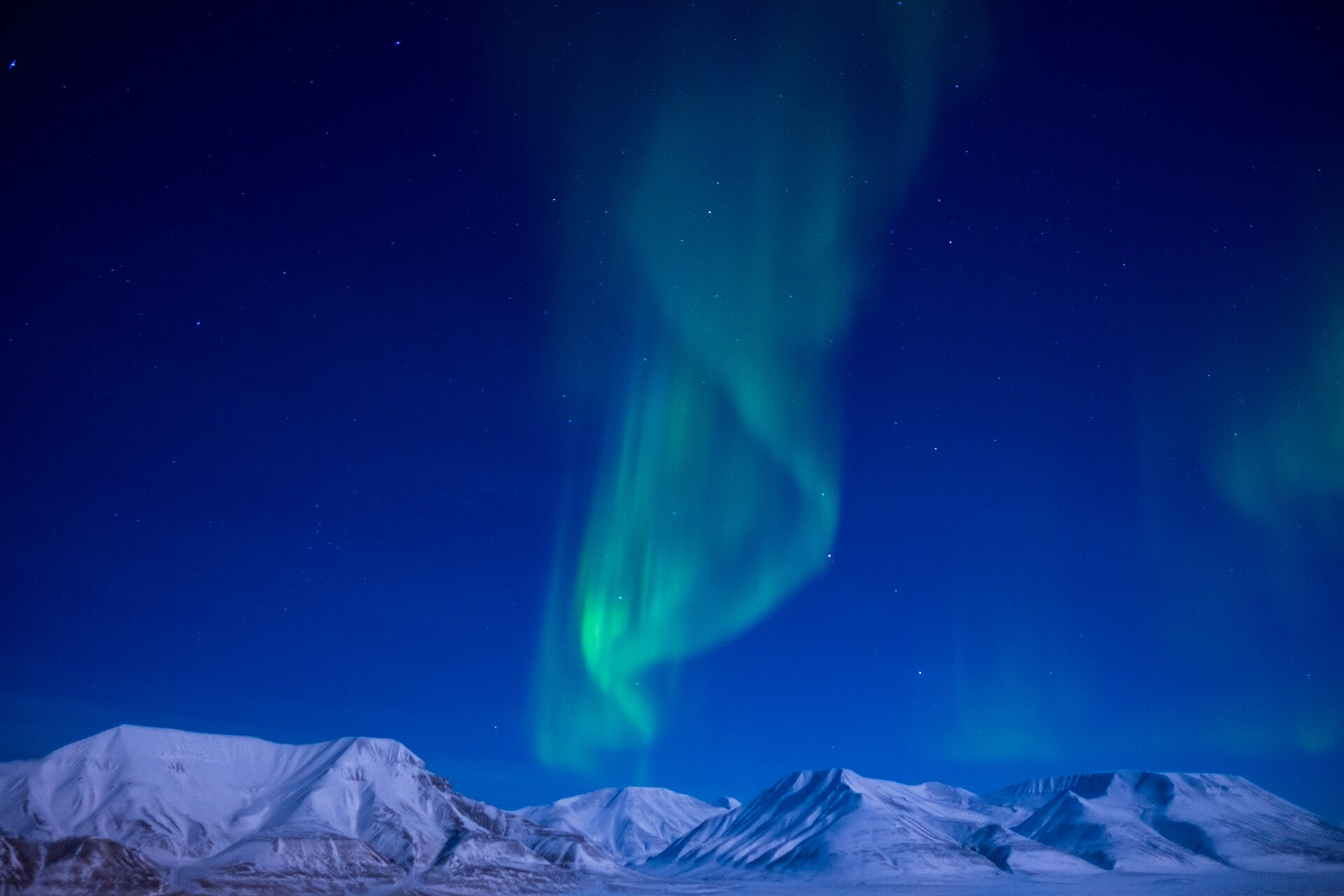
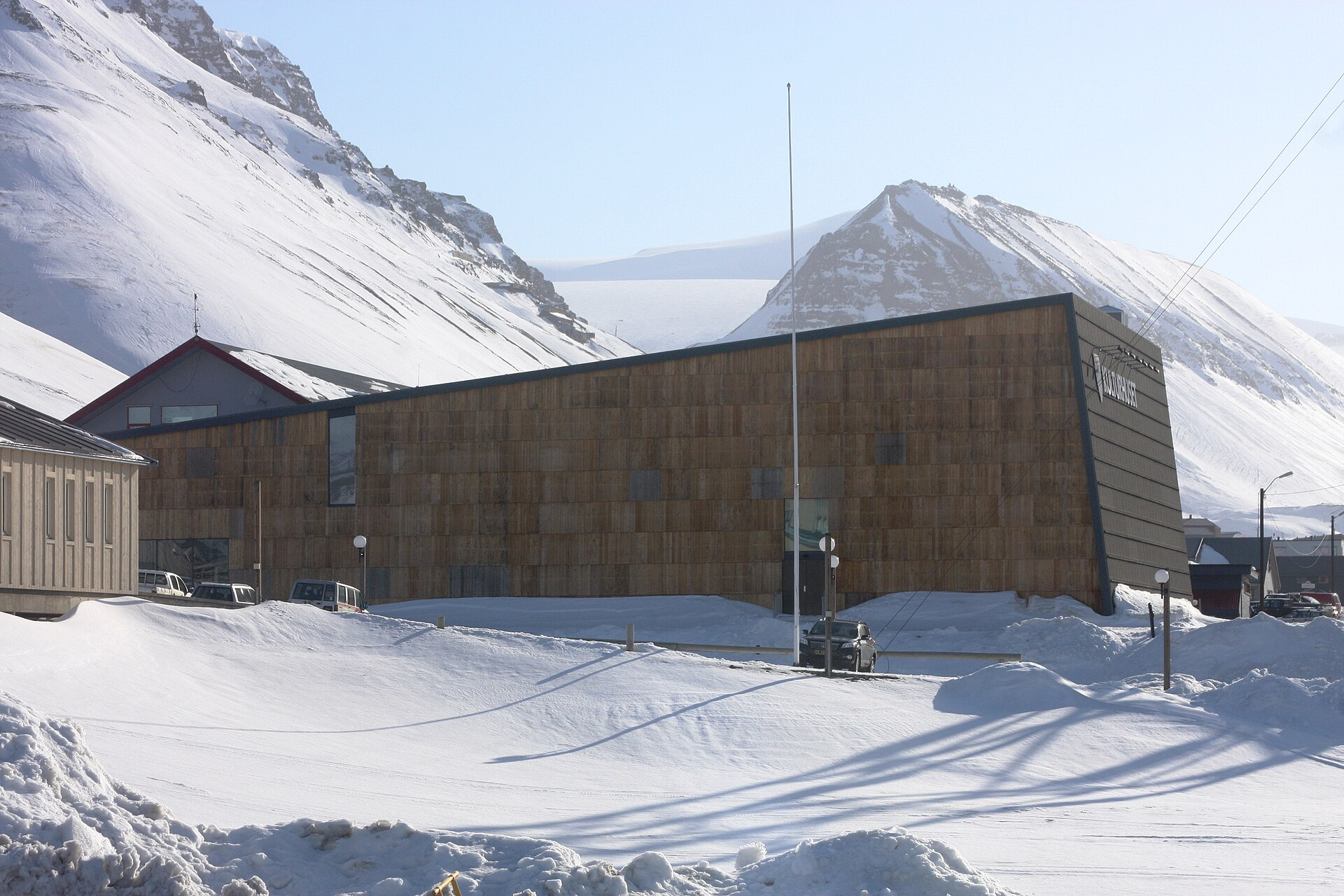
Inside town, life is disarmingly normal and slightly upside down. People remove their shoes indoors nearly everywhere, a tradition dating to the coal era, when miners left the dust at the door — visitors pad through hotels and the museum in socks. Snowmobiles outnumber cars. The university center teaches Arctic science to students who might see the northern lights on the walk to class — during the polar night, which runs from late October to mid-February, when the sun never breaches the horizon and the town lives by streetlight and aurora. The books balance in summer: from roughly late April to late August the sun never sets at all, and blackout curtains become the most important furnishing in every guesthouse.
One more local rule delights visitors: cats are banned throughout Svalbard, to protect the archipelago’s ground-nesting birds. It is a town of huskies, by law and by preference — the sled dogs in the kennels at the edge of town outnumber several categories of resident, and they are, visitors report, extremely aware of their status.
Anyone Can Move There — That’s the Treaty
Longyearbyen’s strangest feature might be legal. Under the Svalbard Treaty of 1920, which recognized Norwegian sovereignty over the archipelago, citizens of the treaty’s dozens of signatory nations have equal rights to live and work there — meaning Svalbard is effectively visa-free residency for much of the world, no permit required, provided you can support yourself and survive the winters. The result is one of the most international small towns anywhere: a couple of thousand people from some fifty nationalities, running hotels, guiding glacier hikes, cooking in restaurants that are — inevitably — the world’s northernmost Thai kitchen, brewery, and so on.
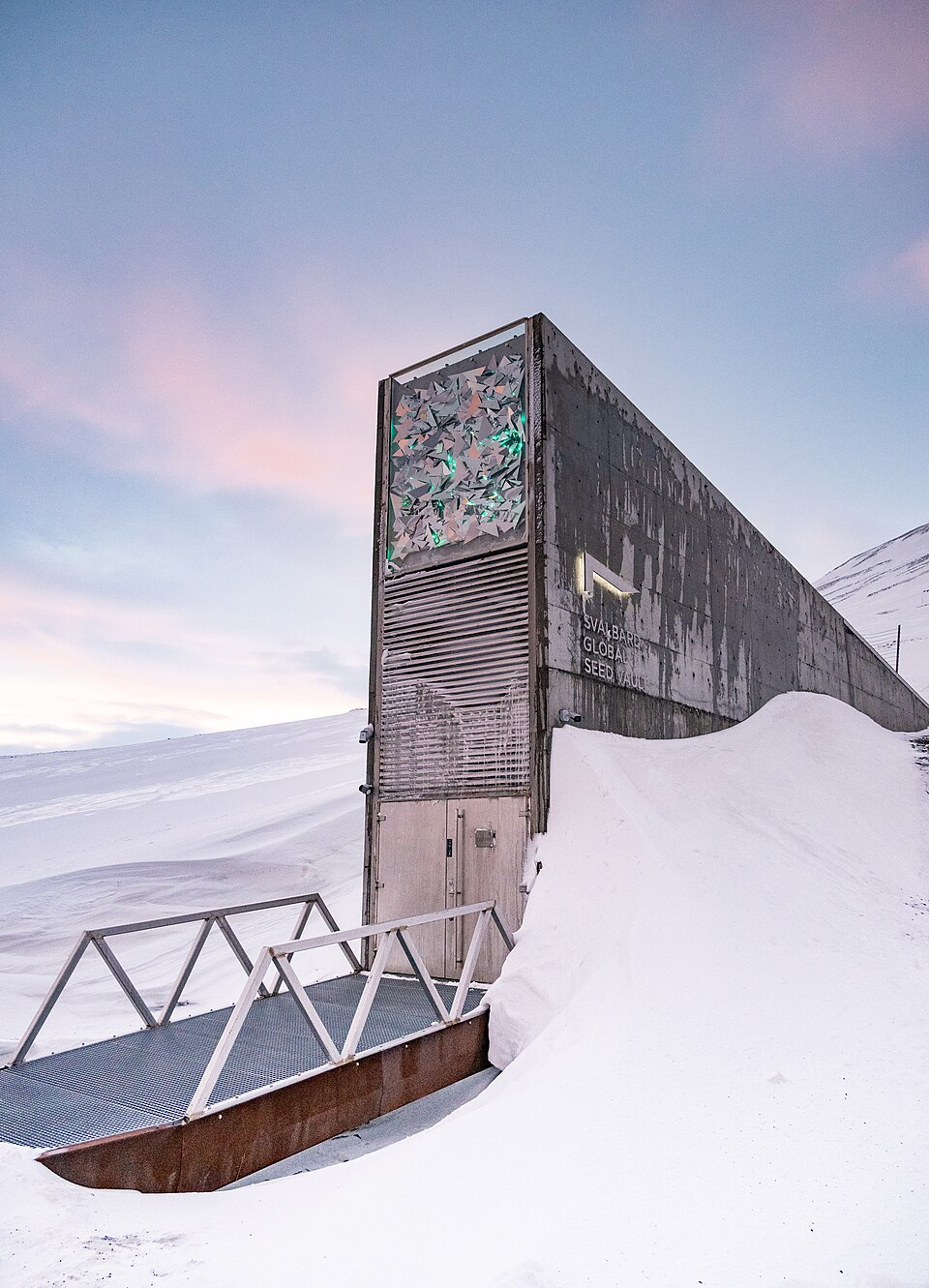
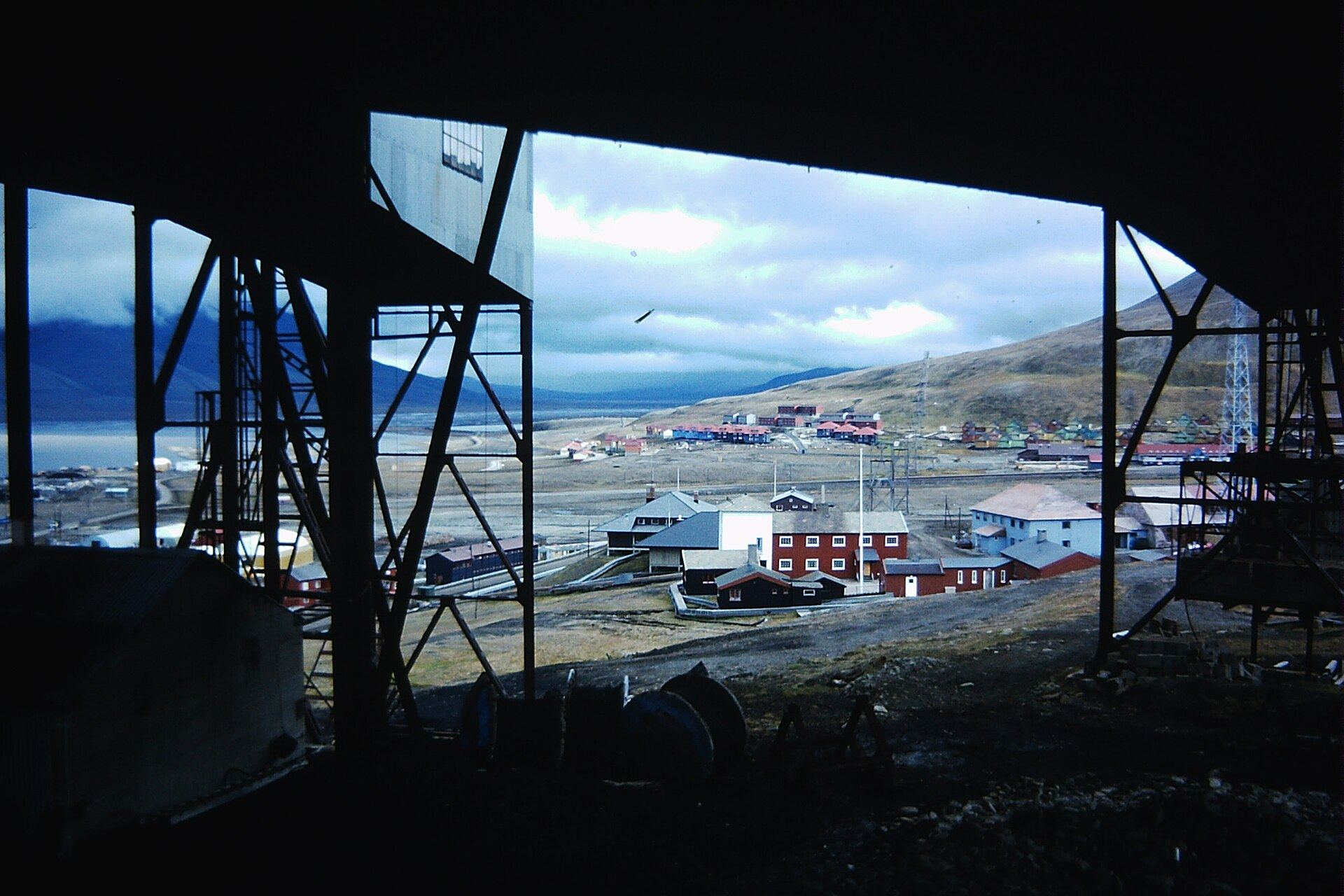
The town’s original reason for existing was coal; an American named John Munro Longyear founded the mining operation in 1906 and left his name on the valley. The last Norwegian mine near town closed in the mid-2020s, ending the industry era, and today’s Longyearbyen runs on science, logistics, and travelers — plus one very famous vault in the mountain up the road, where the world keeps backup copies of its crop seeds. Tours don’t go inside, but the angular entrance, glowing above the fjord, has become the archipelago’s second-most-photographed doorway after the bear sign.
What a Visit Actually Involves
The practicalities are gentler than the latitude suggests. Flights from Oslo and Tromsø land year-round at the northernmost airport with scheduled service; the flight itself, descending over glaciers and fjords, is fair warning of what’s coming. In town, a surprising infrastructure awaits — good hotels, serious restaurants, a museum that explains the whole improbable story, and outfitters running everything from dogsledding and ice-cave tours in the frozen months to boat trips past glacier fronts and walrus haul-outs in the endless light of summer.
Choosing a season means choosing a planet. Winter (and the blue twilight on its edges) offers aurora, snowmobiles, and the polar night’s strange calm; the light season offers hiking, wildlife, and midnight sun on the water. Either way, the cardinal rules are the same: never leave town without a guide or a rifle, book excursions rather than improvising — this is the rare destination where the warning signs are not liability boilerplate — dress like you believe the forecast, and bring more camera storage than seems sane. Budget more days than the town’s size suggests — the excursions are the point, weather reshuffles them freely, and every guide in town has a story about the trip that got better after the plan fell apart.
Day trips add two of the Arctic’s strangest excursions. Across the fjord sits Barentsburg, a Russian coal settlement operating under the treaty’s open terms — a functioning piece of another country’s Arctic, with its own school, brewery, and Soviet-era monuments, reachable by boat in summer and snowmobile convoy in winter. Farther up the fjord lies Pyramiden, the Soviet mining town abandoned in 1998 with theatrical suddenness: a grand piano still in the cultural palace, the world’s northernmost Lenin statue gazing over an empty square, guided walks through a company town frozen mid-shift. Both make Longyearbyen’s own oddities feel almost suburban, and both underline what the treaty built here — an archipelago where the last century’s rivals ended up as neighbors with adjoining ghost stories.
The Town That’s Honest About Everything
What stays with visitors isn’t the cold or the bears or even the light. It’s the honesty of the place. Longyearbyen doesn’t pretend permanence: the ground won’t take its dead, the treaty means anyone can come, the economics mean most people stay a few years and move on, and the town’s records — northernmost this, last that — all carry the quiet asterisk of existing at the edge of the possible. Most destinations sell you the idea that they’ve always been there and always will be. Longyearbyen sells the opposite, and it turns out the opposite is mesmerizing: a warm, improbable, sock-footed little civilization holding a lantern at 78 degrees north, where everyone is just visiting — and knows it, and came anyway.
Just don’t plan to stay forever. That part, at least, the internet got right.
Like our content? Follow us for more.