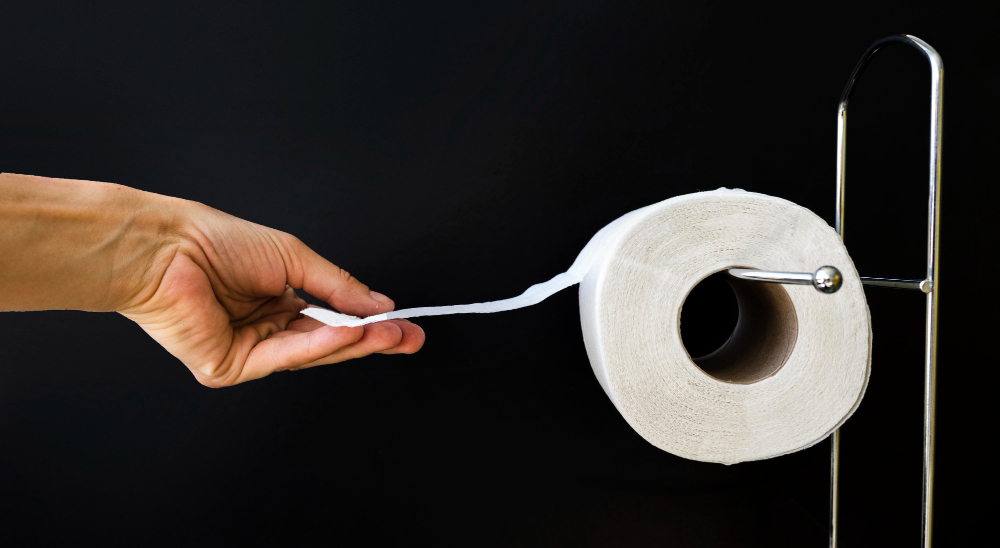
It is the most reliably divisive question in domestic life, it has broken up less serious relationships than it should have, and it has an answer that is older than almost anybody arguing about it.
The patent for the perforated toilet paper roll was granted in 1891. The drawing attached to it shows the sheet coming over the top of the roll, away from the wall. If the inventor’s intention settles anything, it settles this.
What the Patent Actually Shows
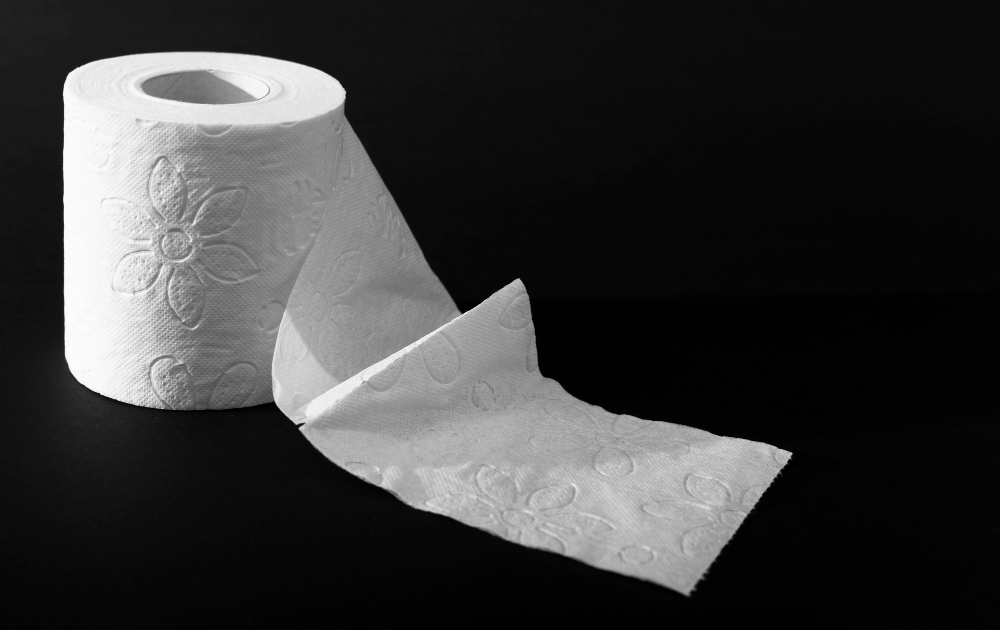
The document is a United States patent granted in 1891 to Seth Wheeler, covering a roll of perforated wrapping or toilet paper. The illustrations show the roll mounted with the loose end hanging down the front, over the top.
That is the whole of the evidence, and it is worth being honest about what it is and is not. The patent is about the perforations and the roll, not about the orientation – the drawing shows an orientation because a drawing has to show something. Nobody was legislating.
But it is the earliest authoritative depiction, it is unambiguous, and it has been settling arguments ever since somebody first circulated it. In the over-versus-under dispute that is as close to a founding document as exists, and the under camp has never produced anything comparable.
Like our content? Follow us for more.
The Practical Arguments, Which Are Not Equal
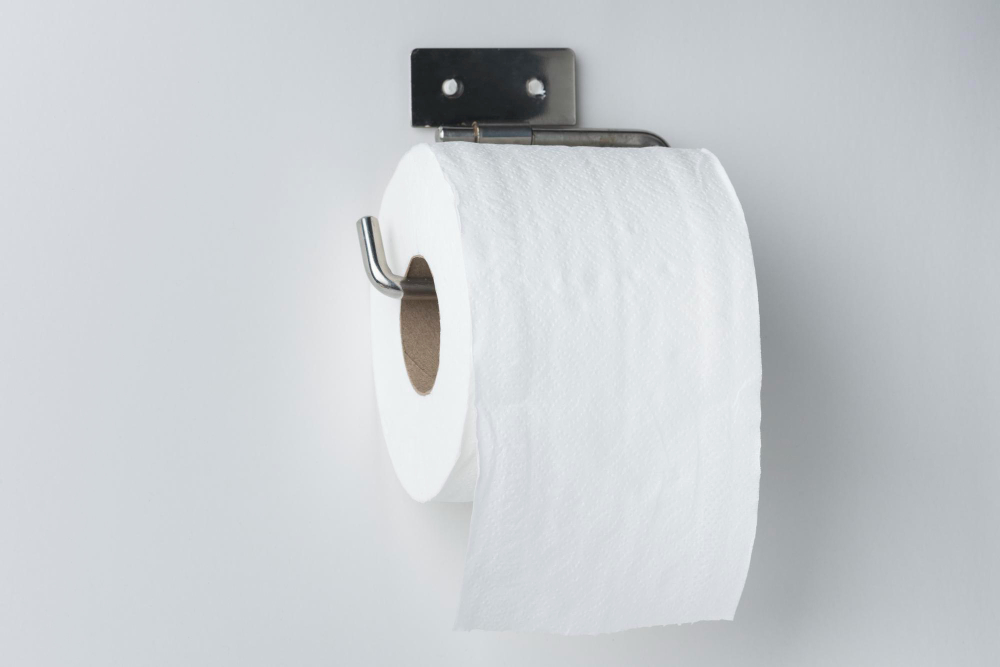
Leaving intent aside, the two orientations perform differently, and the differences are measurable rather than matters of taste.
Over is easier to find and tear. The loose end hangs in open air at the front, visible, reachable with one hand, and the roll is held still by friction against the holder when you pull – which is what gives you a clean tear at the perforation. In the dark, or in an unfamiliar bathroom, you locate the end by reaching forward rather than by feeling around behind the roll.
Over is also more hygienic in one specific and real sense. With the paper hanging at the front, your hand touches only the sheet you are taking. With it hanging behind, your knuckles frequently brush the wall and the back of the roll as you reach, and both of those surfaces are considerably less clean than the paper. In a public washroom that is not a trivial distinction.
Under has two genuine arguments. In a house with a cat or a toddler, the under position makes it much harder to unroll the whole thing onto the floor, because pawing at it tends to wind it back on rather than off – this is the single best argument for under and the people who make it are usually right about their own circumstances. And against a wall in a tight space, under keeps the hanging paper from brushing the wall.
That is the honest accounting: over wins on access, tearing and hygiene; under wins on cats, toddlers and cramped fittings.
Why People Feel So Strongly About It
The intensity is the interesting part, because the stakes are plainly zero.
What makes it combustible is that it is a repeated, visible, trivially reversible decision in shared space. You encounter it several times a day. Correcting it takes four seconds. And whichever way it is, somebody has made a choice that is now sitting there being wrong at you.
Household disagreements that persist are almost always of this shape – the dishwasher loading, the direction of the duvet, whether the chopping board goes back on the left. None of them matters, all of them are visible, and each is a daily small reminder that another adult in the house does things differently and is not going to stop.
Surveys on the question have been run many times by manufacturers and by pollsters, and they consistently find a substantial majority for over, usually somewhere around two to one, with remarkable stability across countries. There is also a well-circulated piece of survey folklore claiming the preference correlates with dominance or personality traits. Treat that one with care: it comes from a single informal survey rather than from peer-reviewed research, and it has been repeated far past what the original would support.
Before the Roll, There Was No Question to Ask
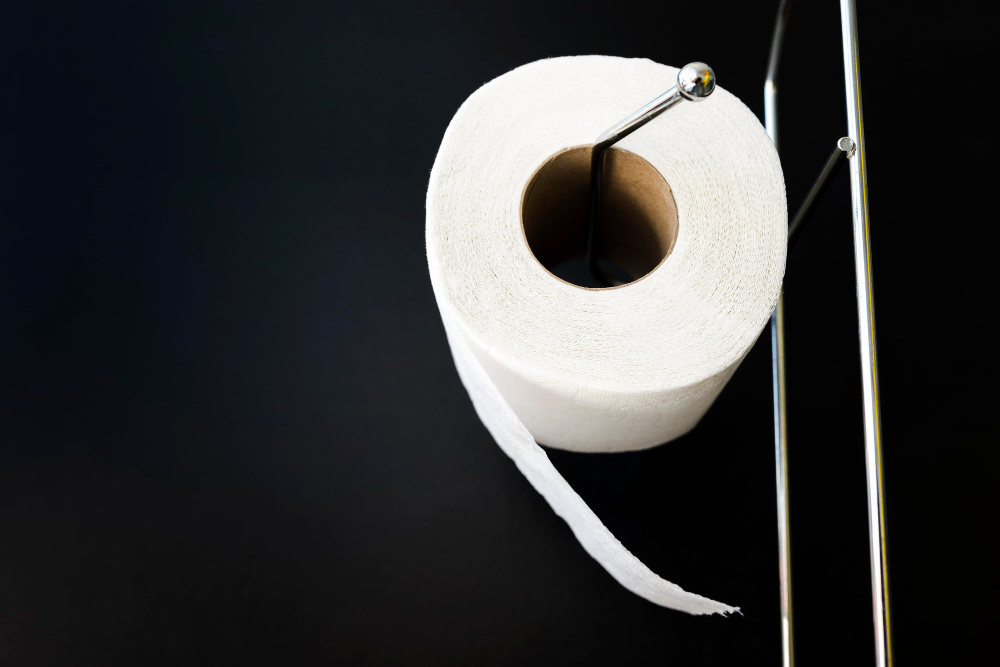
The argument is only possible because of a specific product that is younger than most people assume.
Commercially manufactured toilet paper in sheet form dates from the middle of the nineteenth century, sold flat in packets and marketed, awkwardly, as a medicated product – because advertising it for its actual purpose was not respectable, and because the alternative in general use was free. That alternative was whatever paper the household already had: catalogues, newspapers, almanacs. Mail-order catalogues in particular were hung on a nail in the outhouse, and the fact that they were printed on soft uncoated paper was understood as a feature by everybody except the publishers.
The roll and the perforation changed that, and they changed it by solving a dispensing problem rather than a comfort one. A stack of sheets has to be stored somewhere dry, it falls over, and it cannot be mounted. A perforated roll mounts on a holder, dispenses one sheet at a time, stays off the floor, and is manufactured continuously rather than cut and counted.
That is the invention: not the paper, the roll. And the roll is what created a mounting problem, and the mounting problem is what created a hundred and thirty years of argument in which both sides are certain and only one has a drawing.
The Holder Is the Other Half of the Problem
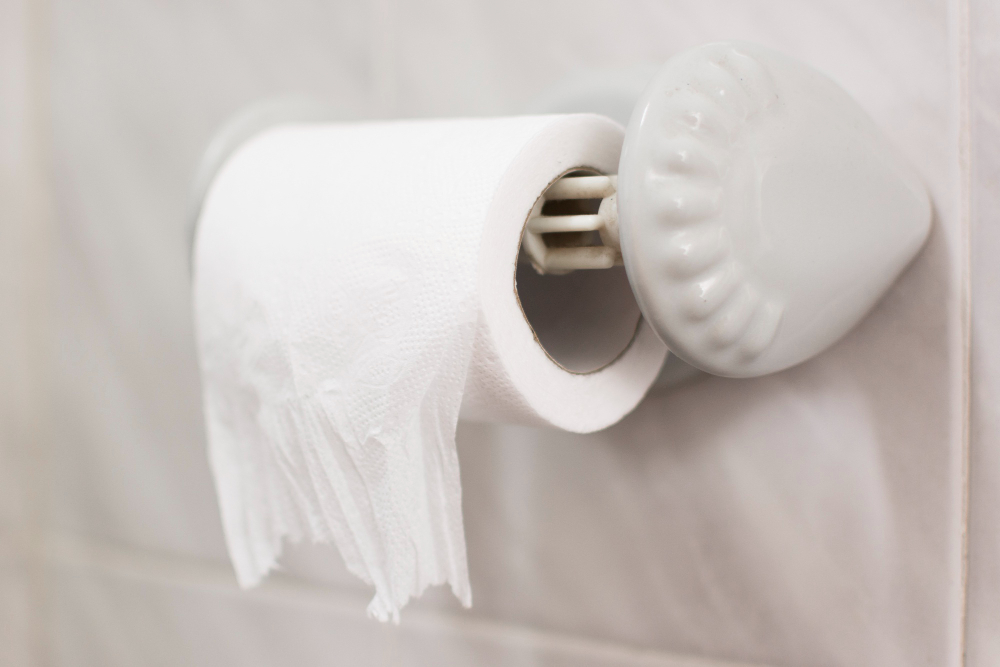
A good deal of the argument is actually about hardware, and nobody frames it that way.
A horizontal bar with a spring-loaded insert – the standard fitting for most of the twentieth century – can be loaded either way and offers no resistance, which is precisely why the question arises. Change the holder and the question frequently disappears.
A single-post holder, the kind that is open at one end so the roll slides on, strongly favours over, because an under-loaded roll on an open post tends to unspool. A recessed holder set into the wall cavity, common in older houses and in hotels, usually constrains the direction by geometry. The large covered dispensers in public buildings decide it for you and are designed around over, because the mechanism that controls the sheet length depends on the paper coming off the front.
If an argument in your house has been running for years, replacing a sprung bar with a single post ends it without anybody having to concede, which is a more practical solution than it sounds.
The Roll Has Changed Shape Under Everybody
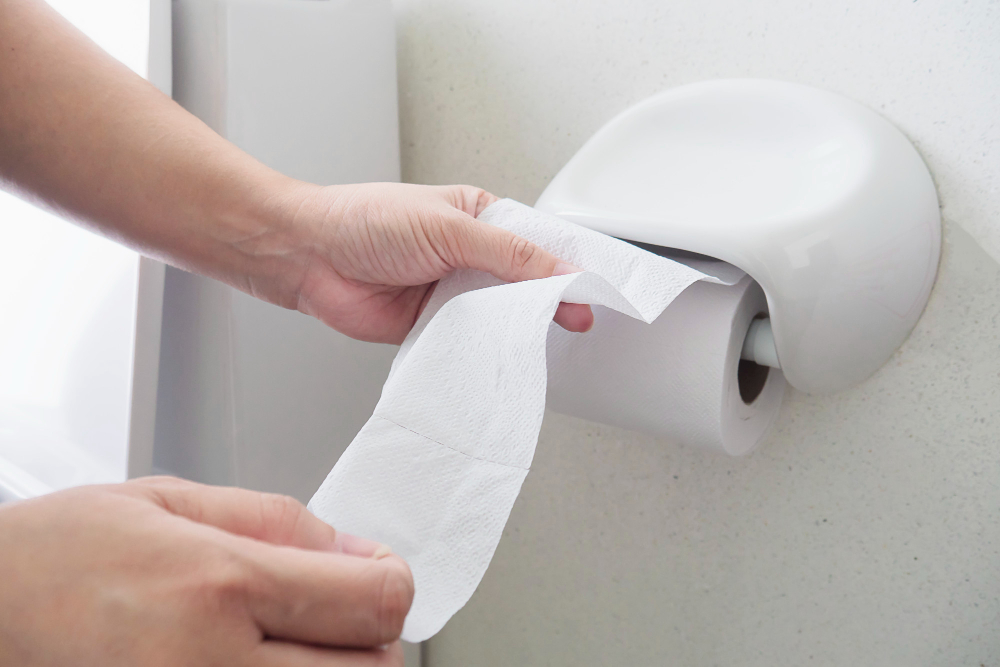
While the argument has run, the product has been quietly altered in ways that affect it.
Rolls have got larger in diameter and the cores have got wider, both of which reduce the number of changes and increase the weight hanging on the holder. Sheet counts and sheet sizes have moved repeatedly – a roll sold as a standard roll today is frequently not the same quantity of paper as one sold under the same description a decade ago, which is a long-running source of complaint and a well-documented pattern across packaged goods generally.
Quilting and embossing, introduced to add softness and perceived thickness, also make the perforations harder to tear cleanly, which is why a premium roll will sometimes tear badly across three sheets while a cheap single-ply tears exactly on the line. The tear quality depends on the perforation depth relative to the sheet’s strength, and softer, thicker paper needs deeper perforation to tear as reliably.
And coreless rolls, now common in commercial washrooms, remove the cardboard tube altogether. They also, incidentally, remove the argument, because the dispensers they go in dictate the direction.
Where This Leaves You
The patent says over. The hygiene argument says over. The one-handed tear says over. The majority in every survey says over.
The cat argument says under, and it is a real argument if you have a cat.
The honest conclusion is that this is a question with a correct answer and almost no consequence attached to getting it wrong, which is the exact combination that produces the most durable arguments. The 1891 drawing will not persuade anybody who loads it under, because nobody in that position arrived there by reasoning.
What it will do is end the discussion, which is all anybody really wants. The drawing is in the public record, it is freely reproducible, and it has been printed out and stuck to the inside of more than one bathroom door.
There is one further wrinkle worth knowing, mostly because it is useful in exactly this argument. Hotels and serviced accommodation almost universally load over, and they fold the leading sheet into a point. Neither of those is about taste. The over position is what the housekeeping trolley and the standard fitting are built around, and the fold is a signal that the room has been serviced since the last guest – a small piece of visible evidence that somebody has been in and done the work.
So the hospitality industry, which has more washrooms to maintain than anybody and no emotional investment in the question at all, arrived at the same answer as the 1891 drawing, for reasons of pure operational efficiency. That is not proof of anything. It is simply the largest group of people who have ever had to think about it seriously, all doing it the same way.
Like our content? Follow us for more.