The little plastic tab holding your bread bag shut is one of the most quietly engineered objects in a supermarket, and the colour of it is not decoration.
In a great many bakeries the colour tells staff which day the loaf was baked or delivered. The rotation that gets used most often runs blue, green, red, white, yellow – which is alphabetical order, matched to the five days a week most bread routes run.
How the Code Works
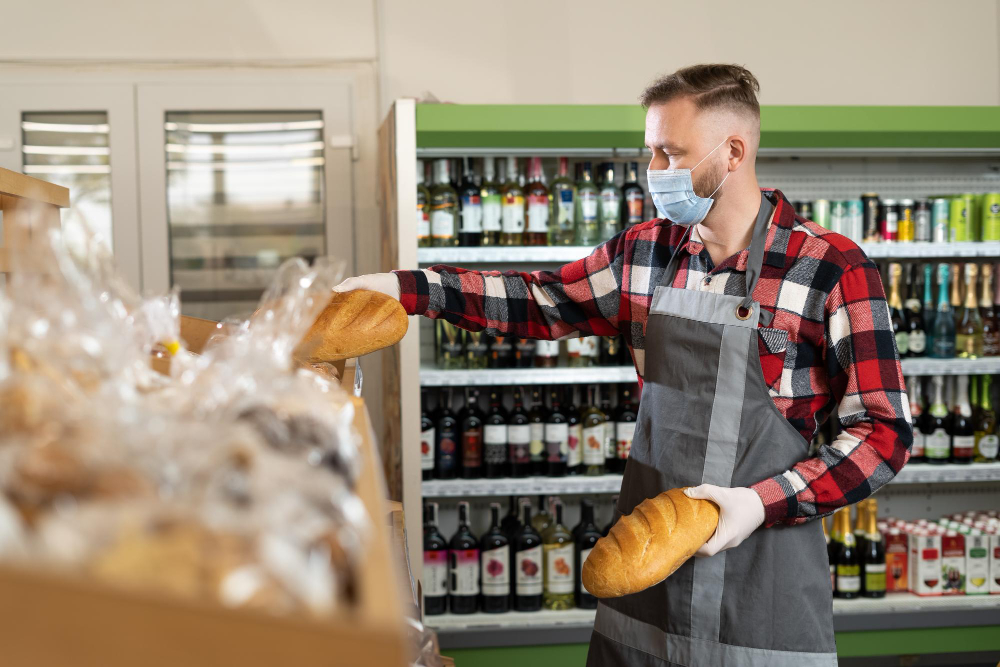
Bread is delivered by the bakery’s own driver, not by the supermarket’s warehouse, and the driver is responsible for the shelf. He puts fresh loaves out and takes the old ones away.
To do that quickly he needs to see at a glance which loaves are from today and which are from Monday, across a shelf holding several hundred bags. Reading a printed date on each one is slow. Reading a colour is instant, and can be done from several feet away while pushing a trolley.
So the colours run in a fixed weekly rotation. The commonly used one is blue for Monday, green for Tuesday, red for Thursday, white for Friday and yellow for Saturday. Most bakeries do not deliver on Wednesday or Sunday, which is why there are five colours rather than seven.
The elegance is in the ordering. Blue, green, red, white, yellow is alphabetical, which means anybody who knows the alphabet can work out which of two colours is older without memorising a chart. A driver covering an unfamiliar route, a new stocker, a relief worker – all of them can read the shelf on their first day.
Like our content? Follow us for more.
The Part Everybody Gets Wrong
This is where the viral version of the story goes further than the facts support, so it is worth being precise.
The colour code is a widespread bakery convention. It is not a regulated standard, it is not required by any agency, and it is not universal. Different bakeries use different rotations. Some regions run the colours in a different order. Some bakeries use the colours for something else entirely – a product line, a route, a plant. Some use twist ties instead of clips, in the same colours and to the same purpose. Some use plain tags and rely wholly on the printed date.
So the colour is a reliable signal within one bakery’s products on one shelf, and an unreliable one across brands. Two loaves from different bakeries with different coloured tags tell you nothing about which is fresher.
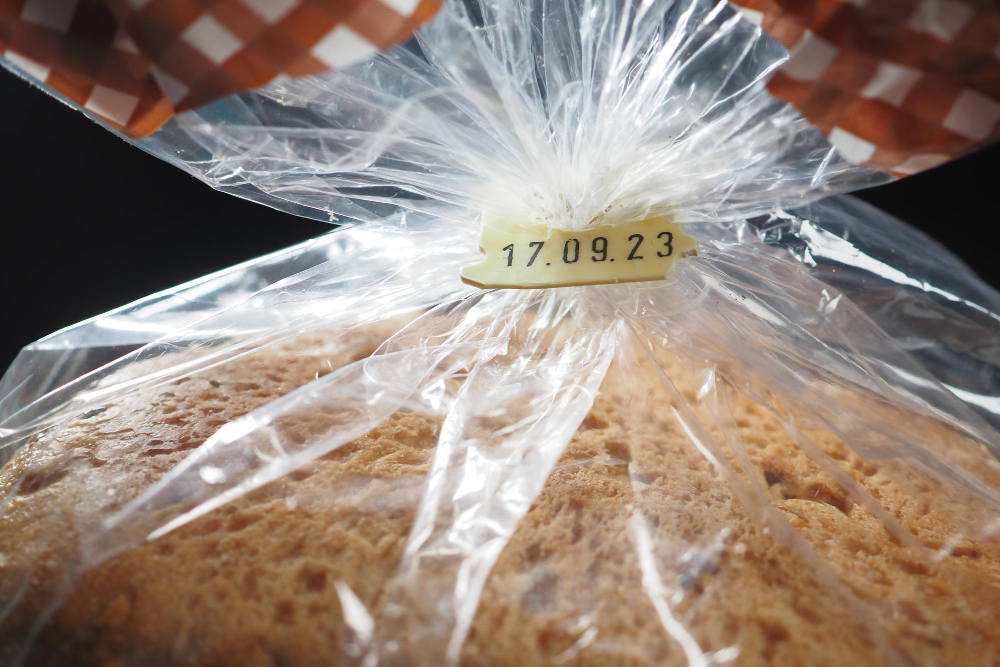
The thing that does tell you is printed on the tag. Almost every clip carries a date, and on most of them it is the best-by or sell-by date rather than the bake date. That number is the authoritative one, and it is the reason the clip exists in the shape it does – a twist tie cannot carry print, and a clip can.
Where the Clip Came From
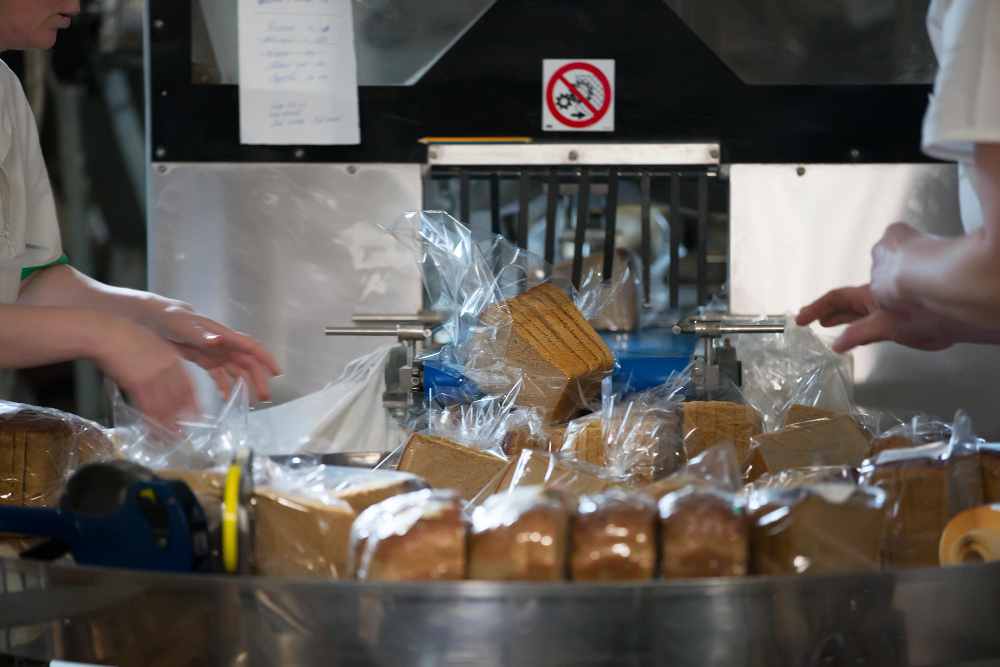
The bag closure as a moulded plastic clip is generally credited to Floyd Paxton, and the origin story he told is that he found himself on an aeroplane in the early 1950s with a bag of peanuts he could not reclose, and cut a closure out of a credit card with a penknife.
Whether it happened quite like that, the product was real: he founded a company to make them in the mid-1950s, and the clip went into bakeries because it solved several problems at once. It could be applied by a machine at high speed. It could be opened and reclosed by the customer without tearing the bag. It held firmly enough that the bag would not open in a trolley. It cost a fraction of a cent. And it had a flat face large enough to print a date on.
Billions are produced annually. The design has barely changed, and the reason is the one that keeps recurring with successful small objects: the machinery that applies them is built around the exact dimensions, and changing the clip means changing every bagging line in every bakery that uses them.
Why Some Bags Have a Twist Tie Instead
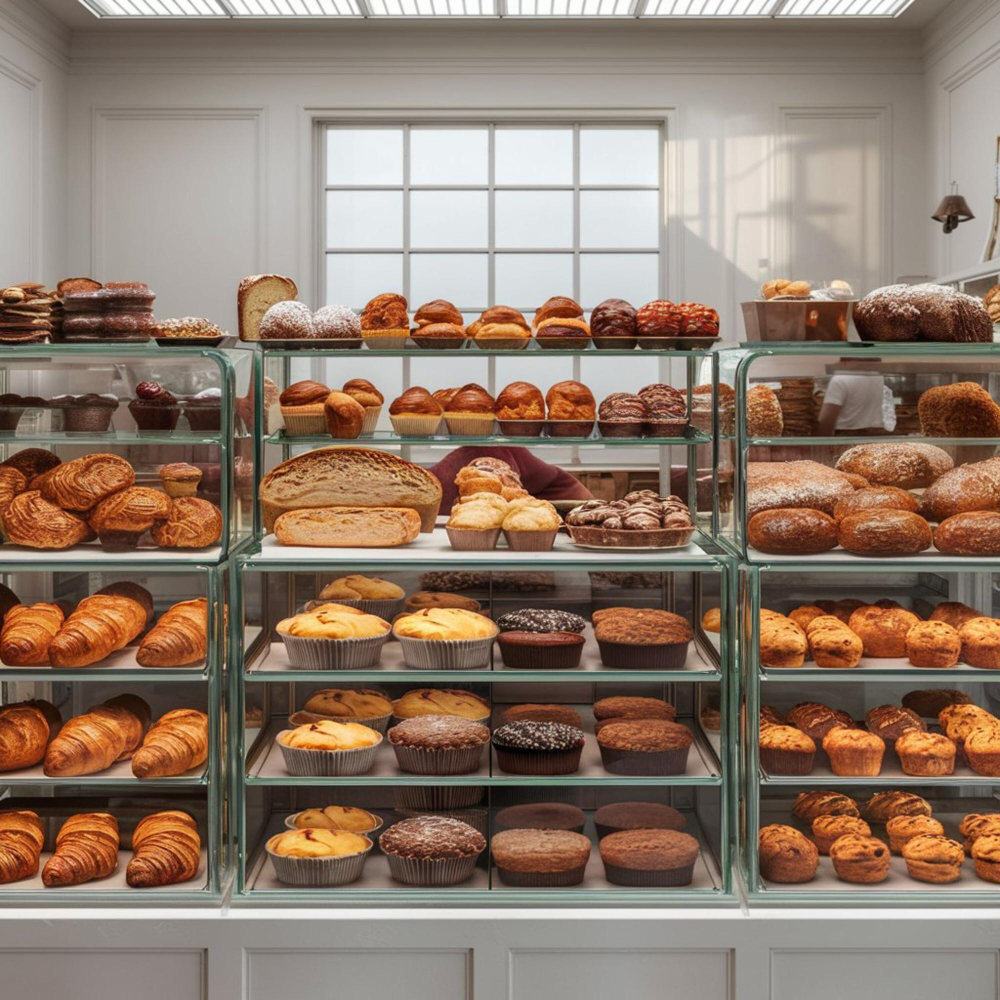
The twist tie and the clip solve the same problem differently, and bakeries choose between them for practical reasons rather than aesthetic ones.
A twist tie is more forgiving of varying bag neck sizes, so it suits artisan and in-store bakery products where loaves differ in size. It is also easier for people with limited hand strength or dexterity to use, which is a genuine accessibility argument and one that gets raised. Against that, it is slower to apply, it cannot carry printed information, and it can be retied by a customer and put back on the shelf.
The clip wins on industrial lines where every bag is the same and the date has to be printed. The tie wins where the product varies. Several bakeries use both, on different products, in the same colours, on the same rotation.
This is also why the colour code survives the format change: the colour is the system, and the clip or the tie is just what carries it.
The Rotation Is Really a Stock Control System
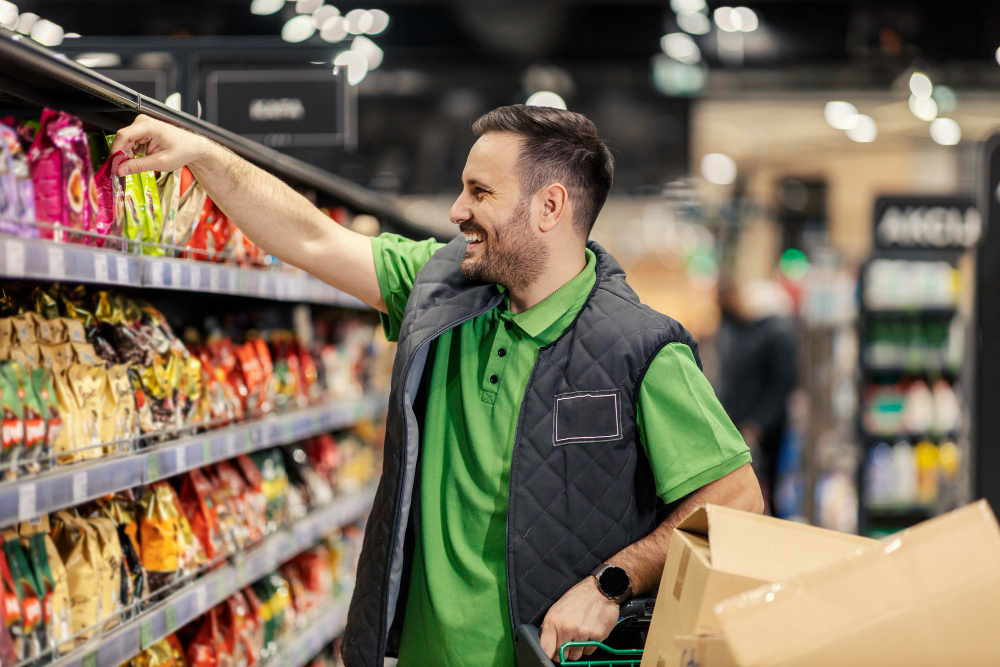
Step back from the colour and what you are looking at is one of the oldest problems in retailing, solved with five pieces of dyed plastic.
Bread has a shelf life measured in days and a supermarket has no practical way to supervise it. The bakery’s own driver does the work instead, under an arrangement in which unsold bread is the bakery’s loss rather than the shop’s – which is why the driver is the one with the incentive to get the rotation right and why he, not the store, controls that shelf.
The term for what he is doing is stock rotation: oldest product to the front, newest to the back, so that what sells first is what expires first. Every perishable department does it. What makes bread unusual is that the product cannot carry a large visible date, the volumes are high, the turnover is daily, and the person doing it is visiting several dozen shops in a morning.
A printed date solves the problem accurately and slowly. A colour solves it approximately and instantly. The bakeries chose instantly, and then made the colours alphabetical so that nobody would have to be trained.
It is worth appreciating how little the system costs. No scanner, no software, no label printer, no staff training, no equipment to break. Five colours and the alphabet, running continuously in tens of thousands of shops, and almost none of the customers walking past it have ever noticed it is there.
The Clips Had an Afterlife Nobody Planned
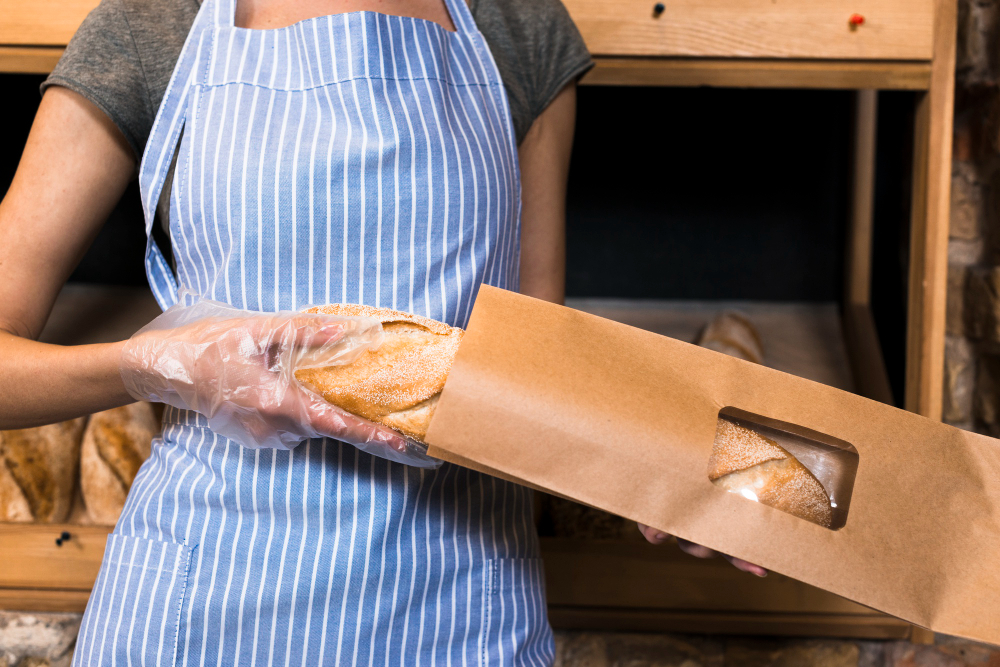
Because they are small, flat, slightly springy and free, bread clips accumulated a long list of secondary uses that circulate endlessly online, and most of them genuinely work.
They label cables. Written on with a marker and clipped round a lead behind a desk, a bread tag identifies which plug belongs to which device, which is the single most repeated use and the one that actually solves a daily irritation.
They repair a flip-flop whose toe post has pulled through, pushed over the post from underneath to act as a washer. They mark the end of a roll of tape. They hold a place in a stack of paper. They can be used to scrape a label off a jar. People have used them as temporary guitar picks, though anybody who plays will tell you the result is not good.
None of this was designed for and all of it is a consequence of a free object with a useful shape being produced in the billions, which is roughly how the paperclip, the rubber band and the clothes peg each acquired their own list.
What Is Changing Now
The clip’s one real problem is that it is a small piece of rigid plastic that goes into the waste stream in enormous numbers, is too small to be sorted by most recycling equipment, and is frequently mistaken for food by wildlife and by machinery.
The responses have been incremental. Some manufacturers have moved to paper-based or fibre closures that fold and crease like the plastic ones and take the same print. Some bakeries have switched to adhesive tape with the date printed on it. Some have moved to resealable adhesive strips built into the bag, which eliminates the separate object entirely.
Each of those loses something. The paper tags are less durable once wet. The tape cannot be reclosed as many times. The built-in strip puts the cost into the bag rather than into a tag, which matters at bakery margins.
What none of them have so far done is kill the colour. A fibre tag is still printed in the week’s colour, and the tape carries a coloured stripe, because the problem the colour solves – a driver reading a shelf in two seconds – has not changed at all. The next time you are in front of the bread, look along the row: the loaves at the back will frequently be a different colour from the ones at the front, and that is not a coincidence. It is somebody’s rotation, working exactly as intended, with the oldest stock pushed forward where it will sell first.
Like our content? Follow us for more.