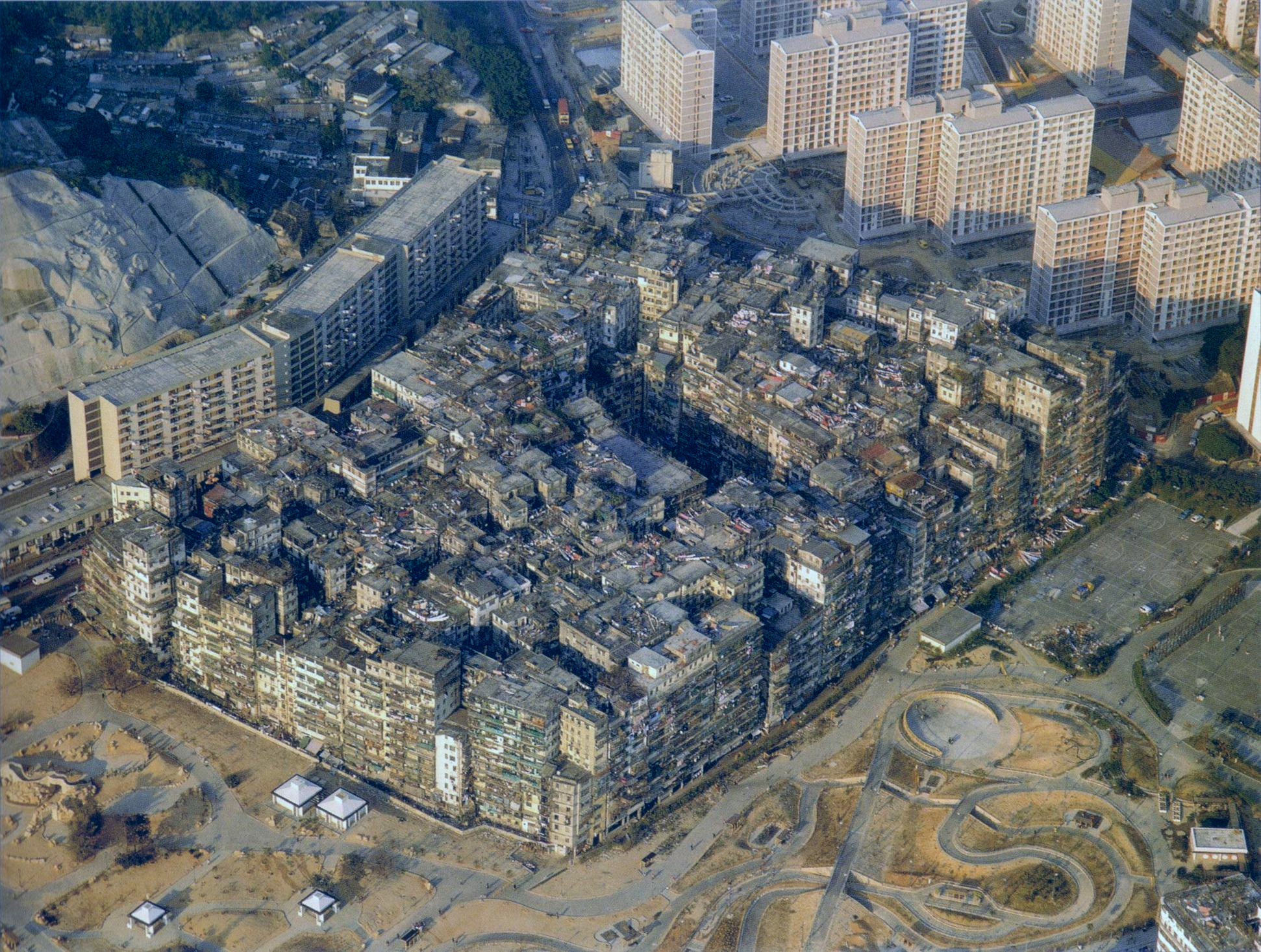
Imagine a single block of buildings, fused together over decades into one continuous structure, rising a dozen or more stories, with no gaps between towers and no master plan behind any of it. Now imagine that inside this mass lived some 33,000 people — families, factory workers, shopkeepers, dentists, drug users, elderly residents, children — packed into an area so small you could walk its perimeter in a few minutes. Picture the interior as a warren of pitch-black alleys and staircases threading between the buildings, hung with a tangle of water pipes and electrical wires, where sunlight never reached the lower levels and the residents got around by a mental map that outsiders could never learn.
This was Kowloon Walled City, and it was, by the measure of population density, the most crowded place that has ever existed on Earth. For most of the twentieth century it sat in the middle of Hong Kong as a legal anomaly — a piece of land that belonged, in a technical sense, to no one who would govern it, and so became governed by almost no one. Feared from the outside as a lawless den of crime and disease, it was, on the inside, a functioning if chaotic community of tens of thousands of ordinary people. It was torn down in 1994, and its story is one of the strangest urban tales of the last century.
An Accident of History
The Walled City existed because of a diplomatic loophole, and understanding it requires a bit of history. The site began centuries ago as a Chinese military outpost on the Kowloon Peninsula. When Britain expanded its control over Hong Kong in the late nineteenth century, leasing the surrounding New Territories, the agreement notably left the small Chinese fort at Kowloon under nominal Chinese jurisdiction — a tiny island of Chinese authority within British-administered Hong Kong.
In practice, this created a place that neither power was willing to fully govern. China didn’t administer it, and Britain, wary of the diplomatic complications, largely left it alone. The result was a legal grey zone — a patch of land where, effectively, neither government enforced its laws, building codes, or regulations. For decades it remained a modest, semi-rural enclave. But after the Second World War, as refugees and migrants poured into Hong Kong and the city’s population exploded, this ungoverned plot became something no one had planned: a place where people could build, and live, entirely outside the rules that constrained everyone else.
Like our content? Follow us for more.
Building Without Rules
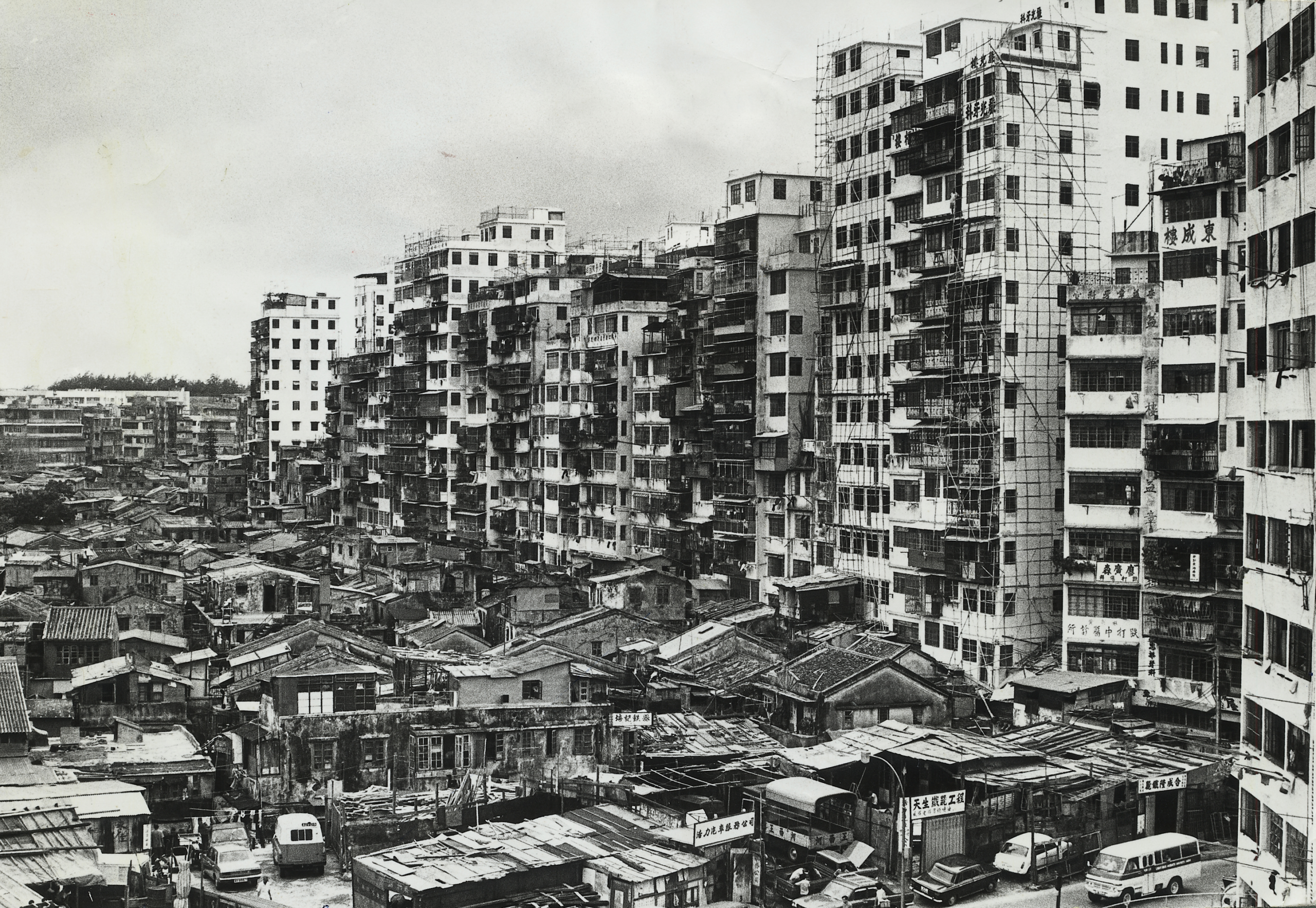
What happened next was a demonstration of what unregulated construction looks like when land is scarce and demand is desperate. With no building codes and no authority to stop them, residents and developers simply built — upward and inward, adding floors to existing structures, filling gaps between buildings, and eventually fusing the whole site into a single continuous mass of interconnected concrete.
The buildings climbed to around a dozen or more stories, their height limited mainly by the nearby airport, whose flight paths passed low overhead and capped how high the structures could rise. With no space to expand outward, everything turned inward and upward. Buildings were constructed so close together, and connected at so many levels, that the entire city became navigable internally — you could reportedly move through much of it without ever going outside, passing from building to building through a three-dimensional maze of corridors, stairwells, and rooftop passages. The lower floors and inner alleys received almost no natural light and little fresh air, permanently dark and dripping with water from the pipes and air conditioners above. Electricity was often jury-rigged, a chaos of tapped wires. And through it all ran the residents, who navigated the labyrinth with total fluency while outsiders — including, by reputation, the police — found it nearly impenetrable.
The Densest Place on Earth
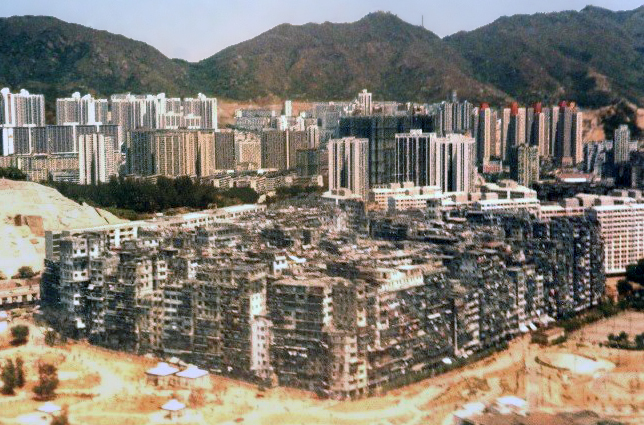
The numbers are what make Kowloon Walled City almost impossible to comprehend. At its peak, the settlement housed an estimated 33,000 people — with some estimates ranging substantially higher — within a footprint of roughly 6.4 acres, an area of about two and a half hectares. That worked out to a population density on the order of well over a million people per square kilometer, a figure so extreme it remains the highest population density ever recorded anywhere on the planet.
To put that in perspective, it packed the population of a small town into the space of a single large city block. Living space was correspondingly minute, with families occupying tiny apartments, some only a few hundred square feet, in a structure where the concept of personal outdoor space essentially didn’t exist except on the rooftops. Those rooftops became one of the few refuges of open air and light — a communal zone used for everything from drying laundry to children’s play to quiet escape, famously overlooked by aircraft roaring past on their approach to the airport, close enough that residents could see the passengers’ windows.
Life Inside the City of Darkness
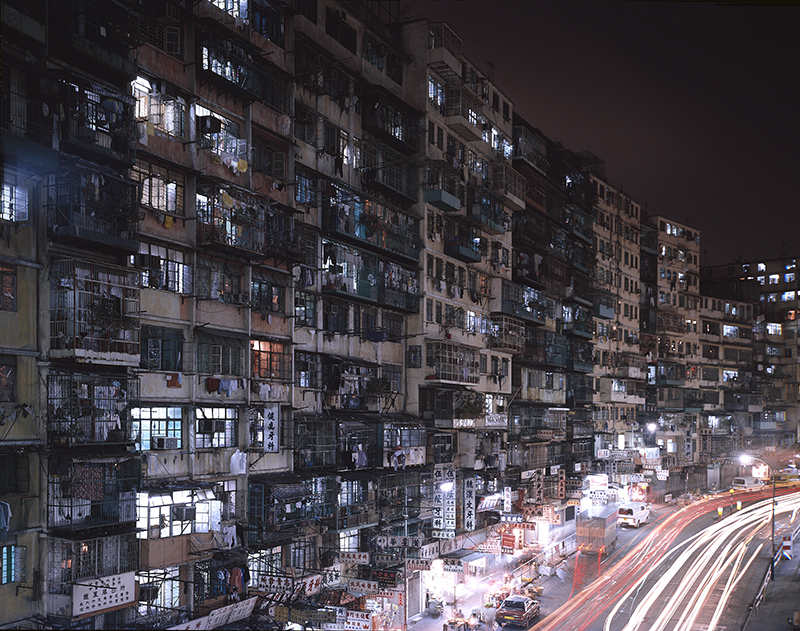
The Walled City’s fearsome reputation was real but incomplete. In its earlier decades especially, the lawlessness attracted organized crime, and the enclave became associated with vice of various kinds — gambling, drugs, and other illicit trades that operated with little fear of the law. This reputation, combined with the claustrophobic darkness and squalor, earned it the nickname “the City of Darkness” and made it a place outsiders feared to enter.
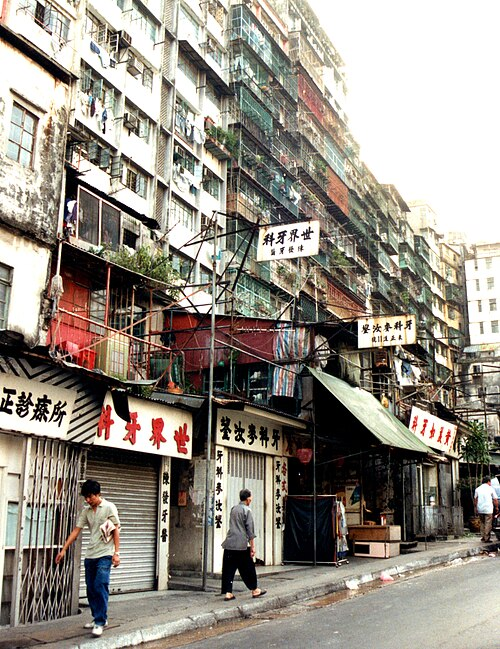
But that was only part of the truth, and arguably not the most important part. Inside, tens of thousands of ordinary people were simply living their lives. The Walled City was full of legitimate businesses operating in the regulatory grey zone: unlicensed dentists and doctors (often well-regarded and affordable precisely because they operated outside the system), food factories, workshops, noodle makers, and countless small enterprises. There were schools, temples, associations, and a real sense of community among many residents, who by numerous accounts formed tight bonds and looked out for one another. Photographers and researchers who spent time inside in its final years consistently reported that, beneath the alarming exterior, the people of the Walled City lived much like people anywhere — working, raising families, and building a real community in one of the most improbable environments on Earth. Over time, as authorities did steadily begin to provide some basic services like water and mail, conditions stabilized somewhat, and the enclave settled into being a strange but functioning neighborhood.
The End
By the 1980s, the Walled City’s days were numbered. As Britain and China negotiated the future handover of Hong Kong, the anomaly of the ungoverned enclave became something both governments finally agreed to resolve. In 1987, the authorities announced that the Walled City would be demolished and replaced with a park.
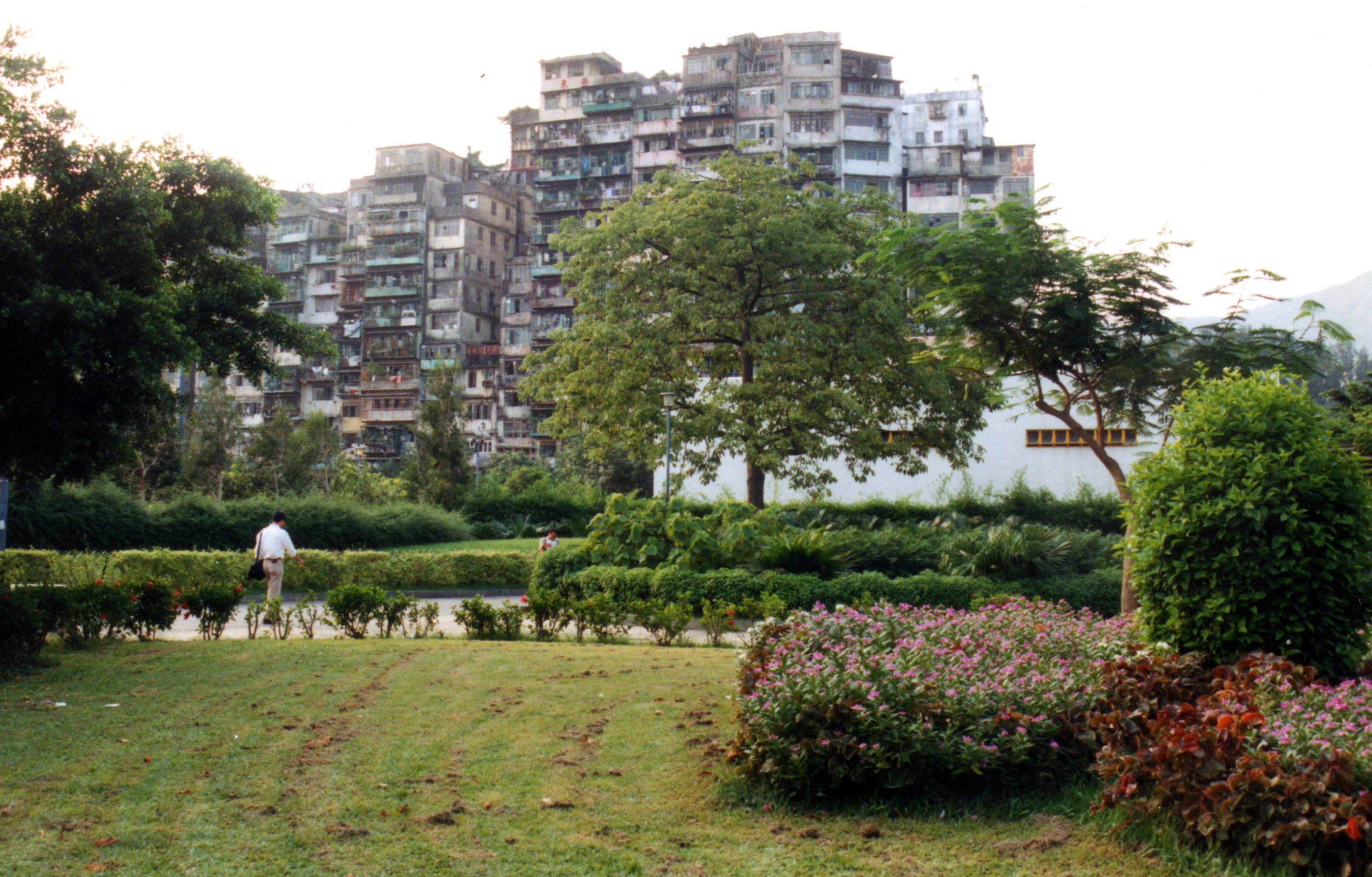
The process was neither quick nor simple. The tens of thousands of residents had to be surveyed, compensated, and relocated, a massive undertaking that took years and was not without conflict, as some residents resisted leaving homes and businesses they’d occupied for decades. Eventually the resettlement was completed, and in 1993 the demolition began, reducing the once-impenetrable mass to rubble over the following months. By 1994 it was gone. On the site today sits Kowloon Walled City Park, a tranquil, landscaped green space with pavilions, ponds, and gardens — about as complete a transformation as can be imagined. A few artifacts were preserved, including the old administrative building and remnants of the original fort, and exhibits within the park tell the story of what once stood there, including a scale model of the vanished labyrinth.
Visiting What Remains
For travelers to Hong Kong, Kowloon Walled City Park is a worthwhile and poignant stop, precisely because of the contrast between what it is now and what it was. The park is free, pleasant, and calm, and the preserved exhibits and model give visitors a sense of the almost unimaginable structure that occupied the same ground within living memory. Standing in a quiet garden where 33,000 people once lived stacked in darkness is a truly strange experience.
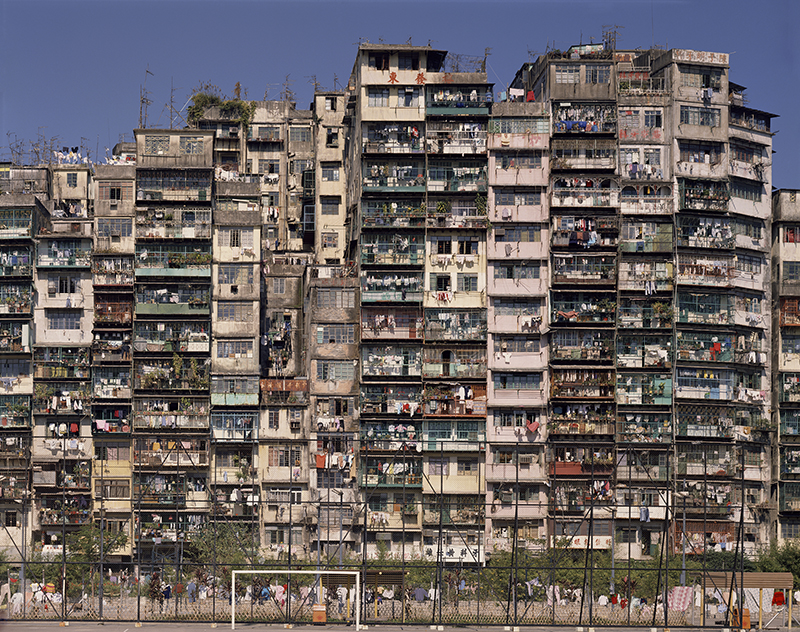
The Walled City has also had a remarkable afterlife in culture. Its extraordinary appearance — the stacked chaos, the tangled wires, the dark corridors — made it a lasting visual touchstone, inspiring filmmakers, artists, game designers, and architects around the world, who continue to be fascinated by it as a vision of what a city can become when it grows entirely without a plan. The photographic record captured in its final years, in particular, preserved the place in extraordinary detail, ensuring that the densest human settlement in history is remembered long after its demolition.
The City That Governed Itself
Kowloon Walled City endures in the imagination because it was a real experiment that no one designed — an accidental answer to the question of what human beings do when you give them a patch of land, desperate need, and no rules at all. The answer, it turned out, was that they built the most crowded place in the history of the world, and then largely made it work: not well, not safely, not with any comfort, but functionally, as a real community with its own economy, its own social order, and its own fierce internal logic.
It was, at once, a slum and a marvel, a den of crime and a tight-knit neighborhood, a monument to dysfunction and a testament to human adaptability. That it existed at all is remarkable; that it lasted for decades, housing tens of thousands in conditions almost no one else on Earth would recognize as livable, is more remarkable still. And that it vanished so completely — replaced by a serene garden where visitors now stroll — gives the whole story the quality of something half-imagined. But it was real, it was here within the last few decades, and by the coldest measure of how many people can occupy how little space, nothing humans have ever built has come close.
Like our content? Follow us for more.