


Sewn into the seam of every mattress and every upholstered chair is a white tag covered in small print, and somewhere in that print is a sentence along the lines of: this tag may not be removed under penalty of law.
Several generations of people read that, took it at face value, and left the tag on for the entire life of the mattress. Some still cut around it when recovering furniture. There is a persistent childhood belief that removing one is a federal crime.
It was never illegal for the owner to remove it. The tag itself said so, in a clause almost nobody read to the end.
What the Tag Was Actually For
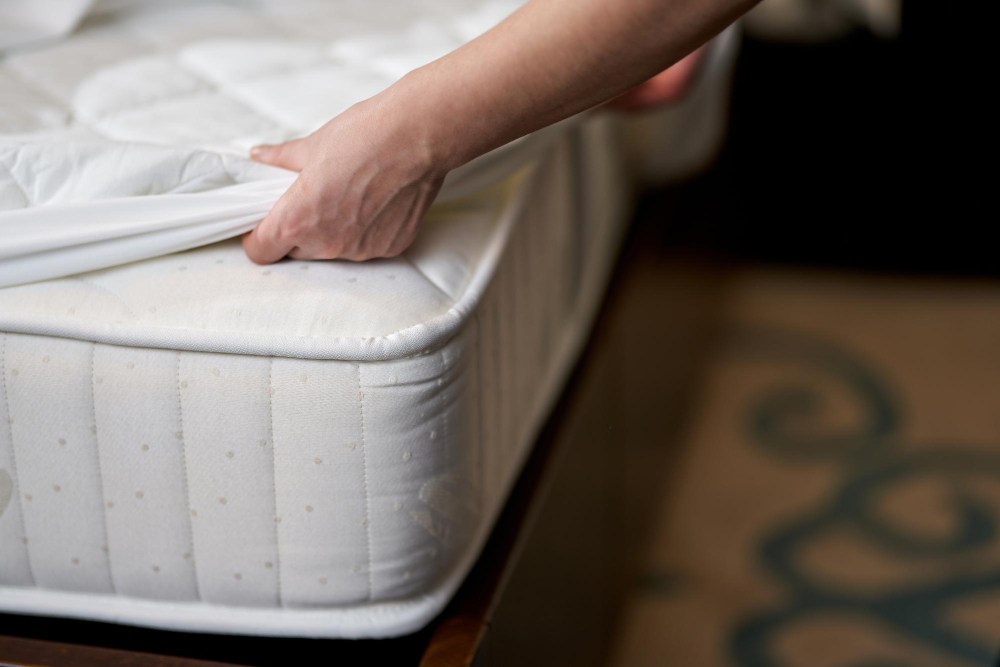
The law label exists because of what used to be inside mattresses.
Through the late nineteenth and early twentieth centuries, upholstered goods were stuffed with whatever was cheap and available: horsehair, straw, corn husks, moss, seaweed, rags, cotton waste, and – this is the part that produced the legislation – material salvaged from previously used bedding, including bedding taken from hospitals and from houses where somebody had died of an infectious disease. The trade in reclaimed stuffing was substantial and entirely unregulated, and a customer buying a mattress had no way of knowing whether the filling was new cotton or the contents of somebody else’s.
This was a public health problem in an era of tuberculosis, and states began to act on it. Through the 1910s and 1920s, state after state passed bedding laws requiring that the contents of a mattress be disclosed on a permanently attached label, that reclaimed material be sterilised and declared, and that a manufacturer be identifiable from the tag.
The tag, in other words, is a disclosure document. It is the ingredient list, and the reason it has to stay attached in a shop is the same reason a food label has to stay on a tin.
Like our content? Follow us for more.
Why the Wording Frightened Everybody
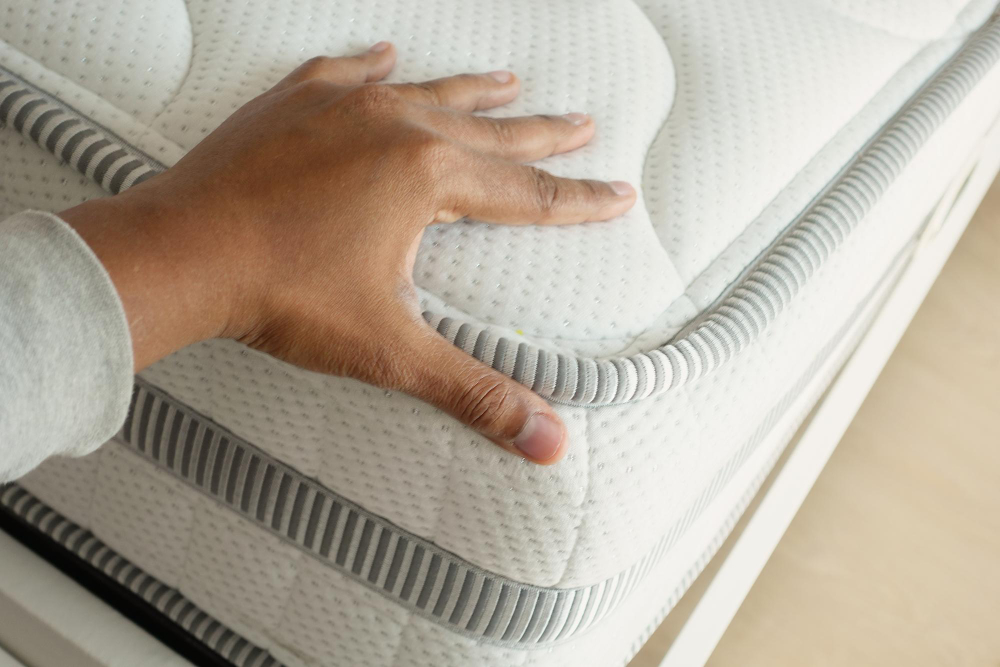
Early labels carried blunt language. The requirement was addressed to the people in the supply chain – the manufacturer, the wholesaler, the retailer – because those were the people the law could reach and the people with an incentive to hide what was in the product. A shop that removed the tag before selling a mattress was defeating the entire scheme.
But the sentence printed on the tag did not say that. It said the tag must not be removed, under penalty of law, and it said it in the kind of dense legal small print that reads as a general prohibition. A customer who got the mattress home and read it had no reason to assume it was aimed at somebody else.
The result was one of the most widely obeyed non-laws in the country. People left the tags on sofas they had owned for thirty years. Furniture restorers worked around them. It became a stock joke, which is itself the clearest evidence of how universally the misunderstanding was held – a joke only works if everybody shares the assumption behind it.
The Wording Was Eventually Fixed

Because the confusion was so widespread, the labels were amended. Modern law labels carry a clause making the position explicit – wording to the effect that the tag may not be removed except by the consumer, or that removal is prohibited except by the purchaser or owner.
That clause has been on labels for decades. It is at the end of a block of small type that includes the filling percentages, the manufacturer’s registry number, the date of manufacture and the state licence numbers, which is to say it is at the end of the part nobody reads. So the folk belief has comfortably outlived its own correction, and the joke still lands.
It is worth saying plainly: you may cut the tag off your own mattress whenever you like. Nobody is coming. There is no agency with jurisdiction over what you do to the furniture in your bedroom.
Two Reasons to Leave It On Anyway

Having established that you are permitted to remove it, there are practical arguments for not bothering.
The first is the warranty. A mattress warranty is typically enforced by reference to the law label, which carries the manufacturer, the model, the date of manufacture and a serial or registry number. Without it, proving which mattress you have and when it was made becomes difficult, and manufacturers do in practice decline claims on unidentifiable mattresses. The tag is the only permanently attached record.
The second is resale and disposal. A great many jurisdictions regulate the sale of used bedding, and the tag is what distinguishes a legitimate second-hand mattress from an undocumented one. If you ever sell, donate or return it, the label is what the next person needs.
Neither of those is a penalty. They are reasons of self-interest, which is a different category from the one most people have filed the tag under.
The Same Tag Is on Far More Than Mattresses

Once you know what you are looking at, law labels turn up everywhere in a house. Sofas, armchairs, ottomans, cushions, pillows, quilts, padded headboards, upholstered dining chairs and children’s soft furniture all carry one, for the same historical reason – all of them were once stuffed with reclaimed material of unknown origin.
The labels are not uniform, because the requirement is largely set state by state rather than nationally. That is why a tag will often list several state registry numbers at once: a manufacturer selling across the country has to satisfy whichever states have their own bedding law, and the cheapest way to do it is to print all the numbers on one label.
The colour sometimes carries meaning too. Different states have at various times used white labels for goods made entirely of new material and other colours for goods containing secondhand or reclaimed filling, so a non-white tag on an old piece of furniture is a genuine signal about what is inside it. The conventions have varied over time and between states, so an old tag is better read than interpreted by colour alone.
How the Law Was Actually Enforced

The bedding laws were not a labelling exercise with a sticker at the end of it. They came with an inspection regime.
States issued registry numbers to manufacturers, which is what the long digit string on the tag is – an identifier tying that mattress to a licensed maker who had filed with the state. Reclaimed filling had to be sterilised at a permitted facility, and the sterilisation itself was licensed and numbered. Inspectors visited factories and warehouses, and in some states they visited shops, because a retailer stripping tags was the most likely point of failure in the whole system.
The penalties were aimed at that behaviour and they were real. A manufacturer who misdeclared contents or a dealer who sold untagged bedding faced fines and the loss of a licence to trade in bedding at all, which in a business built on volume was the more serious of the two.
Seen that way, the sentence on the tag is less a threat than a notice posted on the thing being regulated. It is the same logic as a weights-and-measures seal on a petrol pump or a licence displayed behind a bar: the public gets to see that somebody is accountable, and the person who might want to hide is reminded that the evidence is attached to the goods.
The Tag Grew a Second Job
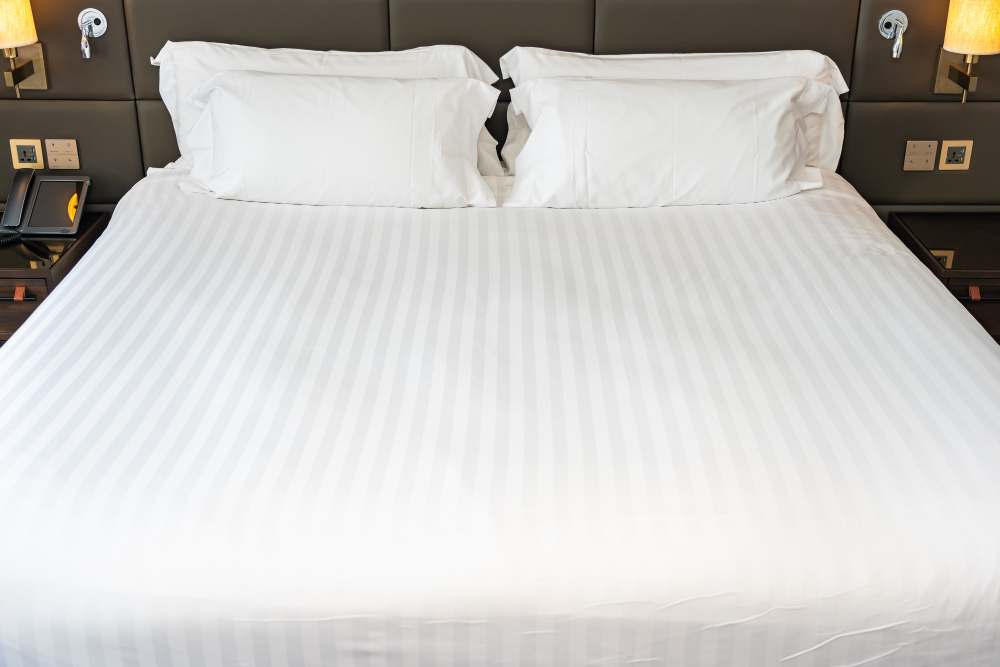
The disclosure label was later joined on the same tag, or on a companion tag, by flammability information – because the second great mattress problem after contamination was that furniture burned.
Upholstered goods filled with foam and covered in synthetic fabric can go from a dropped cigarette to a room fire with remarkable speed, and from the 1970s onward that produced its own wave of regulation. California’s furniture flammability standard became the de facto national one, because no manufacturer wanted to run two production lines, and for decades a tag declaring compliance with it appeared on upholstered furniture sold across the country.
That standard was substantially revised in the 2010s to test smouldering ignition rather than open flame, which allowed manufacturers to meet it without the chemical flame retardants the earlier version effectively required – a change driven by evidence about those chemicals rather than about fire. Newer tags frequently state whether added flame retardants are present.
So the small white rectangle on the side of your mattress is now carrying two separate public health arguments, a century apart, one about what used to be stuffed into bedding and one about what used to be sprayed onto it. Neither of them has anything to do with whether you are allowed to cut it off.
Why the Myth Survived So Well
Three features made this particular misunderstanding unusually durable.
It was printed, permanently, on an object in almost every bedroom in the country, which gave it a distribution no rumour could match. It was phrased as a legal threat, and people do not generally test legal threats for the sake of a bit of fabric. And there was no obvious benefit to removing the tag, so nobody had a reason to find out whether the threat was real.
A false belief with a trivial cost of compliance and no obvious way to disprove it is close to a perfect survival design. It cost nothing to obey, so everybody obeyed, so everybody saw everybody else obeying, which is the strongest evidence most people ever require.
The underlying law, meanwhile, did exactly what it was written to do. Mattresses are no longer stuffed with other people’s bedding, the contents are disclosed, and the manufacturer is identifiable. It is a genuine piece of successful consumer protection whose only lasting cultural footprint is a joke about a tag.
Like our content? Follow us for more.
