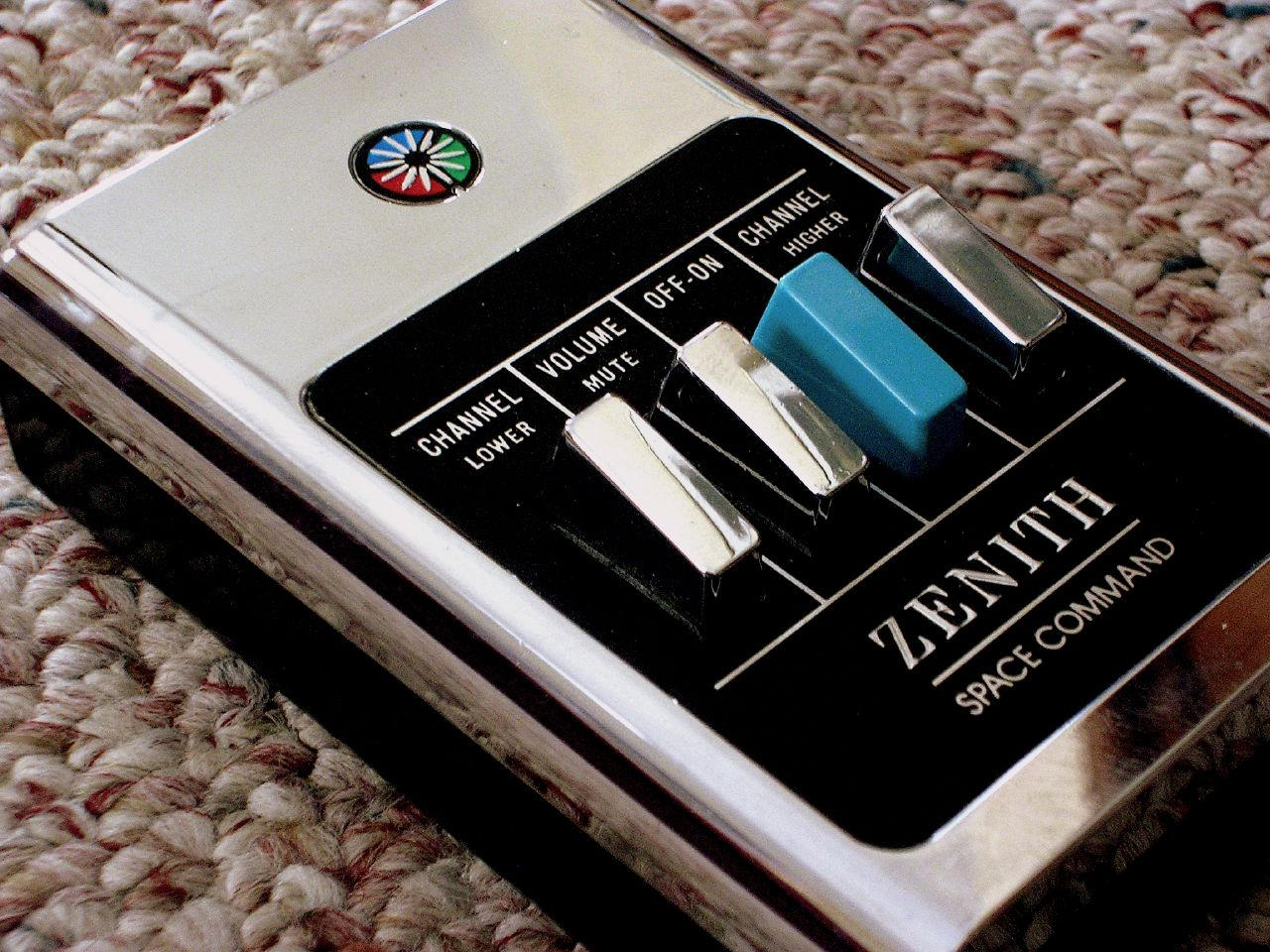
An older relative calls the television remote the clicker, and the word sounds like nostalgia for a sound that modern remotes do not make.
It is not nostalgia. It is a description. The first commercially successful wireless television remote contained no batteries, no circuitry and no transmitter in any ordinary sense. Pressing a button released a hammer that struck a short aluminium rod, which rang at a frequency above human hearing, and the television had a microphone listening for it. It clicked because clicking was the mechanism.
The Problem Was Advertising
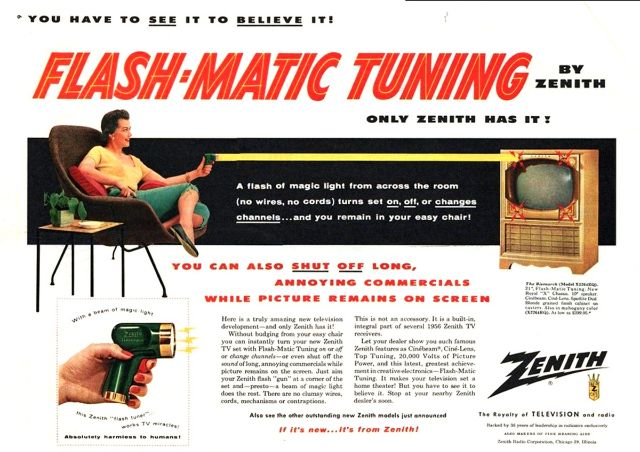
Television manufacturers did not develop remote controls so that people could watch comfortably. They developed them so that people could escape commercials, and they said so in the advertising.
By the early 1950s the complaint was already well established: programmes were interrupted frequently, the interruptions were louder than the programmes, and getting up to turn the sound down and back up again was tiresome. One manufacturer’s early remote was marketed explicitly on the promise that the viewer could now silence an advertisement without leaving the chair, and the company’s founder was personally and publicly contemptuous of commercials.
So the remote control’s original selling point was not convenience in general. It was a specific weapon against a specific annoyance, and it is one of the few consumer technologies whose purpose was openly adversarial towards the industry funding the thing it controlled.
Like our content? Follow us for more.
First It Had a Wire, and People Fell Over It
The earliest attempt, in 1950, was a handset connected to the television by a cable running across the floor. It worked perfectly and was a disaster, because a cable running across a living room floor is something a family trips over, and the complaints were immediate.
The wired unit had a name that acknowledged the problem with some humour, and it was withdrawn in favour of something wireless. The first wireless attempt, a few years later, used a directional torch: the viewer shone a beam of light at a photocell in one corner of the television cabinet, and each of the four corners did a different job.
That failed for a reason nobody had anticipated in the laboratory. A photocell cannot tell the difference between a beam from a handset and sunlight falling across the cabinet in the afternoon, so televisions changed channel on their own whenever the sun came round. The device needed to use a signal that did not occur naturally in a living room.
How the Clicker Worked
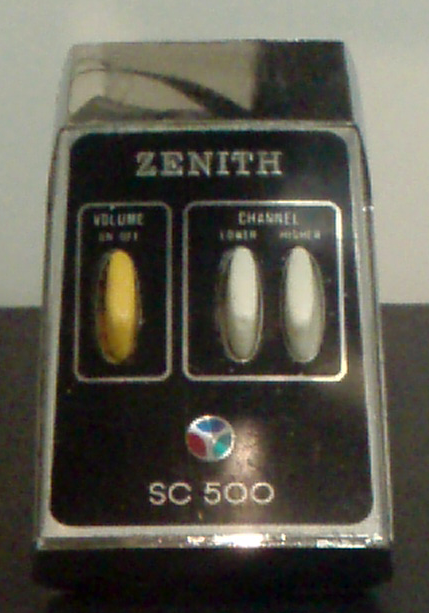
The answer, introduced in 1956, was mechanical and entirely ingenious.
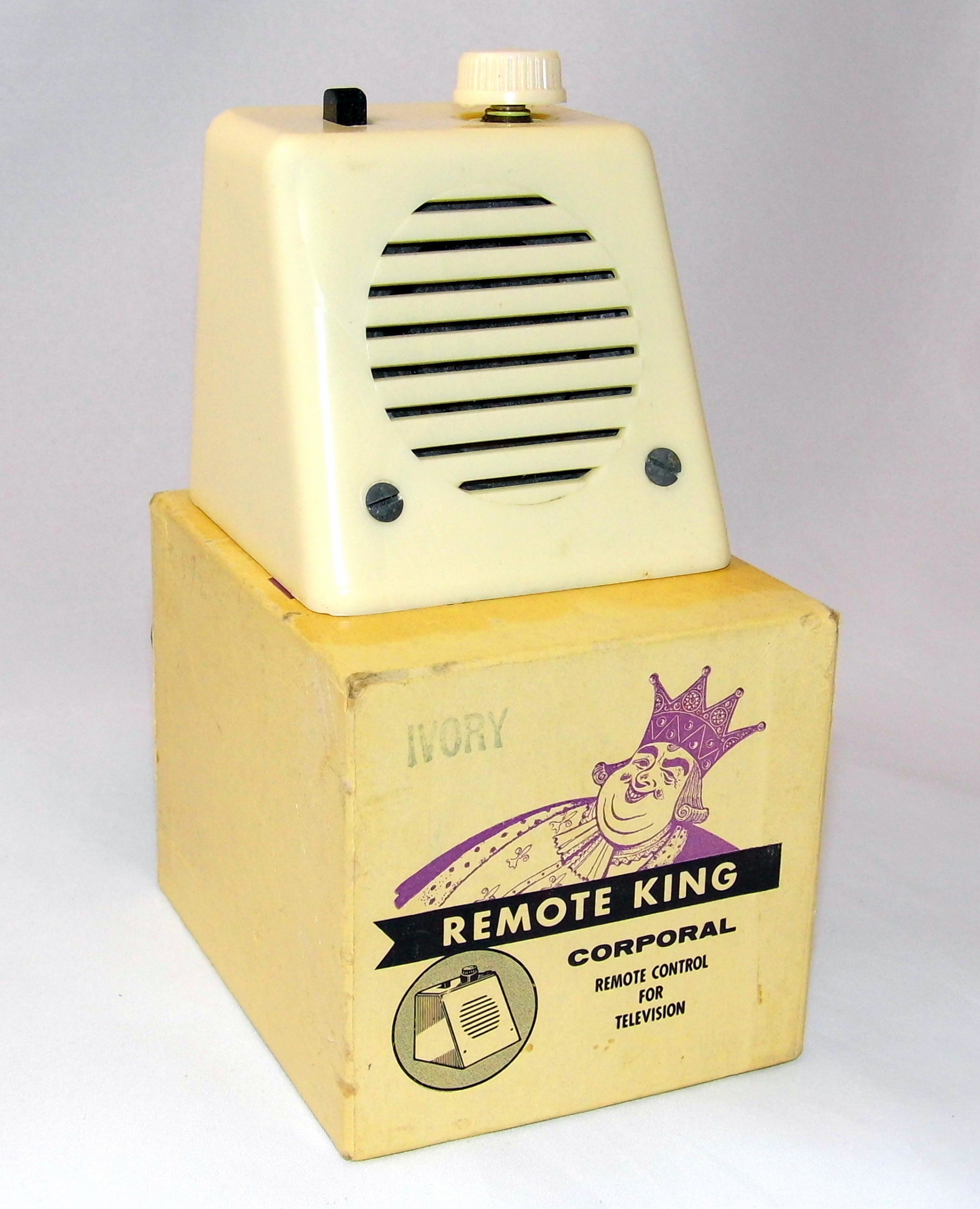
Inside the handset were short aluminium rods of slightly different lengths. Pressing a button released a small spring-loaded hammer which struck one of them, and the rod rang at its own ultrasonic frequency – above the range of human hearing, but distinct and consistent. Inside the television, a microphone and a bank of tuned filters listened for those specific frequencies and acted on whichever one arrived.
Four rods gave four commands: channel up, channel down, sound on or off, and power. The handset needed no battery, could not run flat, and would still work after being dropped, sat on, or left down the side of a chair for a year. It made an audible click as the hammer fired, which is where the name came from.
It was not perfect. Keys, coins and metal objects jingling together produced ultrasonic components, and so did certain dog whistles, so a television could change channel when somebody dropped their keys on a side table. Dogs could hear the handset, and a number of them objected to it. But it worked well enough to sell in large numbers, and ultrasonic remotes remained the standard for roughly two decades.
Then the Whole Thing Went Infrared
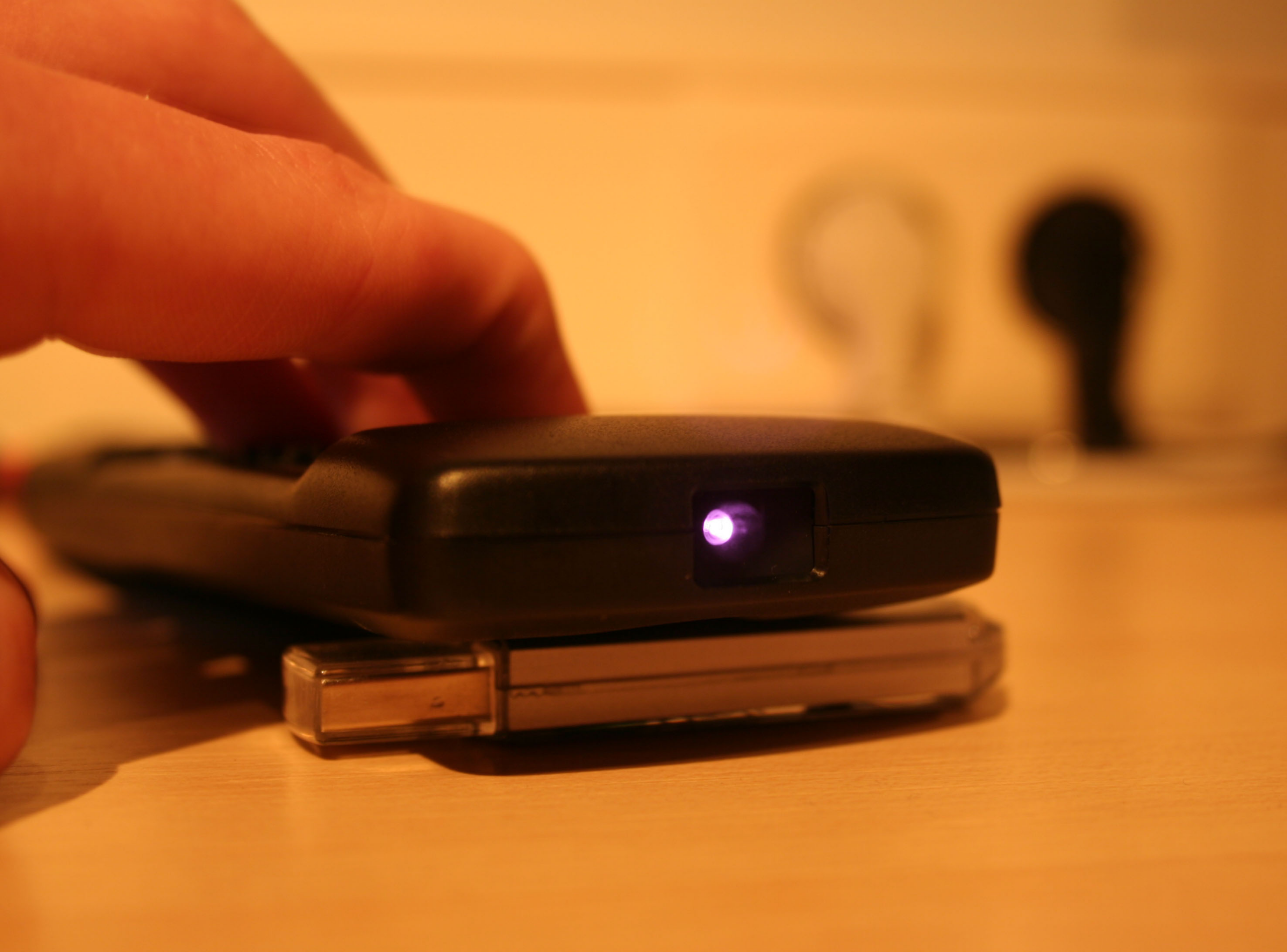
Through the late 1970s and early 1980s, ultrasonic remotes were replaced by infrared, and this is the technology still in use in most households today.
An infrared remote contains a light-emitting diode that produces light just outside the visible range, pulsed in a coded pattern. The television has a receiver tuned to that pattern. It is cheap, it is immune to jingling keys, it can carry far more commands than four, and – the detail that matters most – the codes can be assigned freely, which is what made a remote with fifty buttons possible.
That is the real break in this story. A mechanical clicker could realistically address four functions. Infrared could address a hundred, and so the number of functions expanded to fill the space, and the handset grew buttons for teletext, picture settings, input selection, menus and subtitles. The remote stopped being a device for silencing advertisements and became the primary interface for the television, which is the position it still occupies.
You can see an infrared remote working, incidentally. Point it at a phone camera and press a button: most phone sensors register the infrared as a visible flickering purple-white light, which is the standard way of checking whether a dead remote is actually dead or just needs batteries.
Before Any of It, the Television Had No Buttons Worth Pressing
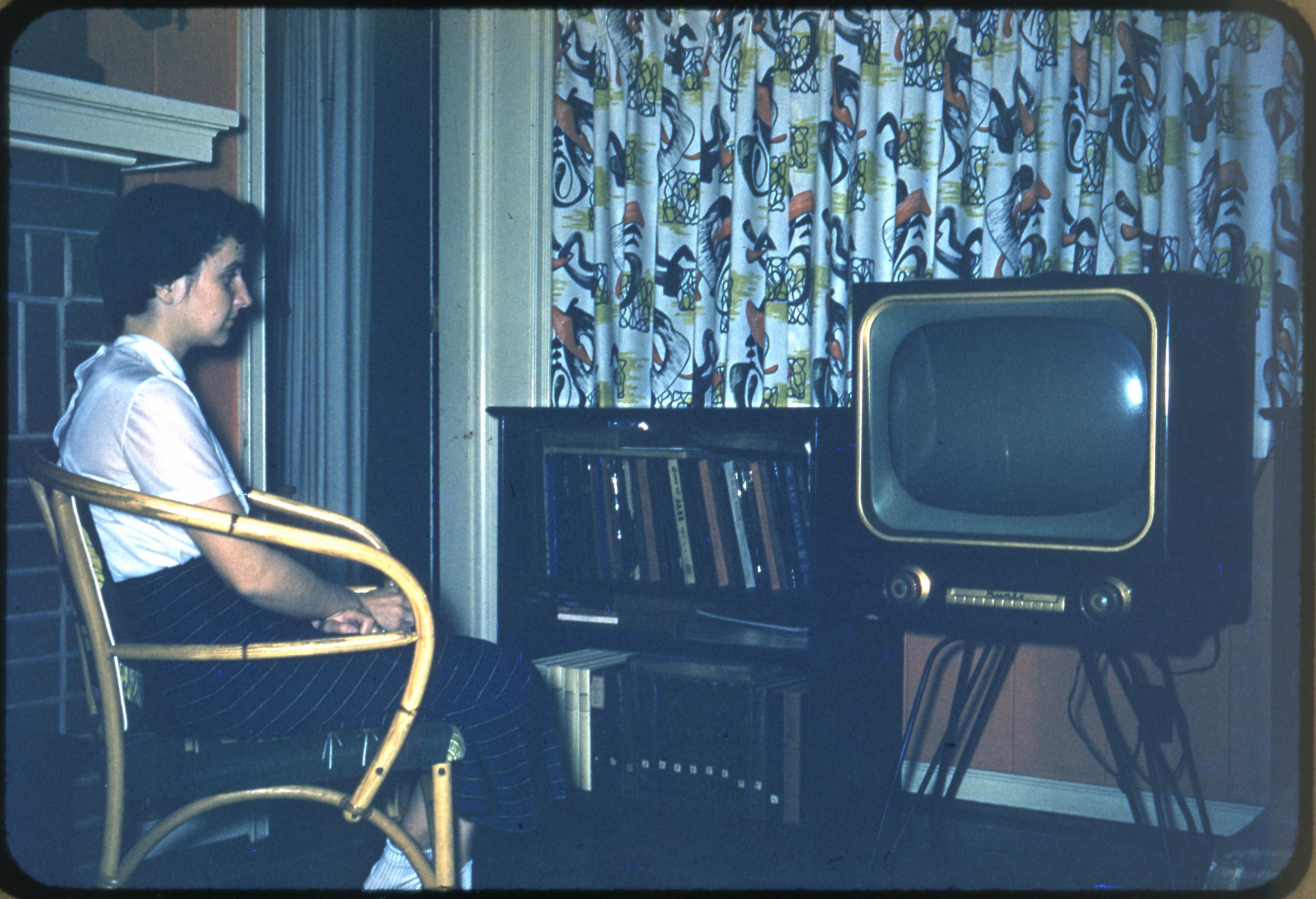
It is worth remembering what the remote was replacing, because the effort involved explains why people wanted one so badly.
A television set of the early 1950s was a piece of furniture. Changing channel meant getting up, crossing the room, and turning a heavy mechanical rotary tuner through every intermediate position with an audible clunk at each stop – there was no jumping straight to a channel. The volume was a separate knob, and so, on most sets, were brightness, contrast, vertical hold and horizontal hold, all of which drifted and needed correcting during an evening.
A viewer with a modern set does not have to adjust anything. A viewer in 1953 was intermittently operating a machine. The picture rolling vertically up the screen was a routine event, fixed by somebody getting up and turning a knob by feel while everybody else called out whether it had stopped.
That is the household the remote arrived into, and it explains the reaction. It was not a minor convenience. It was the end of one person – almost always the same person, and almost always a child – being sent across the room several times an hour for the rest of the evening. Every account of early remote ownership mentions the same thing: the arguments were no longer about who had to get up, they were about who was holding it.
The Remote Changed Television Itself
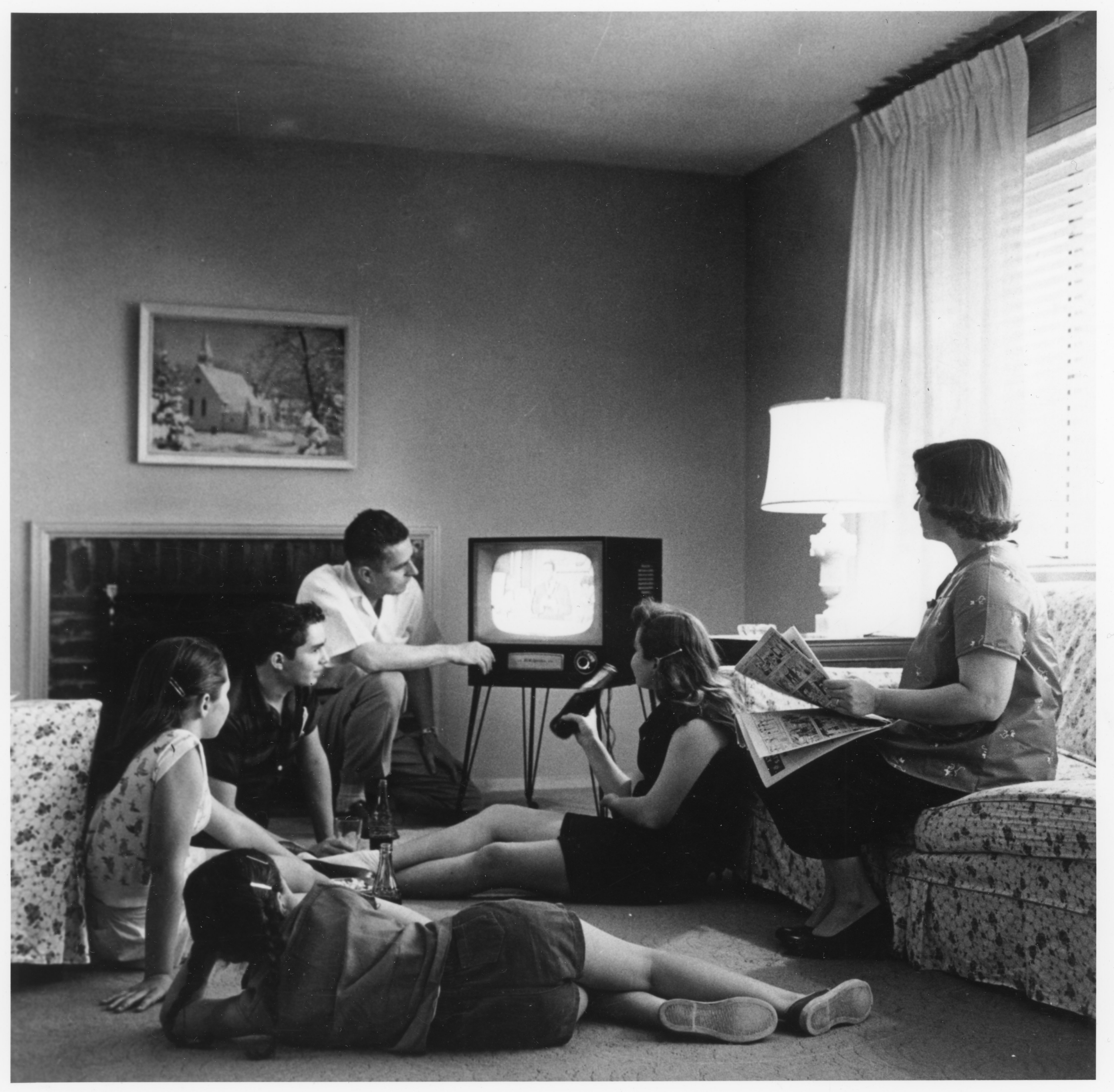
Broadcasters understood quickly what had been handed to the audience, and the programming changed to account for it.
Before remotes were widespread, changing channel cost effort, and a viewer who had settled on a channel tended to stay there. Once changing cost nothing, the audience became volatile within seconds, and the industry developed a vocabulary for what people were now doing – grazing across channels, flipping during breaks, and the specific behaviour of watching two things at once.
Programmes responded with faster openings, cold opens before the titles, cliffhangers before every break, and a general compression of the time a show was allowed to take before giving the viewer a reason to stay. The remote is one of the genuine causes of the increase in editing pace across television over the following decades, and it is a rare example of a hardware accessory reshaping the content it was built to receive.
Why There Are Still Seven of Them in the Drawer
The universal remote was supposed to solve the proliferation and largely did not, for a reason that is instructive.
Infrared command codes were never standardised across the industry. Each manufacturer developed its own code set, and a universal remote works by containing a library of them and being told which one to use. That works until a device uses a code set the library does not have, or until a function exists on the original handset and not in the generic profile – which is almost always the case for the functions people actually need.
The newer answer is to abandon the handset. Consumer electronics control over a cable connection lets a television command devices plugged into it, so one remote operates several boxes. Voice control and phone applications remove the handset altogether. Bluetooth remotes no longer need line of sight, which is why a modern streaming device responds from across the room with the remote pointed at the floor.
And yet almost every household still has a drawer with several dead handsets in it for equipment that was thrown out years ago, because nobody can ever be certain which one still belongs to something. That drawer is the most honest monument the clicker has.
There is a final irony in all of it. The 1956 handset had four buttons, no battery, could be dropped down a stairwell without damage, and did its single job reliably for decades. A current one has upwards of forty buttons, most of which nobody in the house has ever pressed, needs two cells replaced every year or so, stops working when a sofa cushion presses a key, and is frequently the component of an entertainment system that fails first.
The clicker was not better television technology. It was, by a considerable margin, better equipment – and the person who still calls it that is describing a thing that genuinely worked, not just a thing that used to be.
Like our content? Follow us for more.