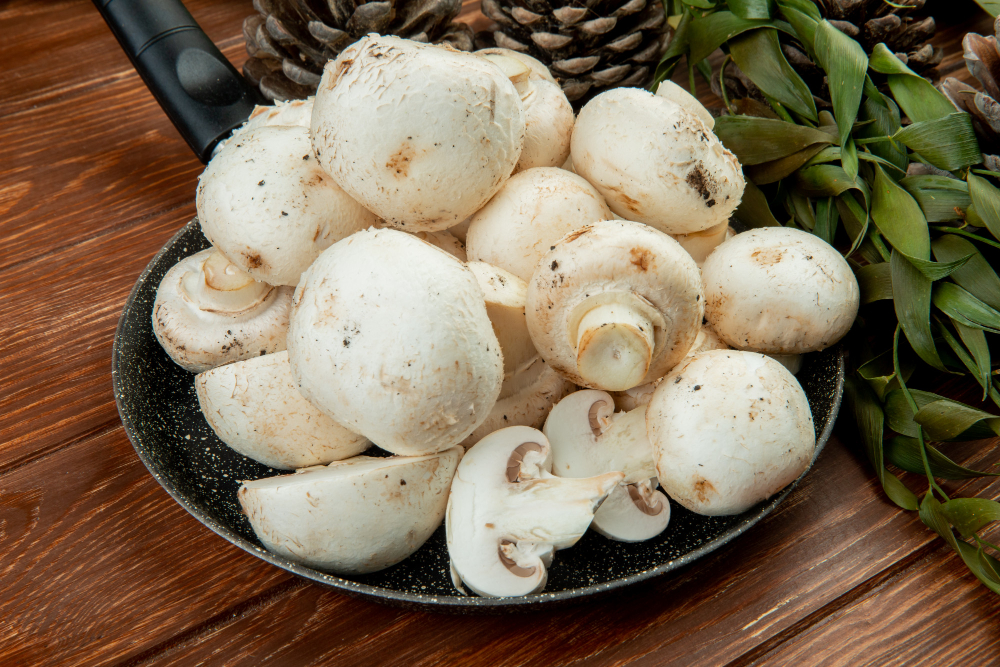
This single misunderstanding, that the mushroom is the fungus, is responsible for most of what people get wrong about fungi. It makes them seem like odd, short-lived things that appear after rain and rot away in a week. What actually appears after rain is a reproductive structure with a lifespan of days, produced by an organism that may be decades or centuries old and that has been present, invisibly, the entire time.
What the Organism Actually Is
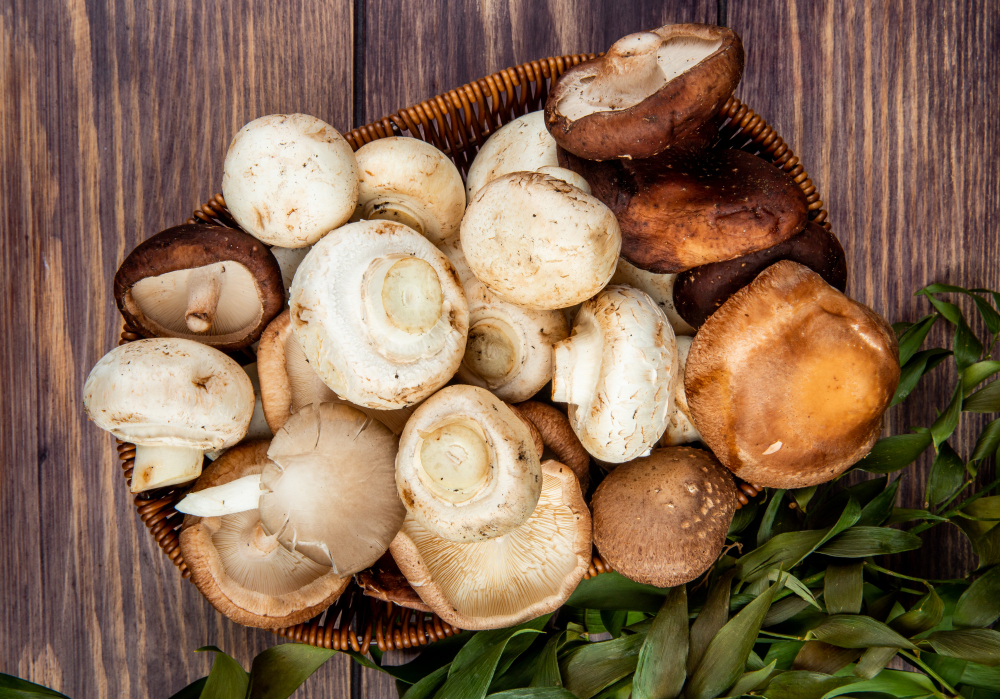
A fungus grows as hyphae: microscopically thin tubes, typically a few thousandths of a millimetre across, that extend at the tip and branch behind. A mass of hyphae is called mycelium, and mycelium is the fungus.
If you lift a piece of rotting log or peel back damp leaf litter, the white or cream threads and the fine webbing running through it are mycelium. In soil it is frequently invisible to the naked eye, threaded between particles, but it is there in most soils in quantities that are difficult to picture. A handful of woodland soil can contain hyphae which, laid end to end, would run for kilometres.
The whole design is committed to surface area. A hypha is thin because being thin is the point: the organism absorbs everything it consumes directly across its wall, so the more wall it has in contact with its food, the faster it works. An animal solves the food problem by having a gut, an internal space with a large surface area folded up inside the body. A fungus solves it by dispensing with a body and turning itself into the surface.
Like our content? Follow us for more.
It Digests Things Outside Itself

A fungus cannot swallow. It has no mouth, no gut, and no way to take a solid particle inside itself.
What it does instead is secrete enzymes out through the hyphal walls into the material around it, break the material down where it lies, and absorb the resulting soluble molecules back in. The digestion happens outside the organism, in the log or the leaf or the soil, and the fungus is standing in its own stomach.
This is a powerful approach, because the enzymes can be tailored to whatever the fungus is growing through. Some fungi produce enzymes capable of breaking down lignin, the rigid compound that makes wood woody and that almost nothing else on Earth can dismantle. This is not a minor talent. Without organisms that can degrade lignin, dead trees would not rot in any meaningful sense, and the carbon locked in them would stay locked. Fungi are the main reason a fallen tree eventually becomes soil rather than a permanent feature of the landscape.
It also explains why fungi appear where they do. A fungus does not go looking for food in the way an animal does. It grows into it, extending through the substrate in whatever direction yields something worth digesting, and starving back where it does not.
Then Why Produce a Mushroom at All
Absorption works fine for feeding, but it does nothing for reproduction. Spores have to leave, and they have to leave far enough to reach ground the parent is not already occupying. That requires getting them up into moving air, and for that the fungus needs a structure.
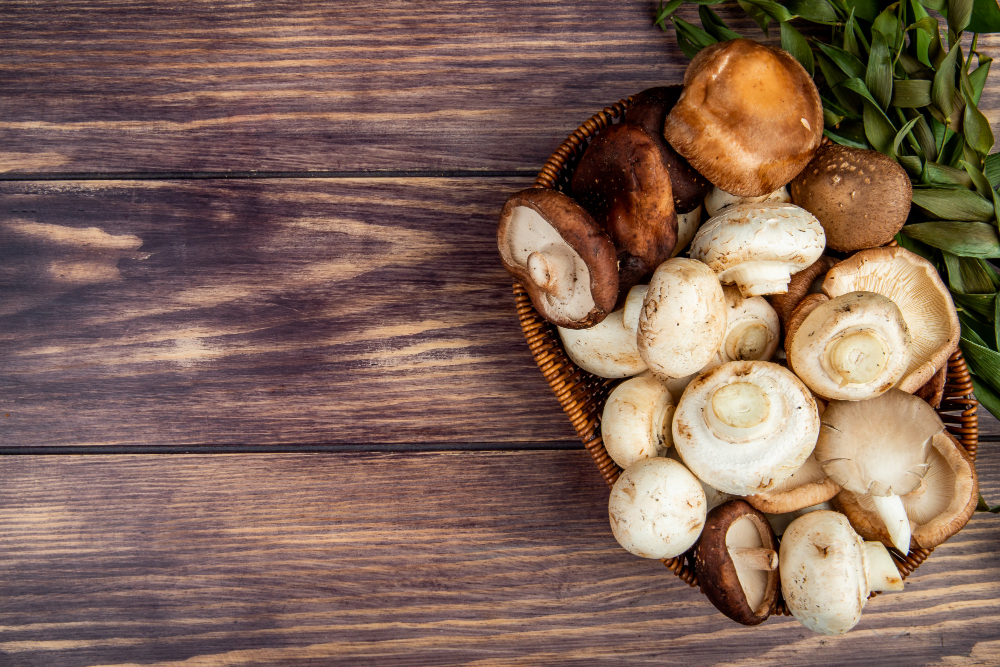
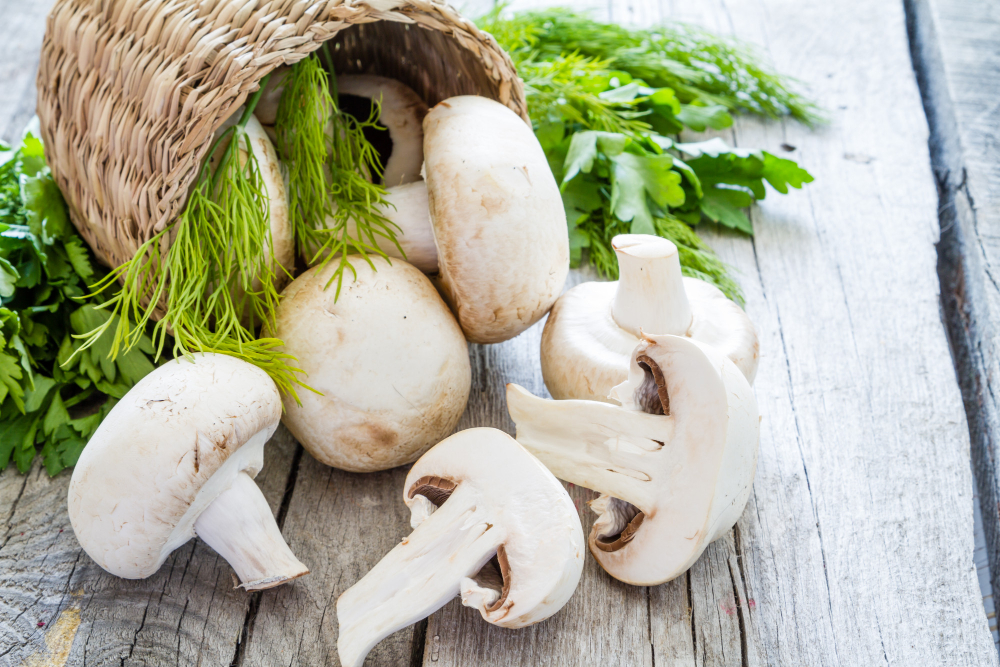
A mushroom is that structure and nothing more. When conditions are right, usually a combination of moisture, temperature and the mycelium having accumulated enough resources, hyphae in one region pack tightly together into a dense knot, which then expands rapidly into the familiar shape.
The expansion is largely a matter of pumping water into cells that are already built, which is why mushrooms can appear overnight and why the classic phrase about something springing up like a mushroom is accurate. The structure was substantially pre-assembled underground; what happened overnight was inflation.
The design is entirely about spore release. The gills or pores on the underside are a surface-area solution again: folding the spore-bearing tissue into gills multiplies the productive area enormously within a small cap. The cap itself shelters that surface from rain. The stem lifts the whole apparatus clear of the ground so that spores falling from the gills drop into air that is moving rather than into still air at soil level.
The numbers are extraordinary. A single ordinary field mushroom can release spores in the billions over the few days it stands. Almost all of them land somewhere that will never support growth. The strategy is not precision; it is volume.
Some of Them Are Enormous and Very Old
Because mycelium simply keeps extending as long as there is food, a fungus has no fixed adult size. It does not reach maturity and stop. It grows outward indefinitely, and if nothing kills it, it can become extremely large.
The best-documented cases are honey fungus in North American forests, where genetic testing has shown single individuals occupying several square kilometres of forest floor. One in Oregon is frequently cited as among the largest organisms known by area, and its age is estimated in the thousands of years, though both the area and the age depend on methods and assumptions that specialists continue to argue over.
The point stands regardless of the exact figures. These are not colonies of separate organisms. Genetic sampling across the area returns the same individual, because the mycelium spread outward from a single origin and remained continuous. It is one organism in the same sense that a very large plant is one organism, and it has been quietly doing this since long before anything nearby was written down.
The same growth pattern produces something much easier to see. A fairy ring is a fungus that started at one point and has been expanding outward evenly ever since, exhausting the resources at the centre and fruiting only at the advancing edge, which is a circle. The ring is the perimeter of the organism. Measure the ring, allow for the annual growth rate, and you have a rough age. Large rings in old grassland can be centuries old.
They Are Not Plants, and They Are Not Close
Fungi were classified as plants for a long time, on the reasonable-looking grounds that they grow in soil and do not move. Both premises are weak and the classification was wrong.
Fungi do not photosynthesise. They have no chlorophyll and cannot make their own food from light, which is the defining plant capability. They obtain carbon by consuming other organisms or their remains, which is what animals do.
Their cell walls are made of chitin, the same material as an insect’s exoskeleton, not the cellulose that builds plant cell walls. They store energy as glycogen, as animals do, not as starch, as plants do.
And the molecular evidence places them, awkwardly for intuition, closer to animals than to plants. Fungi and animals share a more recent common ancestor with each other than either does with the plant kingdom. A mushroom is a more distant relative of the grass it is growing in than it is of the person looking at it.
What They Are Doing to Everything Else
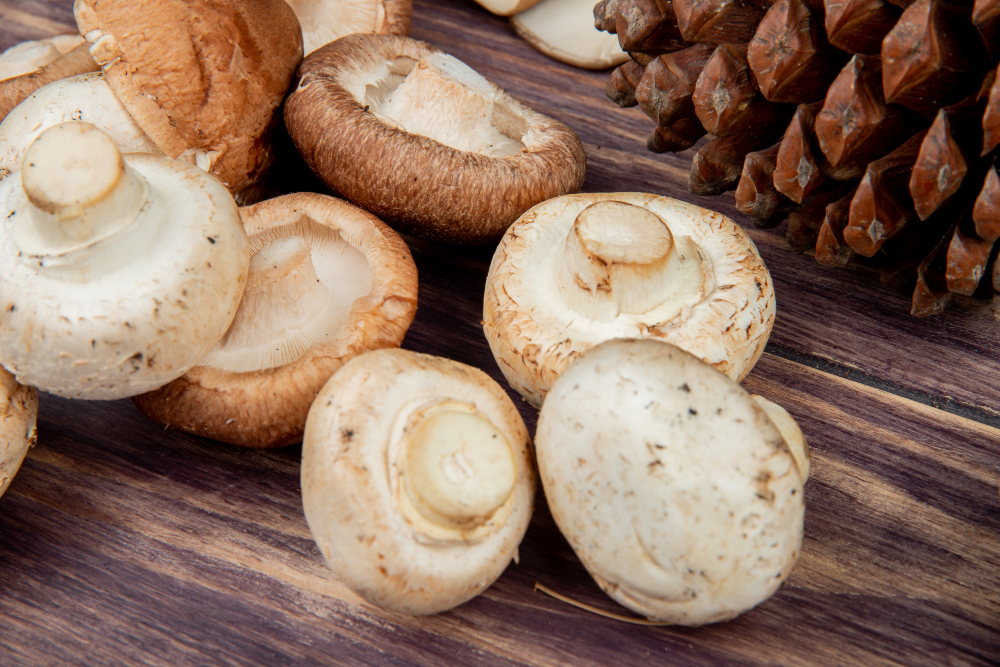
The fungal contribution to the ordinary functioning of the world is much larger than the visible mushrooms suggest.
Decomposition is the obvious one. Fungi are the primary agents breaking down wood and tough plant material, returning locked-up carbon and nutrients to circulation. Bacteria handle a great deal of decay, but the hard structural compounds in wood are largely a fungal problem to solve.
The less obvious one is the partnership with plant roots. The great majority of land plants grow with fungi associated with their roots, an arrangement in which the fungus extends the effective reach of the root system for water and minerals, particularly phosphorus, and receives sugars from the plant in return. The fungal threads are far thinner than the finest root and can reach into pore spaces roots cannot enter. This relationship is ancient, it appears in the fossil record alongside the earliest land plants, and the current view is that plants may not have been able to colonise land without it.
A great deal has been written recently about what these root associations do beyond simple exchange, and some of those wider claims are actively disputed among researchers. The straightforward nutrient-for-sugar exchange, though, is not in doubt and is doing quiet work under most of the vegetation on Earth.
Fungi are also the source of a very large share of antibiotics, the agent in bread, beer and wine, the organism behind blue cheese and soy sauce, and one of the more serious problems in agriculture, since fungal diseases destroy a substantial fraction of the world’s crops every year.
What You Are Actually Looking At
So a mushroom on a lawn is the visible, temporary, reproductive tip of something that is mostly invisible, mostly permanent and mostly underneath.
Picking it does not harm the organism, in the same way that picking an apple does not harm a tree, though trampling the ground compacts the soil and does. The fungus will fruit again when conditions suit it, from the same mycelium, possibly for decades.
And the reason mushrooms seem to appear from nowhere after rain is that nothing appeared. The organism was already there, spread through the ground you were walking on, digesting the material it was standing in, and waiting for enough water to inflate a structure it had already largely built.
Like our content? Follow us for more.