

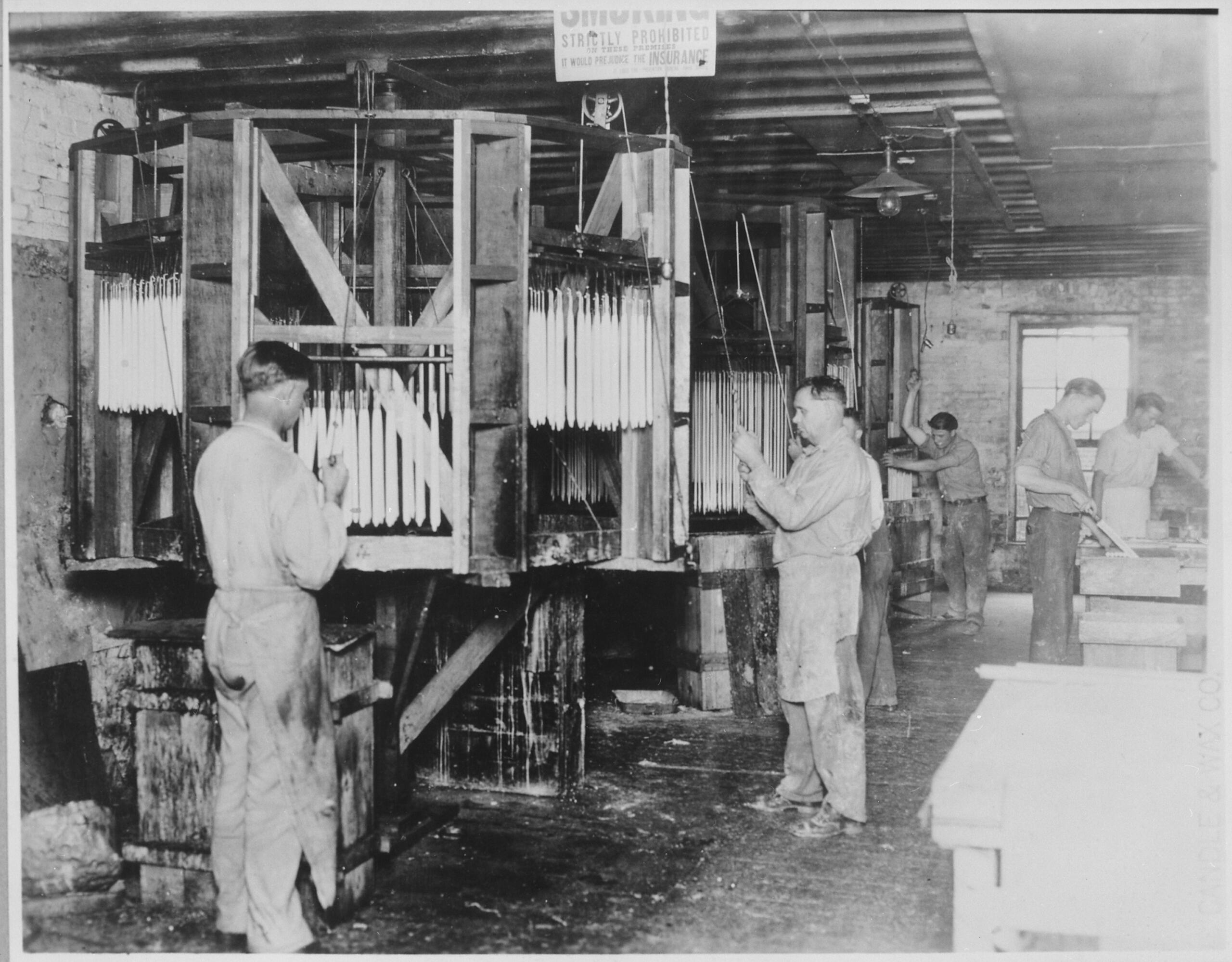
In 1960 the candle industry had already lost the thing it existed for. Electric light had been general for decades, and what remained was churches, emergencies, decoration and export.
The candles were dipped, drawn or moulded. The wick was matched precisely to the wax and the diameter, because that relationship is what makes a candle burn cleanly rather than smoke or drown. And the whole works smelled of nothing worse than warm wax.
Here are eleven things that were ordinary in a candle works in 1960, and what became of each one.
1. The Trade Had Already Lost Its Main Purpose Fifty Years Earlier
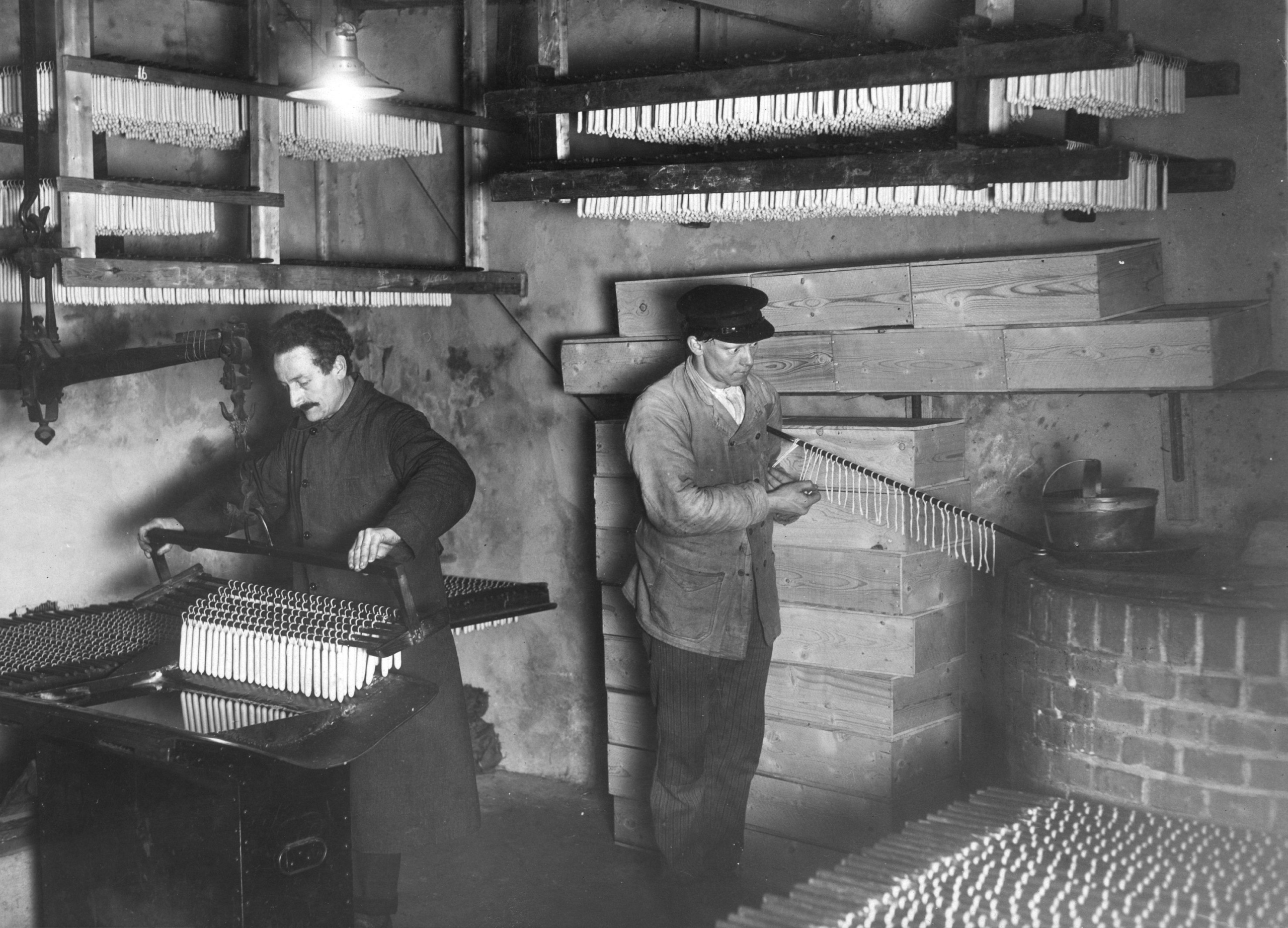
Candles existed to provide light, and by 1960 electric lighting had been general for decades. The industry that remained was making candles for churches, for emergencies, for decoration and for export to places without reliable supply.
The decorative and scented market became the business almost entirely, and it is now far larger in value than the lighting trade ever was. It is the clearest case in this series of an industry surviving by becoming something else: the same object, made the same way, sold for an entirely different reason.
Like our content? Follow us for more.
2. Wax Was Melted, Dipped and Drawn in Enormous Quantities
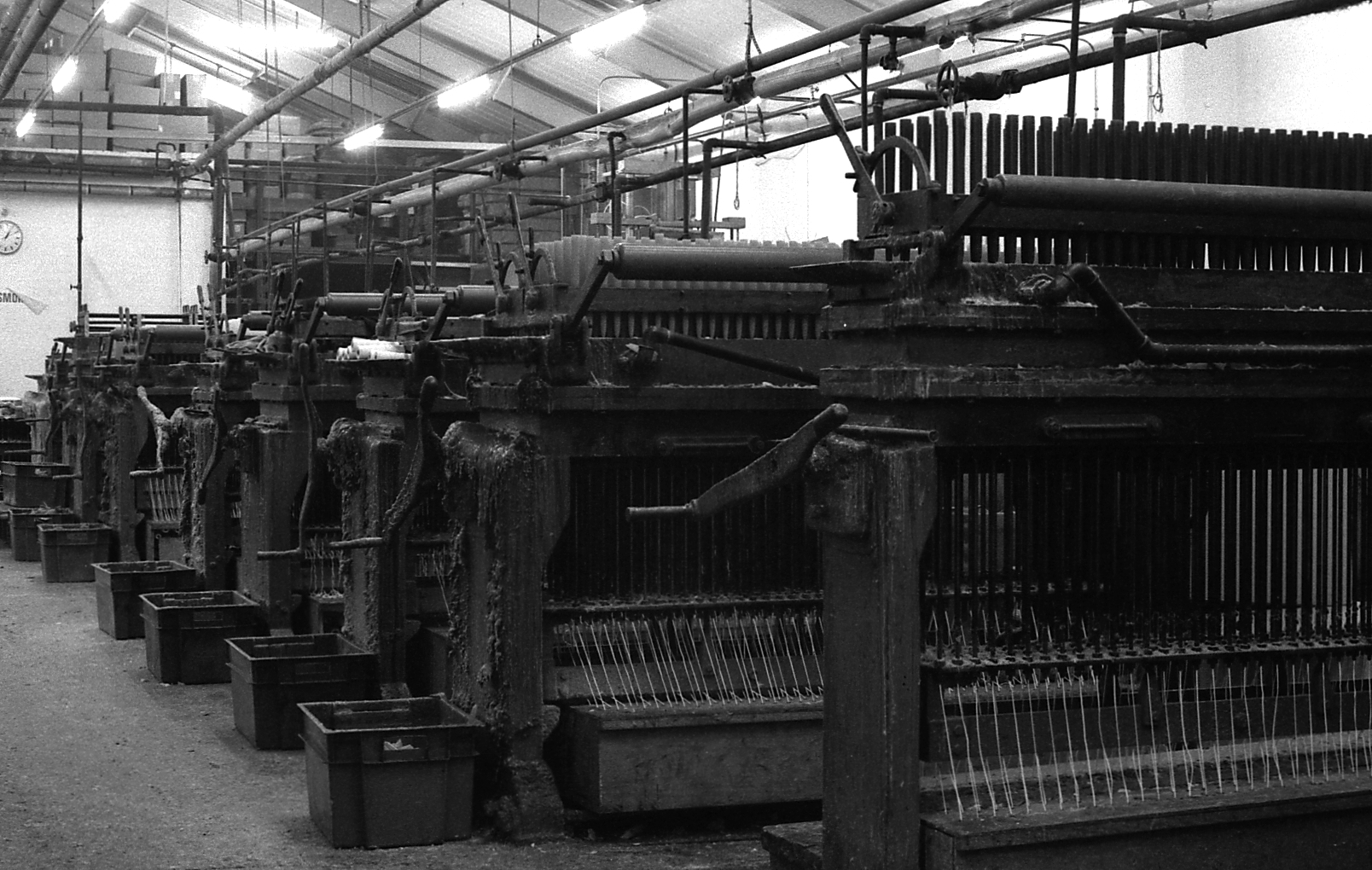
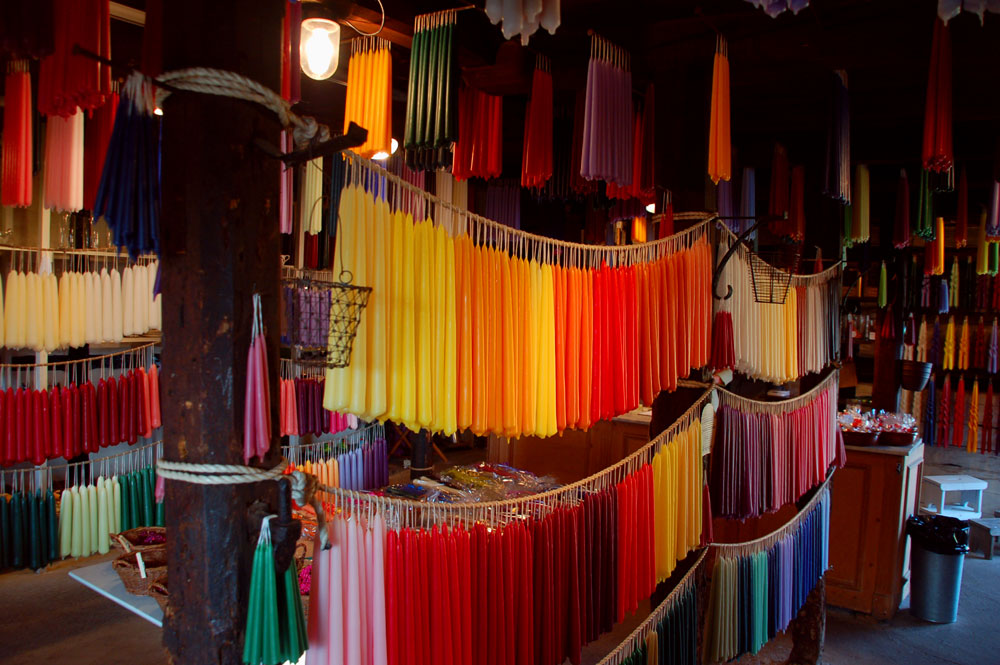
Candles were made by dipping wicks repeatedly into molten wax, by drawing a continuous wick through a bath and building the candle up in passes, or by casting in moulds – each method producing a different product.
Continuous extrusion and automated moulding dominate volume production, and dipping survives for tapers and for craft work. The dipped candle is built up in visible layers, which is why a cut cross-section of one shows rings like a tree, and it is the quickest way to identify how a candle was made.
3. The Wick Was the Whole Engineering Problem
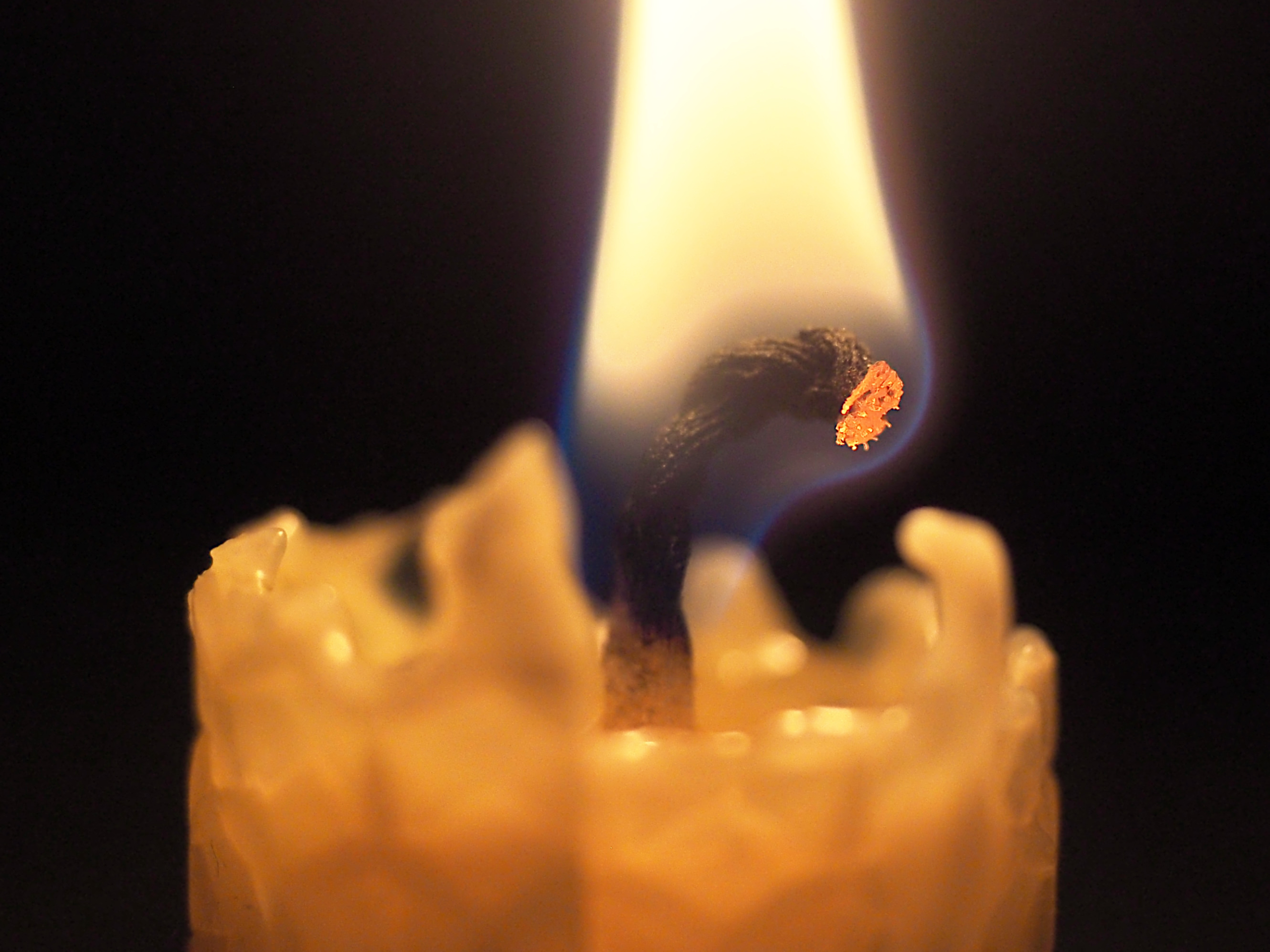
A candle is a self-regulating system – the flame melts the wax, the wick draws it up by capillary action, and the wax burns as vapour. Getting that balance right means matching wick size and construction precisely to the wax and the diameter.
Unchanged and still the controlling variable. A wick too large makes a smoking guttering flame, too small and the candle tunnels and drowns itself in its own wax, and the fact that a candle burns cleanly at all is a tuned relationship rather than an accident.
4. The Wicks Were Plaited So They Would Curl Into the Flame
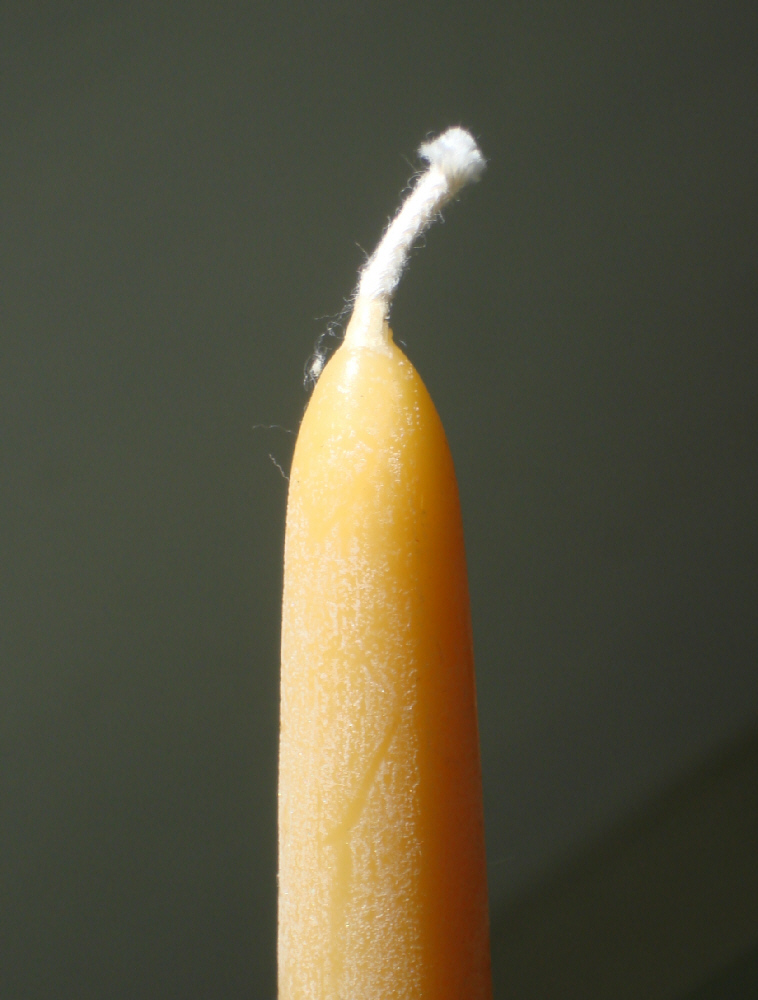
Plaited wicks are constructed asymmetrically so that as the candle burns the tip bends outward into the hot part of the flame, where it burns away.
Still the standard construction. Before this was worked out, candles required snuffing – trimming the burnt wick by hand every few minutes, with a special tool, or the flame smoked and dimmed. The self-trimming wick abolished an entire domestic chore and an entire category of household object, and almost nobody now knows that either existed.
5. Tallow Was Still Being Rendered Within Living Memory
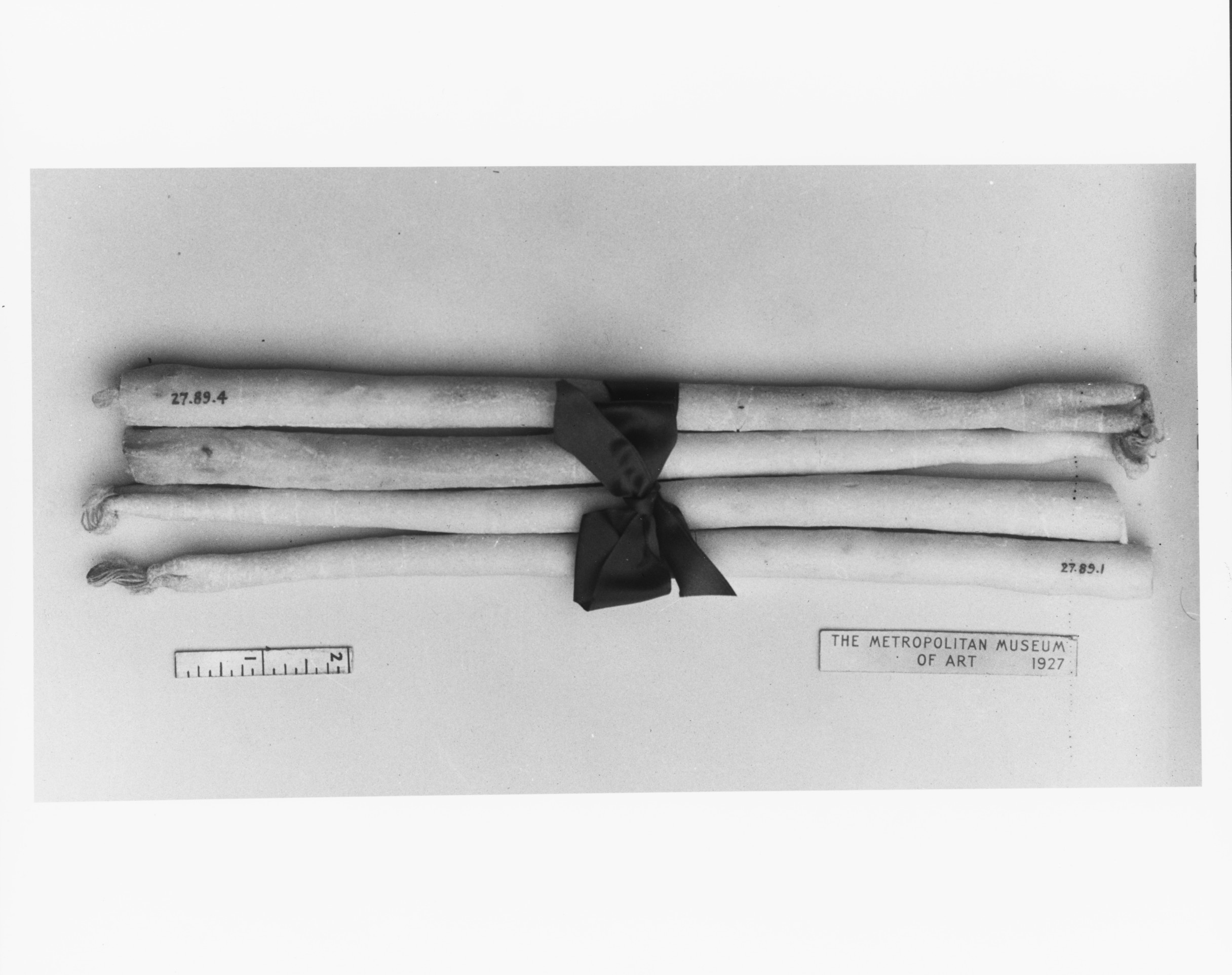
Before paraffin wax, candles were made from animal fat, which was cheap, smelled strongly while burning and went rancid in storage, and the rendering of it was among the most unpleasant trades there was.
Paraffin wax from petroleum refining, and later vegetable waxes, replaced tallow entirely for candles. The difference in the product was enormous – a tallow candle smoked, smelled and had to be snuffed constantly – and the improvement in domestic life when wax became affordable is one of those changes that is difficult to appreciate now.
6. The Church Trade Had Its Own Rules and Its Own Specification
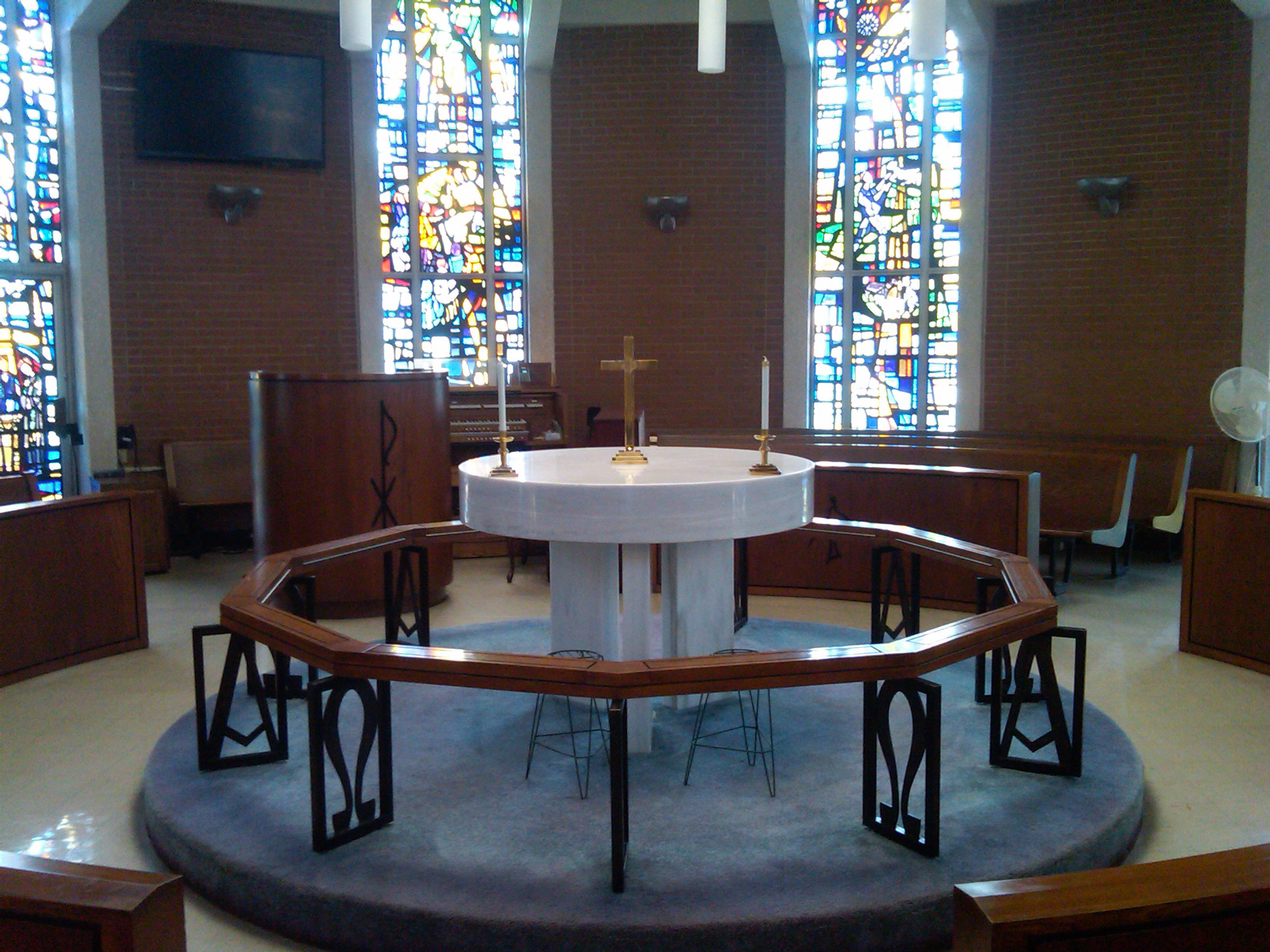
Liturgical candles were required to contain a specified proportion of beeswax, which meant a separate supply chain, separate stock and separate pricing from everything else the works made.
The requirements continue and the market remains a significant part of what surviving makers do. It is an unusual commercial position – a customer whose specification is set by doctrine rather than by performance or price, and which therefore does not change with fashion or technology.
7. The Works Smelled of Hot Wax and Nothing Else
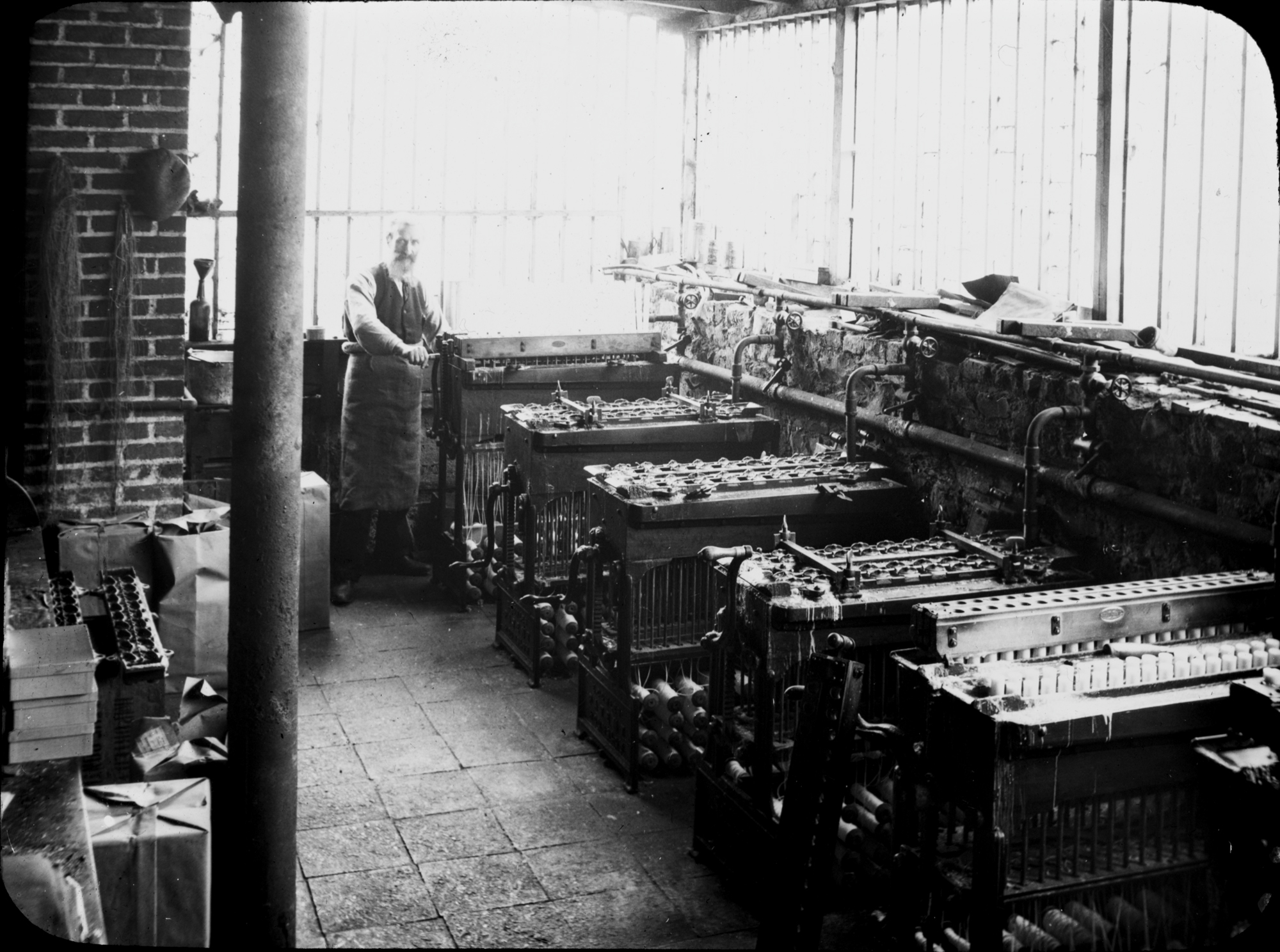
A candle works is one of the few industrial buildings in this series whose atmosphere was simply warm and waxy rather than hazardous or unpleasant.
Still true. Molten wax is handled hot and is a burn hazard, and the dust and fume problems that dominate every other trade in this series are largely absent – which is worth noting because it makes the point that industrial work was not uniformly grim and the differences between trades were enormous.
8. Everything Was Dipped, Trimmed, Rolled and Packed by Hand
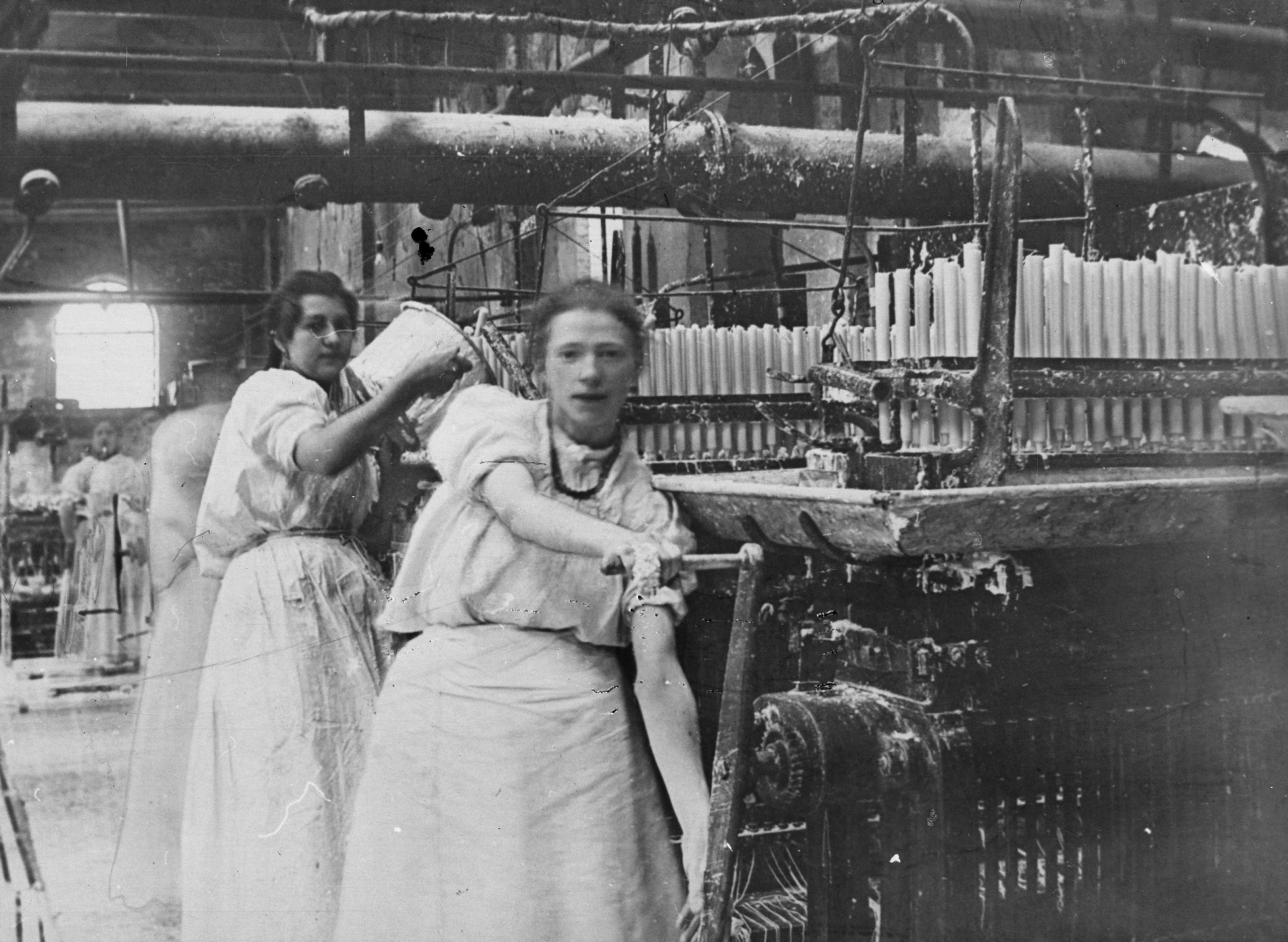
Finishing meant cutting to length, trimming the base to fit a holder, polishing, checking for straightness and packing, all by hand at benches.
Automated cutting, forming and packing handle volume production. Hand finishing survives for the decorative and premium end, where the irregularity is now part of what is being sold rather than a defect to be eliminated.
9. Nobody Thought the Scented Candle Would Be the Business
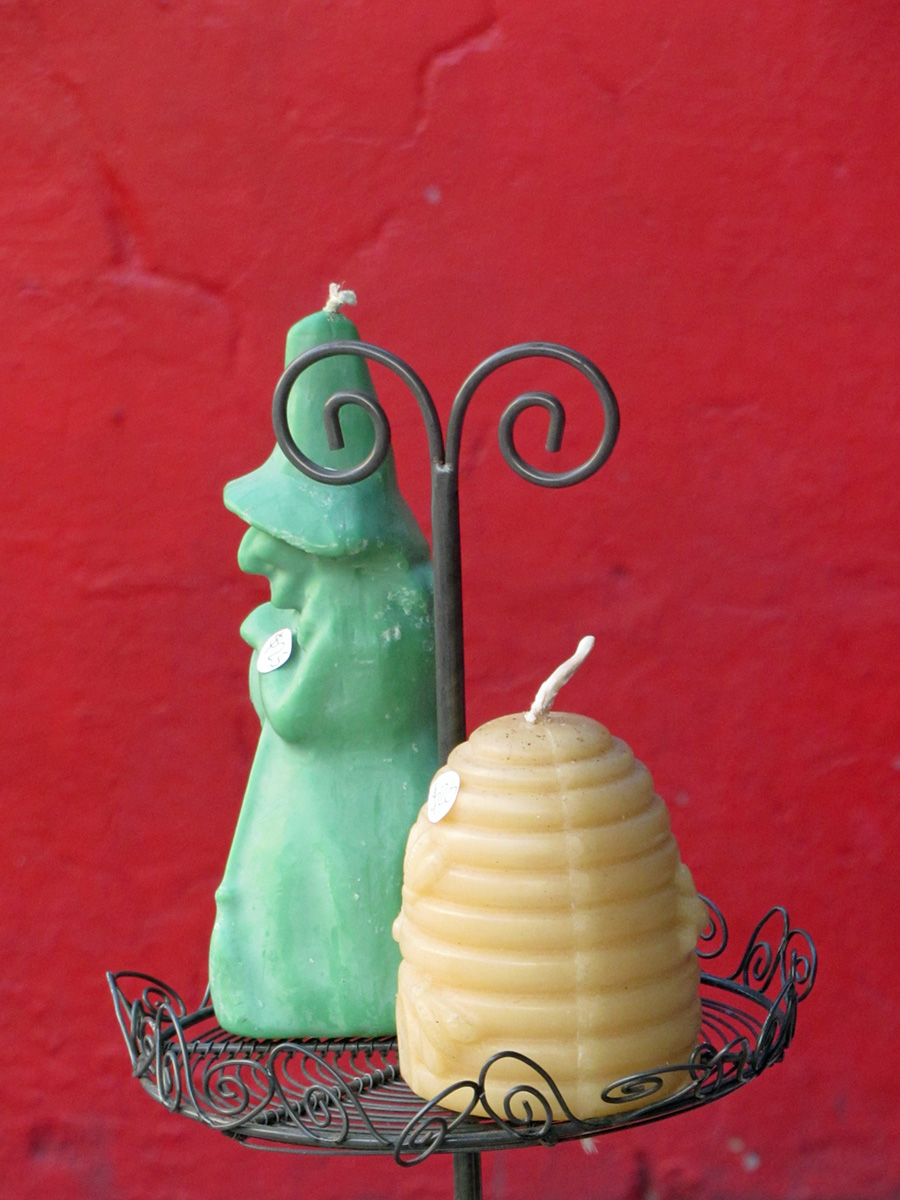
Scenting was marginal, the market was functional, and the idea that a candle would be bought primarily for how it smelled rather than for light or ceremony was not part of anybody’s plan.
Scented and decorative candles became an enormous market with margins no lighting candle could approach. The industry that survived did so by selling an experience rather than a function, which is the same transition the distillery, the bicycle and the ice cream trades all made from different directions.
10. The Fire Risk Was Managed by Being Sensible
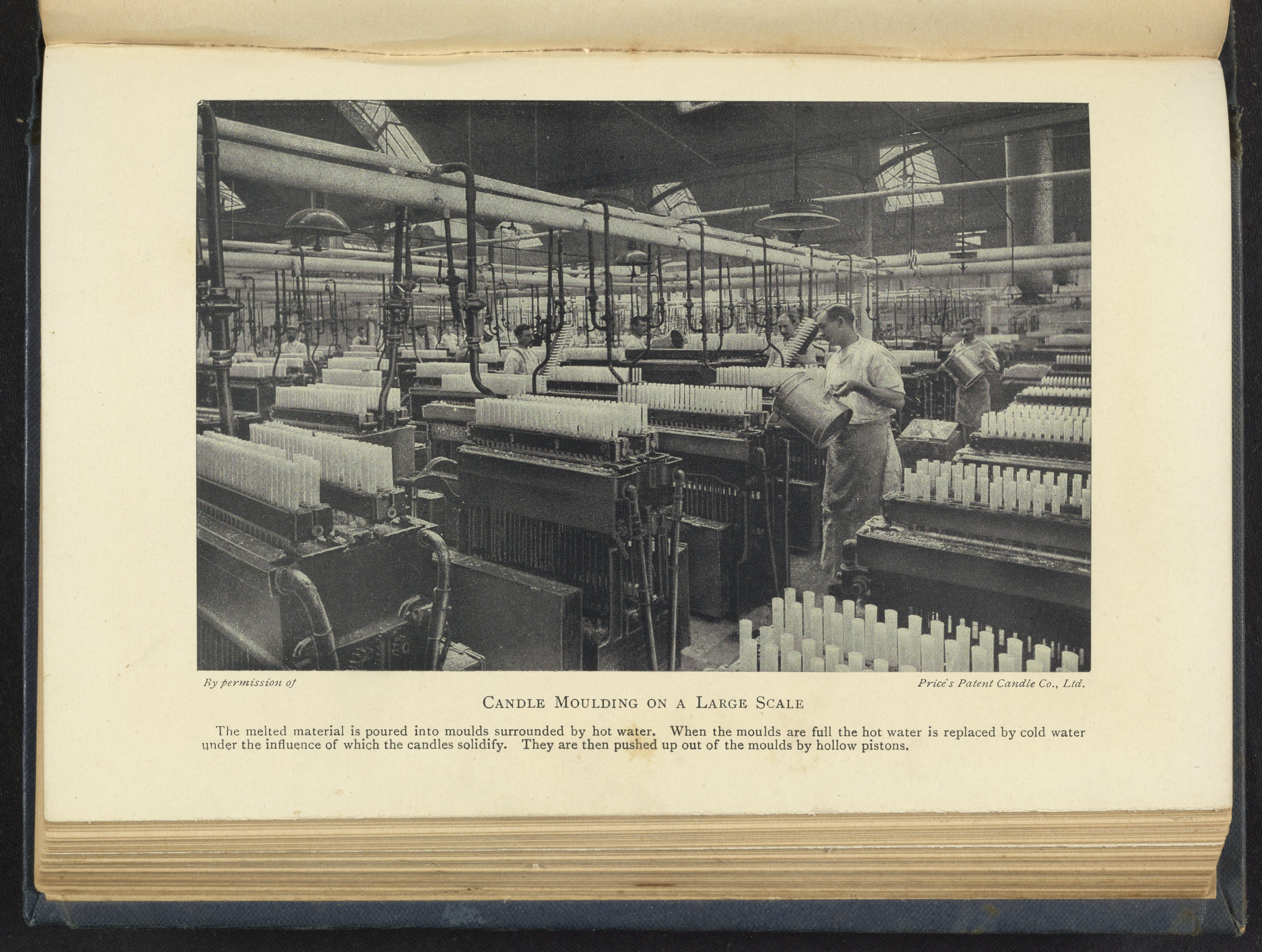
A building full of molten and solid wax, with heating, is a serious fire load, and the precautions amounted to care and a reasonable layout.
Hazardous material storage requirements, fire detection, suppression, compartmentation and defined handling procedures now govern it. Wax fires behave like oil fires rather than like ordinary combustion, which has specific consequences for how they must be dealt with, and that distinction was not generally understood at the time.
11. The Candle Is Unchanged and That Is the Point
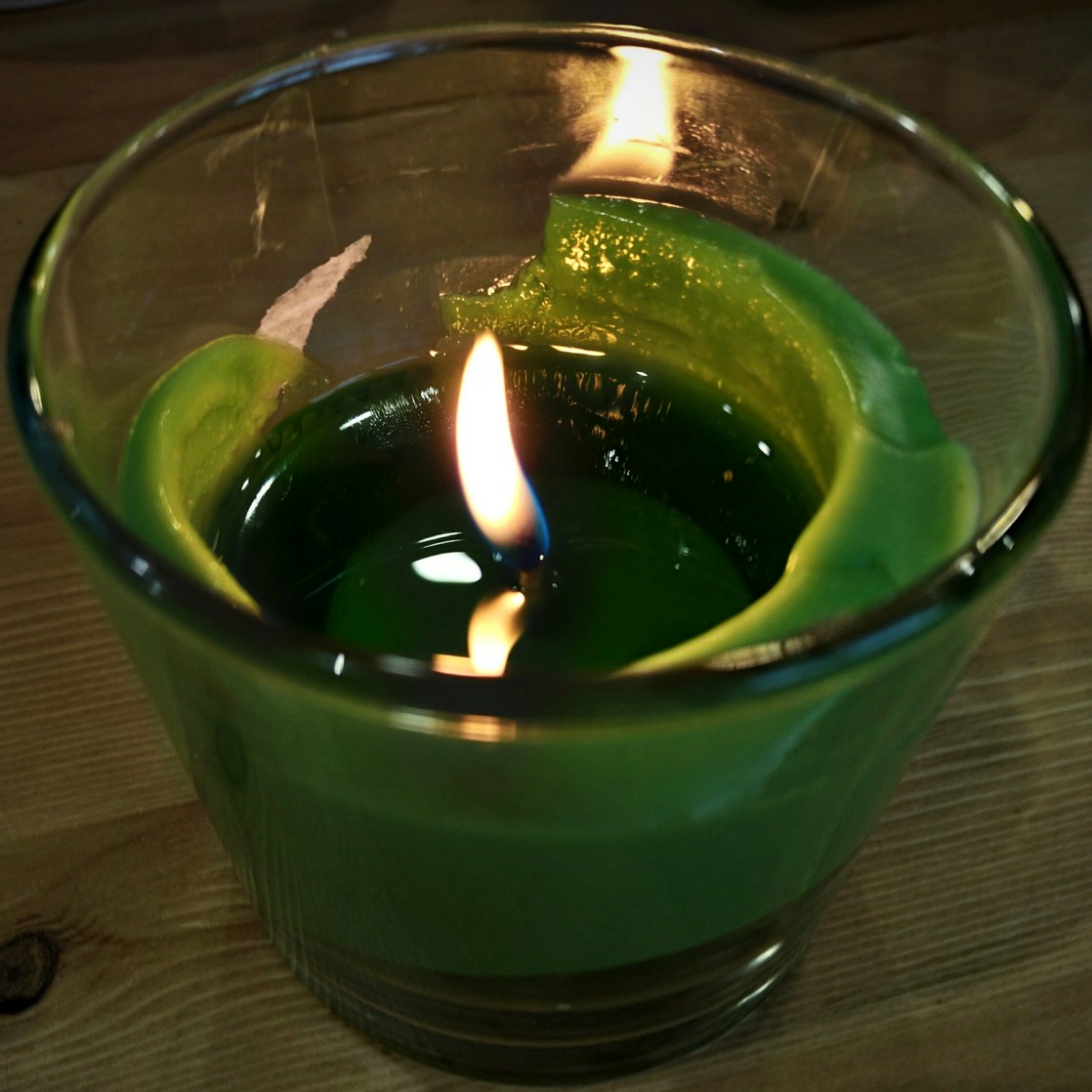
A candle made in 1960 and one made today work identically, by the same mechanism, with the same wick principle and broadly the same materials.
Which makes it one of the very few objects in this entire series that was not improved, replaced, automated out of recognition or made obsolete. It was simply repurposed. The thing people buy it for changed completely and the object did not change at all – and a candle bought for atmosphere in a centrally heated house with electric light is performing a function nobody in 1960 would have recognised as a function.
The Only Object Here That Did Not Change
Every other piece in this series describes an object or a process being transformed. This one does not, and the exception is worth sitting with.
A candle is a wick in a solid fuel. The flame melts the fuel, the liquid rises up the wick by capillary action, it vaporises at the top, and the vapour burns. That cycle sustains itself, at a rate set by the relationship between the wick and the wax, until one of them runs out.
That description was accurate in 1960, it was accurate a century before, and it is accurate now. The materials have shifted – tallow to paraffin, paraffin increasingly to vegetable waxes – and the mechanism has not. A candle from any period will burn in any other period, with nothing to adapt and nothing to explain.
What changed completely is why anybody buys one.
In 1900 it was light. By 1960 it was ceremony, emergency and decoration, and the industry was a shadow of what it had been. Now it is atmosphere and scent, and the market is larger in value than the lighting trade ever managed, selling an identical object at a multiple of the price to people with perfectly good electric lighting.
So the trade did not survive by improving its product, reducing its costs, automating, relocating or finding a technical advantage. It survived because somebody eventually worked out that a thing which had lost its function still had properties people would pay for – and that the properties in question were ones it had always had and nobody had thought to sell.
That is a genuinely unusual ending, and the only one of its kind in all of these pieces.
If you worked in a candle works you will remember the smell, and it is the only trade in this series where that is a pleasant thing to say.
And the candle on your table tonight works exactly the way one did two hundred years ago.
Like our content? Follow us for more.
