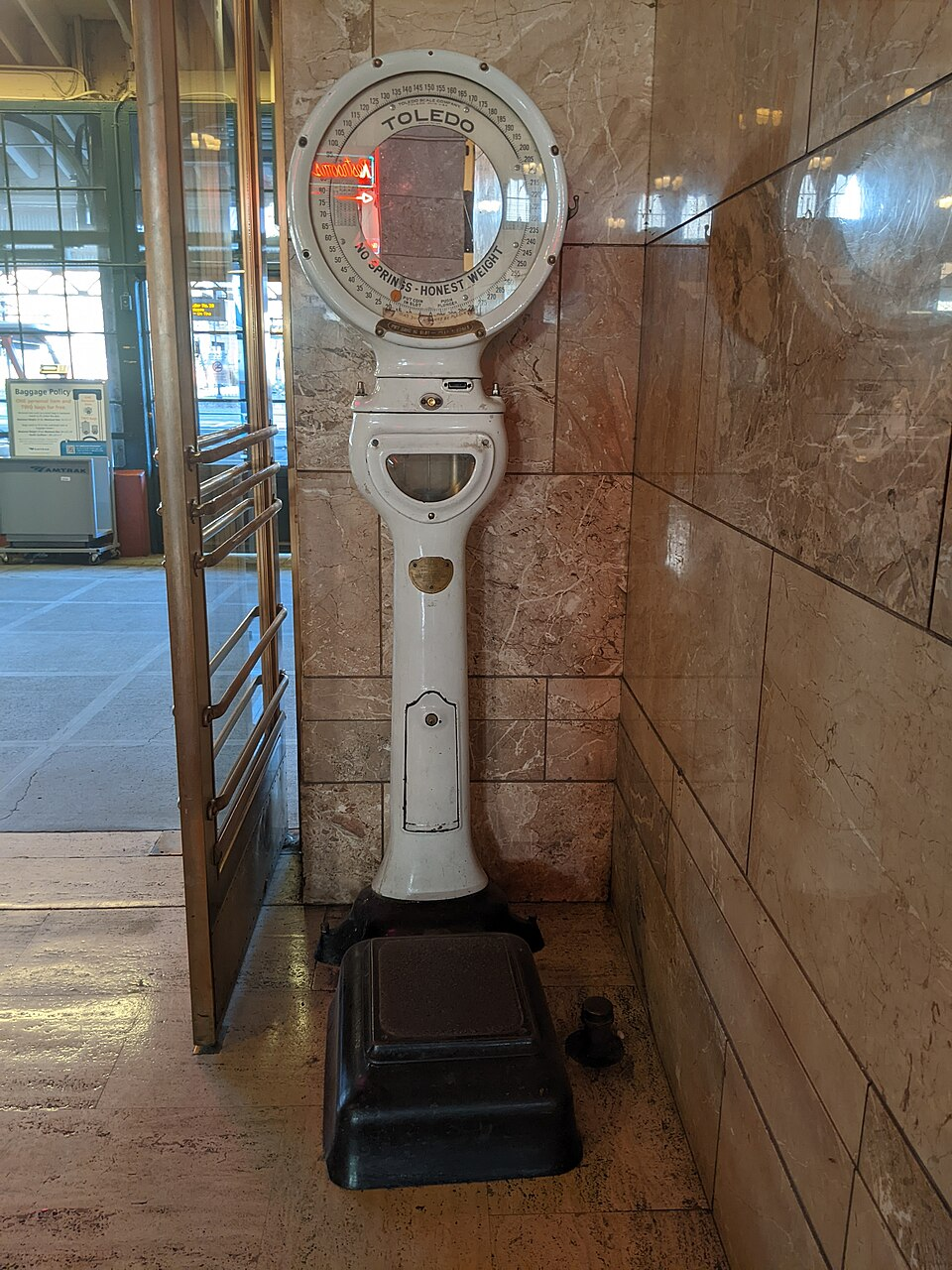
They stood everywhere. Drug stores, railway stations, bus depots, department store entrances, barber shops, amusement piers, five and dimes. A tall column, frequently white porcelain over cast iron, with a platform at the bottom, a big round dial at the top, a mirror, and a slot for a coin.
You stood on it, put in a cent, and a needle swung round to tell you something about yourself.
They are one of the most thoroughly vanished pieces of American street furniture – there is essentially no equivalent now – and they get remembered as a quaint novelty.
They were not a novelty. They were part of the first wave of coin-operated machines in the United States, and that wave had to accomplish something genuinely difficult. It had to persuade an entire public that you could hand money to a mechanism, with no person involved, and get what you paid for.
Almost Nobody Owned a Scale
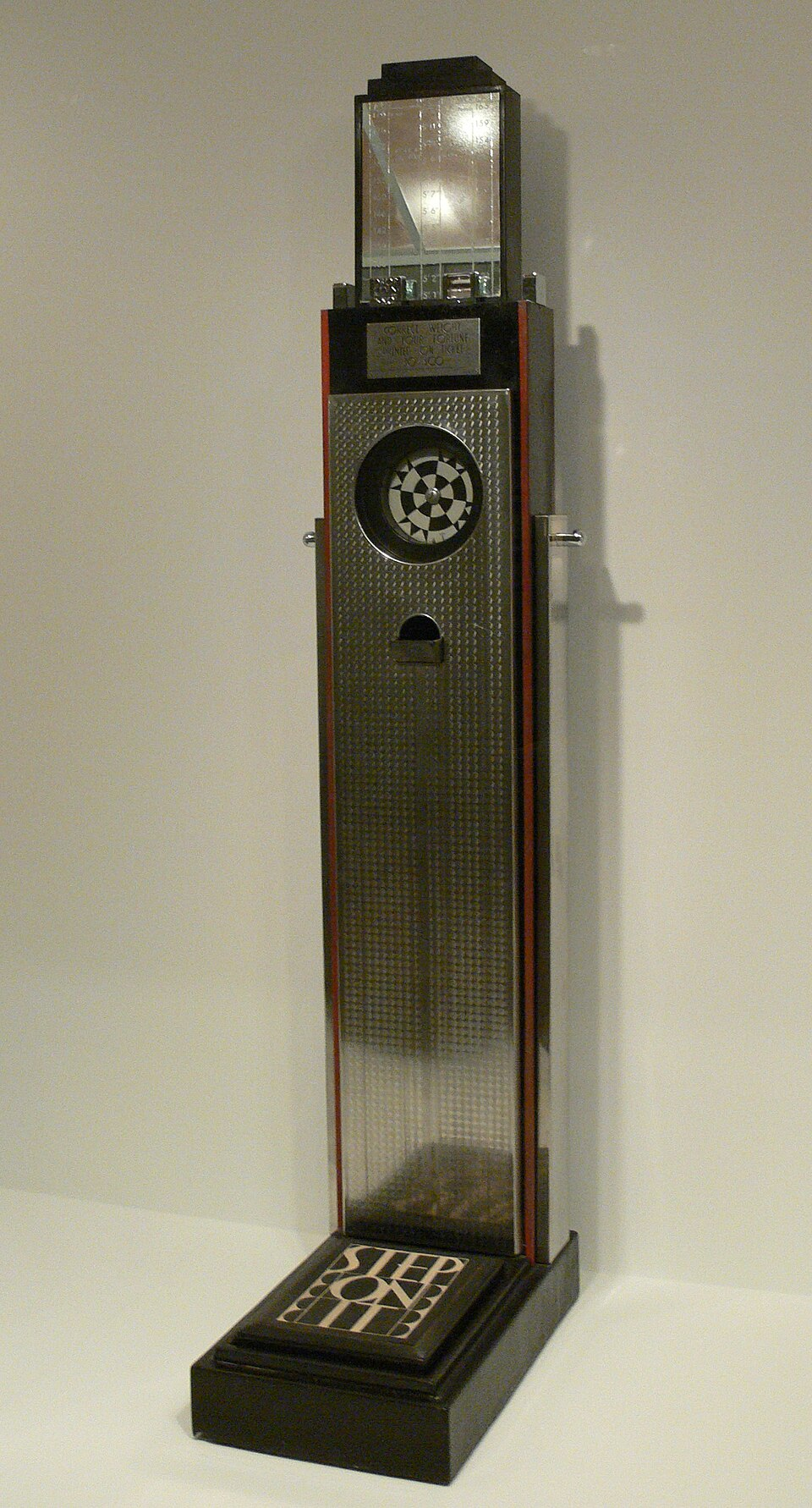
First, the obvious question: why would anybody pay to be weighed?
Because there was no other way to find out. Household scales for weighing people were not a standard domestic item for most of the period these machines flourished. They existed, they were available, and ordinary households largely did not have one – in the same way that most households did not own a thermometer or a set of accurate kitchen scales.
So the number was genuinely unavailable except at a doctor’s office or on a machine in a public place. A person might be weighed a handful of times a year, in a shop doorway, for a cent.
That scarcity is the entire commercial basis of the thing. The machine was selling a piece of information that the customer could not obtain anywhere else and was curious about, at a price low enough to be an impulse, in a location they were already standing in. Which is a close to perfect commercial proposition and explains why there were so many of them.
Like our content? Follow us for more.
The Business Model Was the Interesting Part
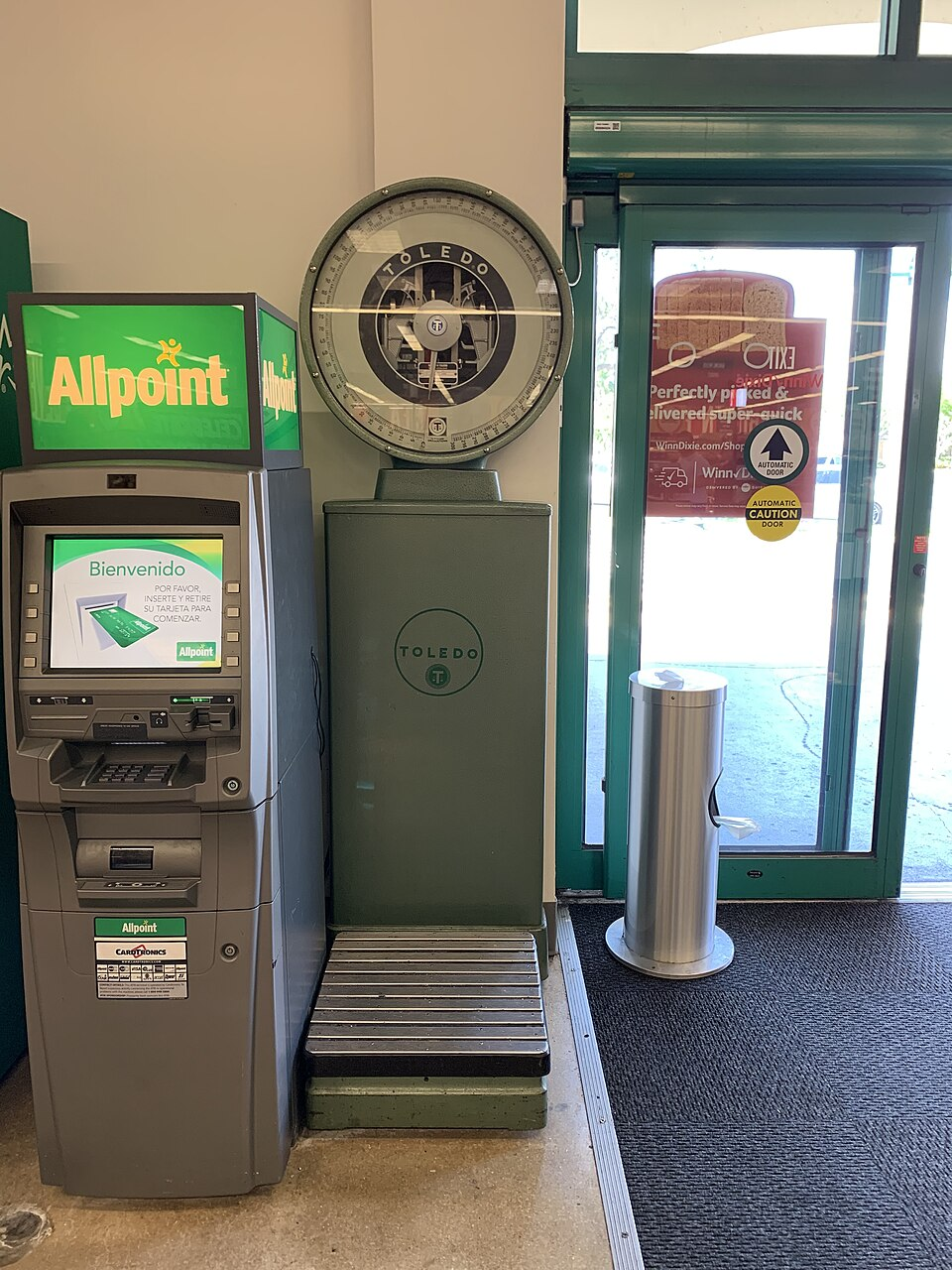
The machines were usually not owned by the shops they stood in.
An operator owned a route – a set of machines placed in locations around a city – and the arrangement with the shopkeeper was a split of the takings, with the operator supplying, installing, maintaining and emptying the machine and the proprietor supplying only the floor space and the foot traffic.
That is the whole structure of the coin-operated trade and it was worked out on machines like these. The operator takes the capital risk and the maintenance burden; the location takes a share for doing nothing except existing; and the customer’s coin is split between two businesses neither of which has done anything at the moment of the transaction.
It is the same arrangement that later ran jukeboxes, cigarette machines, gumball machines, pinball, laundry equipment and vending of every kind, and a great deal of it descends directly from the people who placed weighing machines in drug store doorways.
Fortune Cards Were the Upsell
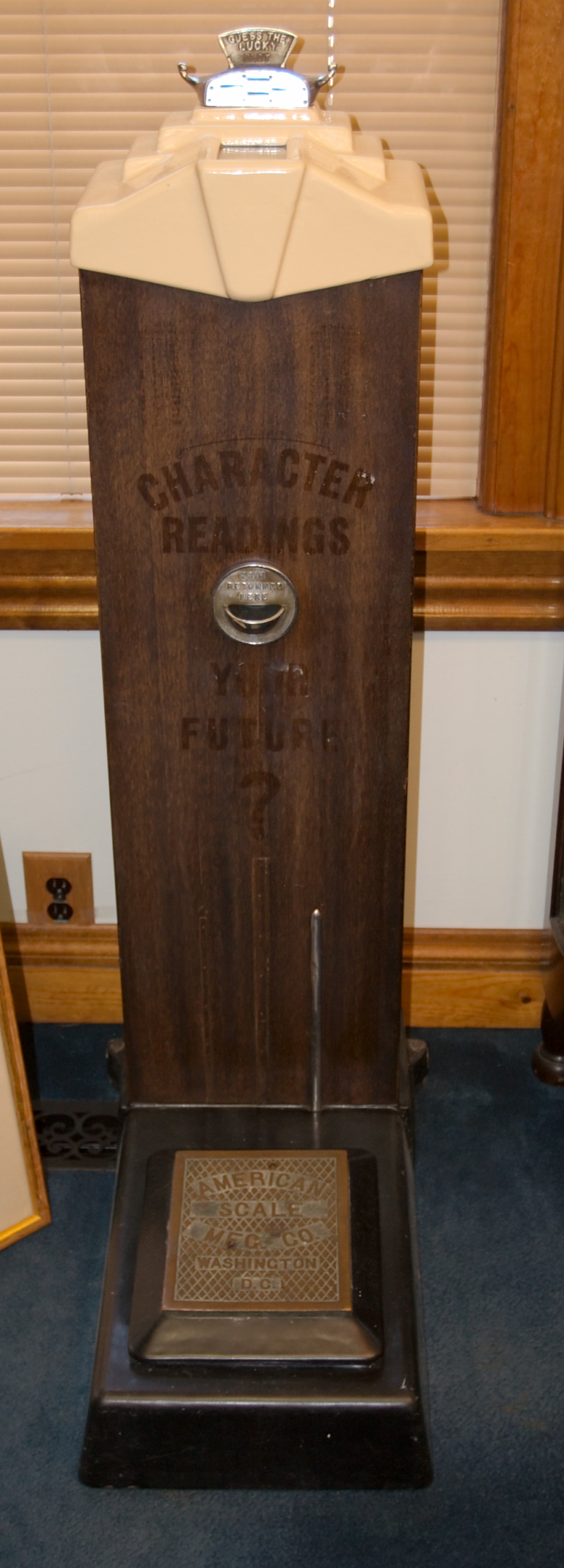
A great many of these machines did not stop at the number.
For the same coin, or for another one, the machine delivered a printed card – with a fortune, a prediction, a character reading, a horoscope, a piece of advice, a joke, sometimes an advertisement for whatever the operator was also selling.
That card is doing something quite deliberate. It converts a single piece of dry information into a small experience with a souvenir attached, it gives the customer something to hold and show to a companion, and it creates a reason to use the machine again when the first piece of information has not changed.
Which is a recognisable commercial technique and it was being applied to a coin-operated machine in a shop entrance a very long time ago. The modern descendant is any machine that gives you a receipt, a token, a sticker or a prize alongside the thing you actually bought.
The Mechanism Had to Be Trustworthy and Visible
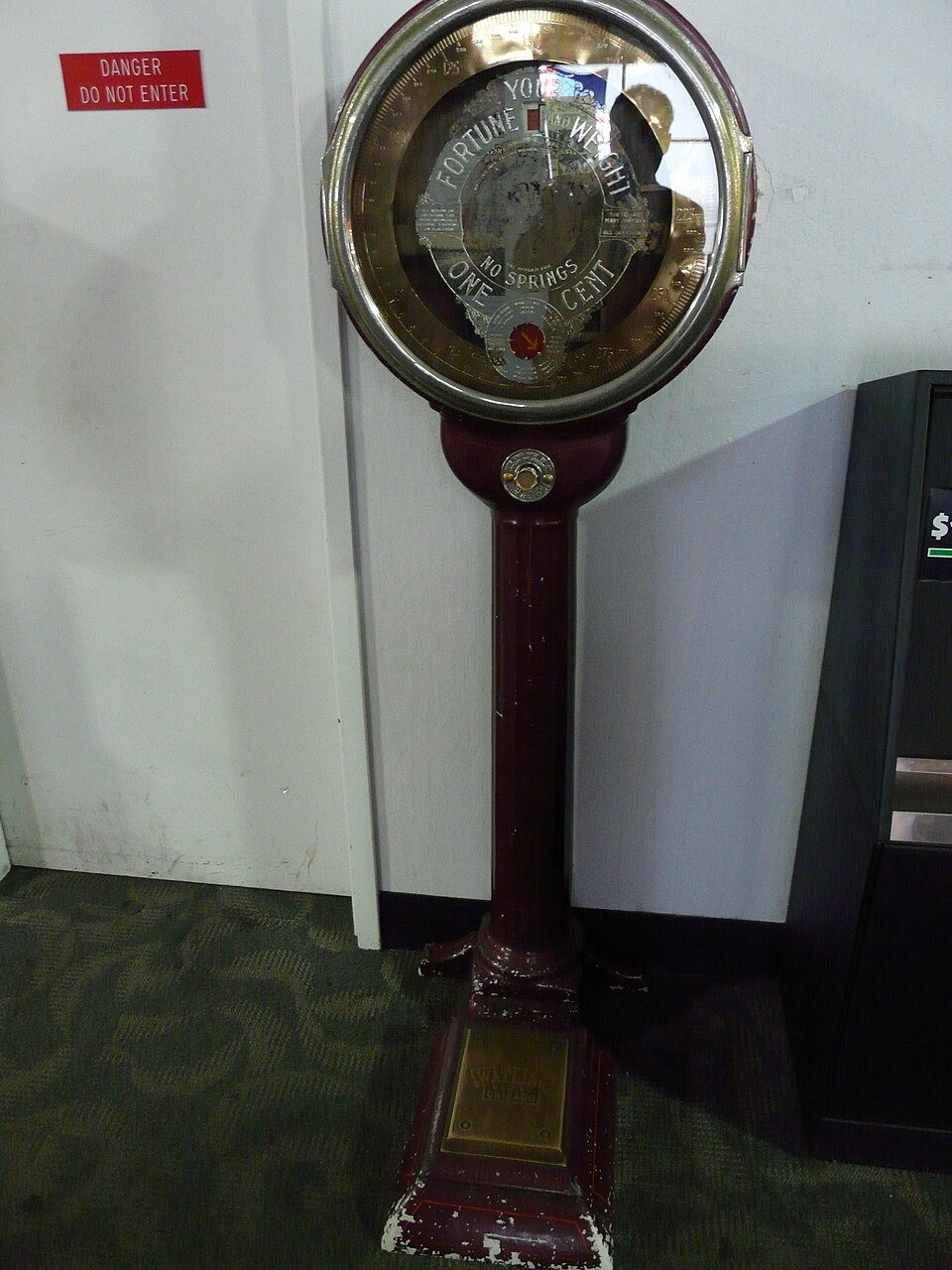
The design of these machines is dominated by one requirement: the customer has to believe the answer.
Hence the enormous dial, which is the single most prominent feature. A big clear mechanical pointer moving over a graduated face is about as transparent a display as can be built – you can watch it move, it settles visibly, and there is nothing hidden about how it arrives at its position. A machine that printed a number out of a slot with no visible movement would have been far less convincing.
Hence also the mirror, which is partly vanity and partly an invitation to stand there a moment longer, and the solid porcelain-over-iron construction, which signals permanence and seriousness rather than fairground gimmickry.
And hence the claims painted on the casing about accuracy, honesty and correctness. Those are not decoration; they are addressing the customer’s actual doubt, which is whether a machine on a shop floor that nobody is watching can be relied upon.
This is the hard problem the whole coin-operated industry had to solve, and it is easy to miss now because the answer has been settled for a century. A person in that period had every reason to be suspicious of putting money into a box. There was no one to complain to, no refund, no recourse, and no way to tell whether the thing had cheated you.
What Came After Was Built on the Habit
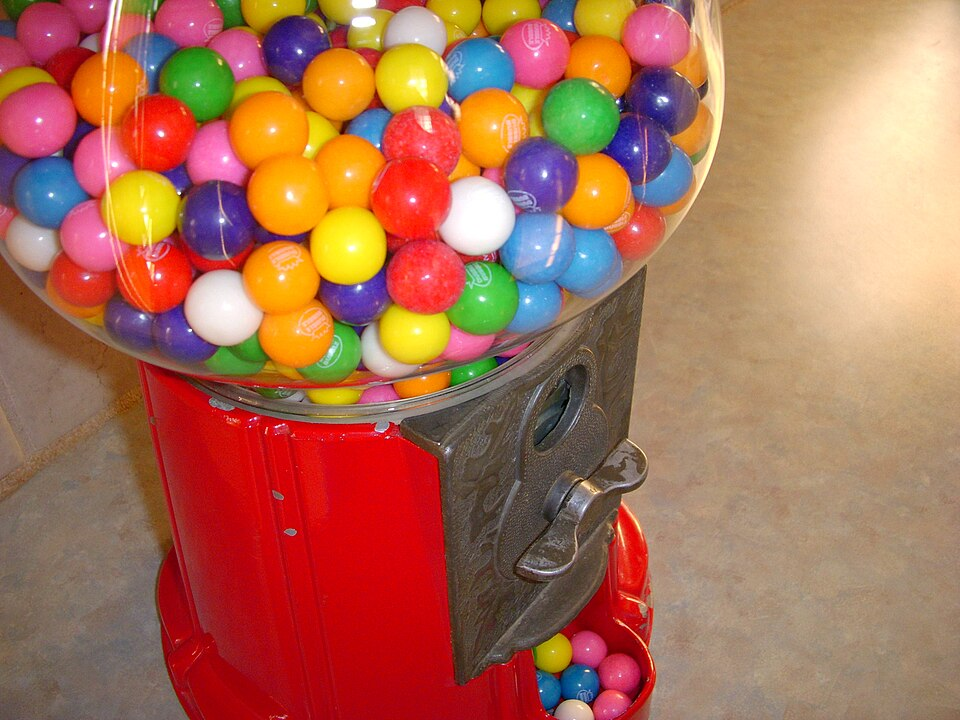
Once the public accepted that a coin slot could be trusted, an enormous amount became possible, and the sequence is worth laying out because it runs straight to the present.
Gum and peanut machines. Stamp machines. Photo booths. Jukeboxes. Lockers in railway stations. Pay telephones, which required people to put money into a box and trust that a stranger on the other end would be connected. Parking meters, which required something considerably harder – putting money into a machine and receiving nothing visible at all in return except the absence of a penalty. Turnstiles. Laundromats. Vending machines selling food, which requires trusting a machine with something you are going to eat. Automatic teller machines, which required trusting a machine with a bank account.
And at the end of that line, self-checkout and the tap of a card against a reader, which is the same transaction with the coin removed – a person completing a purchase with no human being involved at any point and no doubt whatsoever that it will work.
Every one of those depended on the public already being comfortable with the basic act. That comfort had to be built, it took decades, and the machines that built it were weighing scales, gum dispensers and photo booths standing in shop doorways taking pennies.
The Machines Had to Survive the Public
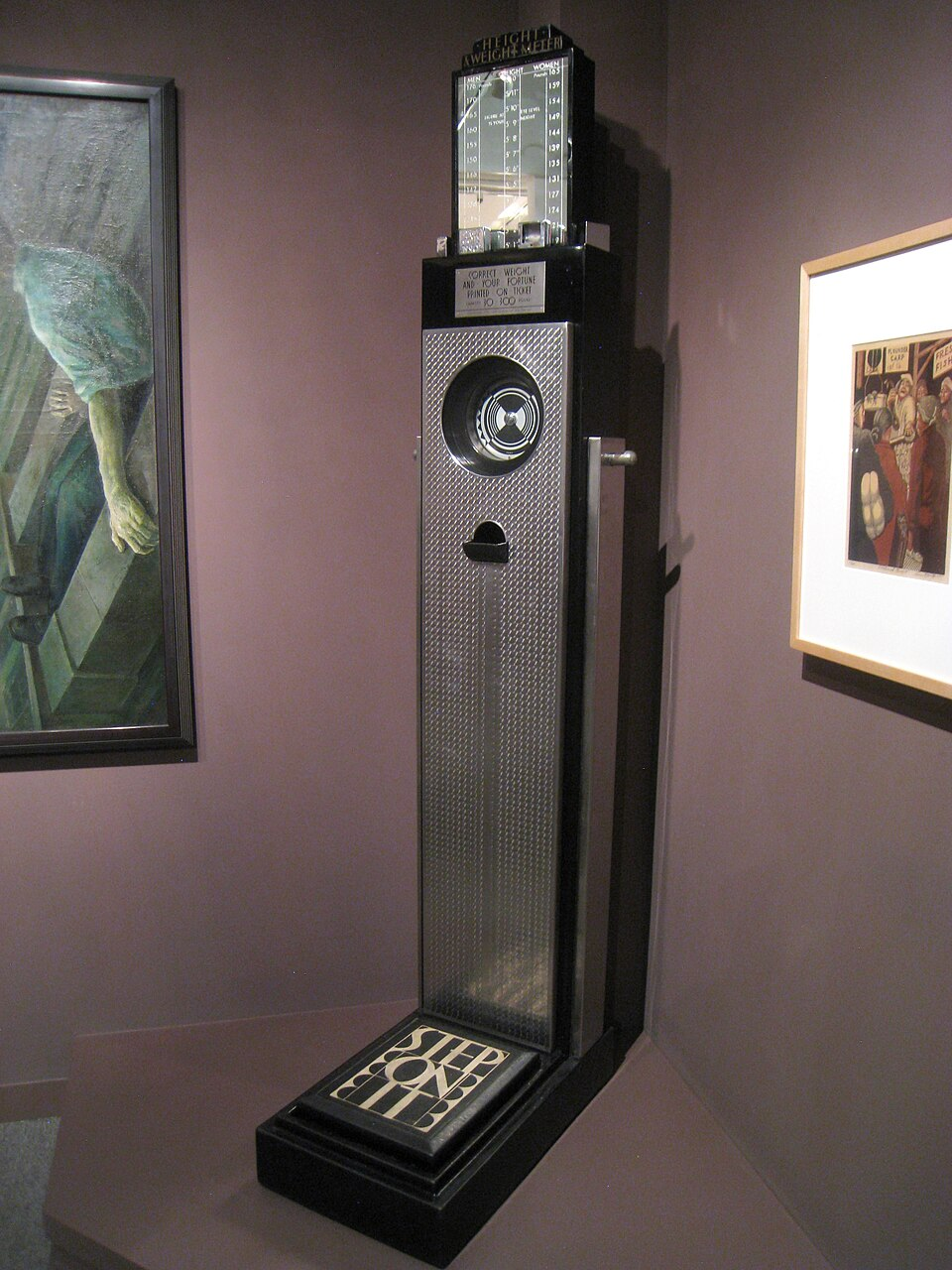
An unattended machine in a public doorway is exposed to things a shop counter is not, and the construction reflects every one of them.
The porcelain-over-cast-iron casing was not chosen for looks alone. It is heavy enough that the machine cannot be carried off, hard enough to resist being levered open, and easy to wipe clean – which matters for an object standing at the entrance of a shop with people brushing past it all day in wet weather.
The coin mechanism had to reject slugs, washers, foreign coins and anything else somebody might try, which is a whole small field of engineering in itself and one the coin-operated trade spent decades refining. Every advance there was immediately applied across the rest of the industry.
The dial glass had to survive being leaned on, and the platform had to survive being jumped on by children, which it was, continuously, for as long as these machines existed.
And the whole thing had to keep working without attention between visits from the route operator, because a machine that has failed is not earning and a machine that has taken money and given nothing is actively destroying the trust the business depended on.
Then the Information Stopped Being Scarce
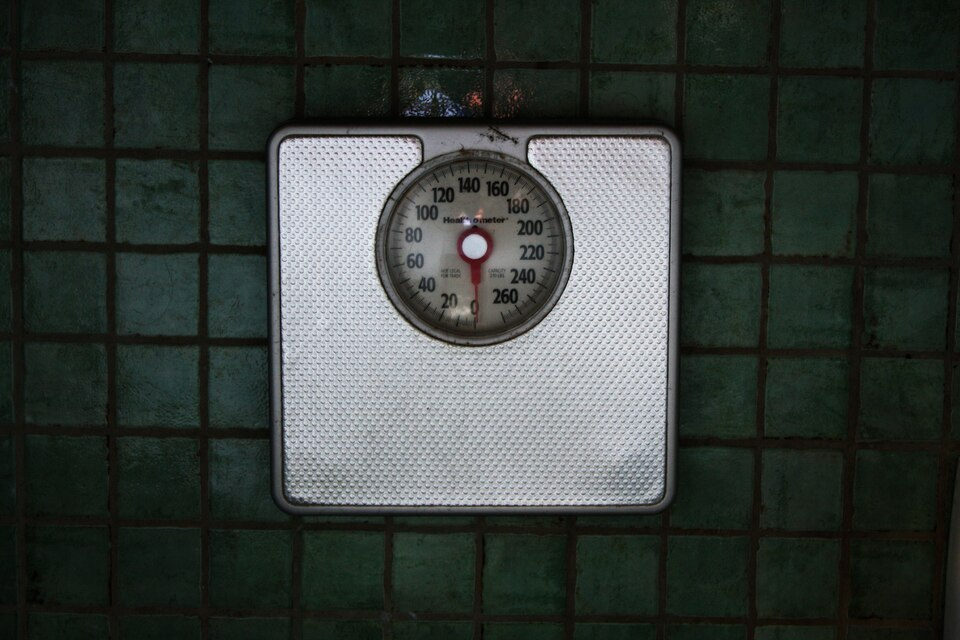
The scales disappeared for a simple reason: the product stopped being worth a cent.
Inexpensive household bathroom scales became an ordinary domestic item, which eliminated the entire basis of the business at a stroke. A piece of information you can obtain at home, free, at any moment, is not something anybody pays for in a shop doorway.
Inflation finished whatever was left. A machine designed around the smallest coin in circulation has a serious problem when that coin stops buying anything, and the economics of a penny-operated device with a route operator taking half do not survive being repriced upward several times.
And the locations went too. The drug store with a soda fountain, the railway station waiting room, the department store entrance and the five and dime were themselves disappearing, which removed the floor space the whole trade had depended on.
So the machines were pulled out, scrapped, or sold off, and the survivors went to collectors – where they are now valued primarily as objects, with the porcelain and the dial and the painted lettering being the point.
The Coin Slot Is Still There
Which leaves the odd final observation.
The weighing machine is completely gone. The information it sold is free. The coin it took is nearly worthless. The shops it stood in have mostly closed. By every measure, the thing failed and was removed.
And the behaviour it taught is now so universal that nobody can see it. Every single day, a vast number of people hand money to a machine with no human supervision, in a public place, for a good or a service, and do not think about it for a second. They do not inspect the machine. They do not check the result. They do not consider the possibility of being cheated, and if the transaction fails they expect a refund and generally get one.
That is an extraordinary amount of trust extended to an unattended mechanism, it is completely unremarkable, and it was not inevitable. Somebody had to go first, in a shop doorway, with a big honest-looking dial and a cent in the slot.
Like our content? Follow us for more.