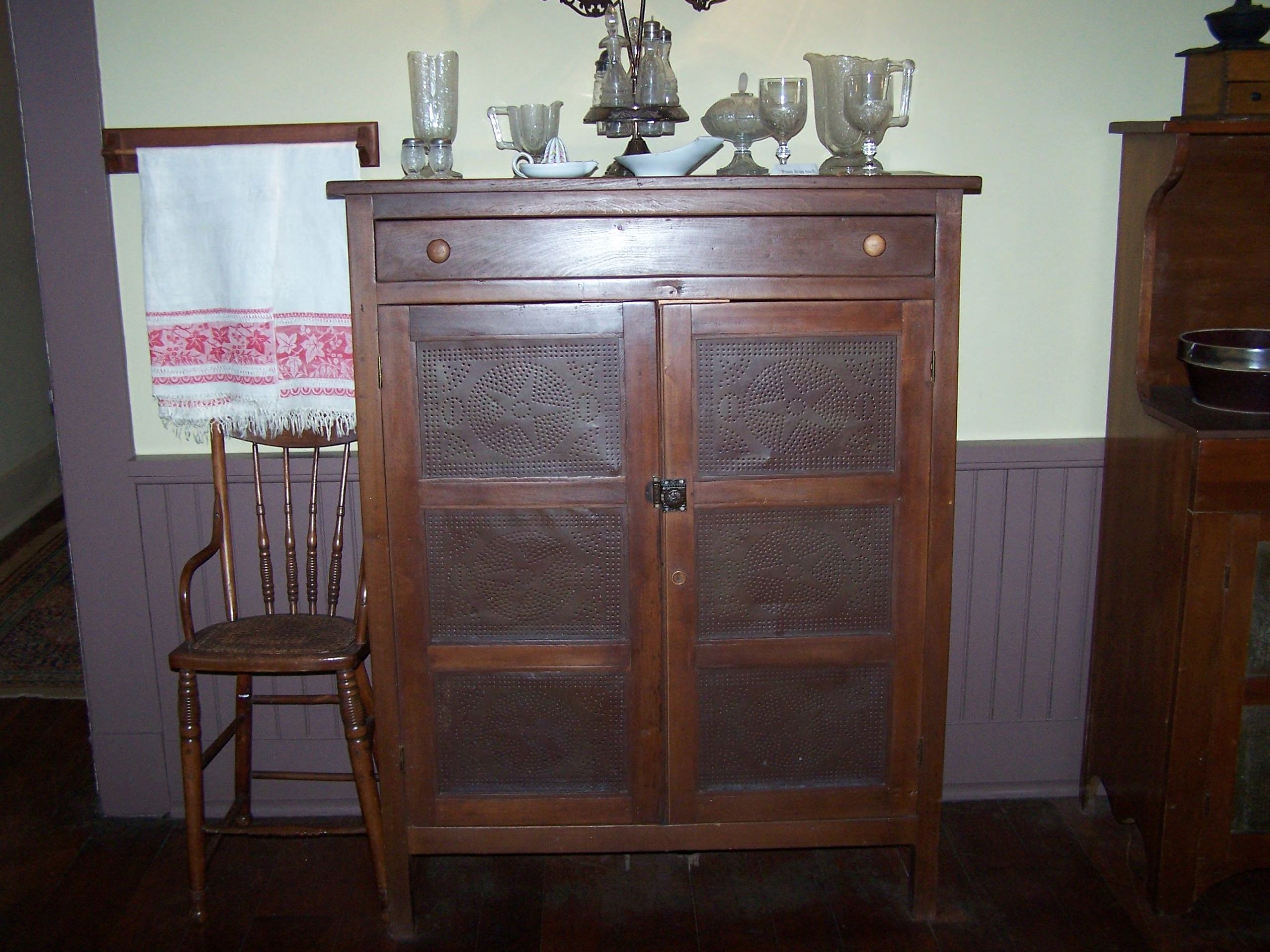
Walk into an antique shop in almost any part of the United States and there is a decent chance of finding a tall wooden cabinet with pierced tin panels in its doors – stars, circles, tulips, eagles, concentric rings, sometimes an entire geometric field punched out by hand.
It will be sold as folk art, and the pattern will be the thing the dealer talks about. Somebody will admire the craftsmanship. Somebody will note that the punching was done from the inside, so the burrs face in and the smooth side shows.
All of which is true and all of which misses what the cabinet is.
The pie safe was a piece of refrigeration equipment, in a house that had none. The holes in the tin were the reason it existed. And the pattern was almost incidental – a way of arranging a required number of perforations into something that looked deliberate rather than random, by people who had to punch them anyway.
The Problem It Was Built to Solve
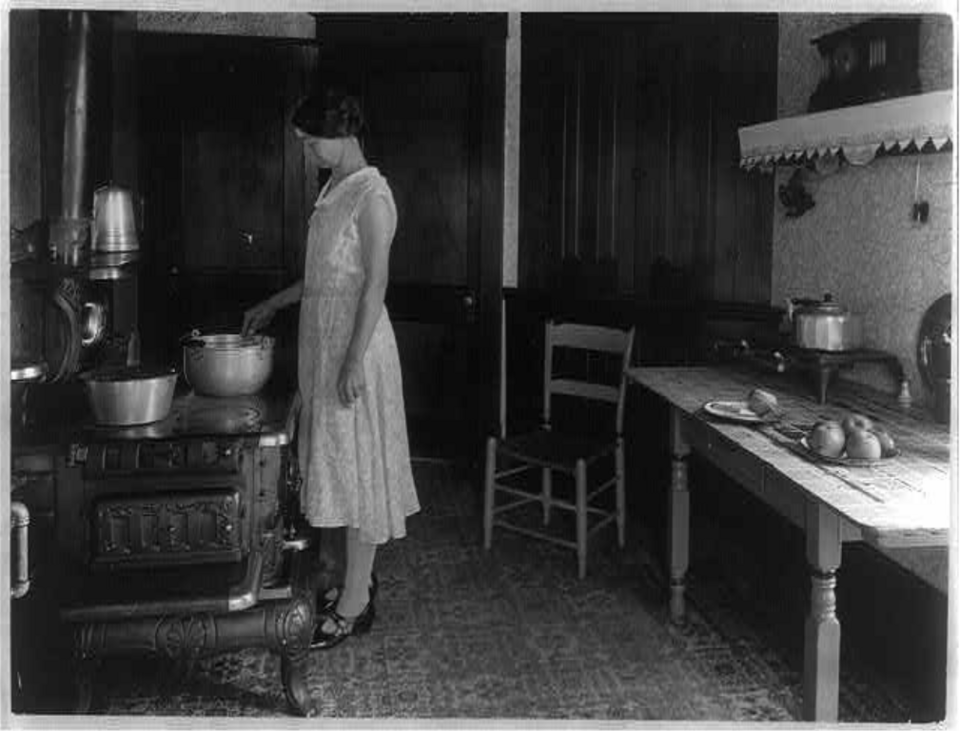
Consider a farmhouse kitchen in the middle of the nineteenth century, or – in a great many parts of the country – well into the twentieth. There is no mechanical refrigeration. There may be an icebox, if the household can get ice, which a lot of rural households could not reliably.
Now consider what that kitchen produces. Bread, in quantity, several times a week. Pies, which were baked in batches because the oven was hot anyway. Cakes. Cooked meat. Butter. Biscuits. All of it made in amounts intended to last days rather than hours, because firing up a stove was an event.
That food has three enemies and they pull in opposite directions.
It needs to be kept away from insects, which in a farmhouse with screen-less windows and a yard full of livestock meant flies in genuinely serious numbers. It needs to be kept away from mice and rats, which were a constant and unromantic presence. And it needs air.
The air is the part people get wrong. A baked good sealed in an airtight container at room temperature does not keep better – it keeps worse, because the moisture coming out of it has nowhere to go and condenses on the inside, which is exactly the condition mould wants. A pie under a tight lid in a warm kitchen goes off considerably faster than a pie sitting in moving air.
So the requirement was a container that was simultaneously closed to flies and vermin and open to air. That is a specific and slightly awkward engineering problem, and the pierced tin cabinet is the solution to it.
Like our content? Follow us for more.
Why Tin, and Why Punched
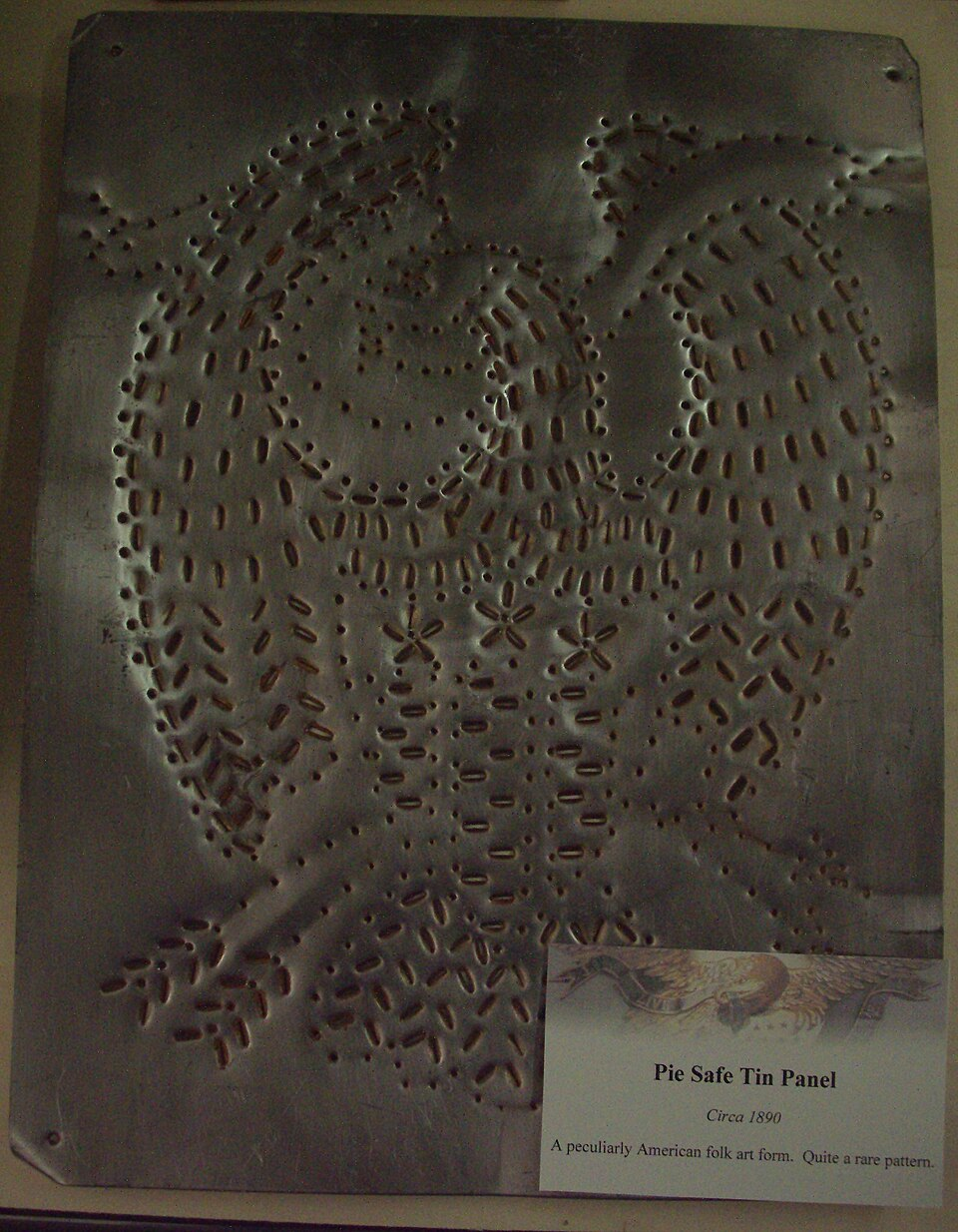
The material choice was not arbitrary either.
Screen wire existed, and some safes used it, but woven wire screen in the period was expensive, it rusted, it sagged, and mice could work at it. Sheet tin – which in practice meant tinplate, thin steel with a tin coating – was cheap, flat, rigid, rust-resistant and available anywhere there was a tinsmith, which was everywhere.
Punching it from the inside out produced a hole with a raised burr on the interior face. That detail matters for two reasons that have nothing to do with how it looks. The burr means the hole is slightly flared, which keeps it from clogging as readily. And the smooth side facing outward means nothing catches on a sleeve or a hand.
The number of holes was the design constraint. Too few and the cabinet does not breathe. Too many and the panel loses rigidity and starts to buckle, and the openings get large enough for an insect. So the tinsmith was working to a density – a required quantity of perforations per panel, distributed reasonably evenly.
And here is where the patterns come from. If you have to punch three hundred holes in a rectangle of tin, you can punch them in a grid, which is dull and shows every error. Or you can lay out a star, a circle, a vine, a basket, an urn, a pattern of concentric arcs – which uses the same number of holes, distributes them evenly, hides irregularity in the design, and looks like something.
The decoration was free. The ventilation was the job.
What a Pie Safe Actually Held
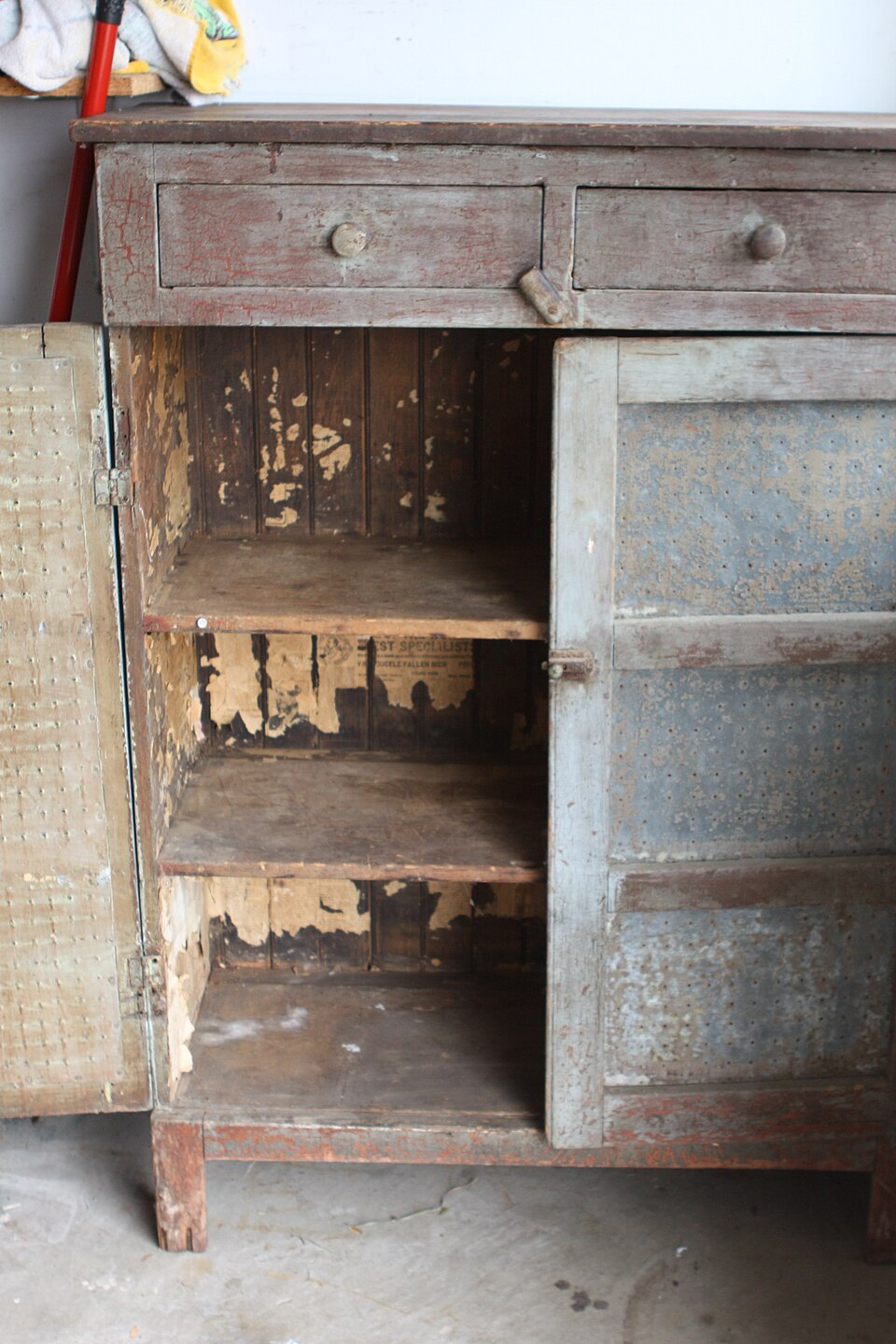
The name is slightly misleading and has been for a long time.
Pies were certainly in there, and in a household that baked six or eight at a time in fruit season the safe might hold little else for a week. But the cabinet was general-purpose food storage, and what went into it depended on the season and the household.
Bread and biscuits. Cooked meat, especially anything from a recent butchering that had been fried down or salted. Butter in a covered dish. Cake under a cloth. Cooling baked goods that were not ready to be put anywhere. Sometimes dishes, on the lower shelves, where the ventilation did not matter.
The shelves were usually open wooden boards with a lip, and the whole thing stood on legs tall enough to get the bottom shelf well off the floor – which was itself a design decision, because the floor was where the mice were and where the cold draught came from.
In a great many farmhouses the safe stood in the kitchen. In others it was in the summer kitchen, or in a back room, or on a cool porch, because the other half of the strategy was simply putting the food somewhere cooler than the room with the stove in it.
The Vocabulary Varied by Region
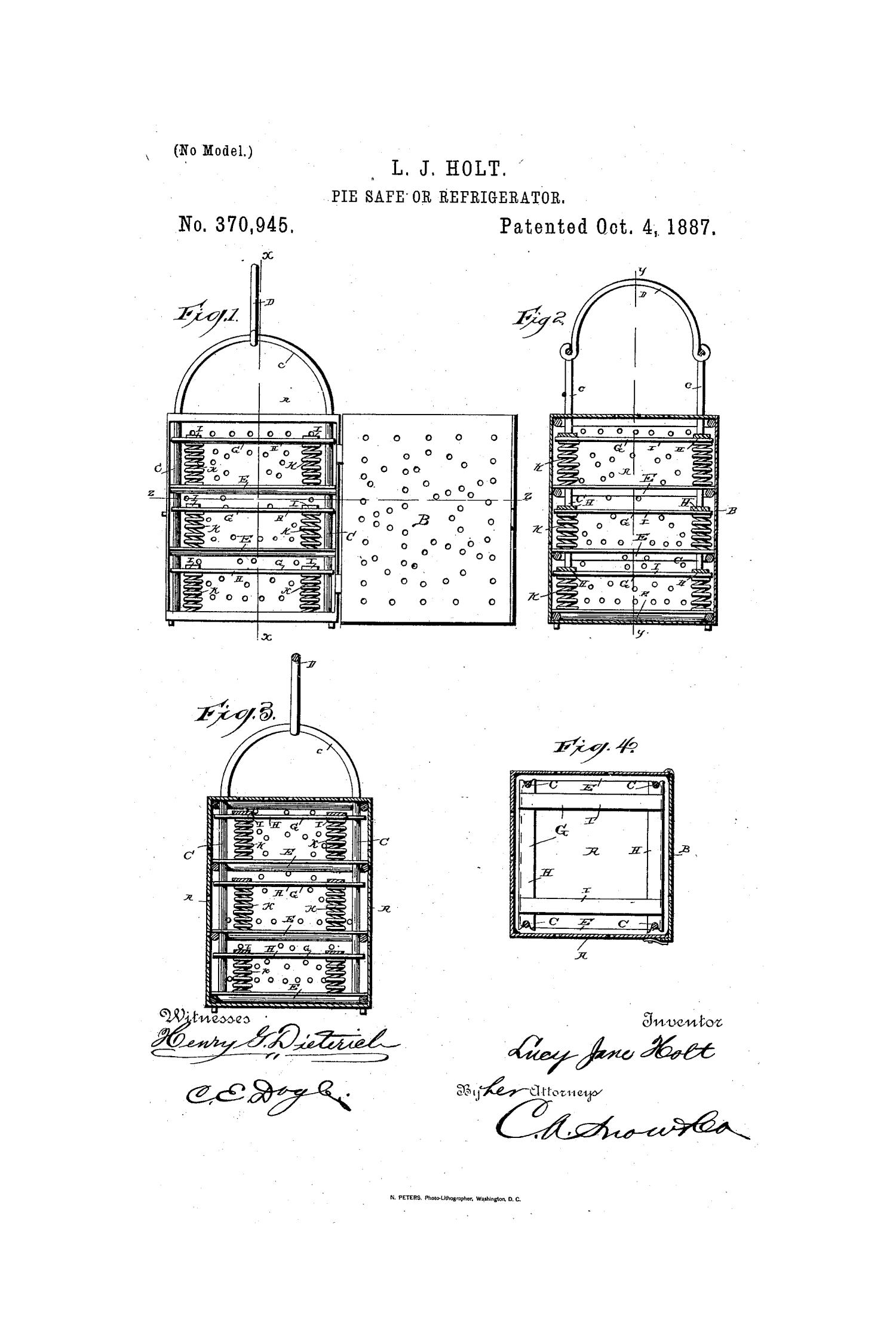
One of the clues that these cabinets were a widespread folk solution rather than a manufactured product category is how inconsistently they were named.
Pie safe is the term that has stuck, mostly because that is what antique dealers settled on. But households called them pie cupboards, pie chests, tin safes, tin cupboards, kitchen safes, meat safes, milk safes, and in some areas simply the safe with no modifier at all – which tells you it was the only cabinet of its kind in the house and nobody needed to specify.
The regional names track the way these objects spread, which was through local tinsmiths and local cabinetmakers working to a general idea rather than to a plan. A safe from one county looks related to a safe from the next county over and distinctly different from one made three hundred miles away, in the proportions, the number of doors, the leg treatment and above all in the panel patterns.
Collectors use those regional pattern differences to attribute pieces, which is a legitimate and interesting pursuit. It is also the study of what was essentially a ventilation specification being met by different hands.
The Refrigerator Ended It Immediately
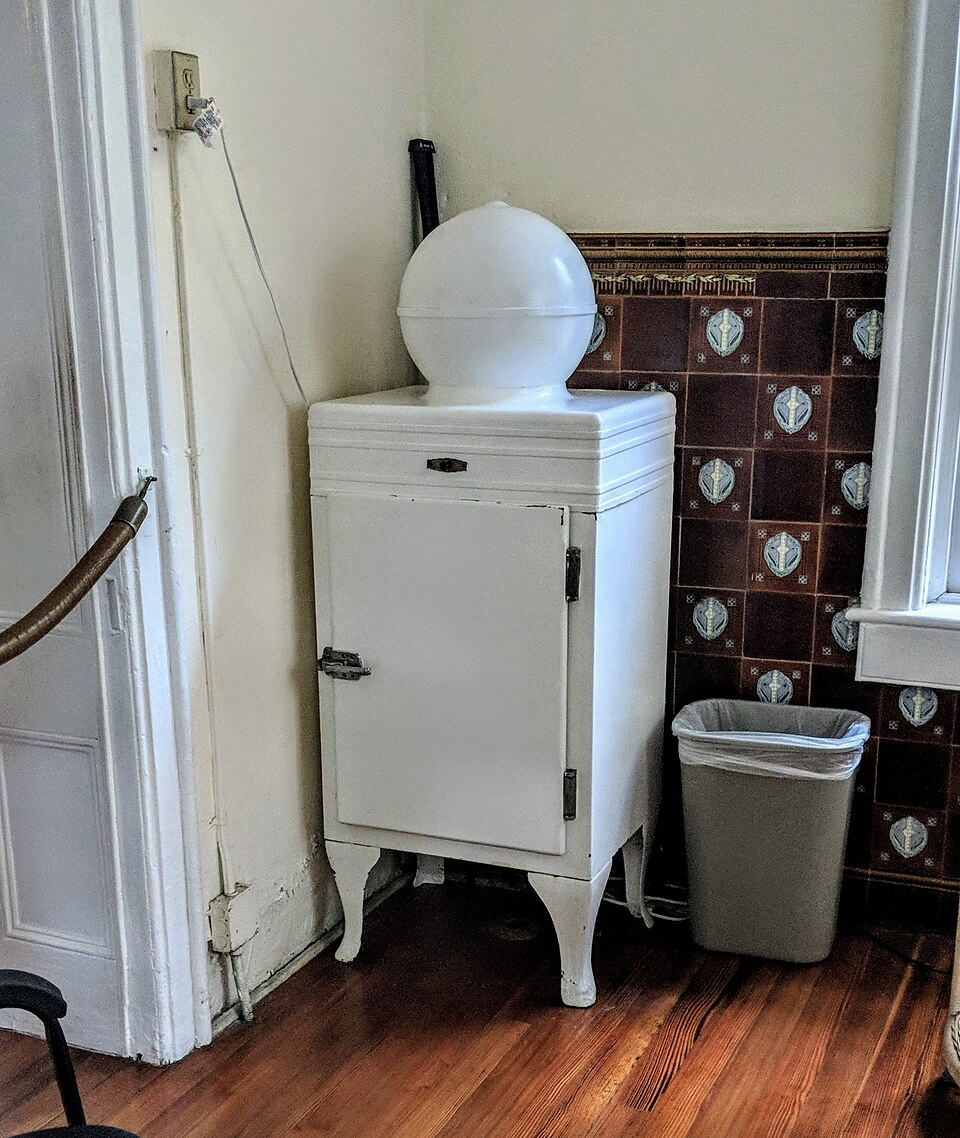
The pie safe did not decline gradually. It became pointless.
Mechanical household refrigeration spread through American homes across the 1920s, 1930s and 1940s, reaching rural electrified areas later than cities but reaching them thoroughly. And a refrigerator does not do the pie safe’s job better. It does a different job that makes the pie safe’s job unnecessary.
A refrigerator is airtight, which the safe deliberately was not. It solves the insect problem, the vermin problem and the spoilage problem simultaneously, by the single expedient of getting the food cold – and once food is cold, the whole careful balance between keeping flies out and letting air in simply stops mattering.
So the cabinets emptied. They got moved to a porch, then to a shed, then to a barn. Some were painted. Some had the tin panels removed and replaced with glass, which is a change you still see and which destroys the function entirely while improving the look of the piece as a display cabinet. A great many were used for tools, for canning jars, for seed, for anything that needed shelves.
And then, perhaps forty years later, they came back indoors as antiques – at which point the tin panels, the thing that had made the object necessary, became the thing that made it valuable.
The Punched Panels Became the Collectible
There is a particular irony in how this ended up.
The pierced tin panel is now the single most sought-after feature of these cabinets. Panels get photographed, catalogued, compared and attributed. Loose panels are sold on their own and framed as wall pieces. Reproduction punched tin is manufactured for people building new cabinets in the style, and there are craftspeople who do nothing but punch patterns for that market.
None of which is wrong. The patterns genuinely are handsome, the hand-punching genuinely is skilled work, and a well-made panel is a pleasing object.
But the reason there is a pattern at all is that somebody had to make several hundred holes and decided they might as well be arranged. The eagle is not a statement about the republic. The tulip is not a Pennsylvania German devotional emblem, whatever has been written about it. They are three hundred ventilation holes in the shape of an eagle and three hundred ventilation holes in the shape of a tulip, punched by a tinsmith who was being paid for a cabinet that had to let air through and keep flies out.
Knowing that does not make the panels less attractive. It makes them considerably more interesting, because it means you are looking at a piece of practical engineering that its makers decorated for free, and that we have since mistaken for decoration that happens to have holes in it.
What the Object Tells You About the Kitchen
The thing worth taking from a pie safe is how much of an old kitchen was organised around the absence of cold.
The safe is one piece of a whole system that modern households have completely forgotten because a single appliance replaced all of it. There was the springhouse or the cellar for things that needed to be cool. There was the smokehouse and the salt barrel for meat that needed to keep for months. There was the crock and the jar for things that had been preserved by acid or sugar. There was the well bucket for cooling a jug. There was the icebox where ice was available. And there was the pie safe for cooked food that needed a few days of ventilated, protected, room-temperature storage.
Each of those addressed a different combination of temperature, moisture, air and exclusion. Together they are a fairly sophisticated distributed solution to food storage, assembled over generations by households with no refrigeration and no theory of microbiology.
The refrigerator replaced the entire system with one box, which is why none of it survives and why the surviving pieces get misread. A pie safe on a dealer’s floor looks like a decorative cabinet because the problem it solved has been gone for three generations.
It was a breathing cage for pies, and the eagle in the door was there because the holes had to go somewhere.
Like our content? Follow us for more.