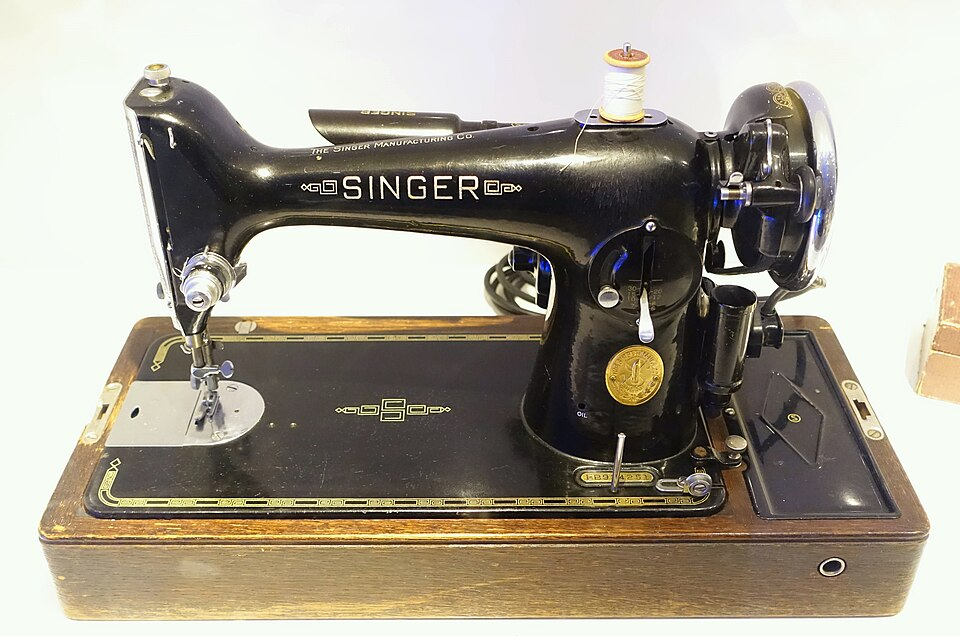
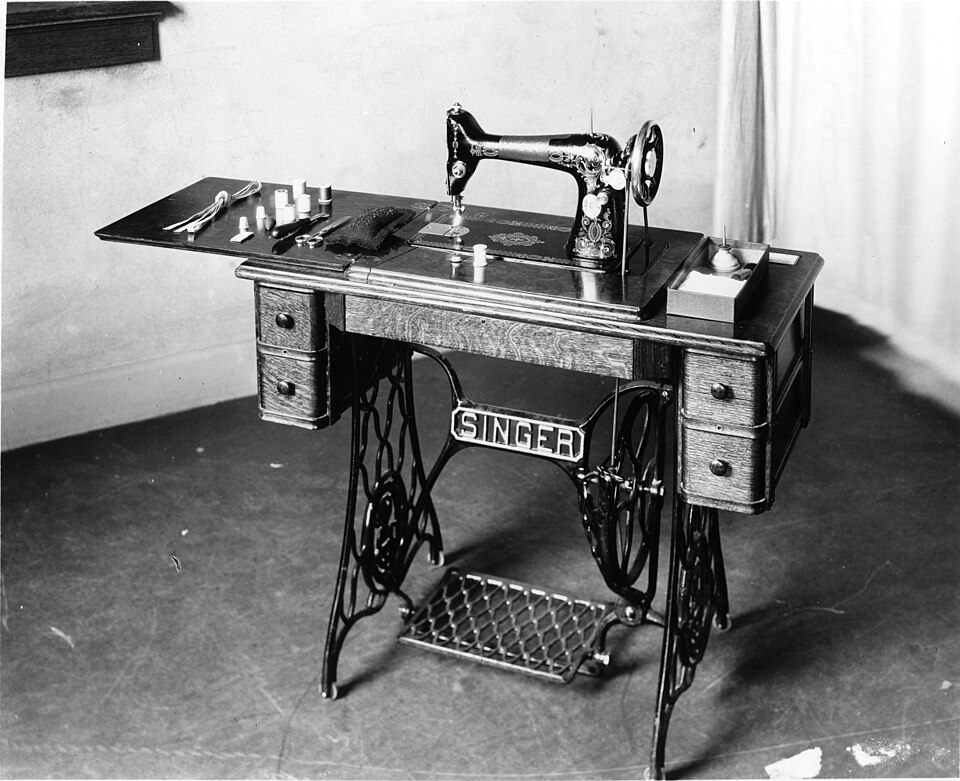
There is one in a great many houses, usually under a plant or a lamp. Cast iron frame with a scrollwork pattern, a wide flat treadle plate at the bottom, a long leather belt, and a wooden cabinet top with the machine head folding down into it.
Most of them have not sewn anything in fifty years. They get valued as furniture, admired for the ironwork, and occasionally converted into a hall table.
What almost nobody mentions is that this object changed how ordinary people buy things.
The sewing machine was the first expensive, complicated piece of machinery ever sold in large numbers to ordinary households – and it was unaffordable. Nobody had that kind of cash. So the companies selling them built a system to let families buy it anyway, a little at a time, with the machine delivered up front. That system went on to be used for pianos, furniture, cars, refrigerators, televisions and effectively everything since.
The hire purchase agreement, the instalment plan, buying on time – whatever it was called locally, it was worked out to move sewing machines.
The Machine Was Genuinely Expensive
It is difficult to overstate this, and the comparison most people reach for is wrong.
A household sewing machine in the second half of the nineteenth century, when these were spreading, cost something on the order of several months of a working person’s wages. Not a week. Not a month. Several months, for a single object, paid in one lump.
That is not a consumer purchase in any sense a nineteenth-century household would have recognised. It is the price of a horse, or a substantial share of the price of a small house in some places. Households at that income level did not buy things at that price. They bought food, cloth, fuel, tools and occasionally livestock, and they bought them with cash or on a running account at a store that they settled after harvest.
And yet the companies selling machines were trying to put one in every house in the country, which was an enormous market and an impossible one at the same time. The product was desirable, the demand was real, and nobody could pay.
The gap between those two facts is where consumer credit comes from.
Like our content? Follow us for more.
What the Instalment Plan Actually Did
The arrangement that solved it was simple and it was new.
The buyer paid a small amount down – enough to demonstrate seriousness and cover the seller’s immediate exposure – and took the machine home. Then they paid a fixed sum every week or every month, over a year or two, until the total was cleared. The seller retained title until the final payment, which meant the machine could be repossessed if payments stopped, and that retained title is the legal mechanism that made the whole thing workable.
Notice what that does. It converts an impossible lump sum into a manageable recurring expense, which households understood because rent and store accounts already worked that way. It gets the product into the house immediately, where it starts being useful and starts being seen by neighbours. And it transfers the risk to the seller, who absorbs it in the price and in the interest.
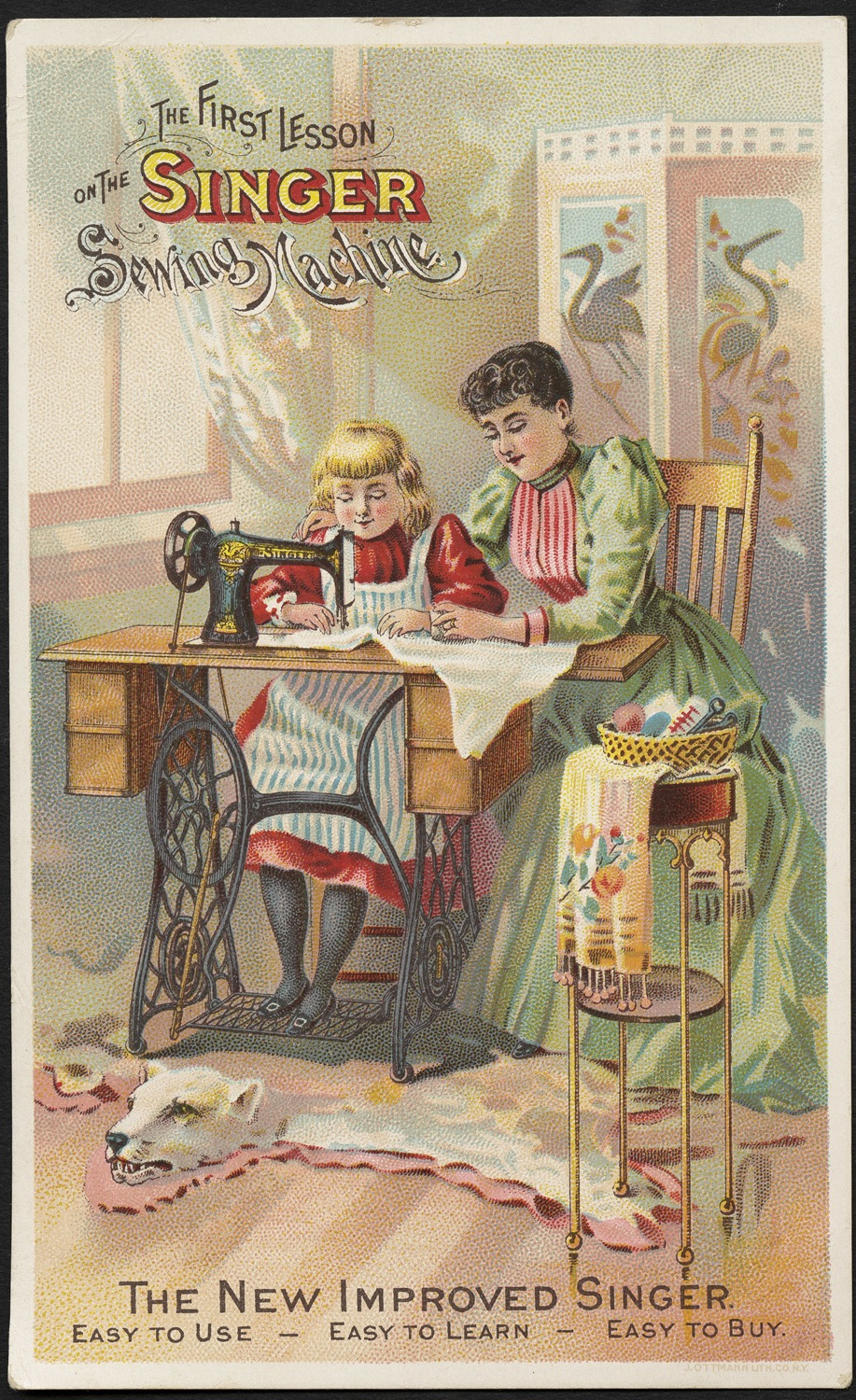
The companies also built the sales force to go with it. Agents went out to households, demonstrated the machine in the kitchen, took the down payment on the spot, and came back to collect. That combination – a demonstration in the home, a signature, a weekly collection – is a sales system as much as a credit system, and it was developed and refined specifically for this product.
The Mechanism Was Worth the Money
None of this would have worked if the machine had not been a genuinely transformative piece of equipment, and it was.
Hand sewing a shirt is hours of work. A seam that takes a skilled hand sewer a long sitting takes a machine minutes. For a household making and repairing all of its own clothing, bedding, curtains and sacking – which is what a nineteenth-century and in many places a twentieth-century household was doing – that is an enormous change in the amount of labour required to keep everybody clothed.
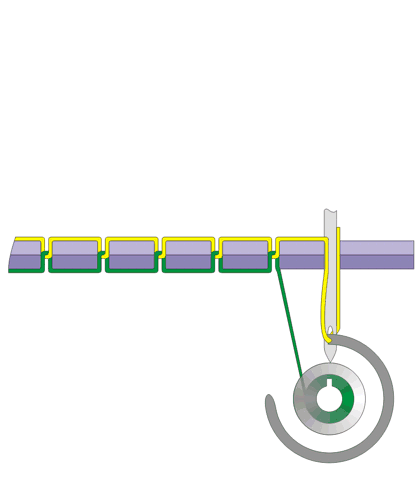
The mechanical achievement underneath it is real. The lockstitch needs two threads – one from the needle above, one from a bobbin below – and a mechanism that passes a loop of the upper thread around the lower thread on every single stitch, hundreds of times a minute, without jamming. The treadle drives it through a leather belt and a hand wheel, which lets the operator vary speed continuously and keep both hands free for the fabric.
That last point is why the treadle beat the hand crank. A hand-cranked machine occupies one of your hands, and guiding fabric accurately requires two. Putting the power at the foot was the design decision that made the machine properly usable.
It Was Sold to Women and Marketed Around Her
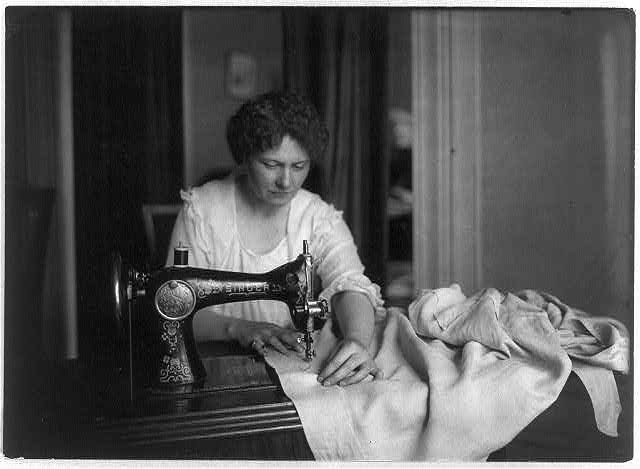
The sales approach is worth looking at honestly because it was specific.
The machine was pitched to the woman of the household, demonstrated to her, and justified in terms of her labour. The arguments were about hours saved, clothing made rather than bought, children better dressed, and work that could be taken in for money – which was real, because a woman with a machine could earn by sewing for other people.
At the same time, in most households the purchase decision formally rested with a husband, and the agreements were frequently signed by him. So the selling had to persuade a woman who would use it and a man who would pay for it, which is why period advertising for these machines reads the way it does: part labour-saving argument, part respectability argument, part investment argument.
The result was that a very large number of American households acquired, as their single most valuable manufactured possession, a machine that was operated by a woman and justified by her work. That is a genuinely unusual situation in the history of household goods and it is one reason the object carries the weight it does in family memory.
The Cabinet Was Part of the Product
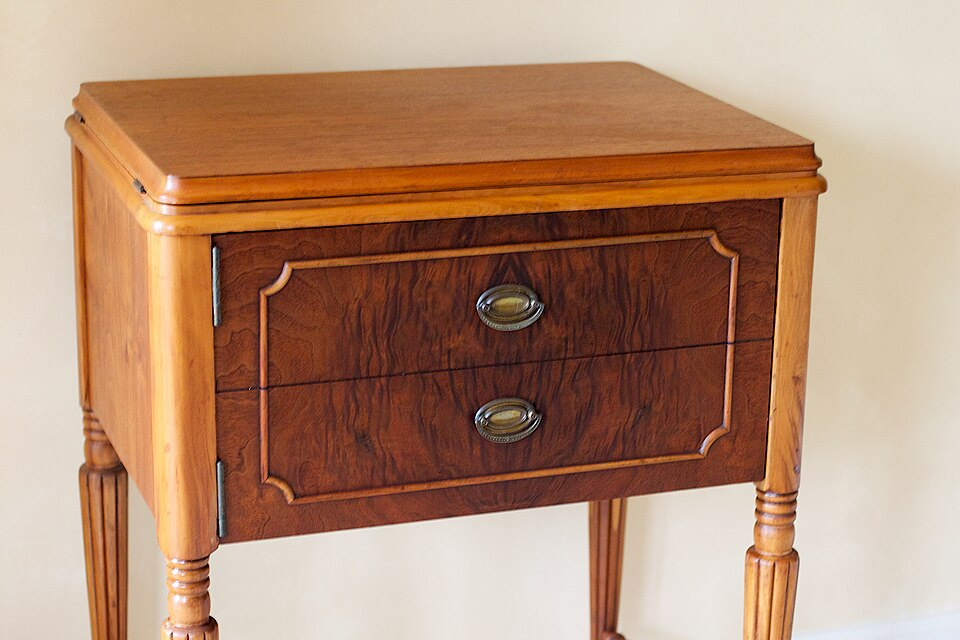
The wooden cabinet that everybody now keeps as furniture was a deliberate commercial decision rather than a mere container.
A machine head on its own is a piece of equipment and it looks like one. Set into a cabinet with a folding top, drawers, a veneered surface and turned detailing, it becomes a piece of parlour furniture that happens to contain a machine. You could close it and have a table.
That mattered because of where the machine had to live. A household spending several months of income on something was not going to put it in a shed, and a house with two or three rooms had nowhere to put a dedicated machine. The cabinet let it sit in the main room of the house without looking like industrial equipment, which made it acceptable to buy.
It also made it a status object, visibly, in the room where visitors sat. Which the companies understood perfectly well.
Electricity Killed the Treadle and Not the Machine
The decline of the treadle is frequently described as the decline of home sewing, and that is not what happened – the two things are separated by about half a century.
Electric household machines arrived and spread through the first half of the twentieth century, and they did the same job with a motor instead of a foot. The mechanism inside is recognisably the same; the lockstitch has not changed. What went was the treadle, the belt, the iron frame and the cabinet, replaced by a portable head with a cord and later by a machine in a carrying case.
Home sewing itself remained completely normal for decades afterward. It declined later and for a different reason: ready-made clothing became cheaper, in real terms, than the cloth required to make the equivalent garment at home. Once that crossover happened – and it happened progressively through the second half of the century – making a dress at home stopped being an economy and became a choice.
So the treadle machine in the hallway represents two separate endings, and most accounts run them together. The frame and the foot pedal were superseded by a motor. The reason to own any machine at all was superseded by the price of a shirt.
The Credit Outlived Everything Else
What survives from all of this is not the machine.
It is the arrangement. Pay a little down, take the goods home, pay a fixed amount at fixed intervals, with the seller holding a claim until you finish. That structure, developed and proven on sewing machines, was applied directly to pianos and parlour organs, then to furniture and household goods, then to automobiles – where it became the entire basis of the industry, since nobody buys a car outright either – then to appliances, then to electronics, and eventually, in a dematerialised form, to almost everything.
The modern version has moved onto a screen and shortened the timescale. A buyer now splits a purchase into four payments at a checkout, with a company carrying the risk and taking its margin elsewhere, and it is presented as a new financial product. It is the sewing machine agreement with the paperwork removed.
Which puts the object in the hallway in a slightly different light. It is not only a handsome piece of Victorian ironwork and a monument to domestic labour, though it is both. It is the first thing ordinary households were ever allowed to buy before they could afford it – and everything since has followed the template that was built to sell it.
Like our content? Follow us for more.