There is a memory that Americans of a certain age share, and that younger generations find almost impossible to imagine: the Sunday when everything was closed. Not “some things.” Everything — the department stores dark, the shopping districts empty, the car lots deserted, the hardware store locked, the whole commercial machinery of the country switched off for one day a week while families went to church, ate a long midday dinner, visited relatives, and simply rested, because there was, quite literally, nowhere to shop and nothing to buy.
This was the world of the “blue laws” — the tangle of state and local statutes that once restricted or forbade commerce on Sundays across most of the United States — and their slow disappearance over the second half of the twentieth century marks one of the quietest but most profound changes in the texture of American life. The laws are largely gone now, and the seven-day, always-open, shop-anytime culture that replaced them feels utterly natural. But within living memory, the country observed a weekly pause so complete that its absence is still mourned by people who remember what a truly closed Sunday felt like.
What the Blue Laws Actually Did

Blue laws — the origin of the quaint name is itself disputed, variously traced to old New England statutes or the color of the paper they were printed on — were laws restricting certain activities, especially commerce, on Sundays, rooted in the Christian observance of the Sabbath as a day of rest. They had deep colonial origins; early American communities enforced Sunday observance strictly, and versions of these laws persisted, evolved, and multiplied across states and municipalities for centuries. By the mid-twentieth century, they formed a patchwork of astonishing variety and specificity.
In their heyday, blue laws could prohibit a remarkable range of Sunday commerce. Department stores and most retail closed entirely. The sale of alcohol was widely banned or restricted on Sundays — a legacy that lingers in many places to this day. And some of the more specific statutes reached a level of detail that now seems almost comic: laws in various places forbade the Sunday sale of particular categories of goods — cars, furniture, appliances, hardware, clothing — while permitting others, producing bizarre situations where a store might legally sell you one item but not another on the same afternoon. Car dealerships closing on Sundays, a practice that survives in a number of states, is a direct descendant of these laws. The overall effect, whatever the local specifics, was the same: Sunday was not a shopping day, because the law would not allow it to be.
Like our content? Follow us for more.
A Really Quieter Country

The lived experience of the closed Sunday is what people remember most vividly, and it describes a rhythm of life almost entirely lost. With the stores shut and commerce forbidden, Sunday became a day fundamentally different in character from the rest of the week — slower, quieter, more oriented toward home, family, church, and rest than toward errands and consumption. Families who had shopped and worked and hurried for six days found the seventh enforced upon them as a pause, and built their lives around it: the big Sunday dinner, the afternoon visit to grandparents, the drive in the country, the long stretch of unstructured time that came from having, quite simply, nothing to buy and nowhere to be.
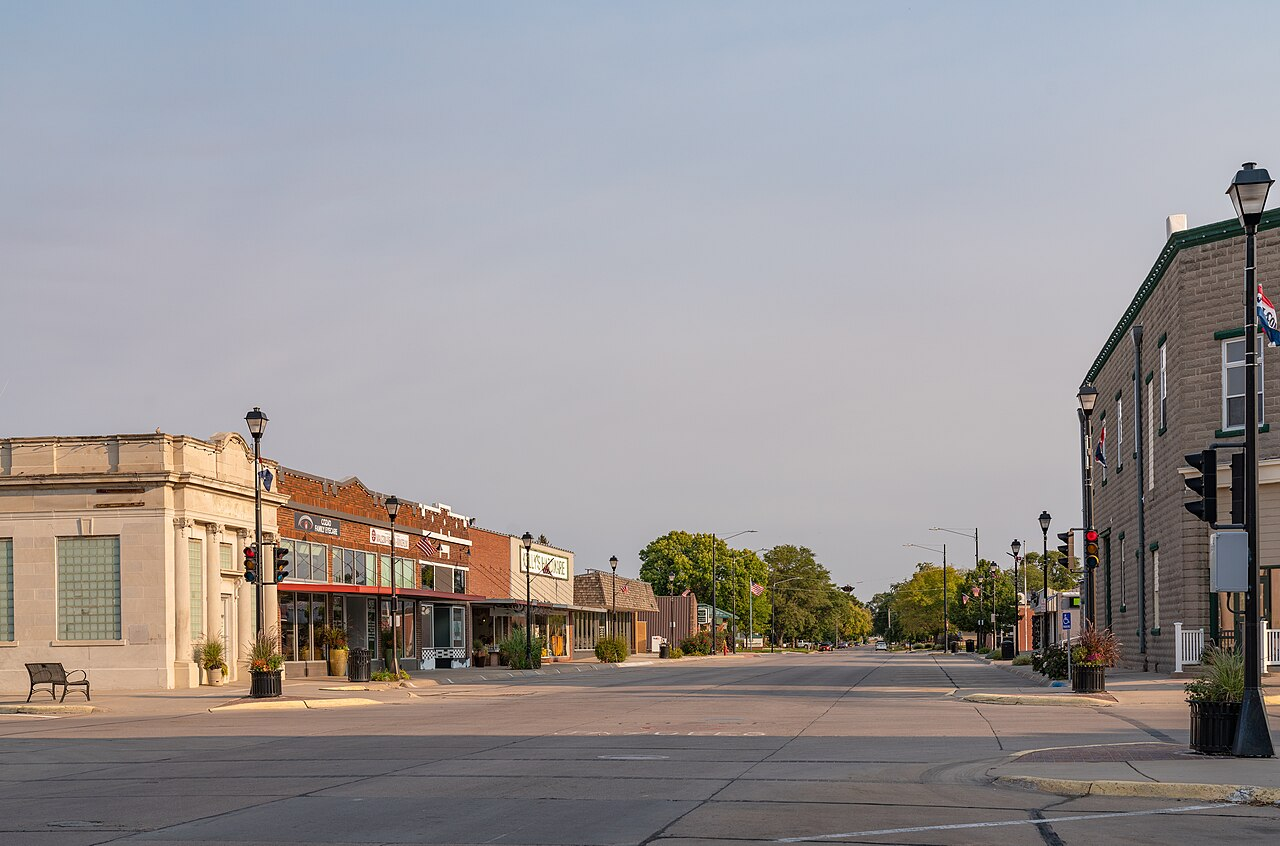
There was a communal quality to it, too. Because everyone’s Sunday was closed at once, the pause was collective — the whole town slowed together, the streets honestly emptied, and the day carried a distinct, shared stillness that people describe with real feeling. Children of the era remember Sundays as expansive and a little boring in the best way, long hours with family and no commercial distractions; adults remember a guaranteed day off from the pressures of getting and spending. Whatever one thought of the laws’ religious underpinnings, they produced a weekly national exhale that touched believers and nonbelievers alike, simply by making it impossible to do otherwise.
The Long, Slow Repeal

The blue laws did not vanish overnight; they eroded gradually over decades, worn down by a combination of forces that reshaped American life. Court challenges questioned the laws on constitutional grounds, particularly the entanglement of state commerce rules with religious observance, though the Supreme Court notably upheld certain Sunday-closing laws in the early 1960s on secular grounds — the idea that a common day of rest served a legitimate civic purpose apart from religion. Even so, the broader trend ran steadily against them.
The deeper forces were economic and cultural. The rise of suburban shopping malls, the growth of a consumer economy that chafed against a closed shopping day, competitive pressure among retailers, the decline of uniform religious observance, and the increasing number of working families who needed the weekend to shop all pushed relentlessly toward repeal. State by state, county by county, the restrictions were loosened, challenged, ignored, and finally struck from the books through the 1970s, 80s, and 90s, until the closed Sunday had become the open Sunday almost everywhere. Some vestiges survived — Sunday alcohol restrictions in many states, car-sales bans in others, scattered local rules — but the great weekly shutdown was, by the end of the century, essentially over.
What We Traded Away

The disappearance of the blue laws was, in most respects, a straightforward expansion of freedom and convenience: people could now shop when it suited them, working families gained access to the weekend for errands, businesses could serve customers seven days a week, and the state got out of the business of enforcing a day of rest. Few would seriously argue for reinstating laws that told stores what they could sell on which day, and the religious coercion embedded in the original statutes is plainly at odds with modern pluralism. The open Sunday was, by most measures, progress.
And yet the loss is real, and widely felt. What America gave up when it opened Sunday was the last enforced, collective pause in the national week — the one day when the pressure to produce and consume was switched off for everyone at once, not by individual choice but by common arrangement. In its place came a culture of relentless availability, where every day is a shopping day, work follows people home through their devices, and the very idea of a guaranteed, universal day of rest has steadily disappeared. Many people now build their own sabbaths — a screen-free day, a family ritual, a deliberate weekly pause — precisely because the culture no longer provides one, reaching individually for the collective rest the blue laws once imposed on everyone.
It’s worth noting how uneven the change was from place to place. Because blue laws were largely state and local, their repeal happened piecemeal over decades, producing a patchwork that persists in fragments today: a traveler crossing state lines can still encounter a county where liquor sales pause on Sundays, a state where car dealerships remain closed, or a town with some quiet old ordinance still technically on the books. These surviving scraps are the last visible traces of what was once a near-universal national institution, and they occasionally surprise visitors who assumed the always-open Sunday was the American default everywhere. For most of the country’s history, it was the opposite that held.
A Rhythm Worth Remembering
Older Americans who lived through the transition often describe the closed Sunday with a complicated nostalgia — not necessarily wishing the laws back, but missing what they produced: a slower week, a guaranteed pause, a day that belonged to family and rest rather than commerce, shared by a whole community at once. It’s a nostalgia less for the rules themselves than for the rhythm they created, a weekly cadence of six days on and one day sincerely off that structured American life for generations and then dissolved so gradually that many never noticed it was gone until it was.
The blue laws are a reminder that a culture’s sense of time is shaped by forces we rarely examine, and that convenience, for all its real benefits, has costs that are easy to miss. The always-open world we live in now would have been unimaginable to Americans of the mid-twentieth century, for whom the closed Sunday was as natural as the sunrise — and the fact that we can barely imagine their world, in turn, measures just how completely the change swept through. Somewhere in the memory of a quiet Sunday street, stores dark and families home and the whole town at rest, is a version of American life that ran on a different clock, and that a great many people, given the chance, would still choose to visit.
Like our content? Follow us for more.