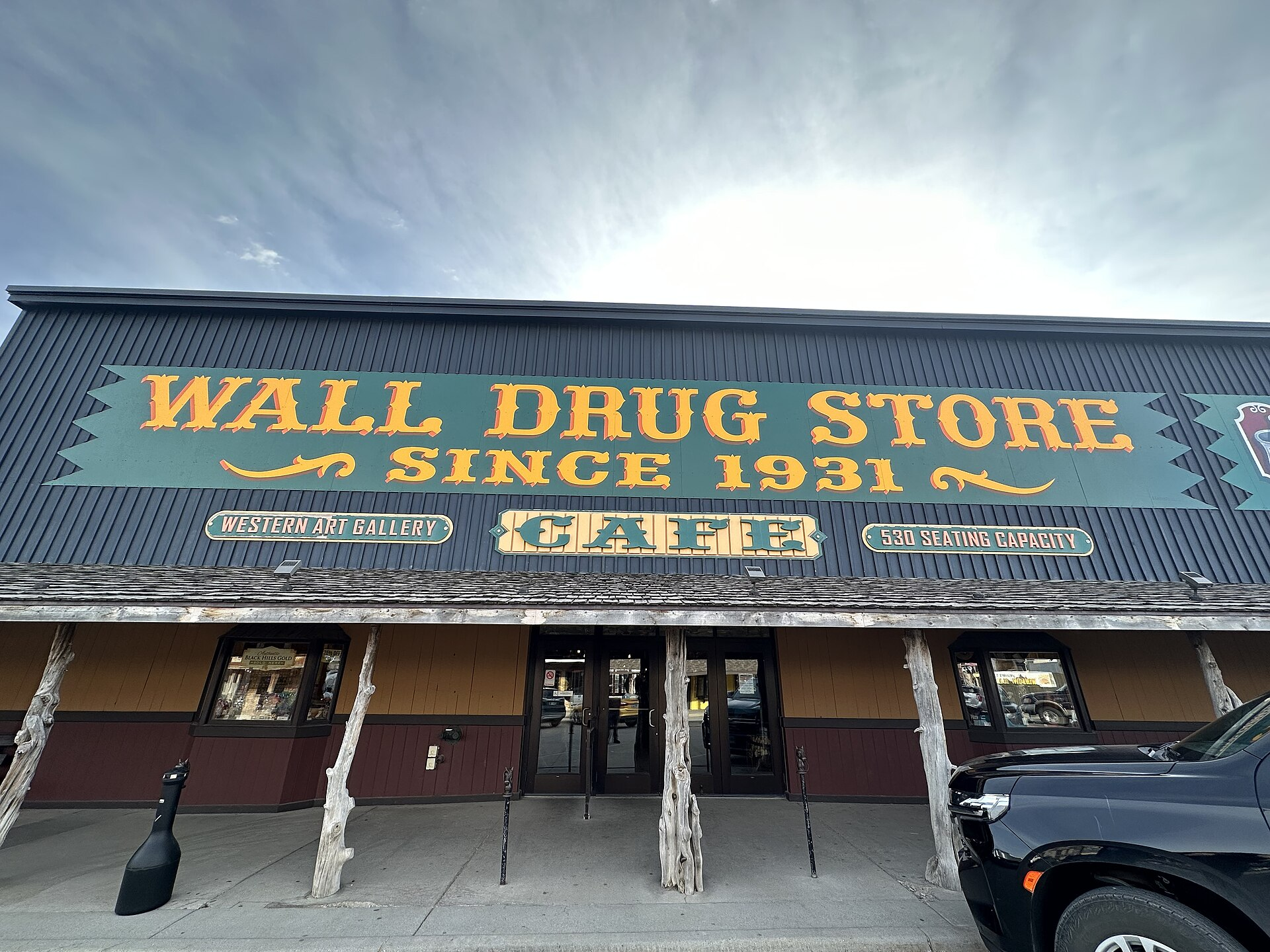
Drive any interstate approaching western South Dakota and you will be told, repeatedly and for hundreds of miles, exactly where you are going. The billboards start impossibly far away — signs counting down the miles, cracking jokes, promising homemade doughnuts, five-cent coffee, an animatronic dinosaur, and above all, free ice water — until, by the time you reach the small town of Wall, resistance is futile. You are going to Wall Drug. Everyone is going to Wall Drug. Wall Drug has spent nearly ninety years making absolutely certain of it.
What began as a failing small-town pharmacy in the depths of the Depression has become the most famous roadside attraction in America — a block-long sprawl of shops, restaurants, and Western kitsch that draws around two million people a year to a town of fewer than a thousand residents, all thanks to one of the greatest marketing ideas in American history. And the idea, in its entirety, was: give thirsty travelers a free cup of ice water, and put up a sign saying so. Everything else followed.
A Dying Store in a Town in the Middle of Nowhere
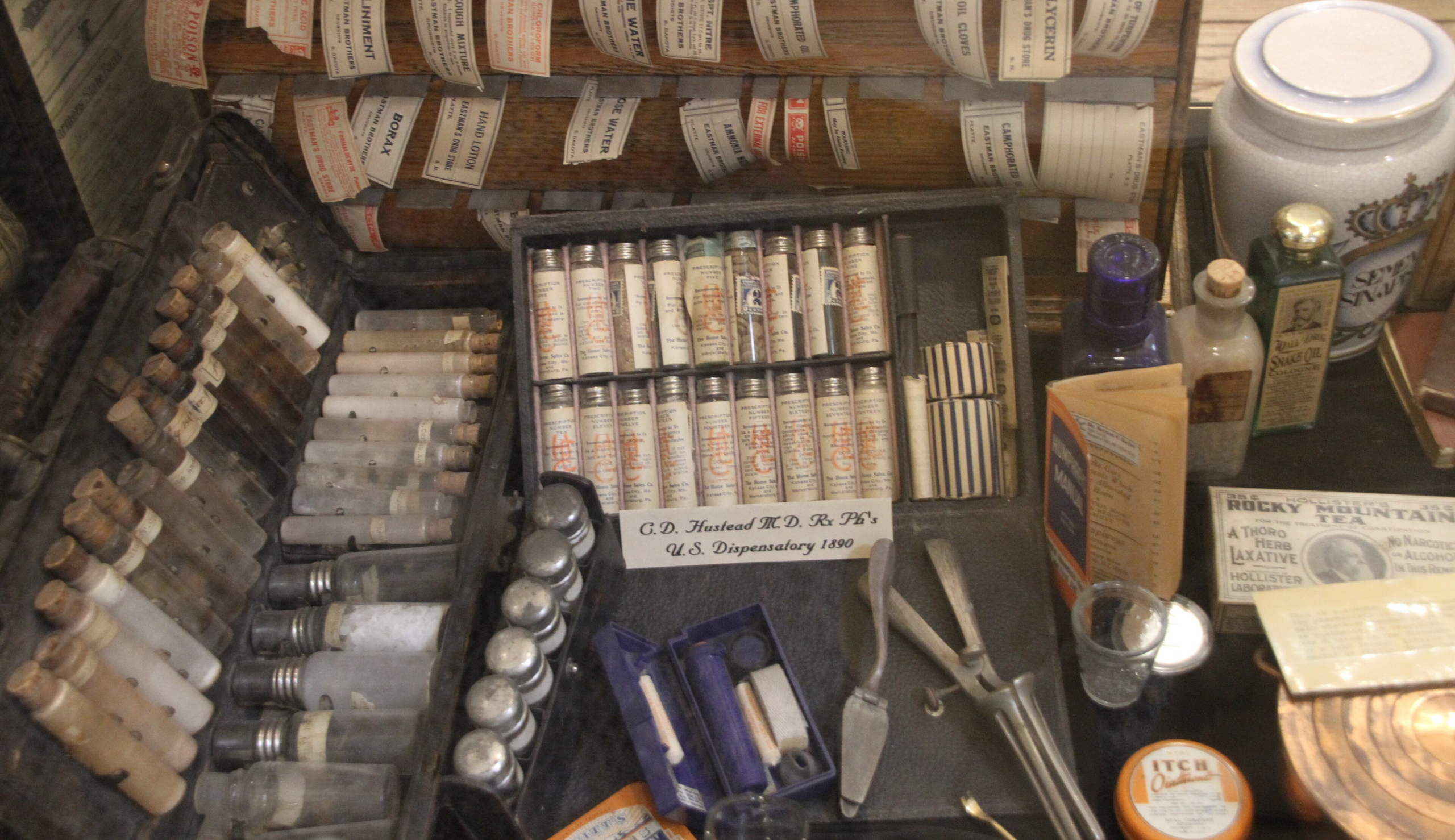
The story begins in 1931, when a young pharmacist named Ted Hustead and his wife, Dorothy, bought a small drugstore in Wall, South Dakota — a decision that looked, for the next several years, like a serious mistake. Wall was a tiny, dusty settlement on the edge of the Badlands, its few hundred residents scraping by through the worst of the Great Depression and the Dust Bowl, and the drugstore struggled to make even a modest living. The Husteads had given themselves five years to make the business work; by 1936, the five years were nearly up, and Wall Drug was going nowhere. The couple, by their own later telling, were close to giving up on the whole venture.
The problem wasn’t just the Depression — it was location. Wall sat on the route toward the newly carved Mount Rushmore, so cars did pass through, but they passed straight through, drivers with no reason on earth to stop in a nothing town in the baking heat. The traffic was there; the store just couldn’t capture it. What Wall Drug needed was a reason — any reason — for those passing travelers to pull over.
Like our content? Follow us for more.
The Idea That Changed Everything
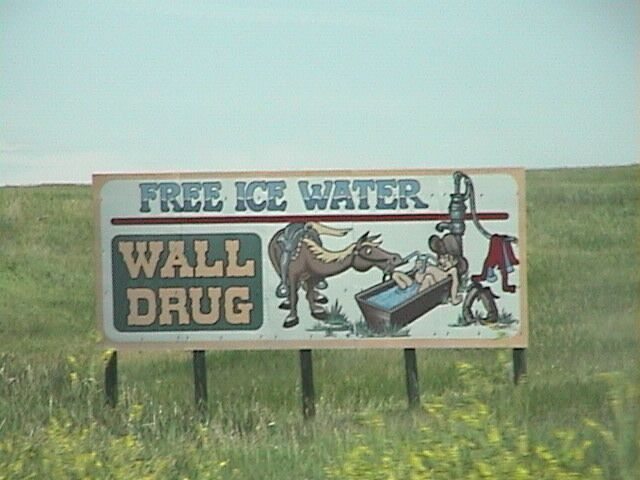
The breakthrough, in the story the Husteads told for decades afterward, came from Dorothy. Lying awake one hot summer day in 1936, kept from her nap by the noise of cars rattling past on the highway, she had an idea so simple it was almost foolish: those travelers, crossing the hot plains toward Rushmore, were thirsty. Why not offer them something they couldn’t refuse and couldn’t get elsewhere — free ice water — and advertise it with signs along the highway, in the style of the then-famous Burma-Shave roadside verses, to lure the cars in?
Ted was skeptical but willing, and they put up their first signs: simple, rhyming boards along the highway announcing free ice water at Wall Drug, just ahead. The effect was immediate and astonishing. By the time Ted had finished putting up the signs and returned to the store, travelers were already pulling in for their free water — and while they were stopped, they bought ice cream, coffee, and goods, and the once-empty store suddenly had customers. That summer transformed Wall Drug. The Husteads hired extra help to keep up, and the free ice water — which cost them almost nothing — had turned a dying drugstore into a thriving one, essentially overnight.
Building an Empire of Signs
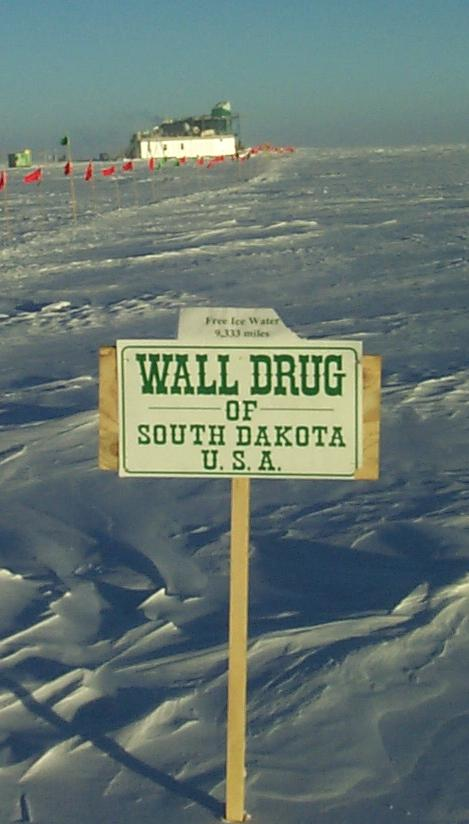
The genius of Wall Drug was that the Husteads never stopped. Having discovered that signs brought people in, they built more signs, then more, then more — expanding the billboard campaign across South Dakota and then far beyond, in an ever-widening net of roadside advertising that became as famous as the store itself. The signs developed their own personality: cornball jokes, mileage countdowns from absurd distances, and relentless promotion of the store’s growing list of attractions. And they spread impossibly far — travelers and soldiers began putting up homemade “Wall Drug” signs around the world, and the store leaned into it, until Wall Drug signs were reportedly appearing in foreign countries, at global landmarks, and, in the campaign’s proudest boast, in places as far-flung as the Antarctic and, by cheeky claim, referencing the distance to Wall Drug from anywhere on earth.
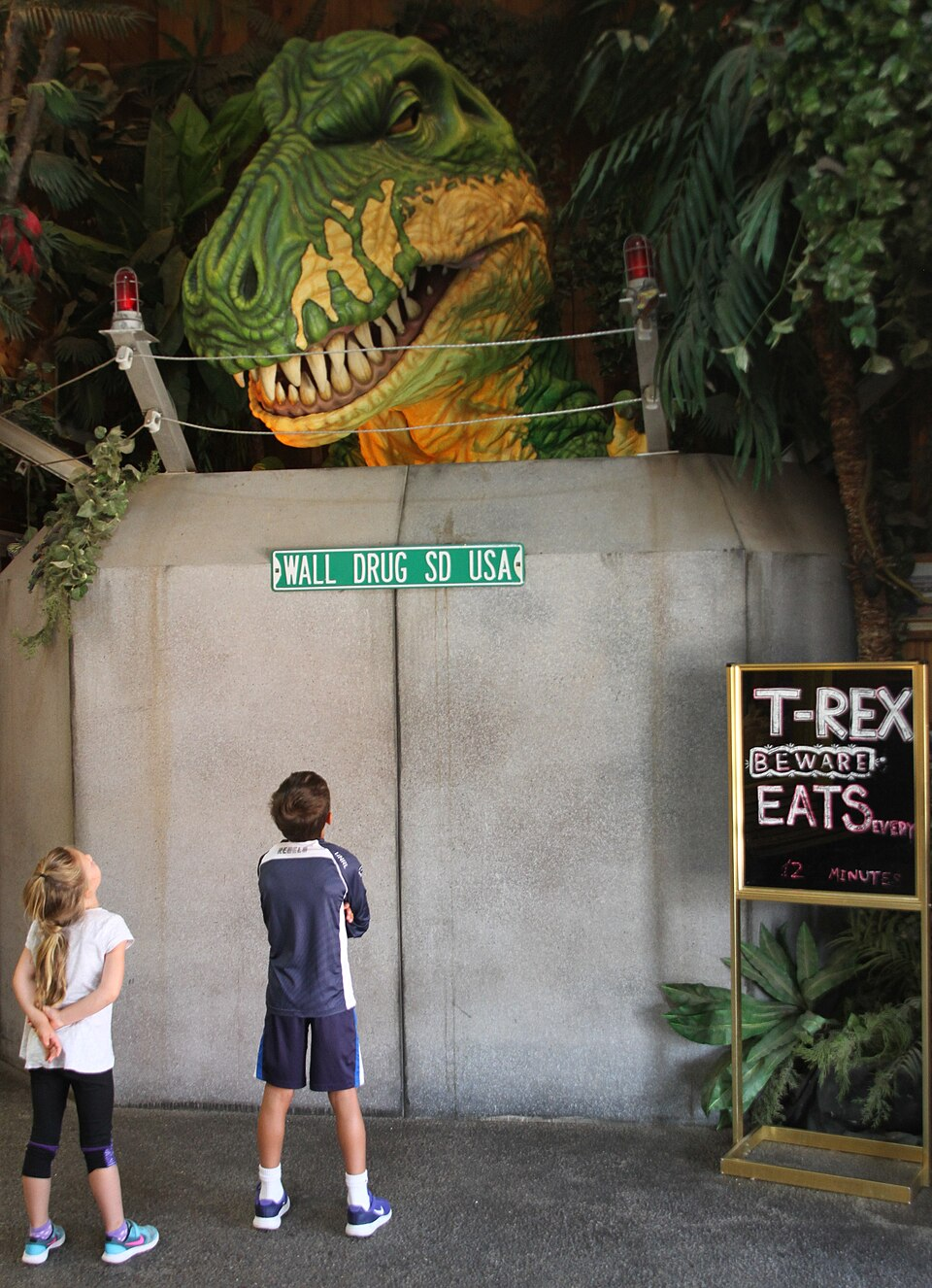
As the crowds grew, so did the store. Over the following decades, Wall Drug expanded from a single drugstore into a rambling complex occupying much of the town’s main street — adding a huge dining room famous for its doughnuts and its cheap coffee, a Western art gallery, shops selling boots and rocks and souvenirs, a chapel, a courtyard with a giant jackalope for photos, an animatronic T. rex, and enough Western Americana to fill an afternoon. It became a destination in its own right, no longer merely a place to break a journey but a reason to make one, all while never abandoning the original promise still posted everywhere: the ice water is still free.
Why It Works: The Psychology of the Roadside
Wall Drug endures as a case study taught in marketing courses, and its lessons are deceptively deep. The free ice water was never really about water; it was about giving people permission to stop — a small, generous, no-strings offer that pulled travelers off the road, at which point ordinary commerce took over. The relentless signs built anticipation over hundreds of miles, turning a simple stop into an event travelers felt they’d earned by the time they arrived. And the humor made the whole thing beloved rather than annoying: the signs were a running joke that drivers were in on, a shared bit of Americana that made pulling over feel like joining the fun.
There’s also a lesson in generosity as strategy. The Husteads gave away the water, kept the coffee famously cheap for decades, and treated the free offer as sacred — and that reputation for openhandedness, in an industry built on extracting money from captive travelers, made Wall Drug something people truly liked rather than merely tolerated. The store proved that the surest way to a traveler’s wallet ran straight through a free cup of water and a good laugh, and it has been proving it, at scale, for almost a century.
Visiting the Legend
For the modern road-tripper, Wall Drug is an essential and thoroughly enjoyable stop, ideally paired with the two natural wonders it sits between: Badlands National Park, whose otherworldly striped formations lie just minutes away, and Mount Rushmore, about an hour to the west. The town of Wall is small and the store impossible to miss — it is, effectively, the town — and the experience is exactly what nine decades of signs promise: a sprawling, cheerful, unapologetically kitschy monument to the American road, where you can get a doughnut, a photo on the jackalope, a five-cent cup of coffee (a price the store famously honored far past reason), and, of course, a free cup of ice water.
Come for the spectacle and the history, not for the highbrow — Wall Drug is roadside Americana at its purest, and it knows exactly what it is. Load up on doughnuts, mug for photos with the giant rabbit, browse the truly good Western art collection tucked among the souvenirs, and take a cold cup of the water that started it all. Then, on your way out, watch for the signs continuing down the highway, thanking you and already working on the next carful of travelers hundreds of miles away.
Free Ice Water, Forever
Wall Drug’s story is, at heart, the perfect American parable: a struggling couple, a Depression-era gamble, a spectacularly simple idea, and an empire built on generosity and relentless self-promotion. Nearly ninety years after Dorothy Hustead couldn’t sleep for the traffic noise, her free ice water is still drawing millions to a tiny town on the edge of the Badlands, and the signs still stretch across the plains for hundreds of miles, still cracking the same jokes, still making the same irresistible promise.
It’s a reminder that the roadside America of a certain era — the era of the family road trip, the roadside attraction, the drive west toward the great sights — is still alive and pouring free water in western South Dakota, exactly as it has since 1936. Few businesses of any kind have ever understood their customers better than the drugstore that figured out that all a hot, tired traveler really wants is a cold drink, a good laugh, and a reason to stop. Wall Drug has been offering all three for nearly a century, and the ice water, as promised on ten thousand signs, is still free.
Like our content? Follow us for more.