The non-absorbent stripes on every bath towel have a real name (the “dobby border”), a real inventor (the dobby loom dates to 1843), and four specific functions textile experts and Snopes have documented. Why your towel doesn’t just have these stripes for decoration — and why some luxury towels deliberately don’t have them at all.
In early 2025, a question went viral on social media that surprised everyone with how many people had never thought about it: what are those non-fluffy stripes near the edges of every bath towel actually for?
The post sparked thousands of theories. Some users suggested they were “racing stripes” to make the towels dry faster. Others proposed they were “face/butt delineation lines” to help you keep track of which end touched which. A surprising number of commenters insisted they were purely decorative. Many admitted they had never noticed them at all.
The actual answer turns out to be a small piece of textile engineering history that goes back nearly 200 years. The stripes are called the “dobby border” — named after the dobby loom, a specialized weaving mechanism invented in 1843. The borders aren’t decorative afterthoughts. They serve four specific functional purposes that improve your towel’s durability, performance, and longevity. Snopes investigated the question after the viral posts and confirmed what textile experts had known all along.
Here’s what the dobby border actually does, why it’s been a standard towel feature for over 180 years, and why some modern luxury towels are deliberately abandoning it.
What the dobby border actually is
A dobby border is the woven strip near the edge of a bath towel that has a different weave pattern than the rest of the towel. While the main body of the towel is made of looped terry cloth (the fluffy part that absorbs water), the dobby border is woven flat — without the absorbent loops.
The name comes from the dobby loom, a specialized weaving machine that uses a complex mechanism to create varied weave patterns. The original term “dobby” itself comes from “draw boy,” the historical term for a weaver’s assistant who would manually manipulate the loom to create patterns before mechanization.
The dobby loom was invented in 1843, and its upgraded mechanics allowed weavers to create more complex fabric designs than simpler looms could produce. Once dobby technology was widely available, weavers began incorporating the borders into bath towels to address several specific problems with all-terry-cloth construction.
Two related types of borders exist:
Dobby border. Features small geometric patterns (checks, diamonds, stripes, or other repeated designs). Created using the dobby loom’s pattern capabilities. More decorative.
Cam border. A simpler flat-woven strip without decorative patterns. Created using simpler weaving mechanisms. More utilitarian.
Both serve essentially the same functional purposes. The choice between them is typically aesthetic — luxury and decorative towels tend toward dobby borders with patterns; high-volume hospitality and gym towels tend toward simpler cam borders.
The 4 specific functions of the dobby border
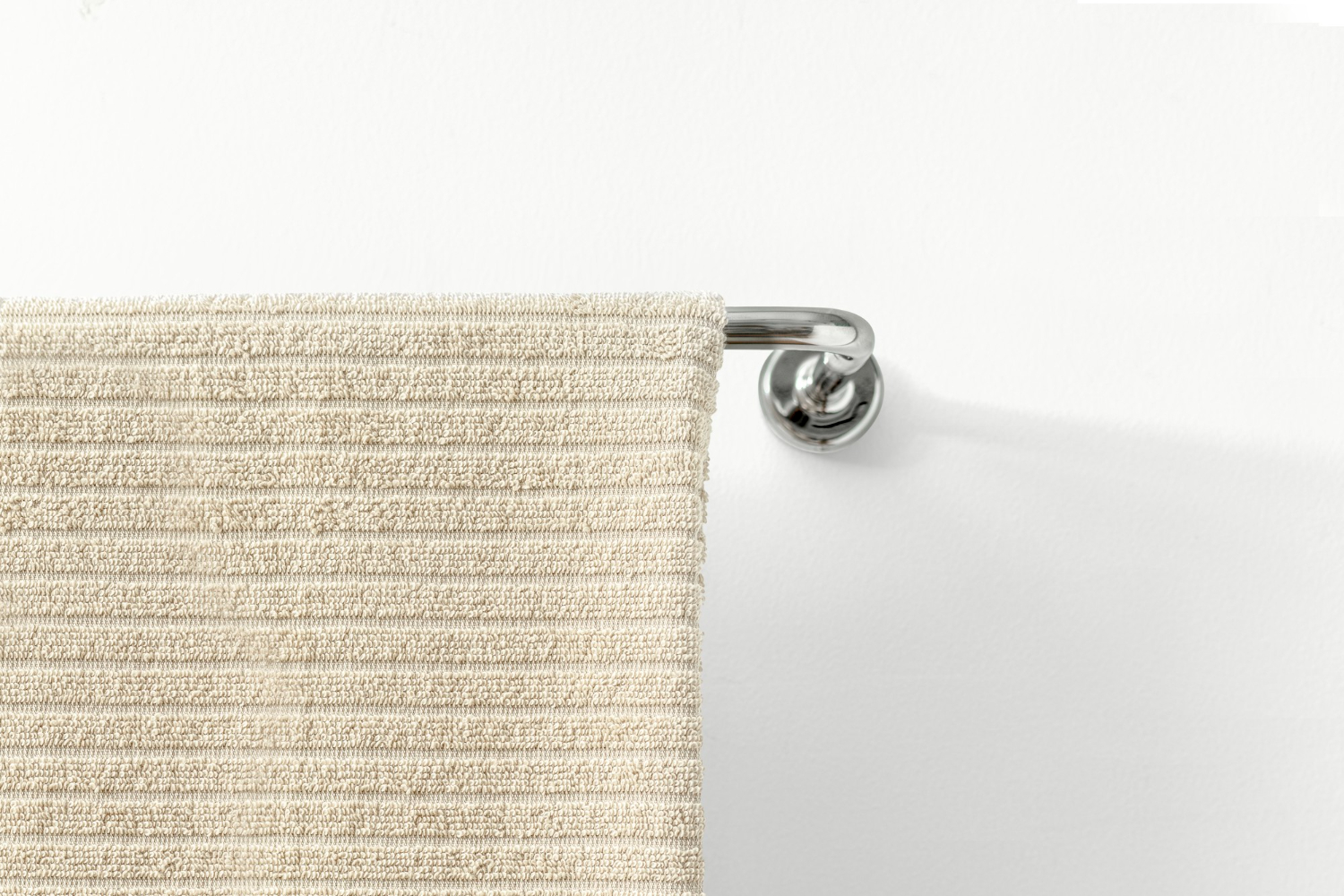
According to Emma Seymour, associate director of the Textiles, Paper & Apparel Lab at the Good Housekeeping Institute, the dobby border serves multiple structural purposes that affect towel performance and longevity. Combined with industry sources from textile manufacturers, the four key functions are:
1. Preventing fraying
Towel edges experience substantial stress. The combination of repeated washing (often in hot water with heavy-duty detergent), tumble drying at high temperatures, and physical wear from use creates conditions where edges can fray, unravel, or develop loose threads.
The dobby border addresses this by creating a tighter, denser weave at the edge that resists fraying. The flat weave doesn’t have the loose terry loops that snag on washing machine agitators, dryer drums, or other items in the wash. The result is a towel that maintains clean edges through hundreds of wash cycles instead of becoming progressively more ragged.
For commercial users (hotels, gyms, hospitals, spas) that wash towels constantly with industrial equipment, this fray prevention is particularly important. A towel that loses its edges after 50 washes vs. one that maintains them after 500 washes represents a substantial cost difference.
2. Preventing uneven shrinkage
Cotton terry cloth shrinks in hot water and high-heat drying — both standard in commercial laundry operations. Without structural reinforcement, the shrinkage can be uneven across the towel, causing what textile professionals call “hour-glassing” (the towel narrows in the middle while the edges remain wider) or other distortions.
The dobby border acts as a stabilizer that ensures shrinkage occurs uniformly across the towel’s width. This means towels maintain consistent dimensions through repeated washing — important both for aesthetic reasons (towels stack neatly in the linen closet) and practical ones (replacement towels actually match the existing set).
3. Improving structural integrity
Bath towels are subjected to substantial physical stress in regular use. Pulling, twisting, hanging on towel bars, being thrown into laundry baskets — all of these create forces that can deform terry cloth construction over time.
The dobby border’s denser weave provides additional structural integrity that the looped terry cloth lacks. Think of it as similar to the hem on a piece of clothing — the reinforced edge prevents the rest of the garment from losing shape. Without dobby borders, towels gradually distort, with the looped cloth pulling in inconsistent directions and the overall shape becoming irregular.
4. Providing a surface for branding and decoration
For hotels, resorts, gyms, and other commercial users, the dobby border provides an ideal surface for embroidered logos, monograms, or decorative branding. The flat weave accepts embroidery cleanly, while the looped terry cloth makes embroidery substantially more difficult.
This is why hotel and resort towels almost universally feature dobby borders — they serve as the canvas for the property’s branding. The same applies to high-end residential towels with monogramming options.
For decorative purposes, the dobby weave allows for patterns (geometric designs, decorative stripes, brand-specific motifs) that can substantially affect a towel’s appearance without affecting its absorbency.
Why the dobby border doesn’t compromise absorbency

A common assumption is that the dobby border, being non-absorbent, must reduce the towel’s overall drying performance. In practice, this is rarely a meaningful issue for several reasons:
Border placement. Dobby borders are typically located near the edges of the towel, where you don’t normally use the surface for primary drying. The center of the towel — which is what you actually use to dry off — is full terry cloth.
Surface area calculations. A dobby border typically represents 5-10% of the towel’s total surface area. Even if completely non-absorbent, this represents a minor reduction in total absorbent capacity.
Fold patterns. When folded, dobby borders typically end up on the outer or hidden edges, not in the active drying area.
Towel design intent. Modern bath towel design considers the dobby border as part of the overall absorbency calculation. Towels are designed to provide adequate absorbent surface area despite the borders.
The trade-off — slightly less absorbent surface area in exchange for substantially better durability and longevity — works out favorably for most users.
The luxury towel exception
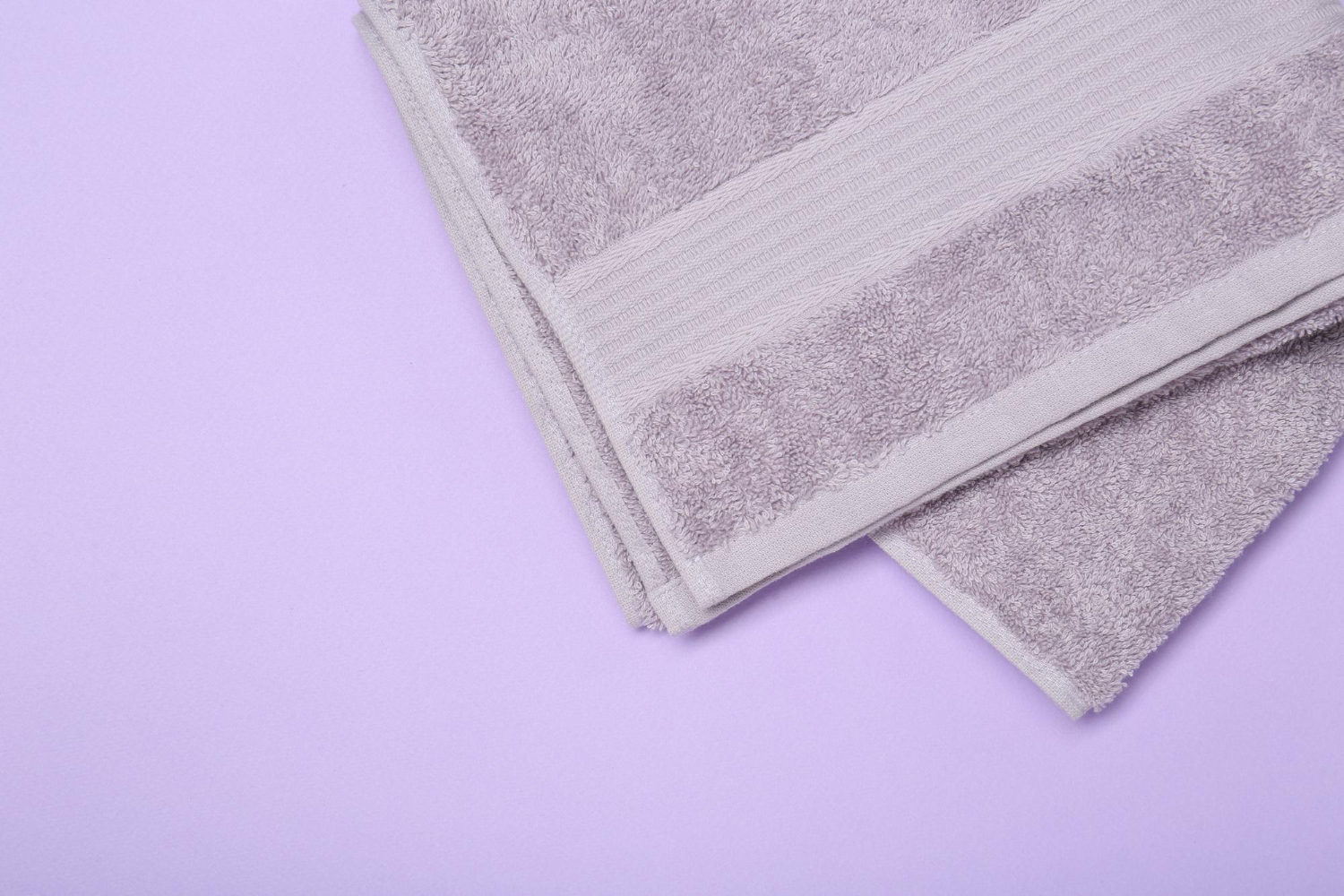
Some modern luxury towel brands have begun producing borderless designs — towels without dobby borders for a more minimalist aesthetic. These towels can perform well, but they require specific design considerations to compensate for the missing border functions:
Higher-quality terry construction that resists fraying without border reinforcement Specialized edge treatments that prevent the unraveling the dobby border would normally prevent Premium materials that maintain shape better than standard cotton without the structural support More careful washing instructions to prevent the uneven shrinkage borders would normally prevent
The result is typically a more expensive towel that requires more careful care but provides a cleaner aesthetic. For consumers who prioritize the minimalist look and are willing to invest in premium materials, borderless towels can be a reasonable choice. For most users, the dobby border represents the right trade-off between performance and aesthetics.
How to actually evaluate towel quality

Beyond the dobby border question, several factors actually determine bath towel quality:
GSM (grams per square meter). This is the weight measurement that indicates towel density. Higher GSM generally means more absorbent and more durable, but also heavier and slower-drying.
- 300-400 GSM: Light towels, quick-drying, suitable for gym or travel
- 400-600 GSM: Standard household towels with good balance
- 600-900 GSM: Heavy luxury towels with maximum absorbency
Cotton type. Different cotton varieties produce different towel characteristics:
- Egyptian cotton: Long staple length producing soft, durable, absorbent towels
- Pima cotton (American Egyptian): Similar long-staple quality, often less expensive
- Turkish cotton: Long-staple, particularly absorbent, very durable
- Standard cotton: Adequate for most uses, less premium feel
Pile height. The length of the terry loops affects feel and absorbency. Longer loops create plusher feel but can be more prone to snagging. Shorter loops are more durable but less luxurious.
Twist quality. How tightly the cotton fibers are twisted affects durability. Higher twist counts generally produce more durable towels.
Weave construction. Beyond just the dobby border, the overall weave structure affects absorbency, durability, and feel.
Color fastness. How well the towel retains its color through washing. Cheaper towels often fade substantially within 20-30 washes.
For most consumers, the practical advice is: look for 500+ GSM, prefer Egyptian or Turkish cotton when budget allows, expect to pay $15-30 per bath towel for good quality, and recognize that the dobby border (when present) is a sign of standard construction rather than a problem to avoid.
What this represents about textile engineering more broadly

The dobby border is a useful example of a textile design choice that’s become so universal that most people stop noticing it exists. Similar invisible engineering choices appear throughout textile products:
Selvedge edges on jeans. The tight-woven self-binding edge that prevents unraveling on premium denim. Created on shuttle looms vs. modern looms; selvedge is now associated with premium quality.
Yokes on dress shirts. The double-thickness fabric across the upper back. Provides shape and durability while disguising shoulder seams.
Reinforced toe construction in socks. Different weave or knit pattern at the toe to resist wear in the high-stress area.
Bar tacks on backpack straps. Concentrated stitching at stress points to prevent failure under load.
Gussets in formal pants. Triangular or diamond inserts in the crotch area to improve mobility and prevent ripping.
Reinforced heels and toes on hiking socks. Extra-thick yarn or different weave patterns at high-wear zones.
All of these features represent engineering decisions that affect the product’s performance and longevity in ways most consumers never consciously notice. The dobby border is just one example among many.
Why this matters for your towel buying decisions
For consumers actively shopping for bath towels in 2026, several practical implications:
Don’t avoid towels with dobby borders. They’re typically signs of better construction, not flaws.
Be cautious of borderless towels at standard prices. A borderless towel without premium materials and construction may be sacrificing the durability the border would have provided.
Look at border construction quality. A well-made dobby border has consistent, tight weaving without obvious flaws. Cheap towels often have poorly-executed borders that bunch, shrink unevenly, or fray prematurely.
Consider commercial-grade towels for high-use situations. Hotel and gym towels with prominent dobby borders are designed for hundreds of industrial wash cycles. They may feel less luxurious than household luxury towels but typically last substantially longer.
Replace towels at appropriate intervals. Even good towels eventually wear out. Most household towels show meaningful degradation after 2-5 years of regular use. The dobby border helps extend this lifetime but doesn’t eliminate it.
Care matters too. Following manufacturer washing instructions (water temperature, drying temperature, fabric softener avoidance for absorbency, etc.) substantially affects how long the dobby border continues to perform its functions.
What this answers about the original question
The next time you fold a bath towel and notice those non-fluffy stripes near the edges, you’ll know what they actually are: the dobby border, a 200-year-old textile engineering solution that addresses fraying, uneven shrinkage, structural integrity, and branding capability. They’re not decorative afterthoughts — they’re functional features that have been incorporated into bath towels since shortly after the dobby loom was invented in 1843.
The viral social media posts asking what they were for revealed something interesting about modern consumers: we use textile products constantly without understanding the engineering choices that go into them. The dobby border is one of countless invisible design decisions that makes everyday products work better than they would otherwise.
For most consumers, the practical takeaway is straightforward. The dobby border is doing its job whether you notice it or not. The towels you’ve used your entire life have lasted as long as they have partly because of this 19th-century textile innovation that’s so universal it became invisible. Now that you know what to look for, you can appreciate the small piece of engineering history sitting in every linen closet in the developed world — a feature so successful that nearly everyone has used it without ever thinking to ask what it was for.