

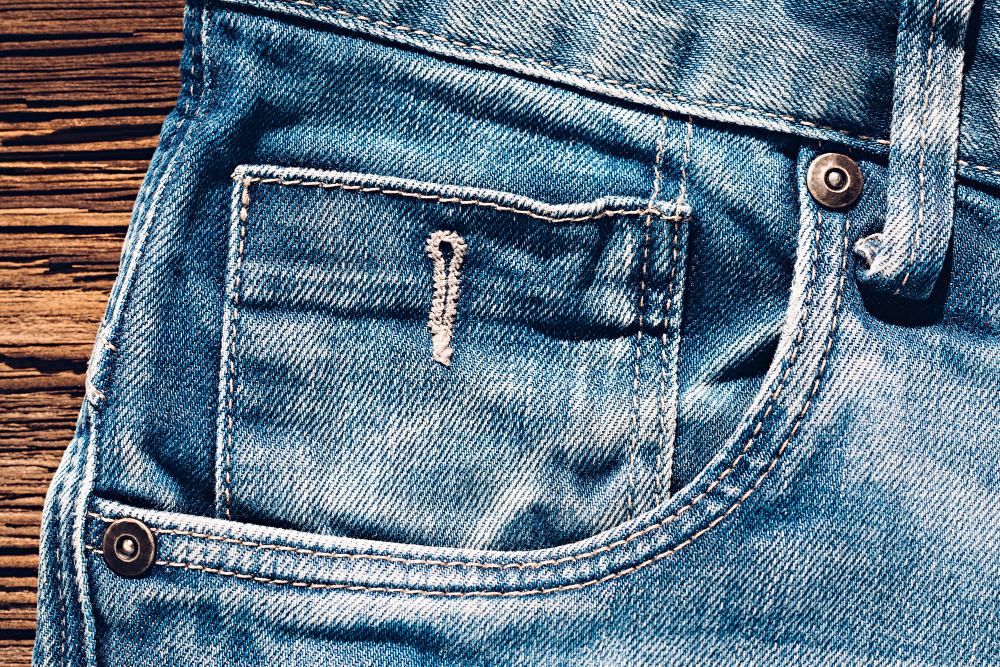
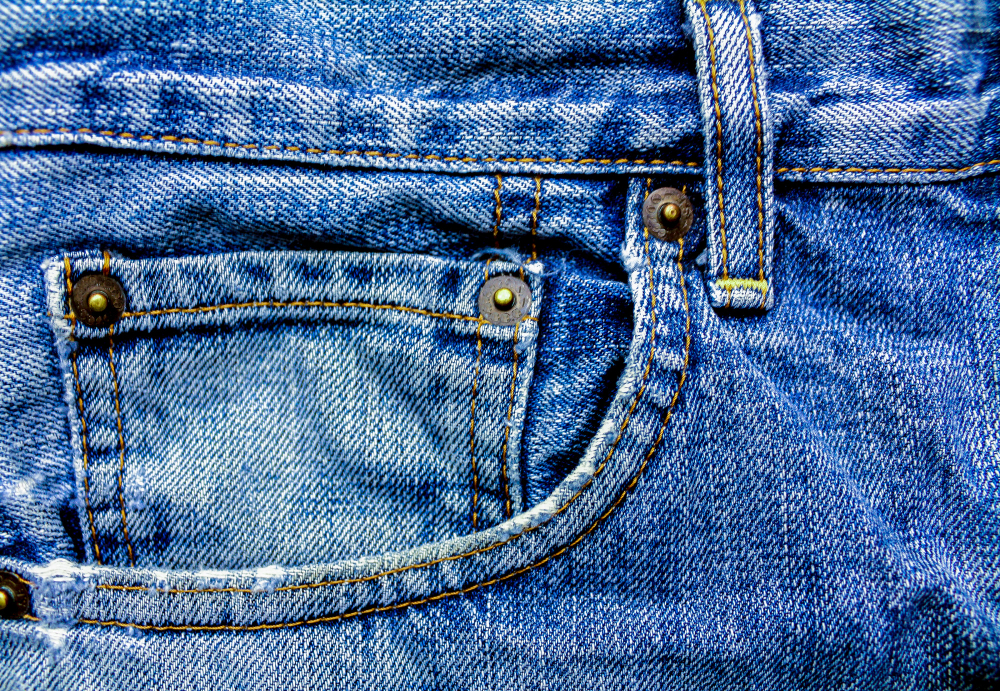
Everybody has noticed it. The little pocket sewn inside the right front pocket of a pair of jeans, roughly two and a half inches deep, too small for a phone and too shallow for a wallet, apparently serving no function at all.
It is called the watch pocket, and the name is the answer. It was designed to hold a pocket watch, and it is not a later addition or a decorative flourish. It is one of the original features of the garment, and it predates the second back pocket by nearly thirty years.
The Patent That Created the Trousers
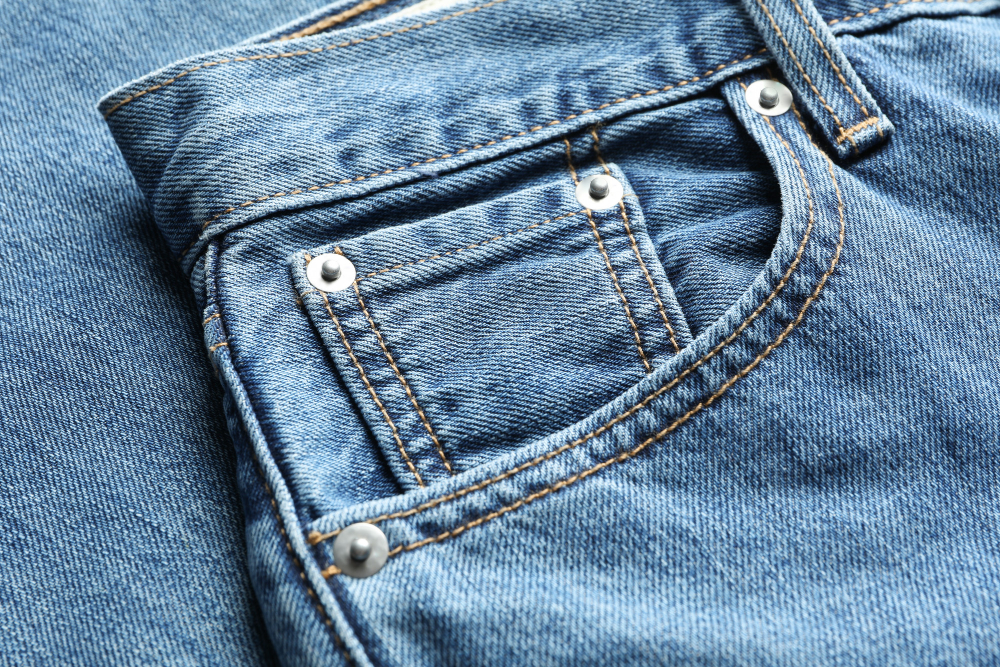
On 20 May 1873, a patent was issued to Jacob W. Davis of Reno, Nevada, and to Levi Strauss and Company of San Francisco, for what the document called an improvement in fastening pocket-openings. The improvement was a copper rivet.
Davis was a tailor. The problem he was solving was specific and unglamorous: the pockets on working men’s trousers tore out at the corners, because a miner or a teamster loaded them with tools and ore samples and the stitching could not take the strain. Davis’s answer was to put a metal rivet through the corner of the pocket, transferring the load from the thread to the fabric itself. He had been doing it on individual commissions for about two years and could not afford to file the patent alone. Strauss, who sold him the duck cloth and the denim, could.
The trousers that resulted had four pockets. Two at the front, one at the back, and the small one. That was the complete design, and it stayed that way for a generation.
Like our content? Follow us for more.
Why a Watch Needed Its Own Pocket
In 1873 a man who owned a timepiece owned a pocket watch. There was no practical alternative. Wristwatches existed but were understood as women’s jewellery, and a working man who wore one would have been making a statement he did not intend to make.
A pocket watch is a disc roughly the diameter of a large coin and considerably thicker, in a hinged metal case, usually attached to a short chain. It is a delicate mechanical instrument with a glass face, and it does not survive being carried loose in a trouser pocket alongside a knife and a handful of change. The conventional home for it was a waistcoat pocket, which is why waistcoats have them.
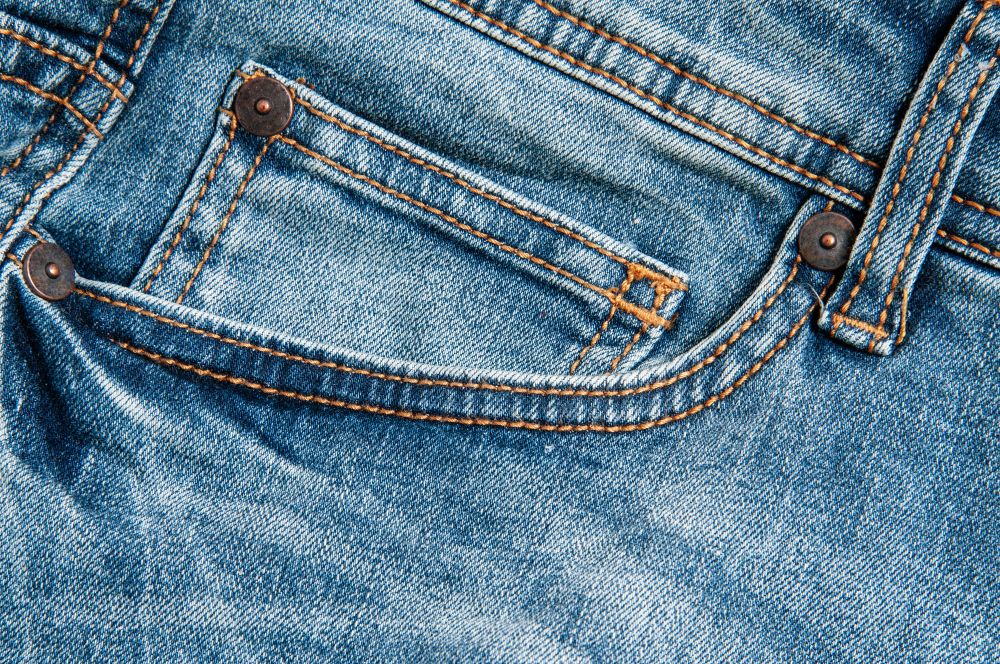
But a labourer in the mountains of Nevada was not wearing a waistcoat. He needed somewhere on his working trousers that would hold a watch snugly enough that it would not move, high enough that sitting down would not press on it, and shallow enough that he could get two fingers to it without taking his hand out of his glove. The pocket within a pocket does all of that, and the position is not arbitrary – it sits above the main pocket’s contents, so nothing else in there can reach it.
What Killed the Pocket Watch
The First World War did it. Officers in the trenches needed to read the time with one hand, in the dark, while holding something else, and a watch strapped to the wrist is the only way to do that. Soldiers improvised by soldering wire lugs onto pocket watch cases and fitting leather straps – these were called trench watches – and the men who came home had spent four years with a timepiece on their arm.
The association with women’s jewellery collapsed almost overnight. Through the 1920s and 1930s the wristwatch became standard male equipment, and by the Second World War the pocket watch was a thing your grandfather carried. The waistcoat went the same way for the same broad reasons.
So by roughly 1935, the pocket on a pair of work trousers had no function. Nobody carrying those trousers was carrying a pocket watch. And the pocket is still there, ninety years later, on virtually every pair of jeans manufactured anywhere in the world.
Why It Did Not Disappear
Three things kept it.
The first is cost, or rather the absence of it. The pocket is a small rectangle of denim and two short lines of stitching, added during an operation the machinist is performing anyway. Removing it saves a few cents at most and requires retooling a pattern.
The second is the pattern itself. By the time the pocket was functionally obsolete, the garment had stopped being workwear and started being a recognisable object. A pair of jeans has a specific arrangement of seams, stitching, rivets and pockets, and that arrangement is what the eye reads as jeans rather than as trousers made of denim. Pull one element out and the thing looks subtly wrong in a way most people cannot name.
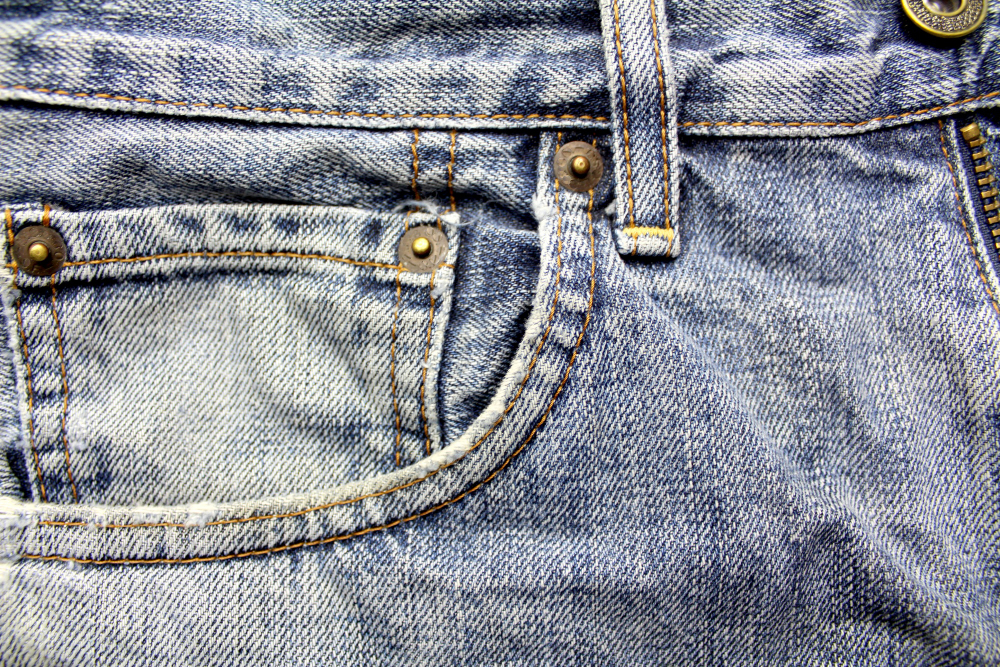
The third is that the manufacturers understood this early and leaned into it. Continuity of design became part of what was being sold. The back pocket rivets, which were covered over in 1937 after complaints that they scratched furniture, saddles and school chairs, were eventually removed from the flagship model in the 1960s and replaced with reinforcing bar tacks – and that change is still discussed by people who care about such things, which tells you how little latitude a manufacturer has to alter the pattern.
The Second Back Pocket Came Later
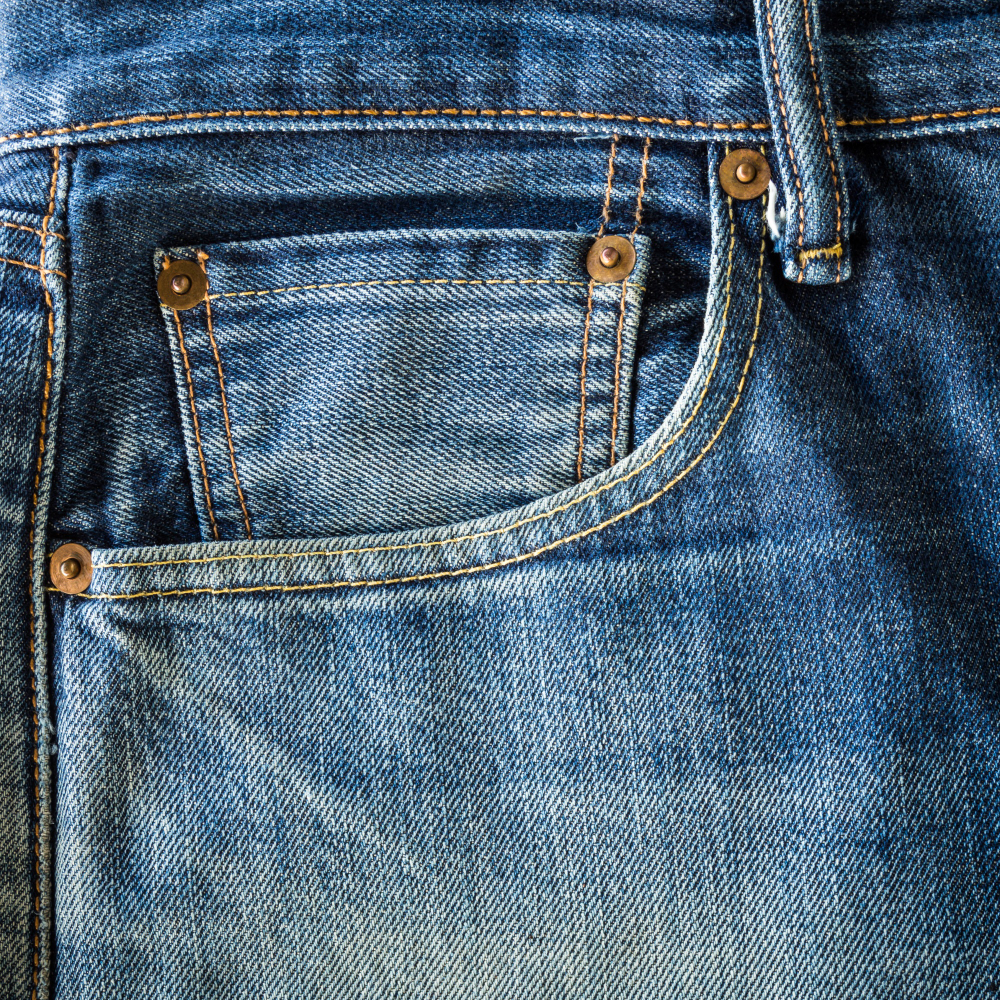
Here is the detail that surprises people most. The small pocket is original. The back right pocket is original. The back left pocket – the one that holds your wallet – was not added until 1901.
For the first twenty-eight years of the garment’s existence it had a single back pocket, which is why the small one is sometimes called the fifth pocket, counting from a five-pocket total that did not exist when it was introduced. The nomenclature is backwards, and it is backwards in every catalogue and on every hangtag.
It has also collected a long list of other names, none of them official and all of them regional: the coin pocket, the ticket pocket, the match pocket, the frontier pocket. Each name records what somebody’s grandfather actually kept in there once the watch was gone.
Every Manufacturer in the World Copied It
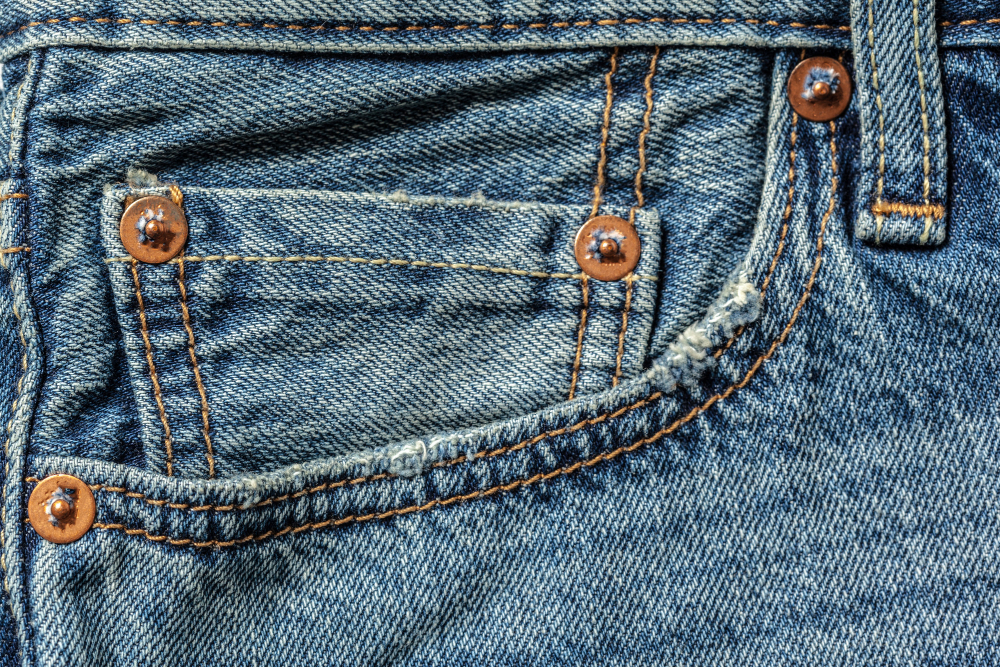
The pocket’s survival is not a story about one company being sentimental. It is a story about an entire global industry inheriting a pattern and declining to question it.
When the patent expired in 1890, the riveted work trouser became public property, and every competitor who entered the market did so by copying the garment that already sold. They copied the rivets, the seam placement, the pocket count and the little pocket, because customers recognised those things and because there was no reason to redesign a product that worked. Each of those manufacturers was then copied in turn.
By the time denim production had spread to Japan, Italy, Turkey, Bangladesh and China, the watch pocket had been carried along through four or five generations of pattern-copying, with nobody at any stage making a decision about it. It is now produced in the hundreds of millions annually by factories whose pattern-cutters have, in a great many cases, never seen a pocket watch.
There is a small irony in the detail. The one thing on the garment that is most reliably identical across every brand, every price point and every country is the feature that stopped having a purpose before most of those brands existed. The rest of the garment has been altered constantly – the rise, the leg, the weight of the cloth, the stretch content, the colour of the stitching, the shape of the back pockets, which is frequently the only way to tell two brands apart at a distance. The useless pocket is the fixed point.
Your Clothes Are Full of These
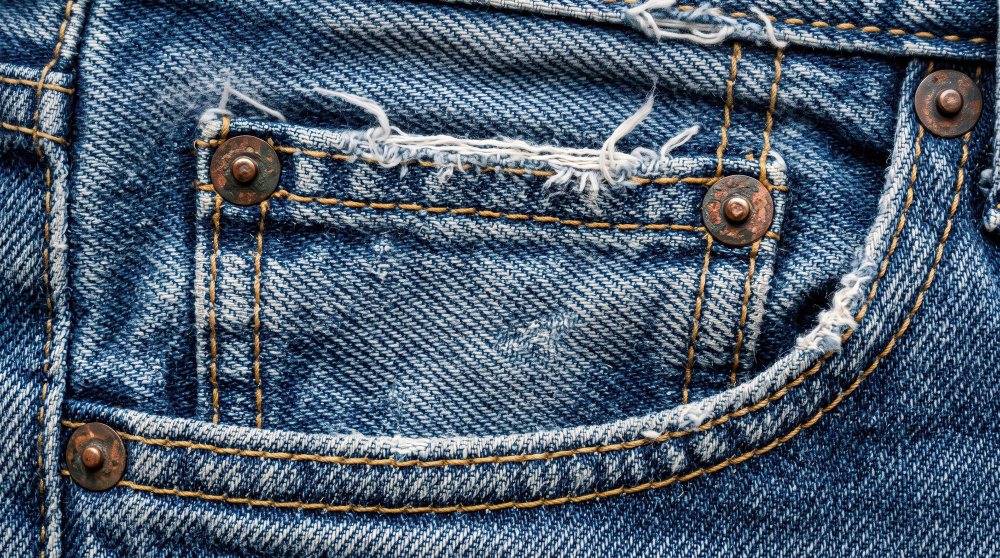
The watch pocket is the most visible survivor of a category. Once you start looking, vestigial features are everywhere in ordinary clothing.
The buttons on the cuff of a suit jacket do nothing. They descend from a period when the sleeve genuinely unbuttoned so a gentleman could turn it back, and they are now sewn to a cuff that does not open – except on expensive jackets, where the buttons work, which is itself a signal rather than a function.
The buttonhole in a suit lapel held a flower, or in military tailoring secured the lapel closed across the throat. The little loop under it, on a well-made jacket, is where the stem went.
The notch where a jacket’s collar meets its lapel exists because the garment evolved from a coat that buttoned to the neck, and when men started wearing it open the fold had to be cut to lie flat. The horizontal flap on the back of a man’s shirt yoke, the heel strip on the back of a trainer, the extra button sewn inside a shirt placket – each one is a solved problem whose solution outlived the problem.
What People Keep in It Now
Not nothing, as it turns out. The pocket’s dimensions happen to suit a surprising amount of modern small equipment, and the fact that it is the only pocket on the garment that nothing can fall out of makes it genuinely useful.
Guitarists keep picks in it. Smokers kept a lighter in it. It is the standard home for a hotel key card, a single folded banknote, a pair of earplugs, a locker key, a USB stick, a wedding ring taken off before manual work, and – for a period of several decades that nobody put on a hangtag – a single condom.
It is also, for a lot of people, where a loose coin ends up and stays, which is why the coin pocket is the name that has mostly won.
Which is a reasonable outcome for a design decision made in 1873 by a tailor in Nevada who was mainly trying to stop pockets tearing, and who put the little one in almost as an afterthought. The rivets he patented have been covered, uncovered and in places removed. The copper is now usually something cheaper. The cloth comes from somewhere else entirely. The pocket is exactly where he left it.
Like our content? Follow us for more.

