Approximately 1.3 million American drivers will sleep overnight at a highway rest stop during a single calendar year, according to the American Trucking Associations’ Highway Watch Program data. The practice is far more common than most American drivers realize, and the rules around it are more complicated than most people assume. Some states allow overnight rest-stop sleeping without restriction. Others impose strict time limits — typically four to eight hours. Some states prohibit overnight parking entirely. The specific rules vary dramatically by state, and the enforcement varies further. The decision to sleep at a rest stop is also a safety decision — some American rest areas are well-lit, regularly patrolled, and reasonably secure. Others are isolated, unstaffed, and have documented safety incidents on file. Here is what every American driver should know before pulling into a highway rest stop for an overnight sleep, drawn from state DOT regulations, AAA road-safety reports, and the specific incident records that exist for the most-used American rest stops.
The legal status of overnight parking at American highway rest stops is governed by individual state Department of Transportation policies, not by federal law. The federal government owns the interstate highway system but cedes operational management of rest areas to the states. Each state has its own rules, posted at each rest area. The penalty for violating posted rules is typically a parking violation or a request from a state trooper to move along — neither serious — but rest-area sleeping can also trigger commercial-vehicle inspections, registration verification, and in rare cases, more involved encounters with law enforcement.
States That Allow Unlimited Overnight Parking
The states that most clearly permit unrestricted overnight rest-area sleeping include Arizona, Arkansas, Colorado, Connecticut, Delaware, Florida, Idaho, Indiana, Iowa, Kansas, Kentucky, Maine, Maryland, Massachusetts, Michigan, Minnesota, Mississippi, Missouri, Montana, Nebraska, Nevada, New Hampshire, New Mexico, New York, North Carolina, North Dakota, Ohio, Oklahoma, Oregon, Pennsylvania, Rhode Island, South Carolina, South Dakota, Tennessee, Texas, Utah, Vermont, Washington, West Virginia, Wisconsin, and Wyoming. The list is most of the country. In these states, drivers can pull into a rest area, sleep for as long as needed, and continue driving without legal consequence. Most state DOT websites explicitly note that overnight parking is permitted for safety purposes — the broader public-safety logic is that a sleepy driver pulling over is safer than a sleepy driver continuing.
States With Time Limits or Restrictions
A smaller group of states imposes time limits on rest-area parking. Virginia and California limit rest-area parking to eight hours. New Jersey limits parking at most state rest areas to four hours. Hawaii has no interstate rest areas. Alaska’s interstate system is limited and operated differently. Most of the time-limit states post the rules at the rest-area entrance, and most state troopers enforce by checking license plates or knocking on windows. The eight-hour limit is generally tolerant — a driver arriving at 10 p.m. and leaving at 6 a.m. is at the boundary and rarely challenged. The four-hour limit in New Jersey is stricter and frequently enforced. Drivers traveling through these states for long-distance trips should plan around the time limits.
States That Prohibit Overnight Rest-Area Parking
A handful of states explicitly prohibit overnight rest-area parking. The list has shrunk in recent years as state DOTs have recognized the safety value of allowing drowsy drivers to pull over. As of 2026, the states with the strictest no-overnight policies include some sections of Illinois (particularly the Tollway-operated rest areas), some Georgia rest areas (where the state has both prohibited and permitted-overnight rest stops), and historically Louisiana (which has shifted policy multiple times). The practical advice for drivers traveling through these states is to use truck stops, gas stations with paid overnight parking, or fast-food parking lots that explicitly allow overnight stays (Cracker Barrel, Walmart with manager permission, Bass Pro Shops).
The Safety Question
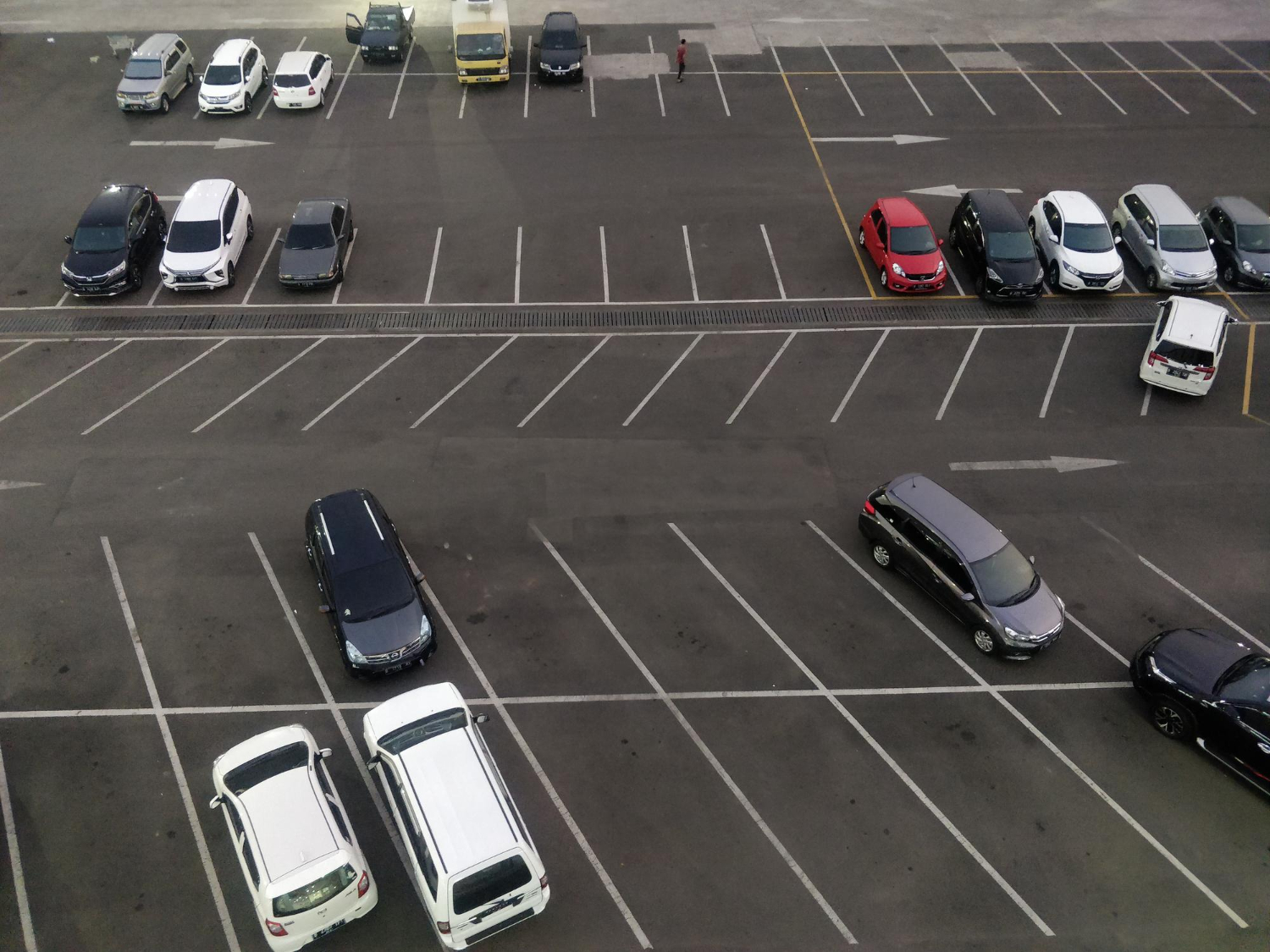
The single most important practical question about overnight rest-area sleeping is safety. The honest answer is that American rest areas vary dramatically. Well-lit, staffed, regularly patrolled rest areas — particularly the welcome centers near state borders, the rest areas on heavily traveled corridors like Interstate 95 between Washington D.C. and Boston, and the modern truck-stop-style facilities along Interstate 80 in Nebraska and Iowa — have low incident rates. Isolated, unstaffed rest areas in less-traveled corridors have higher incident rates per visit. According to the Federal Highway Administration’s Safety Office, reported personal-safety incidents at American rest areas in 2024 totaled approximately 4,100 across the national system — a rate of roughly 1 incident per 7,500 overnight stays. The rate is significantly lower than the rate for hotel-overnight incidents per stay but is non-zero and varies by location.
The practical safety practices for an overnight rest-stop sleep include: park near other vehicles (preferably commercial trucks, which create natural surveillance through the night and produce constant low-level activity that deters most petty crime); park in well-lit areas under lampposts where possible, avoiding the dark corners of the lot; lock all doors and windows including the rear hatch if you have one; place valuables out of sight under seats or in the trunk before pulling into the rest area, not after arrival; sleep with your phone within reach and charging using a cigarette-lighter or USB outlet; keep your keys in the ignition or on your person for fast departure if needed; do not engage with anyone who knocks on the window — start the vehicle and leave the area immediately, even if the person appears to be a fellow traveler asking for help. Most experienced long-haul drivers follow some version of these practices automatically. The single most important practical habit is to avoid being approached by anyone after you have parked — which means parking in busy, well-lit areas with commercial truck activity rather than in remote corners or smaller rural rest areas.
The Five Safest Rest Areas in the Country

Based on incident rates, lighting, regular patrolling, and overall infrastructure, the rest areas most frequently recommended by long-distance drivers and trucker organizations include: the Iowa 80 Truckstop along Interstate 80 in Walcott, Iowa — the largest truck stop in the world, technically a commercial truck stop rather than a state-operated rest area, with 24-hour security, 1,000 truck-parking spaces, restaurants, showers, and a movie theater; the Big Boy Truck Stop along Interstate 95 in South Carolina; the South of the Border complex at the North Carolina/South Carolina border; the Bowling Green, Kentucky Welcome Center on Interstate 65; and the Truckee/Donner Pass California Rest Area on Interstate 80. Each of these provides a combination of high traffic, regular patrolling, lighting, and adjacent commercial services that produces a substantially safer overnight experience than an isolated rural rest area.
What Most American Drivers Do Instead
The majority of American drivers who need to sleep on a long road trip do not actually sleep at state-operated rest areas. They sleep at truck stops (Pilot Flying J, TA Travel Centers, Love’s Travel Stops), at Walmart parking lots with manager permission, at Cracker Barrel locations (where overnight parking is officially permitted by chain policy), or at hotel parking lots where they have booked a room. The state rest area is typically the option of last resort — used by drivers who cannot reasonably continue, who arrive in the middle of the night, or who specifically prefer the rest-area environment.
The practical summary for any American driver considering an overnight rest-stop sleep in 2026 is: research the specific state’s rules before crossing the border, plan to use larger and well-lit rest areas rather than isolated rural ones, follow basic safety practices, and consider truck stops as a safer and often equivalently free alternative. The overnight rest-area sleep is not unsafe — it is generally significantly safer than continuing to drive while exhausted — but the conditions vary substantially and the planning matters. Driver fatigue causes approximately 100,000 annual American highway crashes according to NHTSA data, so the option to safely sleep in a parked vehicle remains an important component of cross-country trip planning.