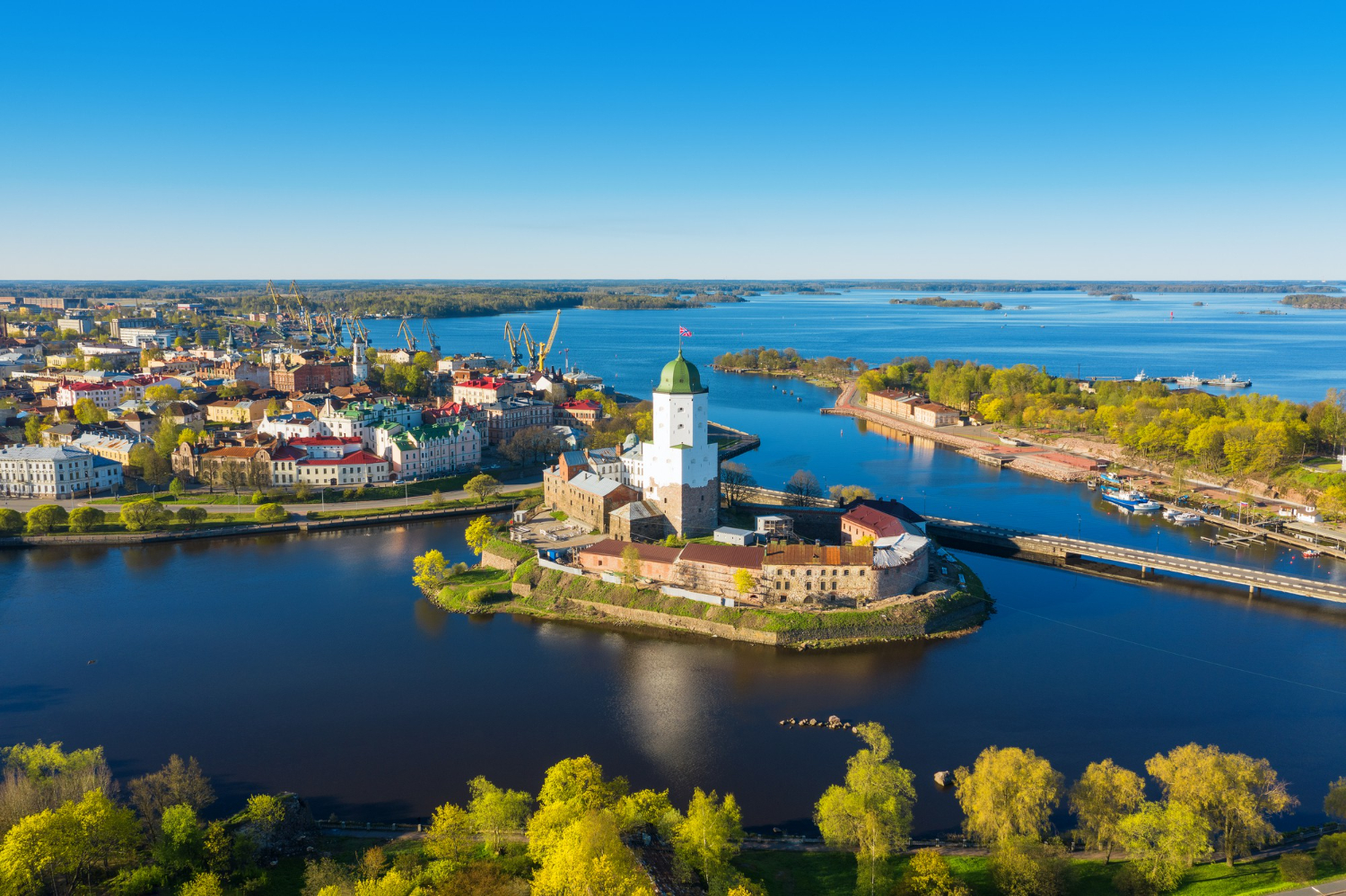
According to the 2025 World Happiness Report, Finland topped the rankings for the eighth consecutive year (now nine, as of 2026), with Denmark, Iceland, and Sweden close behind. The reasons are more specific — and more interesting — than “Scandinavian socialism.”
The 2025 World Happiness Report — published by the Wellbeing Research Centre at the University of Oxford in partnership with Gallup, the UN Sustainable Development Solutions Network, and an independent editorial board — confirmed what has now become an annual tradition: Finland, Denmark, Iceland, and Sweden are the world’s four happiest countries by self-reported life satisfaction. Finland topped the rankings for the eighth consecutive year in 2025, scoring 7.736 out of a possible 10 on the Cantril Ladder (a survey measure that asks respondents to rate their lives on a 0-10 scale). As of March 2026, Finland has held the top spot for nine consecutive years.
The instinctive American response is often skeptical: how could a country with brutal winters, three months of near-darkness, high taxes, and a completely different political system be the happiest place on earth? The actual research provides a specific and surprisingly nuanced answer.
What “happiness” actually measures in the report

The World Happiness Report doesn’t measure how often people smile or how cheerful they appear. It measures sustained life satisfaction — people’s own assessment of whether their lives, taken as a whole, are going well. The Gallup World Poll asks respondents to imagine a ladder where the bottom rung represents “the worst possible life for you” and the top rung represents “the best possible life for you,” and to rate where they currently stand.
The report then correlates these self-reported scores with six measurable factors:
- GDP per capita (economic prosperity)
- Social support (whether you have someone to count on in times of trouble)
- Healthy life expectancy (how long people live in good health)
- Freedom to make life choices (perceived autonomy)
- Generosity (charitable giving and helping behaviors)
- Perceptions of corruption (trust in government and business)
The Nordic countries don’t dominate any single one of these categories. Several non-Nordic countries (the United States, Switzerland, Luxembourg) score higher on GDP per capita. Several Asian and Mediterranean countries score higher on healthy life expectancy. What the Nordic countries do consistently is score in the top 10-15 across all six factors simultaneously — and the cumulative effect produces the highest overall life satisfaction.
What’s actually distinctive about Nordic societies

The 2025 World Happiness Report’s research, combined with broader social science on Nordic societies, identifies several specific factors that aren’t fully captured in the six measured variables but appear to drive the consistent rankings:
Trust in strangers. Across multiple research streams, Nordic populations consistently report unusually high trust in people they don’t know. The “lost wallet” experiment — researchers intentionally drop wallets in public places and measure return rates — produces dramatically higher return rates in Nordic countries than in most of the world. According to the 2025 report’s analysis, Nordic countries rank among the top places for both expected and actual return of lost wallets. People who believe a wallet would be returned are roughly twice as happy as people who don’t, regardless of where they live.
Income equality. Denmark, in particular, has one of the smallest wealth gaps in the world. The Gini coefficient (the standard measure of income inequality) for Denmark, Sweden, Finland, and Norway is consistently among the lowest among developed economies. Research published in the World Happiness Report has repeatedly demonstrated that lower inequality correlates strongly with higher average life satisfaction — not because everyone is wealthy, but because the gap between top and bottom is small enough that social cohesion remains intact.
Universal healthcare and education. All four top-ranking Nordic countries have universal healthcare and tuition-free university education, including for graduate degrees. This removes two of the largest sources of financial anxiety that affect Americans (medical bills and student debt). The relationship between absence of these specific anxieties and life satisfaction is well-documented in the research.
Generous parental leave and work-life balance. Sweden, for example, offers up to 480 days of paid parental leave that can be split between parents, with parents receiving roughly 80% of their salary during the leave. Sweden’s legal minimum paid vacation is 25 days, with many employers offering 30-40 days. Comparable Finnish, Danish, and Norwegian policies are similar. The American legal minimum paid vacation is zero days.
Sauna culture (Finland specifically). Finland has approximately three million saunas in a country of 5.6 million people — roughly one sauna per two people. Sauna use isn’t just recreational; it’s a regular social and family activity that produces multiple measurable health benefits (improved cardiovascular health, reduced stress hormones, better sleep) and serves as a venue for the kind of quiet, low-pressure social interaction that supports community bonds.
Strong democratic institutions and low corruption. Transparency International’s annual Corruption Perceptions Index consistently ranks Denmark, Finland, Norway, and Sweden in the top 5-10 globally. The perceived absence of corruption — knowing that public services will function as intended and that government decisions aren’t being made through bribery — is one of the strongest predictors of life satisfaction in the World Happiness Report’s analysis.
What the report actually says about the United States

For comparison: the United States ranked just outside the top 25 in the 2025 report, ranking 24th. The United Kingdom also barely made the top 25. France ranked 33rd. According to the report’s analysis, this is part of a broader trend: in 2013, the top 10 happiest countries were all Western industrialized nations. In 2025, only seven of the top 10 are Western industrialized countries. The “industrial powers” that have dropped out of the top 20 since 2013 include Switzerland (1st in 2015, 13th in 2025), Canada (6th in 2013, 18th in 2025), and Australia (10th in 2013, 11th in 2025).
The United States’s specific issues, according to the report’s analysis, include declining social trust, rising income inequality, increasing political polarization, declining trust in institutions, and a documented decline in civic participation. The U.S. has high GDP per capita and high healthy life expectancy by global standards, but the other factors — particularly social support, perceived freedom, and trust in government — have declined enough to drag the overall score down.
A specific finding: the U.S. now ranks particularly poorly on happiness among younger generations. People under 30 in the United States report dramatically lower life satisfaction than the U.S. average for the first time in the report’s history.
What can be learned from the Nordic model — and what can’t
Some of the Nordic happiness factors are genuinely transferable to other contexts:
- Building stronger community ties (social support)
- Reducing daily anxiety about basic needs like healthcare and education
- Improving trust in institutions through transparency
- Prioritizing leisure and family time
- Spending time in nature regularly (Finnish “everyman’s right” allows free access to forests for foraging, hiking, and camping)
- Active engagement in physical activity, including in cold weather
- Strong family meal traditions
Others are less transferable. Nordic countries are small (Finland 5.6 million, Denmark 6 million, Iceland 400,000), relatively ethnically homogeneous (though increasingly diverse), and have built their welfare states over many decades with broad political consensus. Replicating that in larger, more diverse countries with different political traditions is genuinely difficult.
The report also notes that some of the Nordic happiness comes from factors that don’t translate at all: the specific cultural ethos of Finnish sisu (perseverance through difficulty), Danish hygge (cozy contentment), or Norwegian friluftsliv (open-air living) are deeply embedded in language and tradition in ways that can’t be straightforwardly adopted elsewhere.
What the 2025 report’s specific finding was about generosity
One of the most interesting findings in the 2025 report — the section that most distinguished it from previous years — was about the relationship between generosity and happiness. The report found that:
- People consistently underestimate the kindness of strangers. Actual lost-wallet return rates in a 40-country experiment were roughly twice as high as people’s expectations.
- Believing a wallet would be returned was a stronger predictor of happiness than most other factors — about twice as related to happiness as unemployment.
- The COVID-era surge in benevolent acts (helping strangers, donating, volunteering) has remained roughly 10% above pre-pandemic levels almost everywhere.
- Donating to charity produced about twice the happiness boost of volunteering or helping strangers individually.
The report’s authors identified what they called “the three Cs” of meaningful generosity: caring connections (knowing who you’re helping), choice (acting voluntarily rather than from obligation), and clear positive impact (seeing or knowing the difference your action made). Acts of kindness that include all three produce significantly more happiness for both giver and recipient than acts that include only one or two.
What this actually means for travelers and for everyone else
For travelers interested in seeing what consistently-high-life-satisfaction societies look like in practice, visiting Finland, Denmark, Iceland, Sweden, or Norway provides a genuine glimpse of something different. Helsinki’s public spaces, Copenhagen’s cycling culture, Reykjavik’s tight-knit community, Stockholm’s parental-leave-driven workplace patterns, and the broader Nordic emphasis on quality time over quantity of consumption are all observable in daily life.
For people not planning to relocate to Scandinavia (which is most people), the World Happiness Report’s findings have specific actionable implications: invest in close social relationships, participate in regular civic life, prioritize generosity (the research suggests that giving small amounts to charity regularly produces more happiness than giving large amounts occasionally), spend time outdoors, and recognize that other people are probably kinder than you assume they are.
The Nordic countries don’t have a secret. They have a set of policy choices, cultural traditions, and social norms that have accumulated over decades — and that, taken together, produce measurably higher life satisfaction than countries that haven’t made the same choices. Some of those choices can be replicated. Others can’t. But the basic insight — that the components of a good life are well-understood, measurable, and at least partially policy-responsive — is genuinely useful regardless of where you live.