


The distinction that organises the whole subject is between comparing and measuring. A balance compares; a scale measures a force. Almost every difference between weighing devices follows from which one they are doing. Here are twelve.
1. A Balance Compares Rather Than Measures
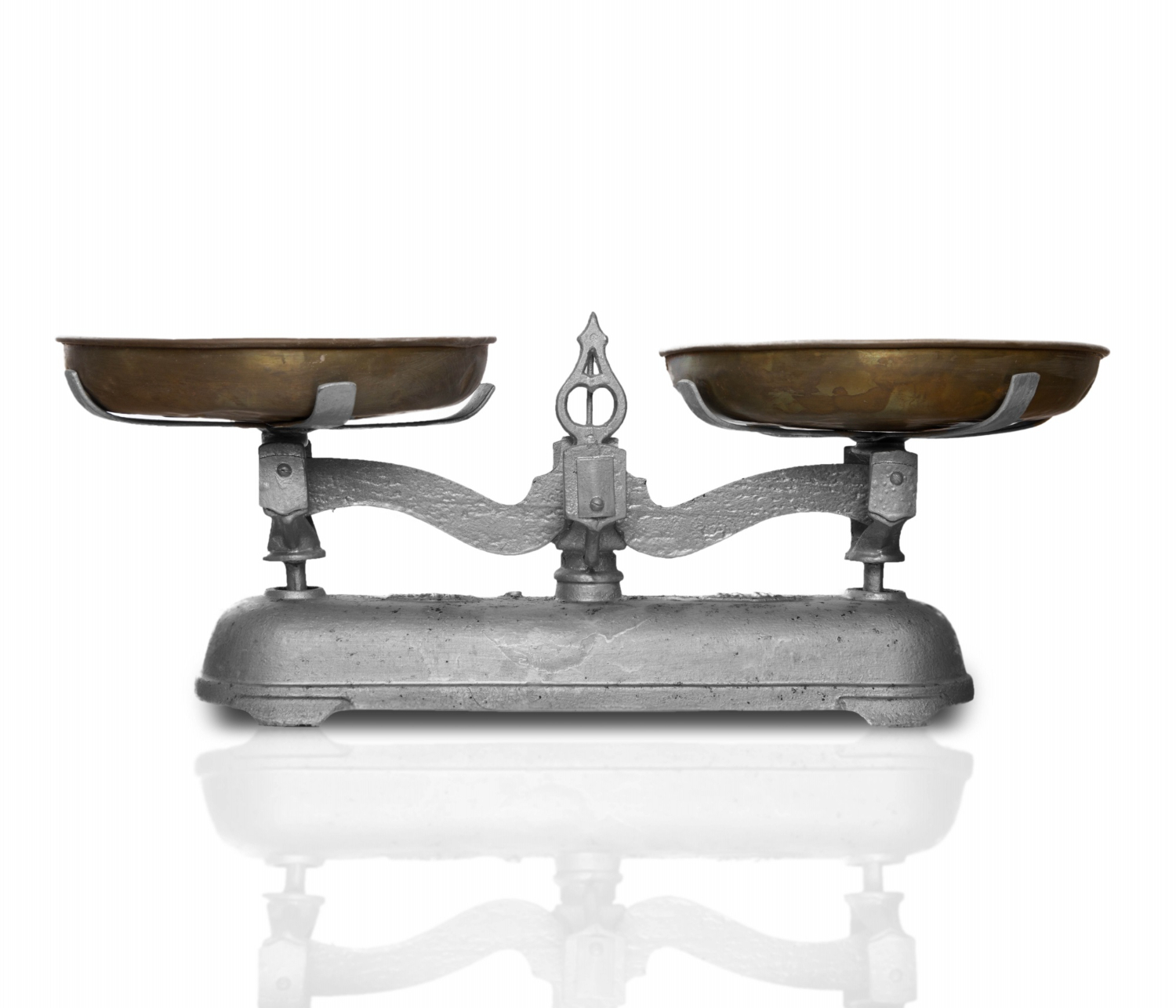
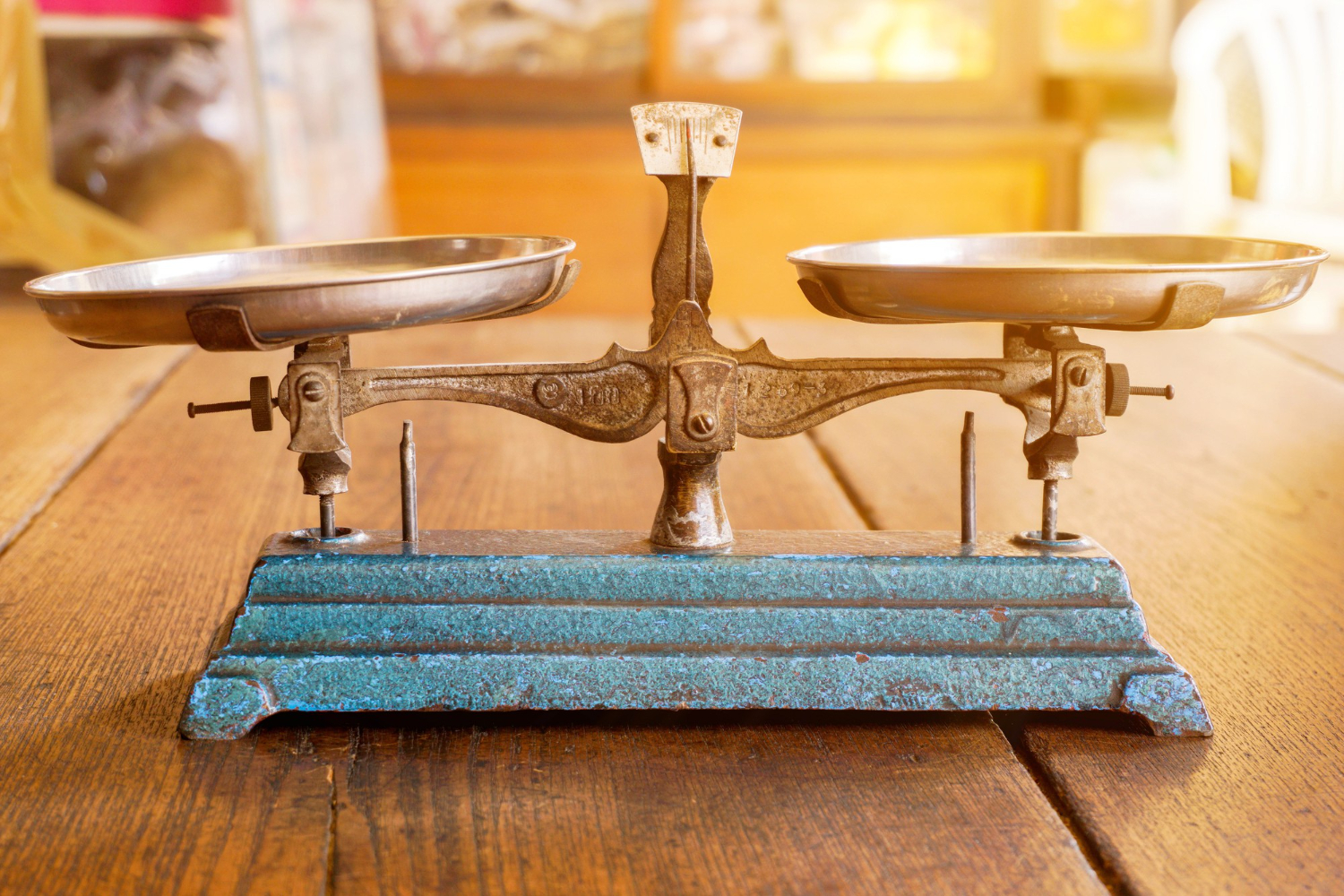
Putting an unknown load on one side and known masses on the other establishes equality, and the answer is read off the known side rather than from any measurement of force.
Nothing is being quantified directly. Comparison is the method that makes a balance fundamentally different from a scale.
Like our content? Follow us for more.
2. Which Is Why It Works Anywhere

Because both sides are affected identically by whatever gravity is present, a balance gives the same result at sea level, on a mountain or on another world entirely.
The comparison cancels the variable out. Location independence is the property that made balances the standard for trade.
3. A Spring Scale Measures a Pull

A spring extends in proportion to the force applied, so the extension can be marked against a scale and read off directly, with no known masses required.
It is quicker and needs no set of weights. Force measurement is the alternative approach and the more convenient one.
4. And Therefore Gives a Different Answer Elsewhere

Because it measures force rather than comparing masses, a spring scale reads differently wherever gravity differs, including measurably at different altitudes.
That is a real limitation rather than a theoretical one. Gravity dependence is the weakness comparison does not have.
5. The Arms Have to Be Identical
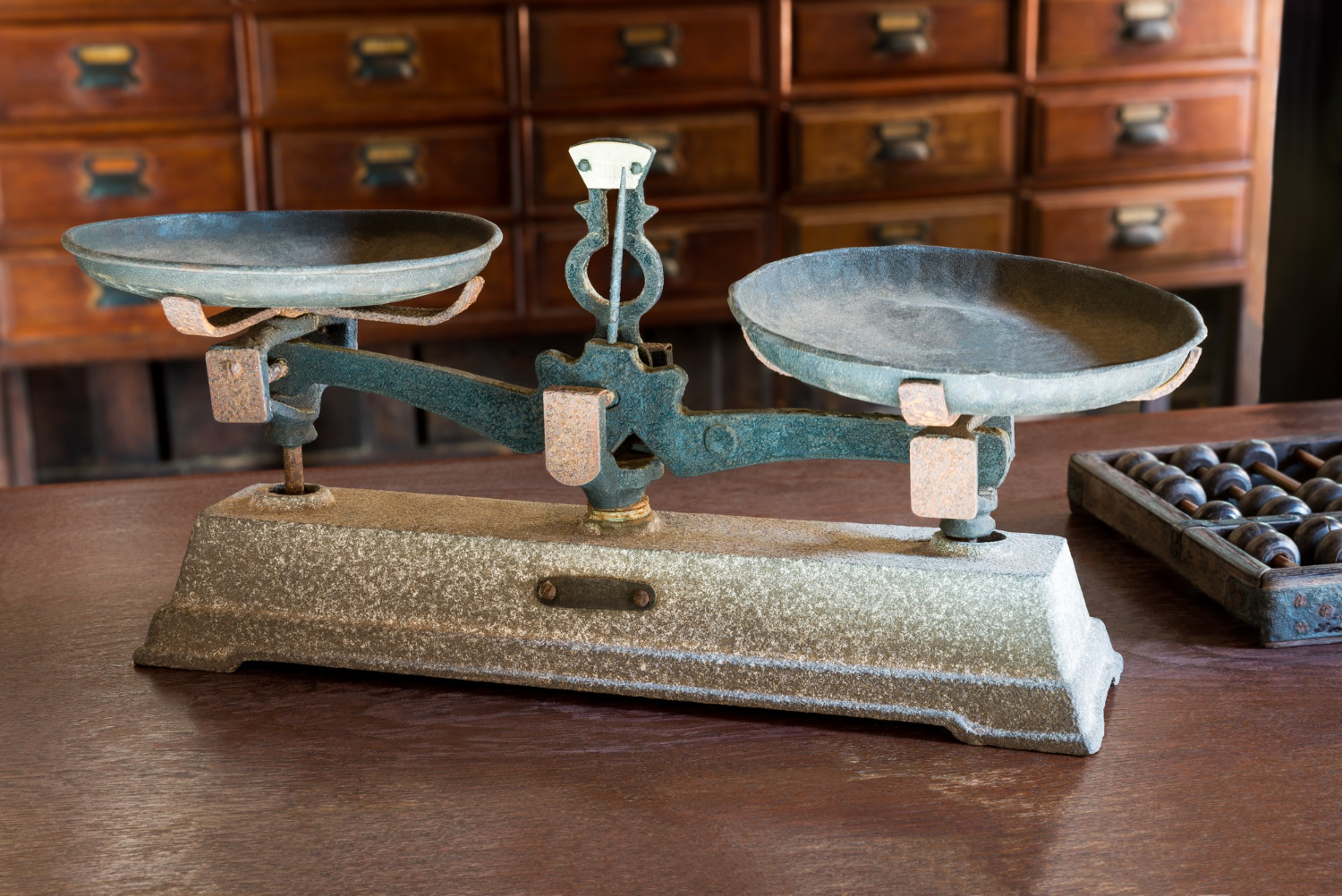
An equal-arm balance depends entirely on both arms being exactly the same length, and any difference produces a systematic error in one direction.
Falsifying a balance was a recognised fraud for as long as balances existed. Arm equality is the assumption everything else rests on.
6. Which Is Why Inspection Is Ancient

Because the whole of trade depended on honest weighing, the checking and stamping of weights and measures is among the oldest regulatory functions any authority performed.
Official standards were physical objects held centrally. Verification is the institution that grew up around a mechanical vulnerability.
7. Unequal Arms Multiply the Effect

Placing the pivot off-centre means a small weight on the long arm balances a large load on the short one, and sliding it along gives a continuous reading.
One small counterweight replaces an entire set. The steelyard is the design that traded precision for portability.
8. Sensitivity Depends on the Pivot
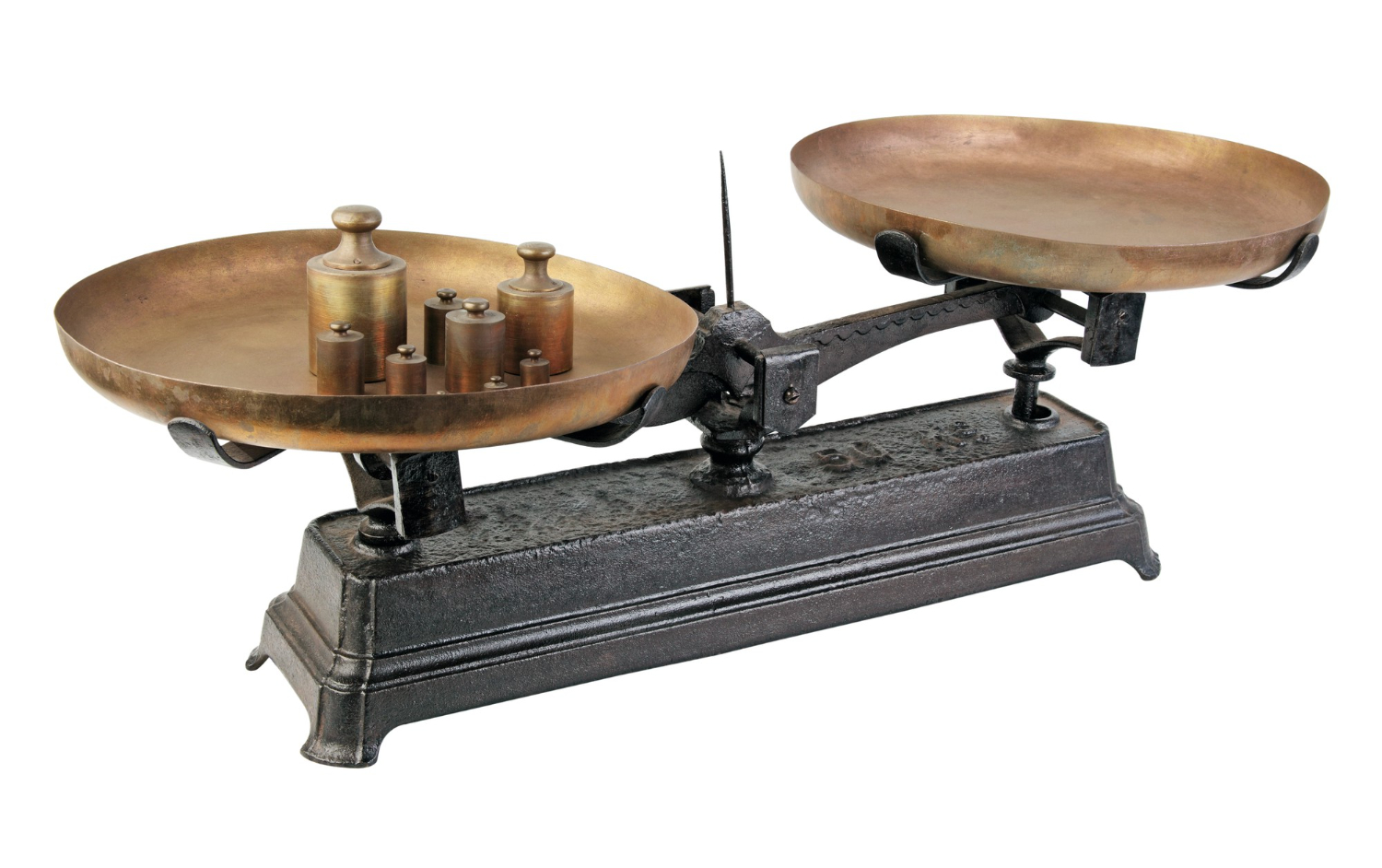
A beam pivoted very close to its own centre of mass responds to extremely small differences, which is what makes a precision balance precise – and extremely delicate.
The more sensitive it is, the less it tolerates. Pivot placement is the trade between sensitivity and robustness.
9. Precision Balances Need a Box
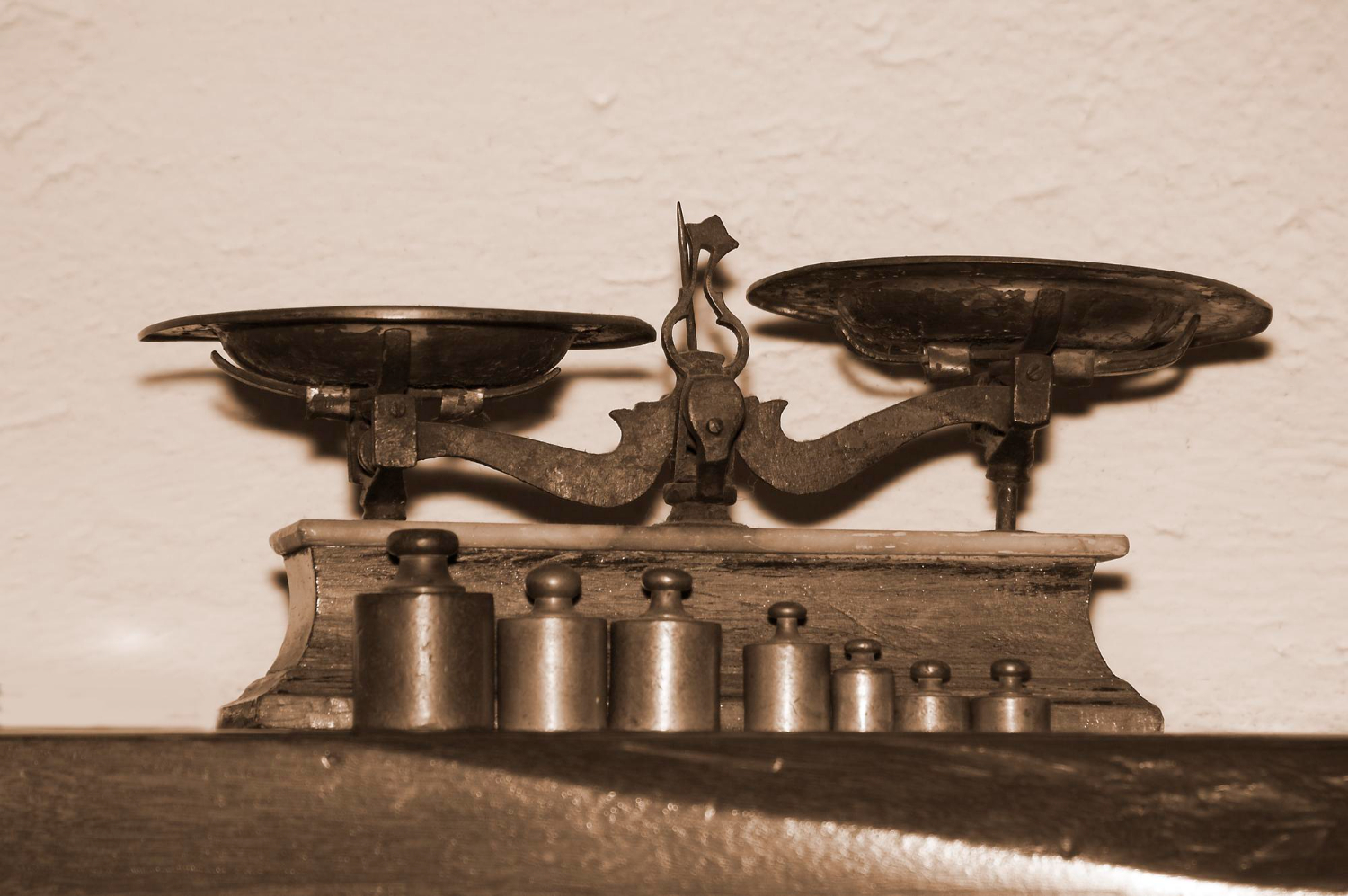
At high sensitivity, air currents, temperature differences and vibration all move the beam, so laboratory balances are enclosed and mounted on heavy stable surfaces.
The enclosure is the instrument rather than an accessory. Environmental isolation is what precision actually requires.
10. Even the Air Has to Be Accounted For
Everything weighed in air experiences a small upward buoyant force depending on its volume, so very precise work corrects for it – which means two objects of identical mass and different size do not balance exactly.
It is tiny and it matters at the top end. Air buoyancy is the correction that only appears when everything else has been eliminated.
11. Modern Scales Measure Deformation

A load cell contains a component that deforms very slightly under load, with that deformation converted into an electrical signal that is calibrated against known masses.
It is a spring scale in principle, refined enormously. Electronic weighing is the same force measurement with a different readout.
12. Mass and Weight Are Not the Same Thing

Mass is how much material is present and does not change; weight is the force that material experiences in a gravitational field and does.
Ordinary language uses one word for both, which is why the distinction feels pedantic and is not. The mass-weight difference is the confusion underlying every item above.
Compare It or Measure the Pull

Two methods, two families of instrument. Comparison is location-independent and needs a set of known masses; force measurement is convenient and depends on where you are standing.
The last item resolves the rest. Ordinary speech uses one word for two different quantities, which is why the fact that a balance and a scale disagree on a mountain seems paradoxical – and it stops being paradoxical the moment you notice they were never measuring the same thing.
Like our content? Follow us for more.
